
l l l l l l Yusuke Miyao


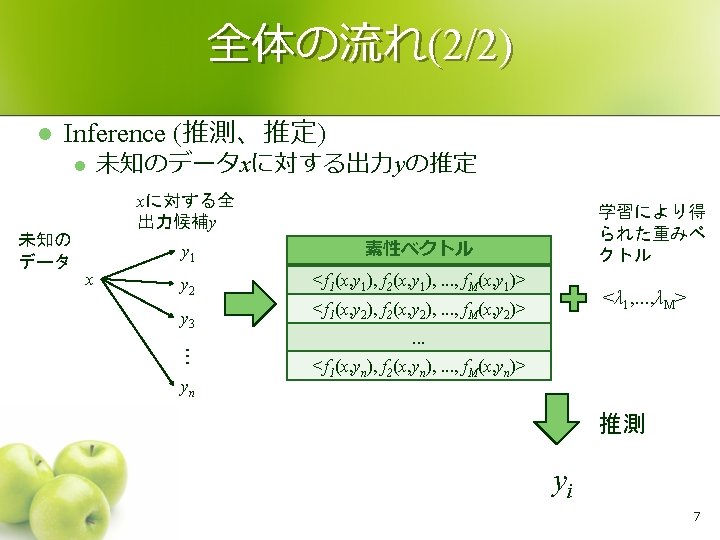



- Slides: 23
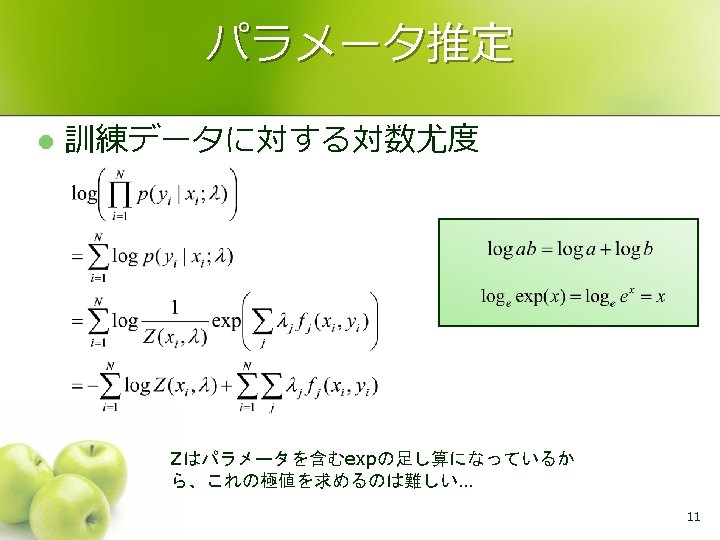
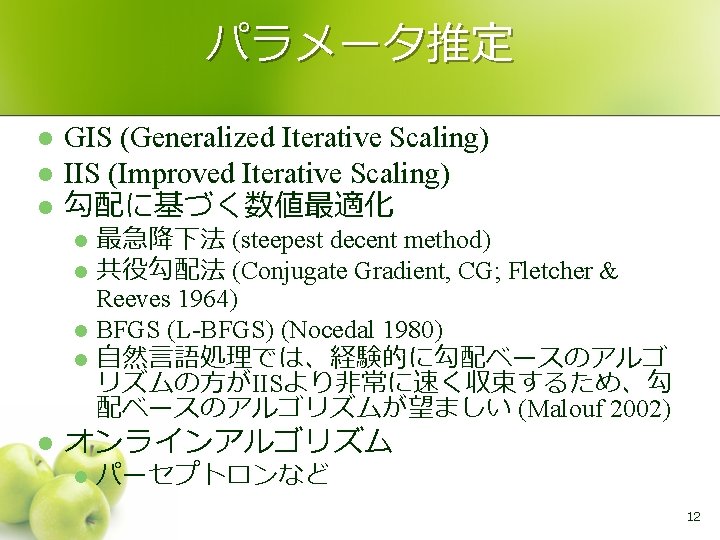
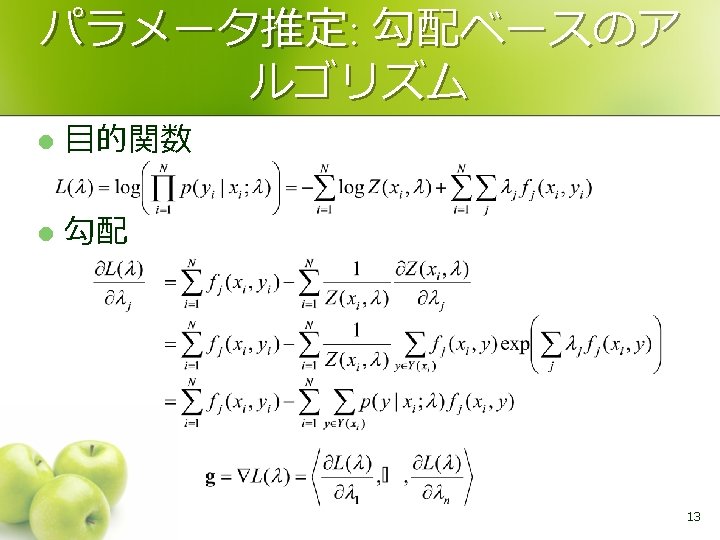
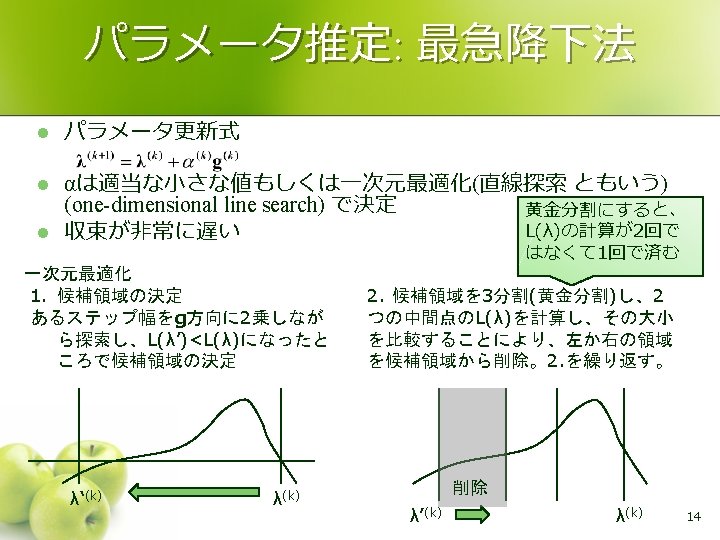
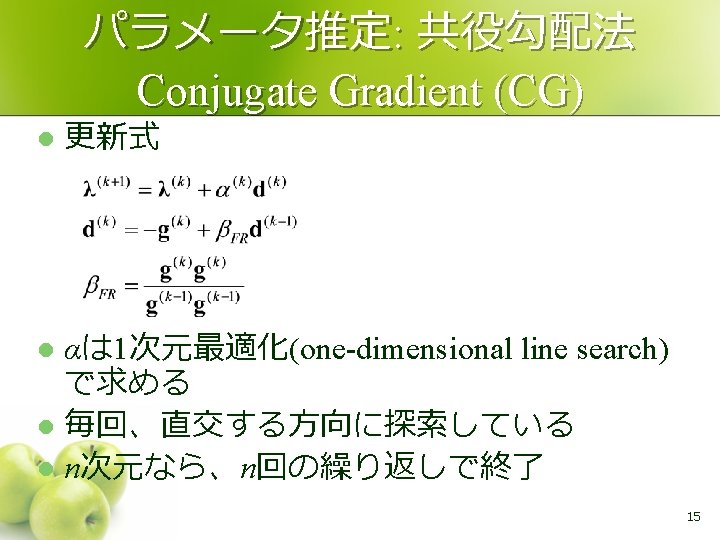
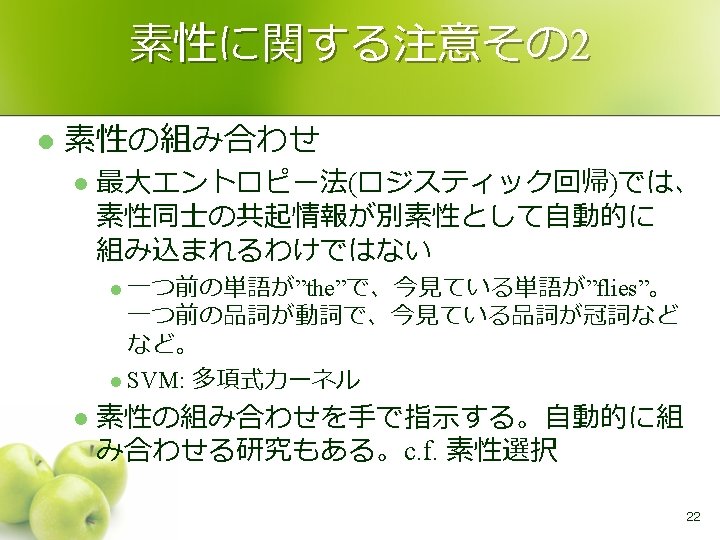
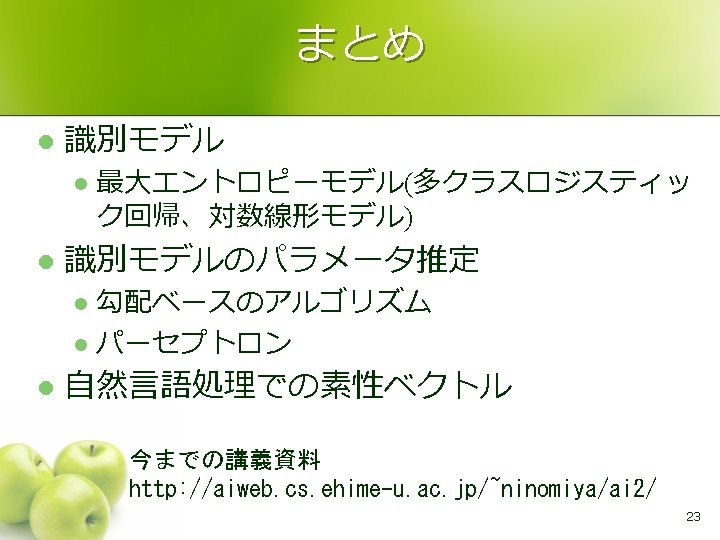
今日の講義の予定 l 確率的識別モデル l l 最大エントロピーモデル(多クラスロジスティック回帰、対数線形モデル) パラメータ推定 自然言語処理での素性ベクトル 教科書 l l l Yusuke Miyao (2006) From Linguistic Theory to Syntactic Analysis: Corpus. Oriented Grammar Development and Feature Forest Model, Ph. D Thesis, University of Tokyo Jun’ichi Kazama (2004) Improving Maximum Entropy Natural Language Processing by Uncertainty-aware Extensions and Unsupervised Learning, Ph. D. Thesis, University of Tokyo 北研二(著) 辻井潤一(編) 言語と計算 4 確率的言語モデル 東大出版会 Jorge Nocedal, Stephen Wright (1999) “Numerical Optimization” Springer, 1 st edition 1999, 2 nd edition 2006 Cristopher M. Bishop “PATTERN RECOGNITION AND MACHINE LEARNING” Springer, 2006 Nello Cristianini and John Shawe-Taylor “An Introduction to Support Vector Machines and other kernel-based learning methods”, Cambridge University Press, 2000. 2
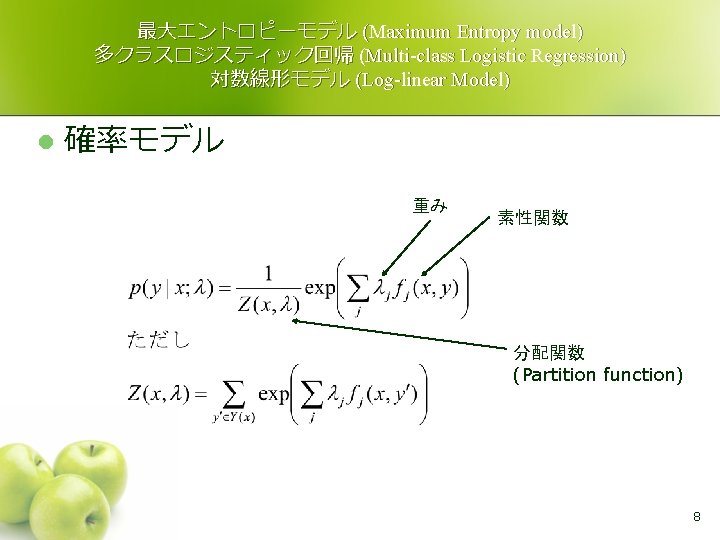
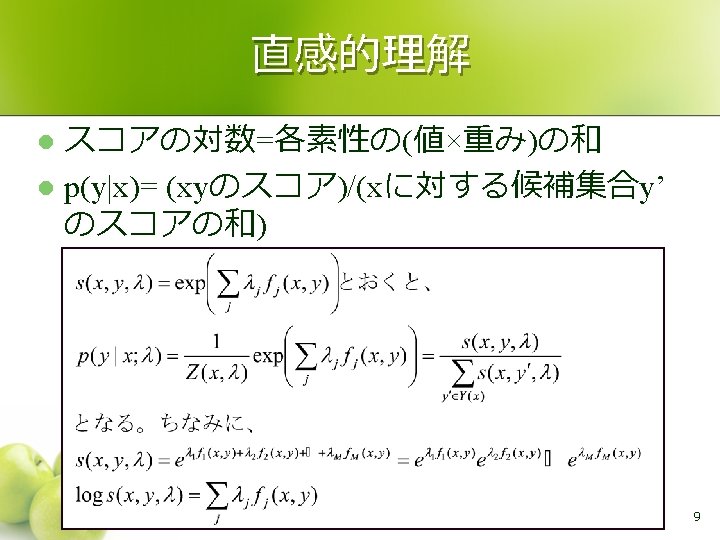
最大エントロピーモデル (Maximum Entropy model) 多クラスロジスティック回帰 (Multi-class Logistic Regression) 対数線形モデル (Log-linear Model) l 確率モデル 重み 素性関数 分配関数 (Partition function) 8
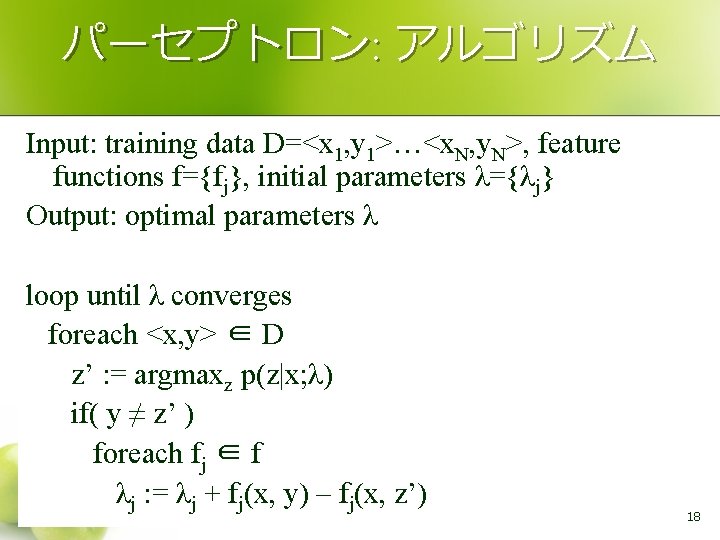
パーセプトロン: アルゴリズム Input: training data D=<x 1, y 1>…<x. N, y. N>, feature functions f={fj}, initial parameters λ={λj} Output: optimal parameters λ loop until λ converges foreach <x, y> ∈ D z’ : = argmaxz p(z|x; λ) if( y ≠ z’ ) foreach fj ∈ f λj : = λj + fj(x, y) – fj(x, z’) 18