
L I To use bar models to calculate
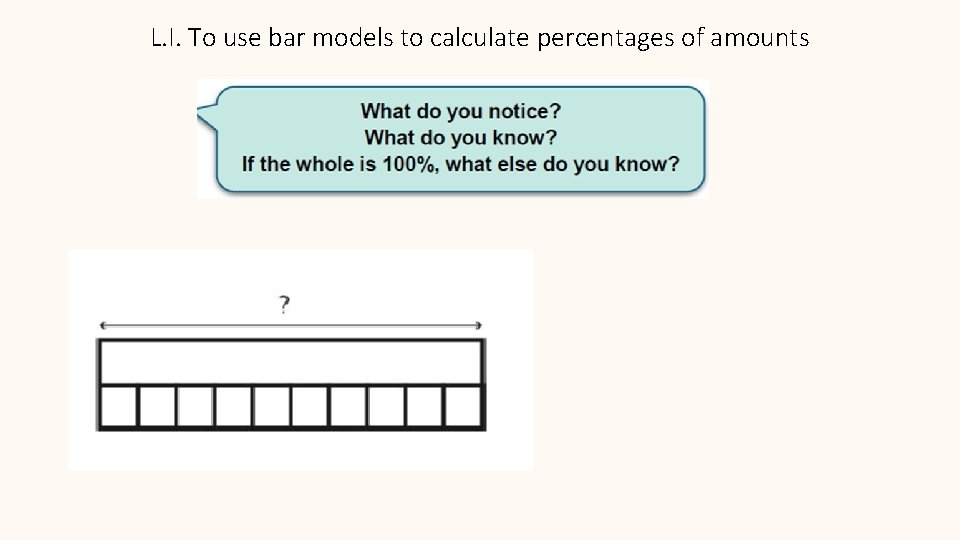
L. I. To use bar models to calculate percentages of amounts
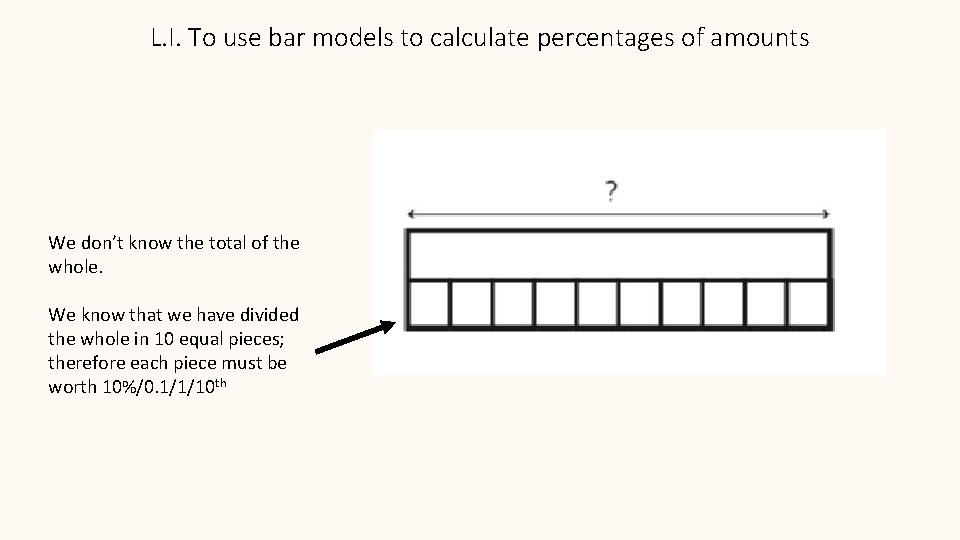
L. I. To use bar models to calculate percentages of amounts We don’t know the total of the whole. We know that we have divided the whole in 10 equal pieces; therefore each piece must be worth 10%/0. 1/1/10 th
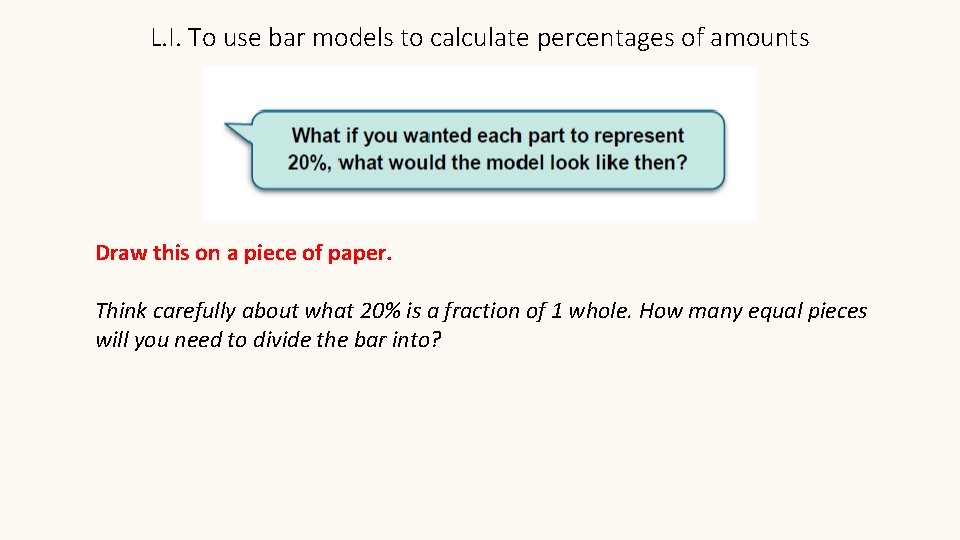
L. I. To use bar models to calculate percentages of amounts Draw this on a piece of paper. Think carefully about what 20% is a fraction of 1 whole. How many equal pieces will you need to divide the bar into?
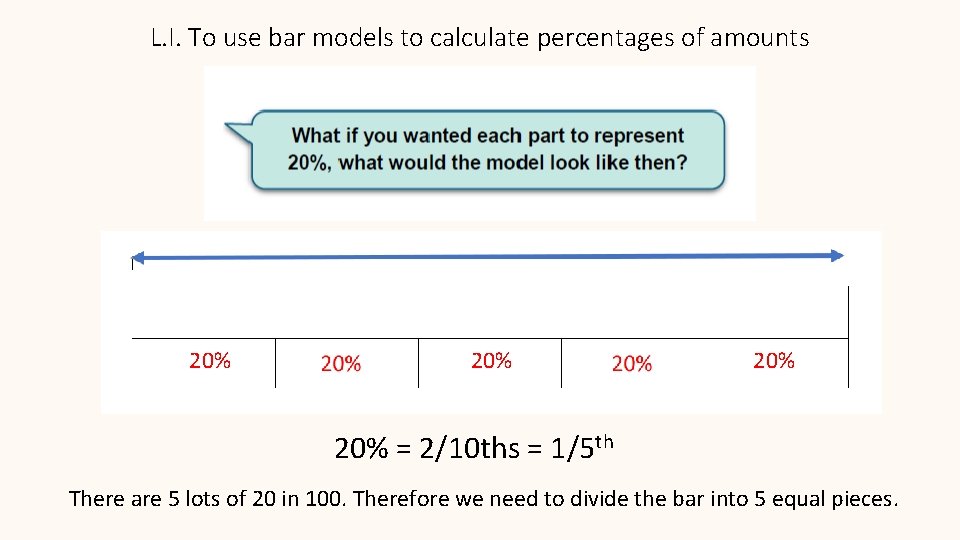
L. I. To use bar models to calculate percentages of amounts 20% 20% = 2/10 ths = 1/5 th There are 5 lots of 20 in 100. Therefore we need to divide the bar into 5 equal pieces.
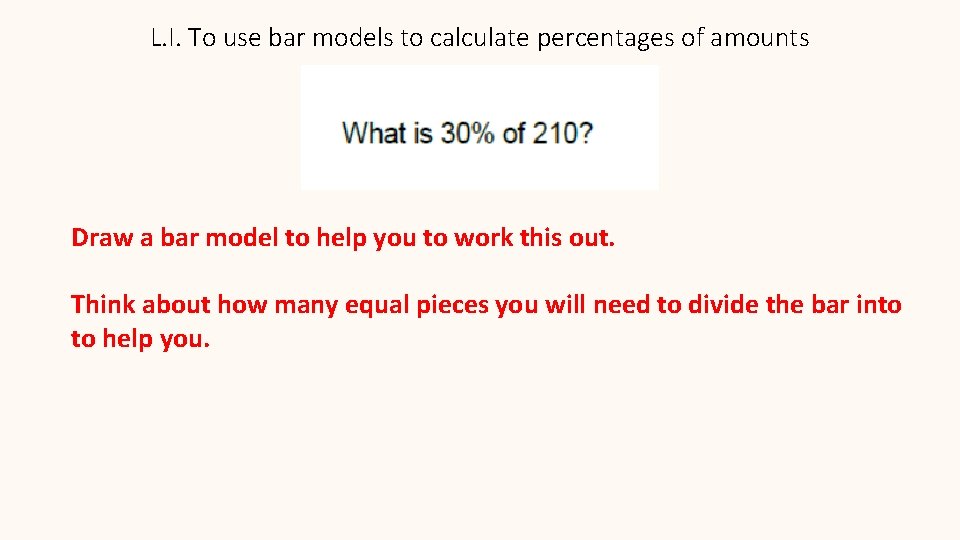
L. I. To use bar models to calculate percentages of amounts Draw a bar model to help you to work this out. Think about how many equal pieces you will need to divide the bar into to help you.
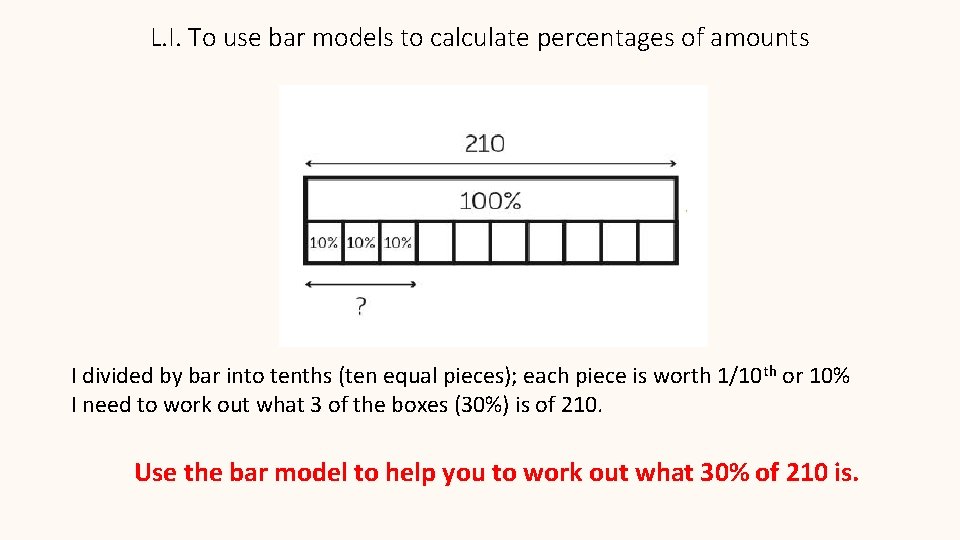
L. I. To use bar models to calculate percentages of amounts I divided by bar into tenths (ten equal pieces); each piece is worth 1/10 th or 10% I need to work out what 3 of the boxes (30%) is of 210. Use the bar model to help you to work out what 30% of 210 is.
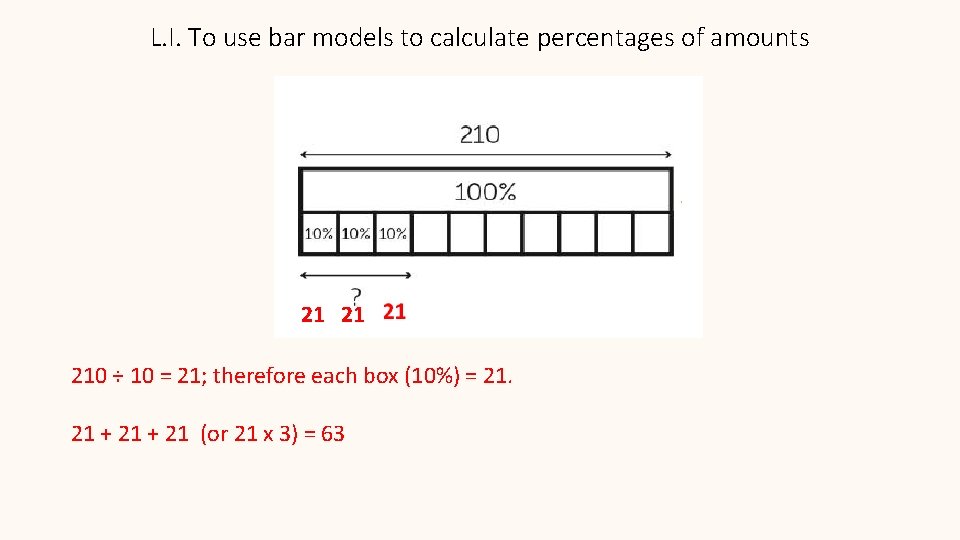
L. I. To use bar models to calculate percentages of amounts 21 21 210 ÷ 10 = 21; therefore each box (10%) = 21. 21 + 21 (or 21 x 3) = 63
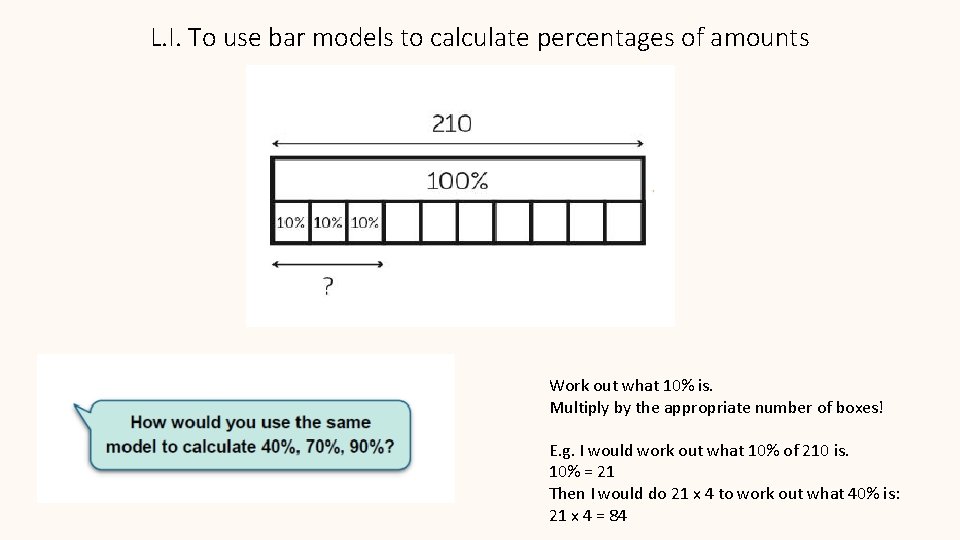
L. I. To use bar models to calculate percentages of amounts Work out what 10% is. Multiply by the appropriate number of boxes! E. g. I would work out what 10% of 210 is. 10% = 21 Then I would do 21 x 4 to work out what 40% is: 21 x 4 = 84

L. I. To use bar models to calculate percentages of amounts Complete this sheet (it can be downloaded from the Year 5 blog or you can draw the bar models on a piece of paper).
L. I. To use bar models to calculate percentages of amounts
- Slides: 10