
L 3 Titrations Learning Objectives Required Practical 1
L 3: Titrations Learning Objectives: Required Practical 1: 1. Make up a volumetric solution. 2. Carry out a simple acid-base titration. 3. Calculate concentration using titration results.
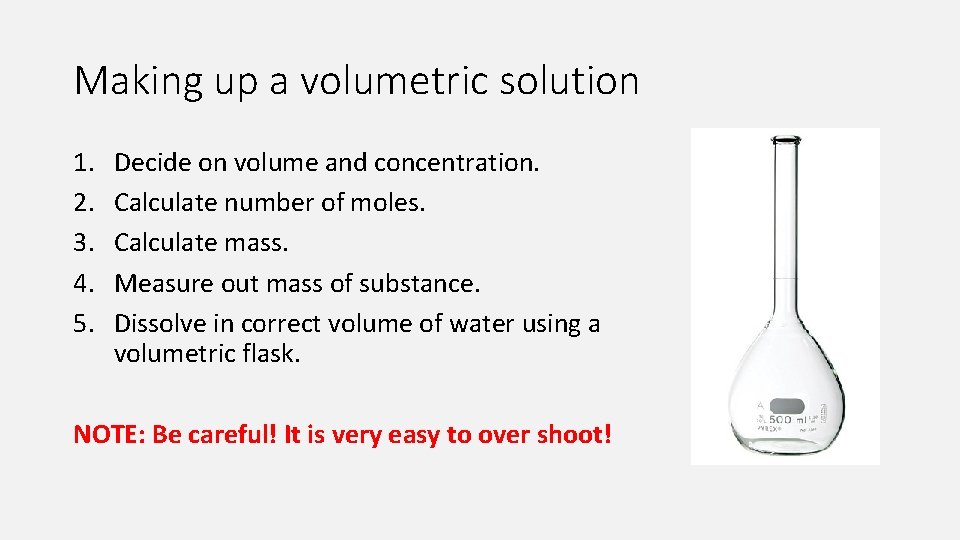
Making up a volumetric solution 1. 2. 3. 4. 5. Decide on volume and concentration. Calculate number of moles. Calculate mass. Measure out mass of substance. Dissolve in correct volume of water using a volumetric flask. NOTE: Be careful! It is very easy to over shoot!
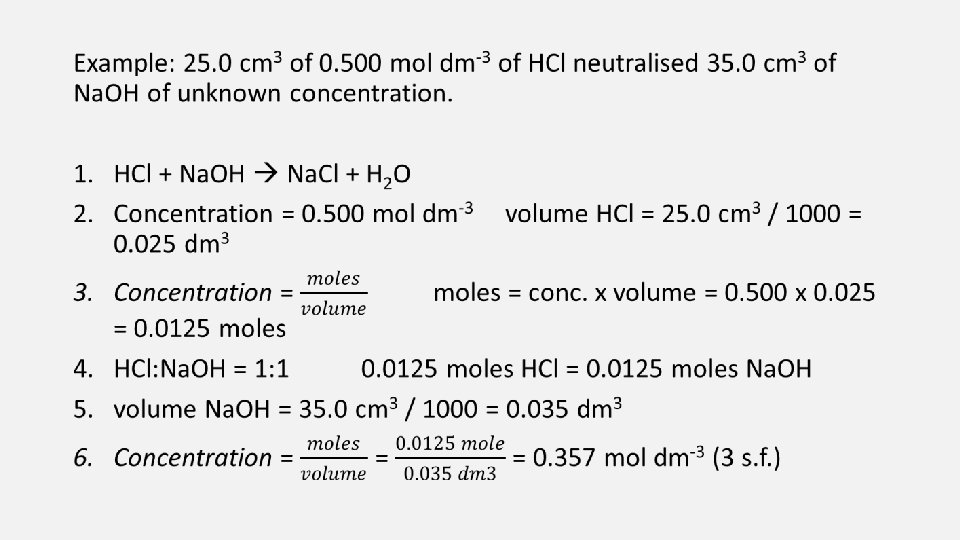
Acid-Base Titration • An unknown concentration or volume of either acid or base can be determined through a titration using a neutralisation reaction with either a base or acid with a known concentration and measure the volume needed to neutralise. Example: HCl + Na. OH Na. Cl + H 2 O
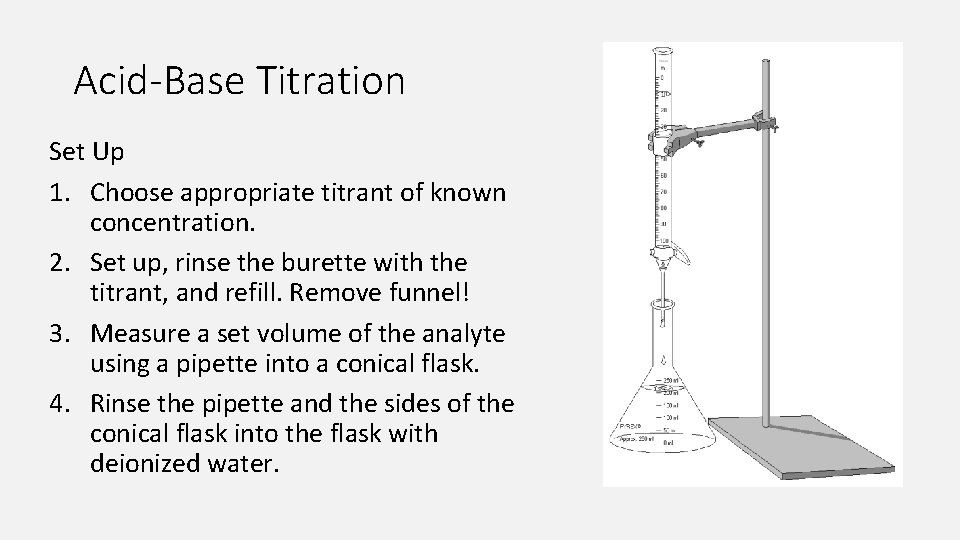
Acid-Base Titration Set Up 1. Choose appropriate titrant of known concentration. 2. Set up, rinse the burette with the titrant, and refill. Remove funnel! 3. Measure a set volume of the analyte using a pipette into a conical flask. 4. Rinse the pipette and the sides of the conical flask into the flask with deionized water.
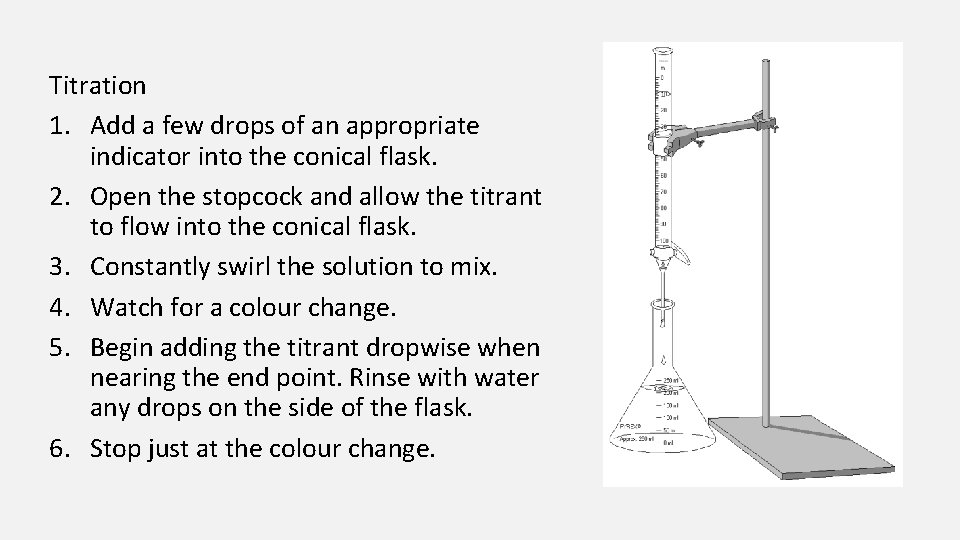
Titration 1. Add a few drops of an appropriate indicator into the conical flask. 2. Open the stopcock and allow the titrant to flow into the conical flask. 3. Constantly swirl the solution to mix. 4. Watch for a colour change. 5. Begin adding the titrant dropwise when nearing the end point. Rinse with water any drops on the side of the flask. 6. Stop just at the colour change.
Recording Results Titre = the volume of titrant needed to neutralise the analyte Concordant results (titrations) = results within 1 cm 3 of each other 1. Record the initial volume of titrant in the burette. Round to the nearest 0. 1 cm 3 2. Record the final volume of titrant in the burette. 3. Subtract the final volume from the initial volume to calculate the titre. 4. Repeat titrations until you have three concordant results 5. Calculate the average titre using only the concordant results. Don’t round your result, only round to correct number of s. f. after your final calculation of concentration.
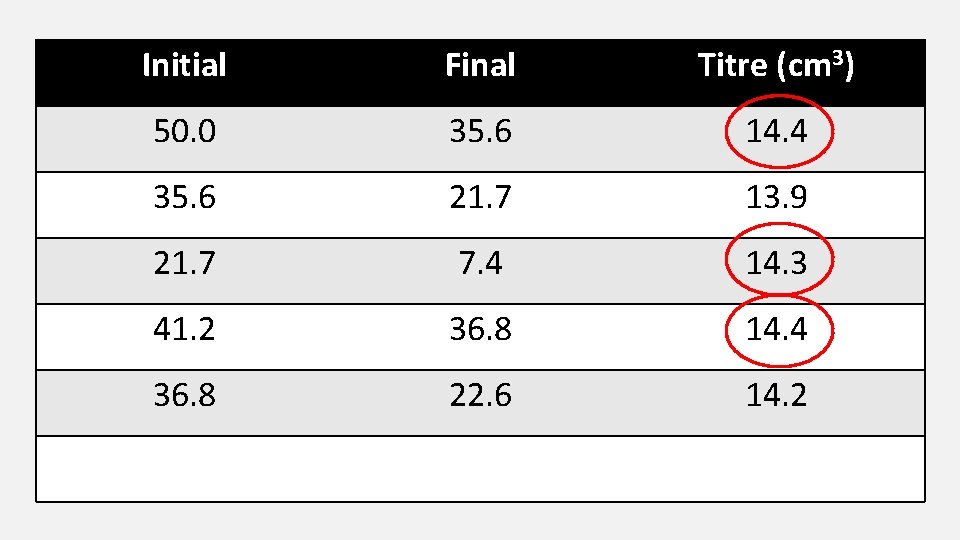
Initial Final Titre (cm 3) 50. 0 35. 6 14. 4 35. 6 21. 7 13. 9 21. 7 7. 4 14. 3 41. 2 36. 8 14. 4 36. 8 22. 6 14. 2 Average = 14. 367
Analysing Results 1. Write a balanced equation for the neutralisation reaction. 2. Average titre is volume of titrant, convert to dm 3. Concentration of titrant is known. 3. Calculate the number of moles of the titrant. 4. Using molar ratios calculate the number of moles of the analyte. 5. Using moles and volume, calculate the concentration of the analyte.
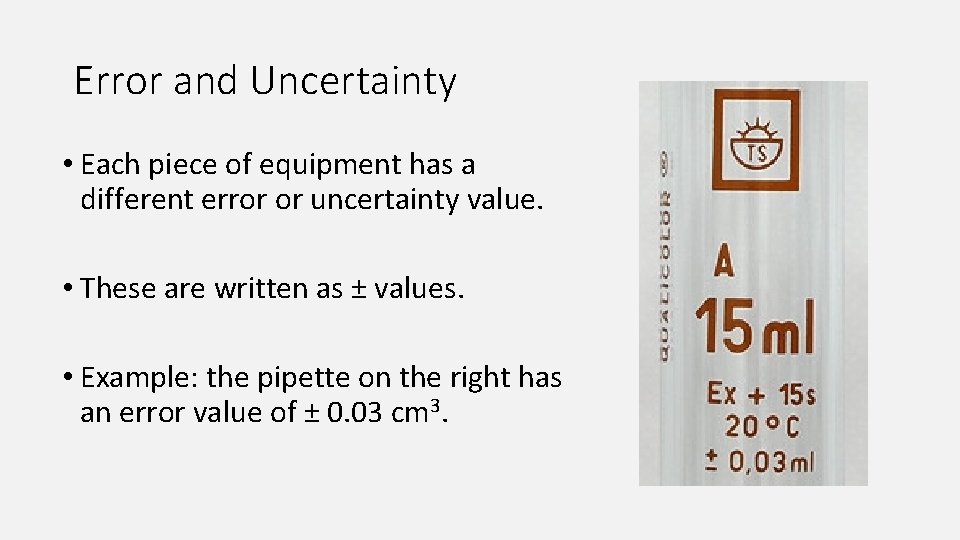
Error and Uncertainty • Each piece of equipment has a different error or uncertainty value. • These are written as ± values. • Example: the pipette on the right has an error value of ± 0. 03 cm 3.
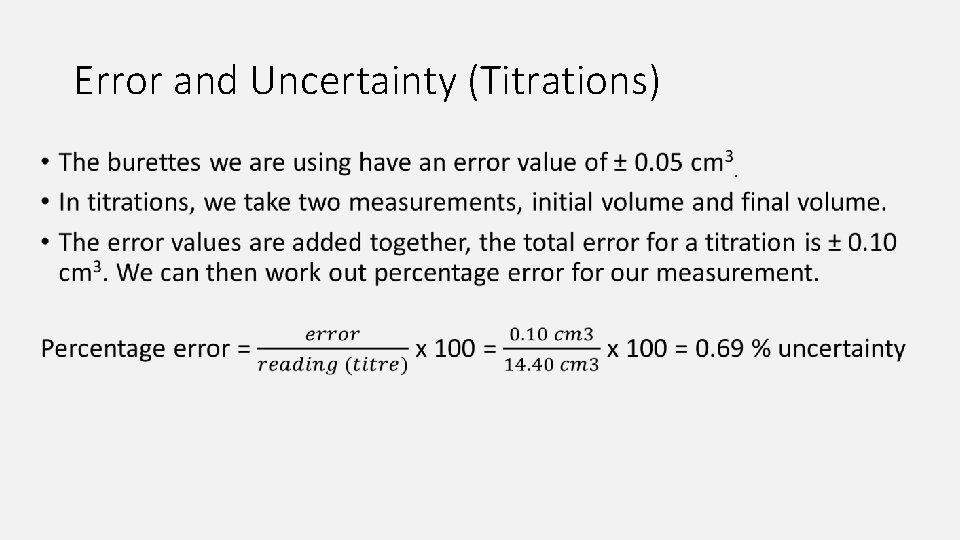
Error and Uncertainty (Titrations) •
Homework: • Revise Section 2. 5 (pg. 49 -53) • Complete Q 2 on pg. 52 and pg. 53, if you haven’t already done so. • Pay close attention to practical skills.
- Slides: 12