
L 3 Defence Against Disease Learning Objectives 1
L 3: Defence Against Disease Learning Objectives: 1. Describe the body’s first line of defence against pathogens. 2. Explain how white blood cells deal with pathogens in different ways. 3. Evaluate the effectiveness of vaccinations in preventing disease.
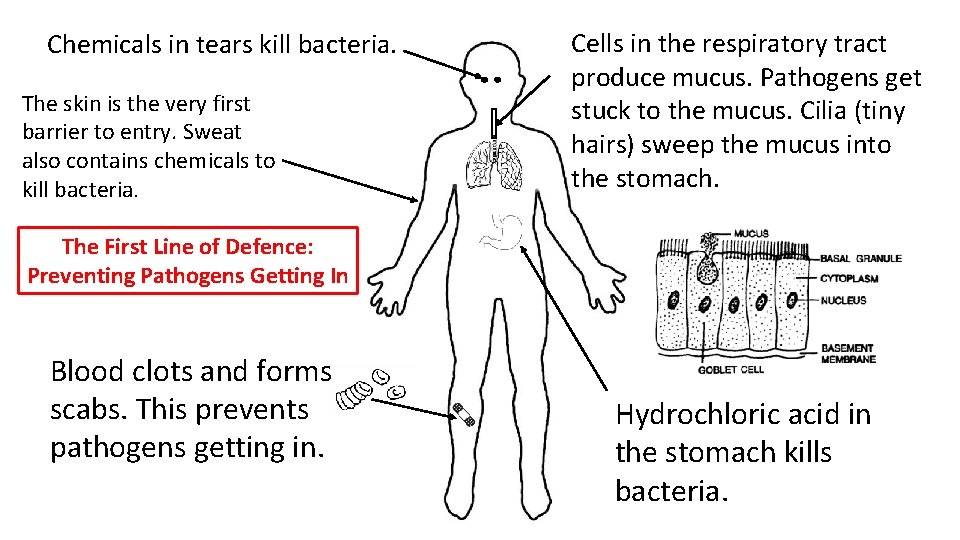
Chemicals in tears kill bacteria. The skin is the very first barrier to entry. Sweat also contains chemicals to kill bacteria. Cells in the respiratory tract produce mucus. Pathogens get stuck to the mucus. Cilia (tiny hairs) sweep the mucus into the stomach. The First Line of Defence: Preventing Pathogens Getting In Blood clots and forms scabs. This prevents pathogens getting in. Hydrochloric acid in the stomach kills bacteria.
Second Line of Defence: The Immune System • White blood cells are a vital part of the immune system as they deal with pathogens that do enter the body. • They do this in three main ways: 1. Ingesting – they “eat” and digest pathogens 2. Producing Antibodies – these tag and disable pathogens 3. Producing Antitoxins – these counteract the toxins produced by pathogens
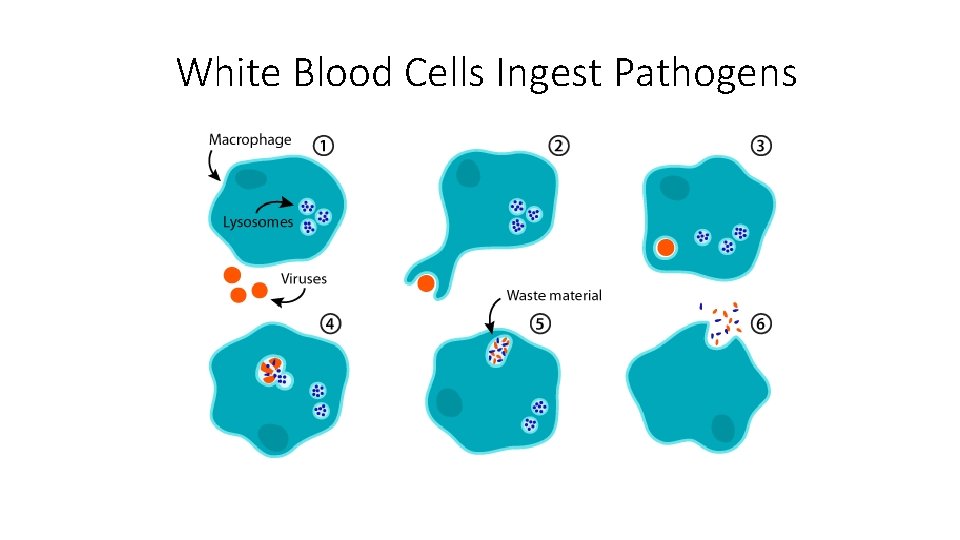
White Blood Cells Ingest Pathogens
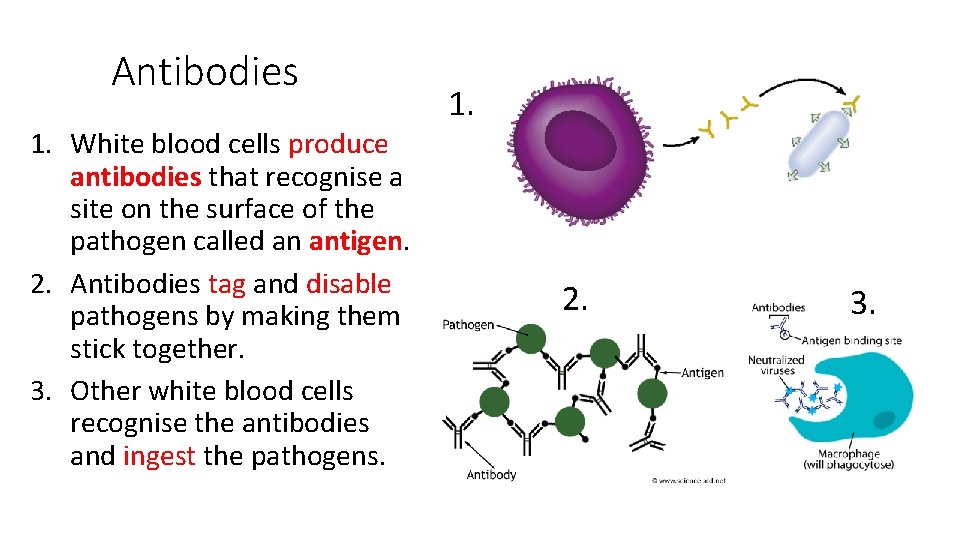
Antibodies 1. White blood cells produce antibodies that recognise a site on the surface of the pathogen called an antigen. 2. Antibodies tag and disable pathogens by making them stick together. 3. Other white blood cells recognise the antibodies and ingest the pathogens. 1. 2. 3.
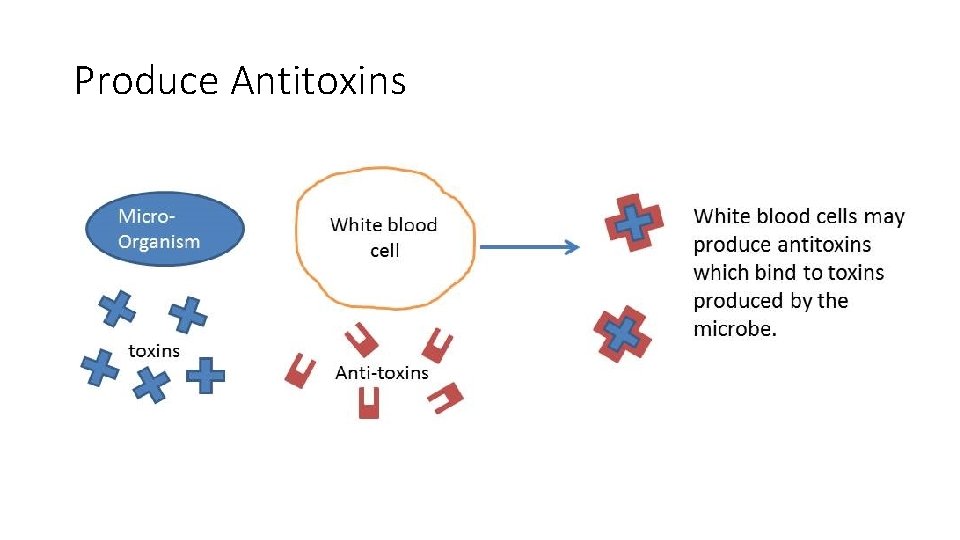
Produce Antitoxins
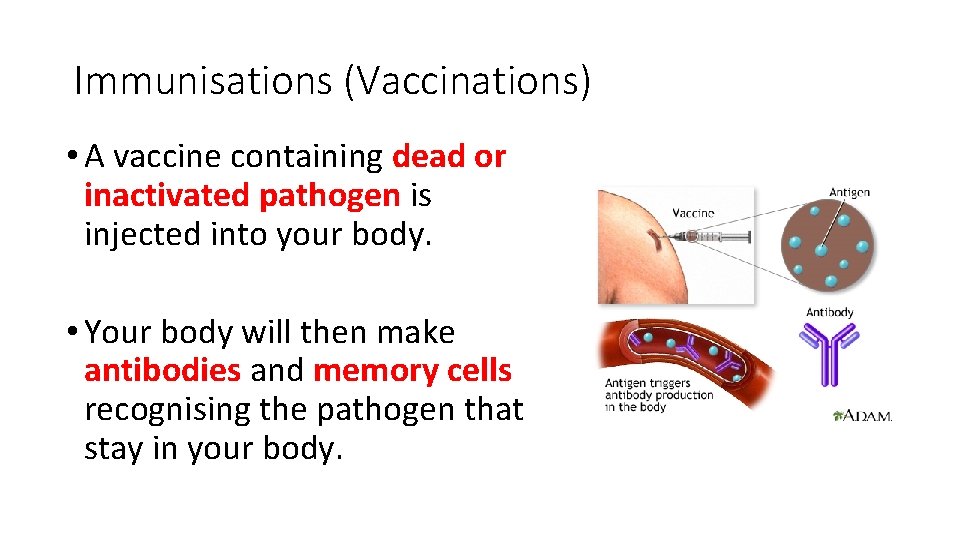
Immunisations (Vaccinations) • A vaccine containing dead or inactivated pathogen is injected into your body. • Your body will then make antibodies and memory cells recognising the pathogen that stay in your body.
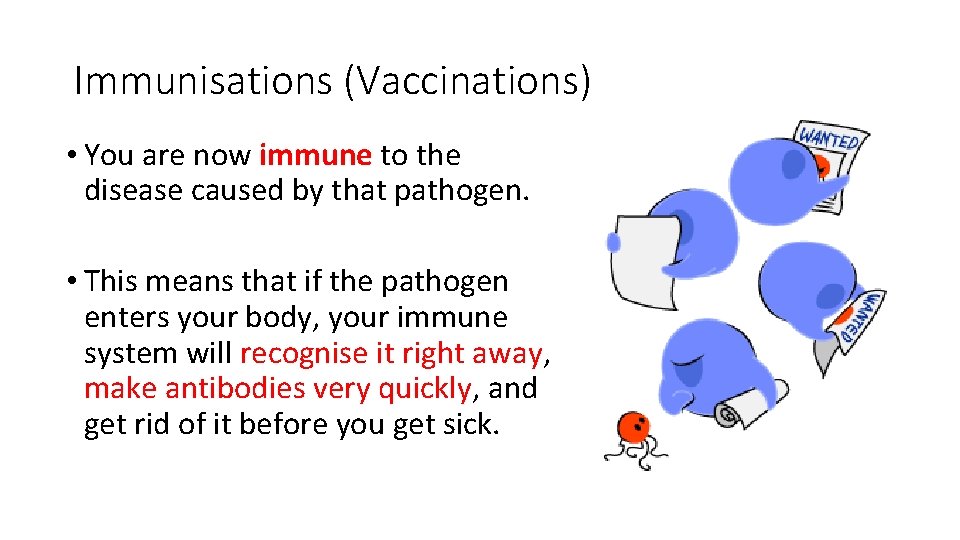
Immunisations (Vaccinations) • You are now immune to the disease caused by that pathogen. • This means that if the pathogen enters your body, your immune system will recognise it right away, make antibodies very quickly, and get rid of it before you get sick.
- Slides: 8