
L 20 Tornadoes cyclostrophic balance Ahrens Chapter 78

L 20 Tornadoes: cyclostrophic balance Ahrens Chapter 7/8: Precipitation Section on Hail Chapter 14/15: Lightning & Thunder
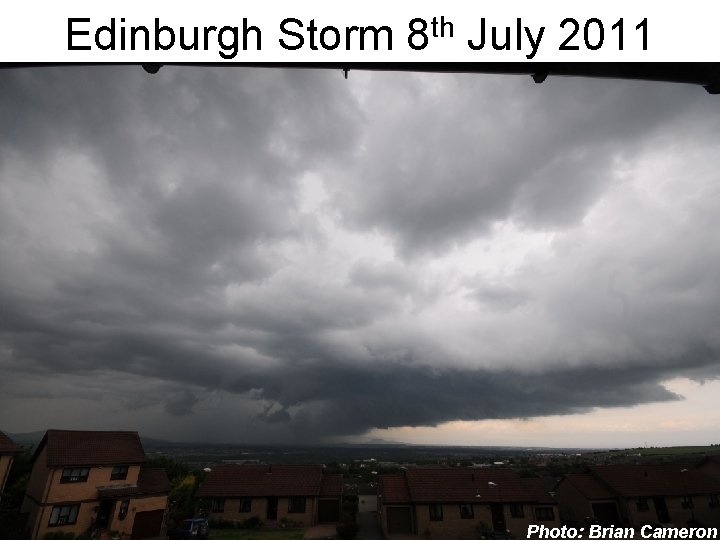
Edinburgh Storm 8 th July 2011 Photo: Brian Cameron
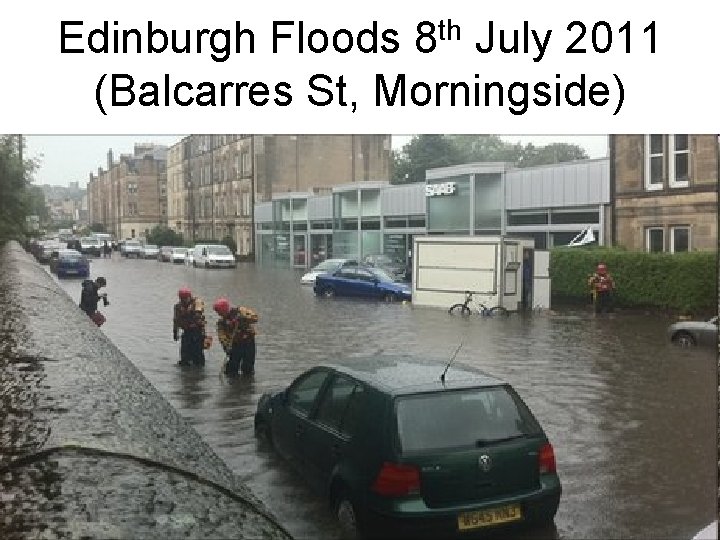
Edinburgh Floods 8 th July 2011 (Balcarres St, Morningside)
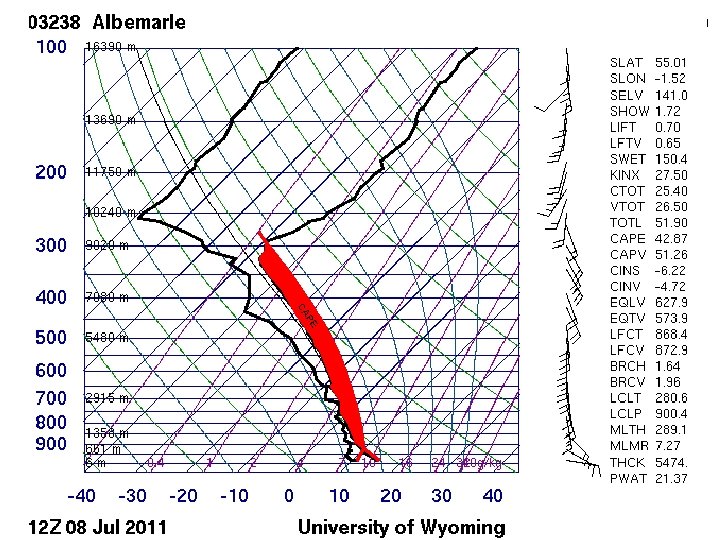
PE CA
Royal Meteorological Society Meetings Tuesday 8 th November, 5. 30 pm Institute of Geography, Drummond Street “A New Flood Warning System for Scotland” Joint presentation by Met Office/SEPA Everyone welcome (free tea+biscuits from 5 pm)
Supercell thunderstorms • Rotating updraught – Rotation causes the storm to be more robust – longer-lived, and therefore more dangerous • Forms an area of low pressure at centre of rotation, called a mesolow • Updraught centred on the low pressure • Circulation around the low is in cyclostrophic balance…
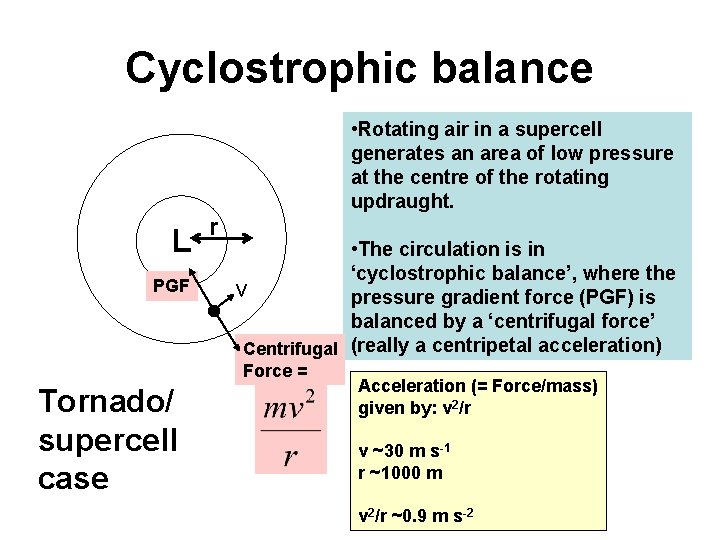
Cyclostrophic balance • Rotating air in a supercell generates an area of low pressure at the centre of the rotating updraught. L PGF r • The circulation is in ‘cyclostrophic balance’, where the v pressure gradient force (PGF) is balanced by a ‘centrifugal force’ Centrifugal (really a centripetal acceleration) Force = Tornado/ supercell case Acceleration (= Force/mass) given by: v 2/r v ~30 m s-1 r ~1000 m v 2/r ~0. 9 m s-2
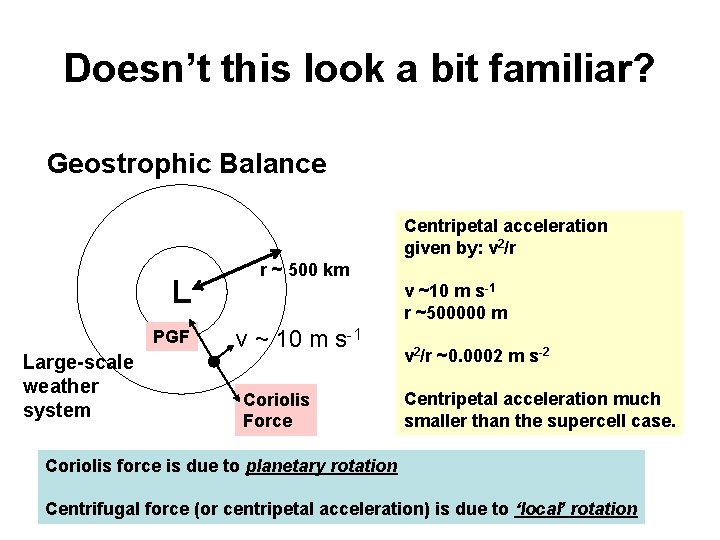
Doesn’t this look a bit familiar? Geostrophic Balance Centripetal acceleration given by: v 2/r L PGF Large-scale weather system r ~ 500 km v ~10 m s-1 r ~500000 m v ~ 10 m s-1 Coriolis Force v 2/r ~0. 0002 m s-2 Centripetal acceleration much smaller than the supercell case. Coriolis force is due to planetary rotation Centrifugal force (or centripetal acceleration) is due to ‘local’ rotation
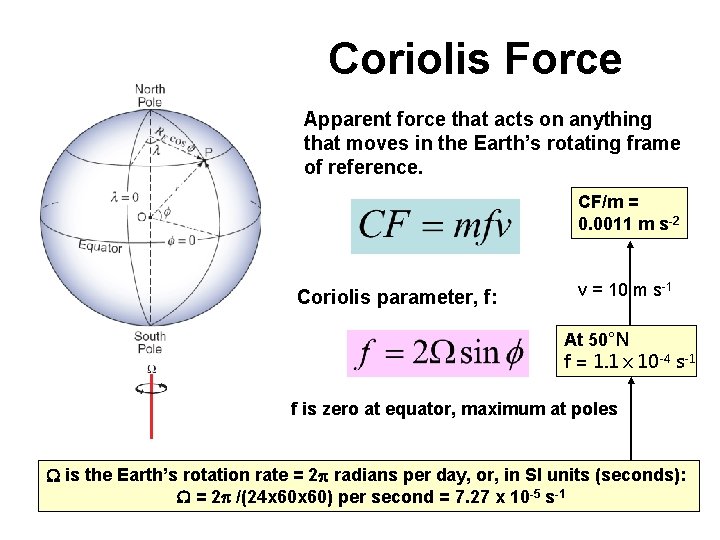
Coriolis Force Apparent force that acts on anything that moves in the Earth’s rotating frame of reference. CF/m = 0. 0011 m s-2 Coriolis parameter, f: v = 10 m s-1 At 50°N f = 1. 1 x 10 -4 s-1 f is zero at equator, maximum at poles is the Earth’s rotation rate = 2 radians per day, or, in SI units (seconds): = 2 /(24 x 60) per second = 7. 27 x 10 -5 s-1
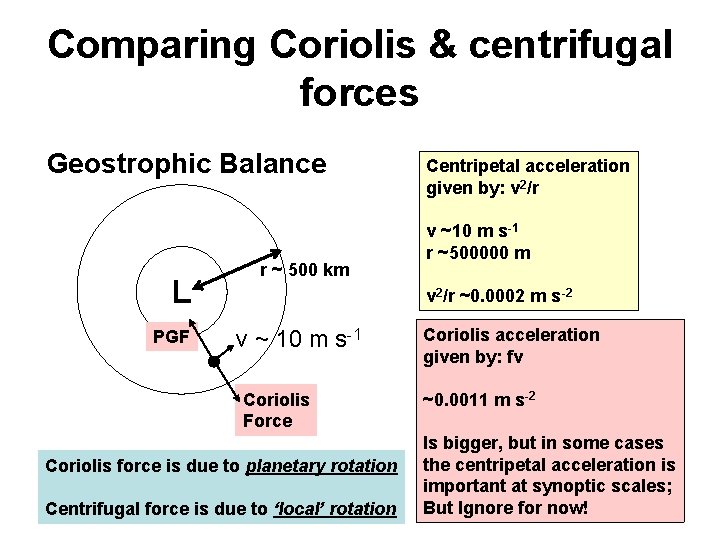
Comparing Coriolis & centrifugal forces Geostrophic Balance L PGF r ~ 500 km Centripetal acceleration given by: v 2/r v ~10 m s-1 r ~500000 m v 2/r ~0. 0002 m s-2 v ~ 10 m s-1 Coriolis Force Coriolis force is due to planetary rotation Centrifugal force is due to ‘local’ rotation Coriolis acceleration given by: fv ~0. 0011 m s-2 Is bigger, but in some cases the centripetal acceleration is important at synoptic scales; But Ignore for now!
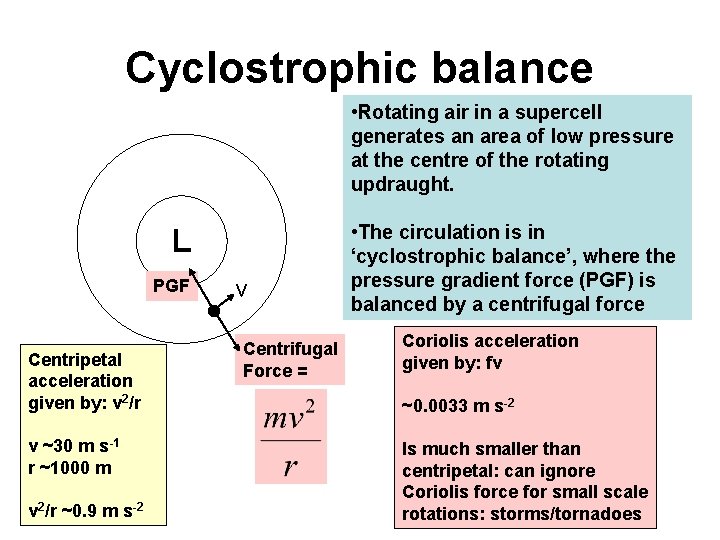
Cyclostrophic balance • Rotating air in a supercell generates an area of low pressure at the centre of the rotating updraught. L PGF Centripetal acceleration given by: v 2/r v ~30 m s-1 r ~1000 m v 2/r ~0. 9 m s-2 v Centrifugal Force = • The circulation is in ‘cyclostrophic balance’, where the pressure gradient force (PGF) is balanced by a centrifugal force Coriolis acceleration given by: fv ~0. 0033 m s-2 Is much smaller than centripetal: can ignore Coriolis force for small scale rotations: storms/tornadoes

Summary of forces for rotating systems • Supercell storms/tornadoes (~1 km across): – Cyclostrophic balance: – PGF vs. centrifugal force (ignore Coriolis) • Synoptic weather systems (~1000 km): – Geostrophic balance: – PGF vs Coriolis Force (ignore centrifugal) • Scale is all-important!

Back to Supercell storms • Low pressure in rotating updraught can be so low that is causes saturation and forms a ‘funnel’ cloud • (Drop in pressure is equivalent to ascent)
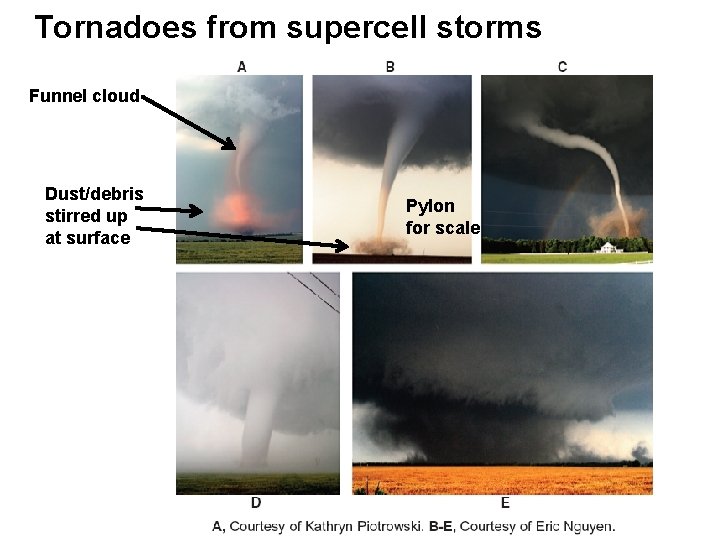
Tornadoes from supercell storms Funnel cloud Dust/debris stirred up at surface Pylon for scale
Supercells & Tornadoes in the UK • Generally much less severe than a typical US supercell/tornado, nevertheless… • The UK experiences around 40 tornadoes a year – they generally do not cause damage, or are not even noticed • A couple of recent cases: – 21 st March 2004 – S. Midlands – 28 th July 2005 – Lincolnshire – Data & images from www. torro. org. uk
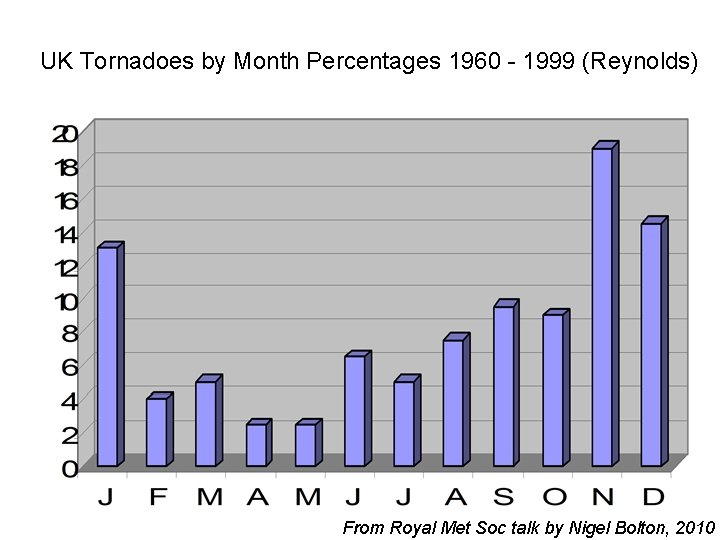
UK Tornadoes by Month Percentages 1960 - 1999 (Reynolds) From Royal Met Soc talk by Nigel Bolton, 2010
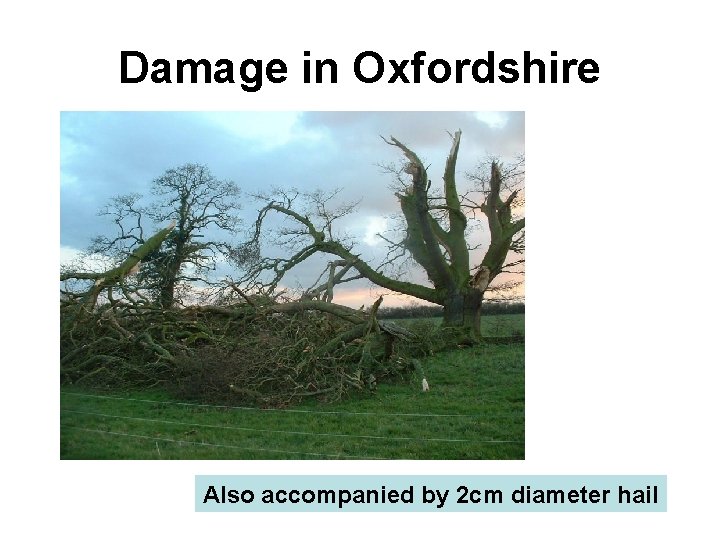
Damage in Oxfordshire Also accompanied by 2 cm diameter hail
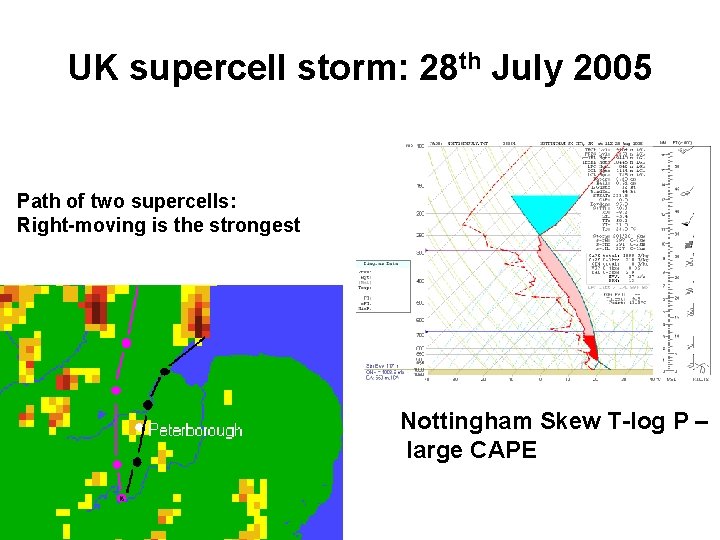
UK supercell storm: 28 th July 2005 Path of two supercells: Right-moving is the strongest Nottingham Skew T-log P – large CAPE
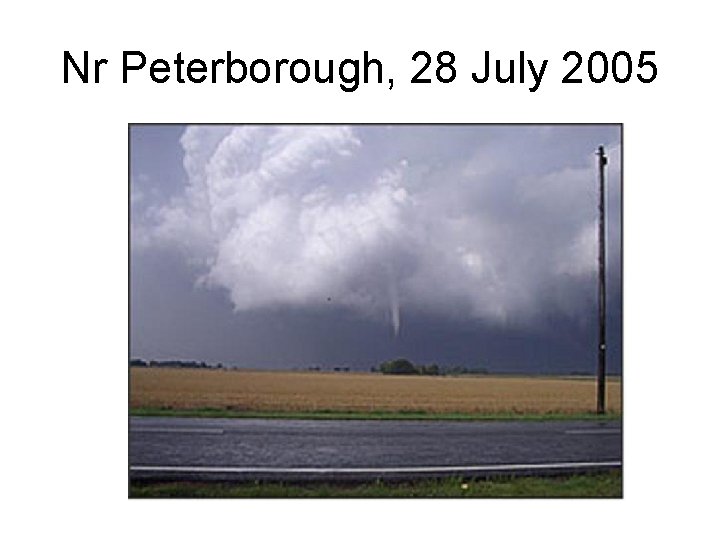
Nr Peterborough, 28 July 2005
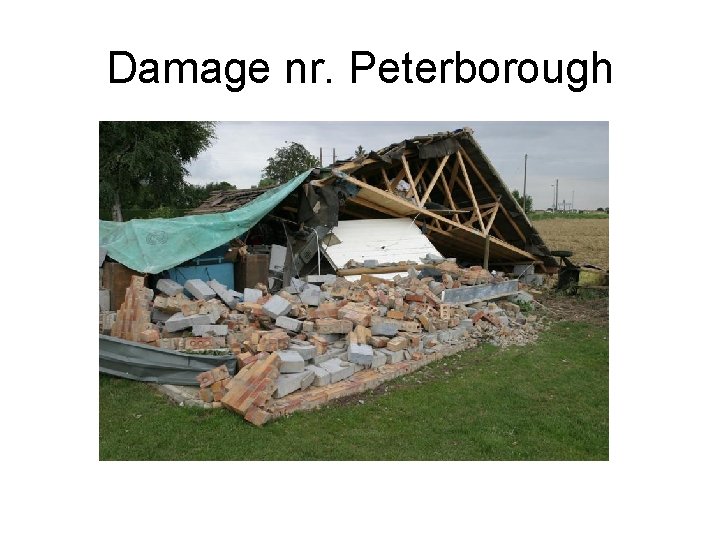
Damage nr. Peterborough
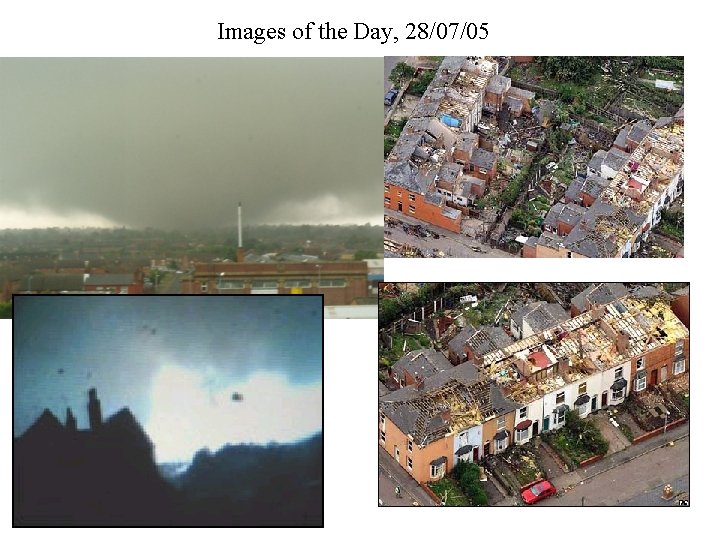
Images of the Day, 28/07/05
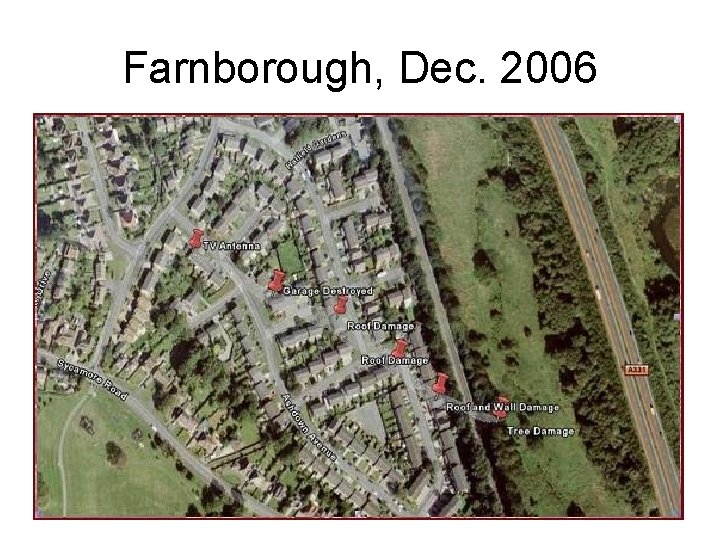
Farnborough, Dec. 2006
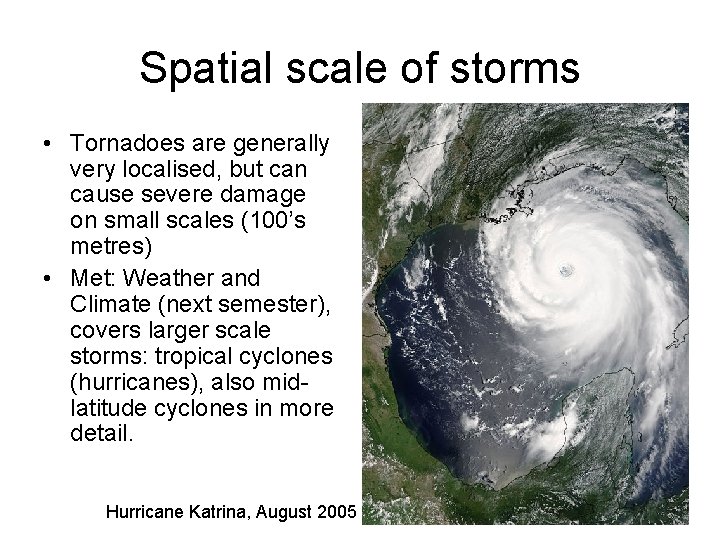
Spatial scale of storms • Tornadoes are generally very localised, but can cause severe damage on small scales (100’s metres) • Met: Weather and Climate (next semester), covers larger scale storms: tropical cyclones (hurricanes), also midlatitude cyclones in more detail. Hurricane Katrina, August 2005
Summary: Tornadoes • Small scales (~1 km across) • Flow close to cyclostrophic balance: – – PGF in balance with a centrifugal force strictly: PGF creates a centripetal acceleration Ignore Coriolis force at these small scales cf. Geostrophic balance in synoptic weather systems • Tornadoes are an important hazard in the UK (as well as other parts of the world): they can cause very localised severe damage

Hail formation • Starts with small ice crystal surrounded by abundant supercooled droplets – within a cloud with strong updraughts • Growth by riming • Once initial crystal shape is lost: graupel
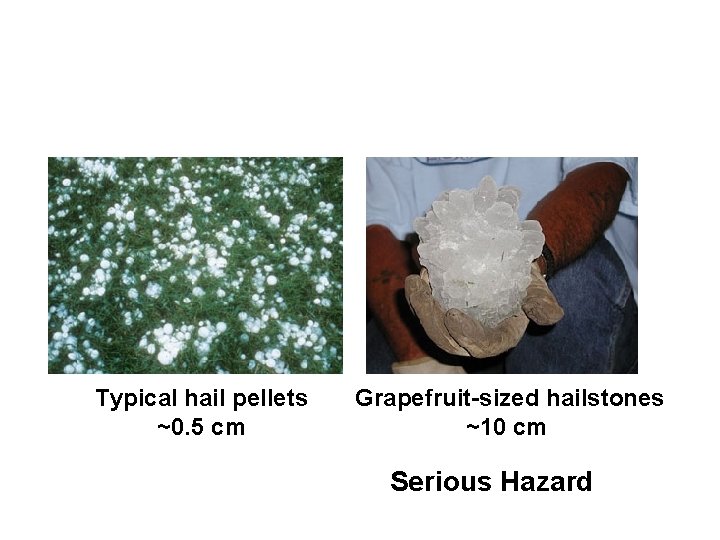
Typical hail pellets ~0. 5 cm Grapefruit-sized hailstones ~10 cm Serious Hazard
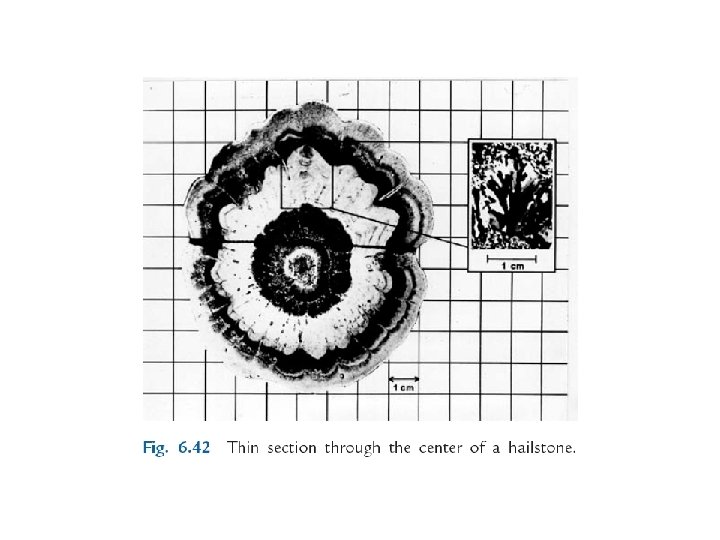
Hailstone structure • Hail can grow quite rapidly (5 -10 minutes) • As it grows, requires larger and larger updraught velocities to support it • One path is approximately horizontally across the cloud, growing as it traverses the updraught, then plummeting as it enters the downdraught • Alternating light/dark layers due to different growth stages – dark layers have bubbles trapped; ‘wet’ growth vs ice (colder) growth
Cloud electrification • Need a cold cloud – i. e. contains ice • Radar data indicates graupel or hailstones • As hail falls through cloud, bumping into other cloud particles, it tends to become negatively charged • Exact mechanism is not clear, but falling hail tends to make the lower cloud negatively charged, and leaves the upper part of the cloud positively charged…
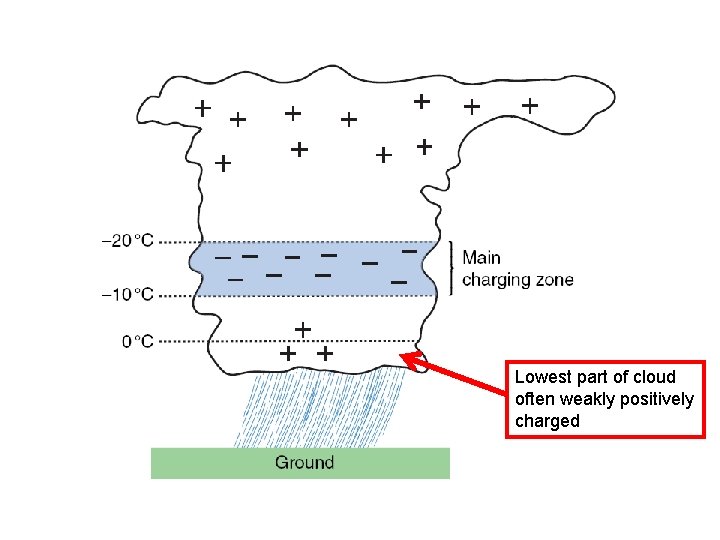
Lowest part of cloud often weakly positively charged
Lightning discharge • • Air has a low conductivity, but it can only cope with a gradient in charge (an electric field) up to ~106 volts per metre – beyond that it discharges: Lightning. 3 types of lightning: – 1 a – 1 b – 2 Within cloud Produce cloud flashes Cloud to air Cloud to ground – most energetic }
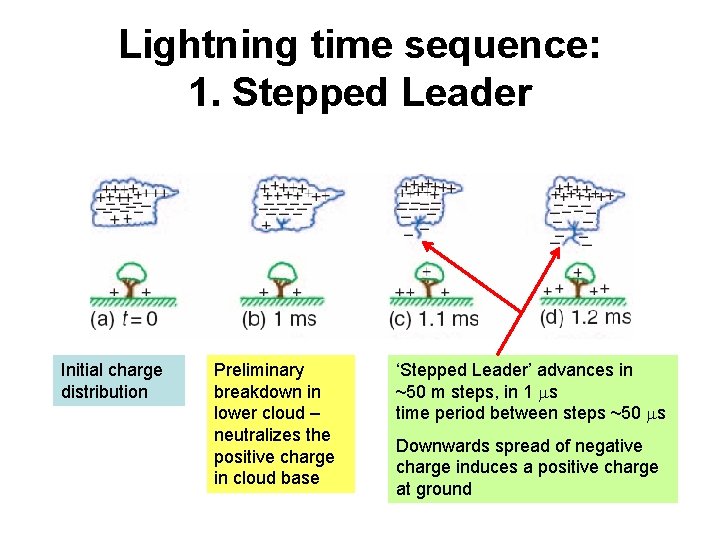
Lightning time sequence: 1. Stepped Leader Initial charge distribution Preliminary breakdown in lower cloud – neutralizes the positive charge in cloud base ‘Stepped Leader’ advances in ~50 m steps, in 1 s time period between steps ~50 s Downwards spread of negative charge induces a positive charge at ground
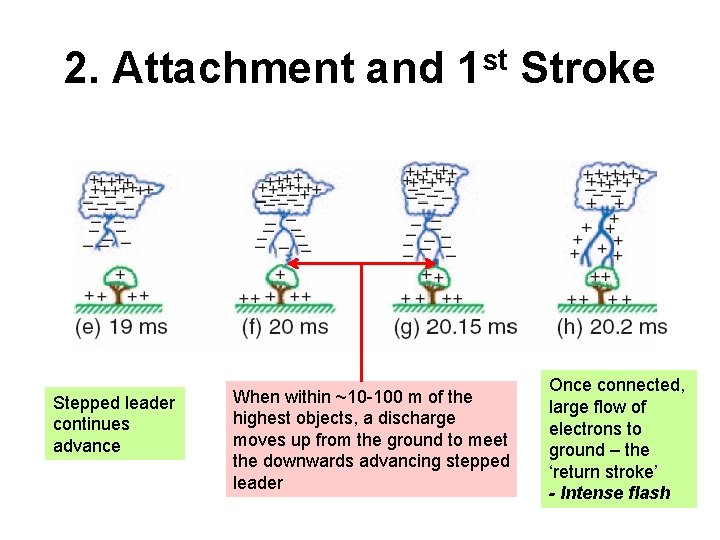
2. Attachment and 1 st Stroke Stepped leader continues advance When within ~10 -100 m of the highest objects, a discharge moves up from the ground to meet the downwards advancing stepped leader Once connected, large flow of electrons to ground – the ‘return stroke’ - Intense flash
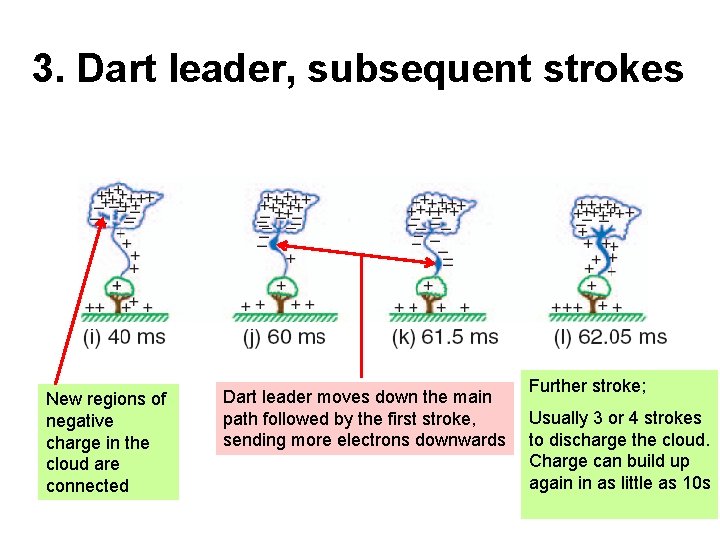
3. Dart leader, subsequent strokes New regions of negative charge in the cloud are connected Dart leader moves down the main path followed by the first stroke, sending more electrons downwards Further stroke; Usually 3 or 4 strokes to discharge the cloud. Charge can build up again in as little as 10 s
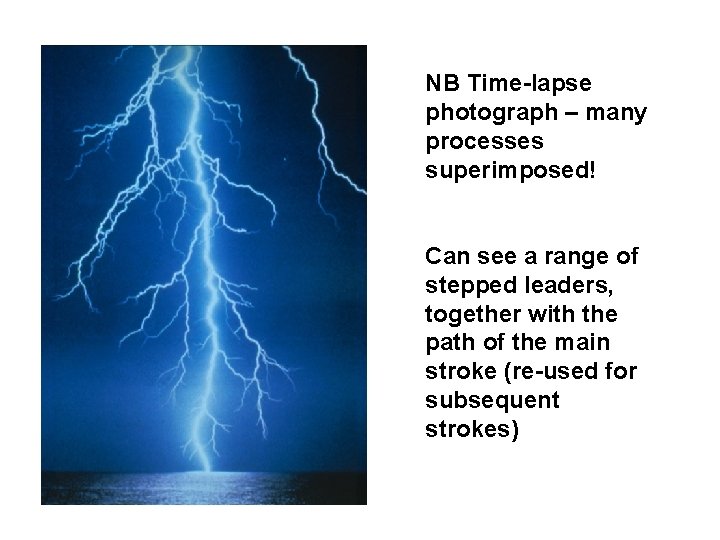
NB Time-lapse photograph – many processes superimposed! Can see a range of stepped leaders, together with the path of the main stroke (re-used for subsequent strokes)
Thunder • Return stroke raises air temperature in the channel it passes through to >30, 000 K very quickly – air has no time to expand, so pressure rises, and air expands rapidly. • Creates a shock-wave, which then creates a sound-wave a little further away: thunder • Travels at speed of sound: 330 m s-1 (i. e. 1 mile in ~5 seconds) • Stepped leaders also create thunder, but much less than the main stroke • Sound waves tend to be refracted upwards, limiting the range over which thunder can be heard to within ~25 km of the source.
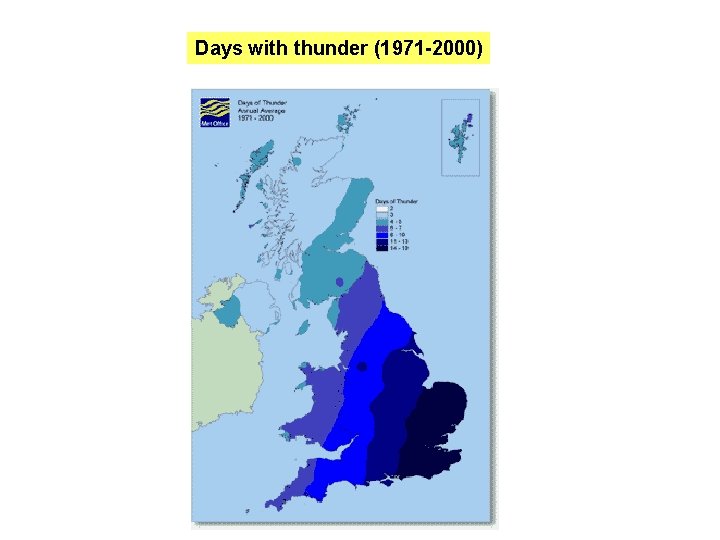
Days with thunder (1971 -2000)

Distribution of lightning
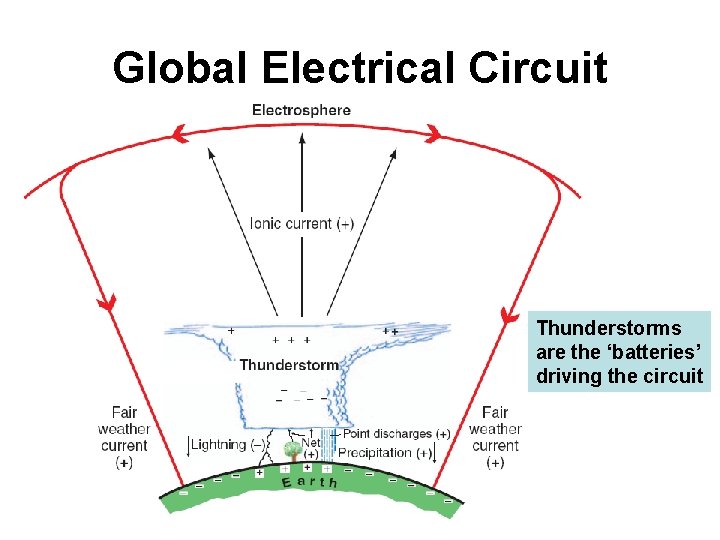
Global Electrical Circuit Thunderstorms are the ‘batteries’ driving the circuit
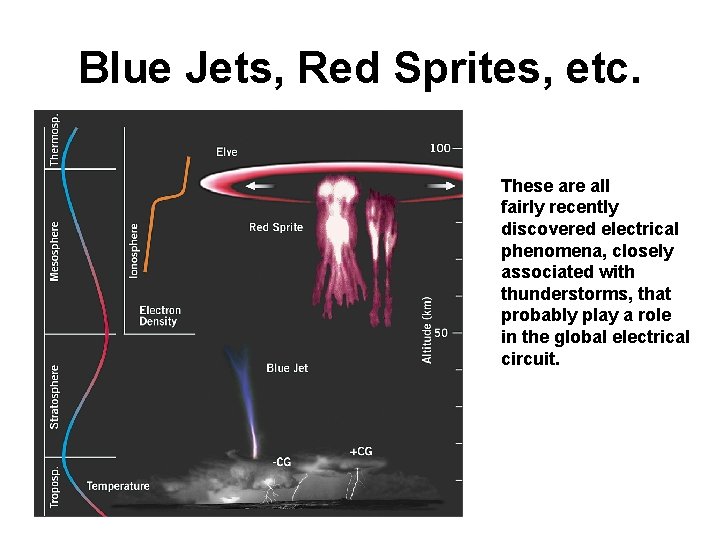
Blue Jets, Red Sprites, etc. These are all fairly recently discovered electrical phenomena, closely associated with thunderstorms, that probably play a role in the global electrical circuit.
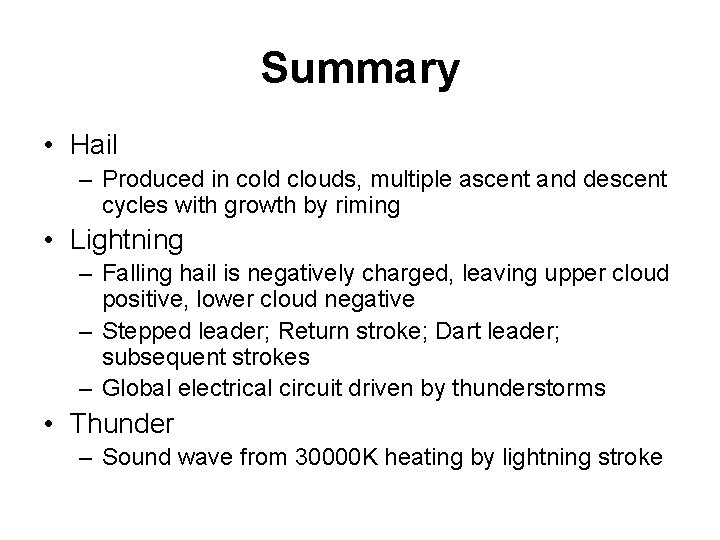
Summary • Hail – Produced in cold clouds, multiple ascent and descent cycles with growth by riming • Lightning – Falling hail is negatively charged, leaving upper cloud positive, lower cloud negative – Stepped leader; Return stroke; Dart leader; subsequent strokes – Global electrical circuit driven by thunderstorms • Thunder – Sound wave from 30000 K heating by lightning stroke
- Slides: 41