
L 19 Thermodynamics 4 n Heat capacity n
![L 19 - Thermodynamics [4] n Heat capacity n Change of phase (ice water](https://slidetodoc.com/presentation_image_h2/d14d4cdd672e3d22f633b8872ed29fdb/image-1.jpg "L 19 - Thermodynamics [4] n Heat capacity n Change of phase (ice water")
- Slides: 19
L 19 - Thermodynamics [4] n Heat capacity n Change of phase (ice water steam) n heat, work, and internal energy n the 1 st law of thermodynamics
How do I boil water? • How much heat does it take to boil water? • Simpler question how much heat is required to raise the temperature of water by so many degrees? • The answer depends on how much water you have and how hot you want to get it • The answer would be different for a different material, say aluminum.
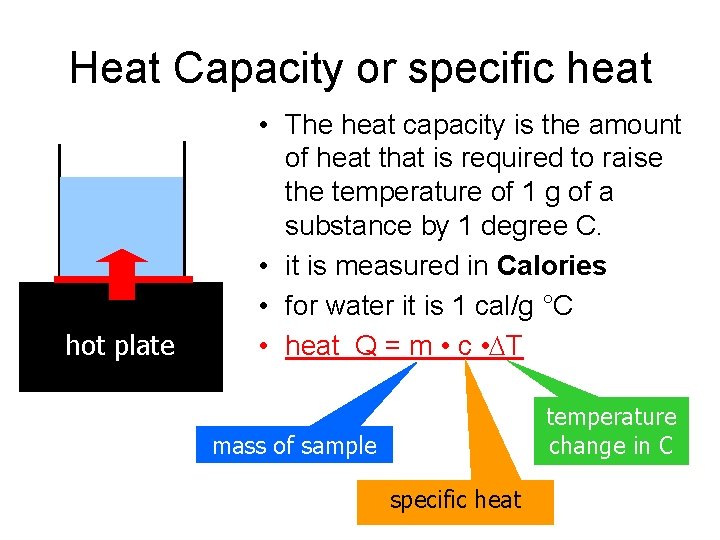
Heat Capacity or specific heat hot plate • The heat capacity is the amount of heat that is required to raise the temperature of 1 g of a substance by 1 degree C. • it is measured in Calories • for water it is 1 cal/g °C • heat Q = m • c • T temperature change in C mass of sample specific heat
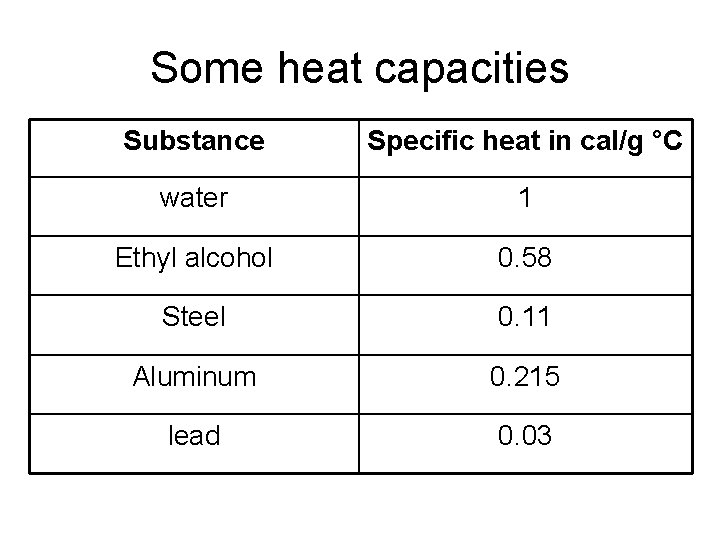
Some heat capacities Substance Specific heat in cal/g °C water 1 Ethyl alcohol 0. 58 Steel 0. 11 Aluminum 0. 215 lead 0. 03
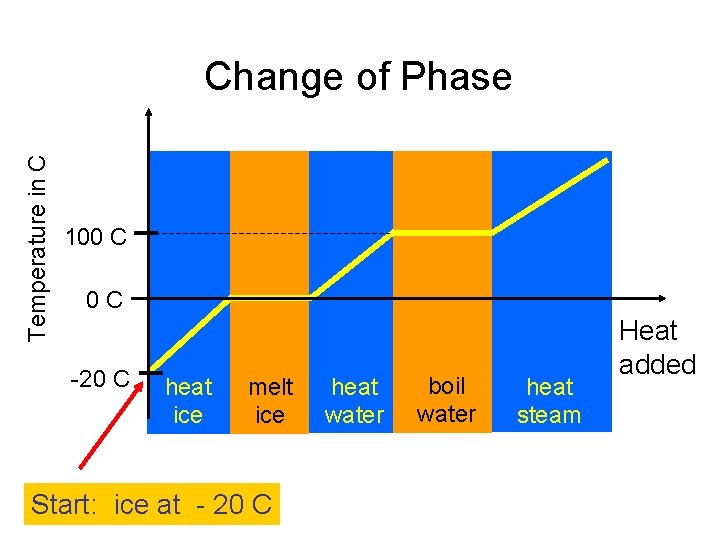
Temperature in C Change of Phase 100 C 0 C -20 C heat ice melt ice Start: ice at - 20 C heat water boil water heat steam Heat added
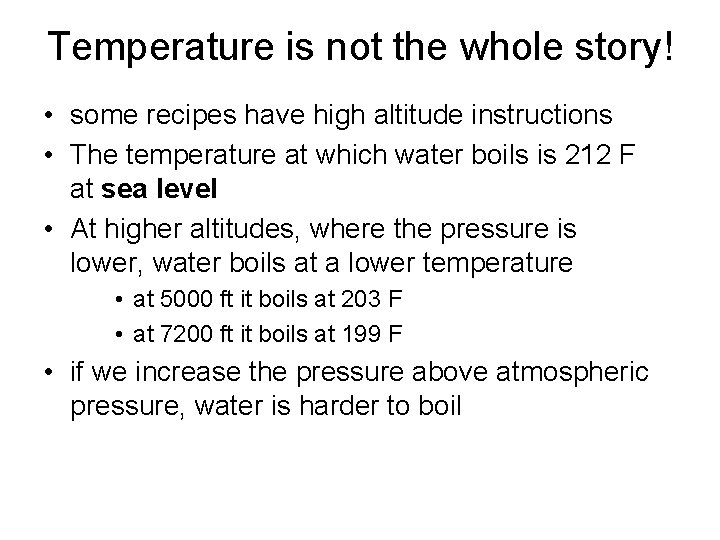
Temperature is not the whole story! • some recipes have high altitude instructions • The temperature at which water boils is 212 F at sea level • At higher altitudes, where the pressure is lower, water boils at a lower temperature • at 5000 ft it boils at 203 F • at 7200 ft it boils at 199 F • if we increase the pressure above atmospheric pressure, water is harder to boil
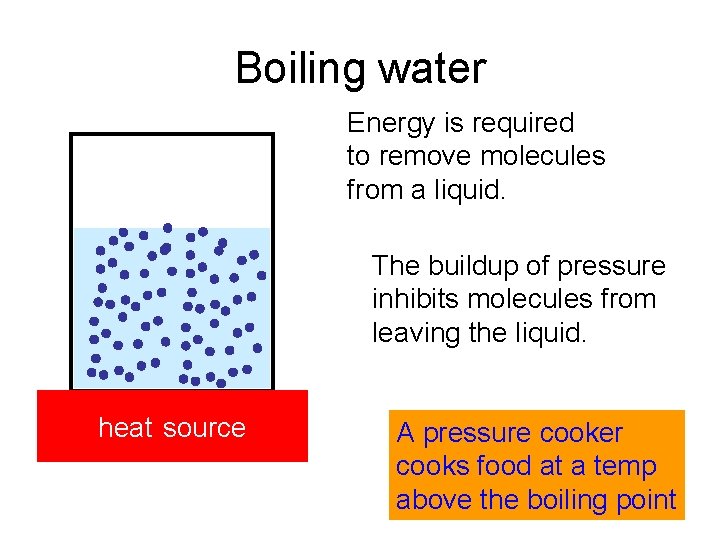
Boiling water Energy is required to remove molecules from a liquid. The buildup of pressure inhibits molecules from leaving the liquid. heat source A pressure cooker cooks food at a temp above the boiling point
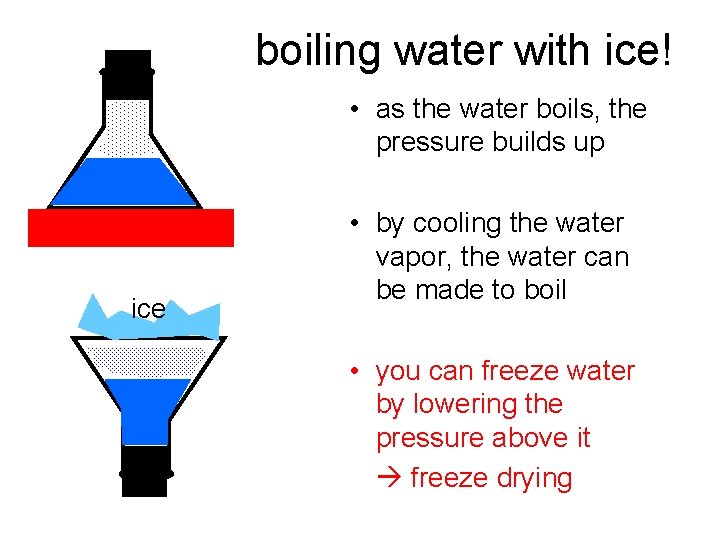
boiling water with ice! • as the water boils, the pressure builds up ice • by cooling the water vapor, the water can be made to boil • you can freeze water by lowering the pressure above it freeze drying
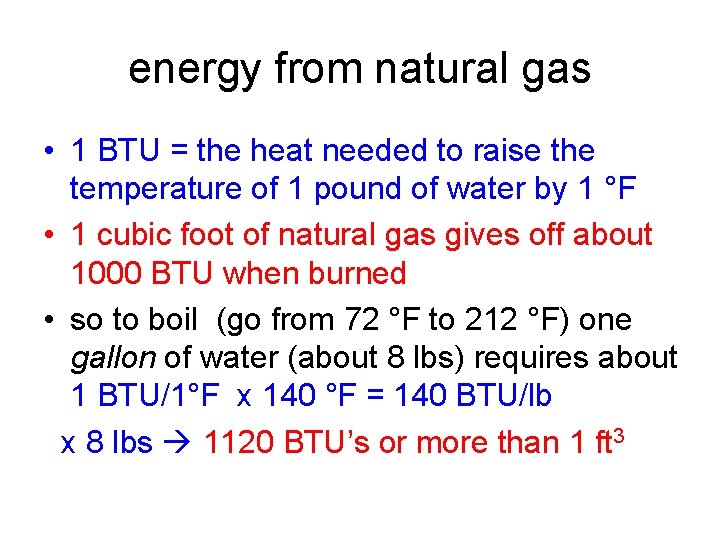
energy from natural gas • 1 BTU = the heat needed to raise the temperature of 1 pound of water by 1 °F • 1 cubic foot of natural gas gives off about 1000 BTU when burned • so to boil (go from 72 °F to 212 °F) one gallon of water (about 8 lbs) requires about 1 BTU/1°F x 140 °F = 140 BTU/lb x 8 lbs 1120 BTU’s or more than 1 ft 3
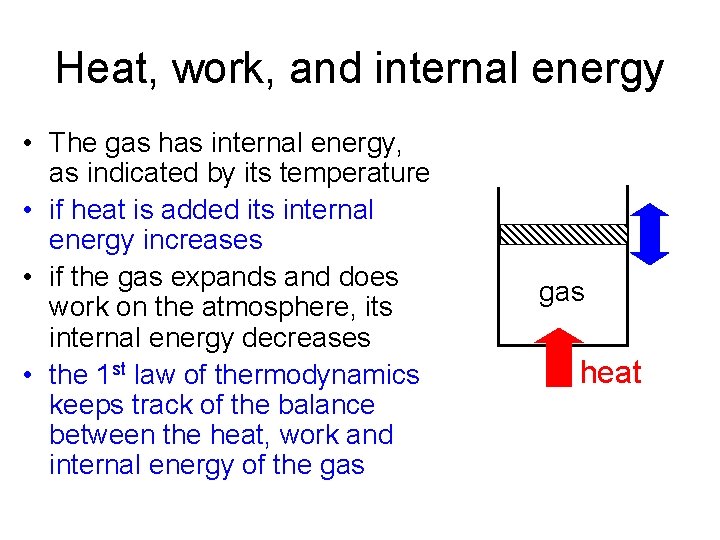
Heat, work, and internal energy • The gas has internal energy, as indicated by its temperature • if heat is added its internal energy increases • if the gas expands and does work on the atmosphere, its internal energy decreases • the 1 st law of thermodynamics keeps track of the balance between the heat, work and internal energy of the gas heat
the first law of thermodynamics • the change in internal energy of the gas = the heat absorbed by the gas minus the work done by the gas • this is a simple energy accounting principle
Analogy to your bank account • the change in your bank account balance = deposits ($ in) - withdrawals ($ out) • the same conservation principle applies to energy transfers 1 st Law of Thermodynamics
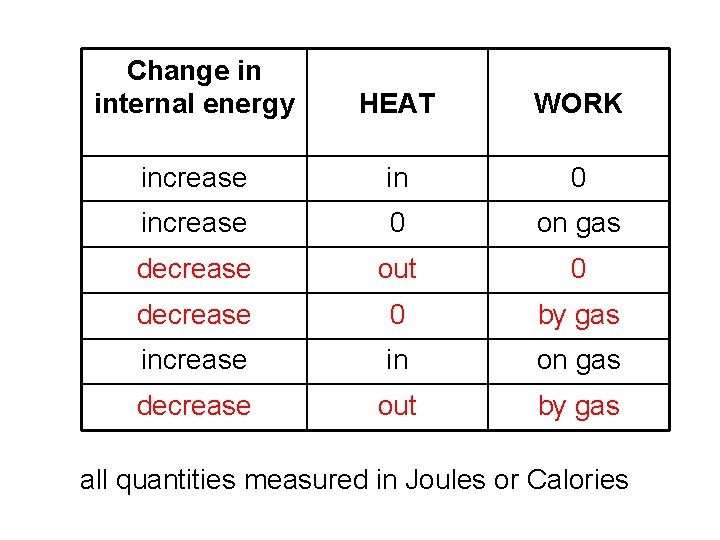
work done by or on a gas • if a gas does work (expansion) its internal energy goes down and so does its temp. • if work is done on a gas (compression) its internal energy goes up and so does its temperature • the internal energy of a gas can be changed by adding or taking away heat or by having the gas do work or doing work on the gas
Change in internal energy HEAT WORK increase in 0 increase 0 on gas decrease out 0 decrease 0 by gas increase in on gas decrease out by gas all quantities measured in Joules or Calories
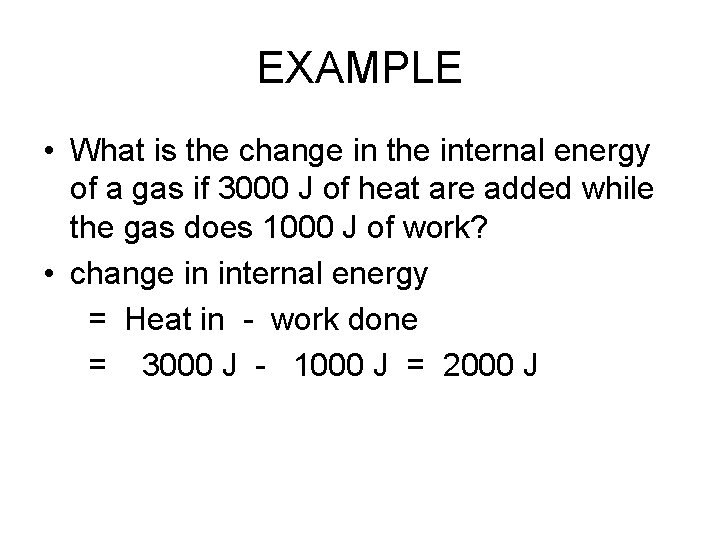
EXAMPLE • What is the change in the internal energy of a gas if 3000 J of heat are added while the gas does 1000 J of work? • change in internal energy = Heat in - work done = 3000 J - 1000 J = 2000 J
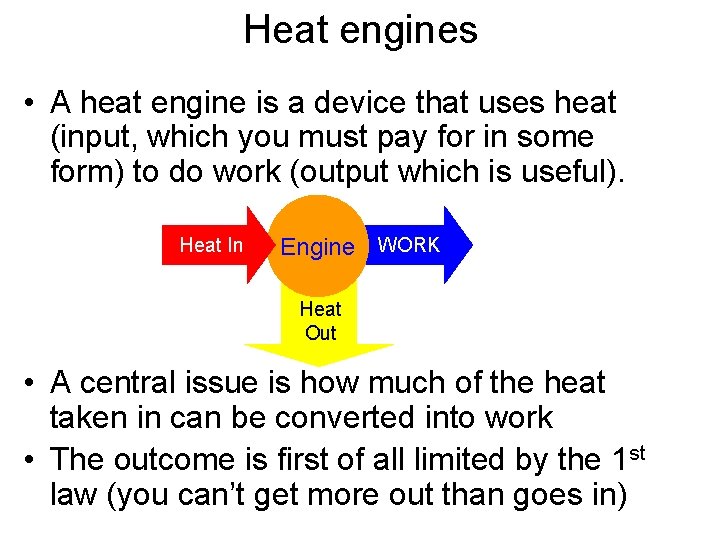
Heat engines • A heat engine is a device that uses heat (input, which you must pay for in some form) to do work (output which is useful). Heat In Engine WORK Heat Out • A central issue is how much of the heat taken in can be converted into work • The outcome is first of all limited by the 1 st law (you can’t get more out than goes in)
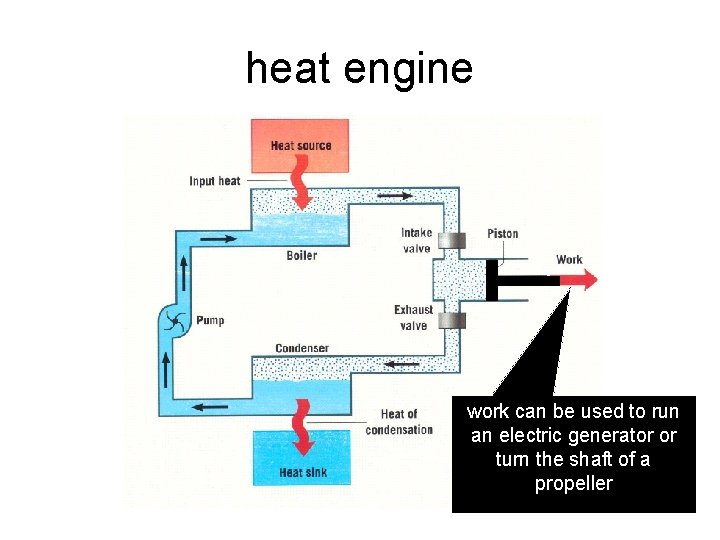
heat engine work can be used to run an electric generator or turn the shaft of a propeller
Second law of thermodynamics • It is impossible to have a heat engine that is 100 % efficient • Not all of the heat taken in by the engine can be converted to work • HEAT is random energy and work is ordered energy
The difference between heat flow and temperature • You are at a campsite and you wake up one cold morning before dawn, stumble out of your tent in search of the outhouse. • You enter the outhouse in which there are two facilities (toilets), one with a wooden seat and one with a metal seat. • Both seats are at the same temperature. • By not choosing wisely, you learn quickly of the difference between temperature and heat flow.