
L 17 Thermodynamics 2 Science dealing with the
- Slides: 25
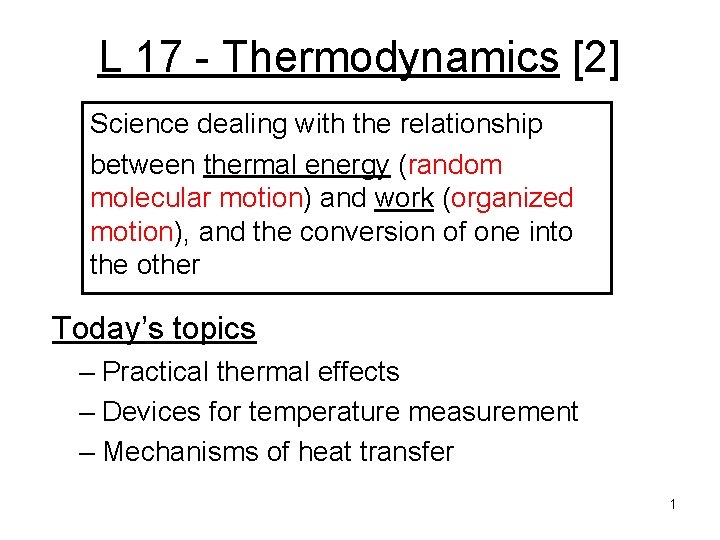
L 17 - Thermodynamics [2] Science dealing with the relationship between thermal energy (random molecular motion) and work (organized motion), and the conversion of one into the other Today’s topics – Practical thermal effects – Devices for temperature measurement – Mechanisms of heat transfer 1
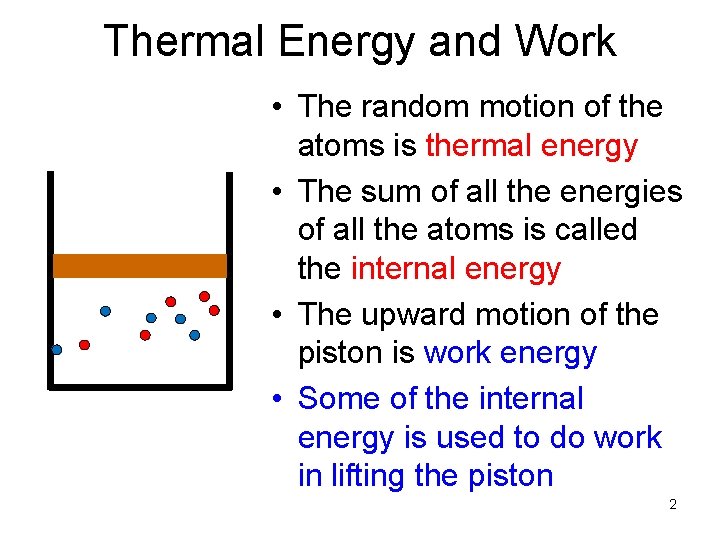
Thermal Energy and Work • The random motion of the atoms is thermal energy • The sum of all the energies of all the atoms is called the internal energy • The upward motion of the piston is work energy • Some of the internal energy is used to do work in lifting the piston 2
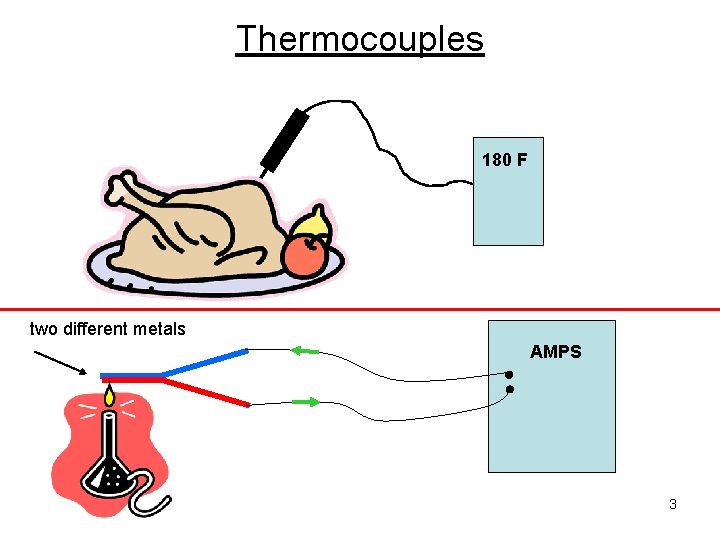
Thermocouples 180 F two different metals AMPS 3
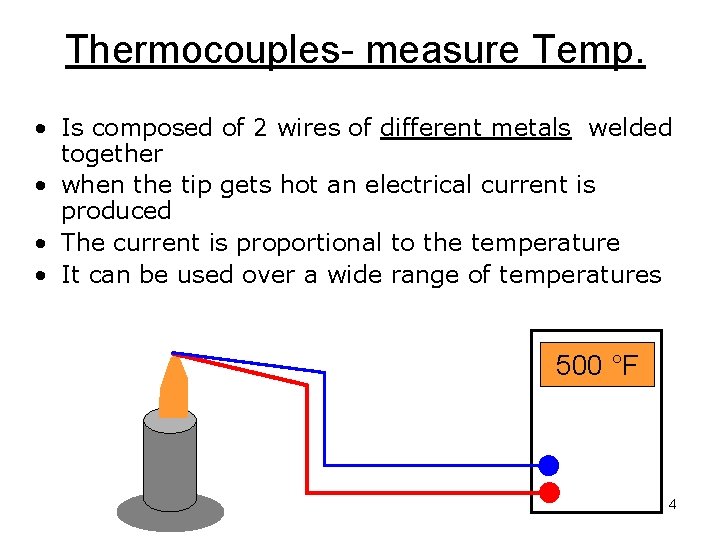
Thermocouples- measure Temp. • Is composed of 2 wires of different metals welded together • when the tip gets hot an electrical current is produced • The current is proportional to the temperature • It can be used over a wide range of temperatures 500 °F 4
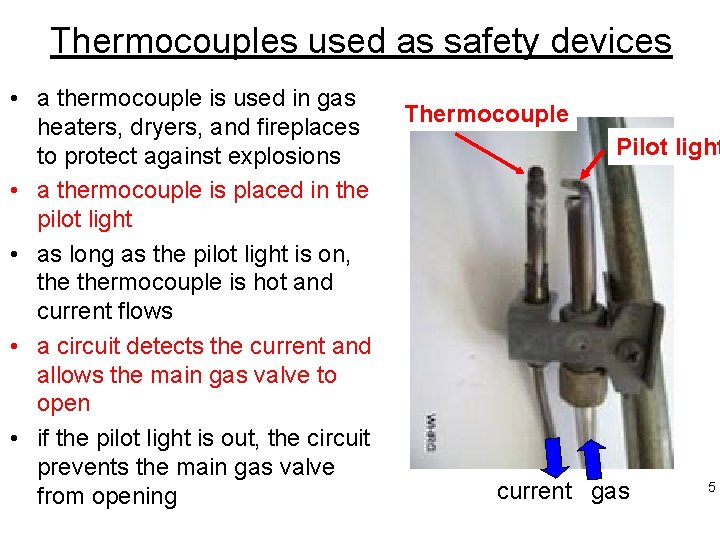
Thermocouples used as safety devices • a thermocouple is used in gas heaters, dryers, and fireplaces to protect against explosions • a thermocouple is placed in the pilot light • as long as the pilot light is on, thermocouple is hot and current flows • a circuit detects the current and allows the main gas valve to open • if the pilot light is out, the circuit prevents the main gas valve from opening Thermocouple Pilot light current gas 5
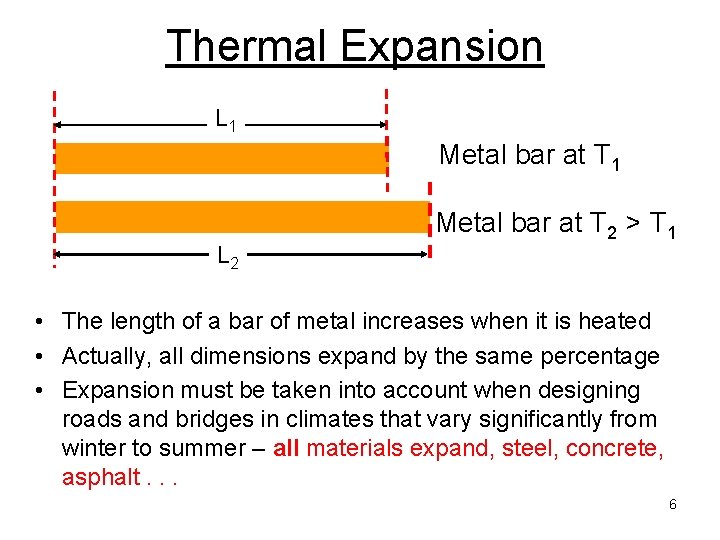
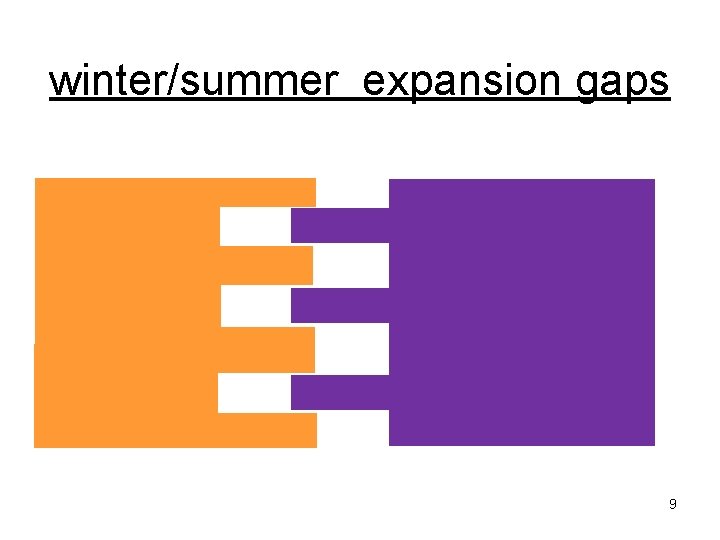
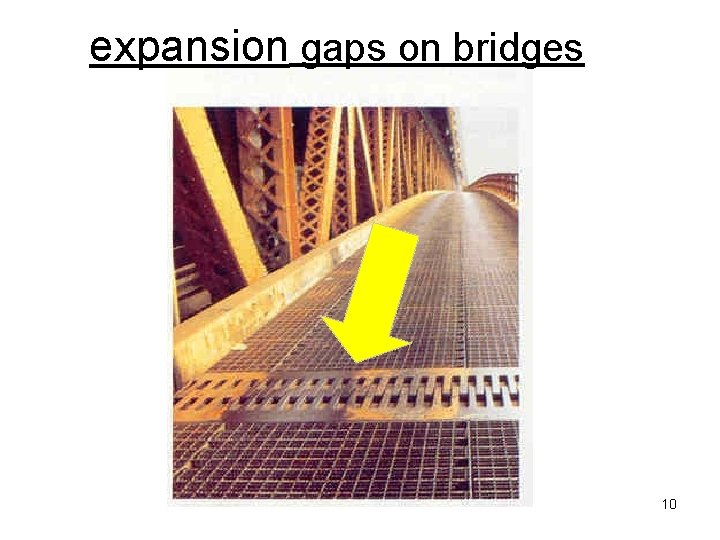
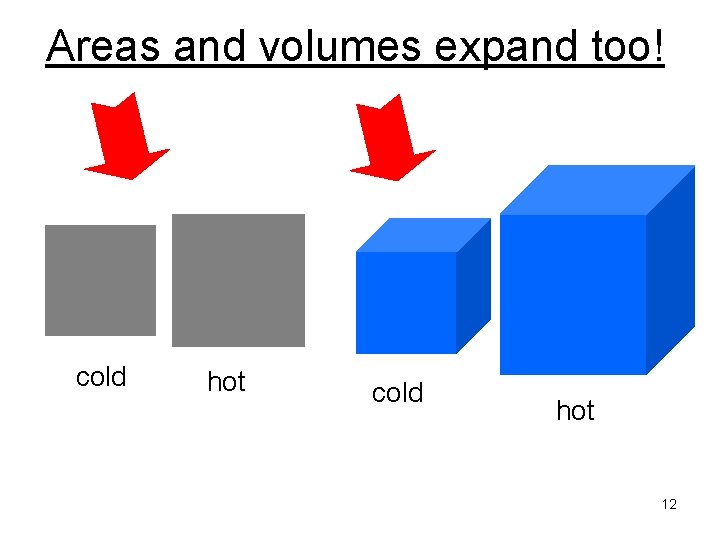
Thermal Expansion L 1 Metal bar at T 1 L 2 Metal bar at T 2 > T 1 • The length of a bar of metal increases when it is heated • Actually, all dimensions expand by the same percentage • Expansion must be taken into account when designing roads and bridges in climates that vary significantly from winter to summer – all materials expand, steel, concrete, asphalt. . . 6
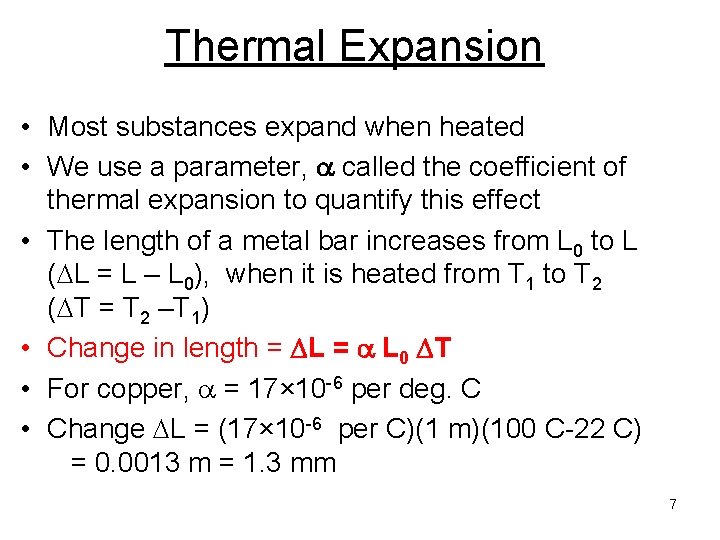
Thermal Expansion • Most substances expand when heated • We use a parameter, a called the coefficient of thermal expansion to quantify this effect • The length of a metal bar increases from L 0 to L (DL = L – L 0), when it is heated from T 1 to T 2 (DT = T 2 –T 1) • Change in length = DL = a L 0 DT • For copper, a = 17× 10 -6 per deg. C • Change DL = (17× 10 -6 per C)(1 m)(100 C-22 C) = 0. 0013 m = 1. 3 mm 7
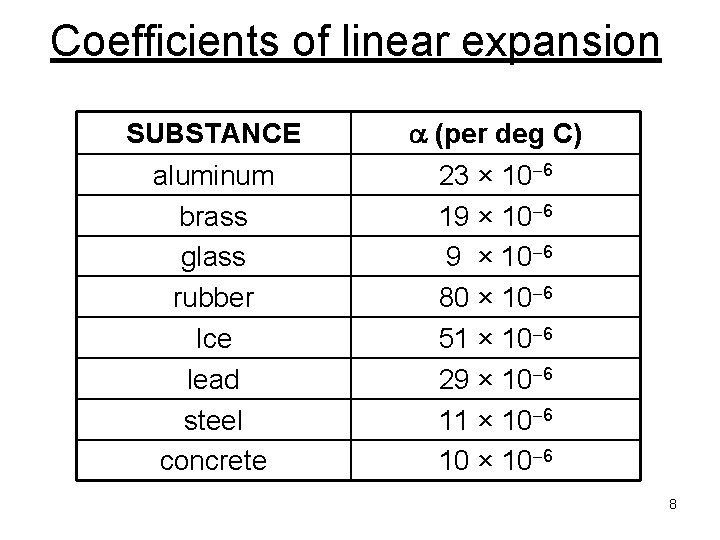
Coefficients of linear expansion SUBSTANCE a (per deg C) aluminum brass glass rubber Ice lead steel concrete 23 × 10 6 19 × 10 6 80 × 10 6 51 × 10 6 29 × 10 6 11 × 10 6 10 × 10 6 8
winter/summer expansion gaps 9
expansion gaps on bridges 10
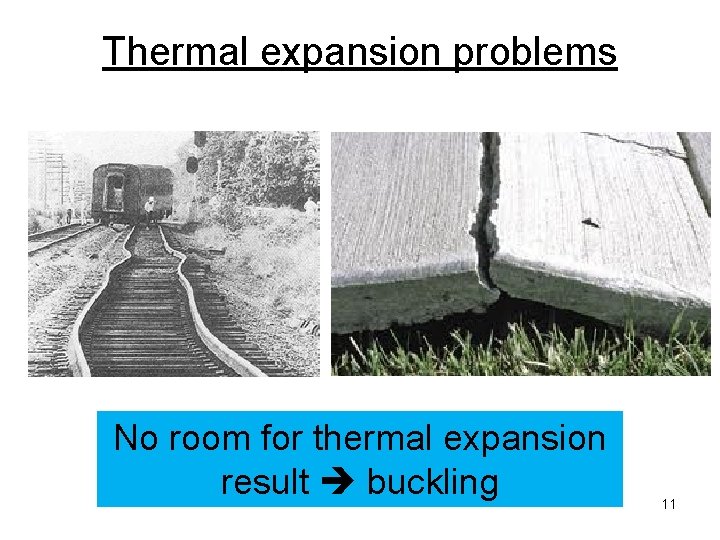
Thermal expansion problems No room for thermal expansion result buckling 11
Areas and volumes expand too! cold hot 12
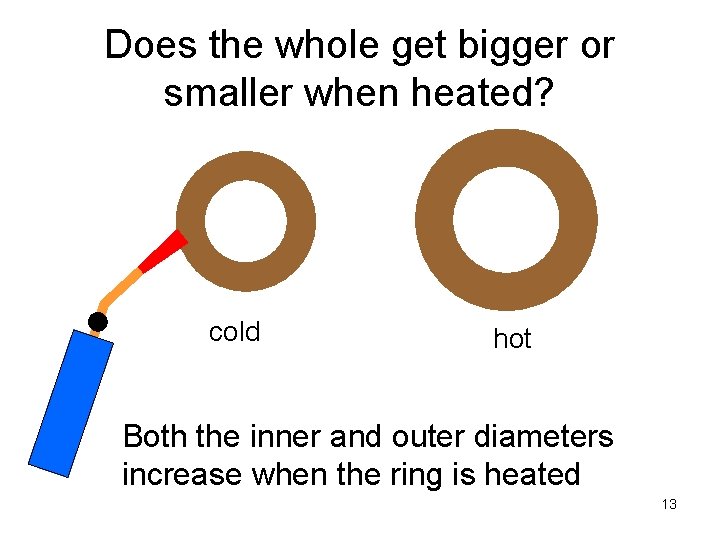
Does the whole get bigger or smaller when heated? cold hot Both the inner and outer diameters increase when the ring is heated 13
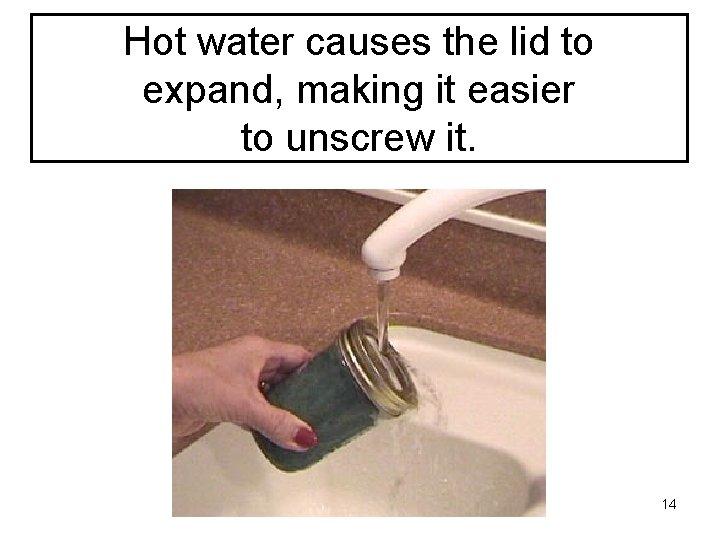
Hot water causes the lid to expand, making it easier to unscrew it. 14
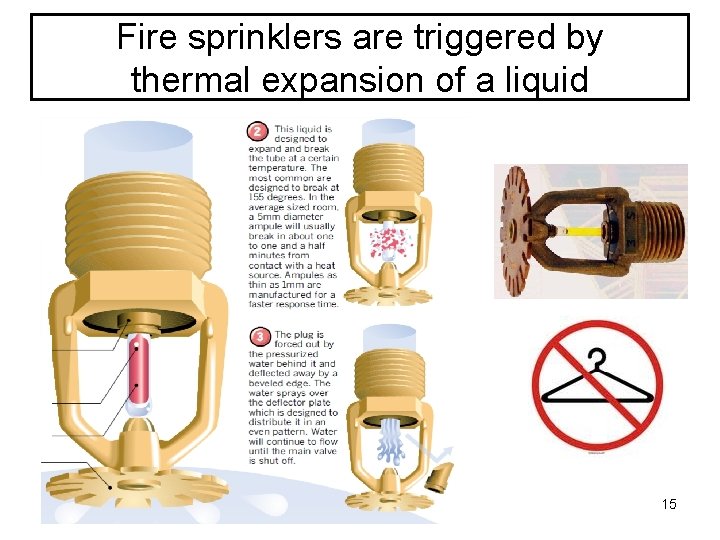
Fire sprinklers are triggered by thermal expansion of a liquid 15
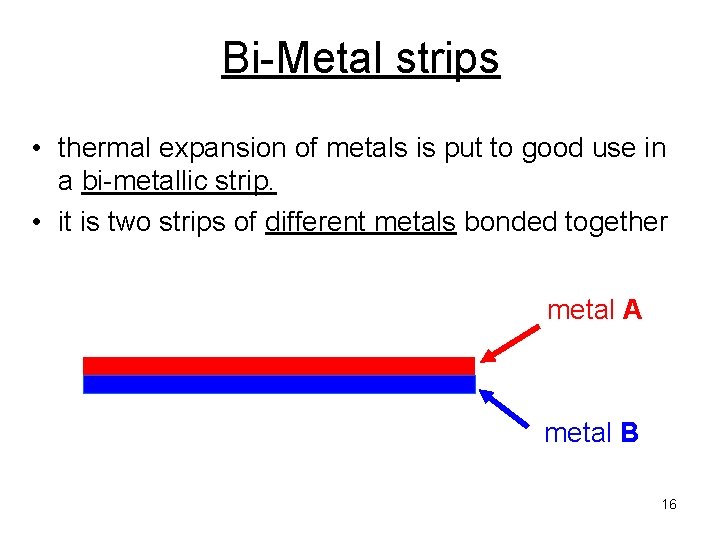
Bi-Metal strips • thermal expansion of metals is put to good use in a bi-metallic strip. • it is two strips of different metals bonded together metal A metal B 16
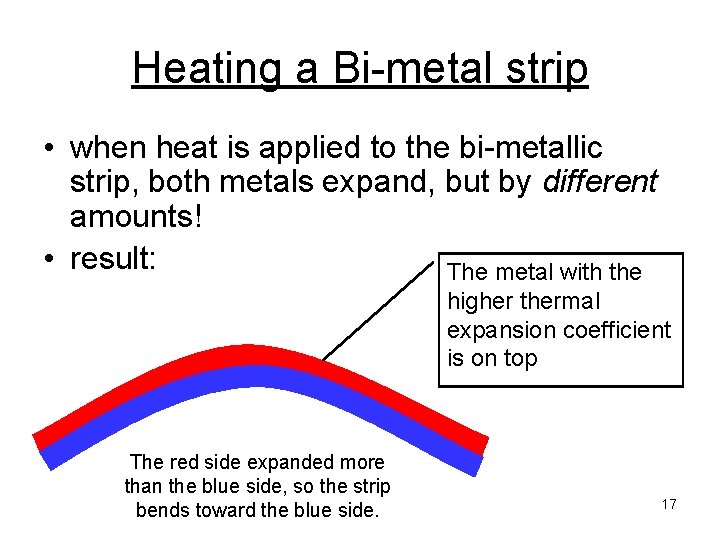
Heating a Bi-metal strip • when heat is applied to the bi-metallic strip, both metals expand, but by different amounts! • result: The metal with the higher thermal expansion coefficient is on top The red side expanded more than the blue side, so the strip bends toward the blue side. 17
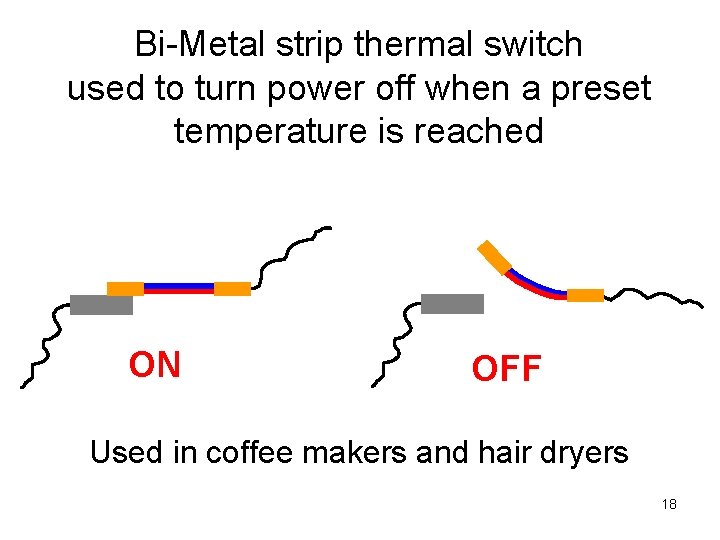
Bi-Metal strip thermal switch used to turn power off when a preset temperature is reached ON OFF Used in coffee makers and hair dryers 18
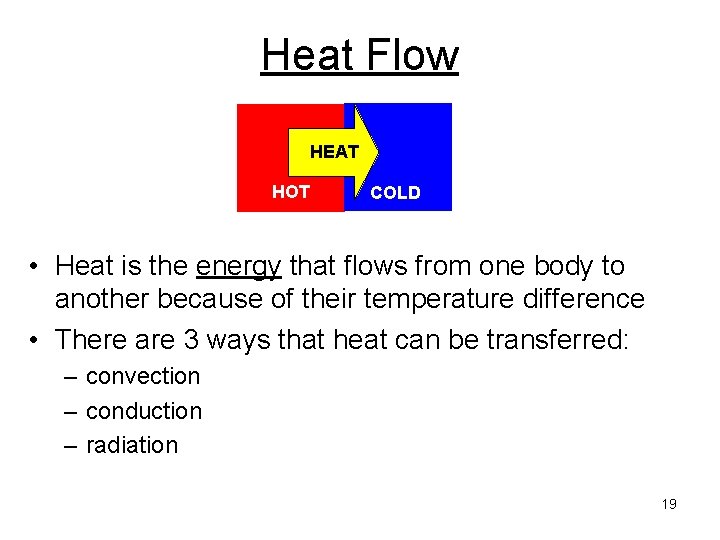
Heat Flow HEAT HOT COLD • Heat is the energy that flows from one body to another because of their temperature difference • There are 3 ways that heat can be transferred: – convection – conduction – radiation 19
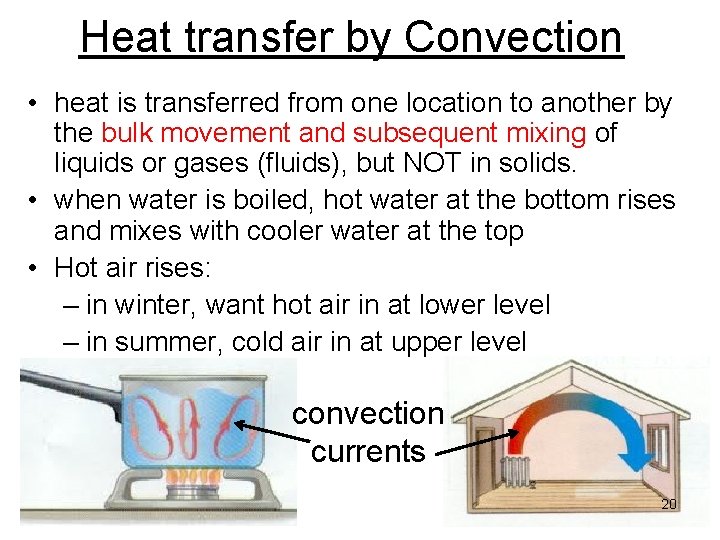
Heat transfer by Convection • heat is transferred from one location to another by the bulk movement and subsequent mixing of liquids or gases (fluids), but NOT in solids. • when water is boiled, hot water at the bottom rises and mixes with cooler water at the top • Hot air rises: – in winter, want hot air in at lower level – in summer, cold air in at upper level convection currents 20
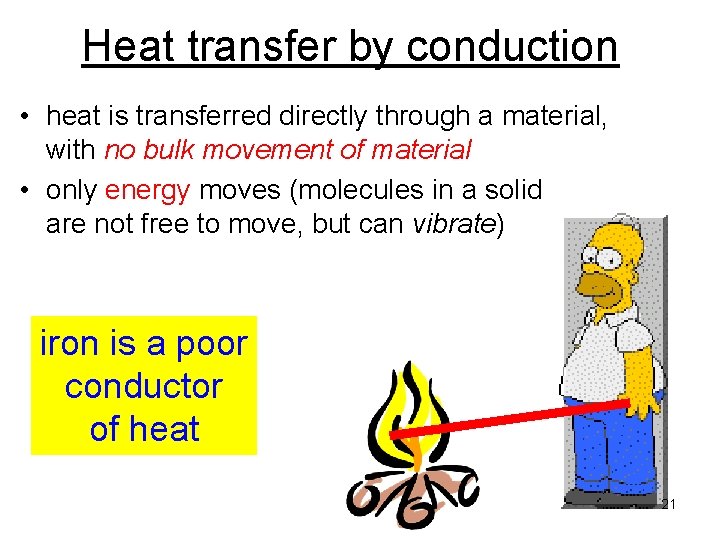
Heat transfer by conduction • heat is transferred directly through a material, with no bulk movement of material • only energy moves (molecules in a solid are not free to move, but can vibrate) iron is a poor conductor of heat 21
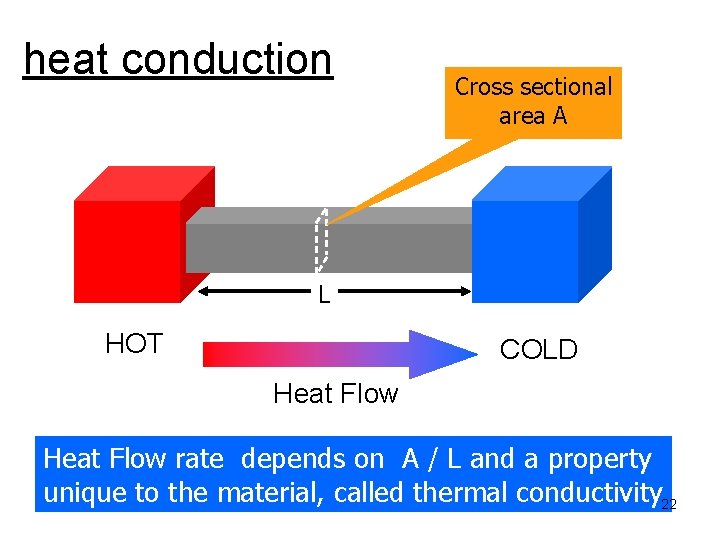
heat conduction Cross sectional area A L HOT COLD Heat Flow rate depends on A / L and a property unique to the material, called thermal conductivity 22
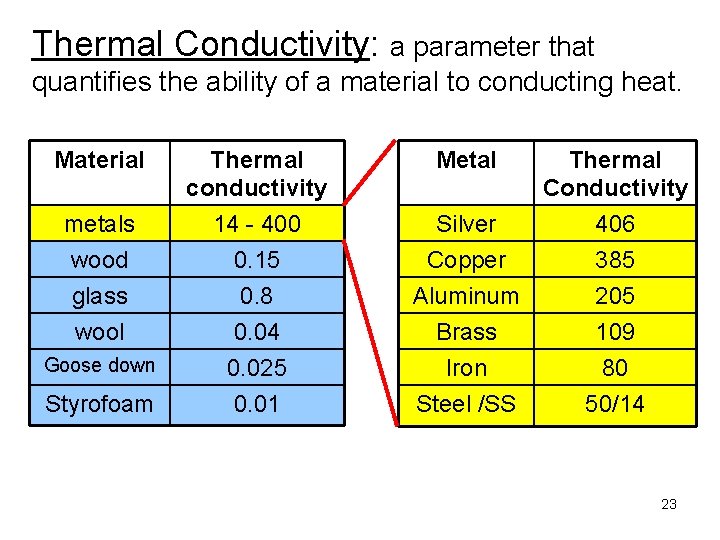
Thermal Conductivity: a parameter that quantifies the ability of a material to conducting heat. Material metals wood glass wool Goose down Styrofoam Thermal conductivity 14 - 400 0. 15 0. 8 0. 04 0. 025 0. 01 Metal Thermal Conductivity Silver 406 Copper 385 Aluminum 205 Brass 109 Iron 80 Steel /SS 50/14 23
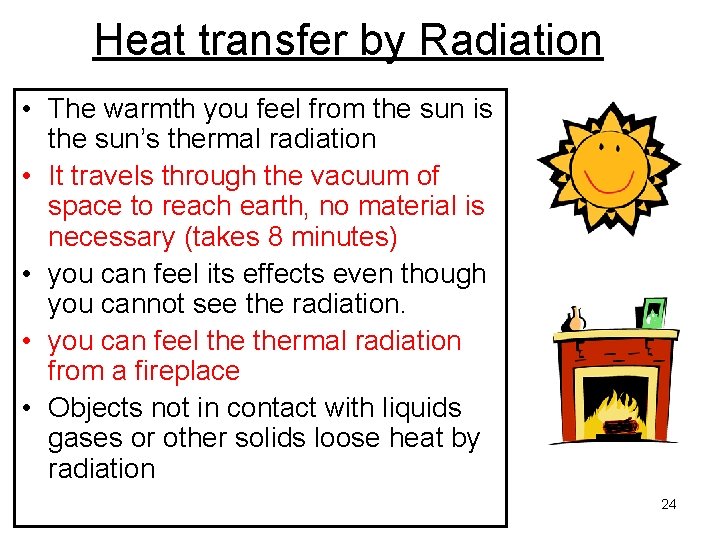
Heat transfer by Radiation • The warmth you feel from the sun is the sun’s thermal radiation • It travels through the vacuum of space to reach earth, no material is necessary (takes 8 minutes) • you can feel its effects even though you cannot see the radiation. • you can feel thermal radiation from a fireplace • Objects not in contact with liquids gases or other solids loose heat by radiation 24
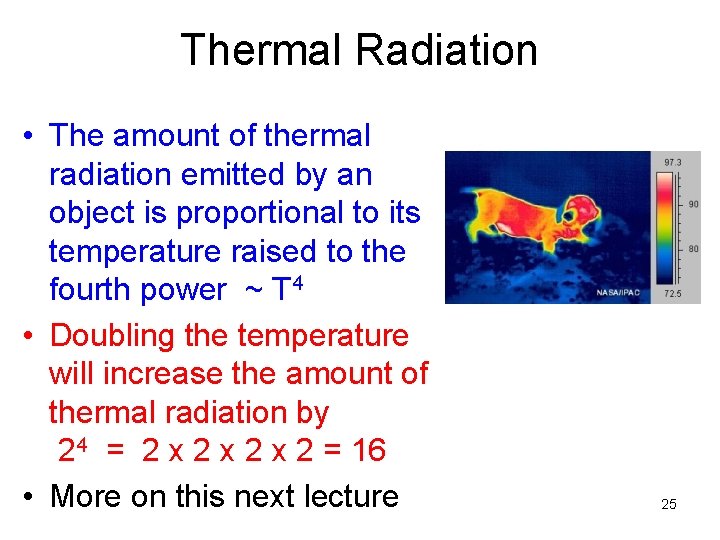
Thermal Radiation • The amount of thermal radiation emitted by an object is proportional to its temperature raised to the fourth power ~ T 4 • Doubling the temperature will increase the amount of thermal radiation by 24 = 2 x 2 x 2 = 16 • More on this next lecture 25