
L 15 Atmospheric Stability Stability and lapse rate
L 15 Atmospheric Stability • • Stability and lapse rate Stability on skew T – ln p charts Stable, neutral, unstable, conditionally unstable Stable atmosphere – Inversions – fog/air pollution • Unstable atmosphere – Convection – Thunderstorm development
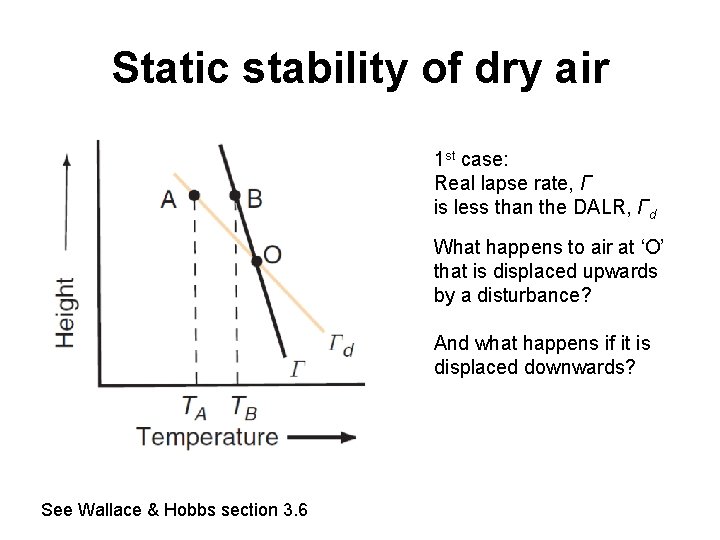
Static stability of dry air 1 st case: Real lapse rate, Γ is less than the DALR, Γd What happens to air at ‘O’ that is displaced upwards by a disturbance? And what happens if it is displaced downwards? See Wallace & Hobbs section 3. 6
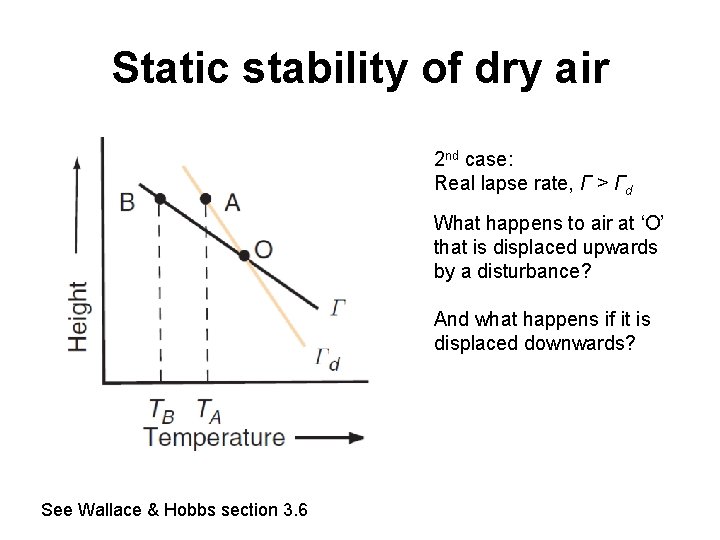
Static stability of dry air 2 nd case: Real lapse rate, Γ > Γd What happens to air at ‘O’ that is displaced upwards by a disturbance? And what happens if it is displaced downwards? See Wallace & Hobbs section 3. 6

Useful analogy for stability: ball on a surface Stable Unstable profiles cannot persist, so tend to rapidly evolve to be ~neutral Neutral Conditional instability
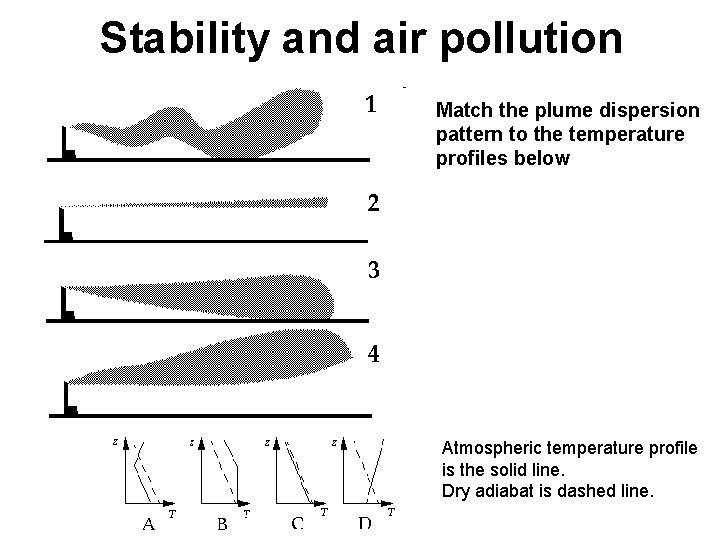
Stability and air pollution Match the plume dispersion pattern to the temperature profiles below Atmospheric temperature profile is the solid line. Dry adiabat is dashed line.
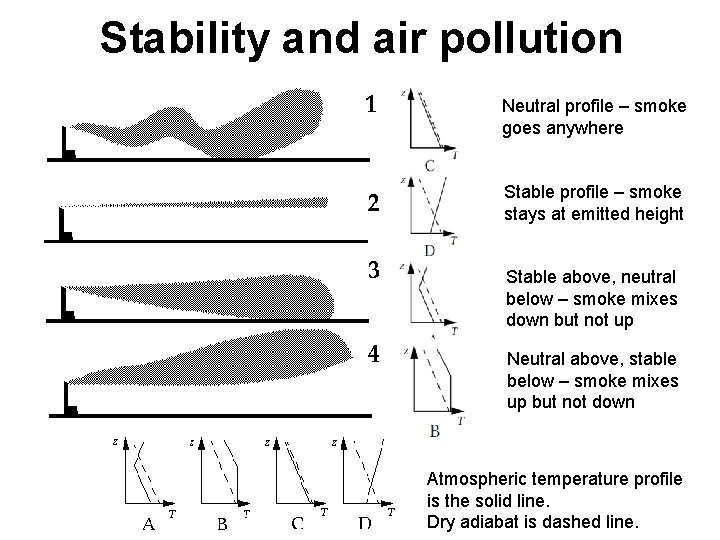
Stability and air pollution Neutral profile – smoke goes anywhere Stable profile – smoke stays at emitted height Stable above, neutral below – smoke mixes down but not up Neutral above, stable below – smoke mixes up but not down Atmospheric temperature profile is the solid line. Dry adiabat is dashed line.
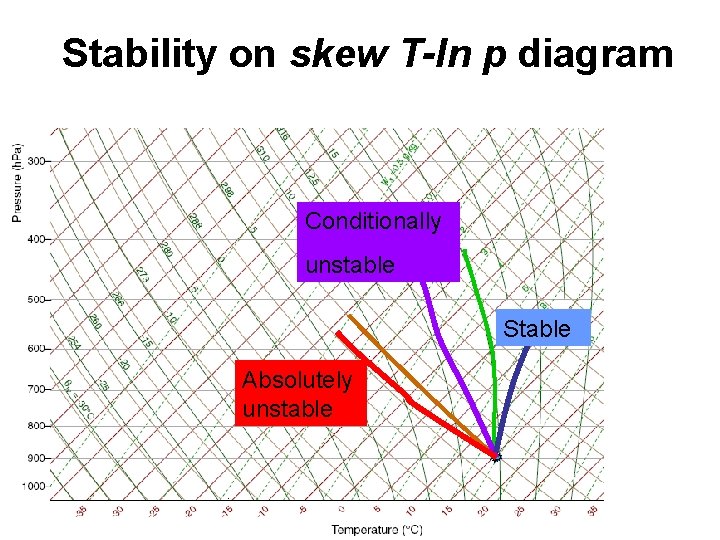
Stability on skew T-ln p diagram Conditionally unstable Stable stable Absolutely unstable
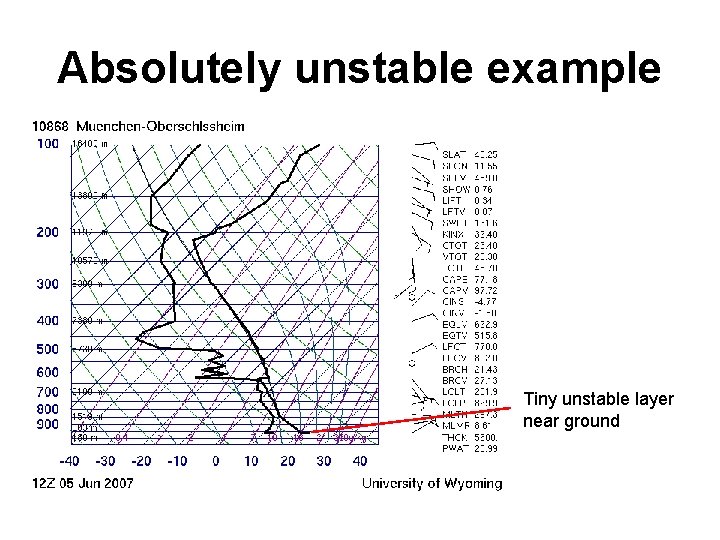
Absolutely unstable example Tiny unstable layer near ground
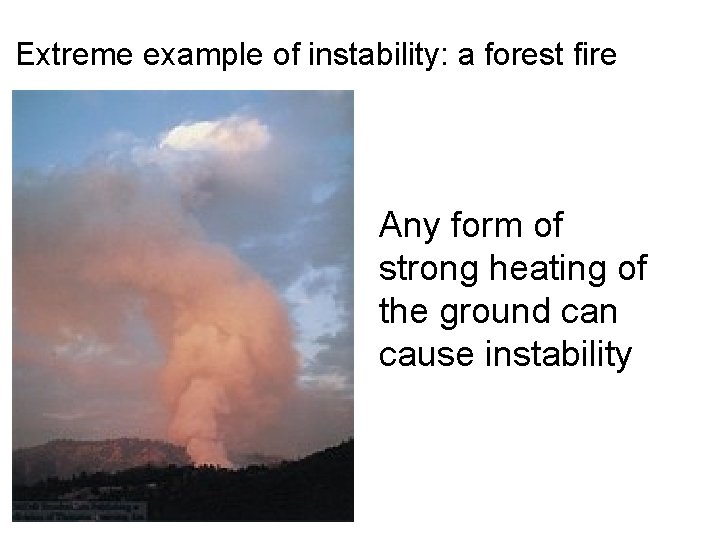
Extreme example of instability: a forest fire Any form of strong heating of the ground can cause instability
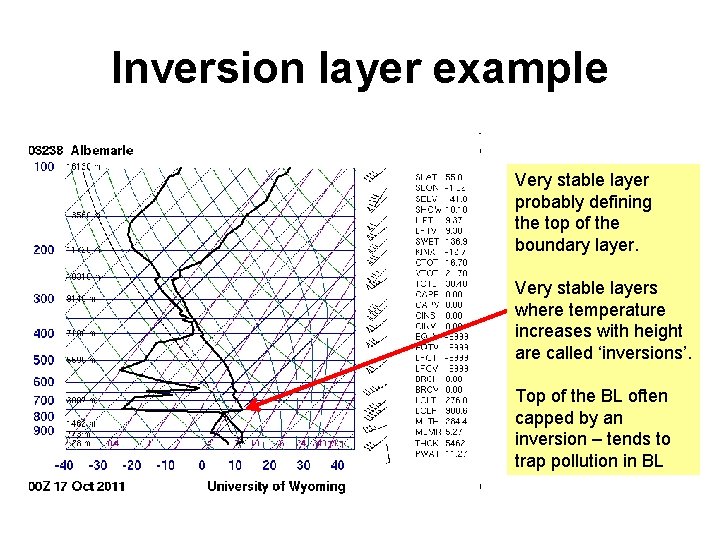
Inversion layer example Very stable layer probably defining the top of the boundary layer. Very stable layers where temperature increases with height are called ‘inversions’. Top of the BL often capped by an inversion – tends to trap pollution in BL
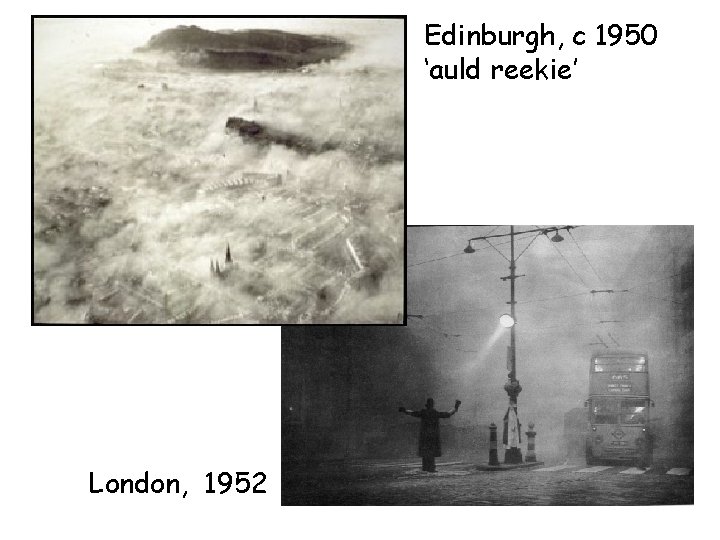
Edinburgh, c 1950 ‘auld reekie’ London, 1952
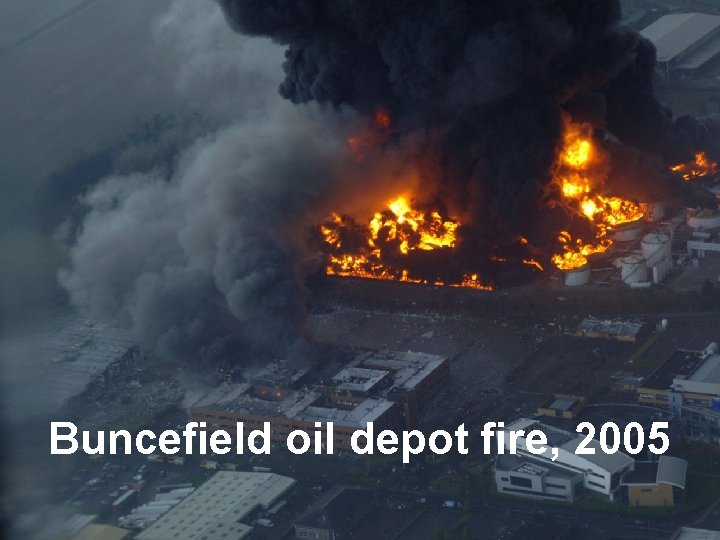
Buncefield oil depot fire, 2005
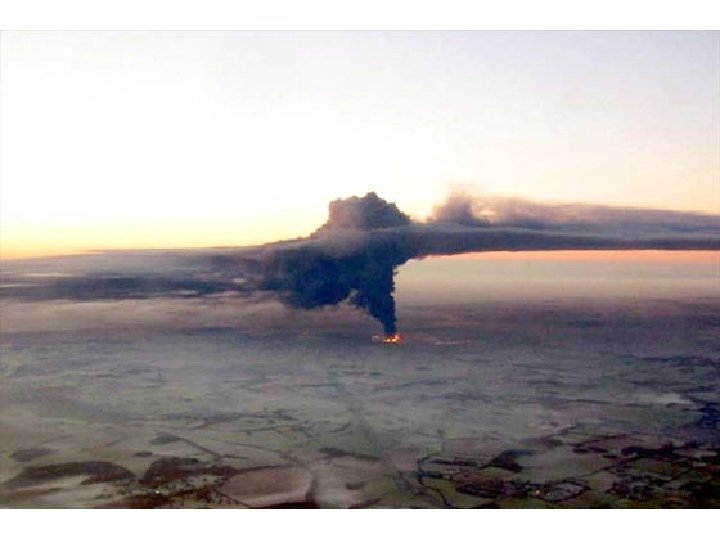
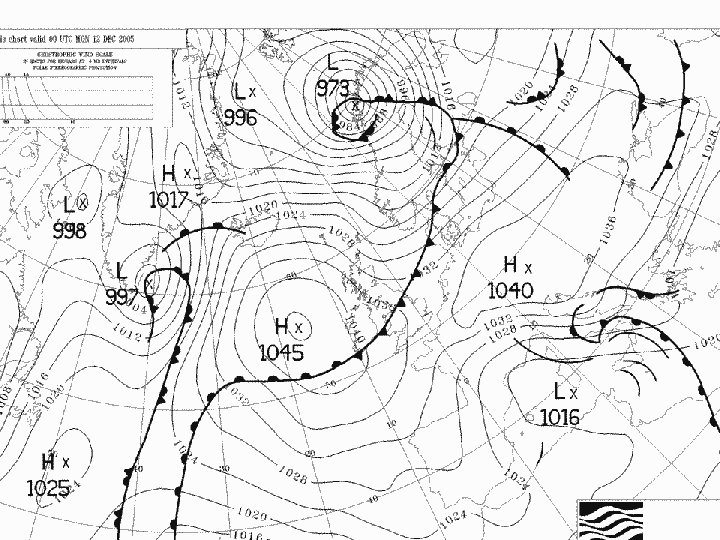
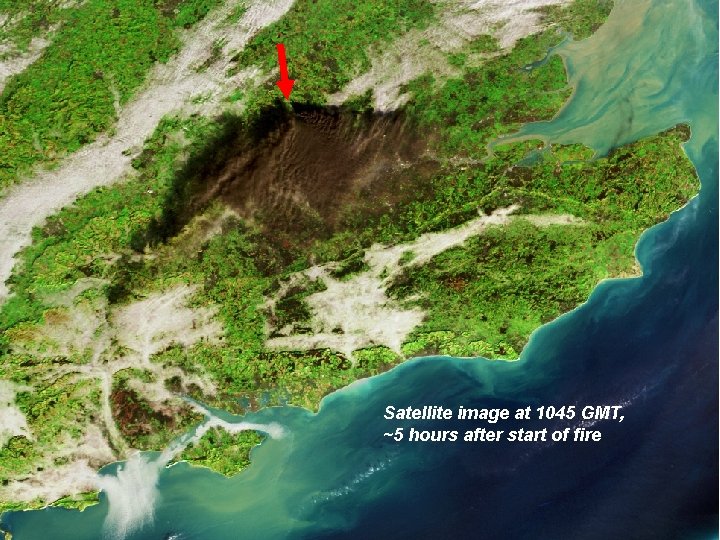
Satellite image at 1045 GMT, ~5 hours after start of fire
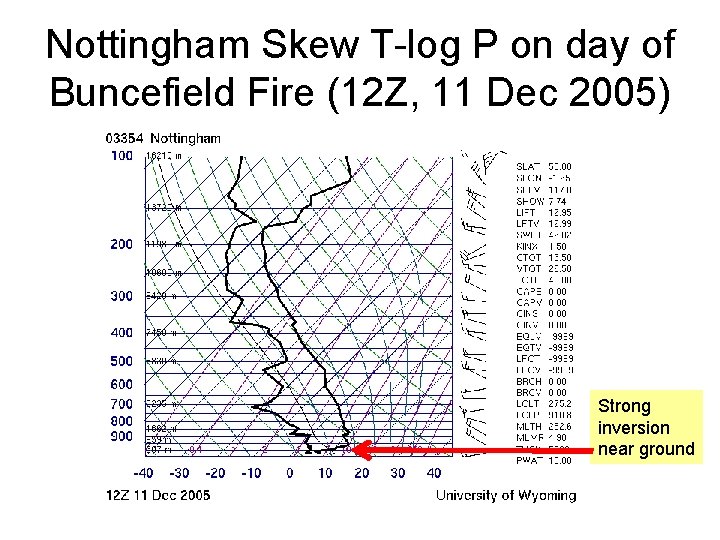
Nottingham Skew T-log P on day of Buncefield Fire (12 Z, 11 Dec 2005) Strong inversion near ground
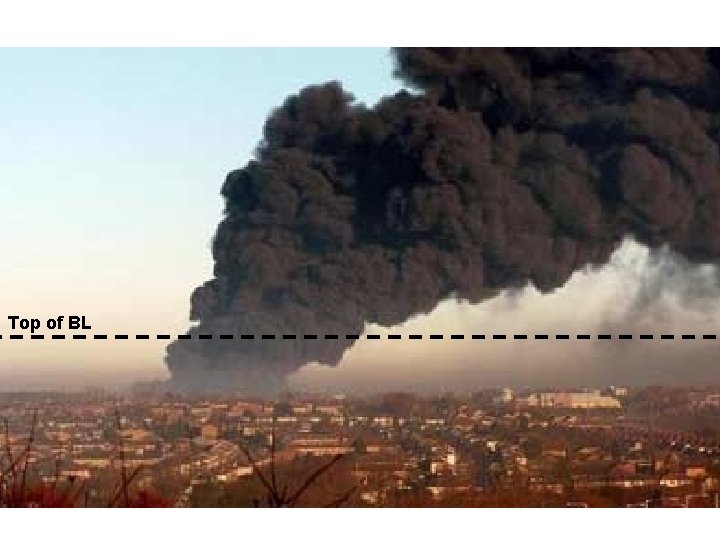
Top of BL
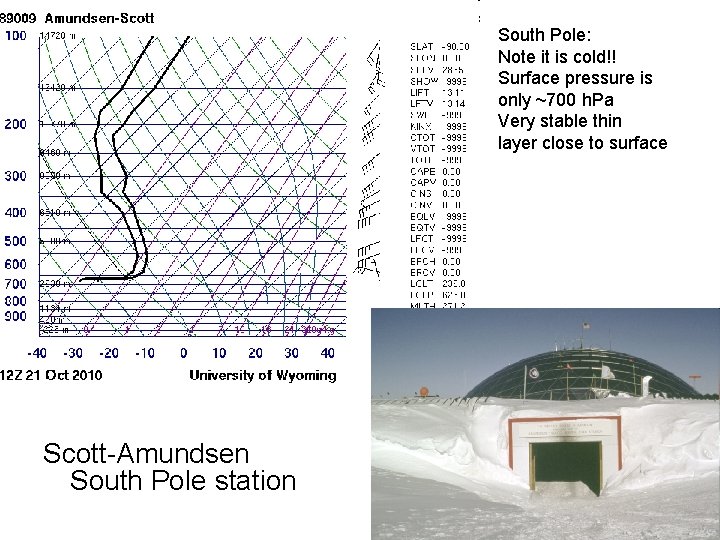
South Pole: Note it is cold!! Surface pressure is only ~700 h. Pa Very stable thin layer close to surface Scott-Amundsen South Pole station
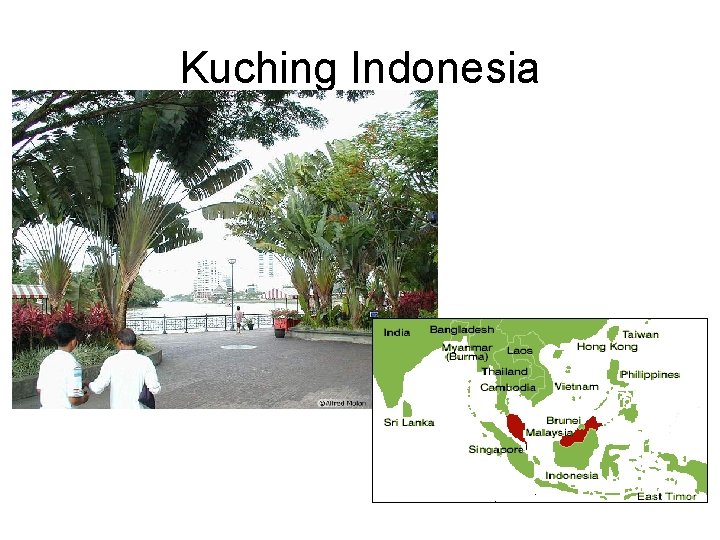
Kuching Indonesia
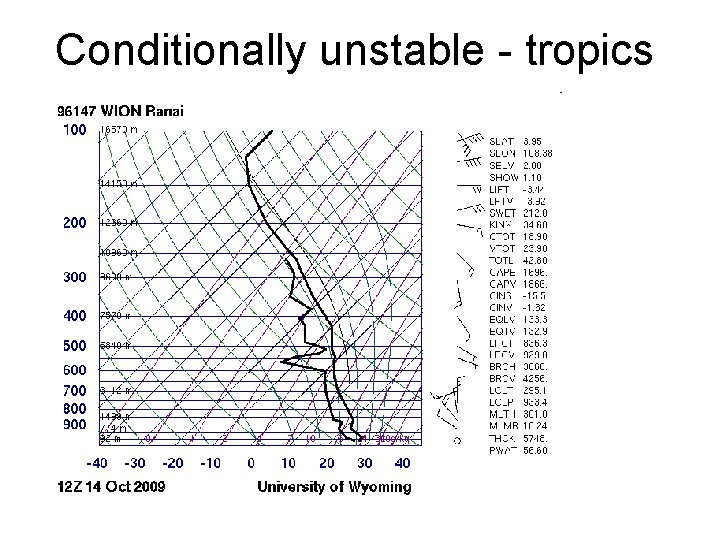
Conditionally unstable - tropics
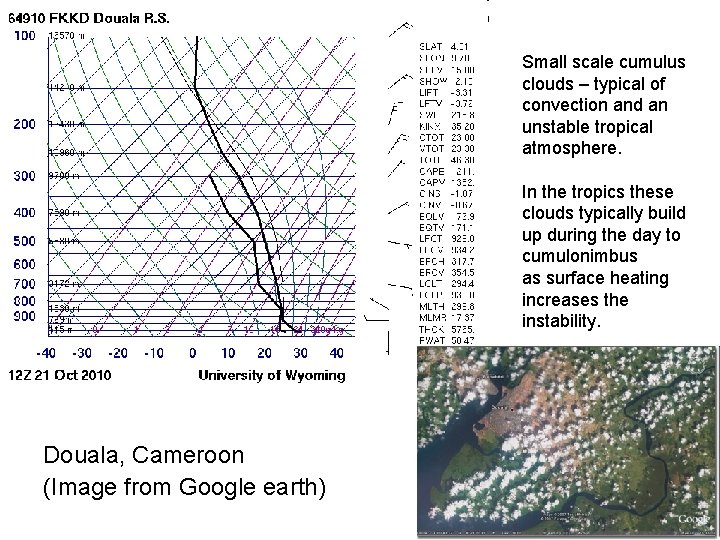
Small scale cumulus clouds – typical of convection and an unstable tropical atmosphere. In the tropics these clouds typically build up during the day to cumulonimbus as surface heating increases the instability. Douala, Cameroon (Image from Google earth)
Summary • Stability and lapse rate • Stability on skew T – ln p charts • Stable, neutral, unstable, conditionally unstable • Stable atmosphere – Inversions – fog/air pollution • Unstable atmosphere – Convection – Thunderstorm development – more next time
- Slides: 22