
L 12 Modern Cloning Strategies Modern Cloning Strategies
- Slides: 16
L. 12. Modern” Cloning Strategies
Modern” Cloning Strategies Several strategies have been developed to overcome the difficulties associated with conventional cloning. These have been compounded by the demands of the numerous functional genomics studies that have resulted from the availability and rapid accumulation of whole‐genome sequences.
Modern” Cloning Strategies These novel cloning strategies typically fall into two main categories: (1) strategies that rely on site‐specific DNA recombination techniques and (2) strategies that do not depend on sequence specificity, but instead rely on DNA end‐linking assembly techniques.
Modern” Cloning Strategies Both categories contain a variety of strategies and methods that significantly reduce the time and effort involved in generating recombinant DNA vectors for gene analysis and c. DNA library construction (c. DNA is a DNA sequence that is complementary to the coding sequence of an RNA transcript). The most widely used example of each strategy: • 1. Gateway® Cloning (Life Technologies, now part of the company of Thermo. Fisher) for site‐specific recombinational techniques and • 2. Gibson Assembly® Cloning (New England Biolabs) for sequence‐independent end‐linking assembly techniques.
Modern” Cloning Strategies Additional cloning methods worth mentioning include Golden Gate and Bio. Bricks that utilize Type IIs restriction enzymes for cloning. Because these unique restriction enzymes cut outside of their recognition sequences, they allow for simultaneous ligation of multiple DNA fragments within the same reaction. In the process, they have the added benefit of removing the restriction enzyme recognition sites from the final DNA molecule.
Gateway Cloning • GATEWAY Cloning Technology is a powerful new methodology that greatly facilitates protein expression, cloning of PCR products, and analysis of gene function by replacing restriction endonucleases and ligase with site-specific recombination. • The GATEWAY Cloning Technology provides: 1. Transfer, in parallel, of one or more DNA sequences into multiple types of vectors 2. Rapid, efficient cloning – and expression – of PCR products, of a wide range of sizes. 3. Faithful maintenance of orientation and reading frame of the transferred DNA sequence.
1. Generation of a high percentage of correct colonies (usually >99%), minimizing the need for screening. 2. Robust reactions that are simple to perform (works well using miniprep DNA). 3. A completely versatile system. Virtually any standard cloning or expression vector can be converted to a GATEWAY‐compatible vector (creating a Destination Vector).
1. An "operating system" for the exchange and immediate use of validated clones and expression vectors between different laboratories. Once gene sequences are converted to Entry Clones, they can be subcloned into virtually any type of Destination Vector, maintaining reading frame and orientation. 2. Maximum flexibility to easily transfer DNA sequences from one expression vector into another. This greatly speeds validation of clones, for example, in a two‐hybrid screen. 3. · Reactions can be automated.
GATEWAY • Cloning Technology provides a versatile system for transferring DNA segments between vectors. Once in the system, DNA segments can be transferred from an Entry Clone into numerous vectors (e. g. , for protein expression) or from the Expression vector back into Entry Clones. • Several options are available for creating Entry Clones. These include: • GATEWAY cloning (via the BP Reaction) of PCR products flanked by att. B recombination sites to generate Entry Clones. • · Cloning by standard recombinant DNA methods of restriction enzyme‐ generated fragments directly into Entry Vectors. • GATEWAY cloning (via the BP Reaction) into Entry Vectors of genes from genomic or c. DNA libraries prepared in att. B‐containing GATEWAY vectors.
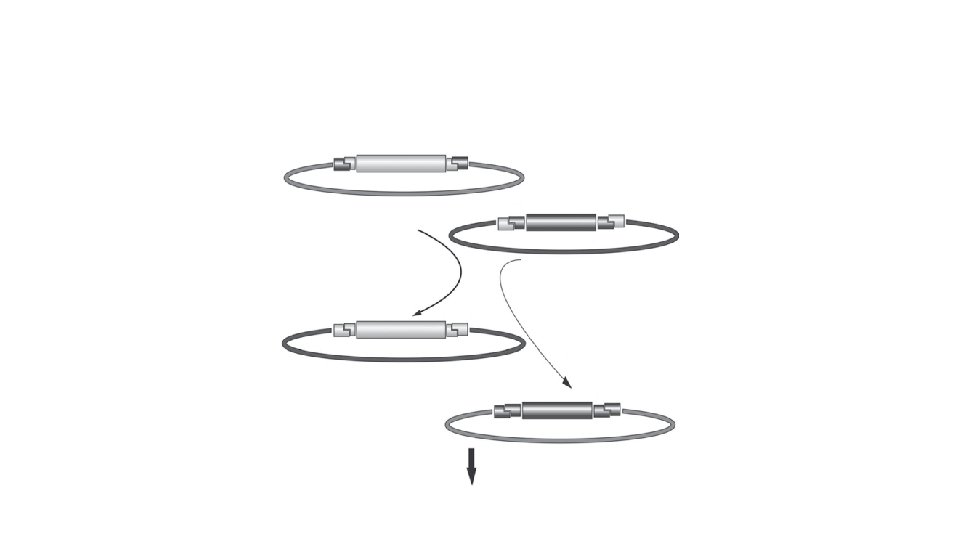
Two Reactions Constitute the GATEWAY Cloning System • The first reaction, the LR Reaction, is the main pathway of this system. The LR Reaction is a recombination reaction between an Entry Clone and a Destination Vector (p. DESTTM), mediated by the LR CLONASE mix of recombination proteins. This reaction transfers DNA segments (e. g. , c. DNA, genomic DNA, or gene sequences) in the Entry Clone to the Destination Vector, to create an Expression Clone.
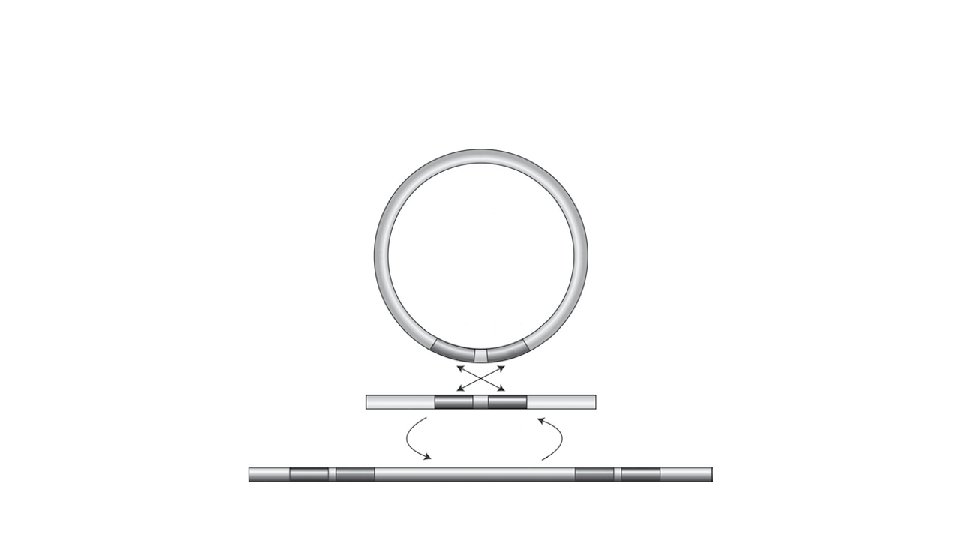
• The sites labeled L, R, B, and P are respectively the att. L, att. R, att. B, and att. P recombination sites for bacteriophage lambda (l) in E. coli. • These sites are specifically recognized by the recombination proteins that constitute the CLONASE Enzyme Mix cocktails. • The GATEWAY cloning reactions are equivalent to concerted, highly specific, cutting and ligation reactions. • Viewed in this way, the recombination proteins cut to the left and right of the gene in the Entry Clone and ligate it into the Destination Vector, creating a new Expression Clone. • During this process, reading frame is maintained.
• The gene in an Expression Clone is flanked by att. B 1 and att. B 2 sites. The orientation of the gene is maintained throughout the subcloning, because att. L 1 reacts only with att. R 1, and att. L 2 reacts only with att. R 2.
• When an aliquot from the recombination reaction is introduced into E. coli, the desired transformants can be selected on plates containing ampicillin. The unreacted Destination Vector does not give ampicillin‐resistant colonies, even though it carries the ampicillin‐resistance gene, because it contains a gene lethal to E. coli, ccd. B. • Thus selection for ampicillin resistance selects for E. coli cells that carry the desired product, which usually comprise >99% of the colonies on the ampicillin plate.
• Expression Clones can express either native or fusion proteins. For native (non-fusion) proteins, the coding sequence together with its translational start and stop signals is flanked by att. B recombination sites. • As a consequence, the att. B 1 sequence resides in the 5¢ untranslated region of the m. RNA. In Nterminal fusion proteins, in contrast, the 25 bp att. B 1 site becomes part of the coding sequence and inserts an additional eight amino acids between the fusion domain and the protein encoded by a gene. • For Cterminal fusions, the att. B 2 sequence adds an additional eight codons between the gene and the Cterminal fusion sequence • .