
Kuthambakkam Village near Chennai Study the village cluster
Kuthambakkam Village, near Chennai Study the village cluster with Kuthambakkam as the nodal village. This is after 15 Years of working together… Kuthambakkam Today (Feb 2012) We will discuss your observations 1
Goals 1. Network Economy - concentrate on Prosperity creation rather than poverty eradication. More than 80% of village consumption can be met through value-addition done to the local produce. The remaining can be supplied by village trade groups (This initiative will focus on evolving self-dependent economy in the rural areas rather than worry about their place in the global market). - Assured and Sustainable employment - Access and Food Security - Developing Collective Entrepreneurship - Conserve energy 2. Continue strengthening panchayats by sharing and learning best practices among panchayats to enable them to function as Local Self Governments to establish self reliant villages (Facilitated by the Panchayat Raj system, these efforts will have a ripple effect) 2
Gram Panchayat (Village Governance) A few hundred years back, India was held together through strong community leadership and community based actions. . . they created and sustained community based infrastructure, governance and trade. The people governing themselves would truly bring democracy to the grass-roots and take a mighty step towards reviving the village economy to its past glory It would build within them confidence in their ability and pride in their locality A strong local governance will ensure the success of every national plan A network may contain 15 -20 villages and a population of 50, 00060, 000 people. 3
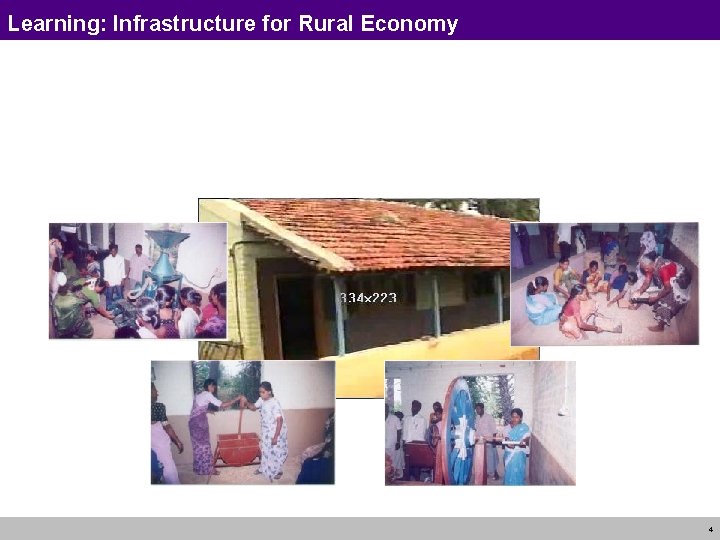
Learning: Infrastructure for Rural Economy 4
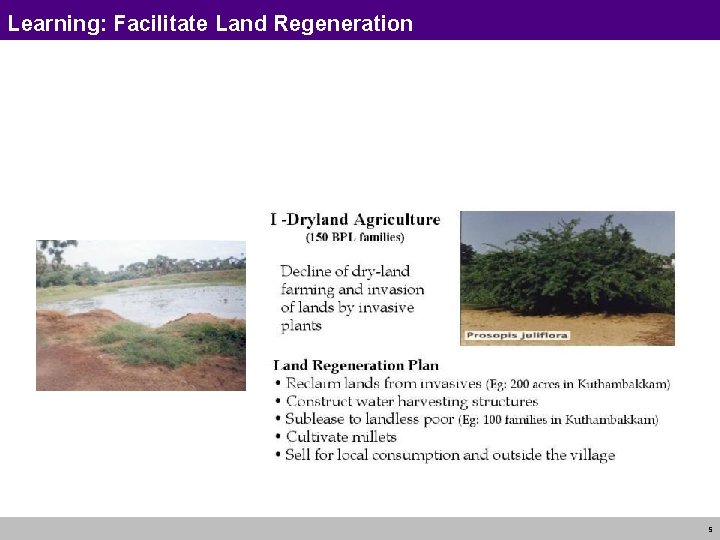
Learning: Facilitate Land Regeneration 5
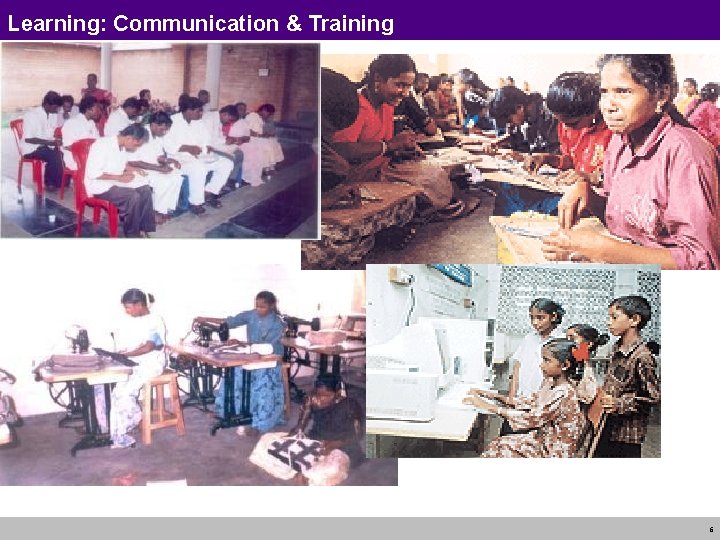
Learning: Communication & Training 6
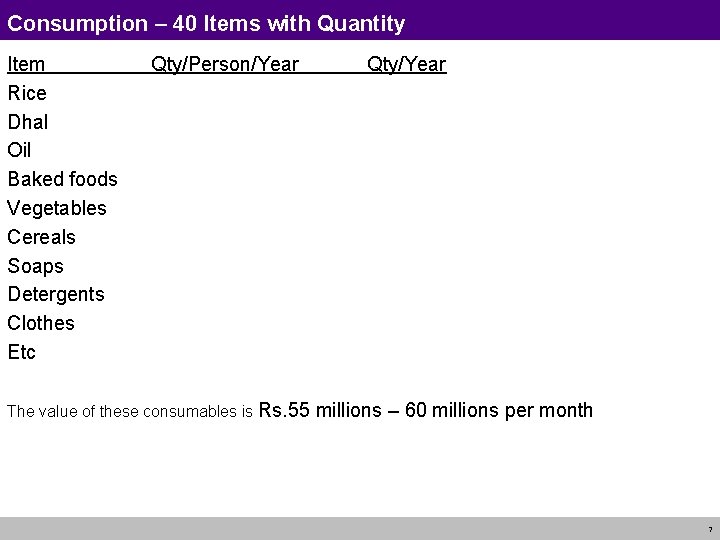
Consumption – 40 Items with Quantity Item Rice Dhal Oil Baked foods Vegetables Cereals Soaps Detergents Clothes Etc Qty/Person/Year The value of these consumables is Rs. 55 Qty/Year millions – 60 millions per month 7
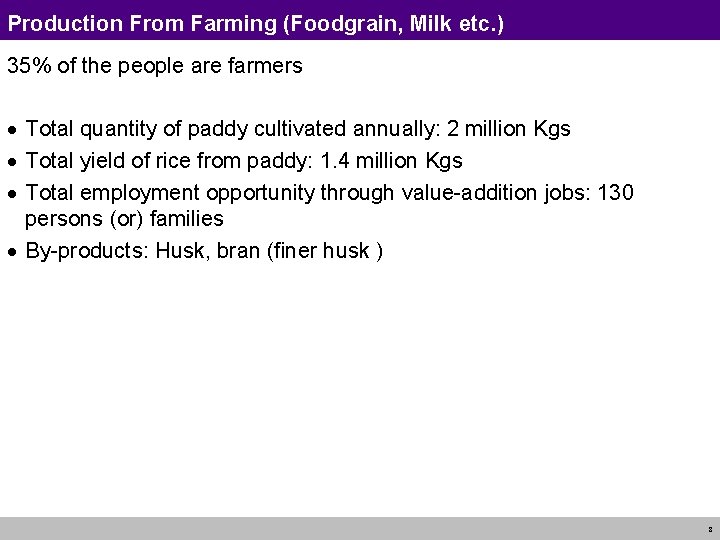
Production From Farming (Foodgrain, Milk etc. ) 35% of the people are farmers · Total quantity of paddy cultivated annually: 2 million Kgs · Total yield of rice from paddy: 1. 4 million Kgs · Total employment opportunity through value-addition jobs: 130 persons (or) families · By-products: Husk, bran (finer husk ) 8
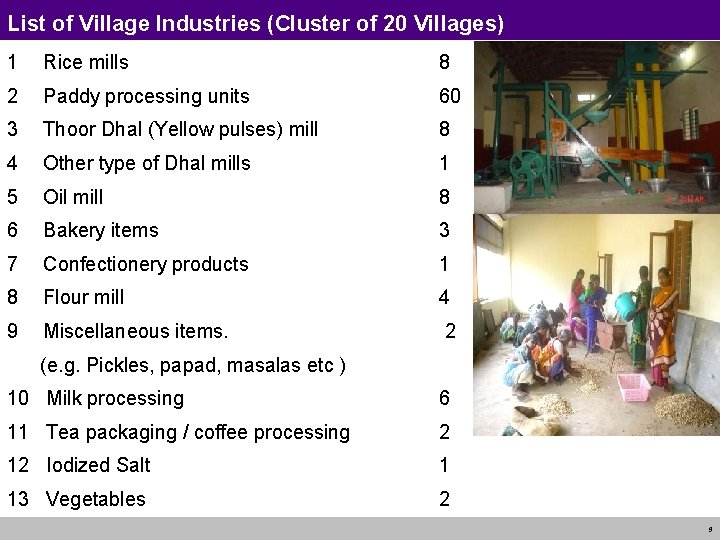
List of Village Industries (Cluster of 20 Villages) 1 Rice mills 8 2 Paddy processing units 60 3 Thoor Dhal (Yellow pulses) mill 8 4 Other type of Dhal mills 1 5 Oil mill 8 6 Bakery items 3 7 Confectionery products 1 8 Flour mill 4 9 Miscellaneous items. 2 (e. g. Pickles, papad, masalas etc ) 10 Milk processing 6 11 Tea packaging / coffee processing 2 12 Iodized Salt 1 13 Vegetables 2 9
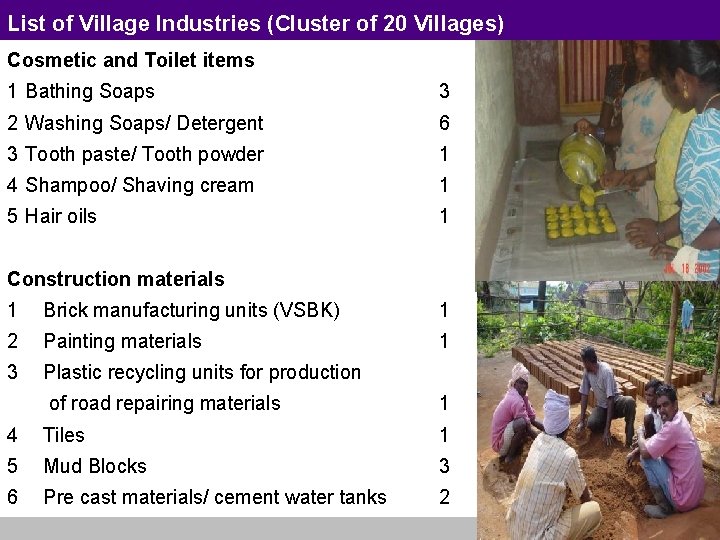
List of Village Industries (Cluster of 20 Villages) Cosmetic and Toilet items 1 Bathing Soaps 3 2 Washing Soaps/ Detergent 6 3 Tooth paste/ Tooth powder 1 4 Shampoo/ Shaving cream 1 5 Hair oils 1 Construction materials 1 Brick manufacturing units (VSBK) 1 2 Painting materials 1 3 Plastic recycling units for production of road repairing materials 1 4 Tiles 1 5 Mud Blocks 3 6 Pre cast materials/ cement water tanks 2 10
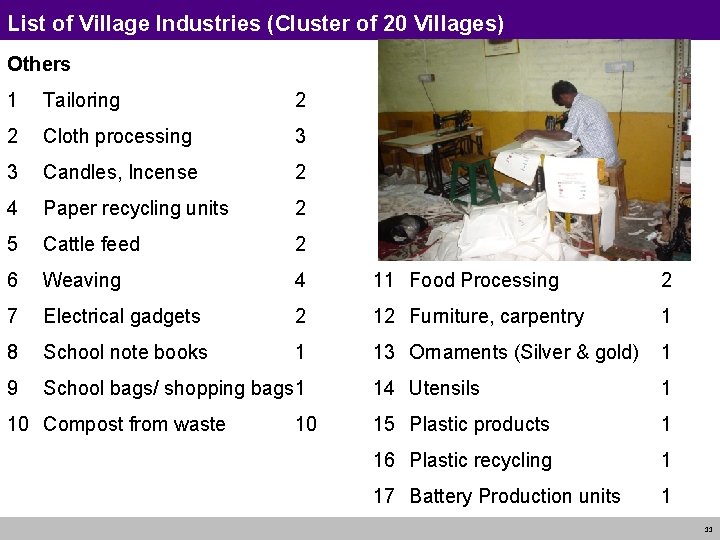
List of Village Industries (Cluster of 20 Villages) Others 1 Tailoring 2 2 Cloth processing 3 3 Candles, Incense 2 4 Paper recycling units 2 5 Cattle feed 2 6 Weaving 4 11 Food Processing 2 7 Electrical gadgets 2 12 Furniture, carpentry 1 8 School note books 1 13 Ornaments (Silver & gold) 1 9 School bags/ shopping bags 1 14 Utensils 1 15 Plastic products 1 16 Plastic recycling 1 17 Battery Production units 1 10 Compost from waste 10 11
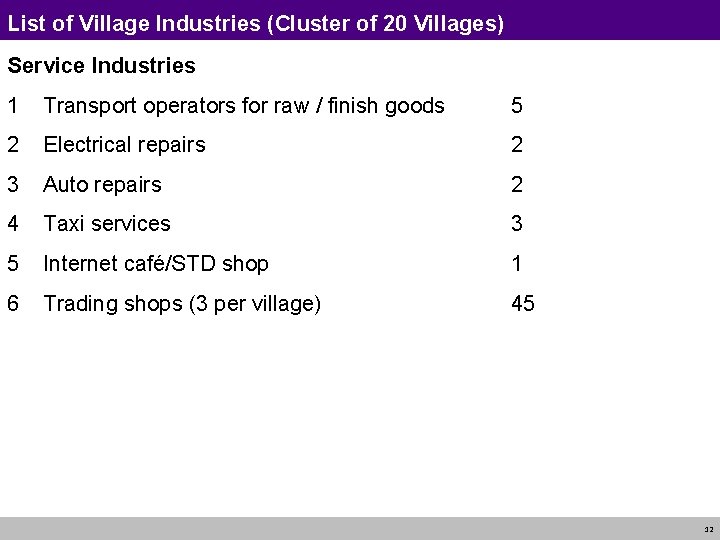
List of Village Industries (Cluster of 20 Villages) Service Industries 1 Transport operators for raw / finish goods 5 2 Electrical repairs 2 3 Auto repairs 2 4 Taxi services 3 5 Internet café/STD shop 1 6 Trading shops (3 per village) 45 12
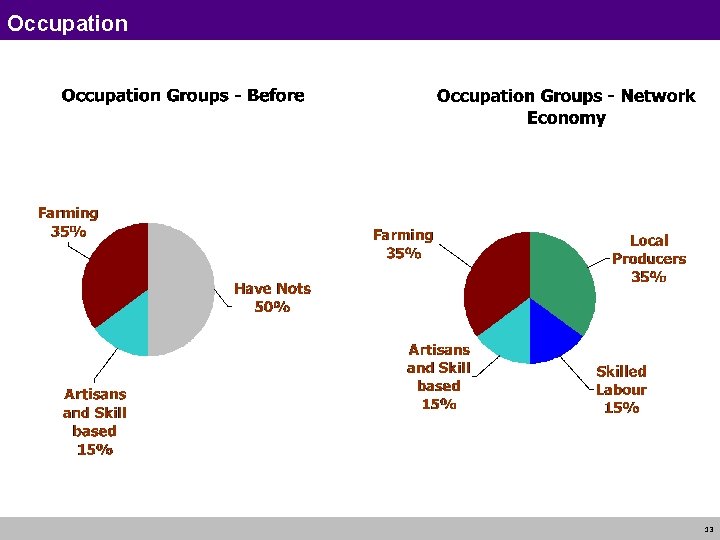
Occupation 13
Village Technology "My machinery must be of the most elementary type which I can put in the homes of the millions. Under my system, again, it is labour which is the current coin, not metal. Any person who can use his labour has that coin, has wealth. He converts his labour into cloth; he converts his labour into grain. If he wants paraffin oil, which he cannot himself produce, he used his surplus grain for getting the oil. " – Mahatma Gandhi · Dormant skills within the village in handling technology in producing what they need has to be augmented with machinery that is easy to operate and maintain for fundamental needs · Any external dependency from the village has to be balanced with production for the outside markets Complementing traditional skills & knowledge with modern technology provides the villages with effective and sustainable solutions. Some such technologies are also available from institutions like · Central Food Technological Research Institute · Central Electro Chemical Research Institute · Regional laboratories and other CSIR laboratories · Indian Institute of Technology (IITs) · Other institutions like KVIC, HUDCO, Development Alternatives, ITRCs etc. 14
This is a very good example of what people can do together (there is still a lot of space for good work in the current system)! Contact: Elango Ramaswamy, Ashoka Fellow, Trust for Self Governance & Ex. Sarpanch of Kuthambakkam Gram Panchayat Kuthambakkam, Poonamallee Block, Thiruvallur District TN 600124 +91 44 2681 1247 http: //www. modelvillageindia. org. in 15
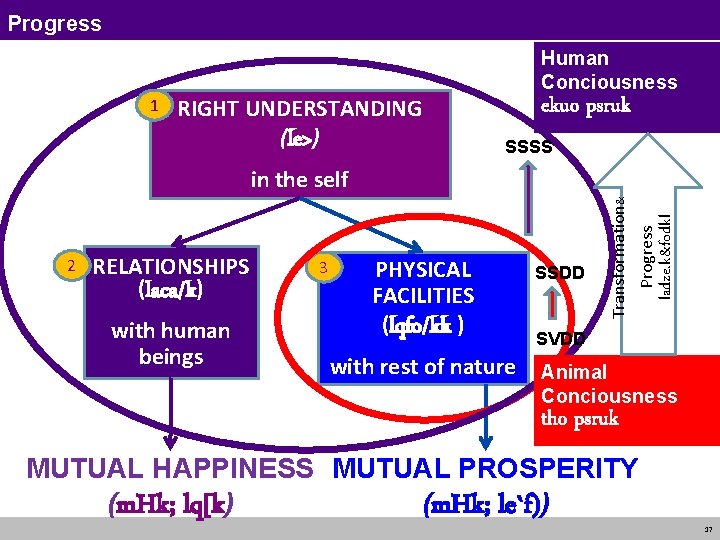
Progress 1 RIGHT UNDERSTANDING (le>) Human Conciousness ekuo psruk SSSS with human beings 3 PHYSICAL FACILITIES (lqfo/kk ) with rest of nature SSDD ladze. k&fodkl RELATIONSHIPS (laca/k) Progress 2 Transformation& in the self SVDD Animal Conciousness tho psruk MUTUAL HAPPINESS MUTUAL PROSPERITY (m. Hk; lq[k) (m. Hk; le`f)) 17
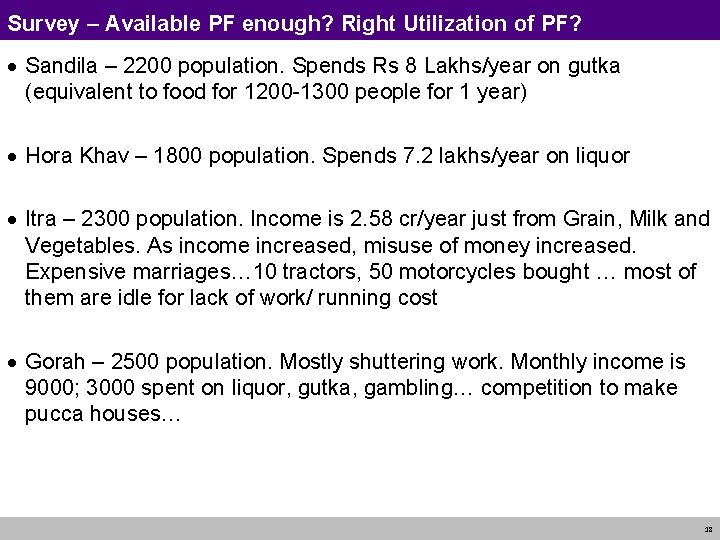
Survey – Available PF enough? Right Utilization of PF? · Sandila – 2200 population. Spends Rs 8 Lakhs/year on gutka (equivalent to food for 1200 -1300 people for 1 year) · Hora Khav – 1800 population. Spends 7. 2 lakhs/year on liquor · Itra – 2300 population. Income is 2. 58 cr/year just from Grain, Milk and Vegetables. As income increased, misuse of money increased. Expensive marriages… 10 tractors, 50 motorcycles bought … most of them are idle for lack of work/ running cost · Gorah – 2500 population. Mostly shuttering work. Monthly income is 9000; 3000 spent on liquor, gutka, gambling… competition to make pucca houses… 18
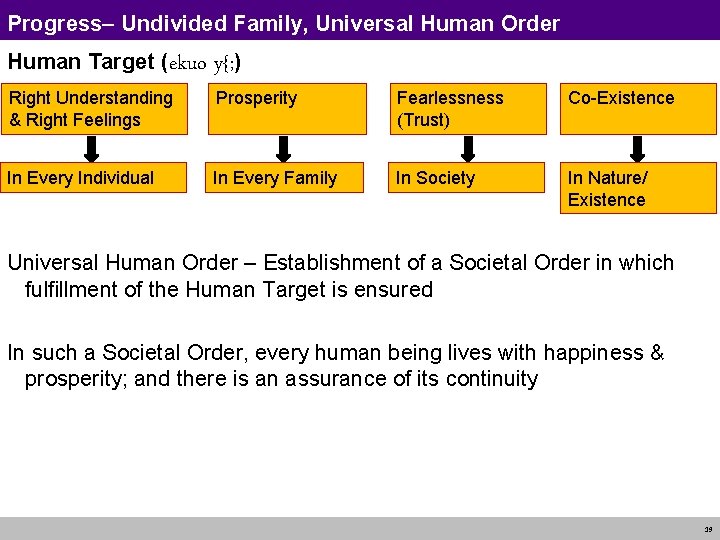
Progress– Undivided Family, Universal Human Order Human Target (ekuo y{; ) Right Understanding & Right Feelings Prosperity Fearlessness (Trust) Co-Existence In Every Individual In Every Family In Society In Nature/ Existence Universal Human Order – Establishment of a Societal Order in which fulfillment of the Human Target is ensured In such a Societal Order, every human being lives with happiness & prosperity; and there is an assurance of its continuity 19
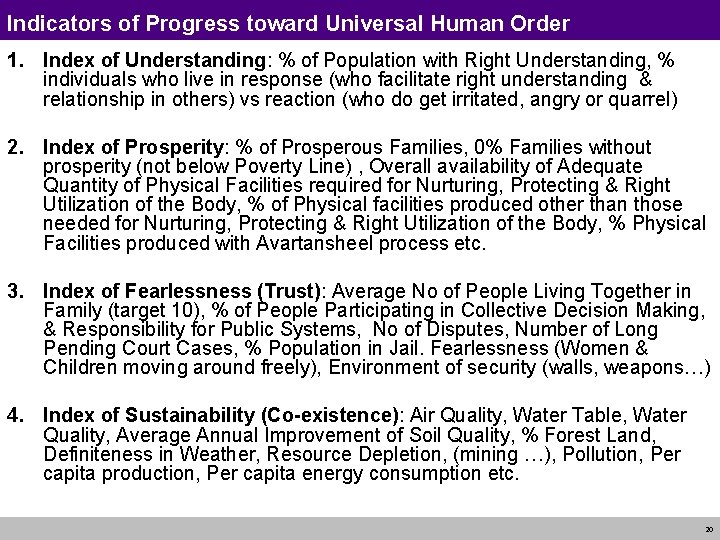
Indicators of Progress toward Universal Human Order 1. Index of Understanding: % of Population with Right Understanding, % individuals who live in response (who facilitate right understanding & relationship in others) vs reaction (who do get irritated, angry or quarrel) 2. Index of Prosperity: % of Prosperous Families, 0% Families without prosperity (not below Poverty Line) , Overall availability of Adequate Quantity of Physical Facilities required for Nurturing, Protecting & Right Utilization of the Body, % of Physical facilities produced other than those needed for Nurturing, Protecting & Right Utilization of the Body, % Physical Facilities produced with Avartansheel process etc. 3. Index of Fearlessness (Trust): Average No of People Living Together in Family (target 10), % of People Participating in Collective Decision Making, & Responsibility for Public Systems, No of Disputes, Number of Long Pending Court Cases, % Population in Jail. Fearlessness (Women & Children moving around freely), Environment of security (walls, weapons…) 4. Index of Sustainability (Co-existence): Air Quality, Water Table, Water Quality, Average Annual Improvement of Soil Quality, % Forest Land, Definiteness in Weather, Resource Depletion, (mining …), Pollution, Per capita production, Per capita energy consumption etc. 20
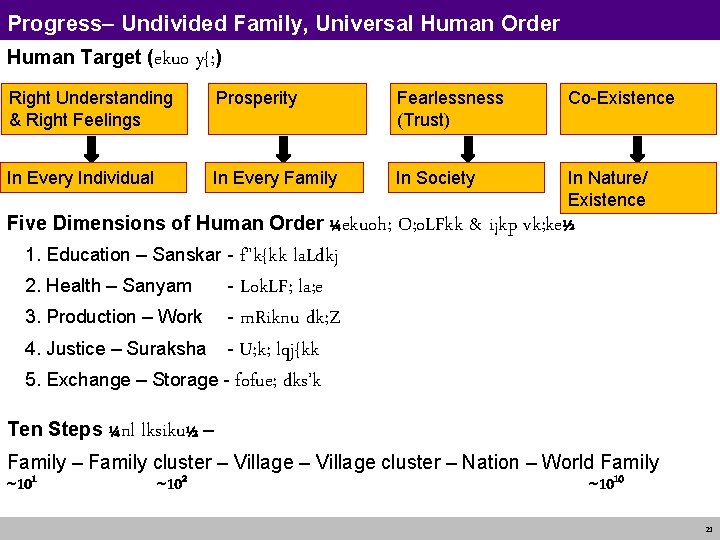
Progress– Undivided Family, Universal Human Order Human Target (ekuo y{; ) Right Understanding & Right Feelings Prosperity Fearlessness (Trust) Co-Existence In Every Individual In Every Family In Society In Nature/ Existence Five Dimensions of Human Order ¼ekuoh; 1. Education – Sanskar - f”k{kk la. Ldkj 2. Health – Sanyam - Lok. LF; la; e 3. Production – Work - m. Riknu dk; Z 4. Justice – Suraksha - U; k; lqj{kk 5. Exchange – Storage - fofue; dks’k Ten Steps ¼nl O; o. LFkk & i¡kp vk; ke½ lksiku½ – Family cluster – Village cluster – Nation – World Family ~101 ~102 ~1010 21
- Slides: 20