
Kullancsokban azonostott krokozk Borrelik Rickettsiak Bartonellk Anaplasmk Francisellk
Kullancsokban azonosított kórokozók: Borreliák, Rickettsiak, Bartonellák, Anaplasmák, Francisellák, Babesiak Dr. Füzi Miklós SE Orvosi Mikrobiológiai Intézet

2

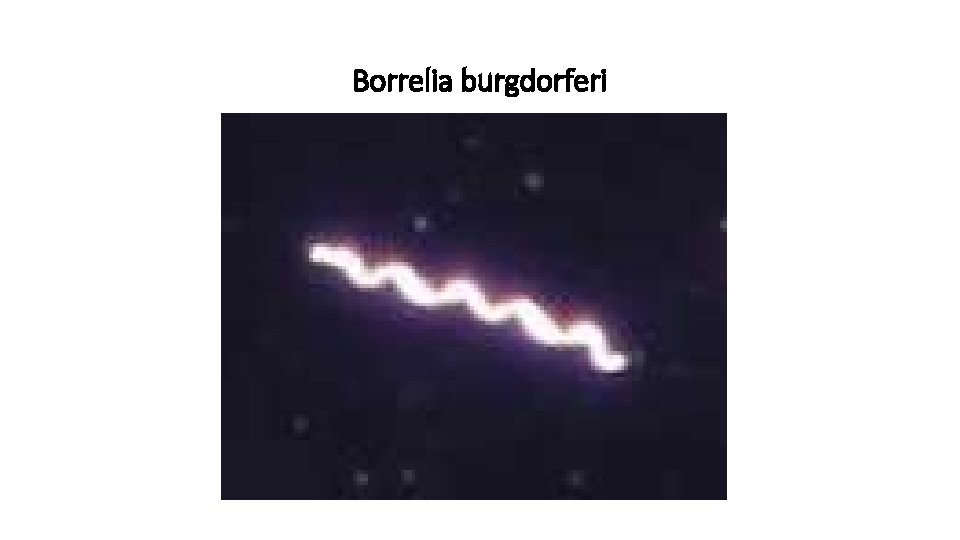
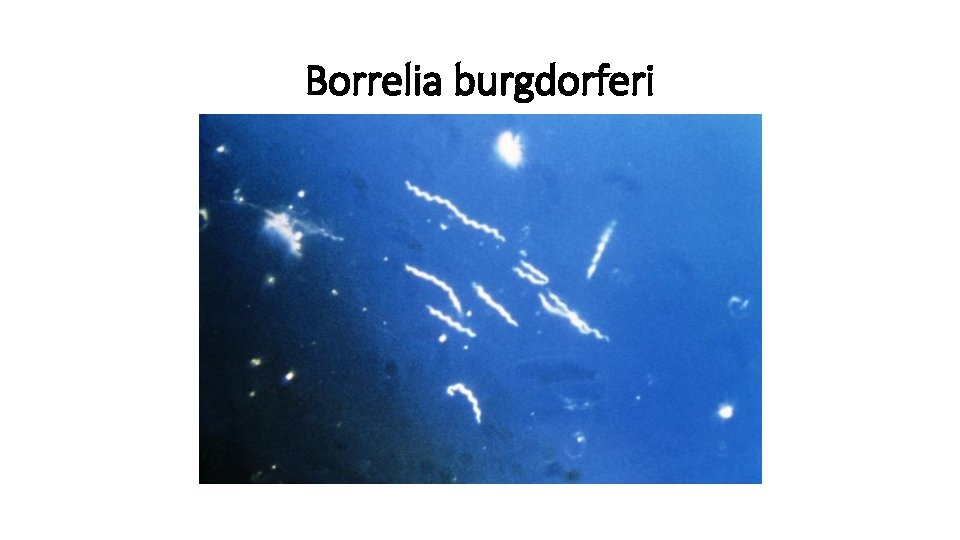
Borreliák • Spirochéták (vékony csavar alakú baktériumok) számos species • Igen hosszú (20 – 30 μm) és vékony (0, 2 μm) baktériumok • Genetika: lineáris kromoszóma (about 900 kbp); számos lineáris és kör alakú plasmid (5 -220) – a kis méretű kromoszoma kevéssé alkalmas antibiotikum rezisztencia kialakítására • A plasmidok szerepe: - alkalmazkodás különböző gazda szervezetekhez - immunválasz elkerülése • Tenyésztés: igen nehéz - csak az 1980 -as években fedezték fel • Reservoir: állatok • Átvitel: kullancs
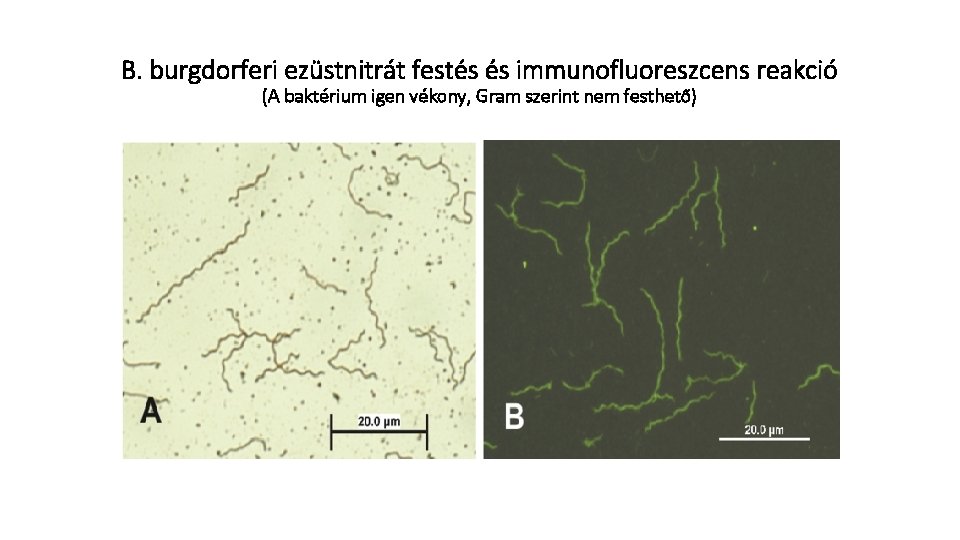
B. burgdorferi ezüstnitrát festés és immunofluoreszcens reakció (A baktérium igen vékony, Gram szerint nem festhető)
Borrelia burgdorferi
Borrelia burgdorferi
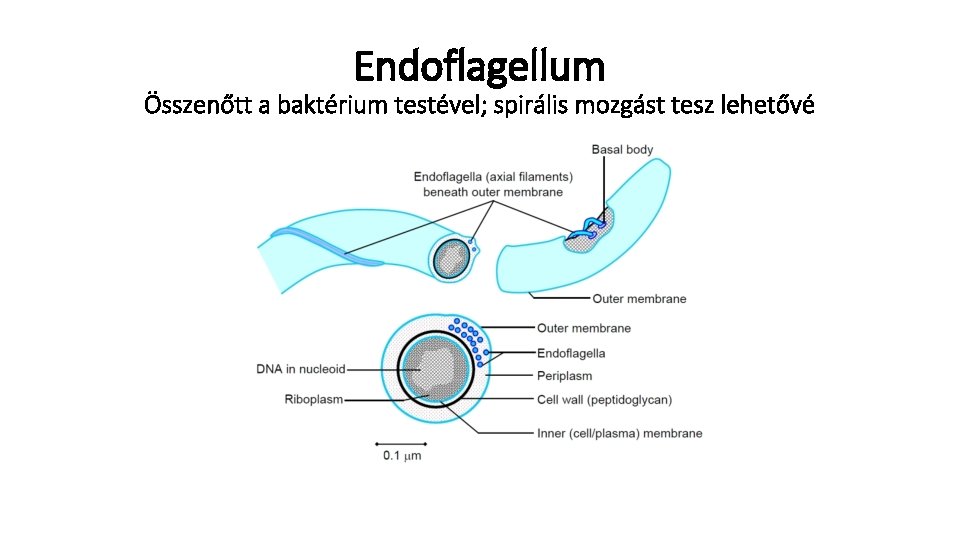
Endoflagellum Összenőtt a baktérium testével; spirális mozgást tesz lehetővé
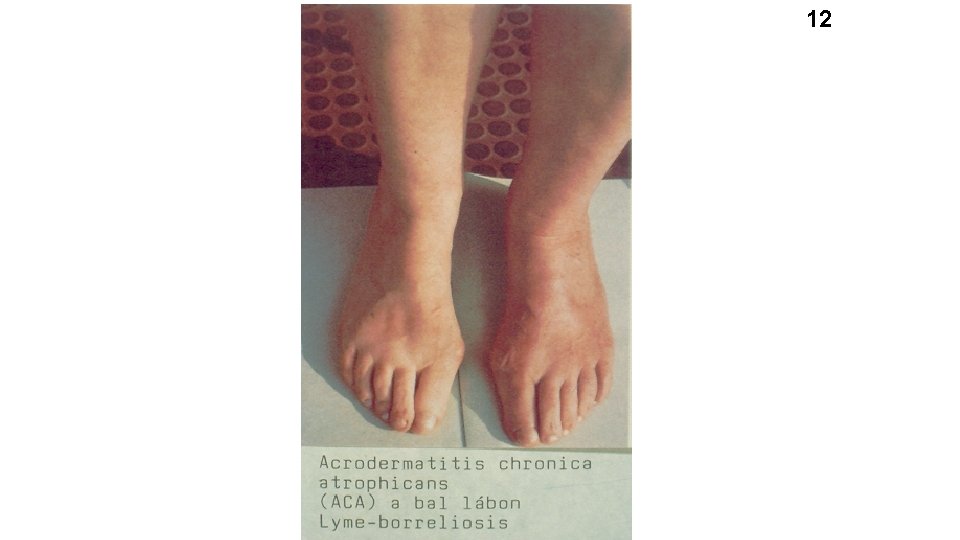
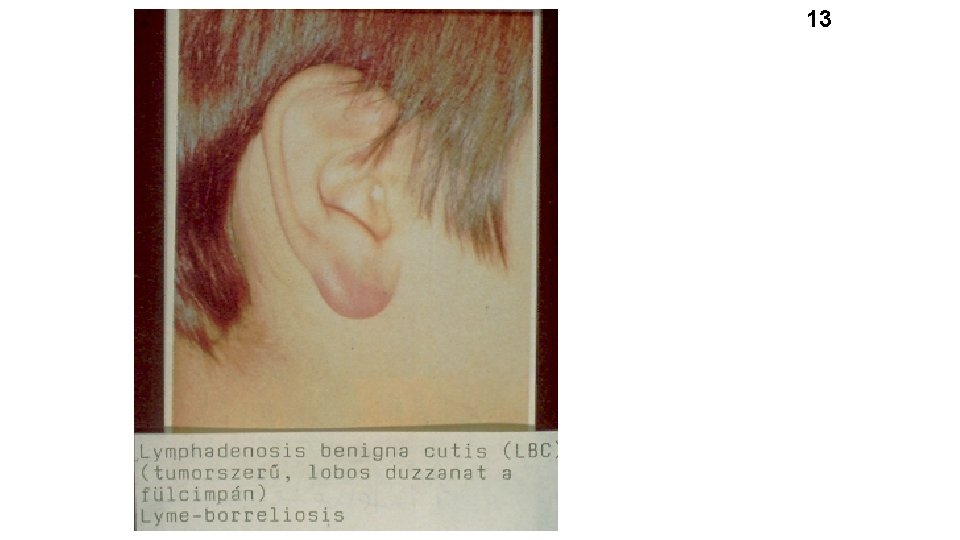
Borreliosis – Lyme betegség • Reseroir: állat fajok • Átvitel: kullancs • 1. stádium: bőrtünetek, erythema migrans, nyirokcsomó megnagyobbodás, gyakran láz • 2. stádium: arthritis • 3. stádium: központi idegrendszer-, szív • Diagnózis: serológia; PCR • Kezelés: ß-laktámok, doxiciklin • Magyarországon évente mintegy 2000 esetet jelentenek; ennél valójában több fordul elő
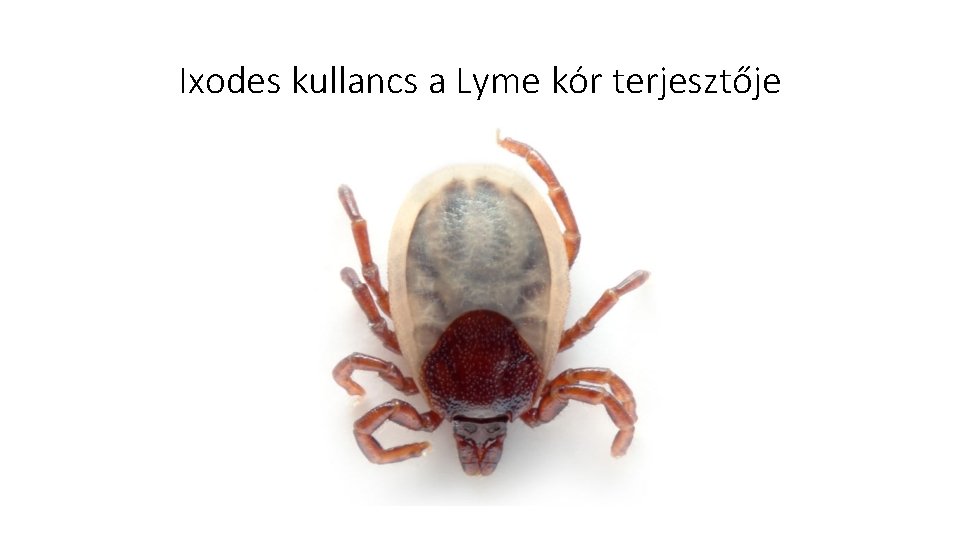
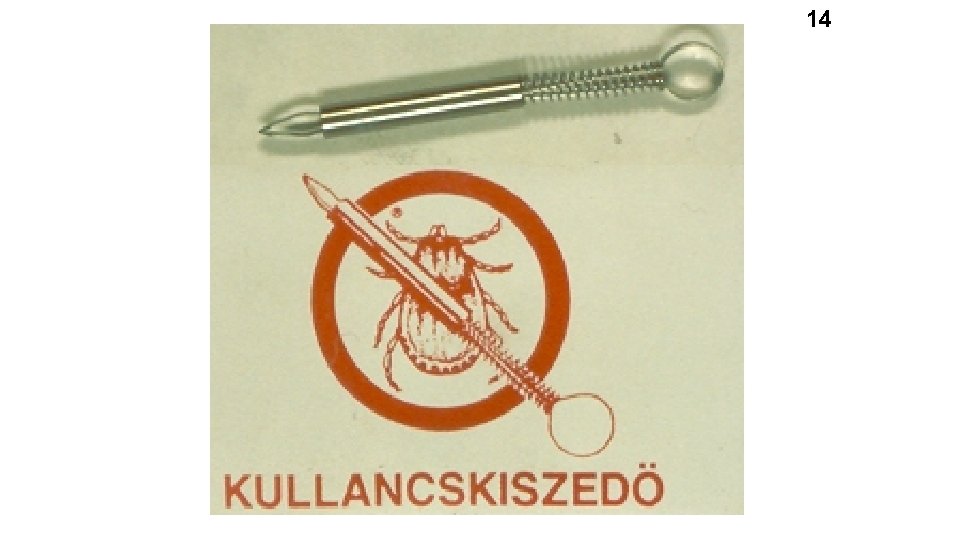
Ixodes kullancs a Lyme kór terjesztője
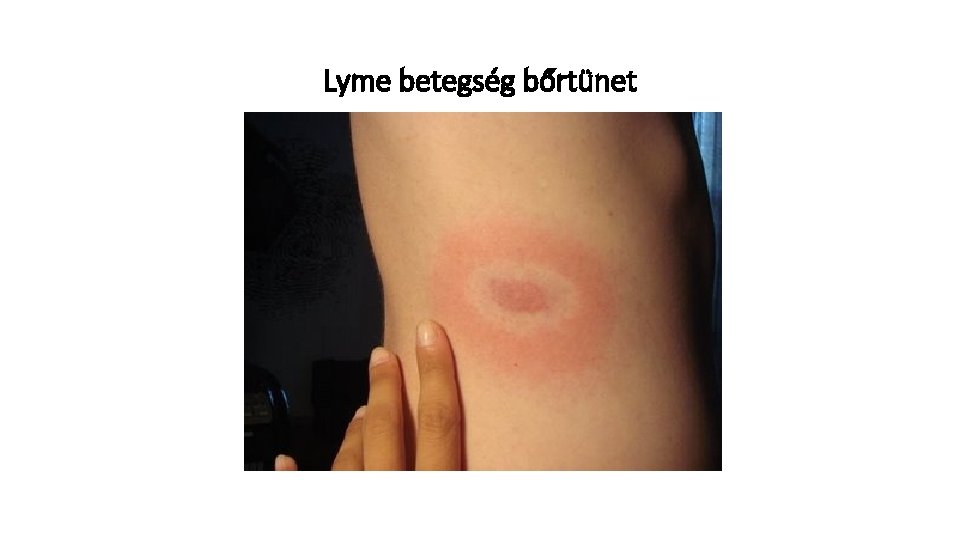
Lyme betegség bőrtünet

11 Fig. 103 Lyme disease. Rash of erythema chronicum migrans on leg. By courtesy of Dr. E. Sahn.
12
13
14
Borrelia – pathogenitás 1. Endoflagellum • Az endoflagellum igen aktív mozgást tesz lehetővé ↓ • A Borrelia képes viszonylag könnyen átjutni a szervezet különböző „védőgátjain” (pl. vér-agy barrier) ↓ • Képes jelentős mértékben elkerülni a specifikus immunválaszt - endothel sejteken való átjutás – kikerül a keringésből ezáltal mind a phagocyták, mind az ellenanyagok kevésbé férnek hozzá - intracelluláris lokalizáció – ugyancsak jelentős védelmet nyújt az immunrendszerrel szemben
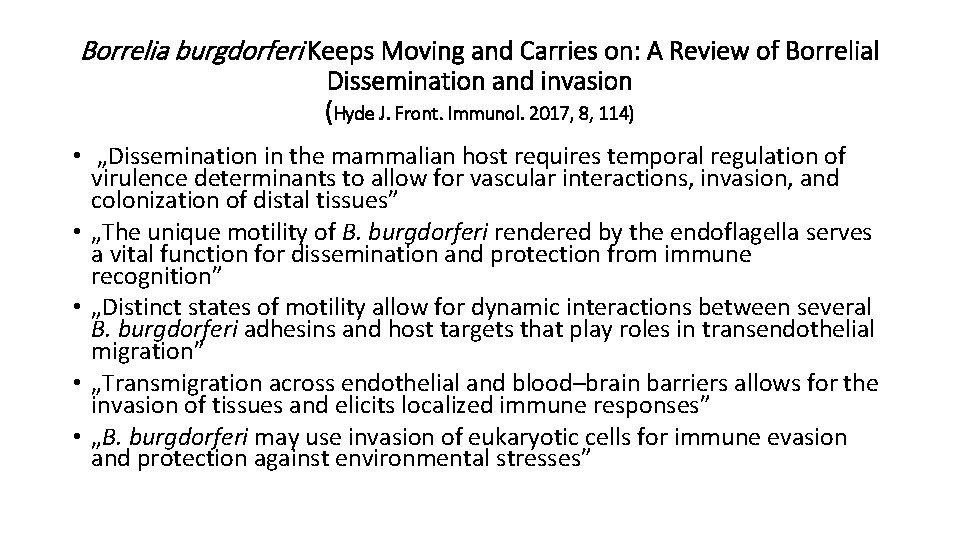
Borrelia burgdorferi Keeps Moving and Carries on: A Review of Borrelial Dissemination and invasion (Hyde J. Front. Immunol. 2017, 8, 114) • „Dissemination in the mammalian host requires temporal regulation of virulence determinants to allow for vascular interactions, invasion, and colonization of distal tissues” • „The unique motility of B. burgdorferi rendered by the endoflagella serves a vital function for dissemination and protection from immune recognition” • „Distinct states of motility allow for dynamic interactions between several B. burgdorferi adhesins and host targets that play roles in transendothelial migration” • „Transmigration across endothelial and blood–brain barriers allows for the invasion of tissues and elicits localized immune responses” • „B. burgdorferi may use invasion of eukaryotic cells for immune evasion and protection against environmental stresses”
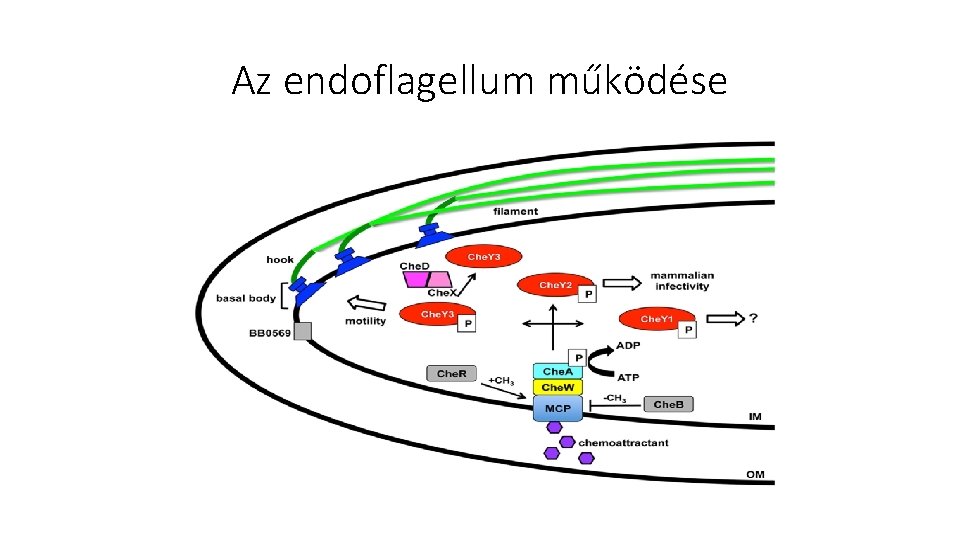
Az endoflagellum működése
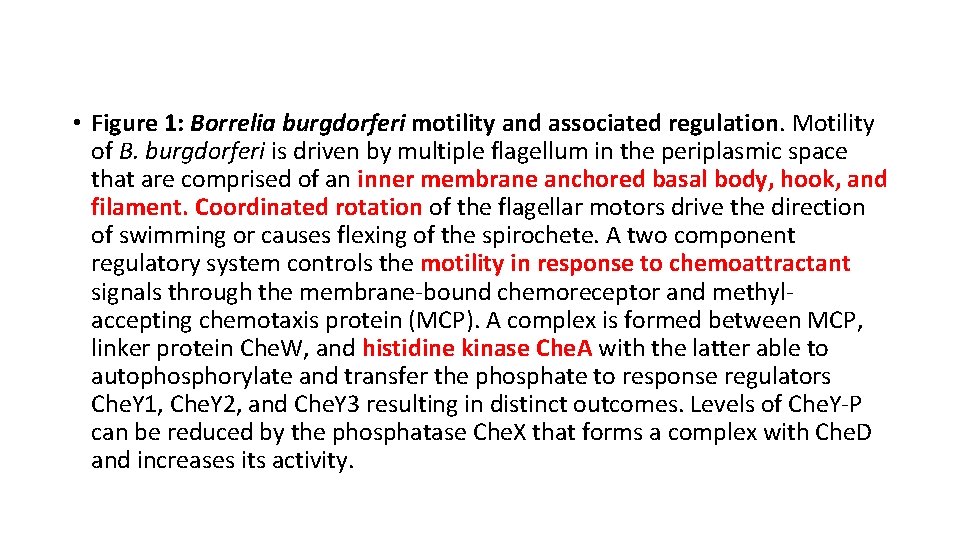
• Figure 1: Borrelia burgdorferi motility and associated regulation. Motility of B. burgdorferi is driven by multiple flagellum in the periplasmic space that are comprised of an inner membrane anchored basal body, hook, and filament. Coordinated rotation of the flagellar motors drive the direction of swimming or causes flexing of the spirochete. A two component regulatory system controls the motility in response to chemoattractant signals through the membrane-bound chemoreceptor and methylaccepting chemotaxis protein (MCP). A complex is formed between MCP, linker protein Che. W, and histidine kinase Che. A with the latter able to autophosphorylate and transfer the phosphate to response regulators Che. Y 1, Che. Y 2, and Che. Y 3 resulting in distinct outcomes. Levels of Che. Y-P can be reduced by the phosphatase Che. X that forms a complex with Che. D and increases its activity.

2. Proteolitikus hatás elősegíti a Borrelia bejutását az extracelluláris matrixba Bb. Htr. A: lebontja a proteoglycanokat Metalloproteináz termelés indukálása: collagen bontás

• Figure 3 Proteolytic activity may promote Borrelia burgdorferi invasion of the extracellular matrix. B. burgdorferi (Bb) protease Bb. Htr. A cleaves the family of hyalectin proteoglycans that includes hyalectin family of chondroitin sulfate proteoglycans, including aggrecan, brevican, neurocan, and versican. Specifically, Bb. Htr. A protease activity degrades aggrecan (green lines) as indicated by dotted green line. This activity may contribute to ECM degradation and allow invasion of the pathogen. The presence of B. burgdorferi induces host matrix metalloproteases (MMP) from endothelial cells, chondrocytes, neutrophils, lymphoblast, and keratinocytes. Collagen (red lines) is degraded (dotted red line) by MMP-1 that is transcriptionally regulated along with MMP-3 through the JNK, mitogen-activated protein kinase, and JAK/STAT pathways.
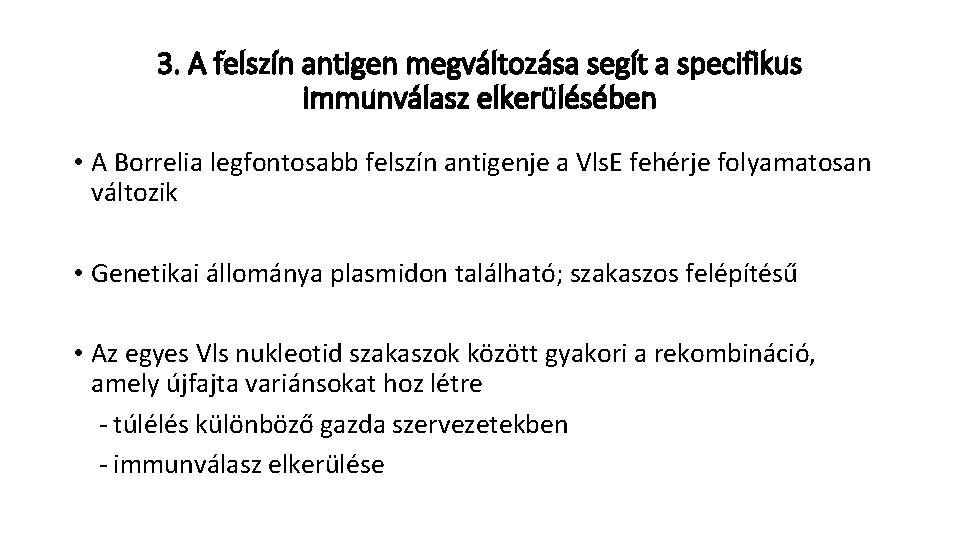
3. A felszín antigen megváltozása segít a specifikus immunválasz elkerülésében • A Borrelia legfontosabb felszín antigenje a Vls. E fehérje folyamatosan változik • Genetikai állománya plasmidon található; szakaszos felépítésű • Az egyes Vls nukleotid szakaszok között gyakori a rekombináció, amely újfajta variánsokat hoz létre - túlélés különböző gazda szervezetekben - immunválasz elkerülése
The vls antigenic variation systems of Lyme disease Borrelia: eluding host immunity through both random, segmental gene conversion and framework heterogeneity Norris S. Microbiol Spectr. 2014; 2(6): doi: 10. 1128/microbiolspec. • Spirochetes that cause Lyme borreliosis (also called Lyme disease) possess the vls locus, encoding an elaborate antigenic variation system. This locus contains the expression site vls. E as well as a contiguous array of vls silent cassettes, which contain variations of the central cassette region of vls. E. The locus is present on one of the many linear plasmids in the organism • Changes in the sequence of vls. E occur continuously during mammalian infection and consist of random, segmental, unidirectional recombination events between the silent cassettes and the cassette region of vls. E. These gene conversion events do not occur during in vitro culture or the tick portion of the infection cycle • The vls system is required for long-term survival of Lyme Borrelia in infected mammals and represents an important mechanism of immune evasion
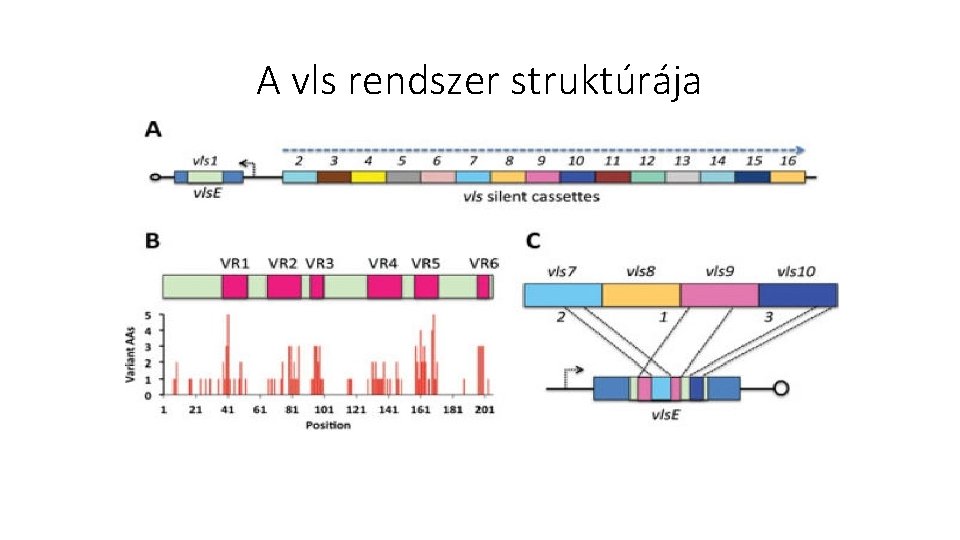
A vls rendszer struktúrája
• Figure 1. Characteristics of the vls locus of B. burgdorferi B 31. A. Arrangement of the vls. E expression site and the 15 silent cassettes near the telomere of the linear plasmid lp 28 -1. The promoter for vls. E is indicated by the short arrow and the orientation of the silent cassettes is shown by the large arrow. B. The cassette regions contain six variable regions (VR 1 through VR 6) separated by relatively invariant regions (IRs). The graph indicates the number of different amino acids encoded by the silent cassettes at each codon in the aligned sequences. Unidirectional, random, segmental recombination occurs sequentially during mammalian infection

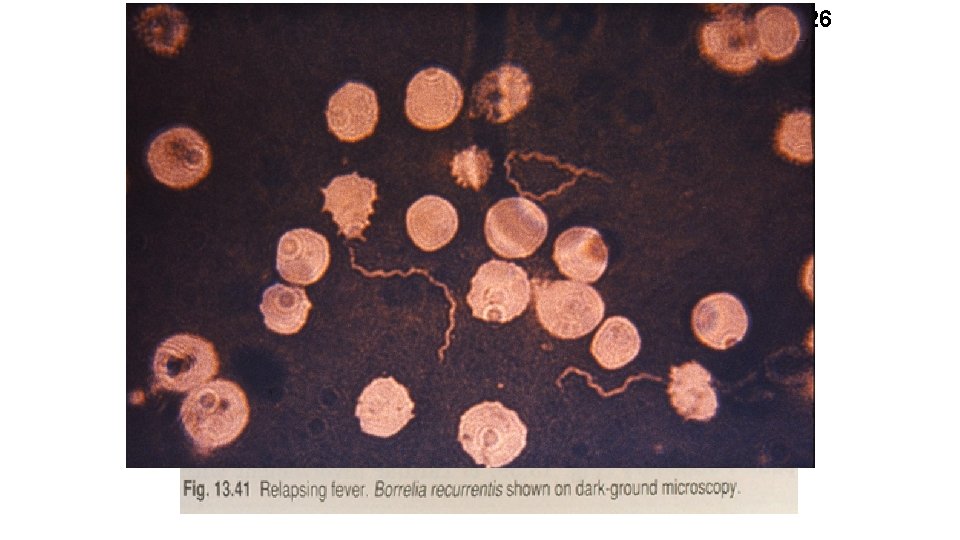
Más Borrelia fajok által okozott „visszatérő lázak” • Tetű által közvetített visszatérő láz: Borrelia recurrentis Reservoir: ember • Kullancs által közvetített visszatérő láz: különböző Borrelia fajok (kizárólag meleg éghajlaton) Reservoir: elsősorban rágcsálók • Tünetek: magas láz, lázas és láztalan időszakok váltakoznak, sárgaság, megváltozott tudati állapot • Az újra és újra visszatérő lázas állapotot a kórokozó antigen struktúrájának megváltozása okozza • Diagnózis: - vér kenet vizsgálata sötét látóterű mikroszkópban - PCR • Therápia : tetraciklin
26
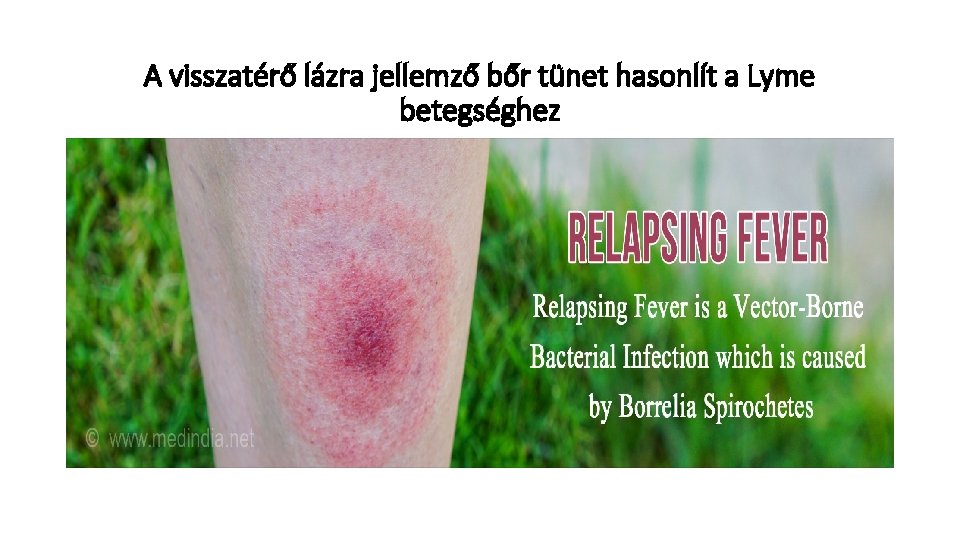
A visszatérő lázra jellemző bőr tünet hasonlít a Lyme betegséghez

28

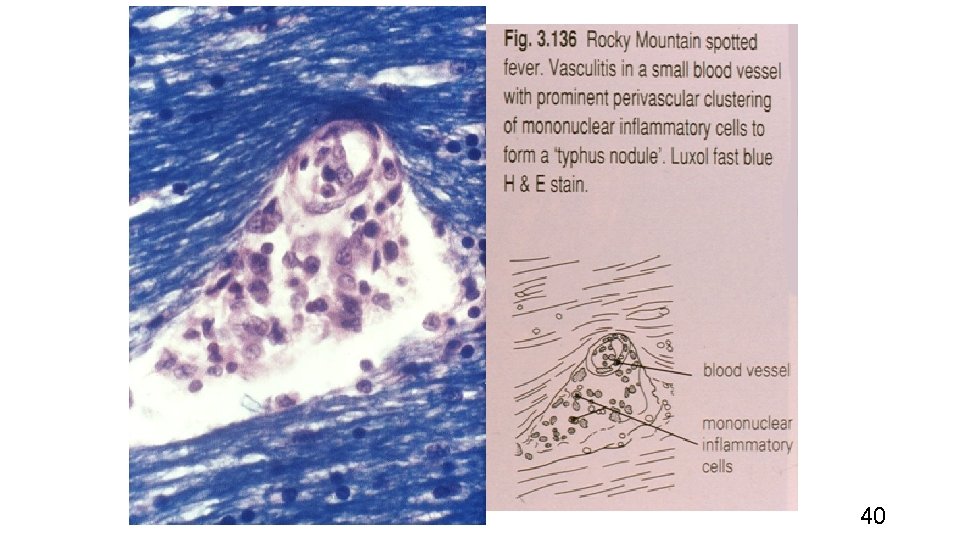
Rickettsiák • Kisméretű intracelluláris parazita baktériumok • Giemsa szerint festhetők • Sejtfaluk a Gram negatív baktériumokéra emlékeztet • Kizárólag szövetkultúrán tenyészthetők • Átvitel: reservoirként is szolgáló rovarok által • Klinikai kép: nyirokcsomó megnagyobbodás, láz, kiütés, vasculitis (az érfal endothel sejtjeiben jól szaporodnak aminek következtében thrombosisok alakulnak ki) • A betegekben keletkező ellenanyagok kereszt reakciót adnak proteus antigénekkel
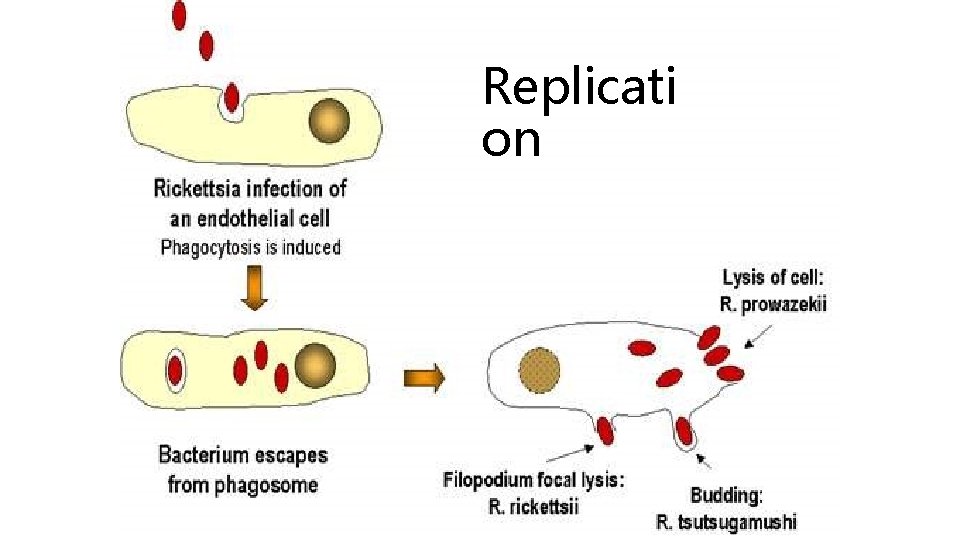
Replicati on
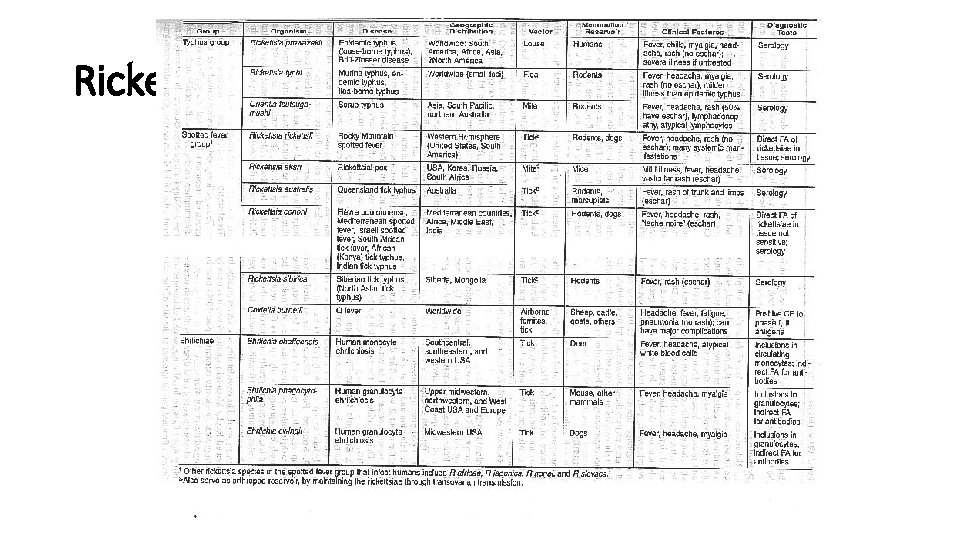
Rickettsiales • Rickettsiae: a csoportosítás „ellentmondásos” - typhus csoport: - kiütéses typhus - „patkány typhus” - foltosláz csoport - kullancs által: Rocky Mountains kiütéses láz minden földrajzi terület saját fajokkal rendelkezik Közép Europa: Rickettsia slovaca - atka által: ázsiai „bozót láz” (Orientia tsutsugamushi) • Coxiella burnetii: Q láz • Anaplasmatales: Ehrlichiae
Rickettsia
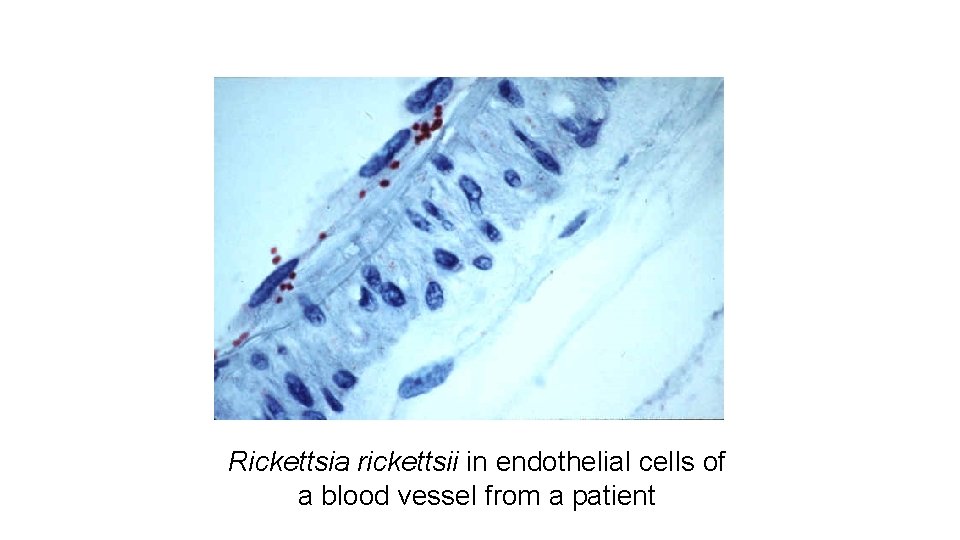
Rickettsia rickettsii in endothelial cells of a blood vessel from a patient
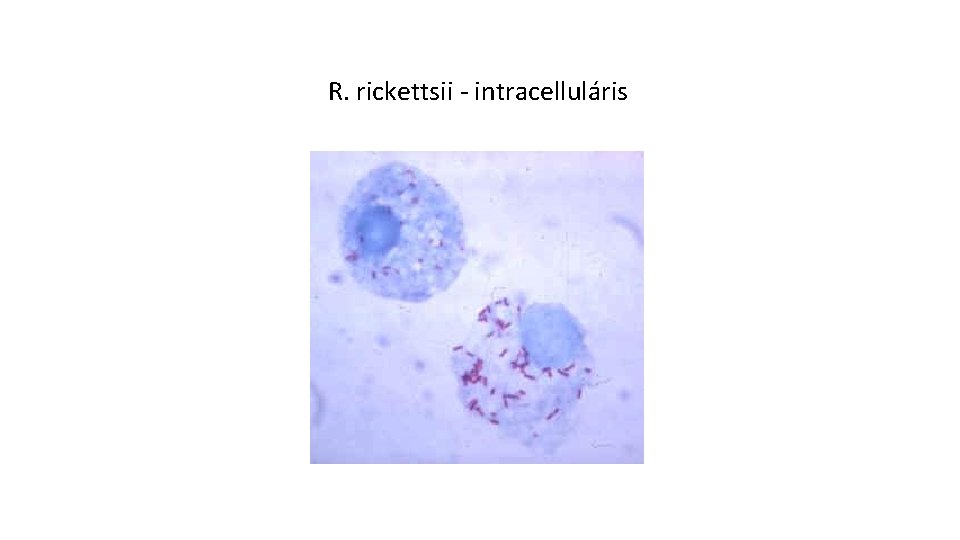
R. rickettsii - intracelluláris Rickettsia
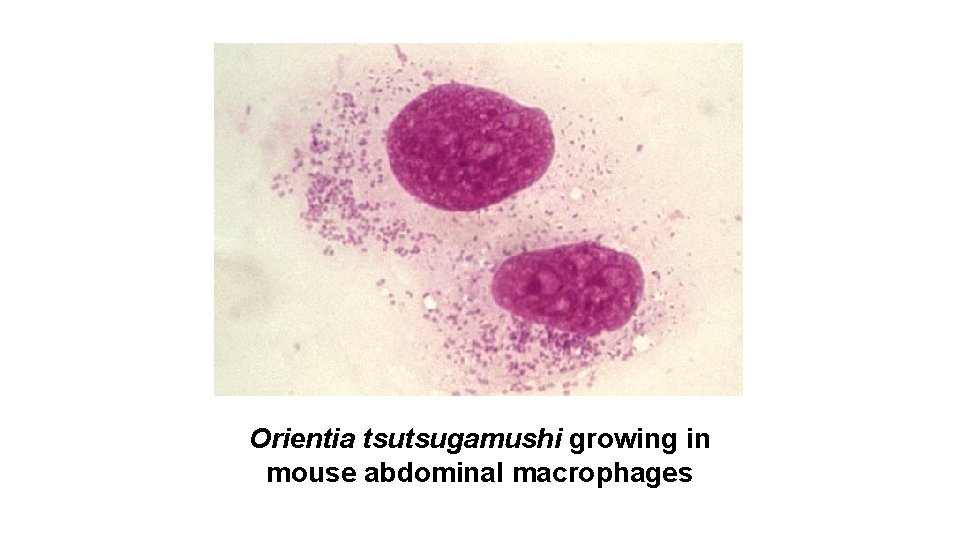
Orientia tsutsugamushi growing in mouse abdominal macrophages (Giemsa)

R. prowazekii Tetű Ember Tetű Kiütéses typhus Diagnózis: Weil-Felix reakció (aggl. Proteus antigénnel) Visszatérő formája: Brill-Zinsser betegség
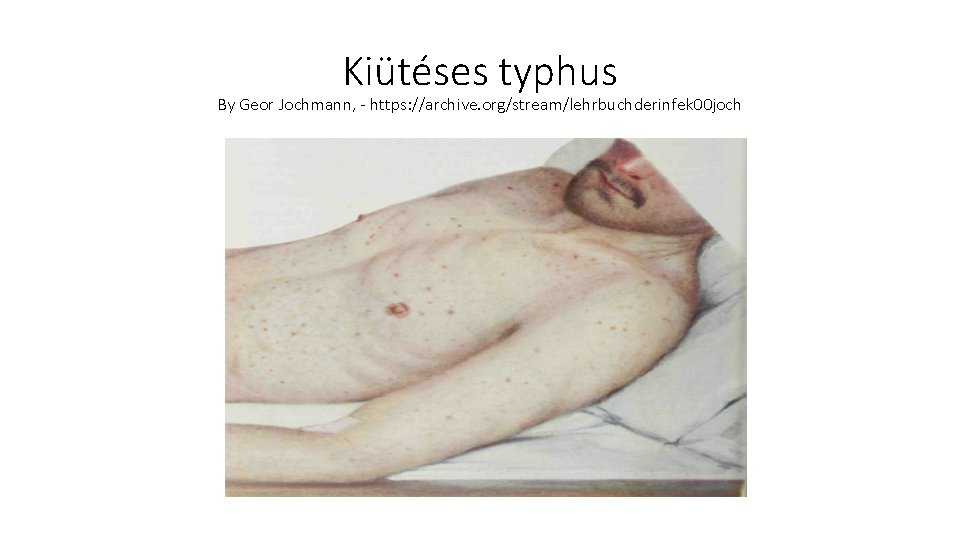
Kiütéses typhus By Geor Jochmann, - https: //archive. org/stream/lehrbuchderinfek 00 joch
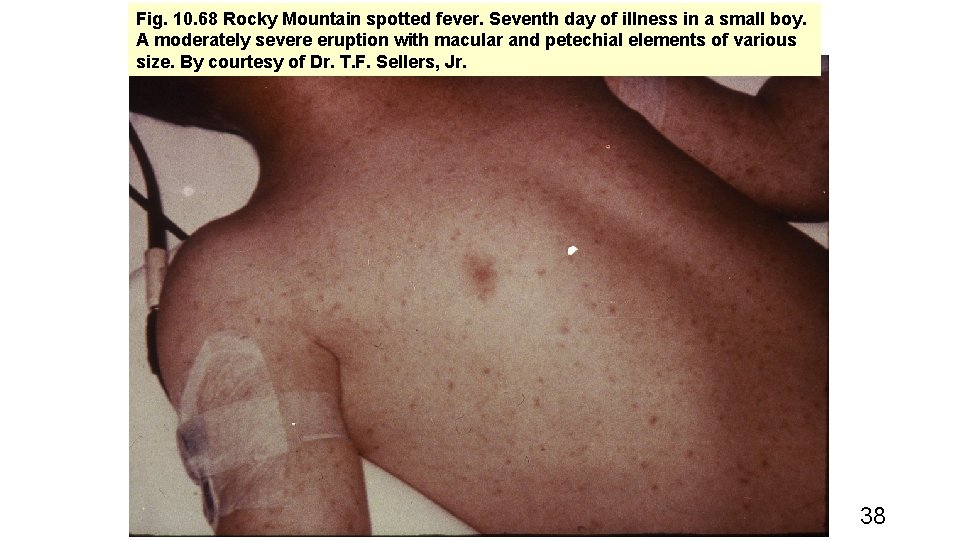
Fig. 10. 68 Rocky Mountain spotted fever. Seventh day of illness in a small boy. A moderately severe eruption with macular and petechial elements of various size. By courtesy of Dr. T. F. Sellers, Jr. 38
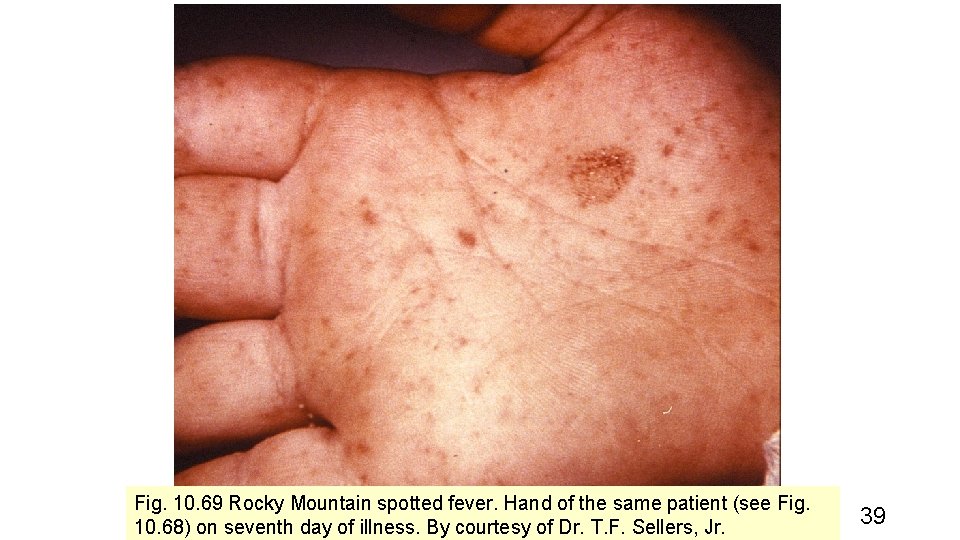
Fig. 10. 69 Rocky Mountain spotted fever. Hand of the same patient (see Fig. 10. 68) on seventh day of illness. By courtesy of Dr. T. F. Sellers, Jr. 39
40
Rickettsioses in Europe Microbes Infect 2015, 217, 834 • Mediterranean Spotted Fever (MSF-like) - Rickettsia conorii - Rickettsia helvetica, - Rickettsia monacensis, - Rickettsia massiliae - Rickettsia aeschlimannii.
Rickettsioses in Europe Microbes Infect 2015, 217, 834 • In the 1990 s … 'new' rickettsioses were diagnosed: Lymphangitis Associated Rickettsiosis (LAR) caused by Rickettsia sibirica … Rickettsia slovaca, Rickettsia rioja and Rickettsia raoultii. ↓ Nemrég fedezték a fajok jelentős részét mert enyhe tüneteket okoznak R. slovaca: nyirokcsomó megnagyobbodás hőemelkedés • Diagnozis: tünetek alapján; serológia, PCR

Ehrlichiaceae Rend: Rickettsiales Család: Anaplasma Obligát intracelluláris pathogen Átvitel: kullancs Fontosabb tünetek: fejfájás, izom gyengeség, kimerültség esetek egy részében: bőrkiütés jelentősen gyengítheti az immunrendszert a TNF-alpha gátlásával (candidiasis) Magyarországon általában enyhe tünetekkel jár – gyakran nem kerül diagnosztizálásra • Diagnózis: PCR, serológia • Therápia: tetracyclin • • •
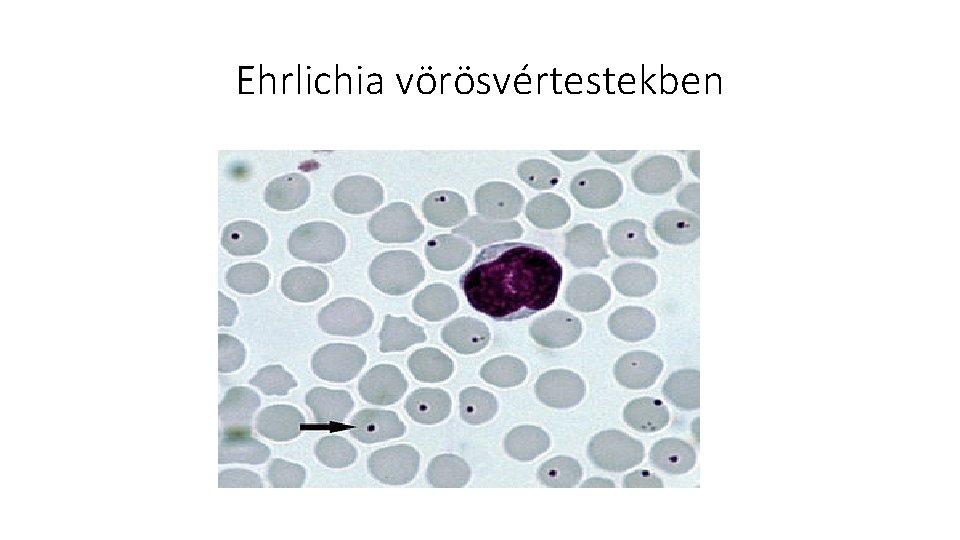
Ehrlichia vörösvértestekben
Coxiella burnetii • Q láz kórokozója • Terjedés cseppfertőzés, kontakt; kullancs • Reservoir: házi állatok • Tünetek: bronchitis, tüdőgyulladás, magas láz • Diagnózis: - serológia - PCR • Therápia: tetracyclin származékok

Human Bartonellosis: An Underappreciated Public Health Problem? Cheslock et al. Trop Med Infect Dis. 2019 Apr 19; 4(2)
Bartonella henselae – „macska karmolási betegség” • Fakultatív intracelluláris baktérium • Gyakran vörös vértestekben található • Tenyésztés: igen nehéz • Festés: ezüst impregnáció • Reservoir: macska • Átvitel: kontakt, kullancs • Tünetek: bőrelváltozás, nyirokcsomó megnagyobbodás, esetleg láz • Diagnózis: PCR, serológia • Therápia: makrolidek (csak ha nyirokcsomó megnagyobbodás kíséri)
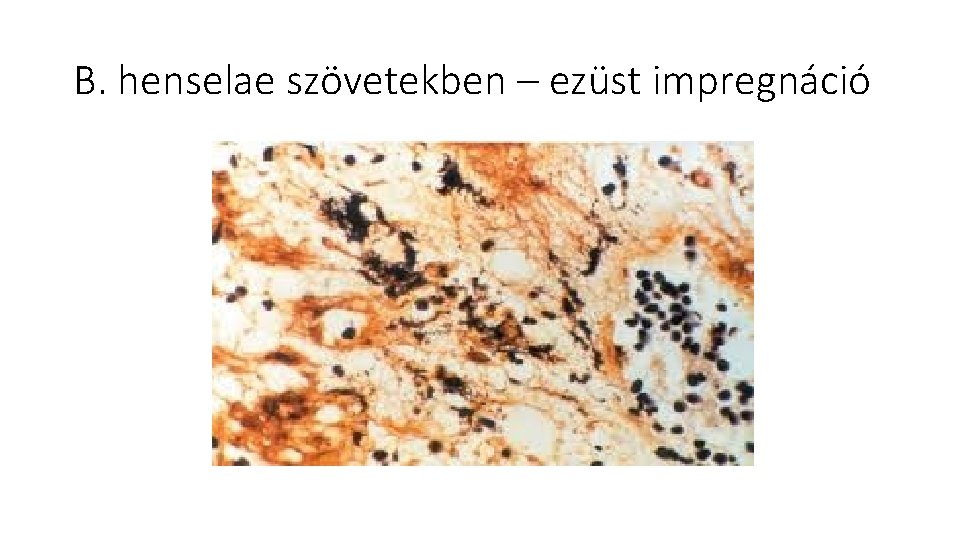
B. henselae szövetekben – ezüst impregnáció
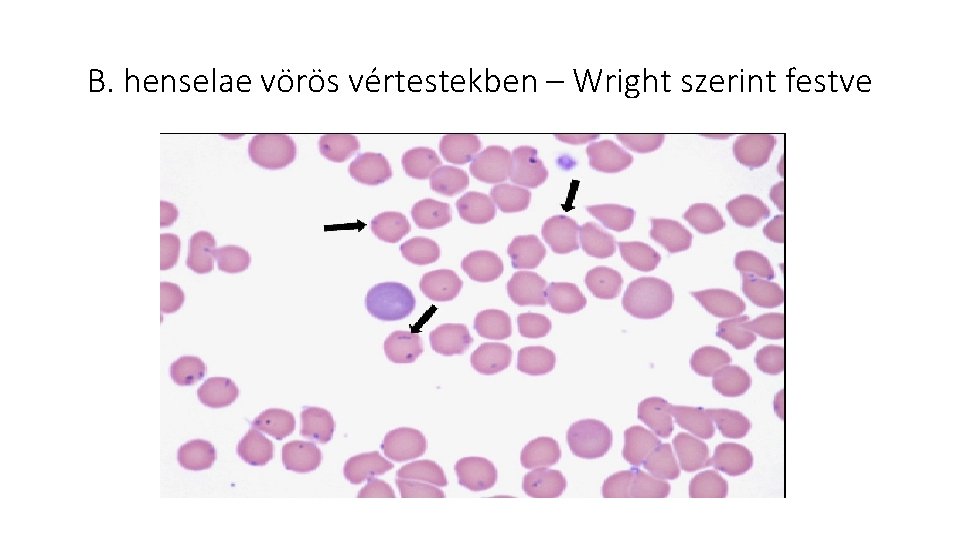
B. henselae vörös vértestekben – Wright szerint festve
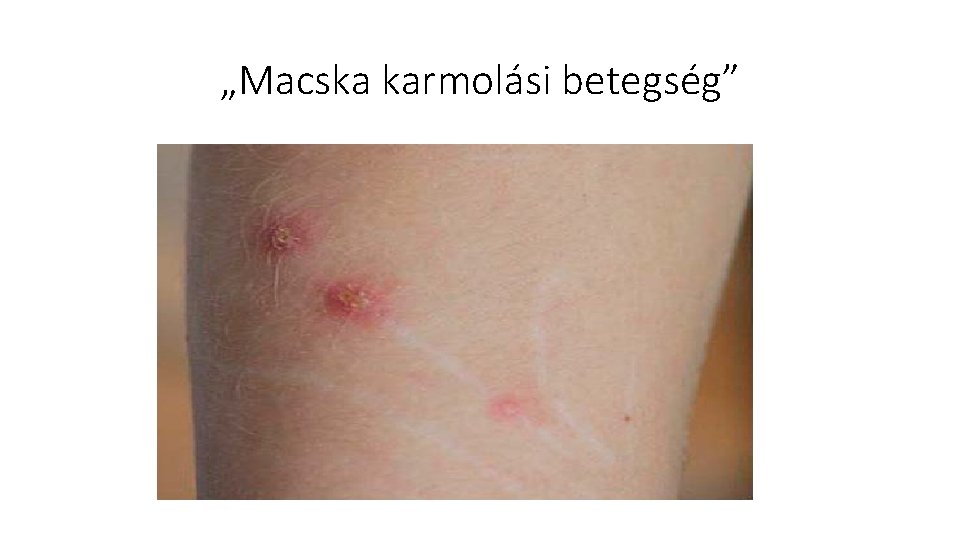
„Macska karmolási betegség”
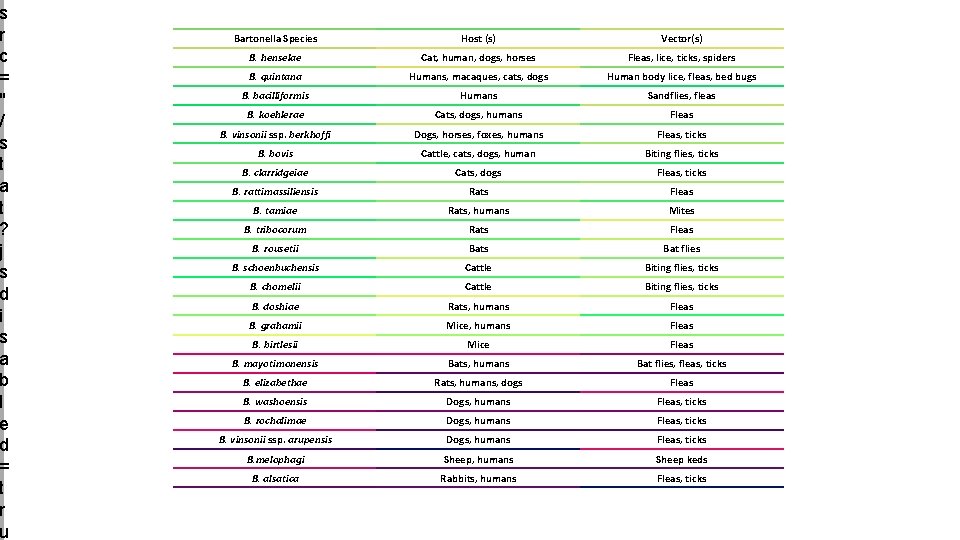
s r c = " / s t a t ? j s d i s a b l e d = t r u Bartonella Species Host (s) Vector(s) B. henselae Cat, human, dogs, horses Fleas, lice, ticks, spiders B. quintana Humans, macaques, cats, dogs Human body lice, fleas, bed bugs B. bacilliformis Humans Sandflies, fleas B. koehlerae Cats, dogs, humans Fleas B. vinsonii ssp. berkhoffi Dogs, horses, foxes, humans Fleas, ticks B. bovis Cattle, cats, dogs, human Biting flies, ticks B. clarridgeiae Cats, dogs Fleas, ticks B. rattimassiliensis Rats Fleas B. tamiae Rats, humans Mites B. tribocorum Rats Fleas B. rousetii Bats Bat flies B. schoenbuchensis Cattle Biting flies, ticks B. chomelii Cattle Biting flies, ticks B. doshiae Rats, humans Fleas B. grahamii Mice, humans Fleas B. birtlesii Mice Fleas B. mayotimonensis Bats, humans Bat flies, fleas, ticks B. elizabethae Rats, humans, dogs Fleas B. washoensis Dogs, humans Fleas, ticks B. rochalimae Dogs, humans Fleas, ticks B. vinsonii ssp. arupensis Dogs, humans Fleas, ticks B. melophagi Sheep, humans Sheep keds B. alsatica Rabbits, humans Fleas, ticks

Francisella tularensis Morphologia: Gram negativ pálcák Hidegtűrő! Tápanyag igényes. Tenyészteni tilos! Csak speciális laboratóriumokban WHO – Bioterrorizmus céljára felhasználható Pathogenesis - forrás: emlősök, madarak, gerinctelen állatok - átvitel: direkt kontaktus, belégzés, per os, vektorok (kullancs, szúnyog, vérszívó légy) EMBERRŐL EMBERRE NEM TERJED!

Francisella tularensis Kórképek: TULAREMIA nyirokcsomókban, apró granulomák + fekélyek + necrosis Primer Komplex cutano-, oculo-, tonsilloglandularis, (látszik!) thoracalis, abdominalis - (nem látszik!) formák Generalisatio – Granuloma képződés! Magyarországon évente több száz esetet jelentenek Diagnosis: Serologia DNS kimutatás: PCR Therapia: Streptomycin, Doxycyclin, Ciprofloxacin
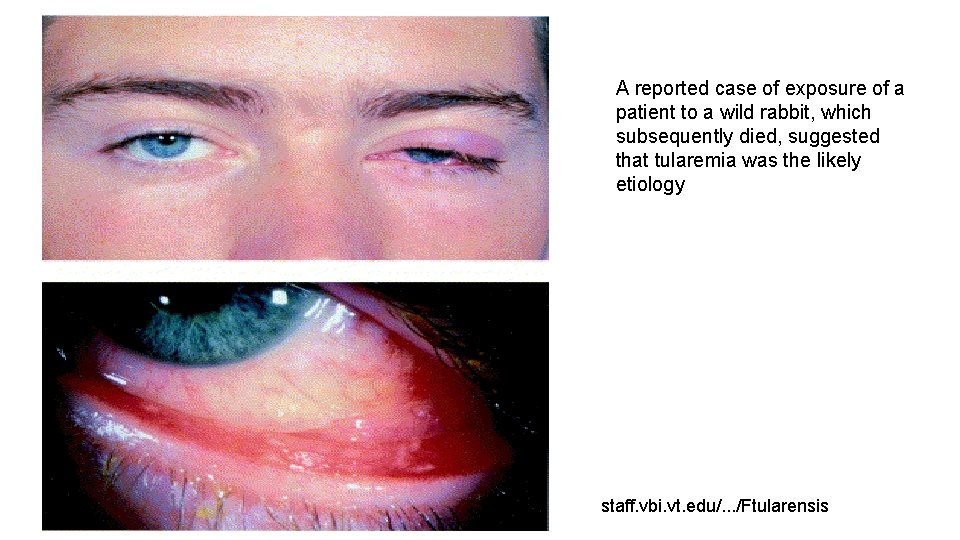
A reported case of exposure of a patient to a wild rabbit, which subsequently died, suggested that tularemia was the likely etiology staff. vbi. vt. edu/. . . /Ftularensis
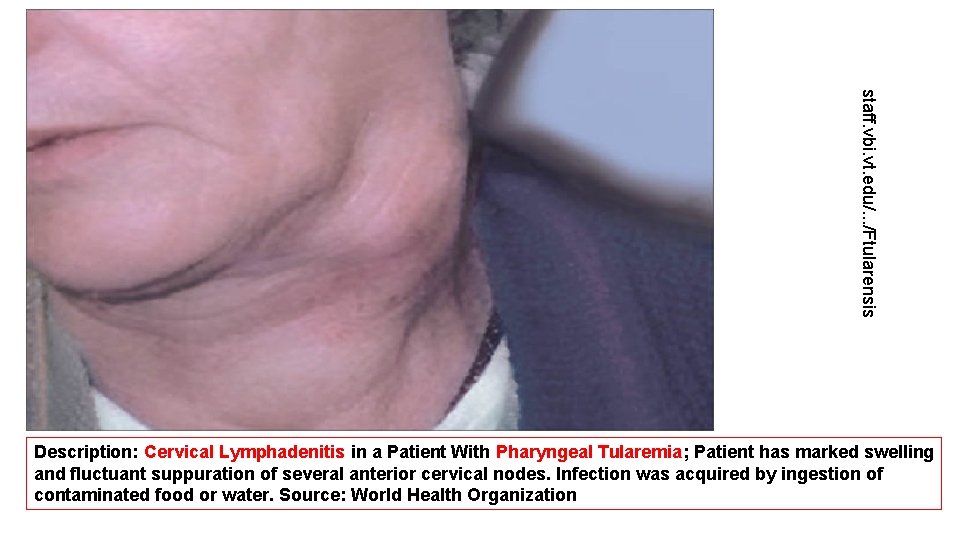
staff. vbi. vt. edu/. . . /Ftularensis Description: Cervical Lymphadenitis in a Patient With Pharyngeal Tularemia; Patient has marked swelling and fluctuant suppuration of several anterior cervical nodes. Infection was acquired by ingestion of contaminated food or water. Source: World Health Organization

Description: These Francisella tularensis colonies show characteristic opalescence on cysteine heart agar with sheep blood (cultured at 37 C for 72 hours). Note: On cysteine heart agar, F tularensis colonies are characteristically opalescent and do not discolor the medium Description: Chest Radiograph of a Patient With Pulmonary Tularemia staff. vbi. vt. edu/. . . /Ftularensis
Babesia
Babesia • Protozoon („egysejtű állat”) • Több mint 100 fajt azonosítottak • Apicomplexa (Sporozoa) törzs (mint Plasmodium, Toxoplasma) • mozgásra képesek („gliding”)
Babesiosis • Reservoir: állatok • Átvitel: kullancs • Általában tünetmentes • Ha tünetek jelentkeznek (immunszupresszáltak) a maláriához hasonlít haemolysis, láz Súlyos esetben: icterus, cardiális érintettség • Kutyákban életveszélyes lehet

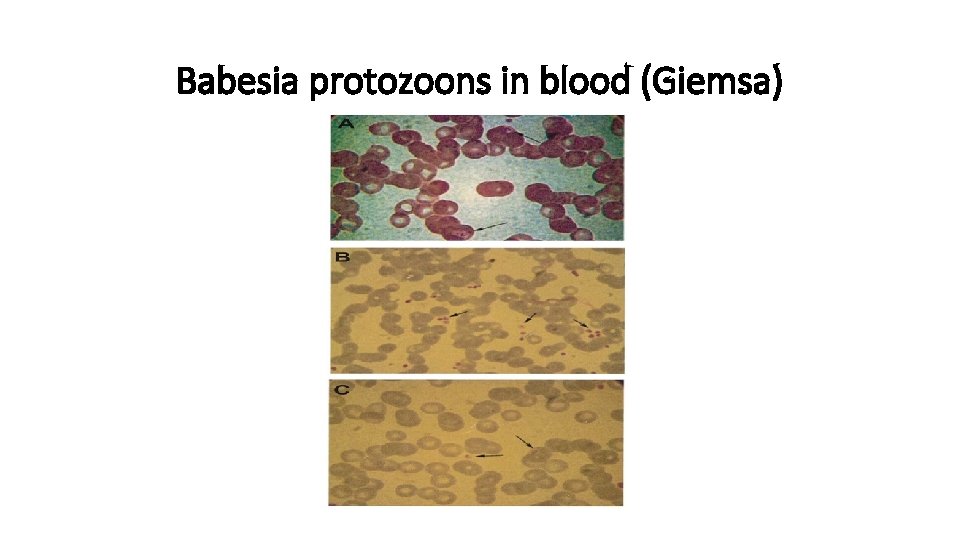
Babesia protozoons in blood (Giemsa)
Babesia microti Infection in Europe CURRENT MICROBIOLOGY Vol. 48 (2004), pp. 435– 437 • A 40 -year-old male patient with a history of lower back pain due to herniated disks and viral pneumonia in 1998 presented in October 1999 with evidence of two tick bites on the anterior part of both lower legs • The erythema migrans (EM) rash was oval, 4 cm 7 cm, with a brownish color on the interior portion of the lesion • The patient removed two ticks from his leg but did not save them for subsequent identification. • Lyme serology positive. Treatment initiated.
Babesia microti Infection in Europe CURRENT MICROBIOLOGY Vol. 48 (2004), pp. 435– 437 • The patient again returned to the clinic in May 2000 complaining of extreme fatigue and malaise, sweats both night and day, muscle pain, weakness, diarrhea, and “mood swings. ” The sweating was accompanied by extreme weakness and malaise. • Antibody tests for Lyme disease were again positive: ELISA 180 units, IFA 1: 512, Ig. G WB equivocal and Ig. M WB positive The Ig. M capture antibody test continued to be negative. • Tests for Babesia antibody revealed a negative Ig. G titer of 1: 40, but a positive Ig. M titer (1: 40). Babesia PCR was negative. • Whole blood was stained by Giemsa in Switzerland examined microscopically showed the presence of intraerythrocytic piroplasms resembling B. microti as well as some extracellular forms
Babesia microti Infection in Europe CURRENT MICROBIOLOGY Vol. 48 (2004), pp. 435– 437 • Lariam (mephloquine) was prescribed 5 tablets/24 h, then 1 tablet/week. • Over the ensuing 14 months the patient was treated periodically with a higher dose of Lariam, doxycycline, and azythromycin. In November 2001 the patient’s prior symptoms returned, and his WBC showed an increase to 8300/mm 3 • Lariam was again prescribed for 1 month. His leukocytosis returned to normal, and he showed continuing improvement in his overall condition

Milyen kórokozókat hordoznak a kullancsok/rágcsálók Europában?
Co-infection of bacteria and protozoan parasites in Ixodes ricinus nymphs collected in the Alsace region, France Nebbak et al. Ticks Tick Borne Dis. 2019 Jun 8. pii: S 1877 -959 X(18)30483 -7 • „Fifty nymphal Ixodes ricinus ticks collected in Alsace, France, identified by morphological criteria and using MALDI-TOF MS, were tested by PCR to detect tick-associated bacteria and protozoan parasites. Seventy percent (35/50) of ticks contained at least one microorganism; 26% (9/35) contained two or more species. Several human pathogens were identified including Borrelia burgdorferi s. s. (4%), Borrelia afzelii (2%), Borrelia garinii (2%), Borrelia valaisiana (4%), Borrelia miyamotoi (2%), Rickettsia helvetica (6%) and "Babesia venatorum" (2%). Bartonella spp. (10%) and a Wolbachia spp. (8%) were also detected. The most common co-infections involved Anaplasmataceae with Borrelia spp. (4%), Anaplasmataceae with Bartonella spp. (6%) and Anaplasmataceae with Rickettsia spp. (6%). Co-infection involving three different groups of bacteria was seen between bacteria of the family Anaplasmataceae, Borrelia spp. and Bartonella spp. (2%). „ • Valamilyen Borrelia faj előfordulása kullancsban: 14%
Detection of tick-borne pathogens in ticks collected in the suburban area of Monte Romano, Lazio Region, Central Italy Mancini et al. Ann Ist Super Sanita. 2019 Apr-Jun; 55(2): 143 -150 • „Overall, 182 ticks (71%) were infected with at least one pathogen; among these co-infections were found in 94 ticks. Tick borne pathogens identified were C. burnetii, B. burgdorferi s. l. , Bartonella spp. , Rickettsia spp. , Francisella spp. , and Ehrlichia spp. In R. bursa and H. marginatum, the presence of B. burgdorferi s. l. was positively correlated with that of C. burnetii, Rickettsia spp. , and Bartonella spp. and their coinfection probabilities were 29. 8%, 22. 7% and 11. 7%, respectively; the probability of coinfection for Francisella spp. and Rickettsia spp. and for Francisella spp. and Bartonella spp. was 14. 9% and 17. 9%, respectively. ” • Valamilyen Borrelia faj előfordulása: 31%
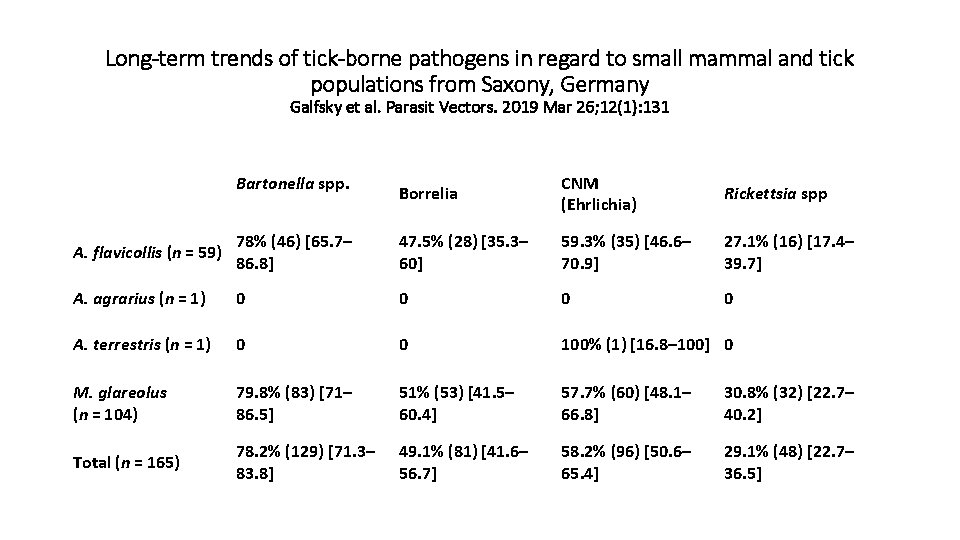
Long-term trends of tick-borne pathogens in regard to small mammal and tick populations from Saxony, Germany Galfsky et al. Parasit Vectors. 2019 Mar 26; 12(1): 131 Bartonella spp. Borrelia CNM (Ehrlichia) Rickettsia spp A. flavicollis (n = 59) 78% (46) [65. 7– 86. 8] 47. 5% (28) [35. 3– 60] 59. 3% (35) [46. 6– 70. 9] 27. 1% (16) [17. 4– 39. 7] A. agrarius (n = 1) 0 0 A. terrestris (n = 1) 0 0 100% (1) [16. 8– 100] 0 M. glareolus (n = 104) 79. 8% (83) [71– 86. 5] 51% (53) [41. 5– 60. 4] 57. 7% (60) [48. 1– 66. 8] 30. 8% (32) [22. 7– 40. 2] Total (n = 165) 78. 2% (129) [71. 3– 83. 8] 49. 1% (81) [41. 6– 56. 7] 58. 2% (96) [50. 6– 65. 4] 29. 1% (48) [22. 7– 36. 5]

Köszönöm a figyelmet
- Slides: 69