
KTH ROYAL INSTITUTE OF TECHNOLOGY DT 2350 Human
![Air pressure changes Frequency [Hz] Number of times/second that the pressure changes repeat. Humans](https://slidetodoc.com/presentation_image_h/13ae40f6fcb762893bbe8c2b97553458/image-6.jpg "Air pressure changes Frequency [Hz] Number of times/second that the pressure changes repeat. Humans")
![Sound level [d. B] Higher amplitude (physical) Higher sound level (perceptual)](https://slidetodoc.com/presentation_image_h/13ae40f6fcb762893bbe8c2b97553458/image-7.jpg "Sound level [d. B] Higher amplitude (physical) Higher sound level (perceptual)")
![Frequency [Hz]](https://slidetodoc.com/presentation_image_h/13ae40f6fcb762893bbe8c2b97553458/image-8.jpg "Frequency [Hz]")
- Slides: 36
KTH ROYAL INSTITUTE OF TECHNOLOGY DT 2350 Human Perception for Information Technology Sound, the Auditory System, and Pitch Perception Roberto Bresin Copyright (c) 2015 Roberto Bresin This work is licensed under the Creative Commons Attribution-Noncommercial-Share Alike 3. 0 Unported License. To view a copy of this license, visit http: //creativecommons. org/licenses/by-nc-sa/3. 0/ or send a letter to Creative Commons, 559 Nathan Abbott Way, Stanford, California 94305, USA.
Outlook • The nature of sound • How we experience sounds • Physiology behind the perception of pitch • Hearing loss • How different parts of the brain respond to sound • Sound localization • Sound design: getting attention with sound
Literature Goldstein, E. (2009/2014). Sensation and Perception. Chapter 11 (2009 edition): Sound, the Auditory System, and Pitch Perception Chapter 11 (2014 edition): Hearing Weinschenk, S. M. (2011). 100 Things Every Designer Needs to Know About People. Chapters #48: Loud noises startle and get attention
Test Which sense would you choose to keep if you had to pick between hearing and vision? Why?
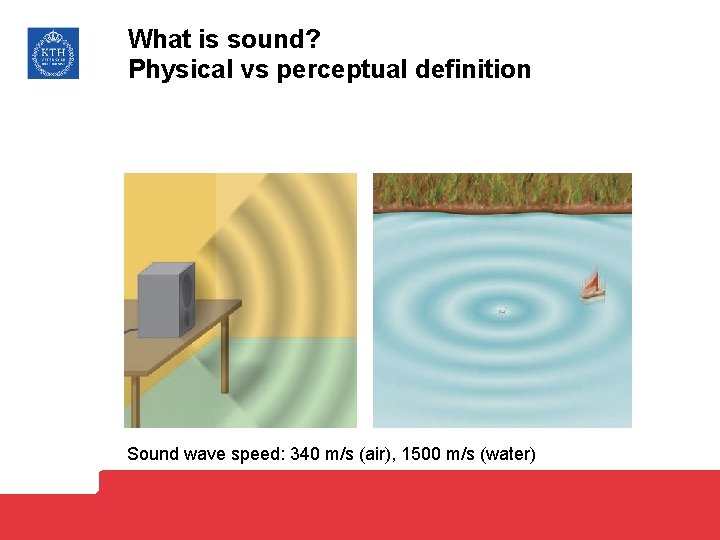
What is sound? Physical vs perceptual definition Sound wave speed: 340 m/s (air), 1500 m/s (water)
Air pressure changes Frequency [Hz] Number of times/second that the pressure changes repeat. Humans can perceive frequencies in the range from 20 Hz to 20, 000 Hz. Decibel [d. B] d. B = 20 x log (p/po) p = stimulus sound pressure po = standard sound pressure (20 micropascals = hearing threshold)
Sound level [d. B] Higher amplitude (physical) Higher sound level (perceptual)
Frequency [Hz]
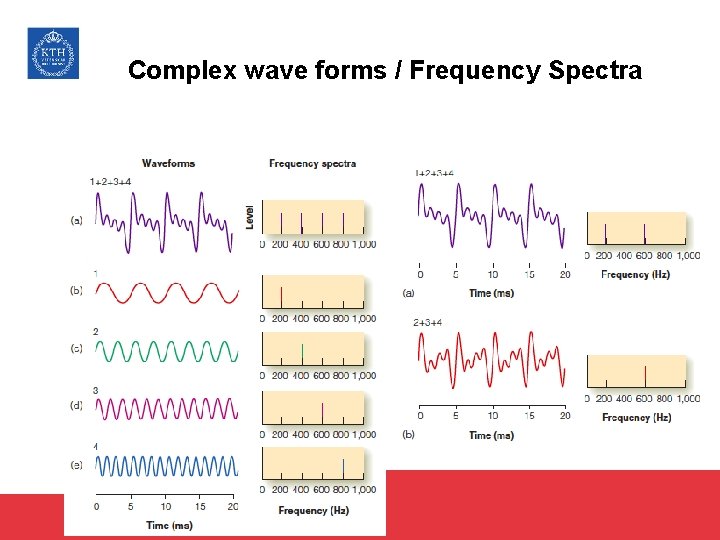
Complex wave forms / Frequency Spectra
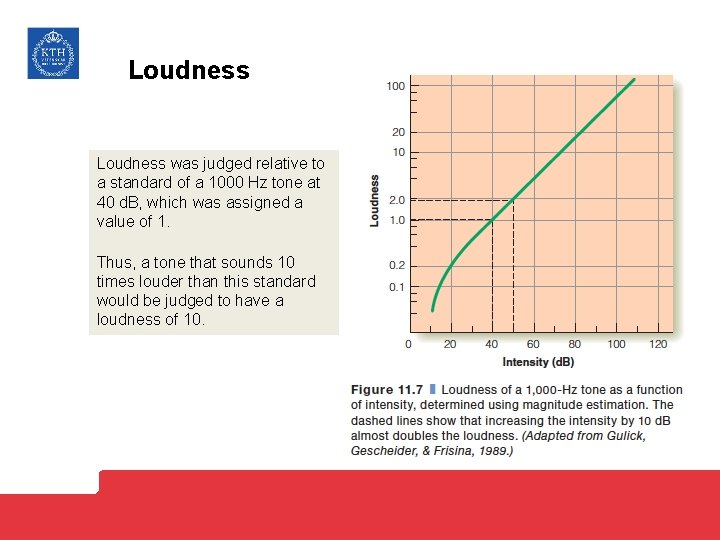
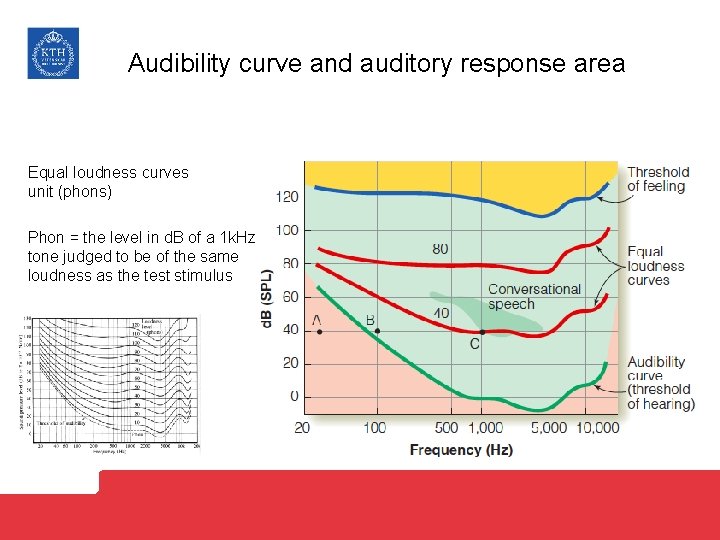
Loudness was judged relative to a standard of a 1000 Hz tone at 40 d. B, which was assigned a value of 1. Thus, a tone that sounds 10 times louder than this standard would be judged to have a loudness of 10.
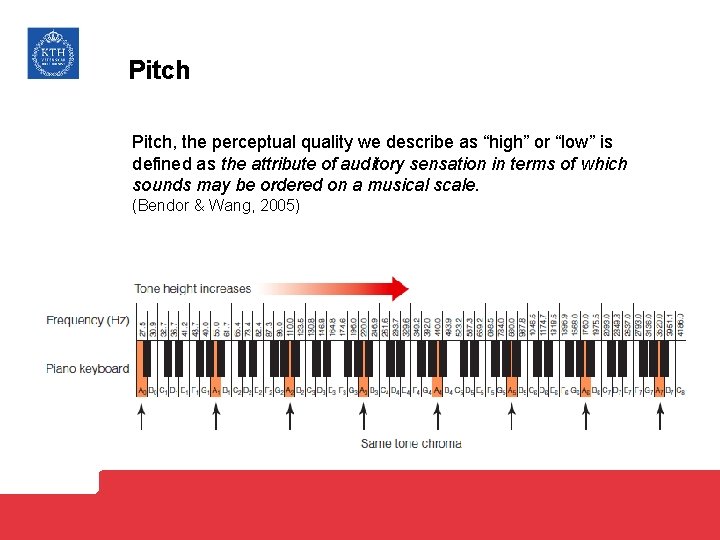
Pitch, the perceptual quality we describe as “high” or “low” is defined as the attribute of auditory sensation in terms of which sounds may be ordered on a musical scale. (Bendor & Wang, 2005)
Audibility curve and auditory response area Equal loudness curves unit (phons) Phon = the level in d. B of a 1 k. Hz tone judged to be of the same loudness as the test stimulus
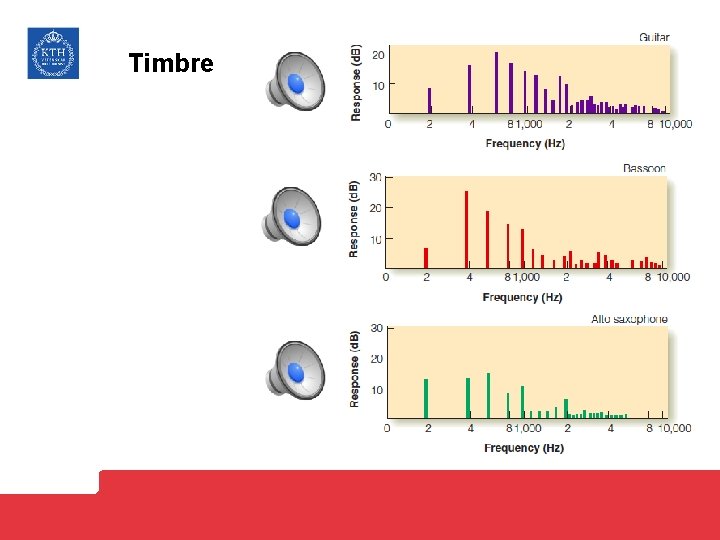
Timbre
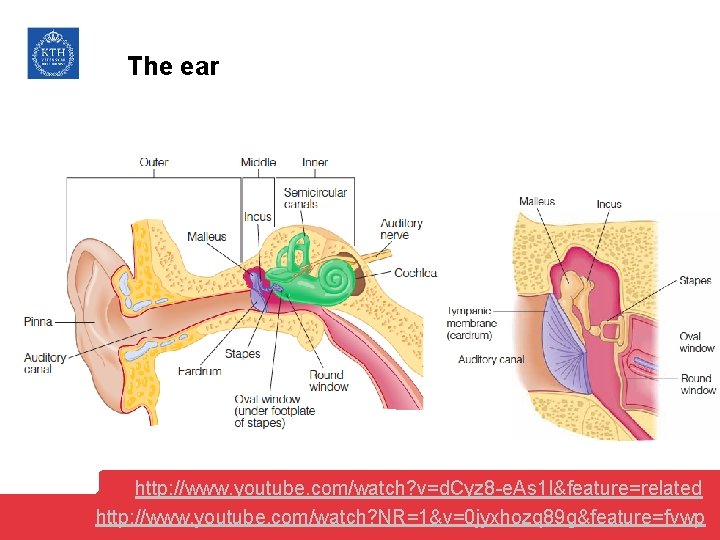
The ear http: //www. youtube. com/watch? v=d. Cyz 8 -e. As 1 I&feature=related http: //www. youtube. com/watch? NR=1&v=0 jyxhozq 89 g&feature=fvwp
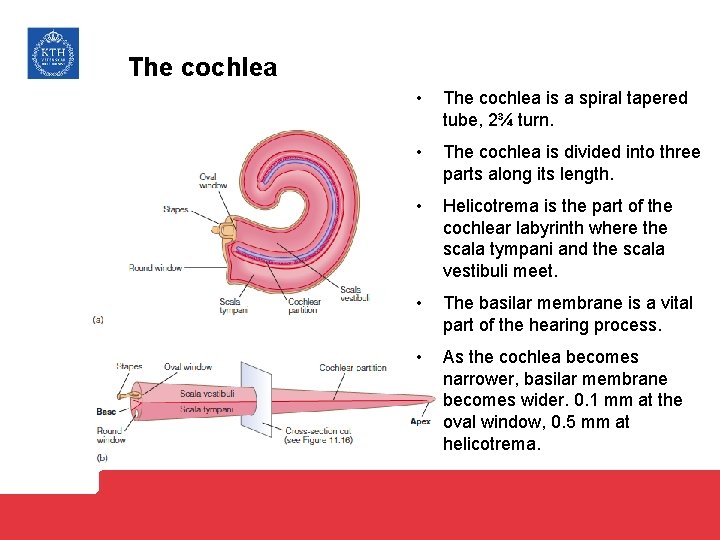
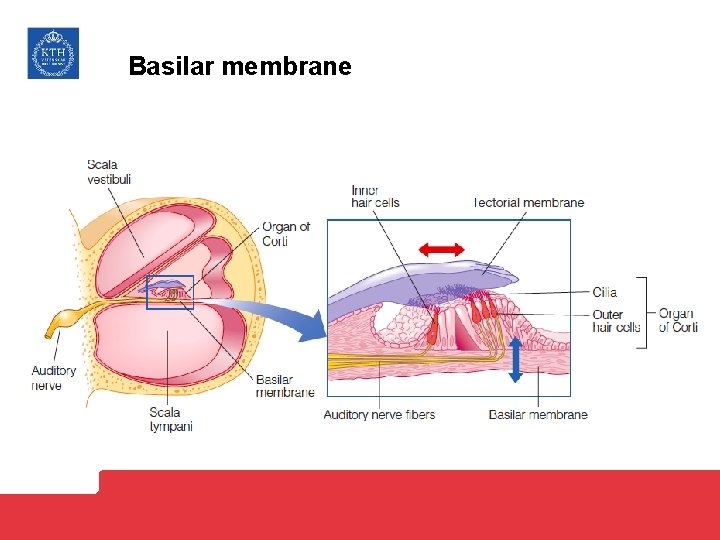
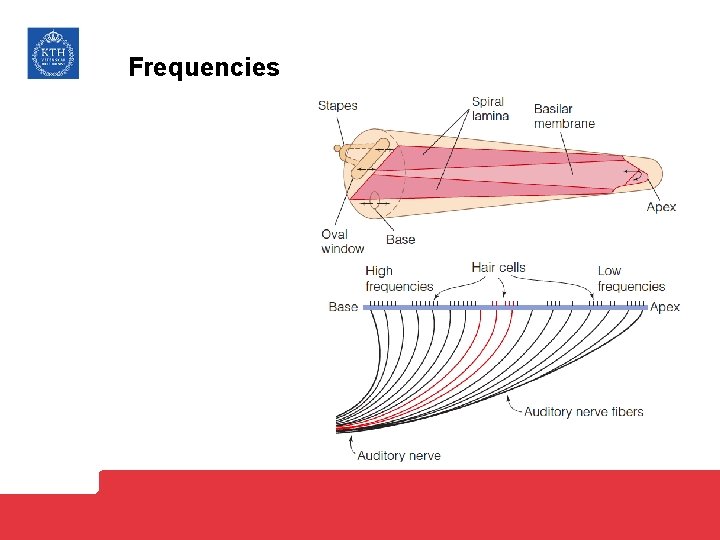
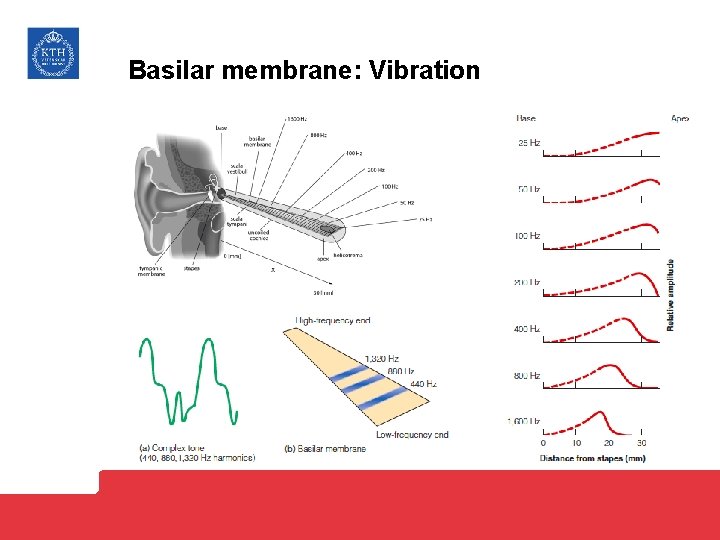
The cochlea • The cochlea is a spiral tapered tube, 2¾ turn. • The cochlea is divided into three parts along its length. • Helicotrema is the part of the cochlear labyrinth where the scala tympani and the scala vestibuli meet. • The basilar membrane is a vital part of the hearing process. • As the cochlea becomes narrower, basilar membrane becomes wider. 0. 1 mm at the oval window, 0. 5 mm at helicotrema.
Basilar membrane
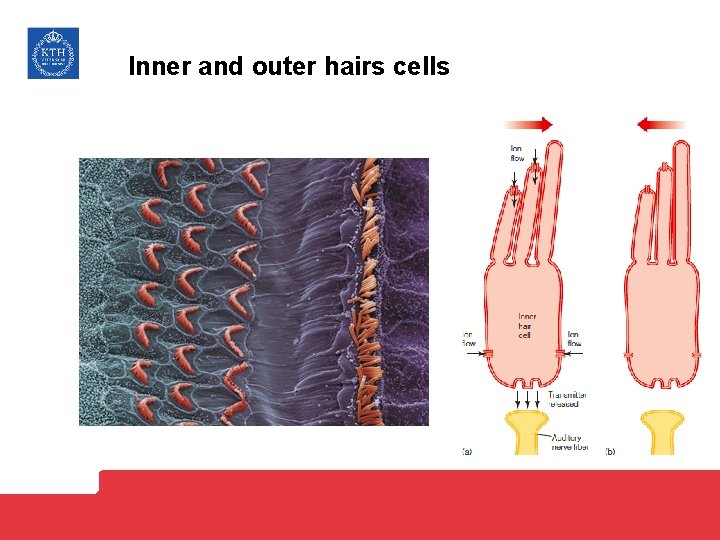
Inner and outer hairs cells
Frequencies
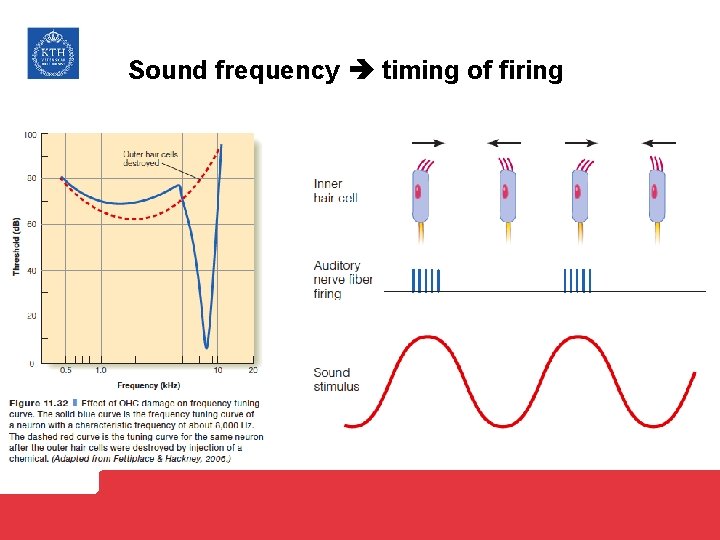
Sound frequency timing of firing
Basilar membrane: Vibration
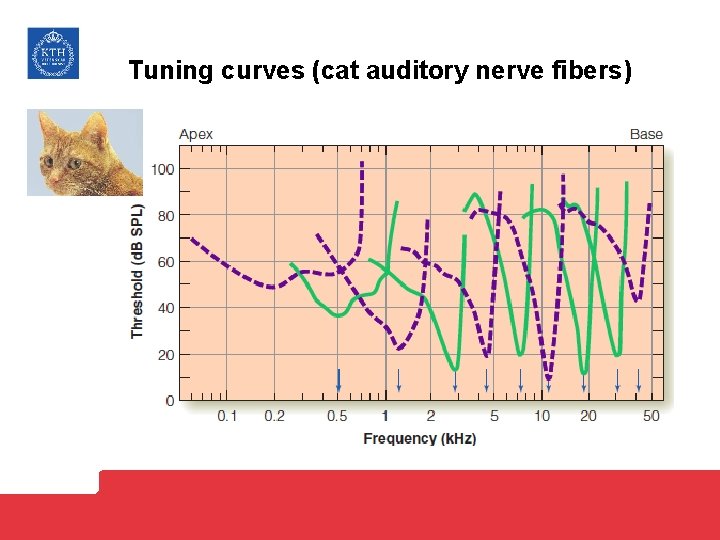
Tuning curves (cat auditory nerve fibers)
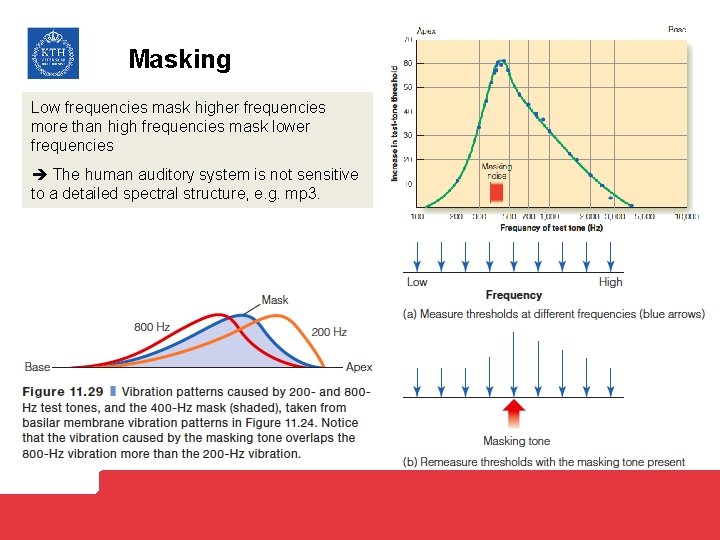
Masking Low frequencies mask higher frequencies more than high frequencies mask lower frequencies The human auditory system is not sensitive to a detailed spectral structure, e. g. mp 3.
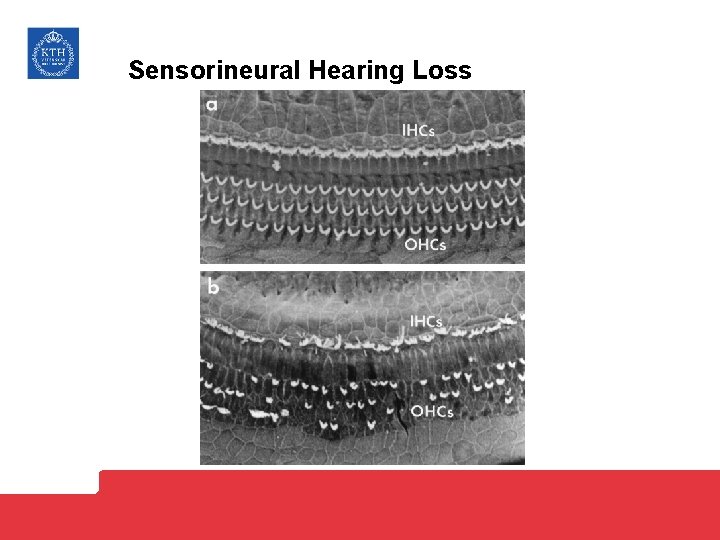
Hearing loss Conductive • Deteriorated impedance conversion between the eardrum and the oval window • Abnormalities at the eardrum, wax in the ear canal, injuries to the ossicles, inflammation in the middle ear Sometimes possible to recover with surgery Sensorineural • • Damage to the inner and outer hair cells Acoustic trauma, drugs, infection, congenital Usually permanent
Sensorineural Hearing Loss
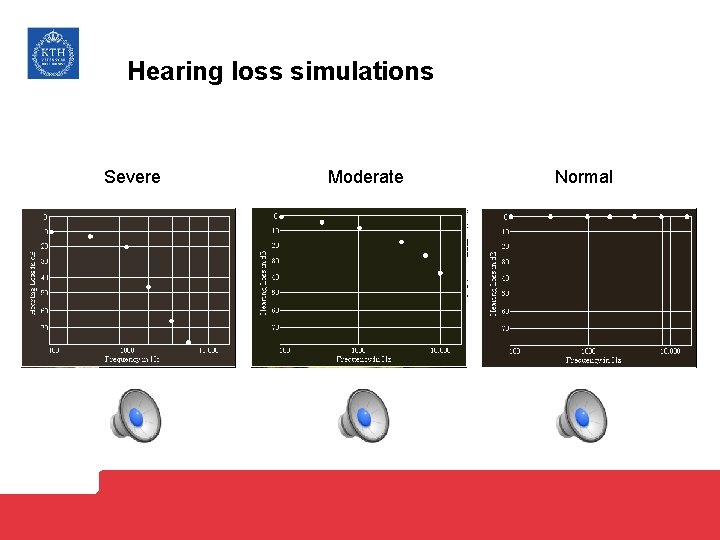
Hearing loss simulations Severe Moderate Normal
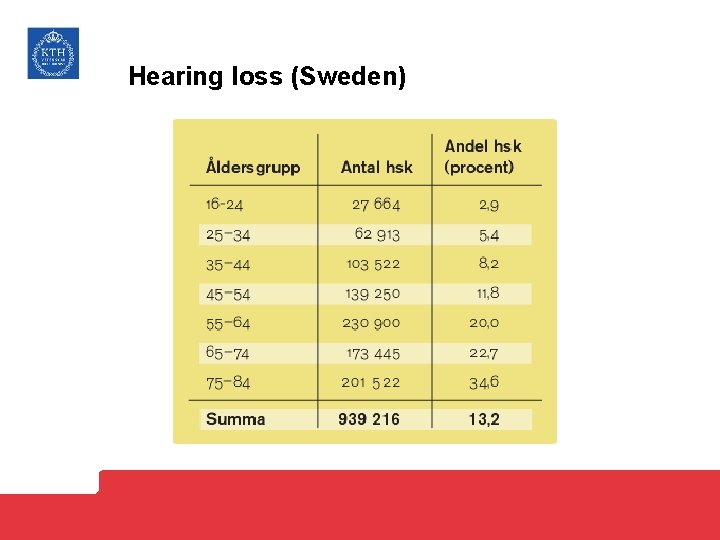
Hearing loss (Sweden)
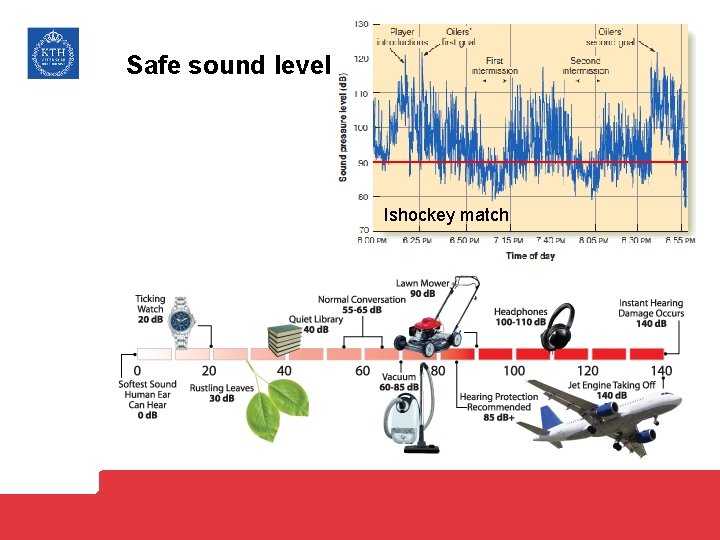
Safe sound level Ishockey match
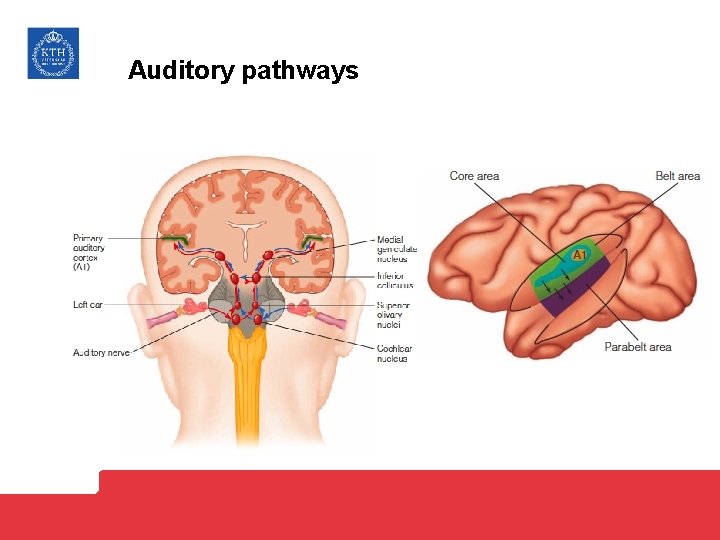
Auditory pathways
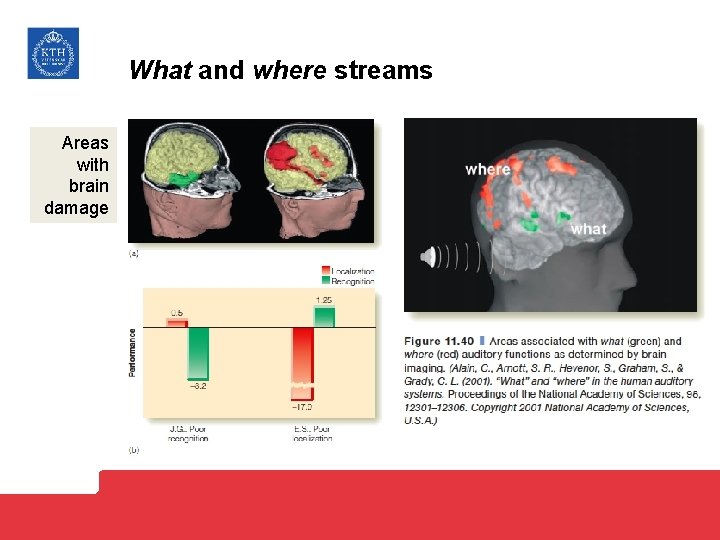
What and where streams Areas with brain damage
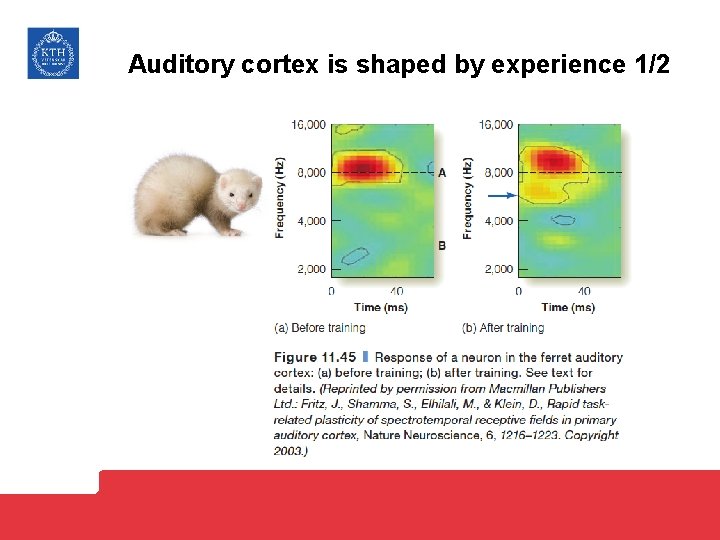
Auditory cortex is shaped by experience 1/2
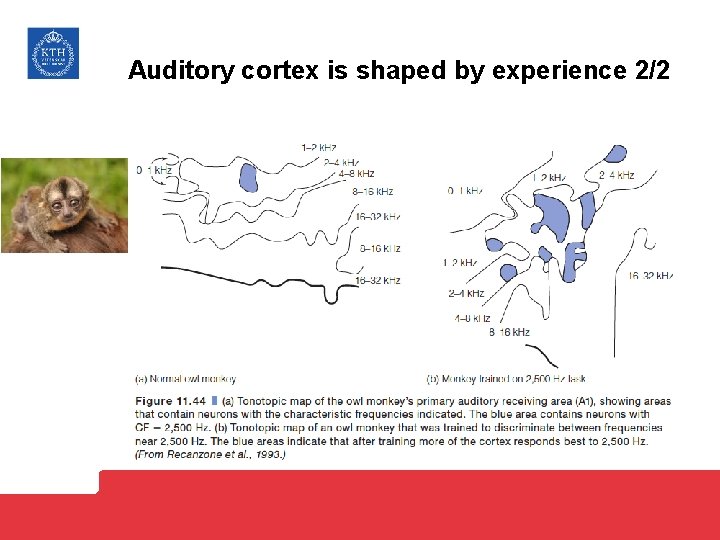
Auditory cortex is shaped by experience 2/2
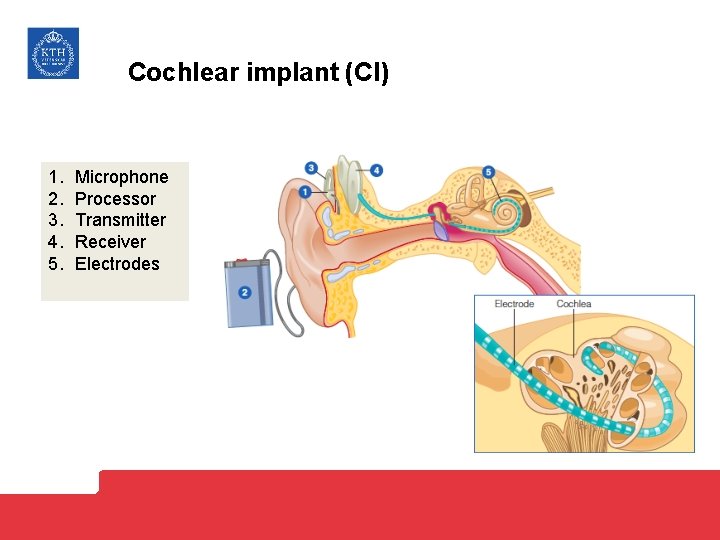
Cochlear implant (CI) 1. 2. 3. 4. 5. Microphone Processor Transmitter Receiver Electrodes
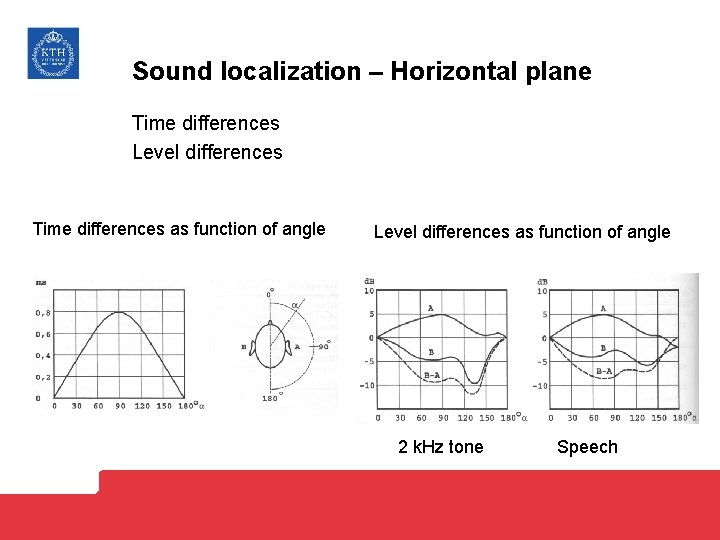
Sound localization – Horizontal plane Time differences Level differences Time differences as function of angle Level differences as function of angle 2 k. Hz tone Speech
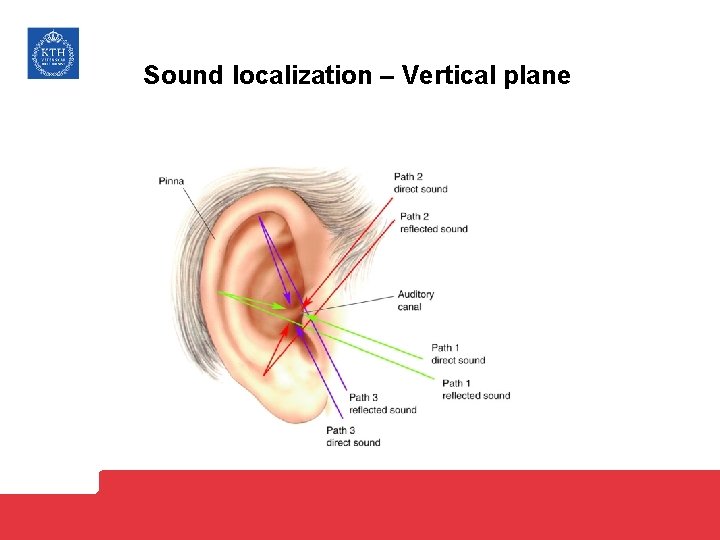
Sound localization – Vertical plane
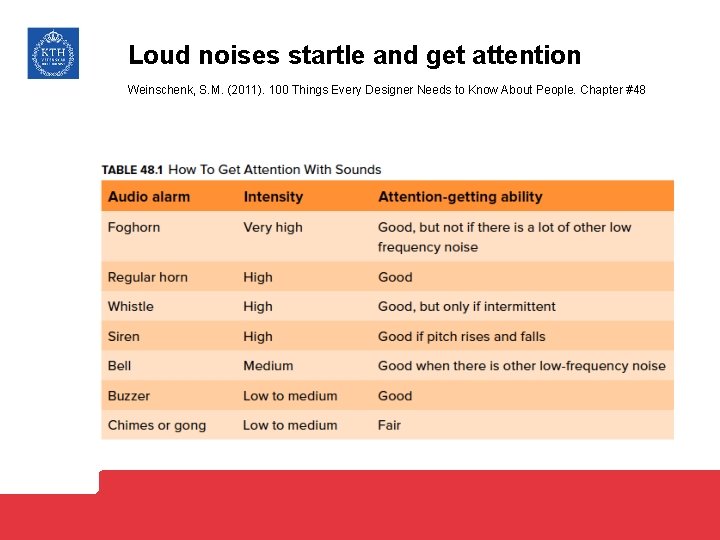
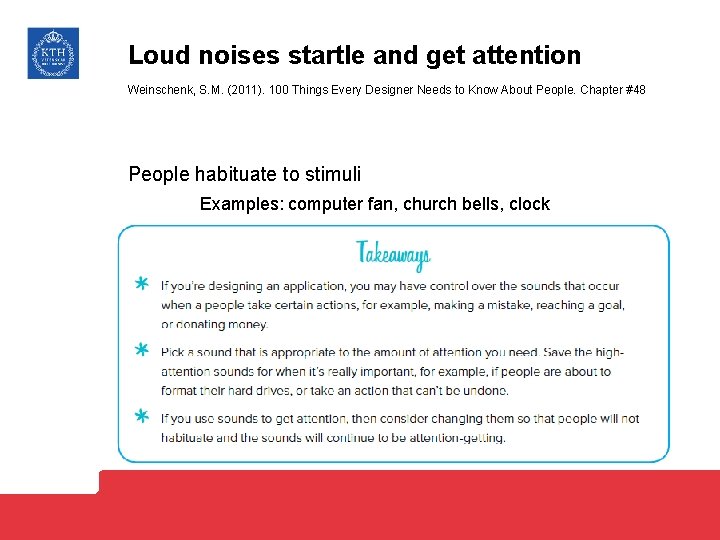
Loud noises startle and get attention Weinschenk, S. M. (2011). 100 Things Every Designer Needs to Know About People. Chapter #48
Loud noises startle and get attention Weinschenk, S. M. (2011). 100 Things Every Designer Needs to Know About People. Chapter #48 People habituate to stimuli Examples: computer fan, church bells, clock