
KState Research and Extension Kansas State University Soil

- Slides: 24
K-State Research and Extension Kansas State University Soil Testing 101 Sandra L. Wick K-State Research and Extension Post Rock District Crop Production Agent Crop Nutrient Management Meeting January 28, 2020 Beloit
Why soil sampling and testing? Ø Determine how much fertilizer to apply ? Ø Determine how much nutrient is available from the soil?
Why soil sampling and testing? ØEstimate probability of nutrient response. ØDetermine the amount of plant available NO 3 -N. ØIdentify fertility trends. ØEstimate long-term nutrient sufficiency. ØEstimate long-term average nutrient rates. ØDiagnosing problems / problem solving.
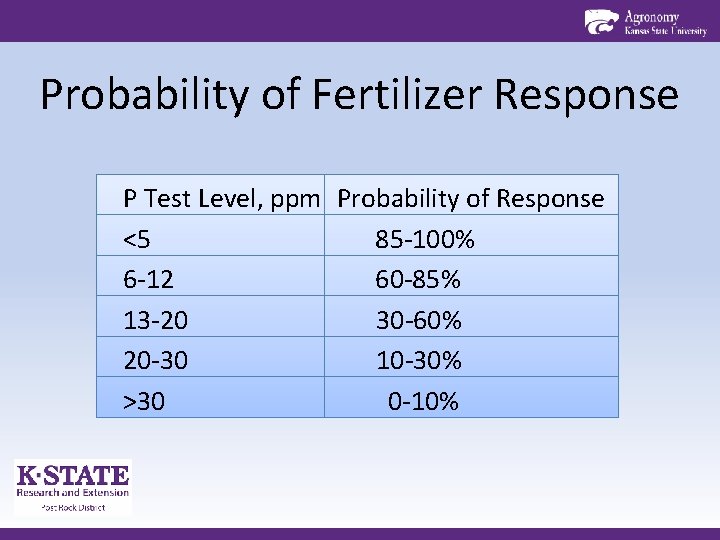
Probability of Fertilizer Response P Test Level, ppm Probability of Response <5 85 -100% 6 -12 60 -85% 13 -20 30 -60% 20 -30 10 -30% >30 0 -10%
Potential limitations ØVariability in test results. ØTime and work to take samples. ØTime to get results back from lab. ØWhat tests are needed?
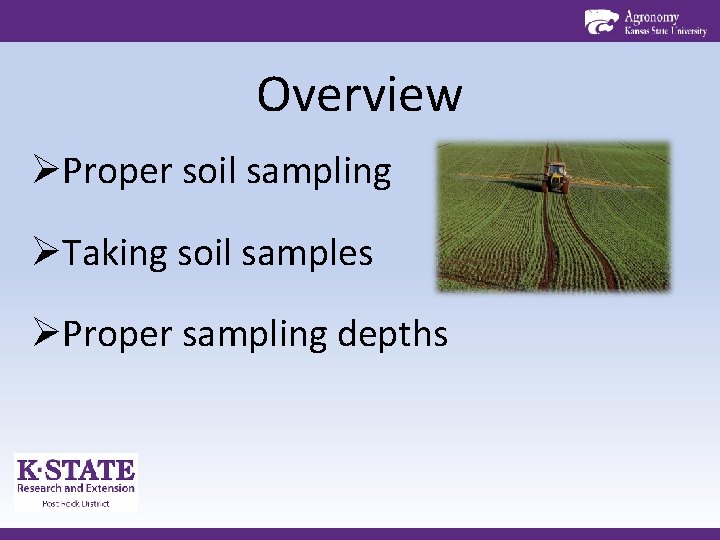
Overview ØProper soil sampling ØTaking soil samples ØProper sampling depths
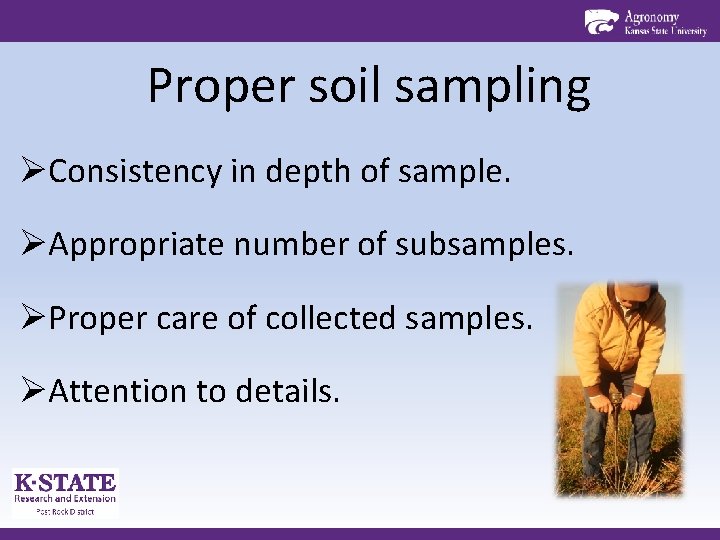
Proper soil sampling ØConsistency in depth of sample. ØAppropriate number of subsamples. ØProper care of collected samples. ØAttention to details.
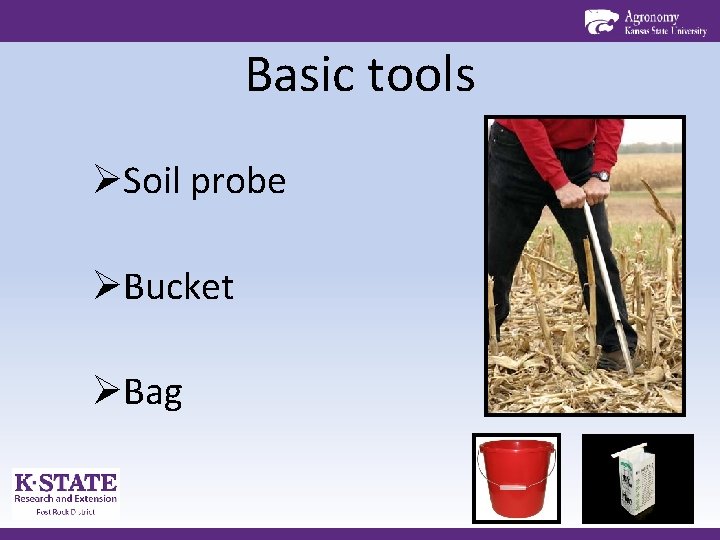
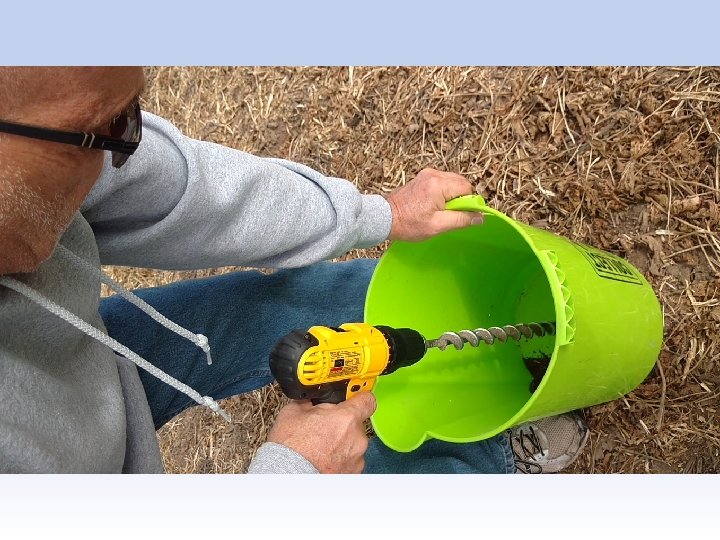
Basic tools ØSoil probe ØBucket ØBag
Considerations ØRecommended sampling depth: Ø 0 -6 inches = p. H, P, K, Zn, Fe, B. Ø 0 -24 inches = Nitrate, Cl, S. ØWhere in the field? ØWhen?
Types of soil sampling: WHERE in the field Ø Simple random – good in homogeneous fields. Ø Systematic – follow some pattern to cover different areas. ØStratified – by management zones. ØComposite – mixing all sample units.
WHEN to Take Samples Ø Sampling can take place during any period of the year. Ø However, it is best to sample a field at about the same time of year. Be consistent. Ø Wait a minimum of thirty days to sample after applications of fertilizer, lime, or sulfur.
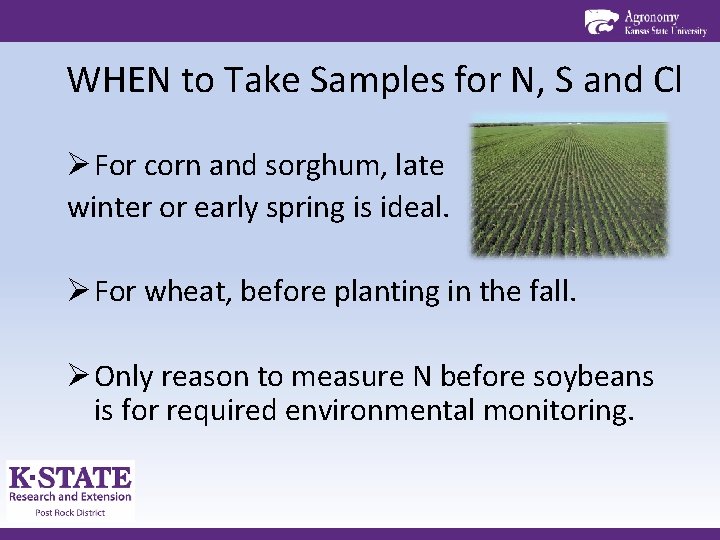
WHEN to Take Samples for N, S and Cl ØFor corn and sorghum, late winter or early spring is ideal. ØFor wheat, before planting in the fall. ØOnly reason to measure N before soybeans is for required environmental monitoring.
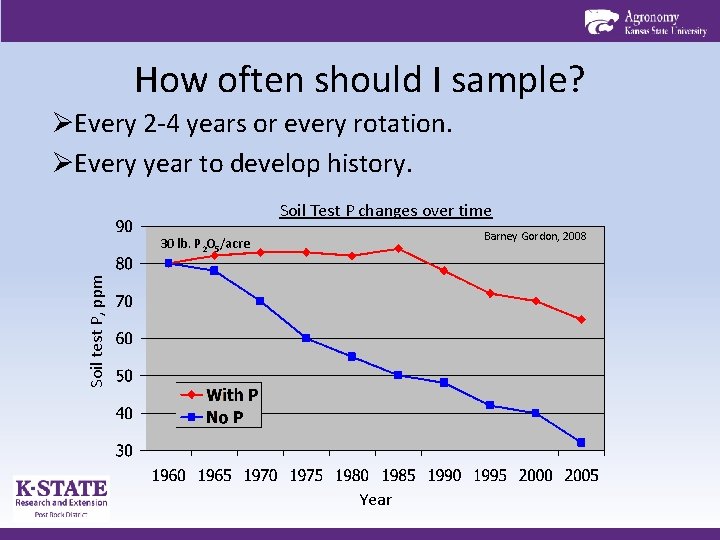
How often should I sample? ØEvery 2 -4 years or every rotation. ØEvery year to develop history. Soil Test P changes over time Barney Gordon, 2008 Soil test P, ppm 30 lb. P 2 O 5/acre Year
Number of Cores and Acres per Sample Ø 15 -20 subsamples per sample submitted to laboratory. ØA smaller number can introduce variability into the results from different sampling years. ØThere is no rule for the number of acres to include in a single sample. Depends on the local situation. A treatable area of 5 -20 acres is ideal. ØVery small sampling areas, such as residential landscape plants and some small gardens may use fewer cores per sample.
How to prepare samples for shipment to the lab ØIdeally hermetic bags avoiding potential contamination. ØPreferably should not be dried before submitting. ØPrecautions: ØDo not apply any heat ØProtect from contamination ØNo microwaves
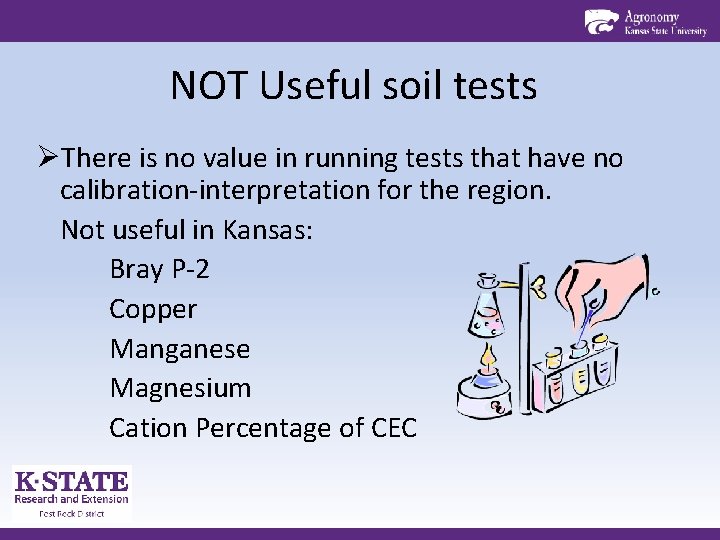
NOT Useful soil tests ØThere is no value in running tests that have no calibration-interpretation for the region. Not useful in Kansas: Bray P-2 Copper Manganese Magnesium Cation Percentage of CEC
Useful soil tests ØProfile Nitrate-N ØBray P-1 Extractable P ØOlsen Extractable P ØMehlich III Extractable P ØExchangeable K ØDTPA Extractable Zn ØChloride ØSoil p. H ØLime Requirement / Buffer p. H ØSoil Organic Matter
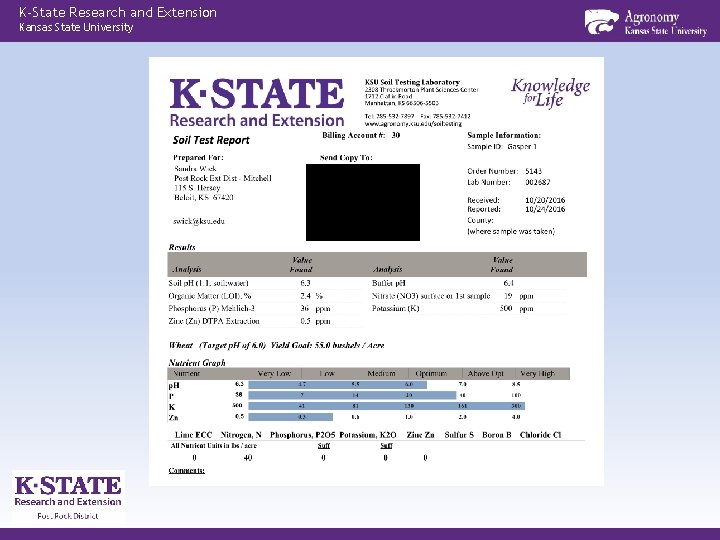
K-State Research and Extension Kansas State University
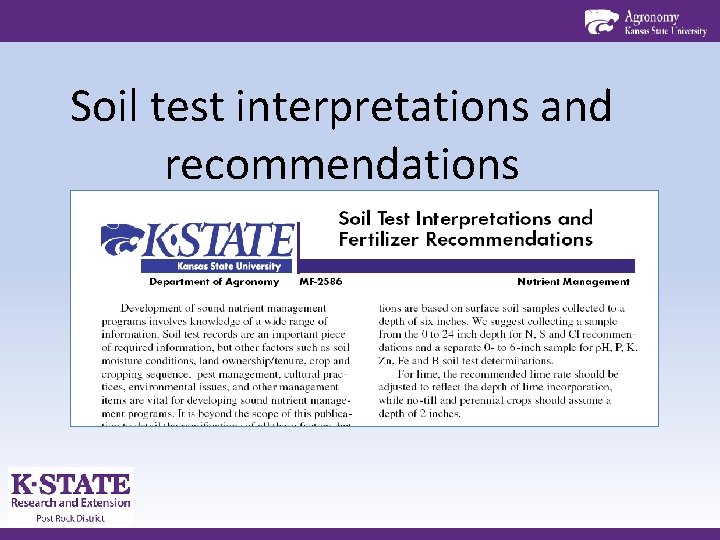
Soil test interpretations and recommendations
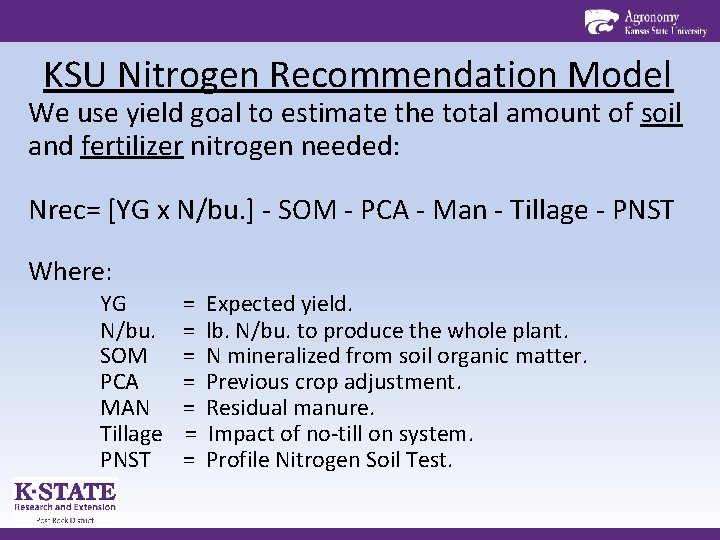
KSU Nitrogen Recommendation Model We use yield goal to estimate the total amount of soil and fertilizer nitrogen needed: Nrec= [YG x N/bu. ] - SOM - PCA - Man - Tillage - PNST Where: YG N/bu. SOM PCA MAN Tillage PNST = = = = Expected yield. lb. N/bu. to produce the whole plant. N mineralized from soil organic matter. Previous crop adjustment. Residual manure. Impact of no-till on system. Profile Nitrogen Soil Test.
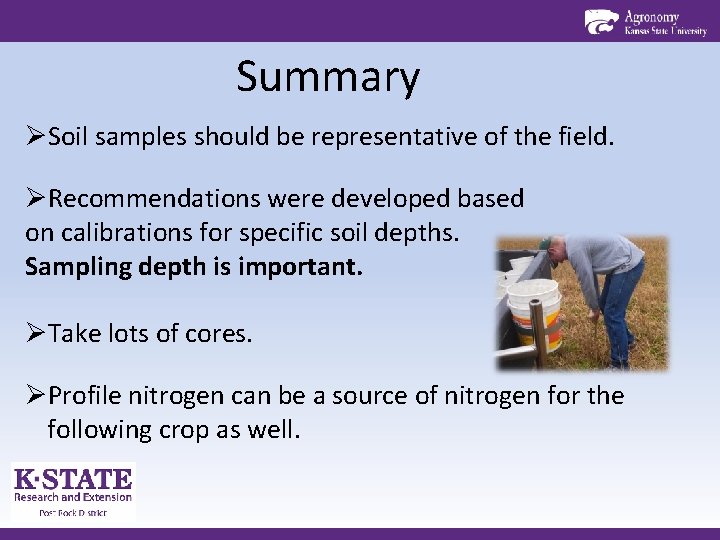
Summary ØSoil samples should be representative of the field. ØRecommendations were developed based on calibrations for specific soil depths. Sampling depth is important. ØTake lots of cores. ØProfile nitrogen can be a source of nitrogen for the following crop as well.
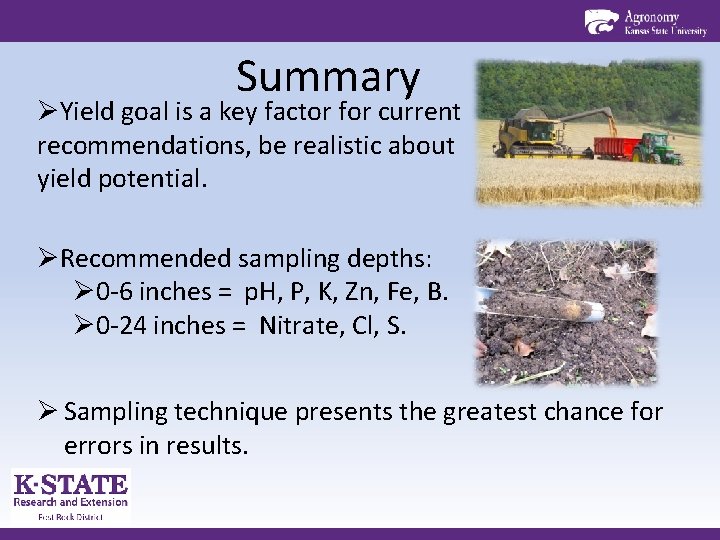
Summary ØYield goal is a key factor for current recommendations, be realistic about yield potential. ØRecommended sampling depths: Ø 0 -6 inches = p. H, P, K, Zn, Fe, B. Ø 0 -24 inches = Nitrate, Cl, S. Ø Sampling technique presents the greatest chance for errors in results.
Questions? Sandra L. Wick -Post Rock Extension District -Crop Production Agent -swick@ksu. edu -785 -282 -6823