
Ksp and Common Ion Effect CommonIon Effect Similar
- Slides: 12
Ksp and Common Ion Effect
Common-Ion Effect Similar to acids and bases There is a “common ion” when 2 salt solutions are mixed together.
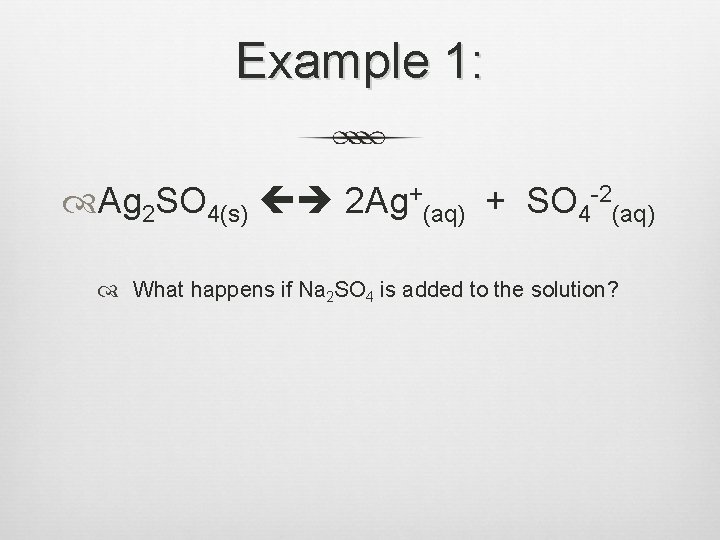
Example 1: Ag 2 SO 4(s) 2 Ag+(aq) + SO 4 -2(aq) What happens if Na 2 SO 4 is added to the solution?
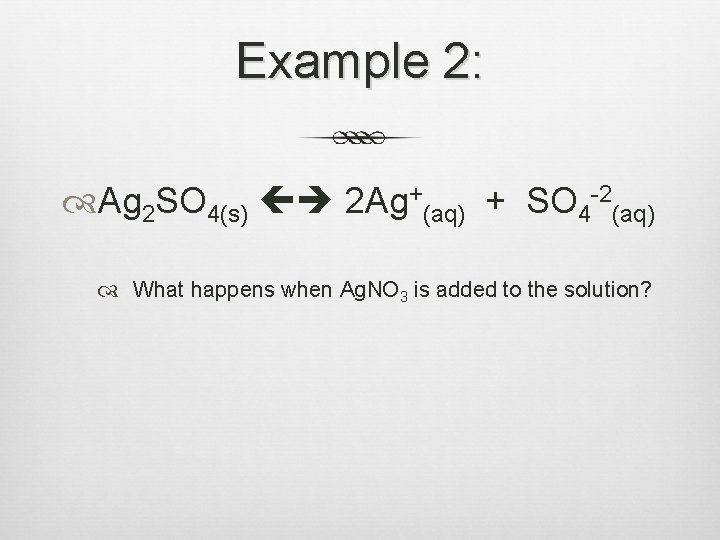
Example 2: Ag 2 SO 4(s) 2 Ag+(aq) + SO 4 -2(aq) What happens when Ag. NO 3 is added to the solution?
**Any time a common is formed through a second solute, the slightly ionic compound has LESS solubility!!**
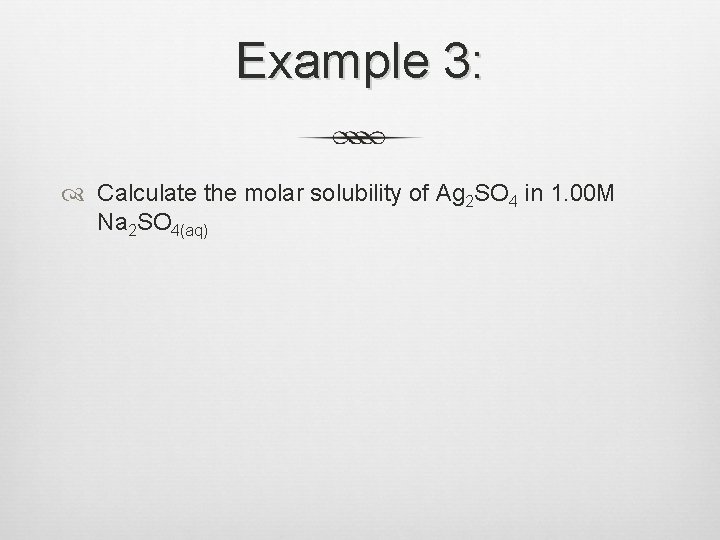
Example 3: Calculate the molar solubility of Ag 2 SO 4 in 1. 00 M Na 2 SO 4(aq)
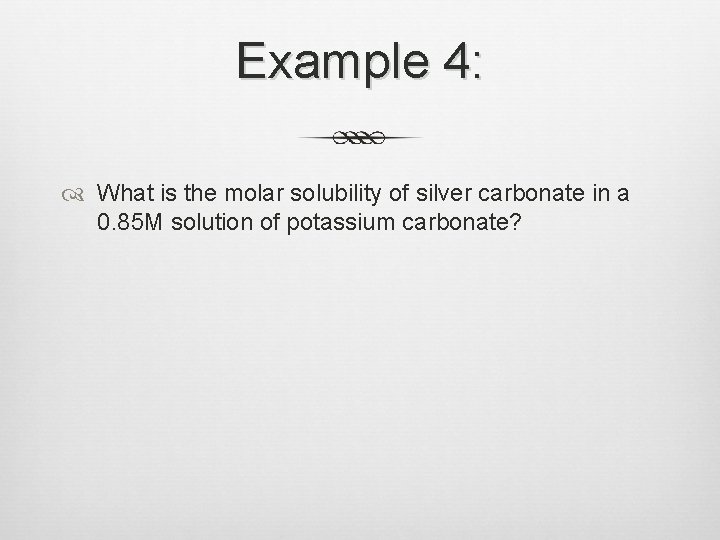
Example 4: What is the molar solubility of silver carbonate in a 0. 85 M solution of potassium carbonate?
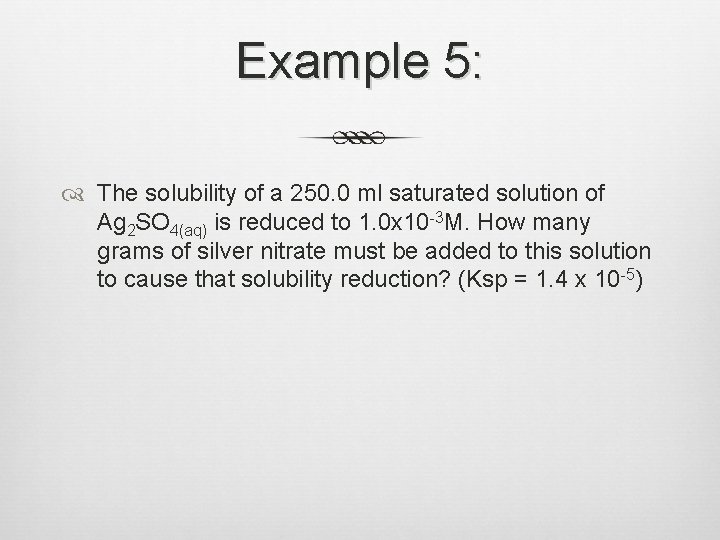
Example 5: The solubility of a 250. 0 ml saturated solution of Ag 2 SO 4(aq) is reduced to 1. 0 x 10 -3 M. How many grams of silver nitrate must be added to this solution to cause that solubility reduction? (Ksp = 1. 4 x 10 -5)
Example 6: What is the molar solubility of aluminum hydroxide in a solution with a p. H = 12. 37?
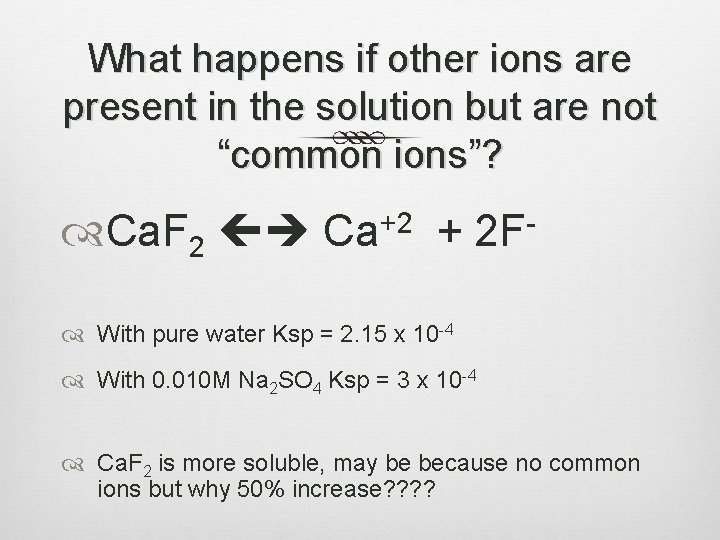
What happens if other ions are present in the solution but are not “common ions”? Ca. F 2 Ca+2 + 2 F With pure water Ksp = 2. 15 x 10 -4 With 0. 010 M Na 2 SO 4 Ksp = 3 x 10 -4 Ca. F 2 is more soluble, may be because no common ions but why 50% increase? ?
What happens if other ions are present in the solution but are not “common ions”? Na 2 SO 4 ions interact with Ca. F 2 ions and prevent them from recombining to form Ca. F 2 More anions surrounding Ca+2 than in water. More cations surrounding F- than in water. More solubility than in water where no hindrance exists.
Ionic Compounds in Aqueous Solutions Think of them having 2 concentrations. 1) Ksp/solute amount in solution Based on stoichiometry 2) Activity Based on interionic attractions occurring in a solution How ion attractions affect solute amount in solution