
KS 4 USEFUL HINTS AND TIPS A guide


- Slides: 11
KS 4 - USEFUL HINTS AND TIPS A guide to up-levelling my writing skills!
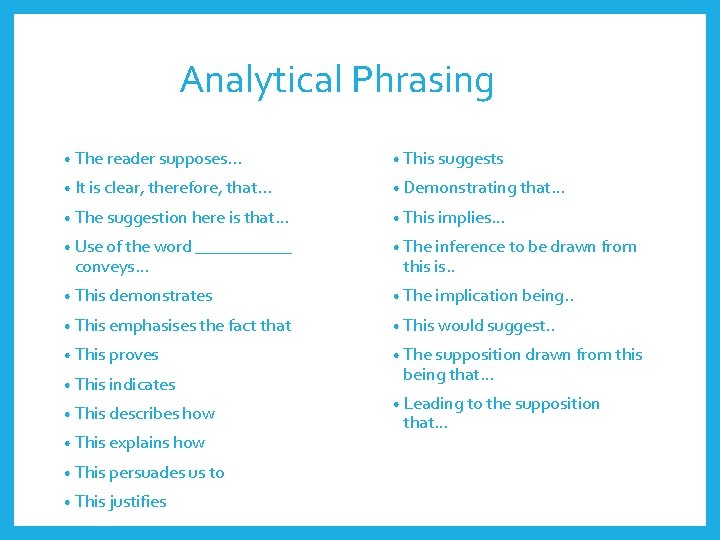
Analytical Phrasing • The reader supposes. . . • This suggests • It is clear, therefore, that. . . • Demonstrating that… • The suggestion here is that. . . • This implies… • Use of the word ______ • The inference to be drawn from • This demonstrates • The implication being. . • This emphasises the fact that • This would suggest. . • This proves • The supposition drawn from this conveys. . . • This indicates • This describes how • This explains how • This persuades us to • This justifies this is. . being that. . . • Leading to the supposition that…
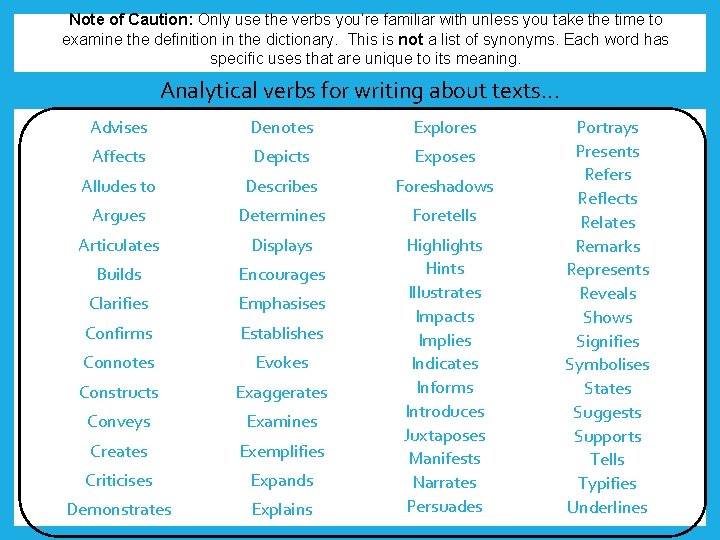
Some examples of active verbs: (Versatile Verbs for analysis) Advices Affects Alludes to Argues Builds Clarifies Confirms Connotes Constructs Criticises Conveys Denotes Depicts Describes Determines Encourages Emphasises Establishes Expands Explains Explores Exposes Highlights Hints Illustrates Impacts Implies Indicates Informs Introduces Manifests Narrates Persuades Portrays Presents Refers Reflects Relates Represents Reveals Shows Signifies Symbolises Suggests Supports Typifies
Note of Caution: Only use the verbs you’re familiar with unless you take the time to examine the definition in the dictionary. This is not a list of synonyms. Each word has specific uses that are unique to its meaning. Analytical verbs for writing about texts. . . Advises Denotes Explores Affects Depicts Exposes Alludes to Describes Foreshadows Argues Determines Foretells Articulates Displays Builds Encourages Clarifies Emphasises Confirms Establishes Connotes Evokes Constructs Exaggerates Conveys Examines Creates Exemplifies Criticises Expands Demonstrates Explains Highlights Hints Illustrates Impacts Implies Indicates Informs Introduces Juxtaposes Manifests Narrates Persuades Portrays Presents Refers Reflects Relates Remarks Represents Reveals Shows Signifies Symbolises States Suggests Supports Tells Typifies Underlines
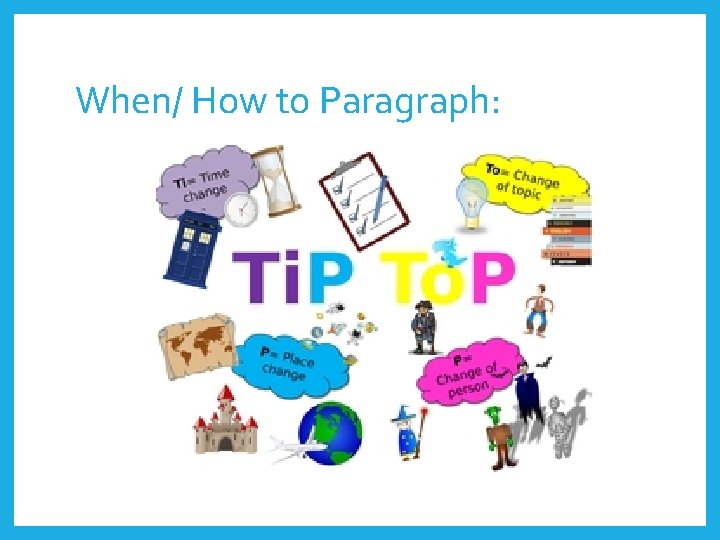
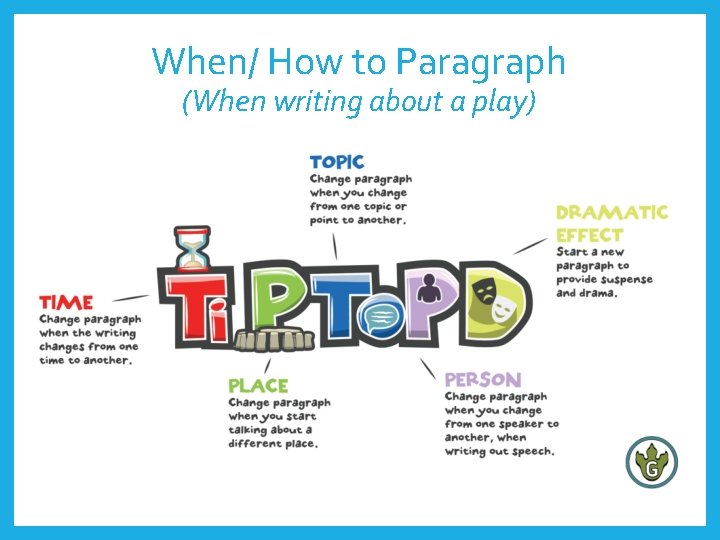
When/ How to Paragraph:
When/ How to Paragraph (When writing about a play)
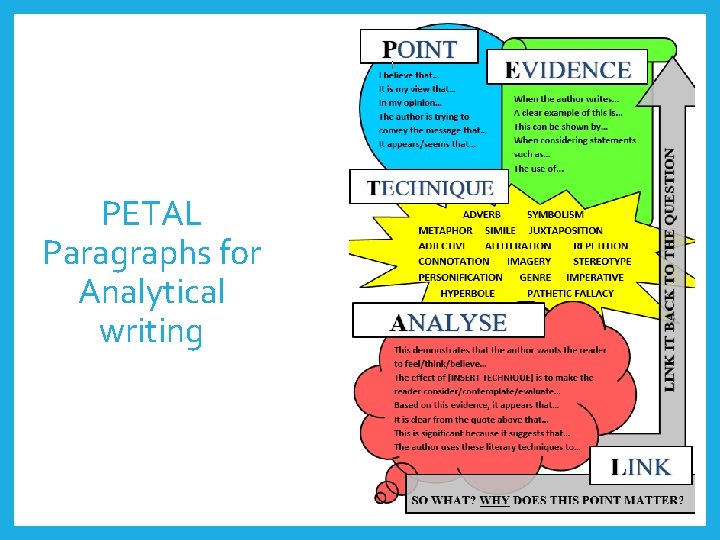
PETAL Paragraphs for Analytical writing
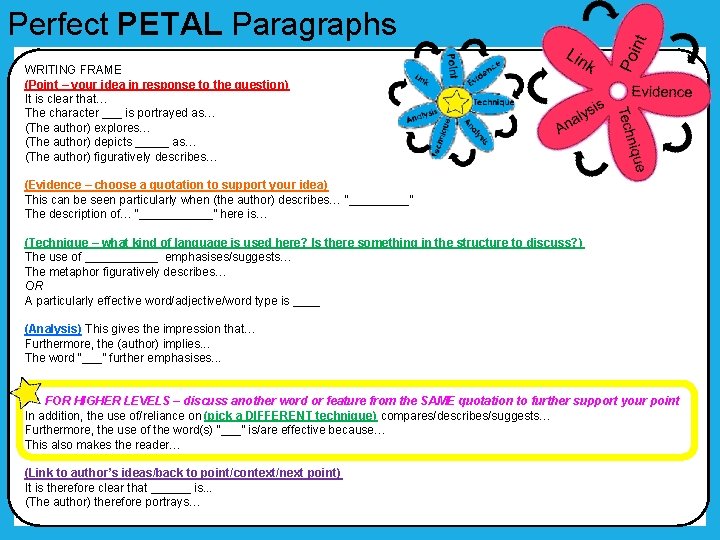
Perfect PETAL Paragraphs WRITING FRAME (Point – your idea in response to the question) It is clear that… The character ___ is portrayed as… (The author) explores… (The author) depicts _____ as… (The author) figuratively describes… (Evidence – choose a quotation to support your idea) This can be seen particularly when (the author) describes… “_____” The description of… “______” here is… (Technique – what kind of language is used here? Is there something in the structure to discuss? ) The use of ______ emphasises/suggests… The metaphor figuratively describes… OR A particularly effective word/adjective/word type is ____ (Analysis) This gives the impression that… Furthermore, the (author) implies. . . The word “___” further emphasises. . . FOR HIGHER LEVELS – discuss another word or feature from the SAME quotation to further support your point In addition, the use of/reliance on (pick a DIFFERENT technique) compares/describes/suggests… Furthermore, the use of the word(s) “___” is/are effective because… This also makes the reader… (Link to author’s ideas/back to point/context/next point) It is therefore clear that ______ is. . . (The author) therefore portrays…
Descriptive Writing Devices Basic Advanced Alliteration Semantic Fields Adjectives Pathetic Fallacy Adverbs Metaphor Onomatopoeia Personification Simile How to plan Foreshadowing Show-not-tell Anthropomorphism Symbolism Write down your story chronologically in main events Short character descriptions Note down main themes Note down spellings Note down some devices you wish to include Structure Paragraphs – Ti. P To. P Dialogue – start a new line for a new speaker even if they only say one word… Punctuation – use a variety of punctuation for effect. Sentence Types- Use a variety of sentence types for effect Simple Compound Complex e Being Concis - Cut out any irrelevant connectives - Have you used two synonyms where one would suffice? - Can you rearrange the sentence in order to cut down words
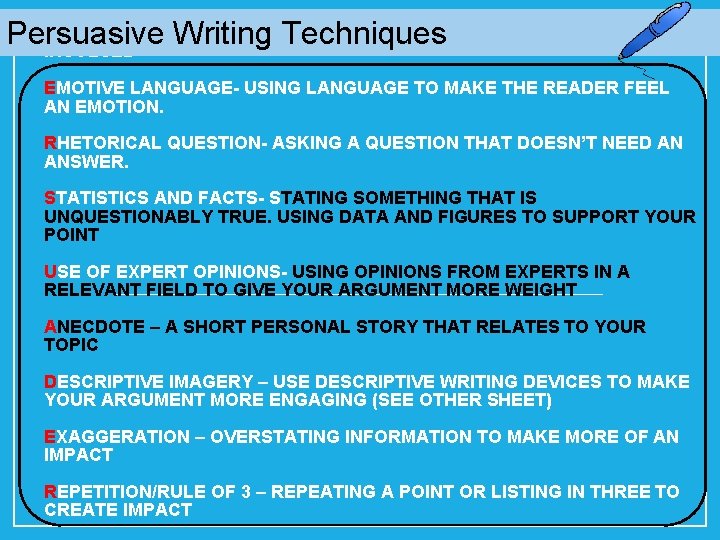
PERSONAL PRONOUNS - ADDRESS THE READER, MAKE THEM FEEL Persuasive Writing Techniques INVOLVED EMOTIVE LANGUAGE- USING LANGUAGE TO MAKE THE READER FEEL AN EMOTION. RHETORICAL QUESTION- ASKING A QUESTION THAT DOESN’T NEED AN ANSWER. STATISTICS AND FACTS- STATING SOMETHING THAT IS UNQUESTIONABLY TRUE. USING DATA AND FIGURES TO SUPPORT YOUR POINT USE OF EXPERT OPINIONS- USING OPINIONS FROM EXPERTS IN A RELEVANT FIELD TO GIVE YOUR ARGUMENT MORE WEIGHT ANECDOTE – A SHORT PERSONAL STORY THAT RELATES TO YOUR TOPIC DESCRIPTIVE IMAGERY – USE DESCRIPTIVE WRITING DEVICES TO MAKE YOUR ARGUMENT MORE ENGAGING (SEE OTHER SHEET) EXAGGERATION – OVERSTATING INFORMATION TO MAKE MORE OF AN IMPACT REPETITION/RULE OF 3 – REPEATING A POINT OR LISTING IN THREE TO CREATE IMPACT
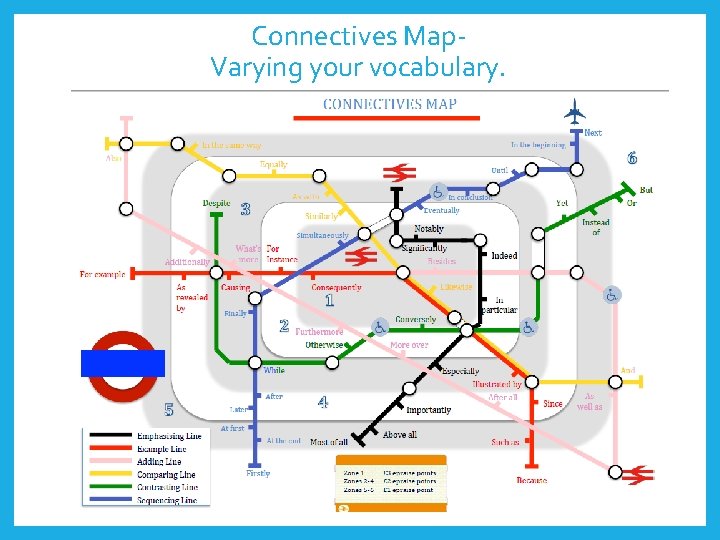
Connectives Map. Varying your vocabulary.