
KS 4 Biology Chromosomes Genes and DNA Boardworks
KS 4 Biology • Chromosomes, Genes and DNA © Boardworks Ltd 2004
Contents Chromosomes, Genes and DNA Chromosomes and gender DNA – the molecule of life How DNA copies itself DNA and the genetic code © Boardworks Ltd 2004

Why are cells different? An oak tree has about 30 different types of cells. How many different types of cells are humans made of? Our bodies have more than 300 different types of cells. Why do cells have different characteristics? © Boardworks Ltd 2004 © Boardworks Ltd
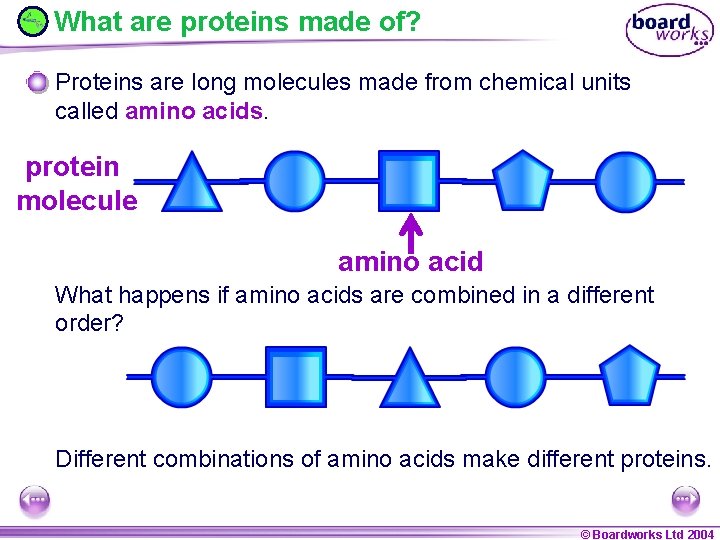
What are proteins made of? Proteins are long molecules made from chemical units called amino acids. protein molecule amino acid What happens if amino acids are combined in a different order? Different combinations of amino acids make different proteins. © Boardworks Ltd 2004 © Boardworks Ltd
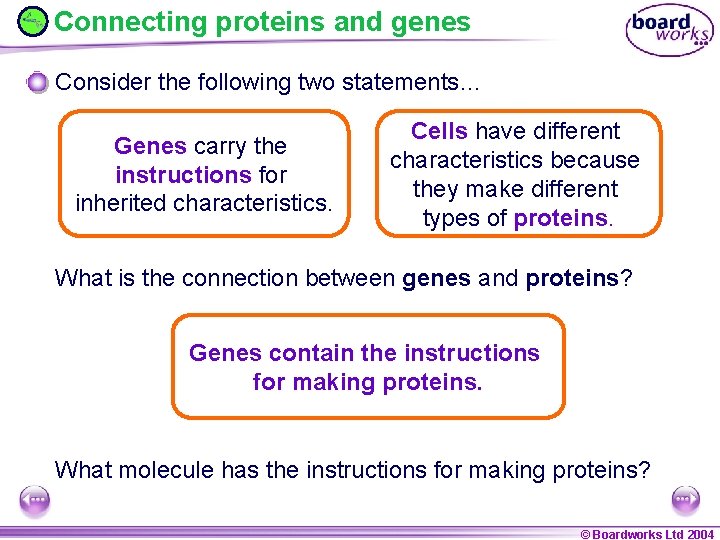
Connecting proteins and genes Consider the following two statements… Genes carry the instructions for inherited characteristics. Cells have different characteristics because they make different types of proteins. What is the connection between genes and proteins? Genes contain the instructions for making proteins. What molecule has the instructions for making proteins? © Boardworks Ltd 2004 © Boardworks Ltd
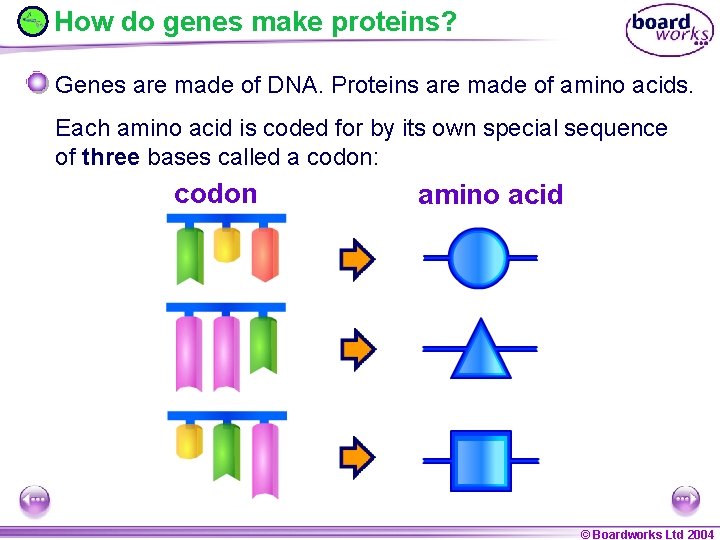
How do genes make proteins? Genes are made of DNA. Proteins are made of amino acids. Each amino acid is coded for by its own special sequence of three bases called a codon: codon amino acid © Boardworks Ltd 2004 © Boardworks Ltd
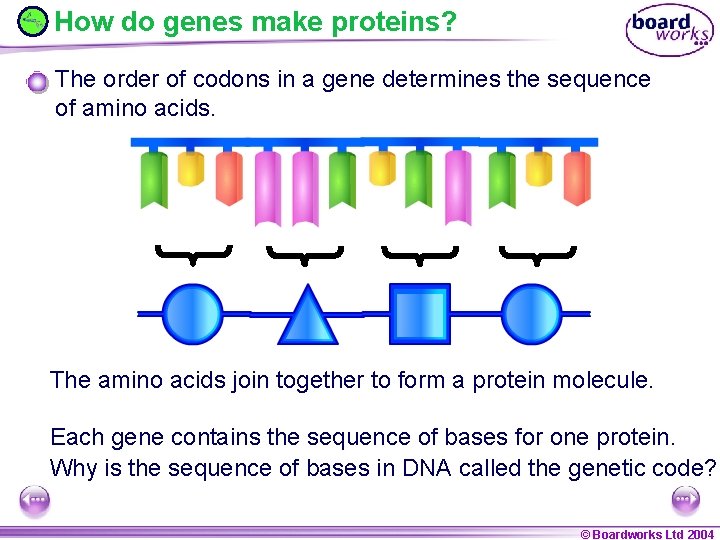
How do genes make proteins? The order of codons in a gene determines the sequence of amino acids. The amino acids join together to form a protein molecule. Each gene contains the sequence of bases for one protein. Why is the sequence of bases in DNA called the genetic code? © Boardworks Ltd 2004 © Boardworks Ltd
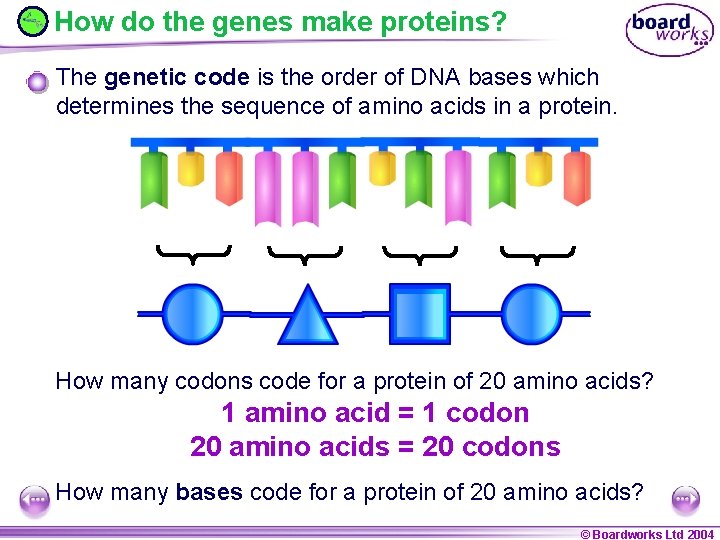
How do the genes make proteins? The genetic code is the order of DNA bases which determines the sequence of amino acids in a protein. How many codons code for a protein of 20 amino acids? 1 amino acid = 1 codon 20 amino acids = 20 codons How many bases code for a protein of 20 amino acids? © Boardworks Ltd 2004 © Boardworks Ltd
How does DNA synthesize protein? • Transcription – DNA makes a copy of itself that can leave the nucleus. This copy is called messenger RNA (m. RNA). It is exactly the same as DNA except for one thing; instead of the nitrogenous base thymine, all RNA has the nitrogenous base uracil (U). • The newly created m. RNA then leaves the nucleus in search of a ribosome. Why does it need to find a ribosome? © Boardworks Ltd 2004
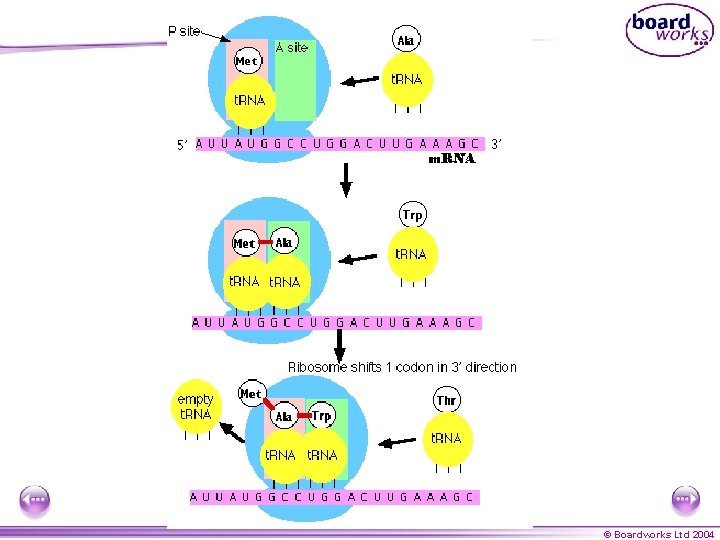
How does DNA synthesize protein? • Translation – Once it reaches a ribosome (r. RNA), it waits for its partner transfer RNA (t. RNA) to bring in the appropriate amino acid. • The m. RNA knows which amino acid to synthesize because its codon binds with an anticodon on the t. RNA molecule. © Boardworks Ltd 2004
© Boardworks Ltd 2004

Table of Anticodons © Boardworks Ltd 2004
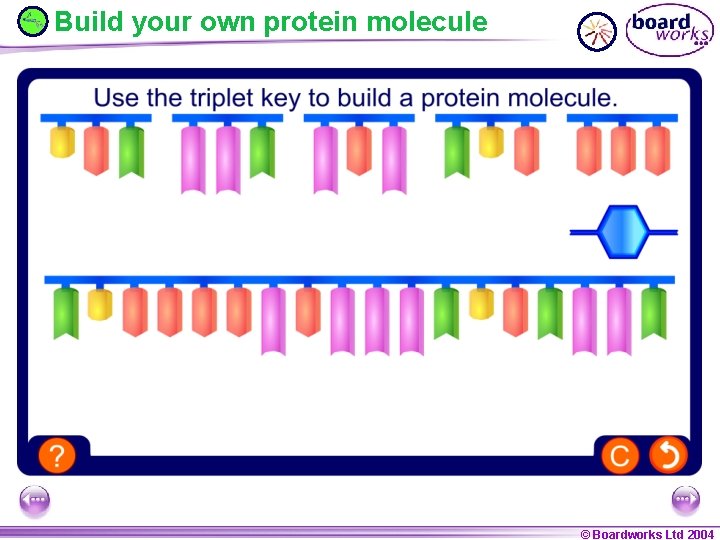
Build your own protein molecule © Boardworks Ltd 2004 © Boardworks Ltd
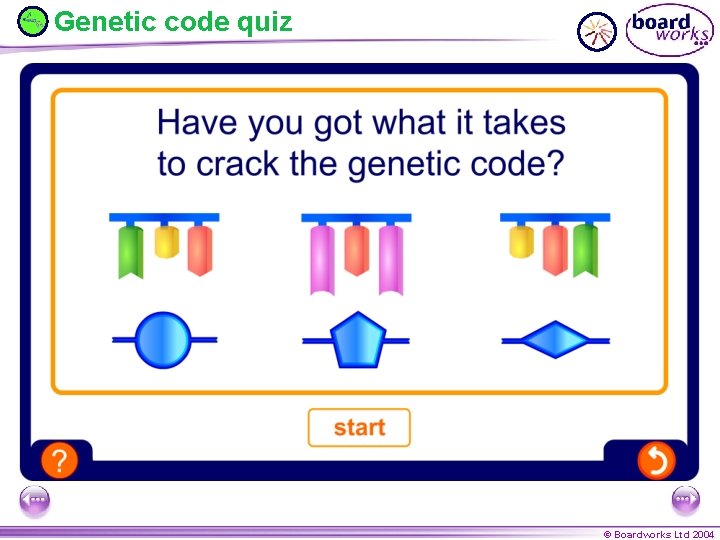
Genetic code quiz © Boardworks Ltd 2004
- Slides: 14