
KS 3 Biology 7 B Reproduction 1 of
KS 3 Biology • 7 B Reproduction 1 of 31 20 © Boardworks Ltd 2005 2004
Contents 7 B Reproduction Human sex cells and systems Ovulation, fertilization and implantation Embryo development and birth Puberty Summary activities 1 20 2 of 31 © Boardworks Ltd 2005 2004

Human reproduction Reproduction is one of the seven life processes. All living things reproduce. Humans use sexual reproduction to produce their young. In order to do this, the two parents (male and female) have different reproductive systems and organs that produce different sex cells. 1 20 3 of 31 © Boardworks Ltd 2005 2004
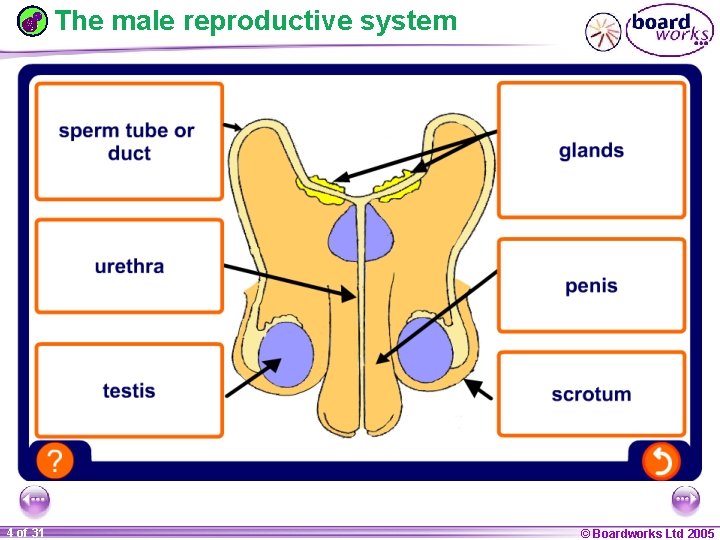
The male reproductive system 1 20 4 of 31 © Boardworks Ltd 2005 2004
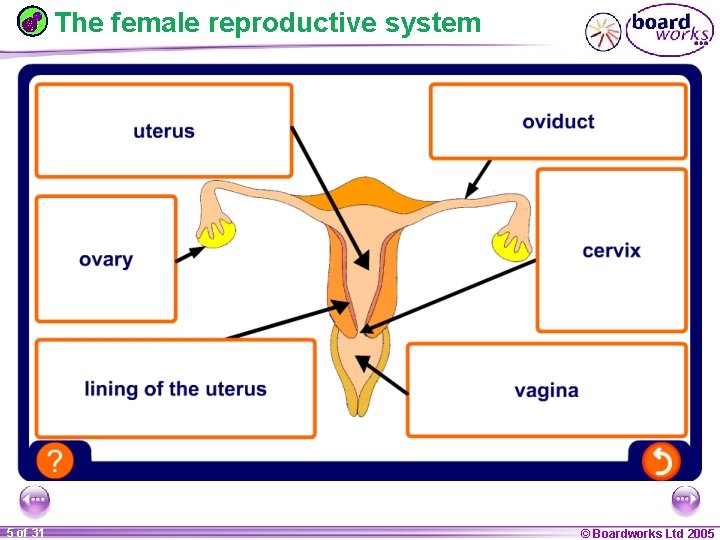
The female reproductive system 1 20 5 of 31 © Boardworks Ltd 2005 2004
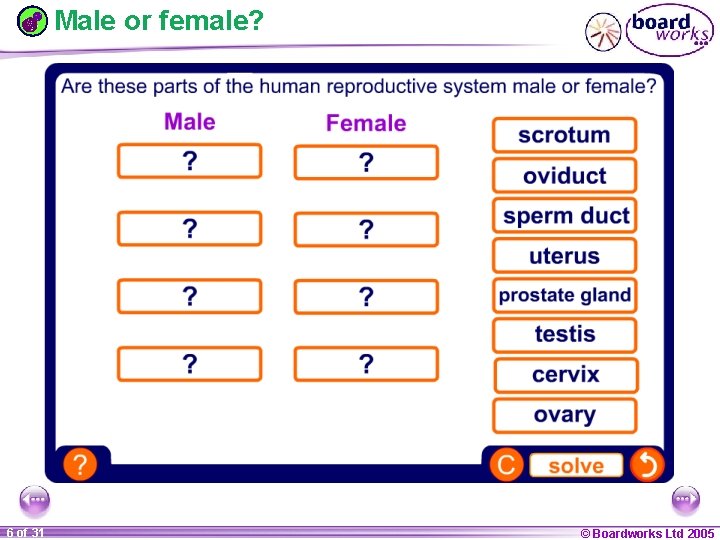
Male or female? 1 20 6 of 31 © Boardworks Ltd 2005 2004
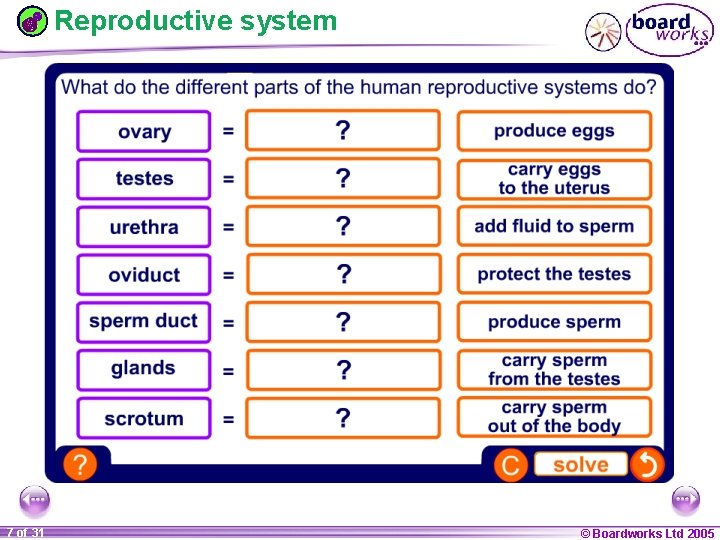
Reproductive system 1 20 7 of 31 © Boardworks Ltd 2005 2004
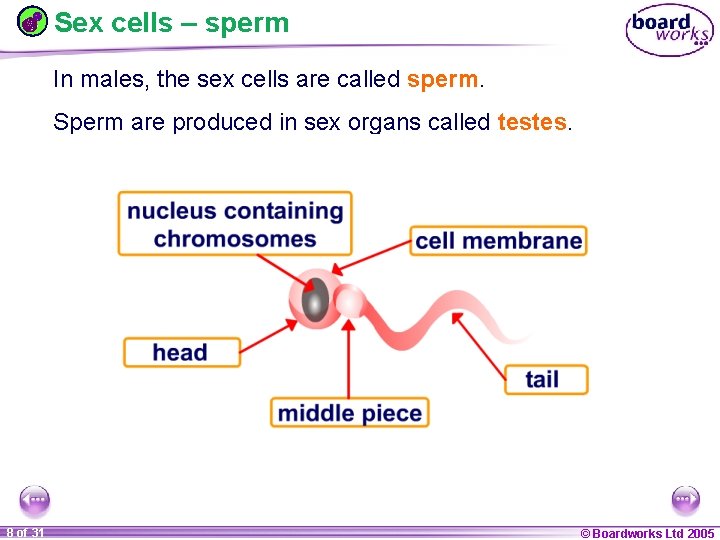
Sex cells – sperm In males, the sex cells are called sperm. Sperm are produced in sex organs called testes. 1 20 8 of 31 © Boardworks Ltd 2005 2004
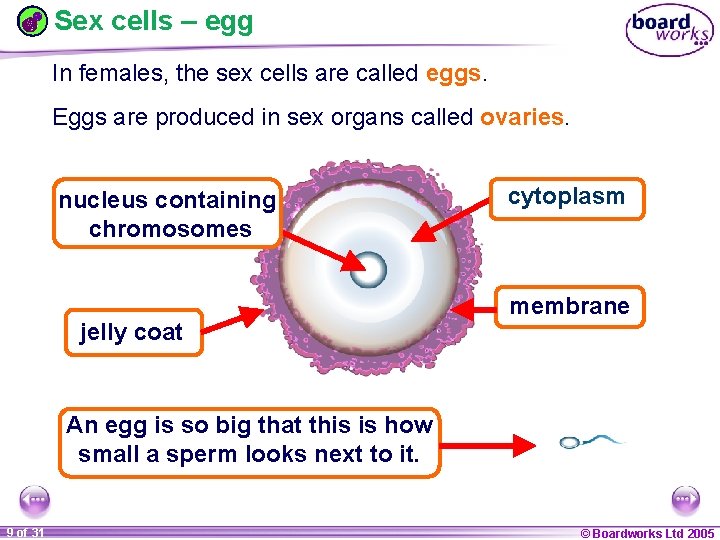
Sex cells – egg In females, the sex cells are called eggs. Eggs are produced in sex organs called ovaries. nucleus containing chromosomes jelly coat cytoplasm membrane An egg is so big that this is how small a sperm looks next to it. 1 20 9 of 31 © Boardworks Ltd 2005 2004
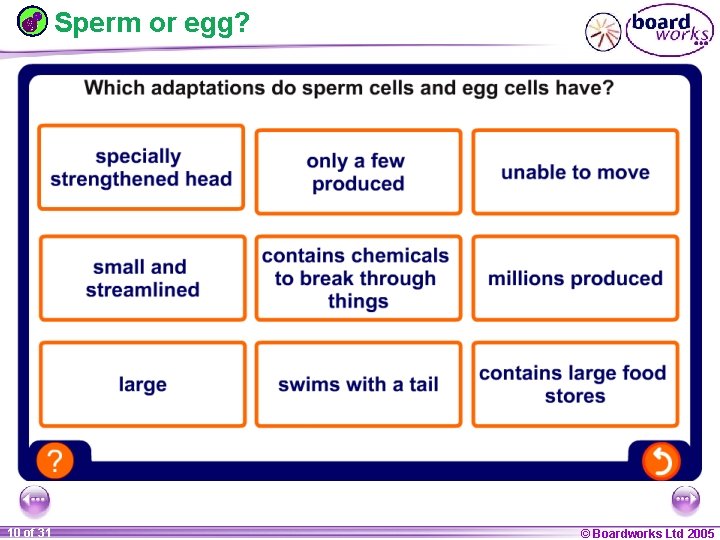
Sperm or egg? 1 10 ofof 20 31 © Boardworks Ltd 2005 2004
Contents 7 B Reproduction Human sex cells and systems Ovulation, fertilization and implantation Embryo development and birth Puberty Summary activities 1 11 ofof 20 31 © Boardworks Ltd 2005 2004
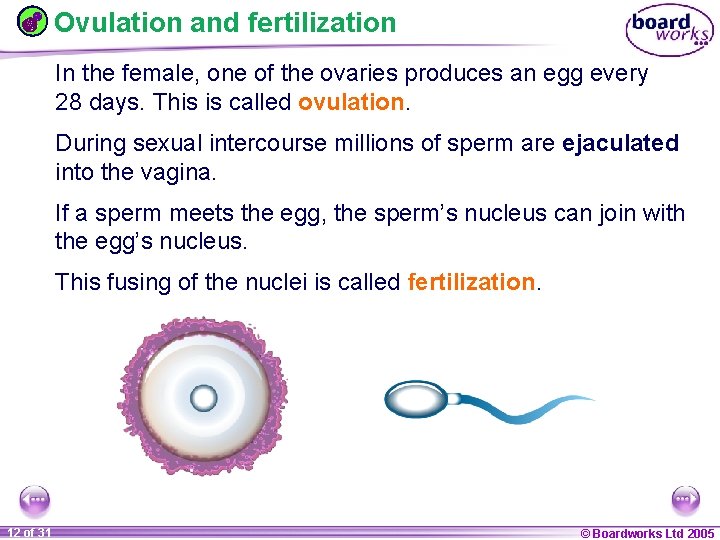
Ovulation and fertilization In the female, one of the ovaries produces an egg every 28 days. This is called ovulation. During sexual intercourse millions of sperm are ejaculated into the vagina. If a sperm meets the egg, the sperm’s nucleus can join with the egg’s nucleus. This fusing of the nuclei is called fertilization. 1 12 ofof 20 31 © Boardworks Ltd 2005 2004
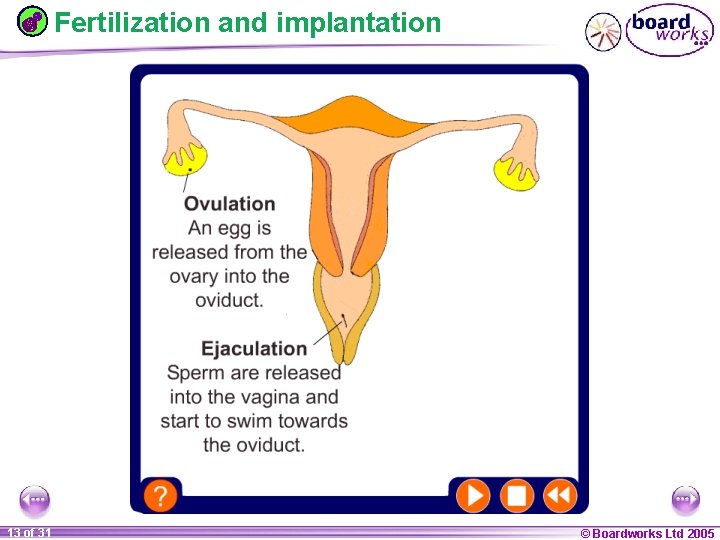
Fertilization and implantation 1 13 ofof 20 31 © Boardworks Ltd 2005 2004
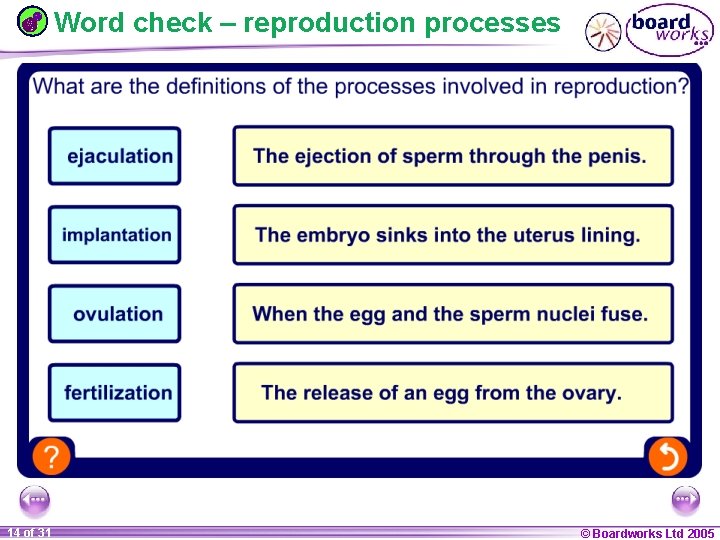
Word check – reproduction processes 1 14 ofof 20 31 © Boardworks Ltd 2005 2004
Contents 7 B Reproduction Human sex cells and systems Ovulation, fertilization and implantation Embryo development and birth Puberty Summary activities 1 15 ofof 20 31 © Boardworks Ltd 2005 2004
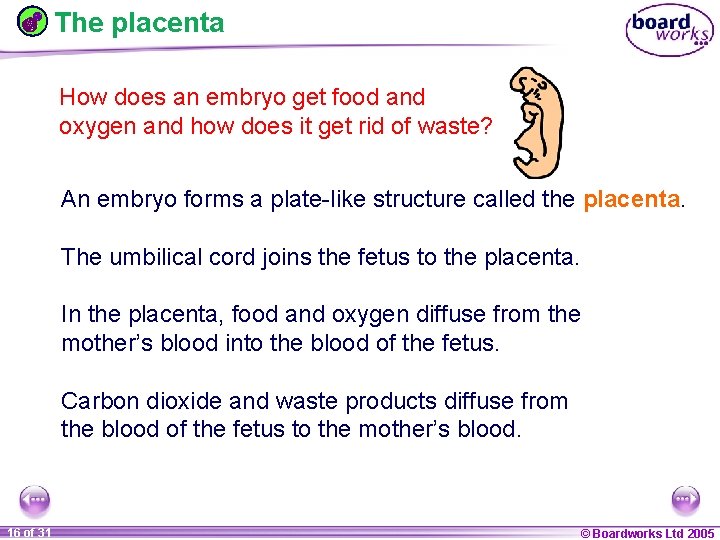
The placenta How does an embryo get food and oxygen and how does it get rid of waste? An embryo forms a plate-like structure called the placenta. The umbilical cord joins the fetus to the placenta. In the placenta, food and oxygen diffuse from the mother’s blood into the blood of the fetus. Carbon dioxide and waste products diffuse from the blood of the fetus to the mother’s blood. 1 16 ofof 20 31 © Boardworks Ltd 2005 2004
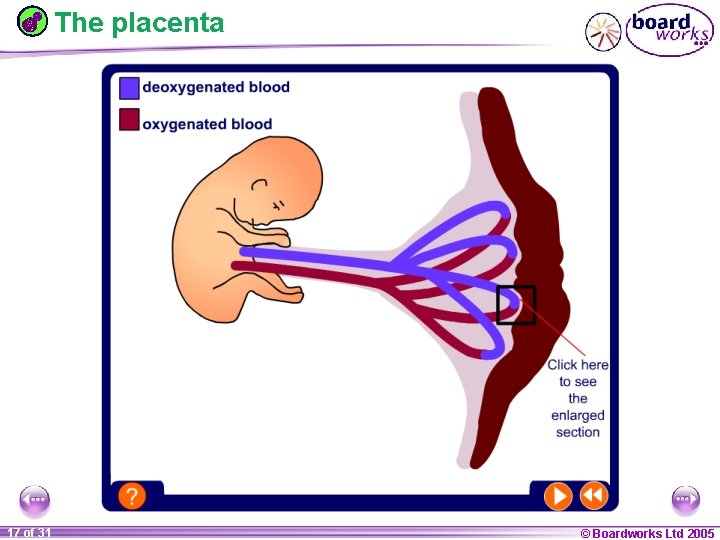
The placenta 1 17 ofof 20 31 © Boardworks Ltd 2005 2004
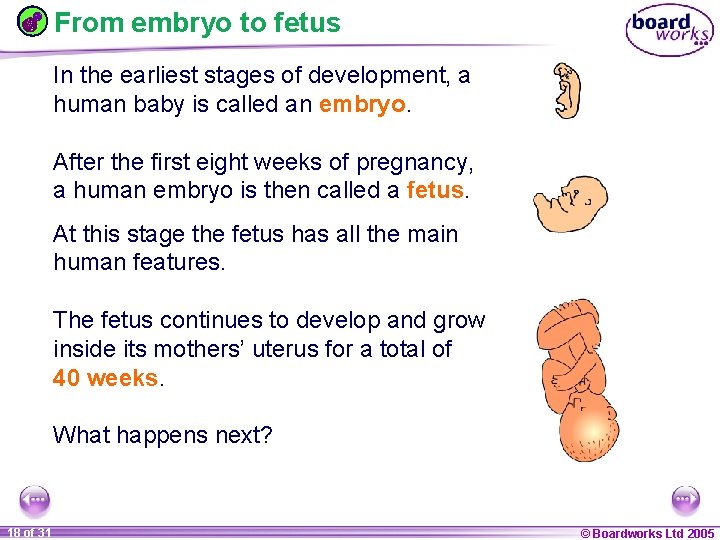
From embryo to fetus In the earliest stages of development, a human baby is called an embryo. After the first eight weeks of pregnancy, a human embryo is then called a fetus. At this stage the fetus has all the main human features. The fetus continues to develop and grow inside its mothers’ uterus for a total of 40 weeks. What happens next? 1 18 ofof 20 31 © Boardworks Ltd 2005 2004
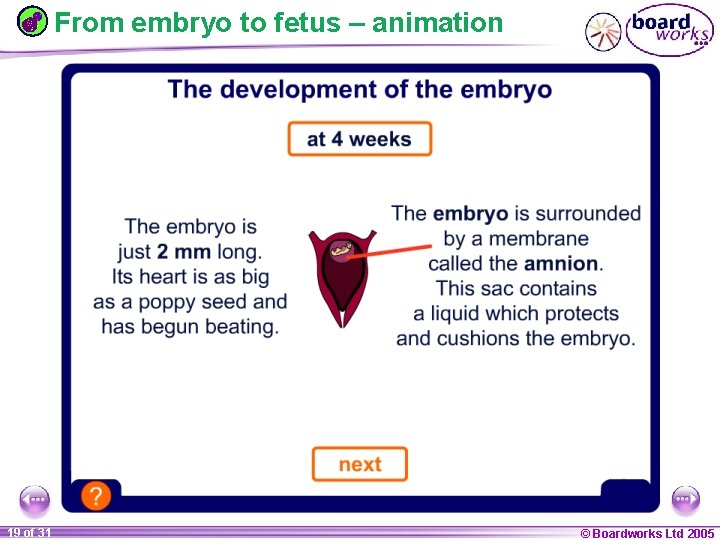
From embryo to fetus – animation 1 19 ofof 20 31 © Boardworks Ltd 2005 2004
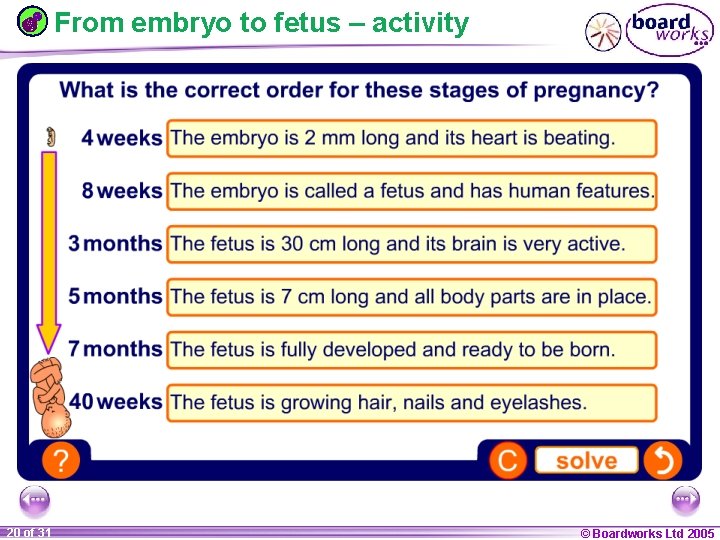
From embryo to fetus – activity 1 20 ofof 20 31 © Boardworks Ltd 2005 2004
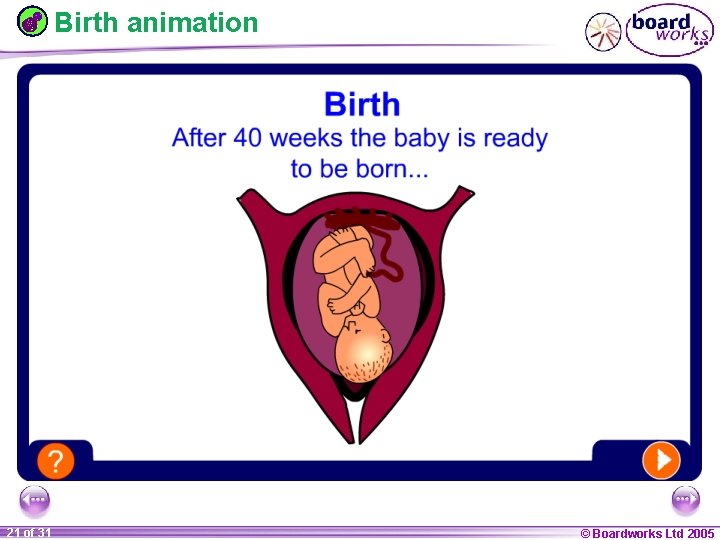
Birth animation 1 21 ofof 20 31 © Boardworks Ltd 2005 2004
Contents 7 B Reproduction Human sex cells and systems Ovulation, fertilization and implantation Embryo development and birth Puberty Summary activities 1 22 ofof 20 31 © Boardworks Ltd 2005 2004
What is puberty? Human children are born with a complete set of sex organs. However, they do not become active until between the ages of 10 and 18. In males, the testes start to make sperm in boys and in females, the ovaries start to release eggs. This stage of development is called puberty. During this important period, many changes take place in the bodies of young men and women. 1 23 ofof 20 31 © Boardworks Ltd 2005 2004
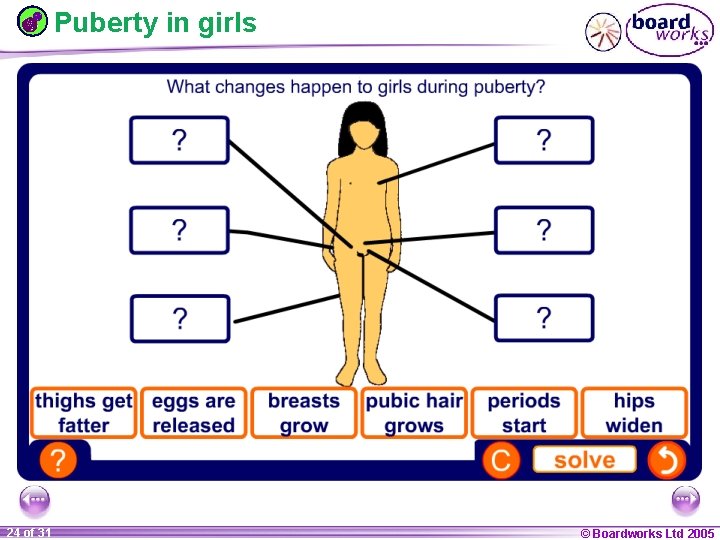
Puberty in girls 1 24 ofof 20 31 © Boardworks Ltd 2005 2004
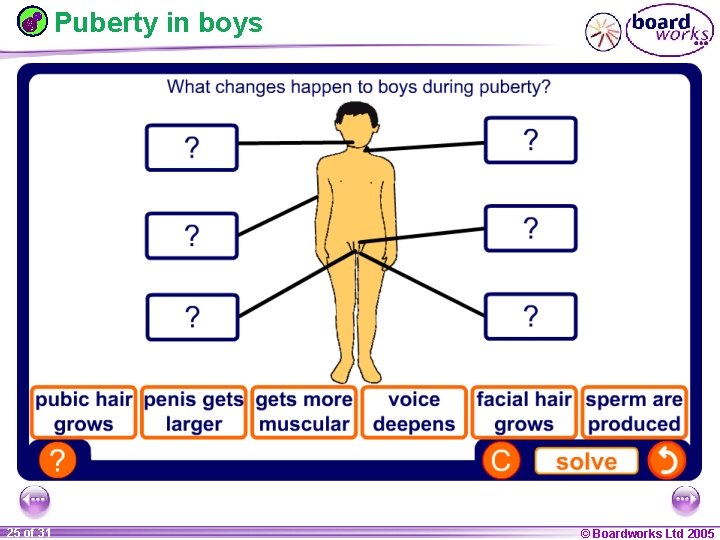
Puberty in boys 1 25 ofof 20 31 © Boardworks Ltd 2005 2004
Menstruation An important part of puberty for girls is the beginning of their monthly cycle. This is known as the menstrual cycle. The menstrual cycle involves the preparation of the uterus lining so that it is able to receive a fertilized egg. If an egg is fertilized, it can implant itself in the prepared uterus lining. If it is not fertilized, the lining of the uterus breaks down and is lost from the body. This is called menstruation or a period. 1 26 ofof 20 31 © Boardworks Ltd 2005 2004
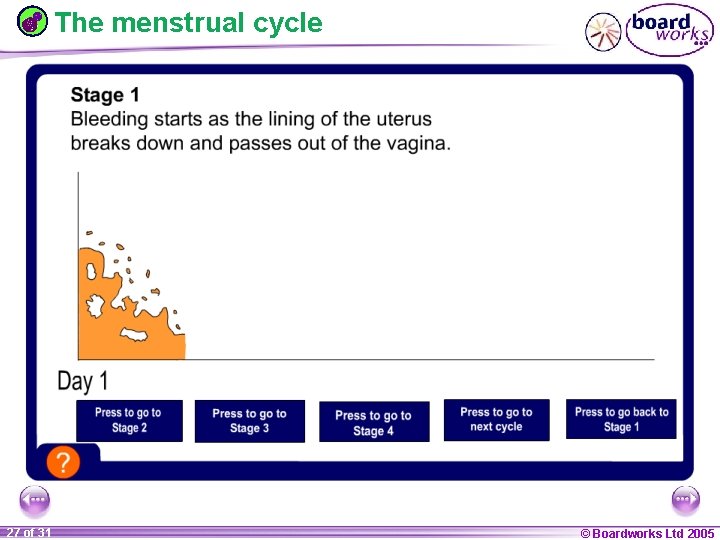
The menstrual cycle 1 27 ofof 20 31 © Boardworks Ltd 2005 2004
Contents 7 B Reproduction Human sex cells and systems Ovulation, fertilization and implantation Embryo development and birth Puberty Summary activities 1 28 ofof 20 31 © Boardworks Ltd 2005 2004
Glossary l egg - The female sex cell. l embryo - The first two months of development of a baby. l fertilization - When the egg and sperm nuclei fuse. l menstruation - The monthly cycle in females. l ovary - The part of the female reproductive system that produces eggs. l ovulation - The release of an eggs from the ovary. l placenta - The structure made by an embryo to obtain food and oxygen from its mother. l puberty - The time when sex organs begin to work. l sperm - The male sex cell. l testis - The part of the male reproductive system that produces sperm. 1 29 ofof 20 31 © Boardworks Ltd 2005 2004
Anagrams 1 30 ofof 20 31 © Boardworks Ltd 2005 2004
Multiple-choice quiz 1 31 ofof 20 31 © Boardworks Ltd 2005 2004
- Slides: 31