
Krebsv cyklus boxidace lipid Karel Kubek References 1
Krebsův cyklus, b-oxidace lipidů Karel Kubíček
References: 1) Voet & Voet: Biochemistry, 4 th Ed. 2011 2) Murray, Granner, Mayes, Rodwell: Harper‘s Illustrated Biochemistry, 26 th Ed. 2003 3) Lehninger, Nelson, Cox: Principles of Biochemistry, 2 nd Ed. 4) http: //www. wikipedia. com 5) http: //www. nobel. se 6) Introduction to Biophysics – presentations by KK
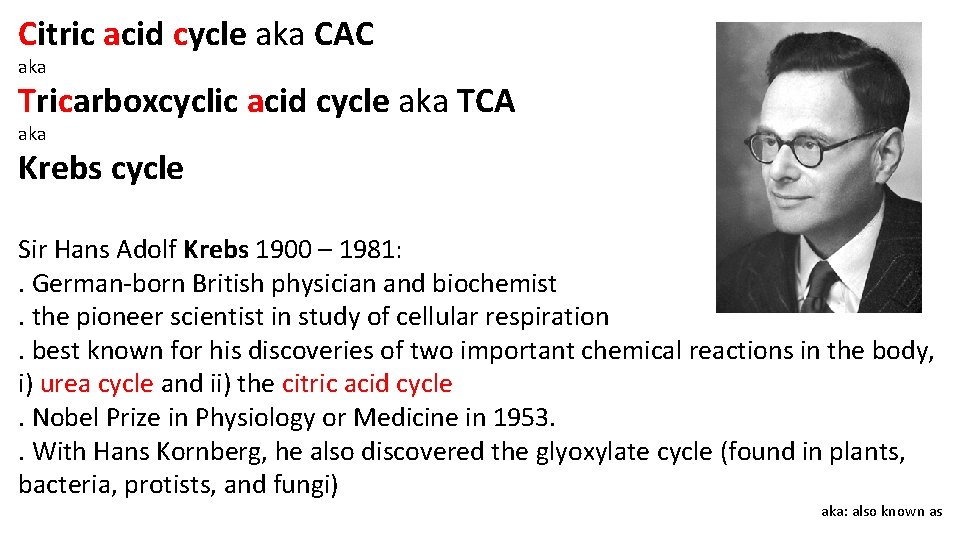
Citric acid cycle aka CAC aka Tricarboxcyclic acid cycle aka TCA aka Krebs cycle Sir Hans Adolf Krebs 1900 – 1981: . German-born British physician and biochemist. the pioneer scientist in study of cellular respiration. best known for his discoveries of two important chemical reactions in the body, i) urea cycle and ii) the citric acid cycle. Nobel Prize in Physiology or Medicine in 1953. . With Hans Kornberg, he also discovered the glyoxylate cycle (found in plants, bacteria, protists, and fungi) aka: also known as

Krebs cycle is complicated but there is a way how to rember its intermediates Brno is nice place to live in!!! And it is because (we wish it so ): Our City Is Kept Safe and Secure From Mobsters
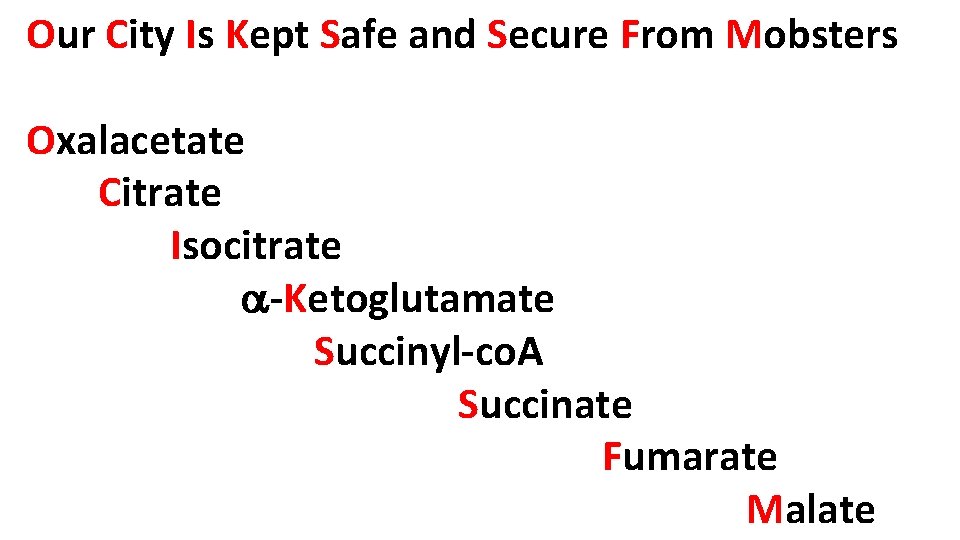
Our City Is Kept Safe and Secure From Mobsters Oxalacetate Citrate Isocitrate a-Ketoglutamate Succinyl-co. A Succinate Fumarate Malate
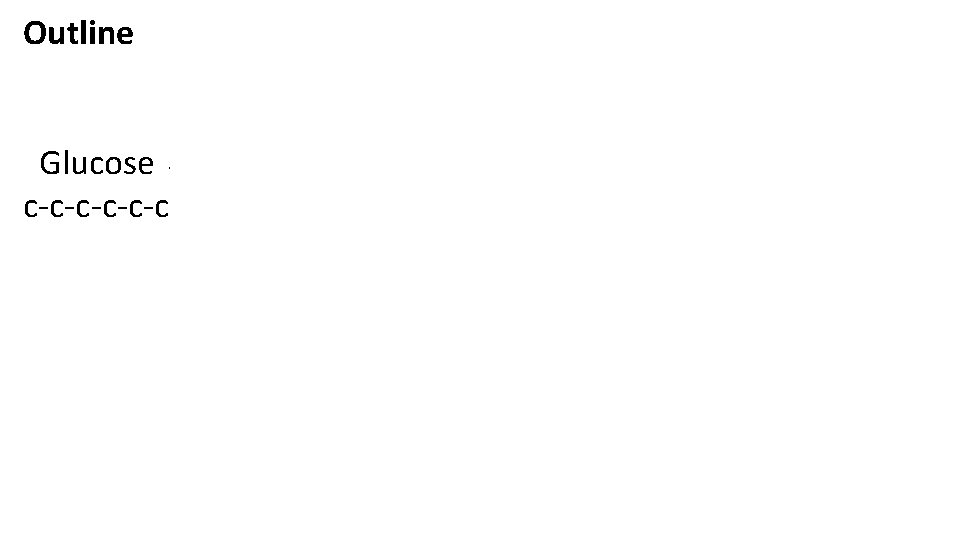
Outline Glucose c-c-c-c pyruvate c-c-c Acetyl Co. A c-c Oxalacetate c-c-c-c CO 2 citric acid c-c-c-c CO 2
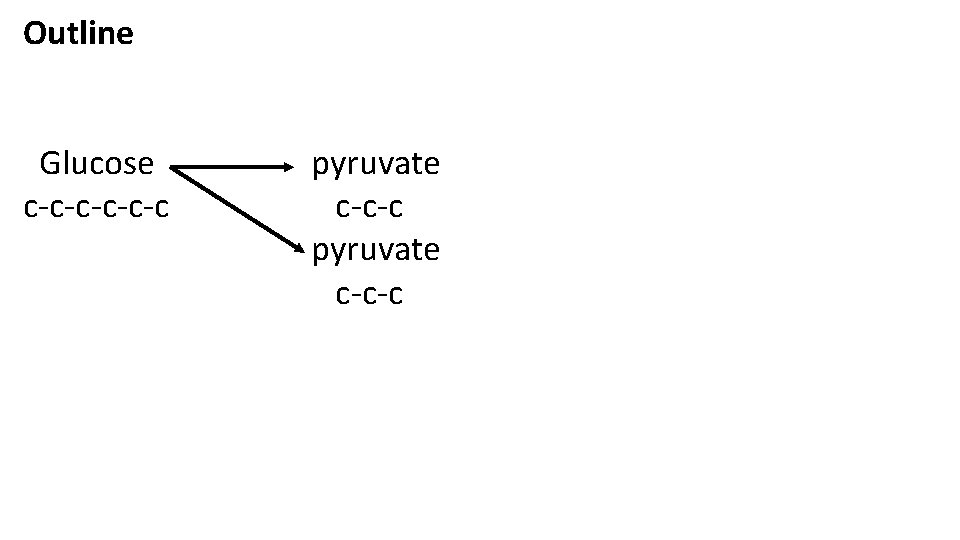
Outline Glucose c-c-c-c pyruvate c-c-c Acetyl Co. A c-c Oxalacetate c-c-c-c CO 2 citric acid c-c-c-c CO 2
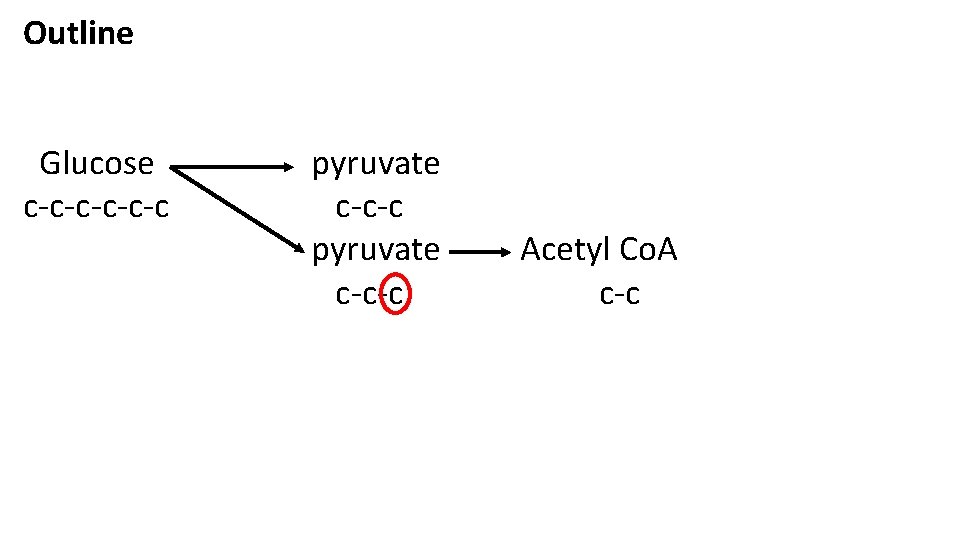
Outline Glucose c-c-c-c pyruvate c-c-c Acetyl Co. A c-c citric acid c-c-c-c
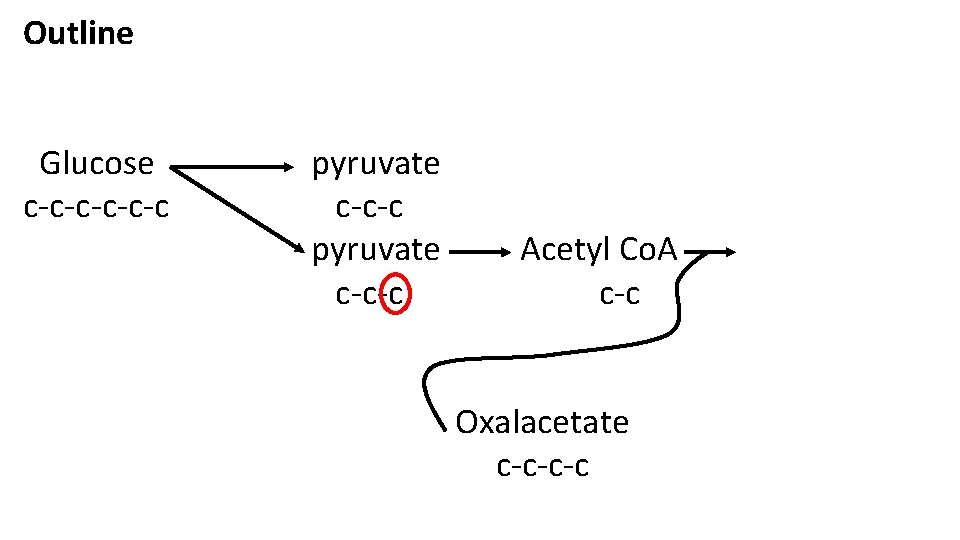
Outline Glucose c-c-c-c pyruvate c-c-c Acetyl Co. A c-c Oxalacetate c-c-c-c citric acid c-c-c-c
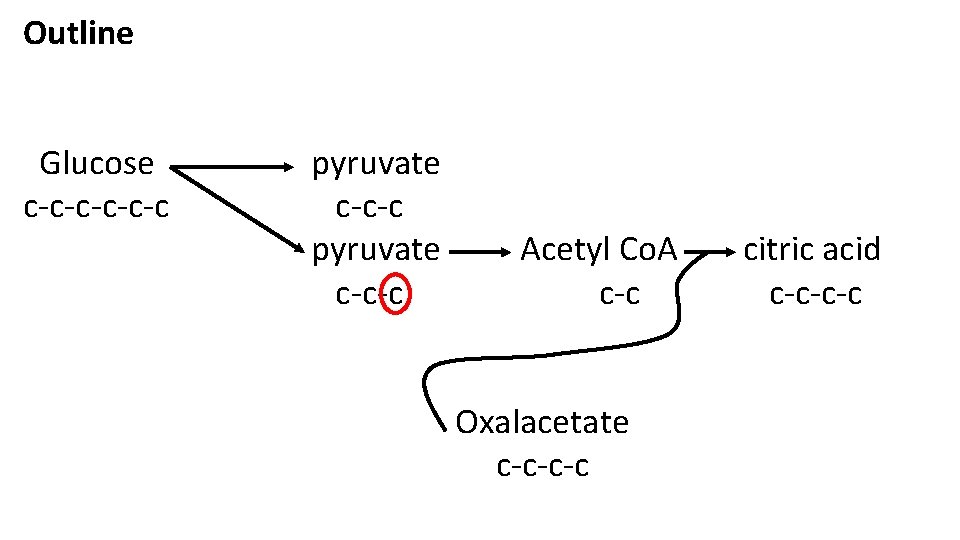
Outline Glucose c-c-c-c pyruvate c-c-c Acetyl Co. A c-c Oxalacetate c-c-c-c citric acid c-c-c-c
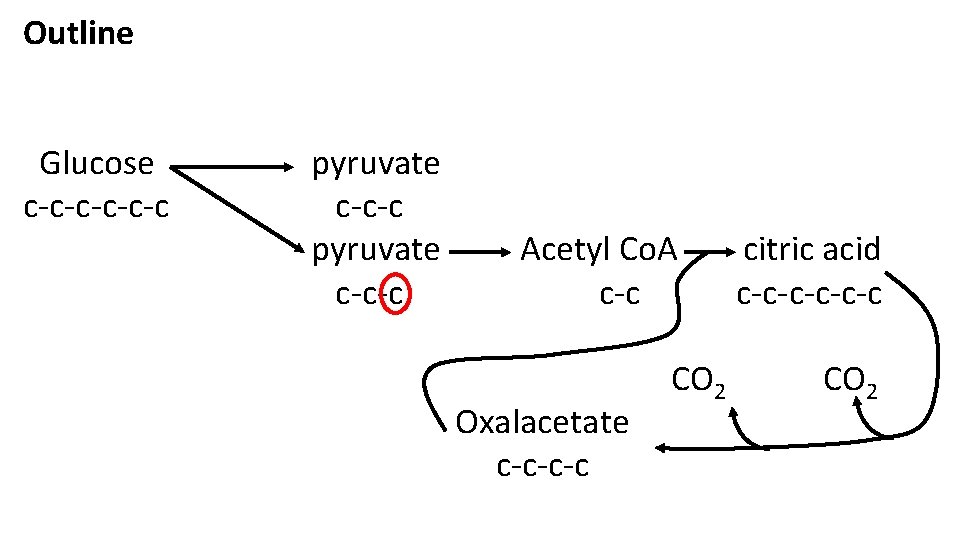
Outline Glucose c-c-c-c pyruvate c-c-c Acetyl Co. A c-c Oxalacetate c-c-c-c CO 2 citric acid c-c-c-c CO 2
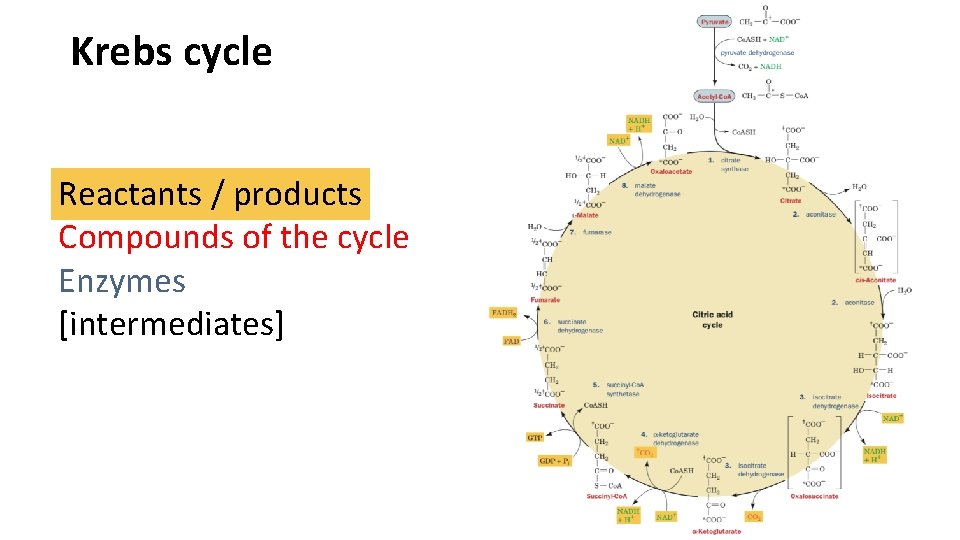
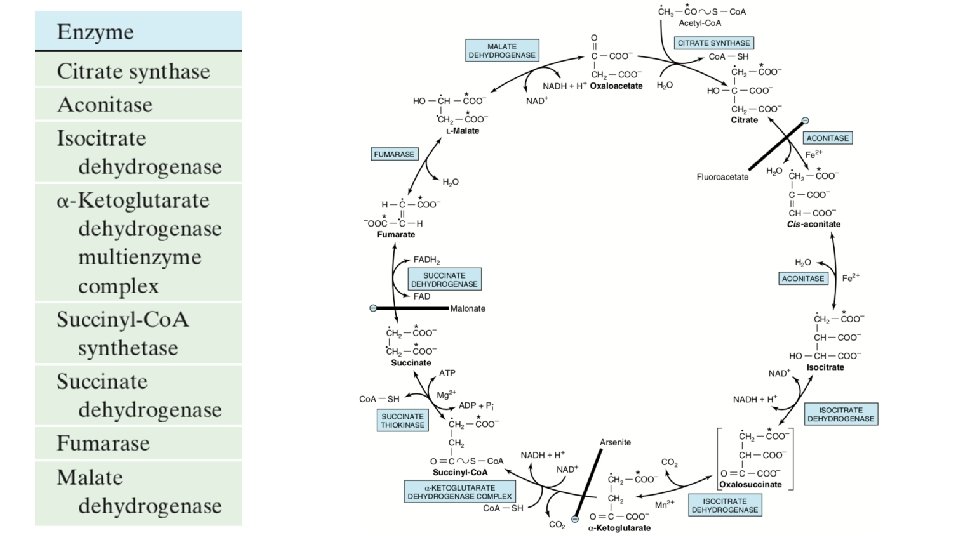
Krebs cycle Reactants / products Compounds of the cycle Enzymes [intermediates]
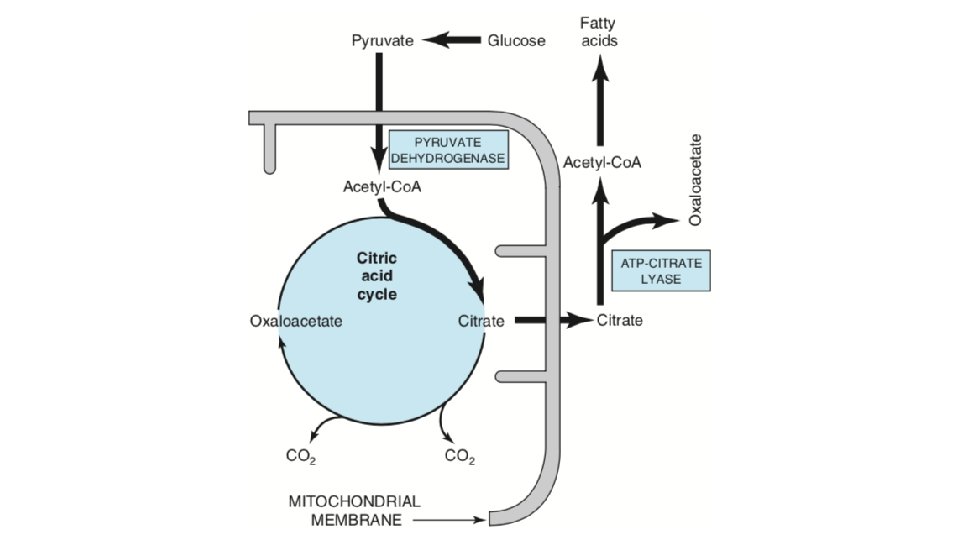
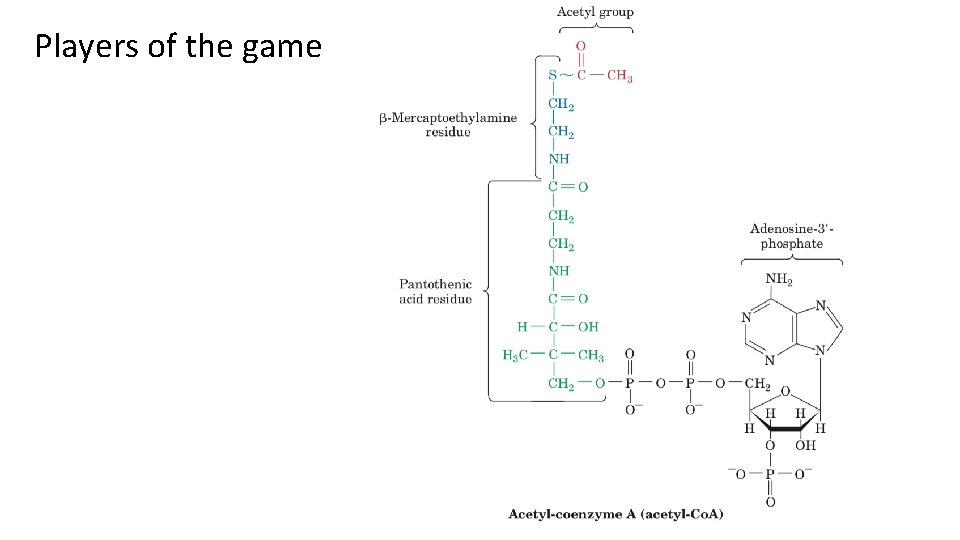
Players of the game
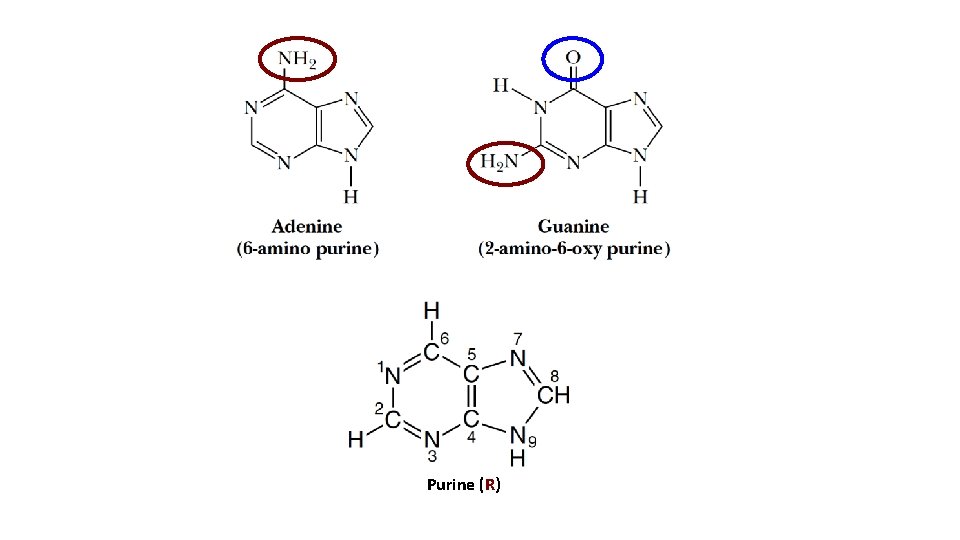
Purine (R)
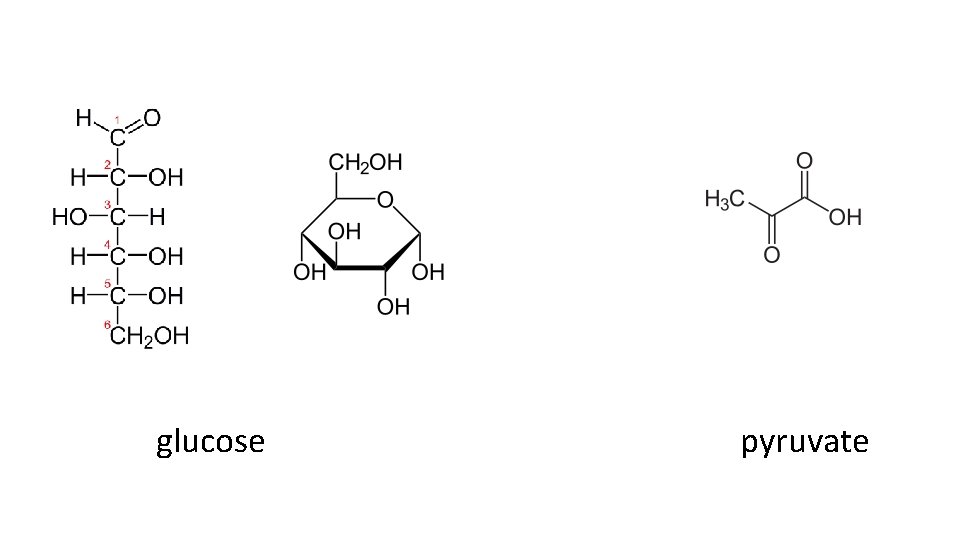
glucose pyruvate
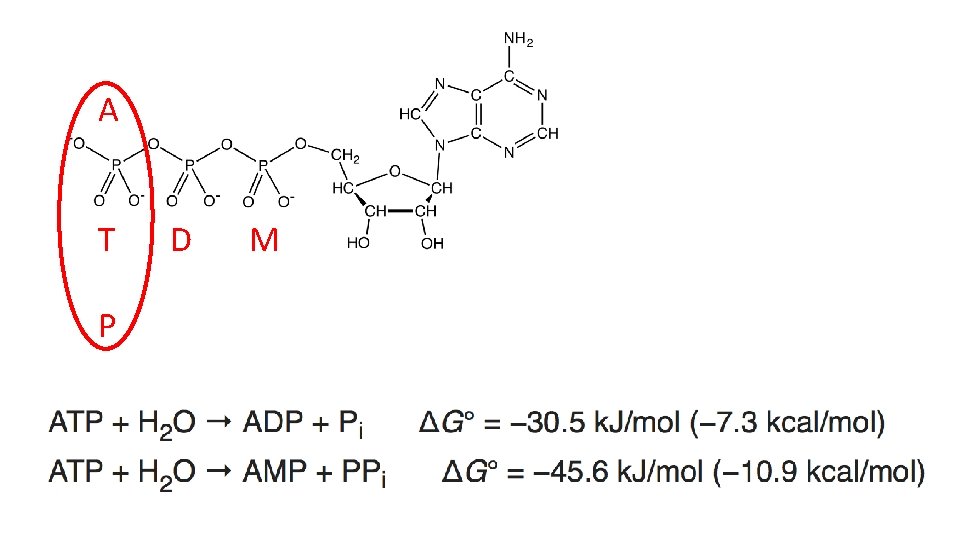
A T P D M
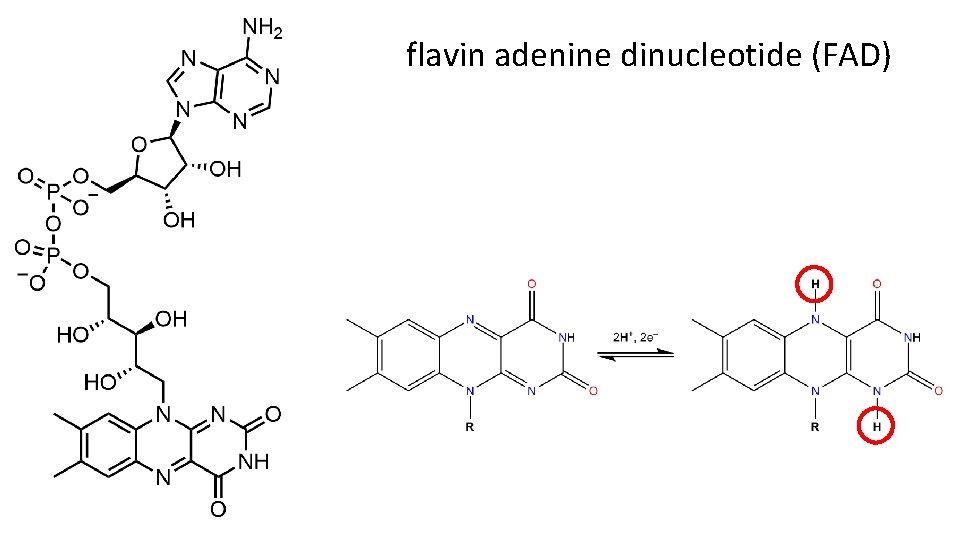
flavin adenine dinucleotide (FAD)
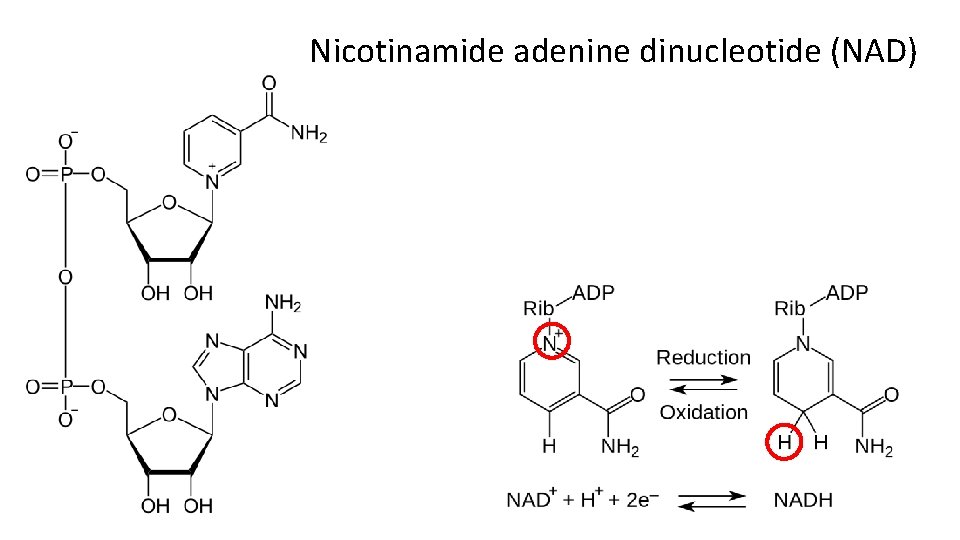
Nicotinamide adenine dinucleotide (NAD)
Protein database – PDB WWW. RCSB. ORG Vizualization programs 1) Py. Mol 2) Chimera 3) VMD 4) Mol 5) Ras. Mol 6) Insight II
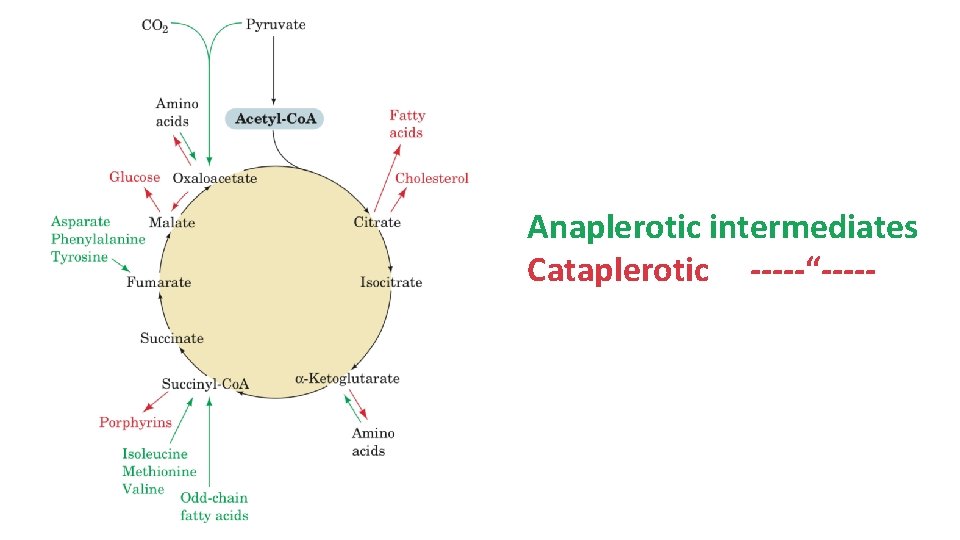
Anaplerotic intermediates Cataplerotic -----“-----
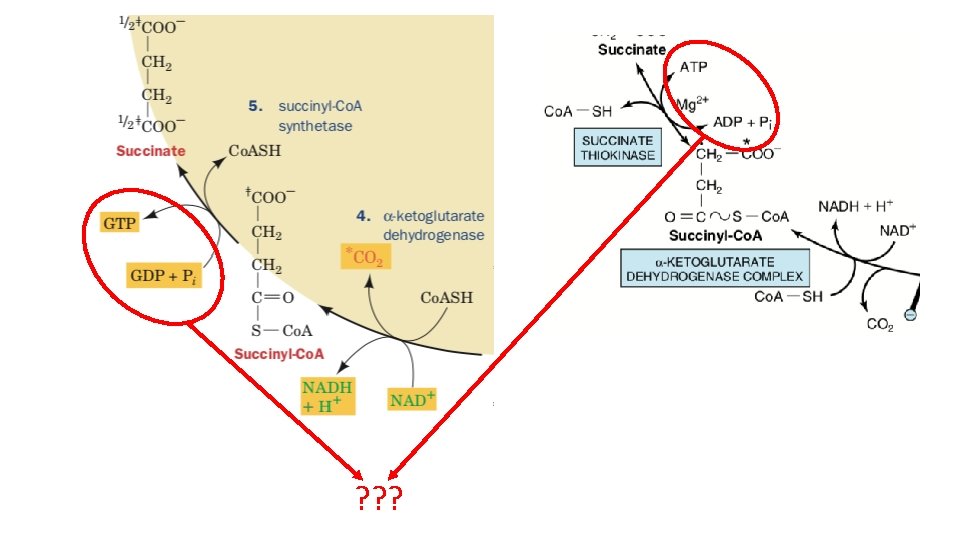
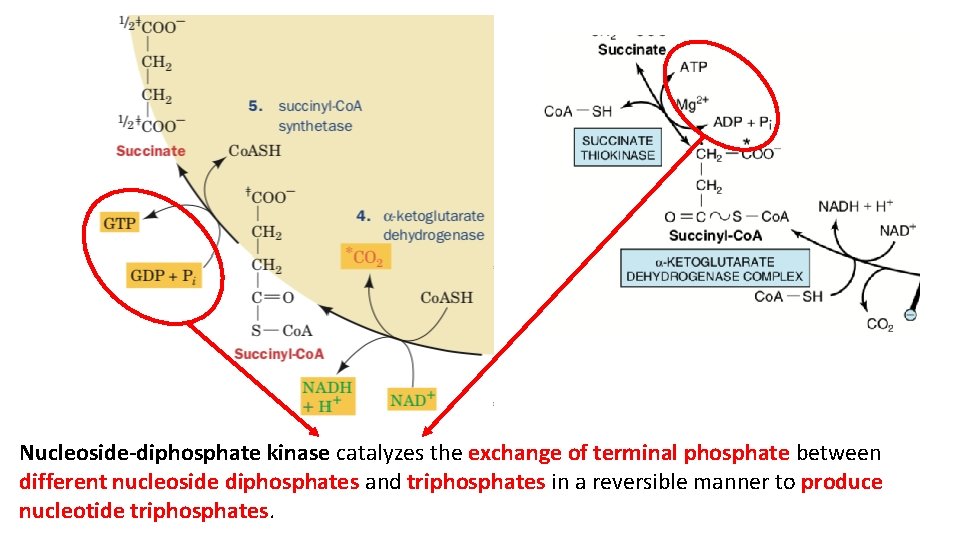
Nucleoside-diphosphate kinase catalyzes the exchange of terminal phosphate between different nucleoside diphosphates and triphosphates in a reversible manner to produce nucleotide triphosphates.
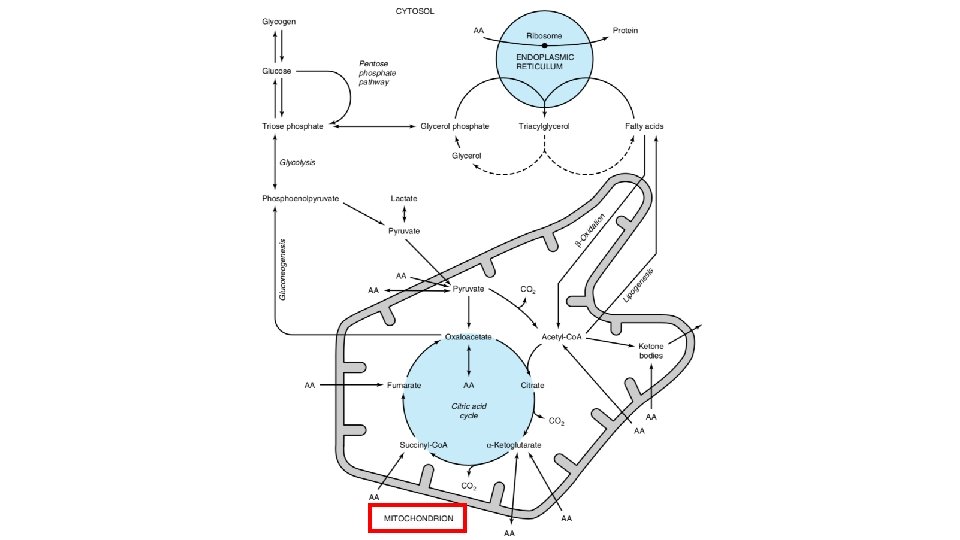
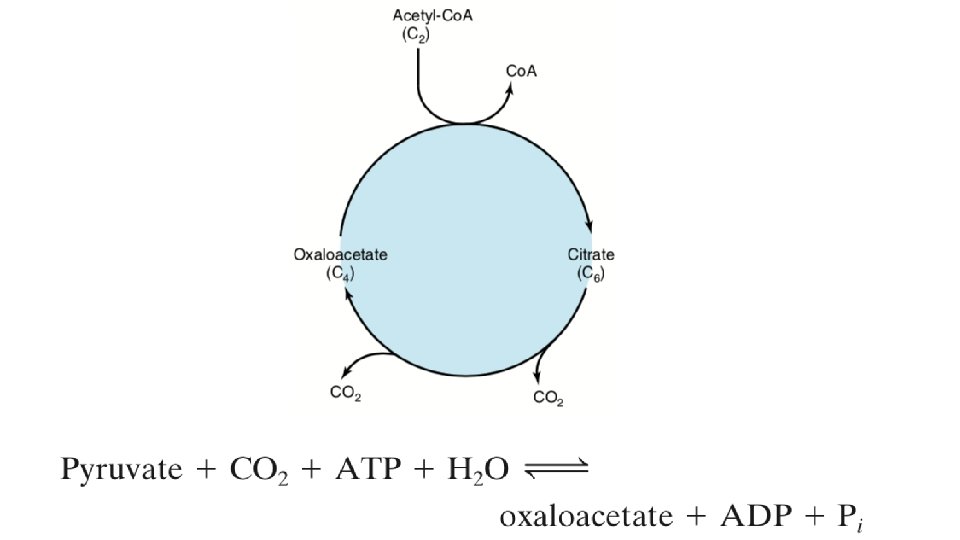
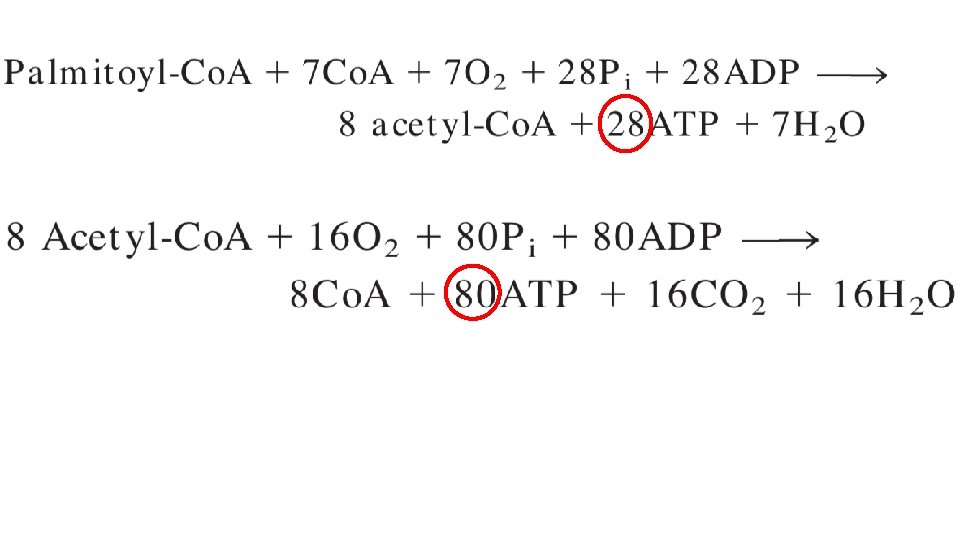
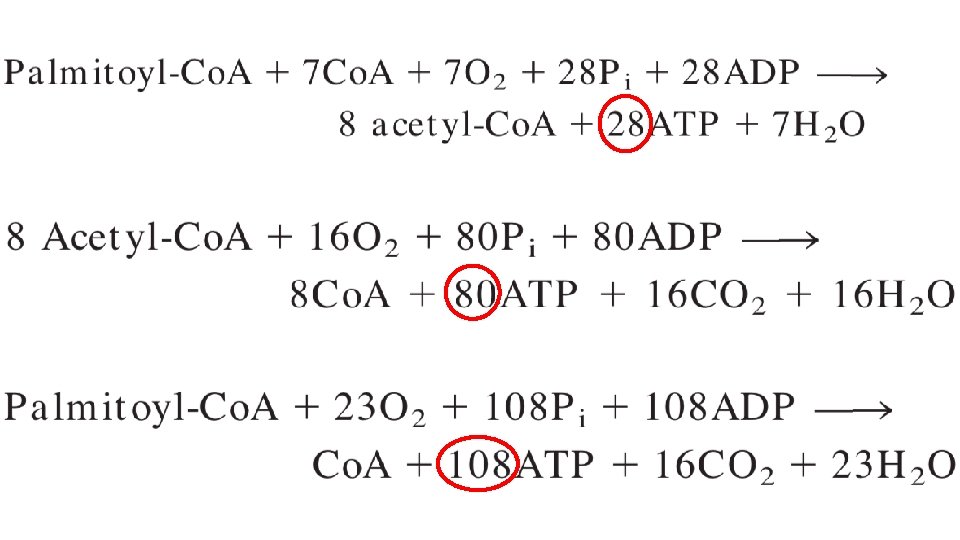
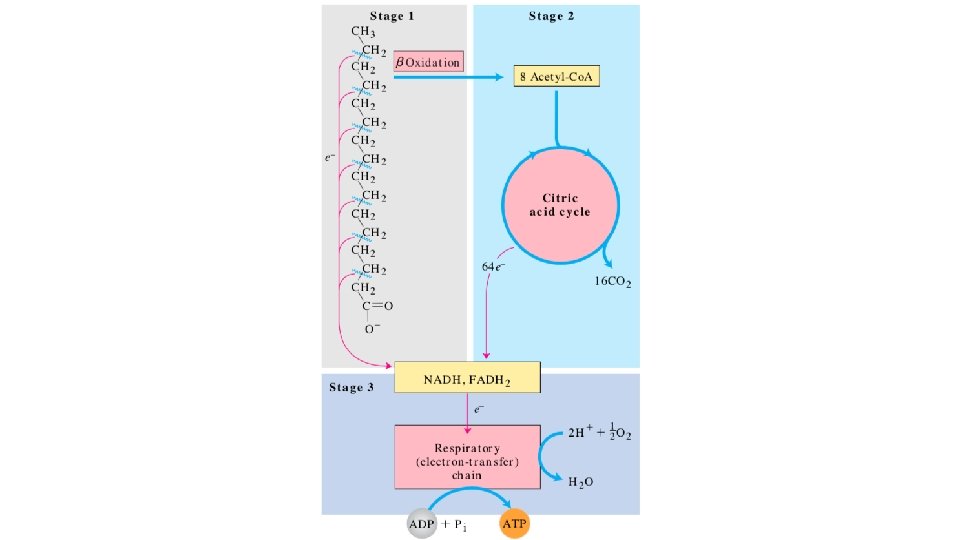
1) The citric acid cycle, the common mode of oxidative metabolism in most organisms, is mediated by eight enzymes that collectively convert 1 acetyl-Co. A to 2 CO 2 molecules so as to yield 3 NADHs, 1 FADH 2, and 1 GTP (or ATP). The NADH and FADH 2 are oxidized by O 2 in the electron-transport chain with the concomitant synthesis of around 11 more ATPs, yielding a total of about 12 ATPs for one turn of the citric acid cycle. 2). Several anabolic pathways cataplerotically utilize citric acid cycle intermediates as starting materials. These essential substances are replaced by anaplerotic reactions of which the major one is synthesis of oxaloacetate from pyruvate and CO 2 by pyruvate carboxylase. 3) The enzymes of the citric acid cycle act as a functional unit that keeps pace with the metabolic demands of the cell. The flux-controlling enzymes appear to be citrate synthase, isocitrate dehydrogenase, and a-ketoglutarate dehydrogenase. Their activities are controlled by substrate availability, product inhibition, inhibition by cycle intermediates, and activation by Ca 2+.
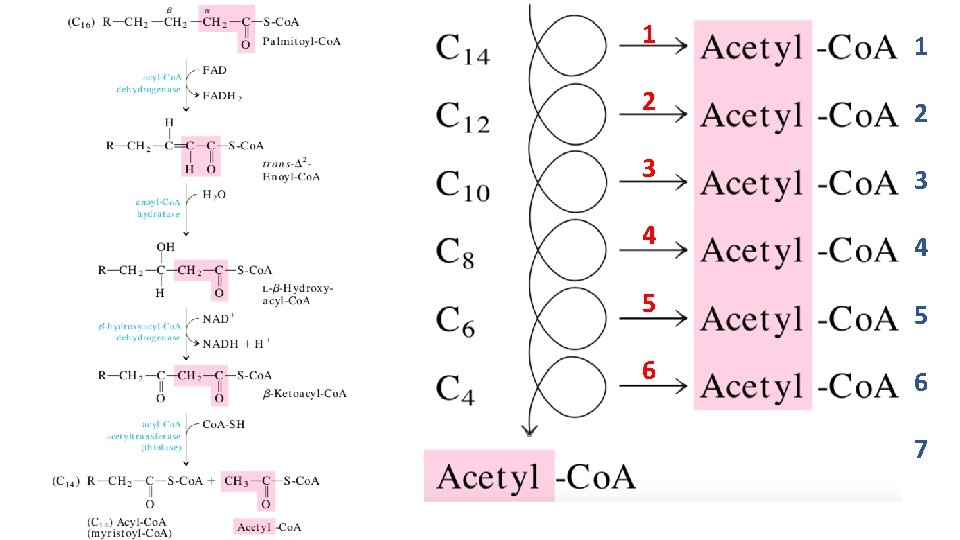
Oxidation of Fatty Acids 1) Activation 2) Transport 3) Oxidation
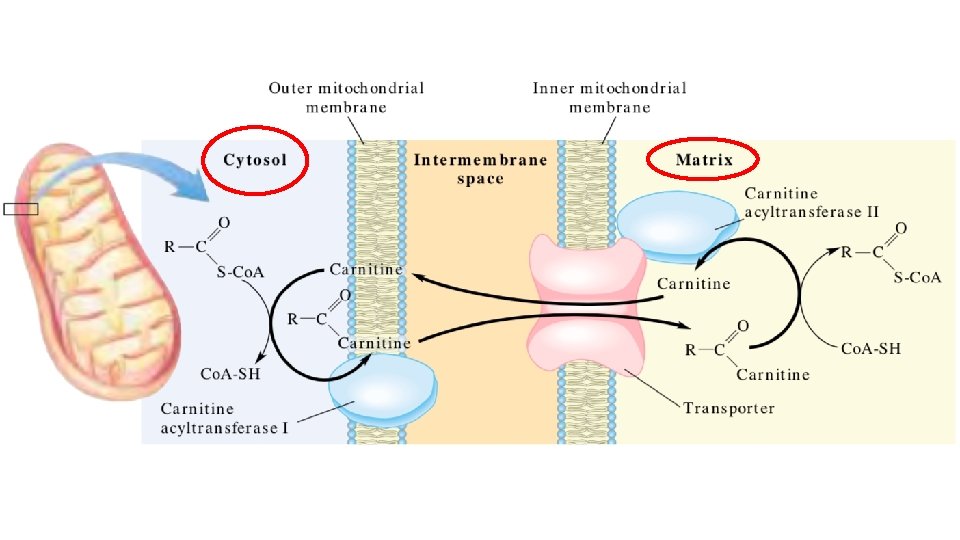
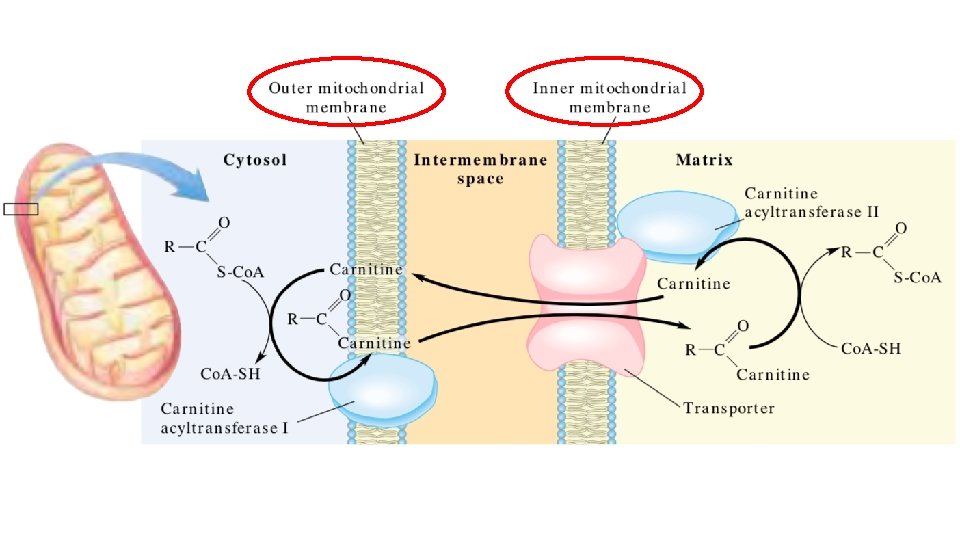
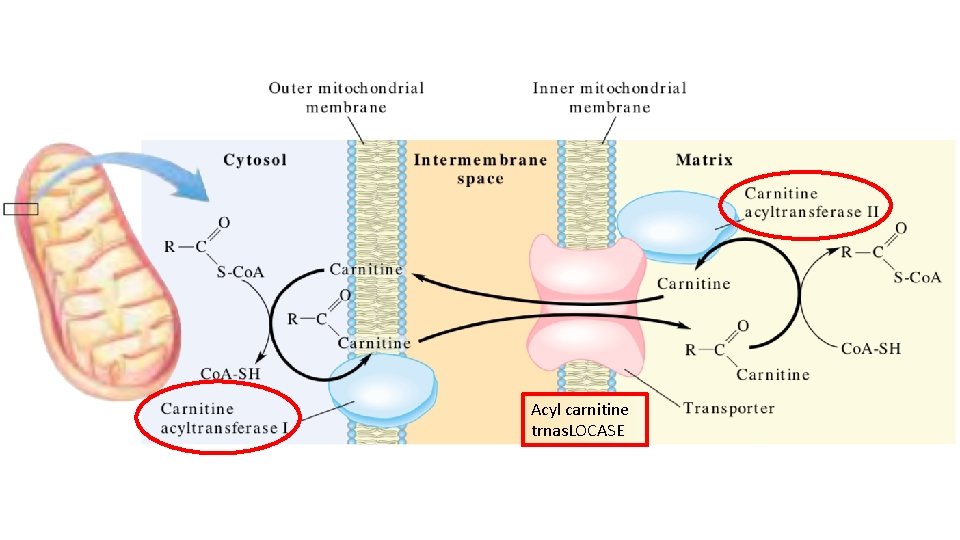
Acyl carnitine trnas. LOCASE
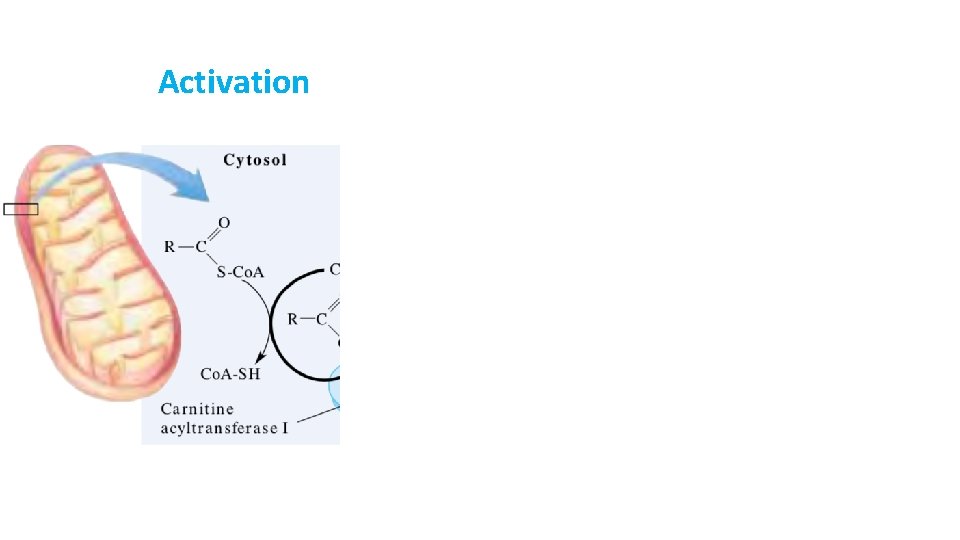
Activation
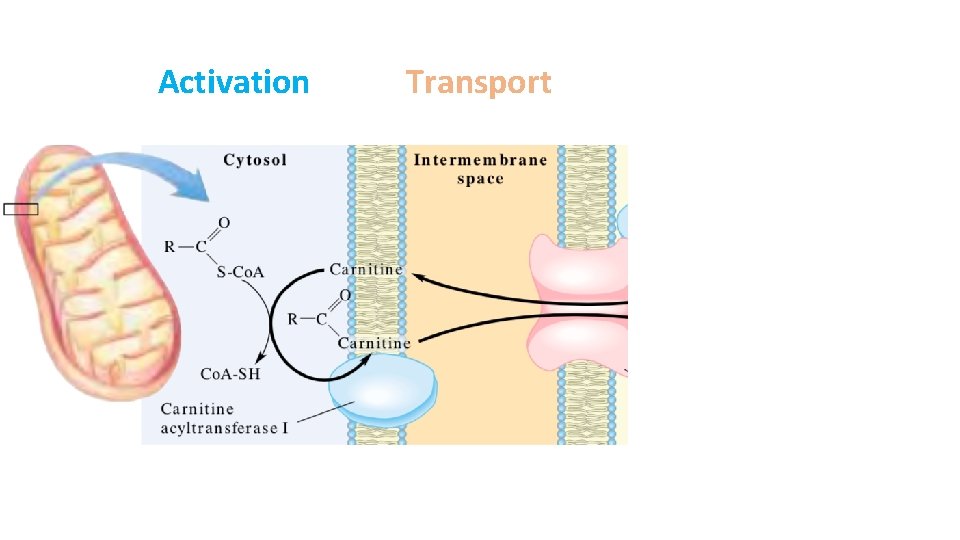
Activation Transport
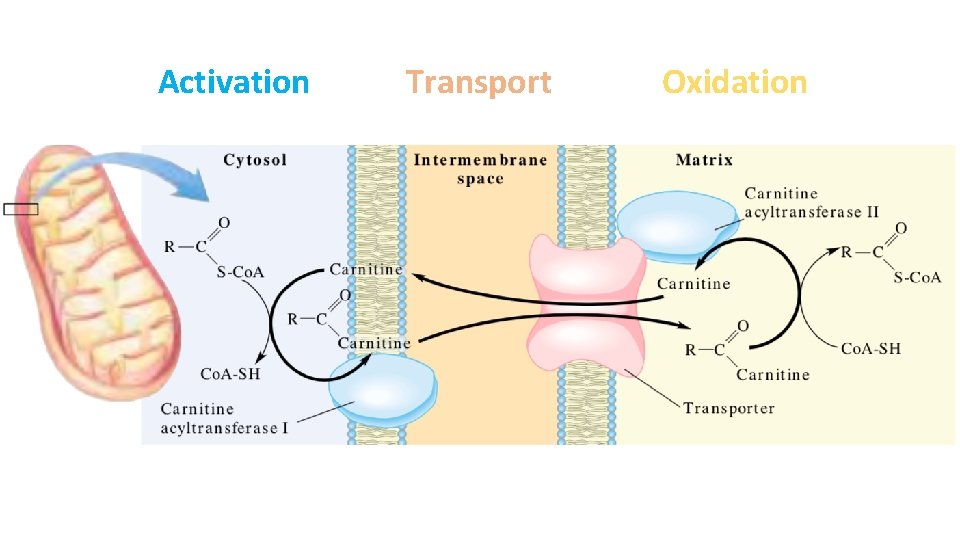
Activation Transport Oxidation
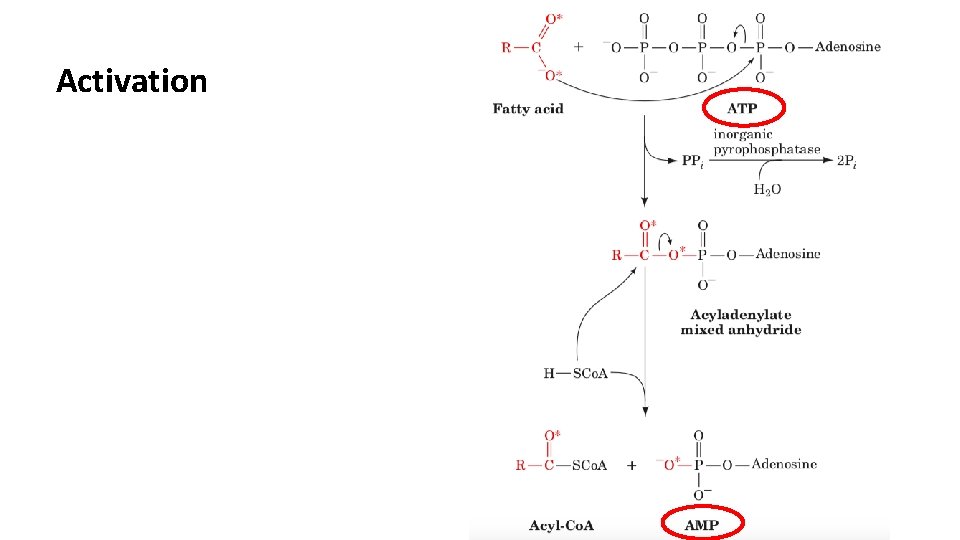
Activation
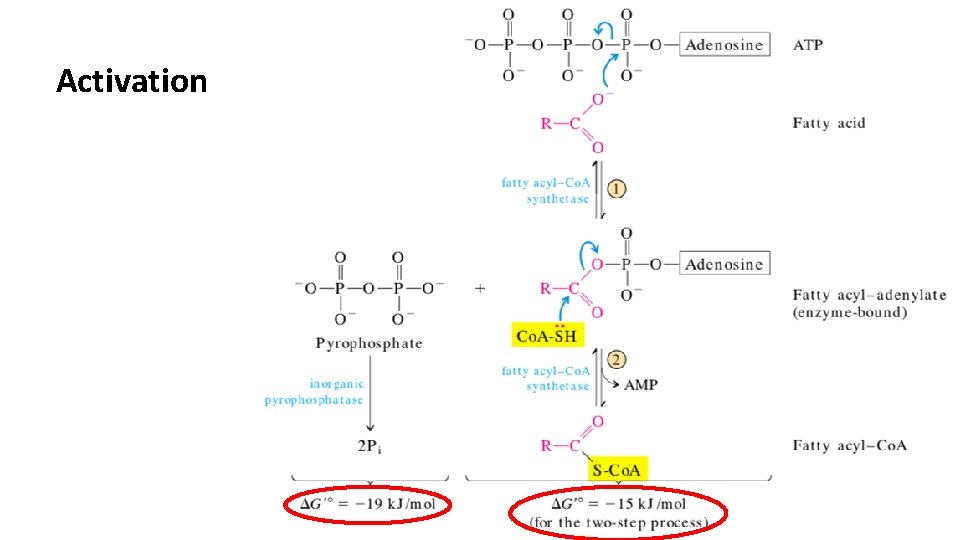
Activation
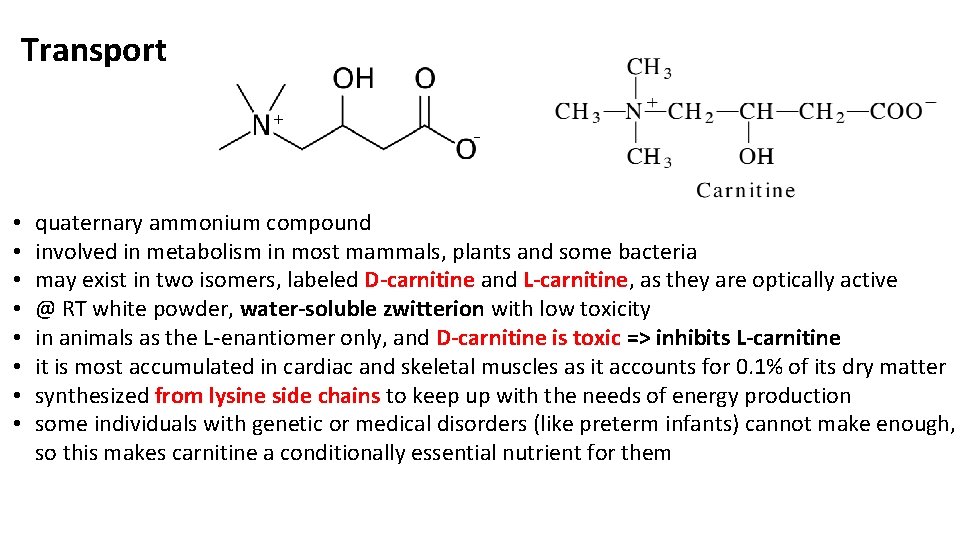
Transport • • quaternary ammonium compound involved in metabolism in most mammals, plants and some bacteria may exist in two isomers, labeled D-carnitine and L-carnitine, as they are optically active @ RT white powder, water-soluble zwitterion with low toxicity in animals as the L-enantiomer only, and D-carnitine is toxic => inhibits L-carnitine it is most accumulated in cardiac and skeletal muscles as it accounts for 0. 1% of its dry matter synthesized from lysine side chains to keep up with the needs of energy production some individuals with genetic or medical disorders (like preterm infants) cannot make enough, so this makes carnitine a conditionally essential nutrient for them
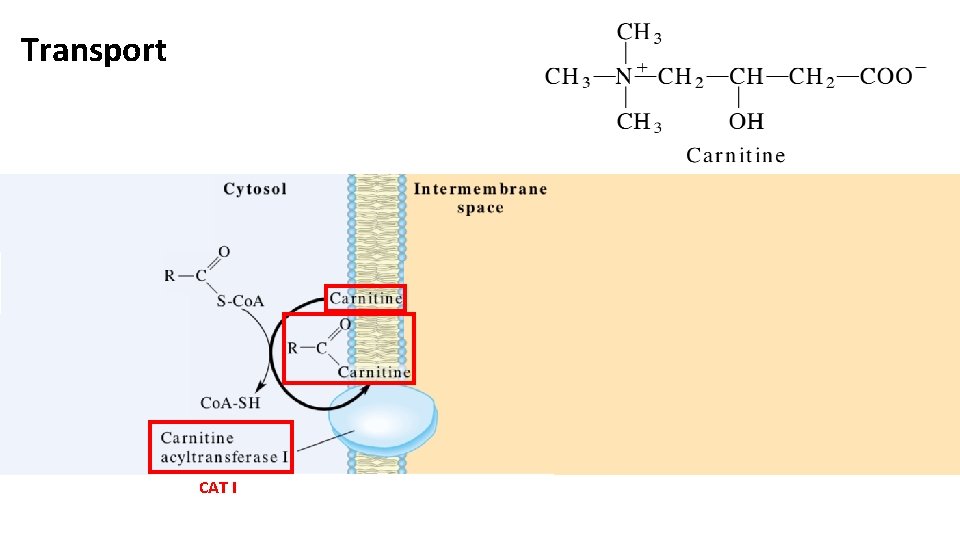
Transport CAT II CAT I
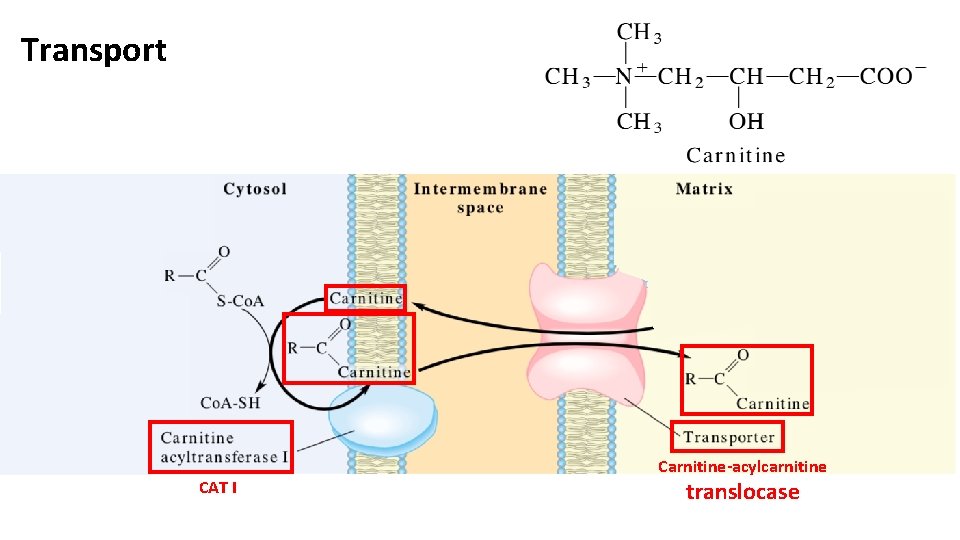
Transport CAT I Carnitine-acylcarnitine translocase
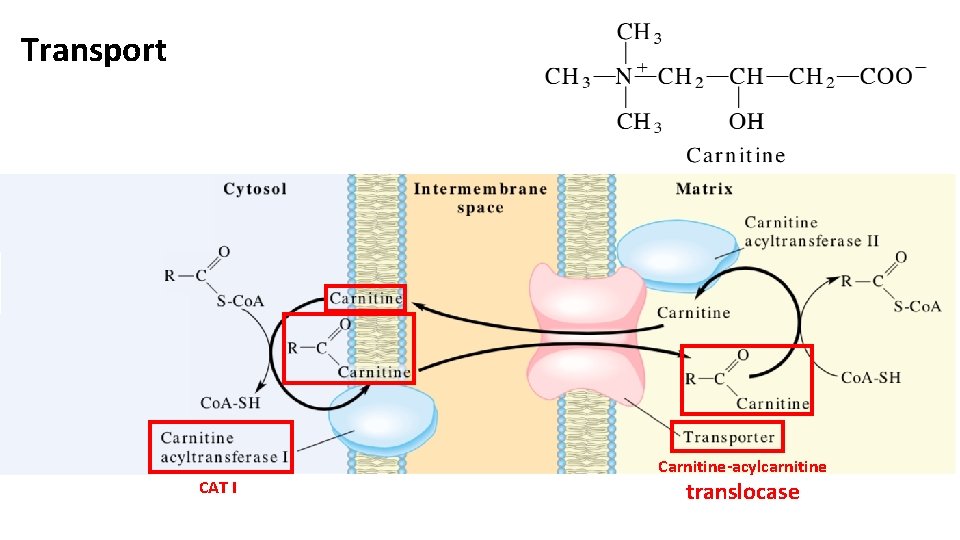
Transport CAT I Carnitine-acylcarnitine translocase
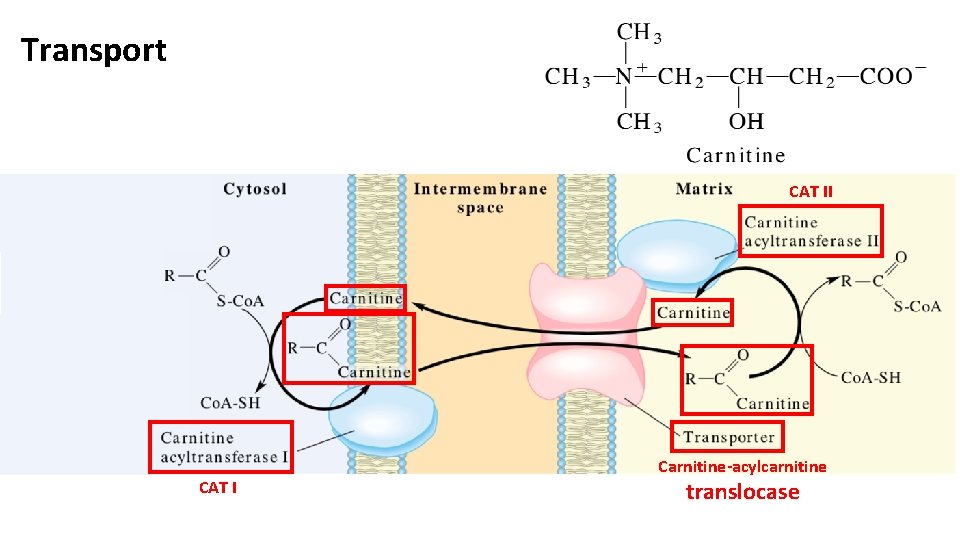
Transport CAT II CAT I Carnitine-acylcarnitine translocase
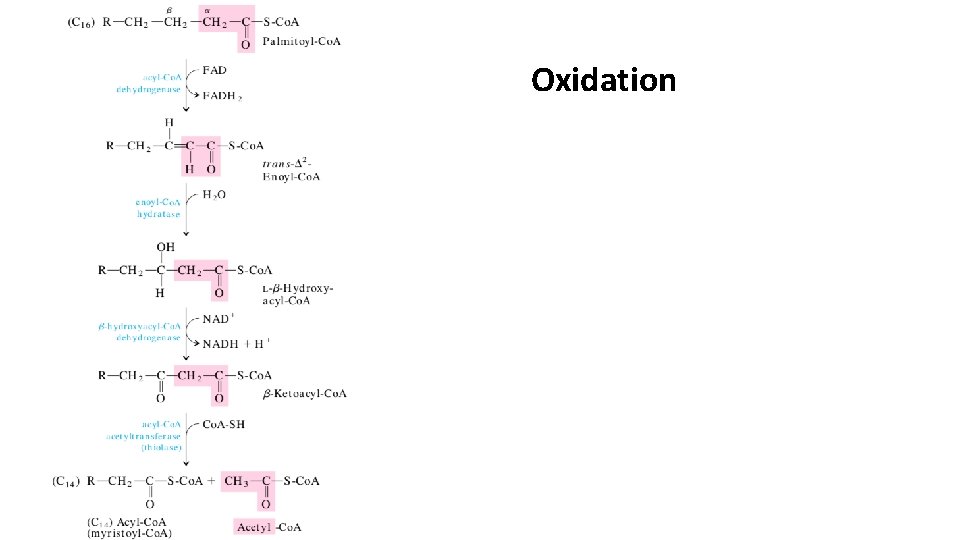
Oxidation
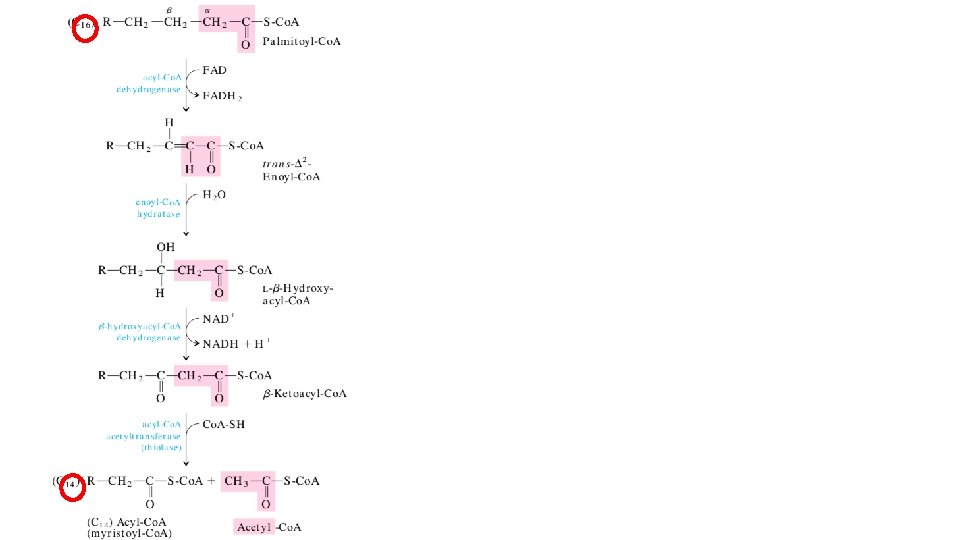
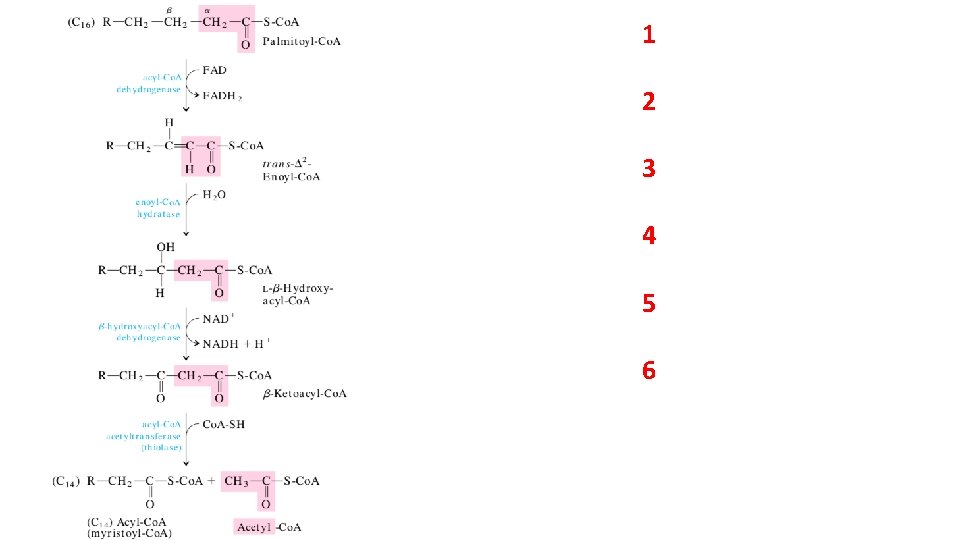
1 2 3 4 5 6
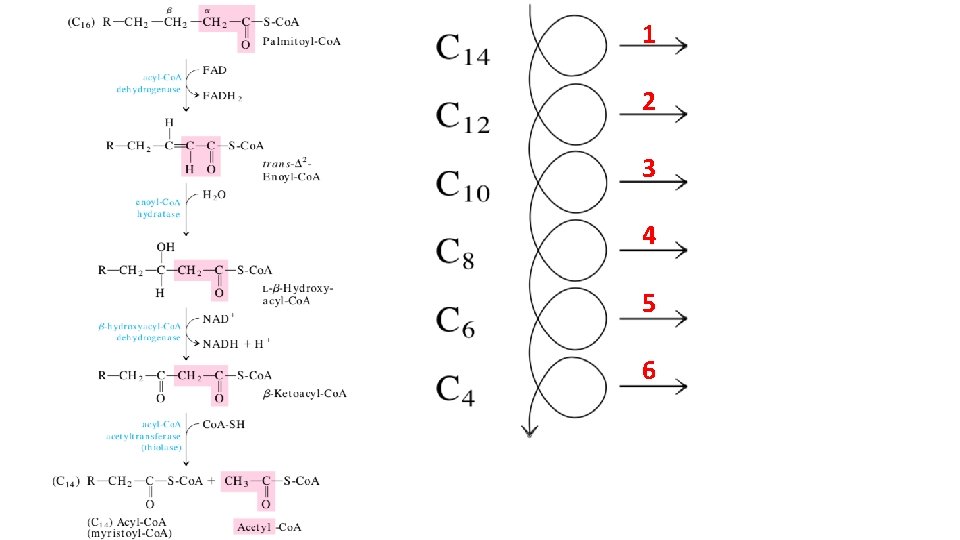
1 2 3 4 5 6
1 1 2 2 3 3 4 4 5 5 6 6 7
- Slides: 56