
KP 1 What is a calorimeter A calorimeter

- Slides: 7
KP 1: What is a calorimeter? • A calorimeter is a device used to measure the heat absorbed or released in a chemical reaction
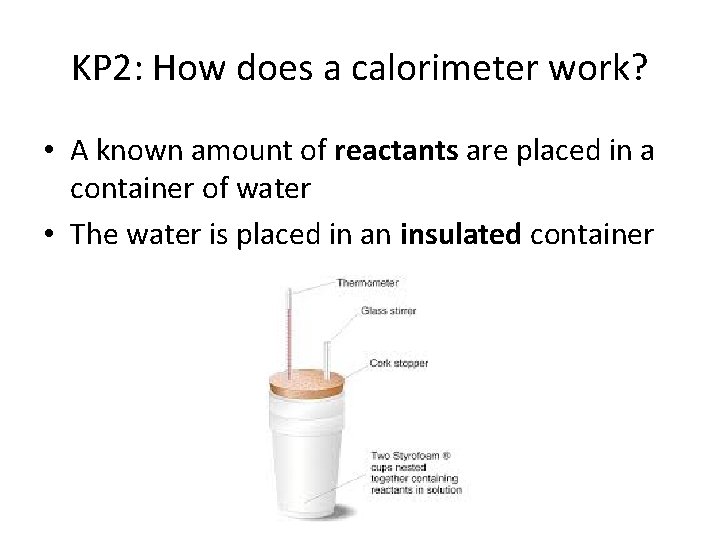
KP 2: How does a calorimeter work? • A known amount of reactants are placed in a container of water • The water is placed in an insulated container
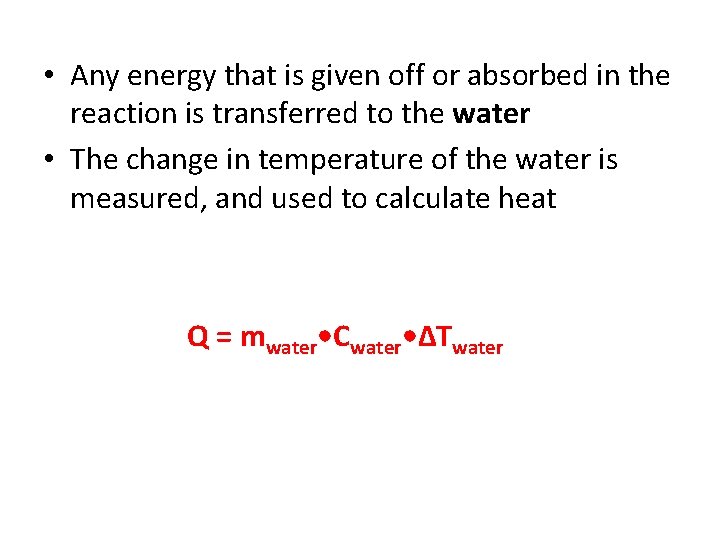
• Any energy that is given off or absorbed in the reaction is transferred to the water • The change in temperature of the water is measured, and used to calculate heat Q = mwater • Cwater • ΔTwater
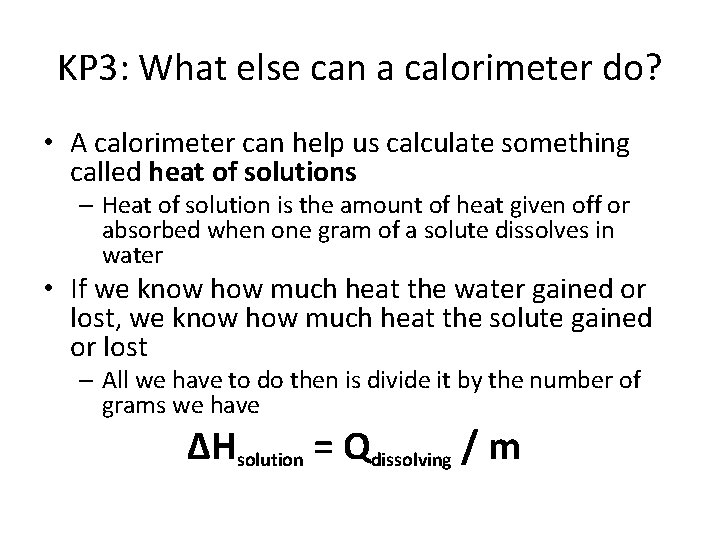
KP 3: What else can a calorimeter do? • A calorimeter can help us calculate something called heat of solutions – Heat of solution is the amount of heat given off or absorbed when one gram of a solute dissolves in water • If we know how much heat the water gained or lost, we know how much heat the solute gained or lost – All we have to do then is divide it by the number of grams we have ΔHsolution = Qdissolving / m
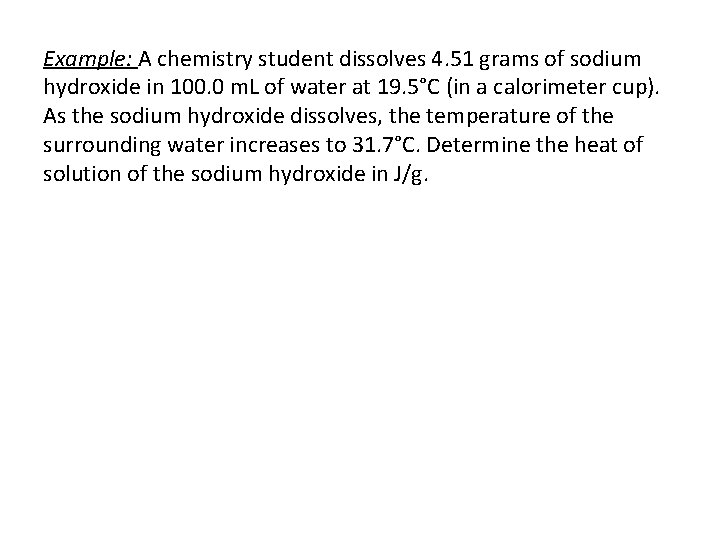
Example: A chemistry student dissolves 4. 51 grams of sodium hydroxide in 100. 0 m. L of water at 19. 5°C (in a calorimeter cup). As the sodium hydroxide dissolves, the temperature of the surrounding water increases to 31. 7°C. Determine the heat of solution of the sodium hydroxide in J/g.
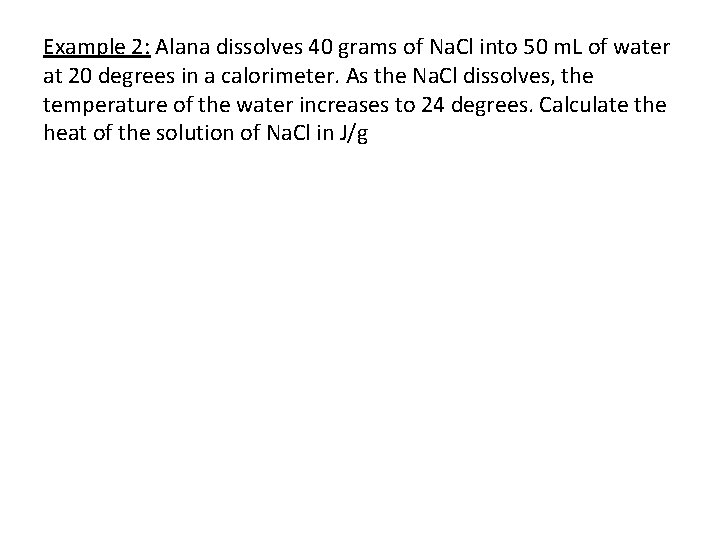
Example 2: Alana dissolves 40 grams of Na. Cl into 50 m. L of water at 20 degrees in a calorimeter. As the Na. Cl dissolves, the temperature of the water increases to 24 degrees. Calculate the heat of the solution of Na. Cl in J/g
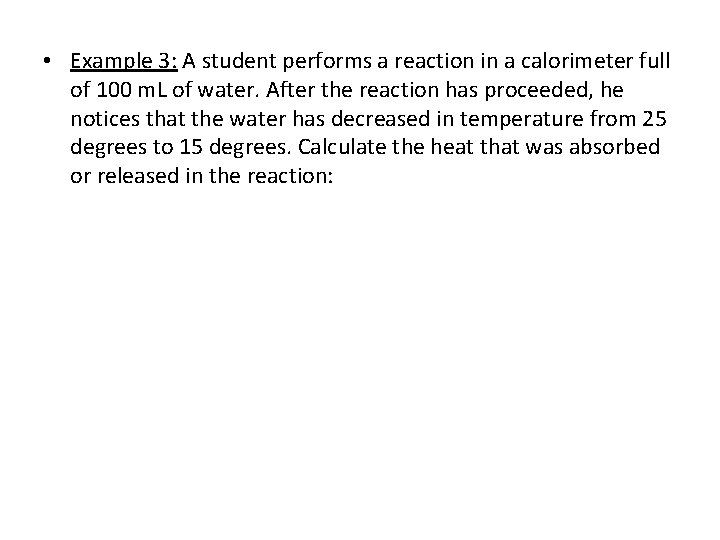
• Example 3: A student performs a reaction in a calorimeter full of 100 m. L of water. After the reaction has proceeded, he notices that the water has decreased in temperature from 25 degrees to 15 degrees. Calculate the heat that was absorbed or released in the reaction: