
Korean Politics Outline Republic of Korea presidential system
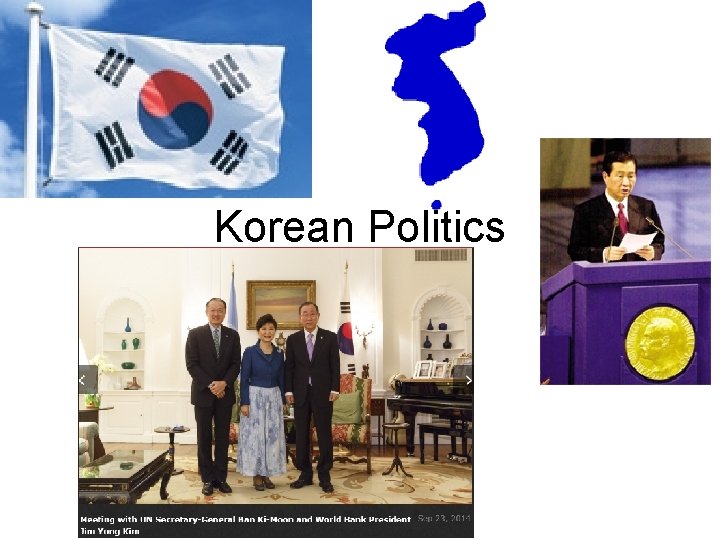
Korean Politics
Outline • Republic of Korea – presidential system – National Assembly – judiciary – parties and elections – external relations • Democratic People’s Republic of Korea – authoritarian party-state
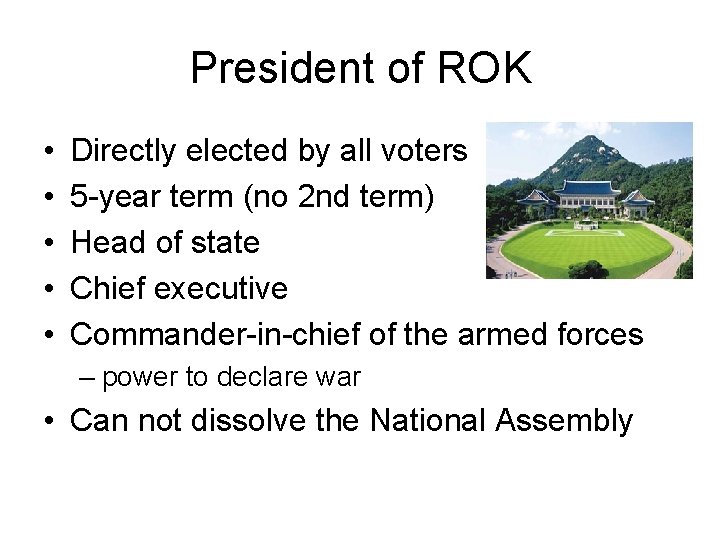
President of ROK • • • Directly elected by all voters 5 -year term (no 2 nd term) Head of state Chief executive Commander-in-chief of the armed forces – power to declare war • Can not dissolve the National Assembly
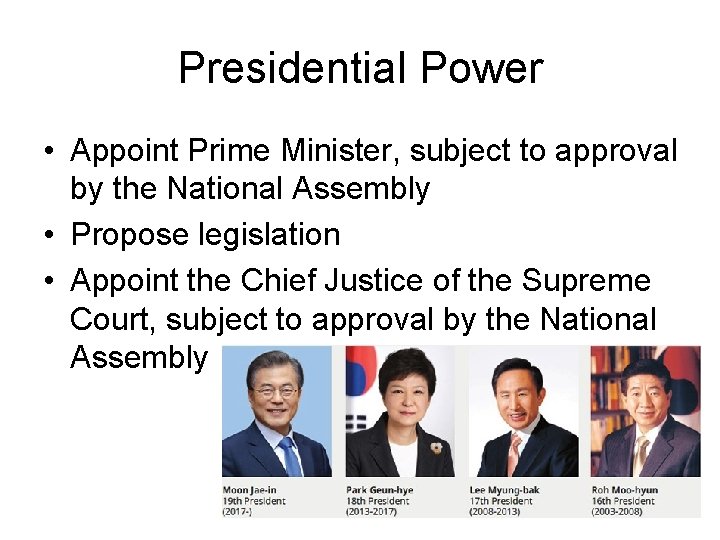
Presidential Power • Appoint Prime Minister, subject to approval by the National Assembly • Propose legislation • Appoint the Chief Justice of the Supreme Court, subject to approval by the National Assembly
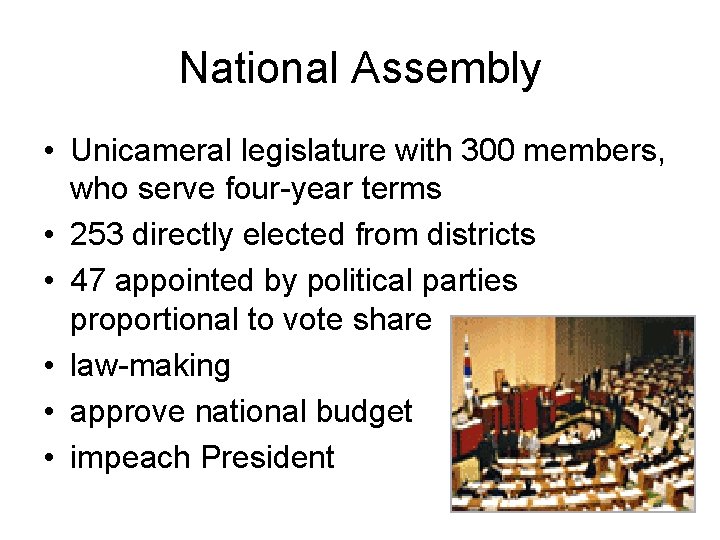
National Assembly • Unicameral legislature with 300 members, who serve four-year terms • 253 directly elected from districts • 47 appointed by political parties proportional to vote share • law-making • approve national budget • impeach President
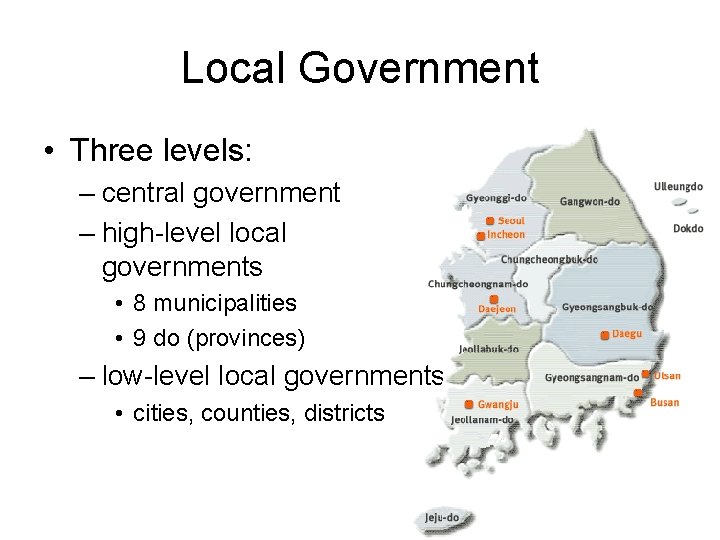
Local Government • Three levels: – central government – high-level local governments • 8 municipalities • 9 do (provinces) – low-level local governments • cities, counties, districts
Evolution of Party System • 1950 s: Liberal Party, Progressive Party, . . . • 1961, Park dissolved all political parties, abolished local elections & local councils • 1980, General Chun banned political activities by party members • 1987, presidential election • 1988, National Assembly election
Middle Power Diplomacy • Capabilities and strength (realism) • Legitimacy and leadership (liberalism) • Multilateral foreign policy – APEC (founding) member since 1989 – United Nations member since 1991 – OECD member since 1996 – G 20 member since 1999 • Soft power and Korean cultural influence
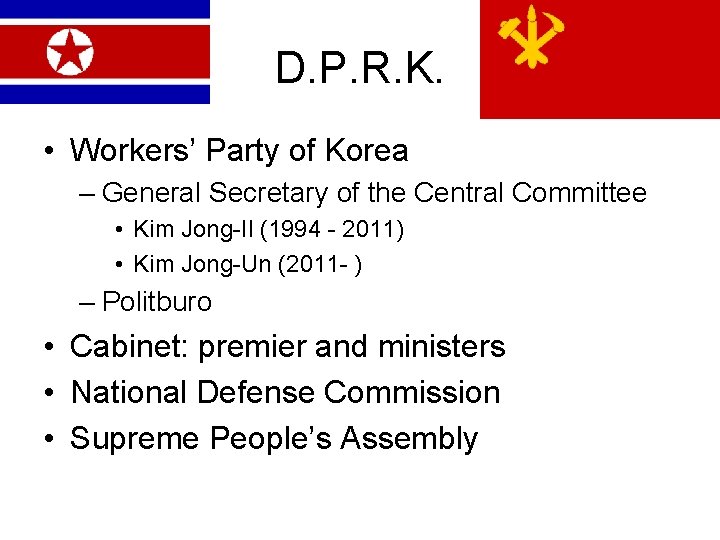
D. P. R. K. • Workers’ Party of Korea – General Secretary of the Central Committee • Kim Jong-Il (1994 - 2011) • Kim Jong-Un (2011 - ) – Politburo • Cabinet: premier and ministers • National Defense Commission • Supreme People’s Assembly
- Slides: 11