
Korean Patent System and Recent Changes Practices in

- Slides: 33
Korean Patent System and Recent Changes. Practices in Chemistry. Bong Sig SONG Korean Patent Attorney Y. S. CHANG & ASSOCIATES February 9 th 2008
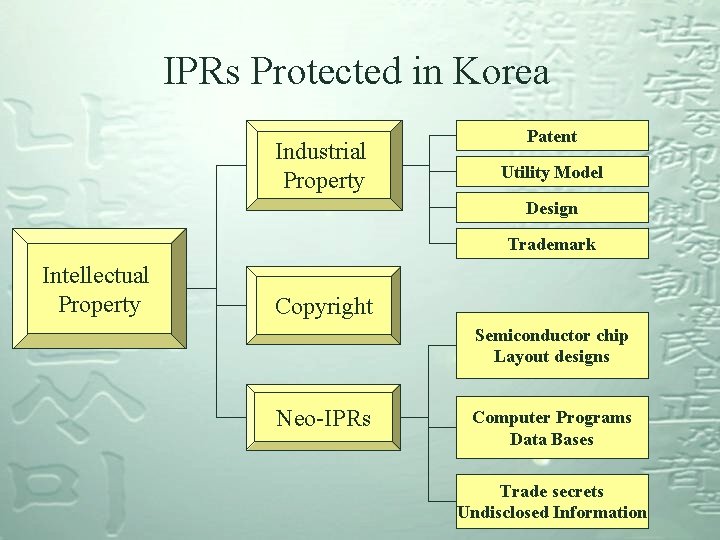
IPRs Protected in Korea Industrial Property Patent Utility Model Design Trademark Intellectual Property Copyright Semiconductor chip Layout designs Neo-IPRs Computer Programs Data Bases Trade secrets Undisclosed Information
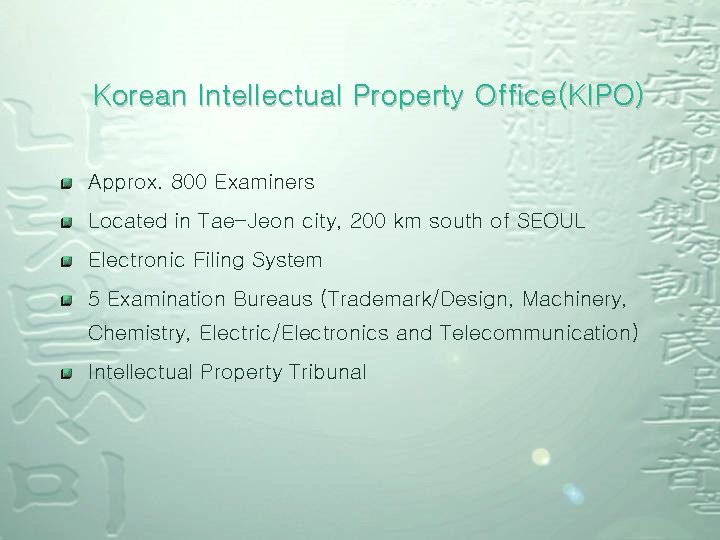
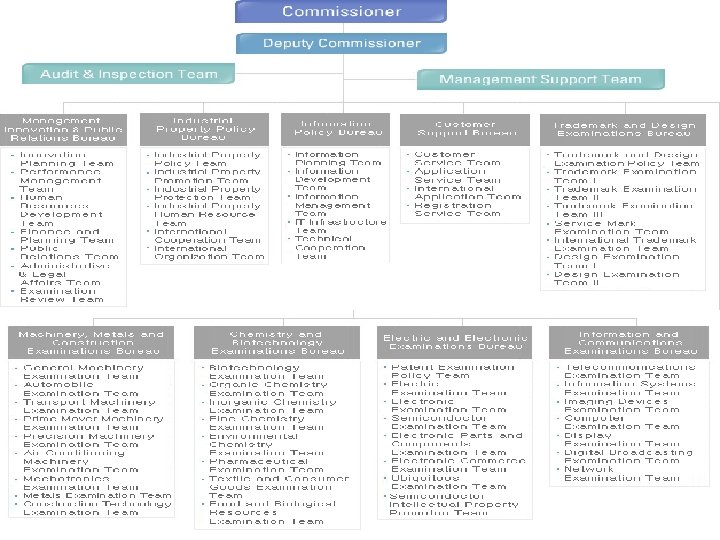
Korean Intellectual Property Office(KIPO) Approx. 800 Examiners Located in Tae-Jeon city, 200 km south of SEOUL Electronic Filing System 5 Examination Bureaus (Trademark/Design, Machinery, Chemistry, Electric/Electronics and Telecommunication) Intellectual Property Tribunal
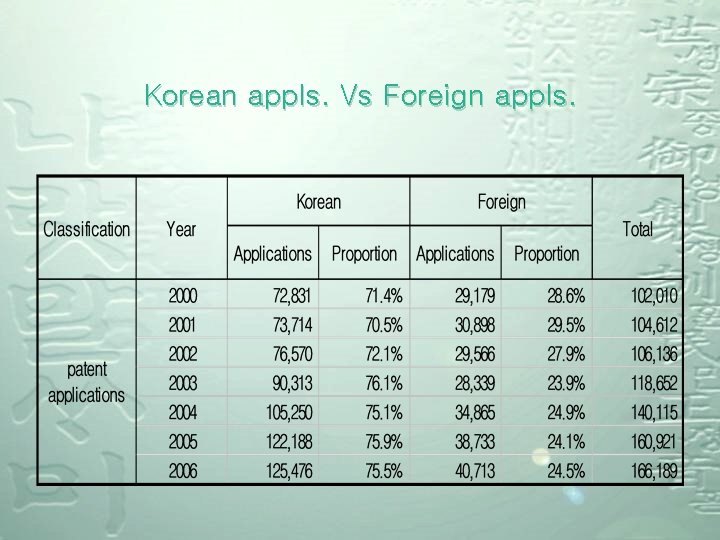
Korean appls. Vs Foreign appls.
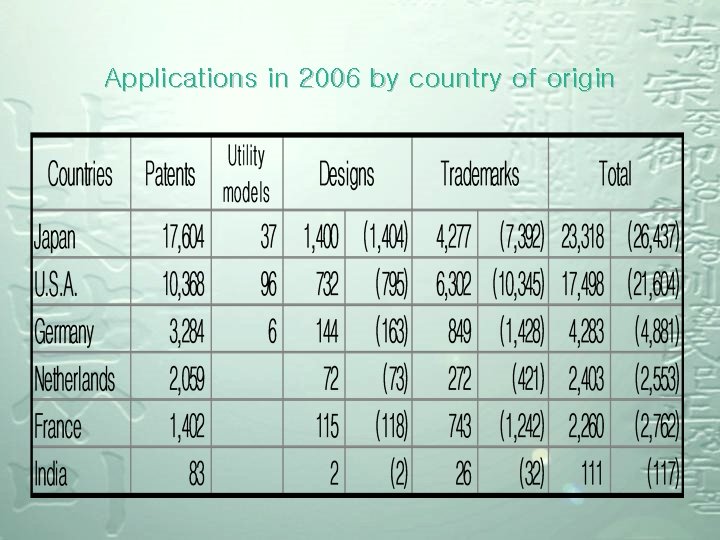
Applications in 2006 by country of origin
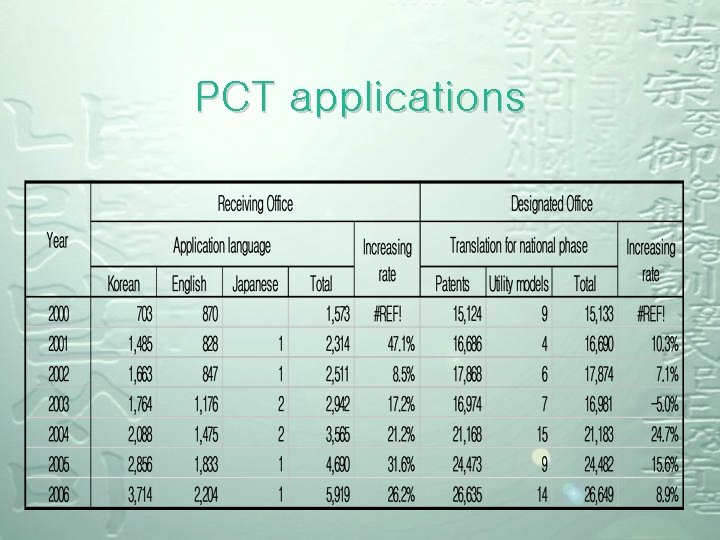
PCT applications
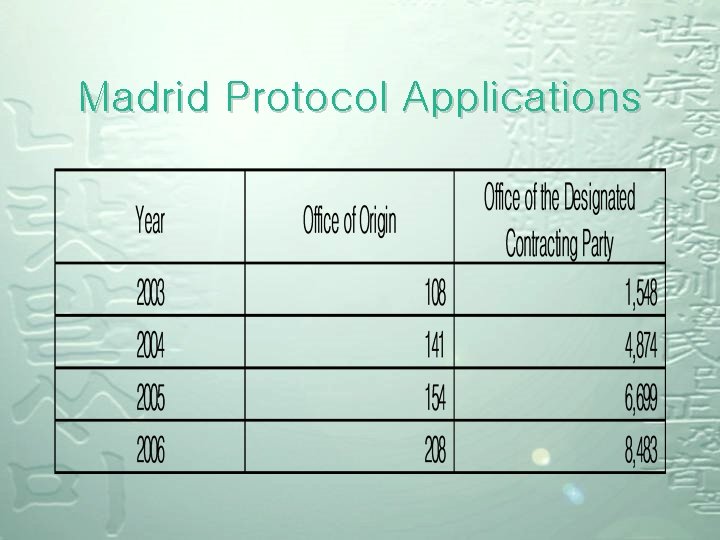
Madrid Protocol Applications
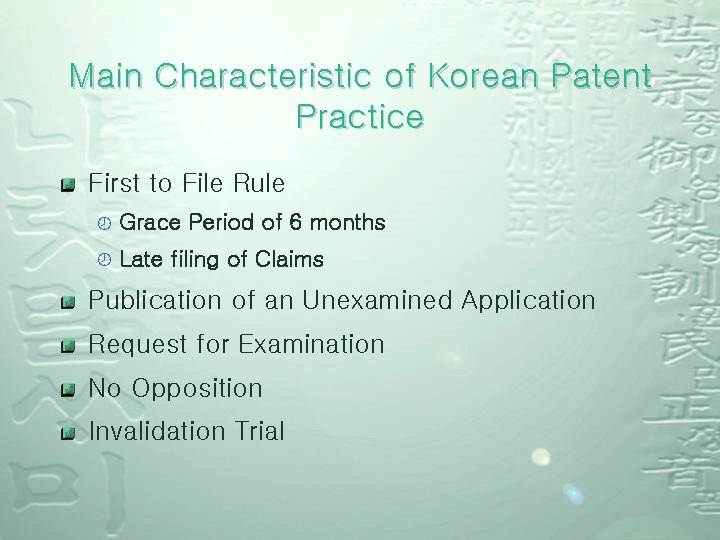
Main Characteristic of Korean Patent Practice First to File Rule ¾ Grace Period of 6 months ¾ Late filing of Claims Publication of an Unexamined Application Request for Examination No Opposition Invalidation Trial
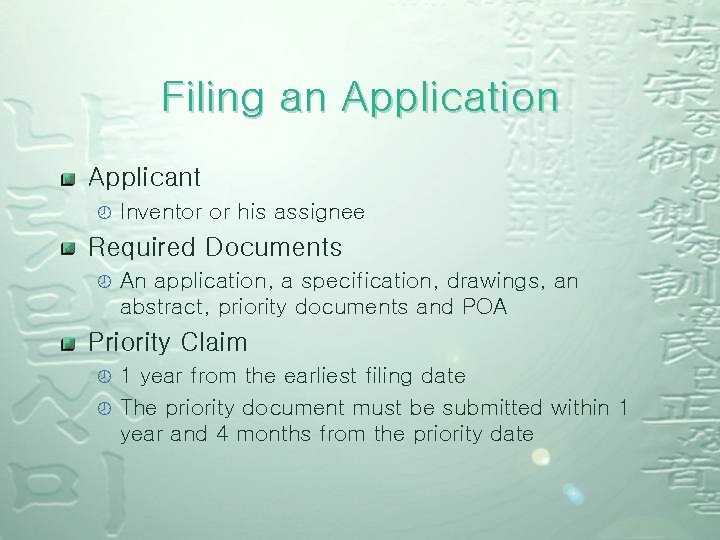
Filing an Application Applicant ¾ Inventor or his assignee Required Documents ¾ An application, a specification, drawings, an abstract, priority documents and POA Priority Claim ¾ ¾ 1 year from the earliest filing date The priority document must be submitted within 1 year and 4 months from the priority date
Publication of Unexamined application 18 months from the filing date Can be made upon request Temporary protection is provided to patent applications that have been laid open
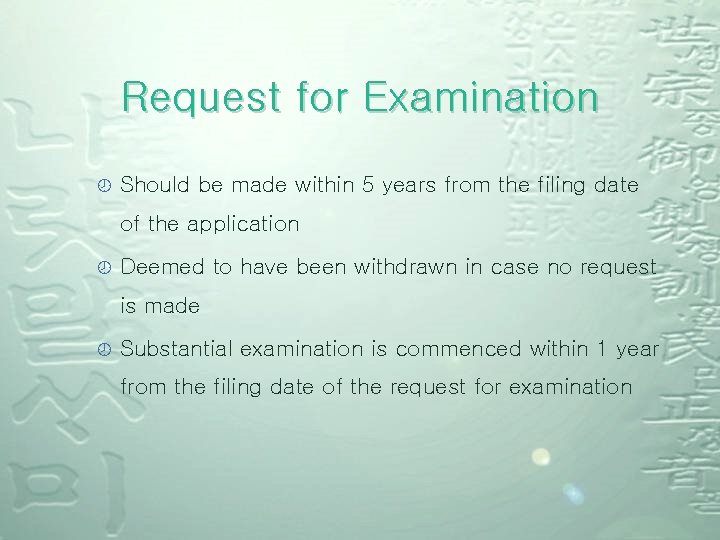
Request for Examination ¾ Should be made within 5 years from the filing date of the application ¾ Deemed to have been withdrawn in case no request is made ¾ Substantial examination is commenced within 1 year from the filing date of the request for examination
Expedited Examination Request for expedited examination can be made when: ¾ ¾ An invention has been commercially worked by a person who is not the applicant. An invention has been commercialized or is about to be commercialized by the applicant Substantial examination is commenced and the first office action will be issued within 2 months
Substantial Examination Requirement for Registration ¾ ¾ ¾ Novelty Inventive Step Industrial Applicability Description Requirements Unity of Invention First Office Action ¾ ¾ ¾ Response period : 2 months Time extensions are available Argument and/or Amendment Final Office Action ¾ Grant or Final Rejection
Registration When an applicant receives a notice of decision to grant a patent he should pay, as a registration fee, the first 3 year’s annuities within 3 months from the date of receipt of such notice 6 months grace period is available ¾ Registration fee doubles
Intellectual Property Tribunal Handles trials against the final rejection of an application; invalidation trials; trials for correction, trials for confirming the scope of a patent right, etc. 11 Boards, each board having 6 ~ 11 examiners Experienced Examiners
New Amendments to the Korean Patent Act (Effective as of July 1, 2007)
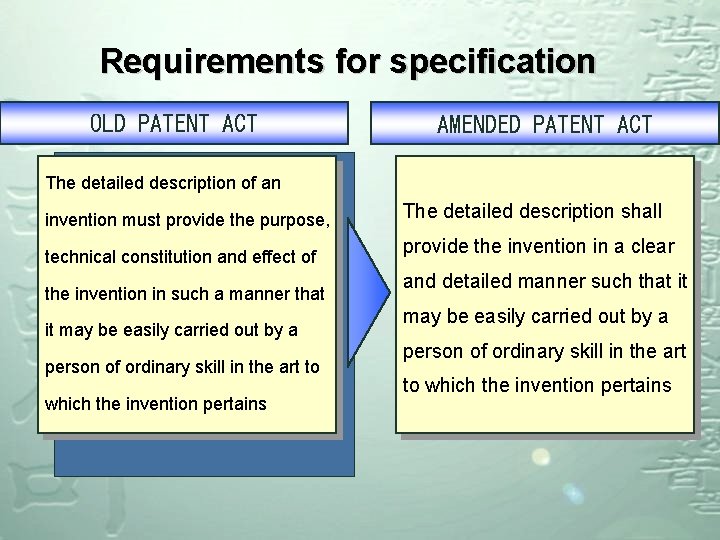
Requirements for specification OLD PATENT ACT AMENDED PATENT ACT The detailed description of an invention must provide the purpose, technical constitution and effect of the invention in such a manner that it may be easily carried out by a person of ordinary skill in the art to which the invention pertains The detailed description shall provide the invention in a clear and detailed manner such that it may be easily carried out by a person of ordinary skill in the art to which the invention pertains
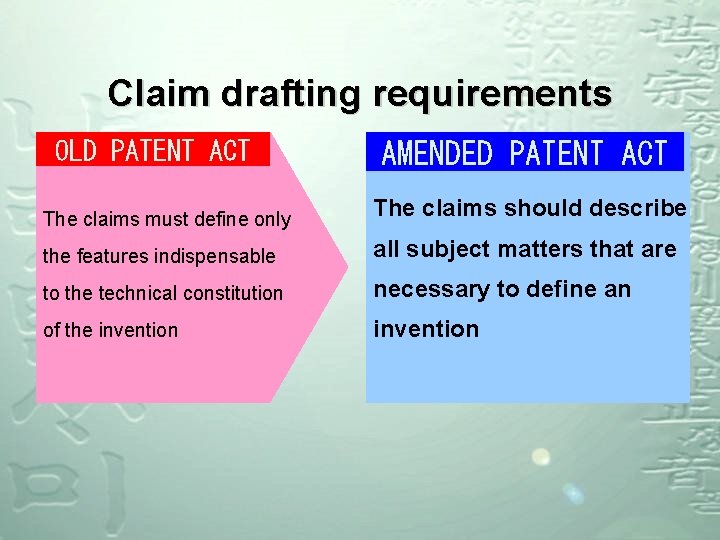
Claim drafting requirements OLD PATENT ACT AMENDED PATENT ACT The claims must define only The claims should describe the features indispensable all subject matters that are to the technical constitution necessary to define an of the invention
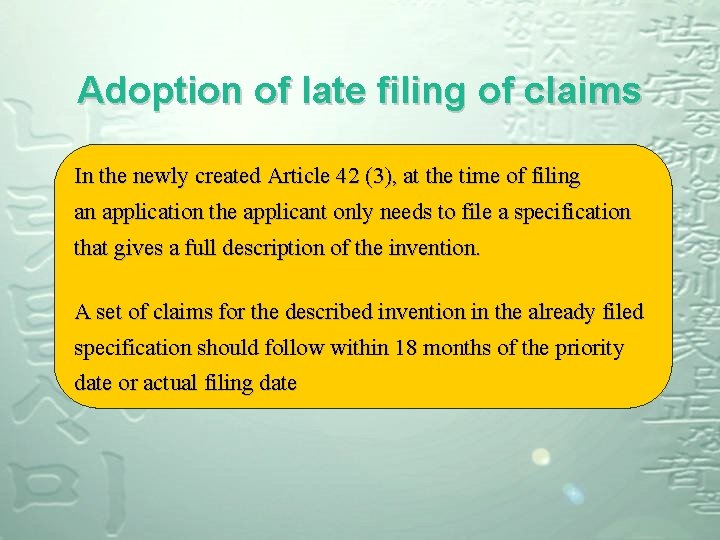
Adoption of late filing of claims In the newly created Article 42 (3), at the time of filing an application the applicant only needs to file a specification that gives a full description of the invention. A set of claims for the described invention in the already filed specification should follow within 18 months of the priority date or actual filing date
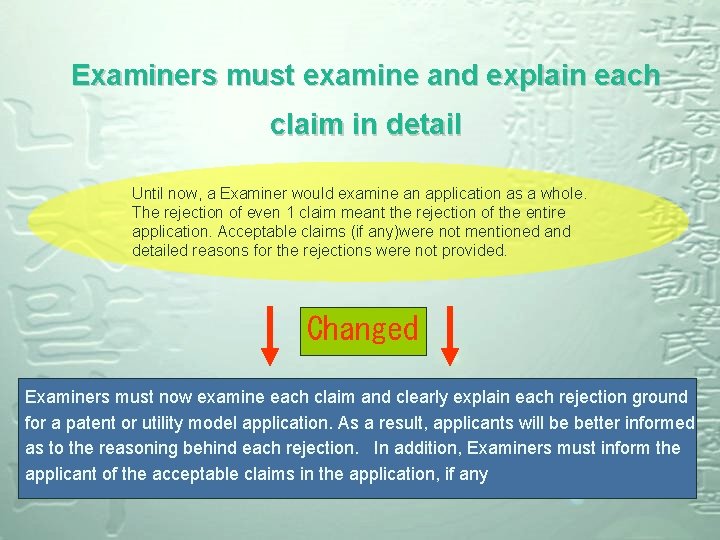
Examiners must examine and explain each claim in detail Until now, a Examiner would examine an application as a whole. The rejection of even 1 claim meant the rejection of the entire application. Acceptable claims (if any)were not mentioned and detailed reasons for the rejections were not provided. Changed Examiners must now examine each claim and clearly explain each rejection ground for a patent or utility model application. As a result, applicants will be better informed as to the reasoning behind each rejection. In addition, Examiners must inform the applicant of the acceptable claims in the application, if any
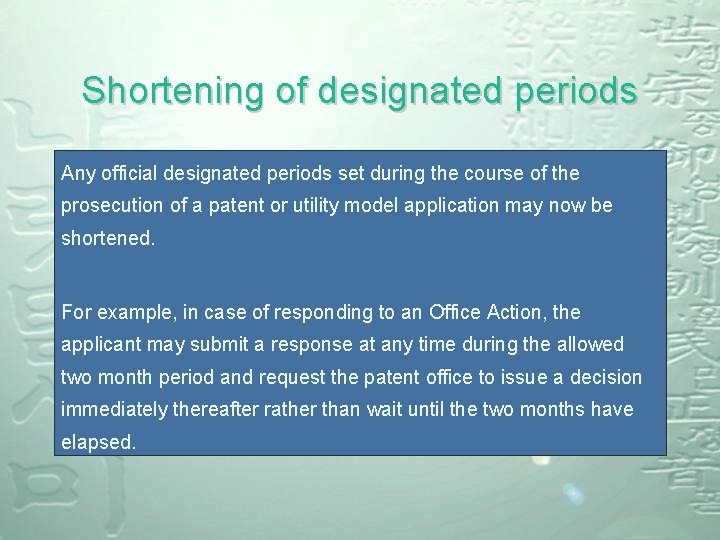
Shortening of designated periods Any official designated periods set during the course of the prosecution of a patent or utility model application may now be shortened. For example, in case of responding to an Office Action, the applicant may submit a response at any time during the allowed two month period and request the patent office to issue a decision immediately thereafter rather than wait until the two months have elapsed.
Korean Patent Practice in the chemical field Jong Hyeok PARK(Mr. ) Patent Attorney, Pharmacist Y. S. CHANG & ASSOCIATES
Patentable Subject Matter Same as those of other countries However, medical treatment of a human being is not allowed.
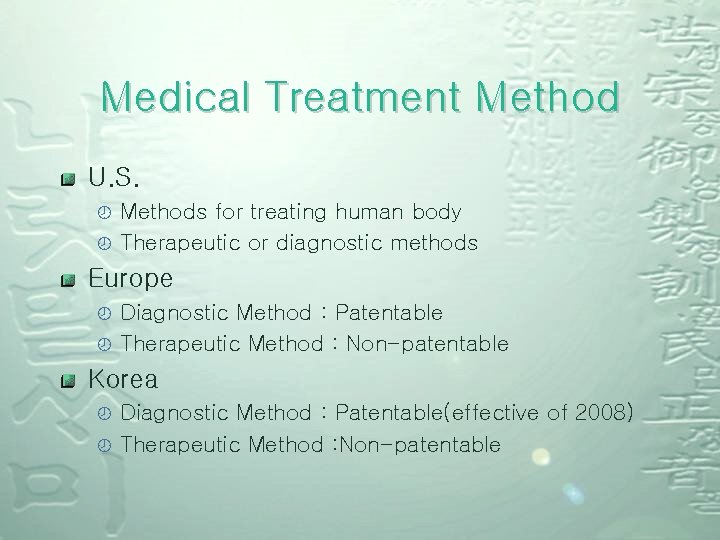
Medical Treatment Method U. S. ¾ ¾ Methods for treating human body Therapeutic or diagnostic methods Europe ¾ ¾ Diagnostic Method : Patentable Therapeutic Method : Non-patentable Korea ¾ ¾ Diagnostic Method : Patentable(effective of 2008) Therapeutic Method : Non-patentable
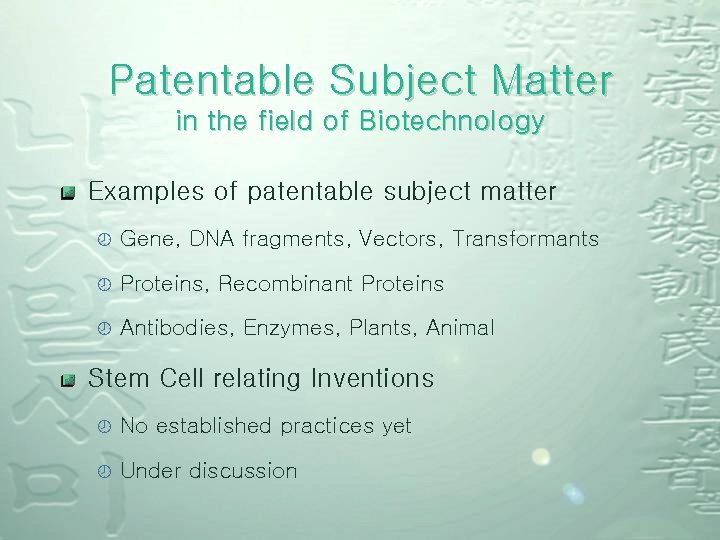
Patentable Subject Matter in the field of Biotechnology Examples of patentable subject matter ¾ Gene, DNA fragments, Vectors, Transformants ¾ Proteins, Recombinant Proteins ¾ Antibodies, Enzymes, Plants, Animal Stem Cell relating Inventions ¾ No established practices yet ¾ Under discussion
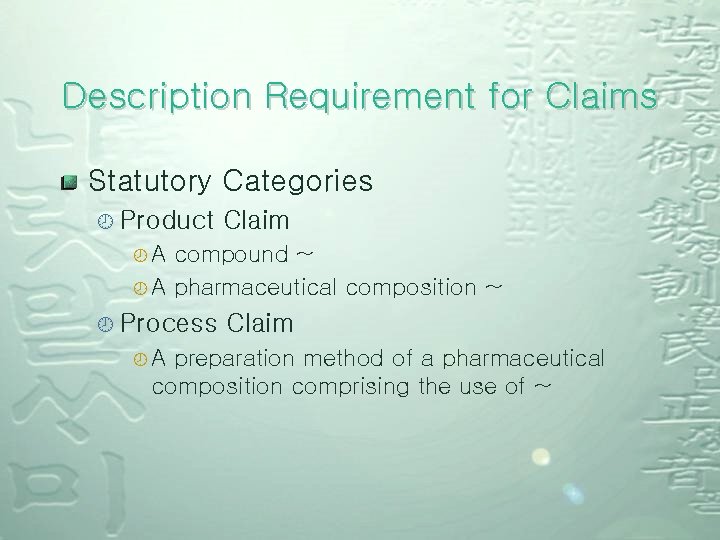
Description Requirement for Claims Statutory Categories ¾ Product Claim ¾A compound ~ ¾ A pharmaceutical composition ~ ¾ Process ¾A Claim preparation method of a pharmaceutical composition comprising the use of ~
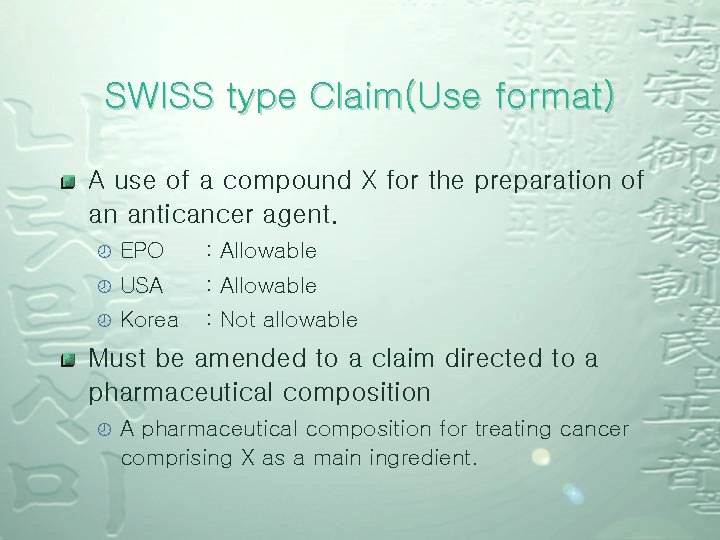
SWISS type Claim(Use format) A use of a compound X for the preparation of an anticancer agent. ¾ EPO : Allowable ¾ USA : Allowable ¾ Korea : Not allowable Must be amended to a claim directed to a pharmaceutical composition ¾ A pharmaceutical composition for treating cancer comprising X as a main ingredient.
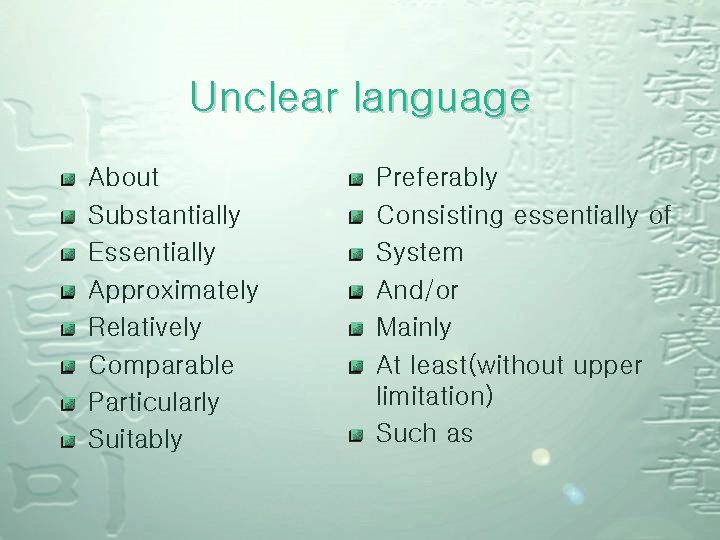
Unclear language About Substantially Essentially Approximately Relatively Comparable Particularly Suitably Preferably Consisting essentially of System And/or Mainly At least(without upper limitation) Such as
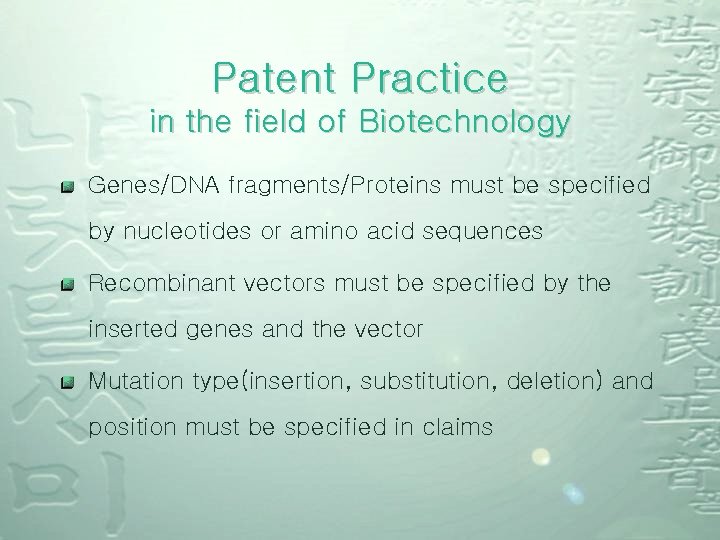
Patent Practice in the field of Biotechnology Genes/DNA fragments/Proteins must be specified by nucleotides or amino acid sequences Recombinant vectors must be specified by the inserted genes and the vector Mutation type(insertion, substitution, deletion) and position must be specified in claims
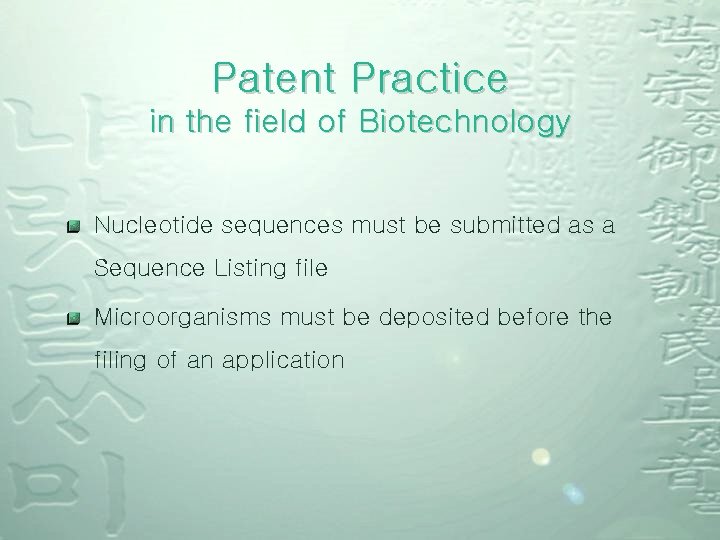
Patent Practice in the field of Biotechnology Nucleotide sequences must be submitted as a Sequence Listing file Microorganisms must be deposited before the filing of an application
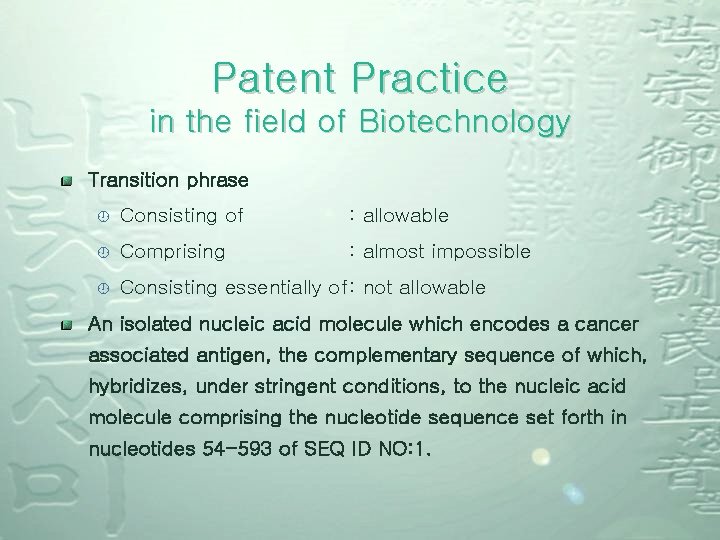
Patent Practice in the field of Biotechnology Transition phrase ¾ Consisting of : allowable ¾ Comprising : almost impossible ¾ Consisting essentially of: not allowable An isolated nucleic acid molecule which encodes a cancer associated antigen, the complementary sequence of which, hybridizes, under stringent conditions, to the nucleic acid molecule comprising the nucleotide sequence set forth in nucleotides 54 -593 of SEQ ID NO: 1.
Thank you