
Kolcabas Theory of Comfort By David La Belle
Kolcaba’s Theory of Comfort By: David La. Belle

Definition �“The immediate experience of being strengthened through having the needs for relief, ease, and transcendence met in four contexts of experience (physical, psychospiritual, social, and environmental). ” (Kolcaba, 2010)

Knowledge �Kolcaba’s Strategies (Kolcaba, 2010) �Patient Empowerment at end of life (Kolcaba, 1991) �Family Empowerment at end of life (Kolcaba, 2010).

Types of Comfort (Kolcaba & Fisher, 1991) �Relief �Ease �Transcendence Context Types of Comfort (Kolcaba & Fisher, 1991) �Physical �Environmental �Psychospiritual �Social
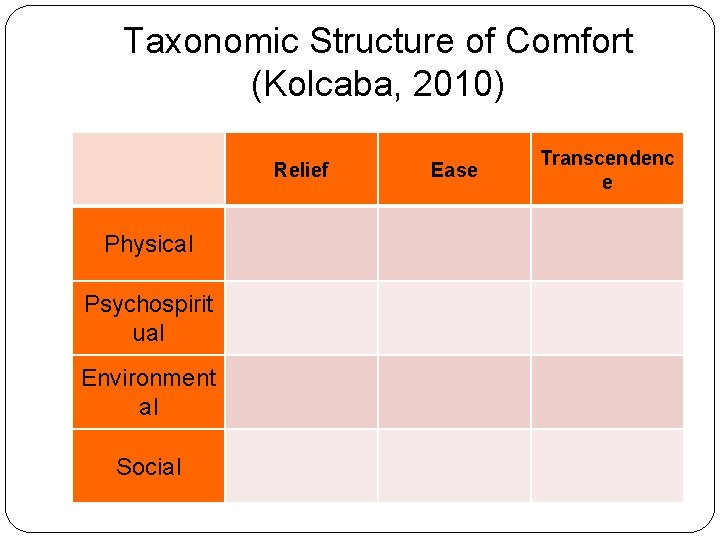
Taxonomic Structure of Comfort (Kolcaba, 2010) Relief Physical Psychospirit ual Environment al Social Ease Transcendenc e

Skills �Patient Engagement �Promoting: �Health �Safety (Kolcaba, 2010) �Transcendence (Kolcaba & Fisher, 1991)
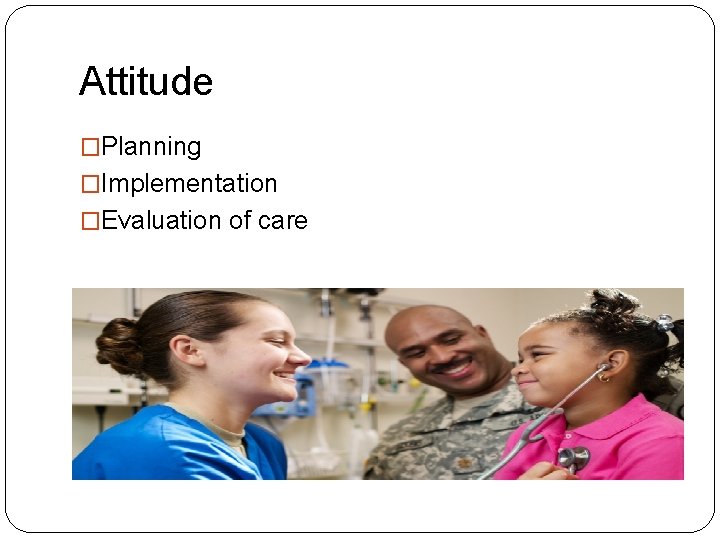
Attitude �Planning �Implementation �Evaluation of care
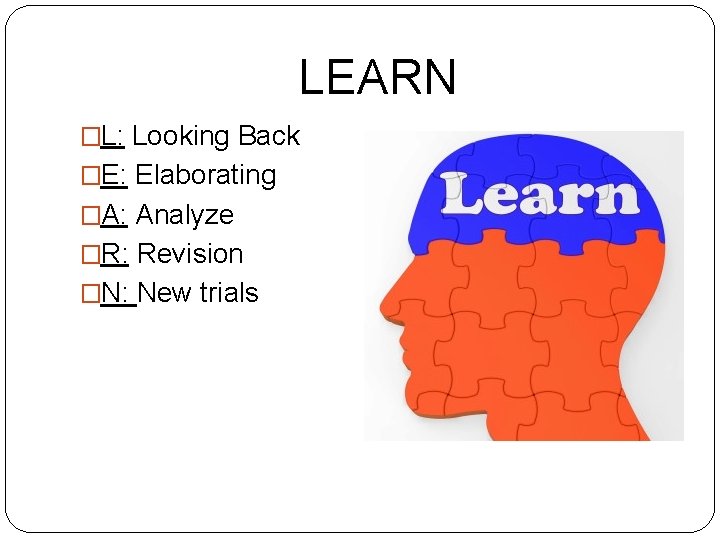
LEARN �L: Looking Back �E: Elaborating �A: Analyze �R: Revision �N: New trials
References �Kolcaba, K. (1991). A Taxonomic Structure for the Concept Comfort. Journal of Nursing Scholarship, 23(4), 237 -240 �Kolcaba, K. (2010). An introduction to comfort theory. In the comfort line. Retrieved June 25, 2014, from http: //www. thecomfortline. com/ �Kolcaba, K. & Fisher, E. (1996). A holistic perspective on comfort care as an advance directive. Critical Care Nursing, 18(4), 66 -76.
- Slides: 9