
KOGNITIVNA REVOLUCIJA INTELIGENCA IN ORODJA COGNITIVE EVOLUTION INTELLIGENCE
- Slides: 11
KOGNITIVNA (R)EVOLUCIJA, INTELIGENCA IN ORODJA COGNITIVE ®EVOLUTION, INTELLIGENCE AND TOOLS Matjaž Gams Institut “Jožef Stefan” 1
What is intelligent? See http: //videolectures. net/solomon_gams_inteligenca/ All beings are intelligent, including - humans - animals - plants. All computer/information systems or robotic systems or devices that learn are intelligent. In AI, agents are autonomous devices capable of performing actions (even thermostats). Intelligent agents are capable of learning. An example: agent IRobot (Roomba) that moves rather randomly, and intelligent agent IRobot that learns the room and vacuums accordingly to the room model. 2
When is intelligence beneficial? An example: random vs. intelligent IRobot (Roomba): people buy „stupid“ Roomba more often than the intelligent one because it is cheaper. More intelligent human predecessor: + better food, more attractive for f. , better living, better use of tools (dig, build, catch, defend, attack) - more food needed, food-sensible brain, famine? In summary: how did the evolution produce the more intelligent human predecessor? 3
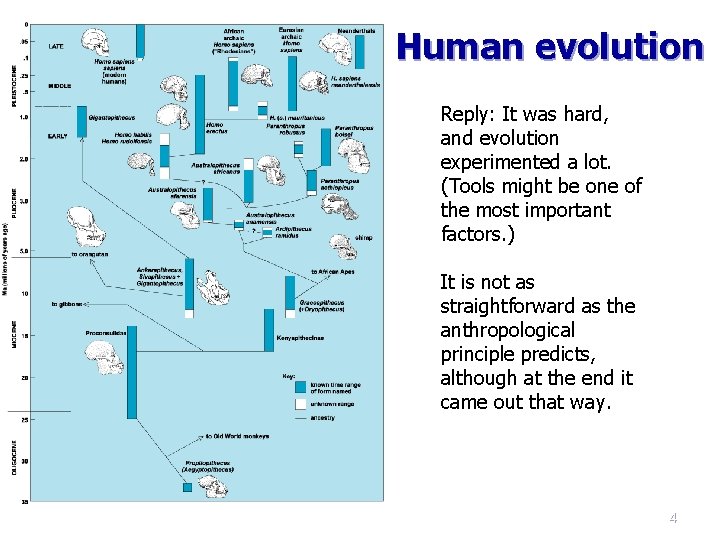
Human evolution Reply: It was hard, and evolution experimented a lot. (Tools might be one of the most important factors. ) It is not as straightforward as the anthropological principle predicts, although at the end it came out that way. 4
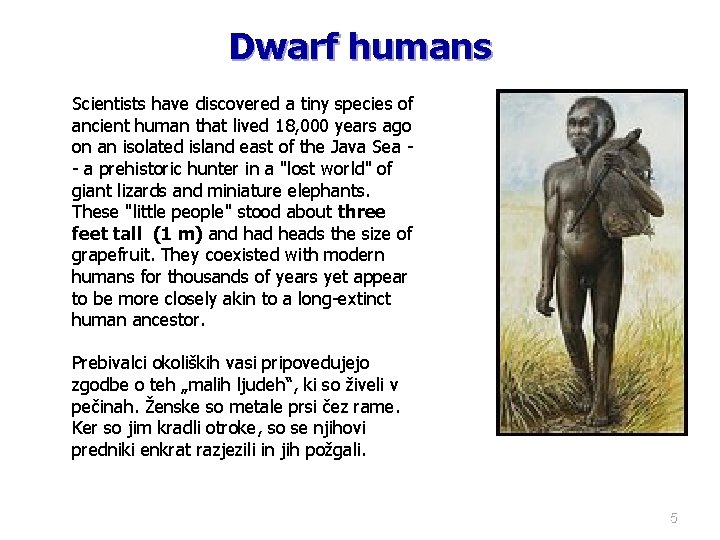
Dwarf humans Scientists have discovered a tiny species of ancient human that lived 18, 000 years ago on an isolated island east of the Java Sea - a prehistoric hunter in a "lost world" of giant lizards and miniature elephants. These "little people" stood about three feet tall (1 m) and had heads the size of grapefruit. They coexisted with modern humans for thousands of years yet appear to be more closely akin to a long-extinct human ancestor. Prebivalci okoliških vasi pripovedujejo zgodbe o teh „malih ljudeh“, ki so živeli v pečinah. Ženske so metale prsi čez rame. Ker so jim kradli otroke, so se njihovi predniki enkrat razjezili in jih požgali. 5
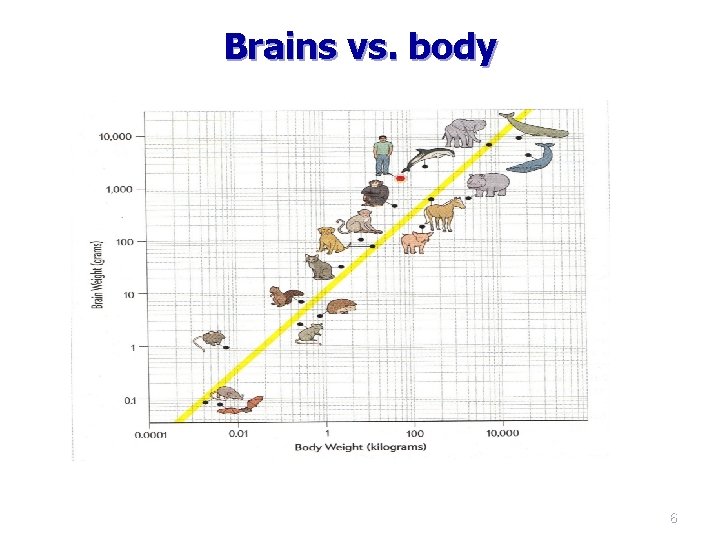
Brains vs. body 6
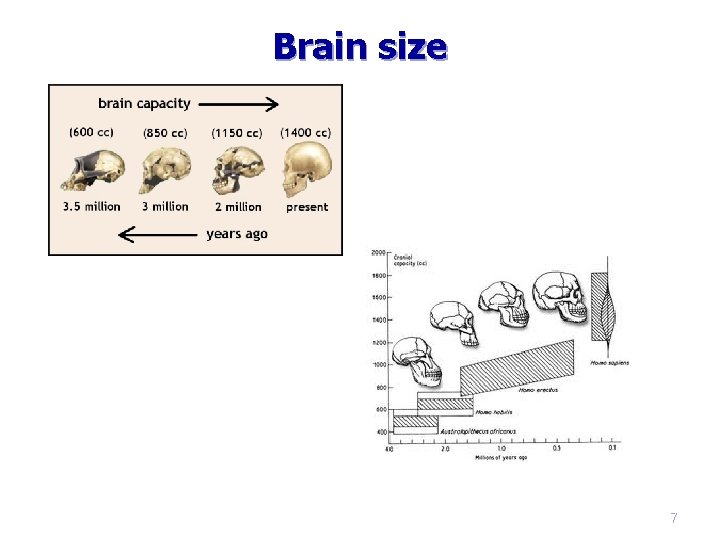
Brain size 7
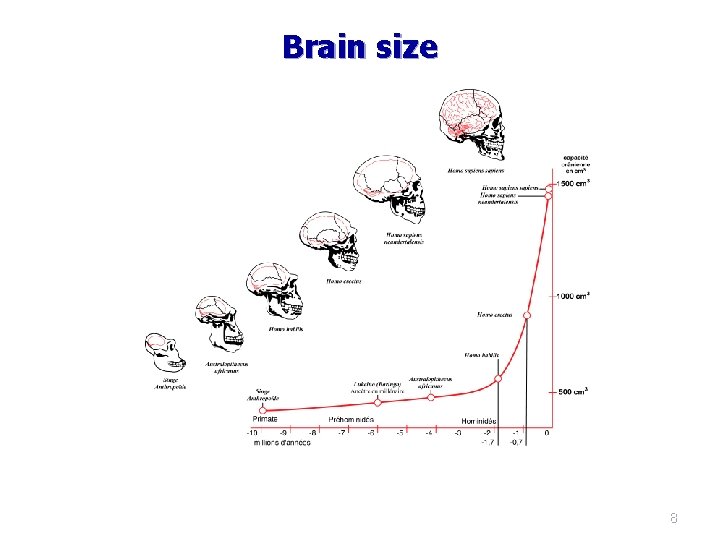
Brain size 8
DISCUSSION Miller's most recent work has used Darwinism (i. e. sexual attraction related to display of wealth, objects, tools …) to gain an understanding of how marketing has exploited our inherited instincts to display social status for reproductive advantage. [3] Miller argues that … social status has been a critical force in reproduction. As a result, marketers "still believe that premium products are bought to display wealth, status, and taste, and they miss the deeper mental traits that people are actually wired to display—traits such as kindness, intelligence, and creativity". This, he claims, limits the success of marketing. [5] 9
DISCUSSION Howard Rheingold: Mind Amplifier: Can Our Digital Tools Make Us Smarter? Instead of asking whether the Web is making us stupid, Howard Rheingold … What if humans could build tools that leverage our ability to think, communicate, and cooperate? … examines the origins of digital mind-extending tools, and then lays out the foundations for their future. Rheingold proposes an applied, interdisciplinary science of mind amplification. He also unveils a new protocol for developing technocognitive-social technologies that embrace empathy, mindfulness, and compassion — elements lacking from existing digital mind-tools. 10
DISCUSSION THESIS: - Tools enable jump ahead - Information society tools enable jump ahead to the „advanced human“ Civilization, person Arguments: history, relation tools-brain-mind ØNice to be with you. 11