
Knowledge of Parenting and Child Development 1 Essential
- Slides: 18
Knowledge of Parenting and Child Development 1
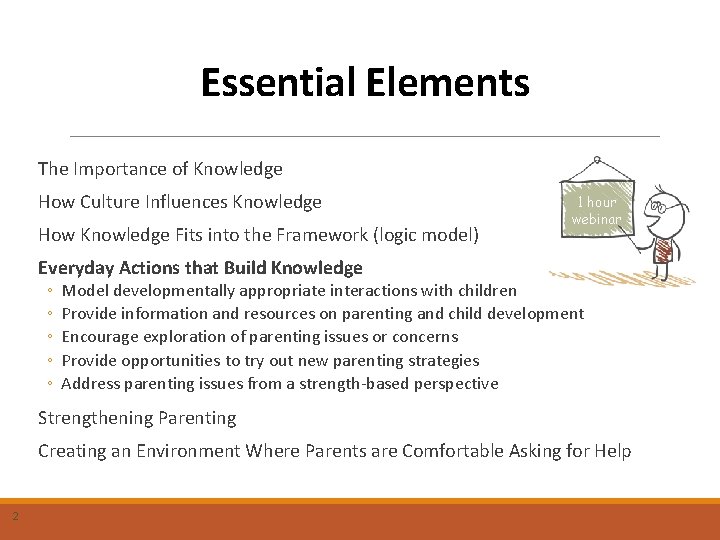
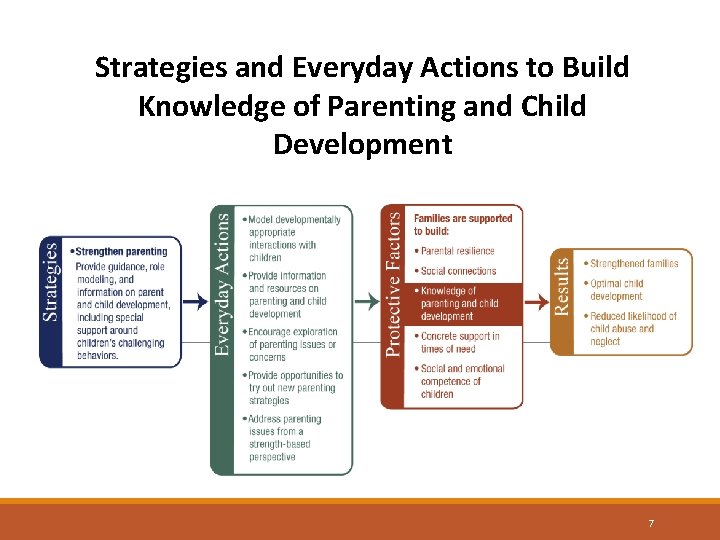
Essential Elements The Importance of Knowledge How Culture Influences Knowledge How Knowledge Fits into the Framework (logic model) 1 hour webinar Everyday Actions that Build Knowledge ◦ ◦ ◦ Model developmentally appropriate interactions with children Provide information and resources on parenting and child development Encourage exploration of parenting issues or concerns Provide opportunities to try out new parenting strategies Address parenting issues from a strength-based perspective Strengthening Parenting Creating an Environment Where Parents are Comfortable Asking for Help 2
Video: Parenting isn’t easy, but… https: //www. youtube. com/watch? v=Pe_u. X 4 TL 7 MY 3
Importance of knowing Child Development Children don’t come with an instructional manual, and people don’t innately know what to expect as a parent or caregiver! It’s important for parents and caregivers to explore the meaning behind a child’s behavior, techniques to manage those behaviors and what is typical in terms of child development. 4
How does culture influence parenting and understanding of child development? 5
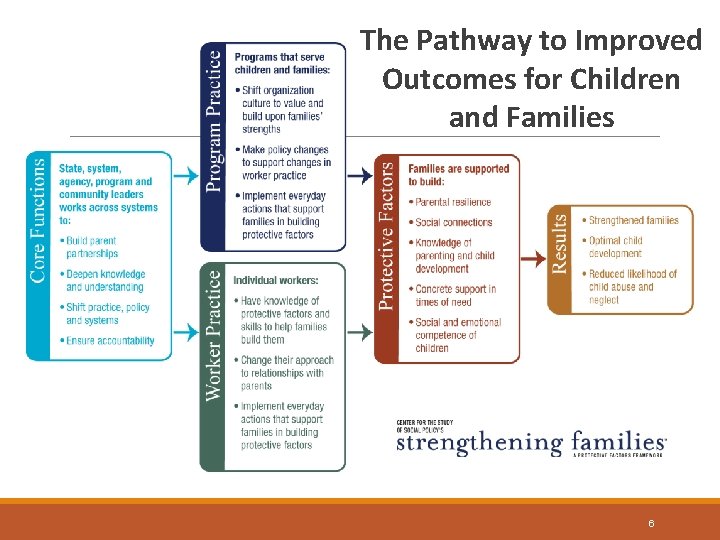
The Pathway to Improved Outcomes for Children and Families 6
Strategies and Everyday Actions to Build Knowledge of Parenting and Child Development 7
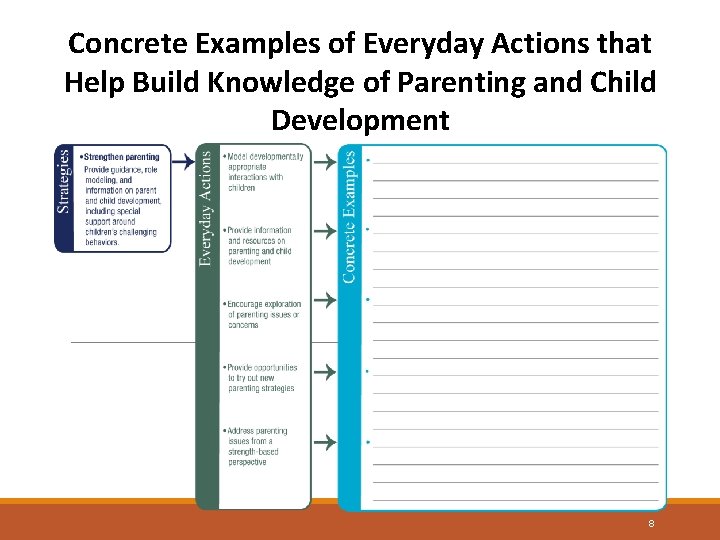
Concrete Examples of Everyday Actions that Help Build Knowledge of Parenting and Child Development 8
What strategies and everyday actions do you use to support parents to increase their knowledge of child development? 9
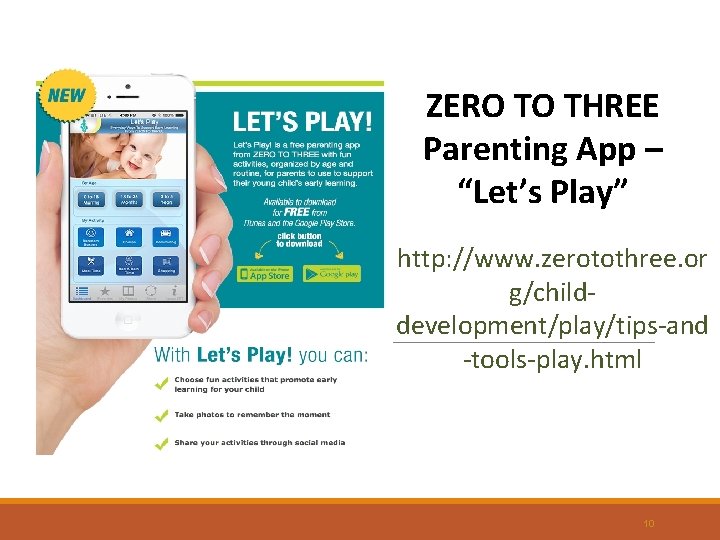
ZERO TO THREE Parenting App – “Let’s Play” http: //www. zerotothree. or g/childdevelopment/play/tips-and -tools-play. html 10
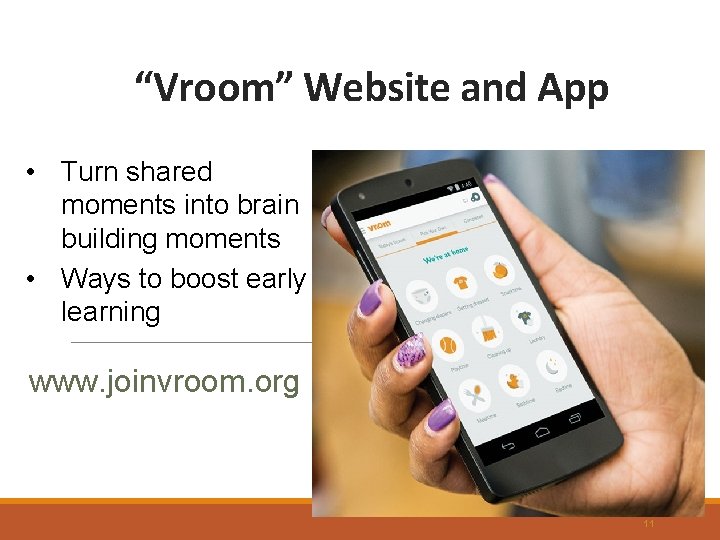
“Vroom” Website and App • Turn shared moments into brain building moments • Ways to boost early learning www. joinvroom. org 11
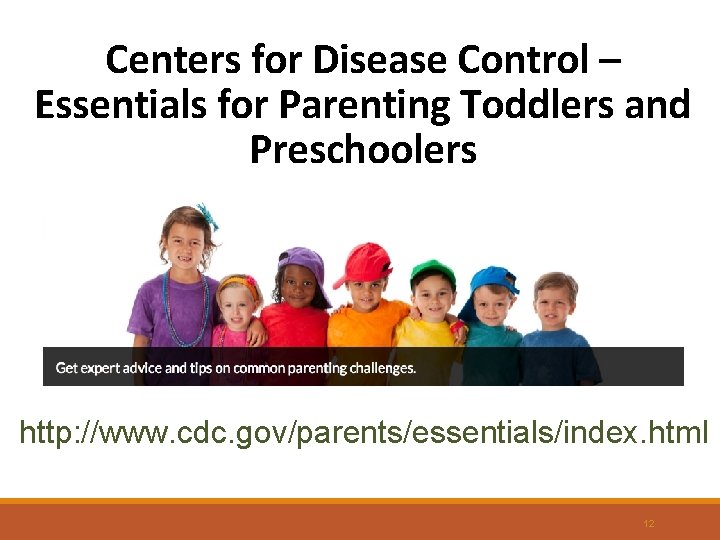
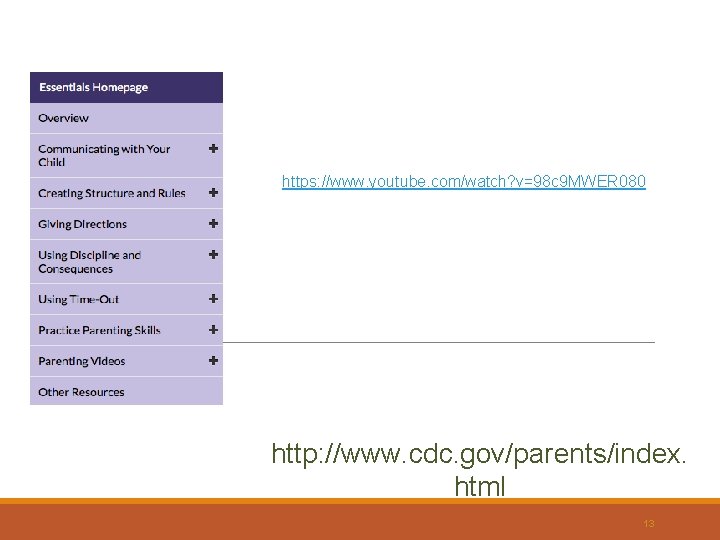
Centers for Disease Control – Essentials for Parenting Toddlers and Preschoolers http: //www. cdc. gov/parents/essentials/index. html 12
https: //www. youtube. com/watch? v=98 c 9 MWER 080 http: //www. cdc. gov/parents/index. html 13
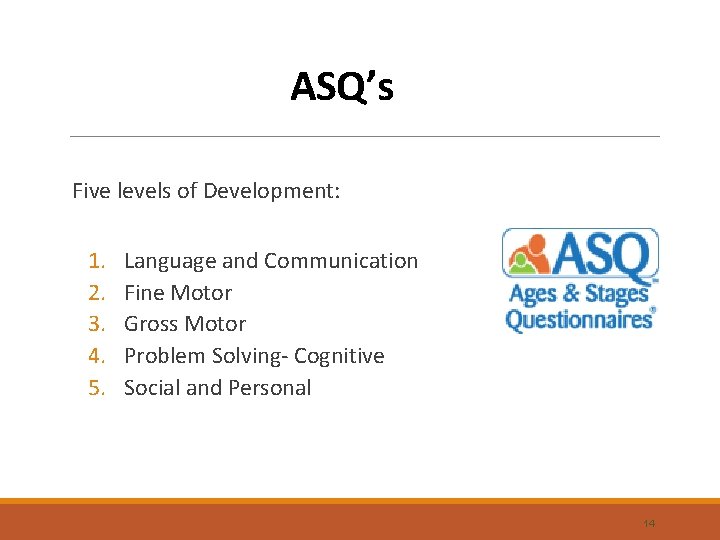
ASQ’s Five levels of Development: 1. 2. 3. 4. 5. Language and Communication Fine Motor Gross Motor Problem Solving- Cognitive Social and Personal 14
“If you had a good enough parent, you are most fortunate because you had a real parent. ” ~ Dr. Donald Winnicott 15
Video: Imperfection is OKAY https: //www. youtube. com/watch? v=s 6 xb 4 H 5 ue. Ks 16
Strengths and Needs Assessment Family-centered assessment is a process designed to gain a greater understanding of how a family's strengths, needs, and resources affect a child's safety, permanency, and well-being. The assessment should be strengths-based, culturally sensitive, individualized, and developed in partnership with the family. *https: //www. ceitan-earlystart. org/wp- content/uploads/es_familyassessment_standalone_v 14. pdf 17
Questions? 18