
Knowledge Management Systems Week 3 3 Naval Knot





- Slides: 24
Knowledge Management Systems Week 3 -3 Naval Knot system mapping 1
Design of a Naval Knot Knowledge Management System The following slides are an mapping of the design of an example KMS developed at the tutorial. 2
Opportunity • To improve the competency of Customs boat crews in tying line knots. 3
Benefit • By improving this competency, Customs will reduce the risk of injury to personnel and loss of equipment. 4
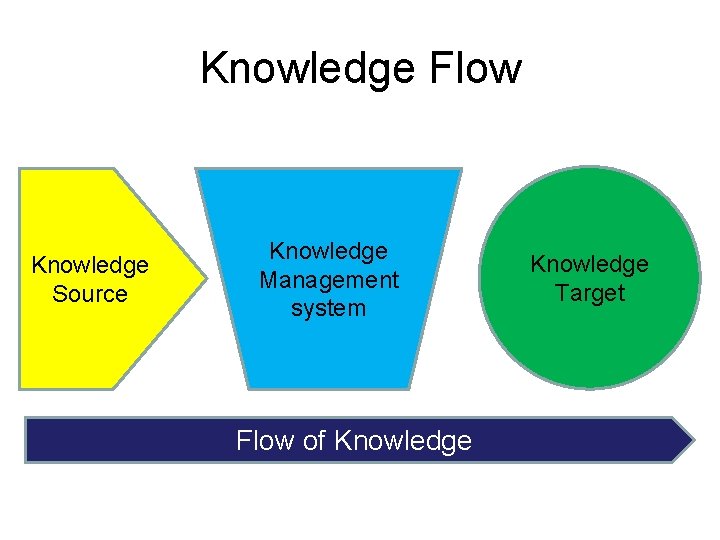
Knowledge Flow Knowledge Source Knowledge Management system Flow of Knowledge Target
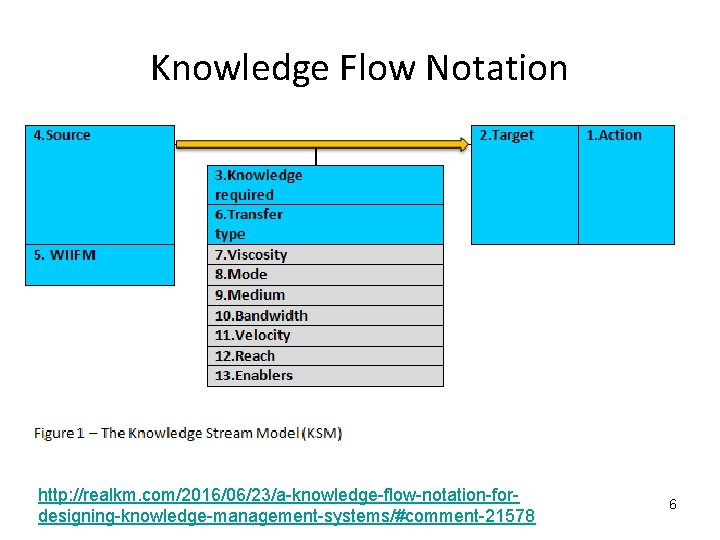
Knowledge Flow Notation http: //realkm. com/2016/06/23/a-knowledge-flow-notation-fordesigning-knowledge-management-systems/#comment-21578 6
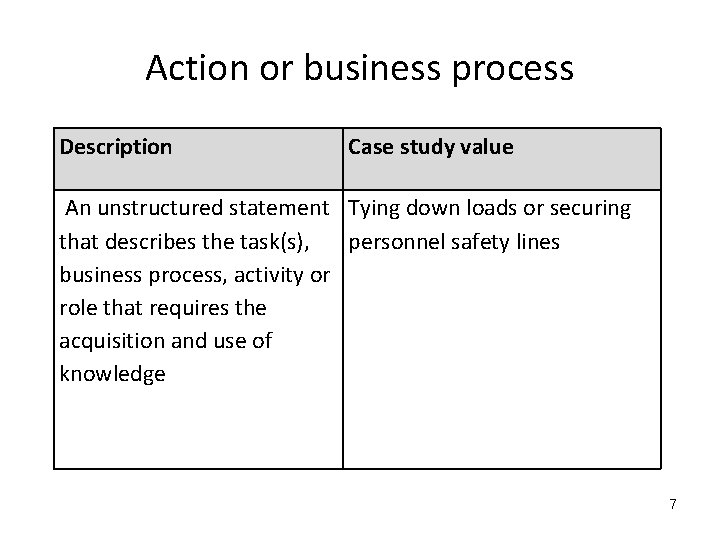
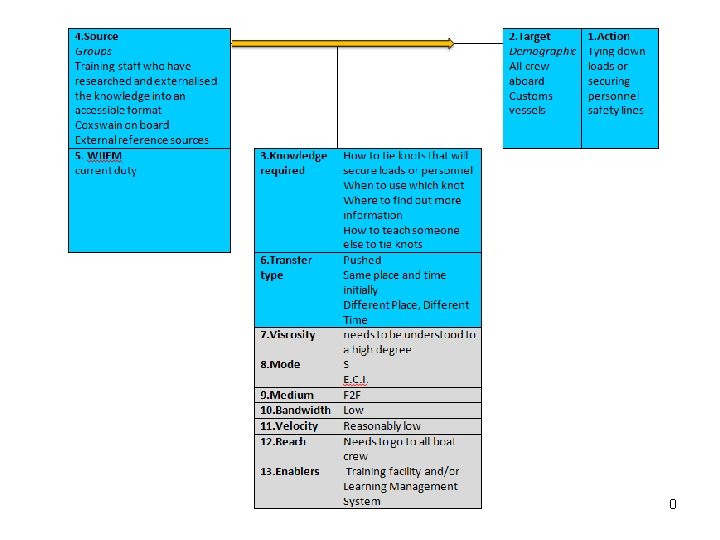
Action or business process Description Case study value An unstructured statement Tying down loads or securing that describes the task(s), personnel safety lines business process, activity or role that requires the acquisition and use of knowledge 7
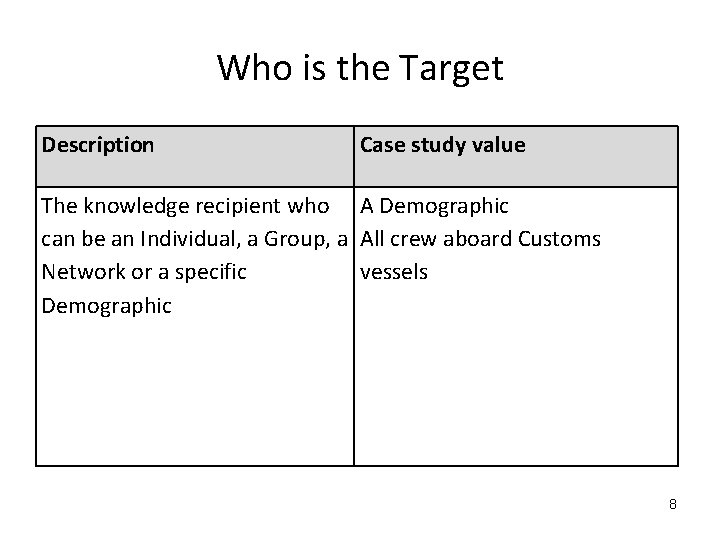
Who is the Target Description Case study value The knowledge recipient who A Demographic can be an Individual, a Group, a All crew aboard Customs Network or a specific vessels Demographic 8
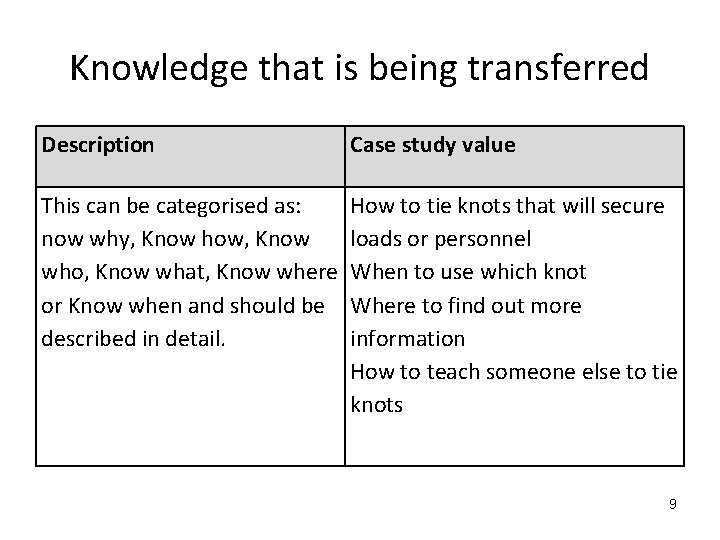
Knowledge that is being transferred Description Case study value This can be categorised as: now why, Know how, Know who, Know what, Know where or Know when and should be described in detail. How to tie knots that will secure loads or personnel When to use which knot Where to find out more information How to teach someone else to tie knots 9
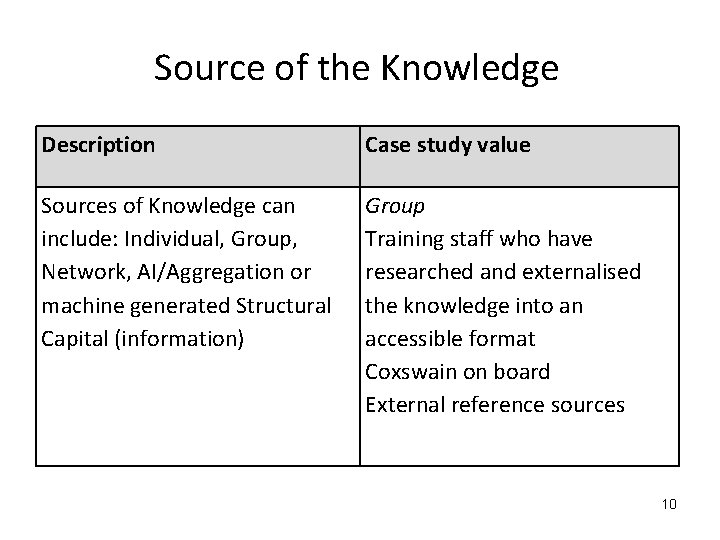
Source of the Knowledge Description Case study value Sources of Knowledge can include: Individual, Group, Network, AI/Aggregation or machine generated Structural Capital (information) Group Training staff who have researched and externalised the knowledge into an accessible format Coxswain on board External reference sources 10
WIIFM Description Case study value The motivators for the Source Providing the knowledge on to share knowledge: Current tying knots is a current duty duties Recognition Payment Quid pro quo Kudos Elevation to social group Opportunities Network 11
The Transfer type of knowledge Description Case study value The knowledge Transfer type In this case the knowledge needs indicates whether the to be pushed. It is a core skill knowledge is Pulled or Pushed. that needs to be applied a very This should also be indicated short notice by the direction of the arrow in the model. The flow can also be 2 -way (Interactive) and occurring at the Same place, Same time, Different place, Different time or a 12 combination.
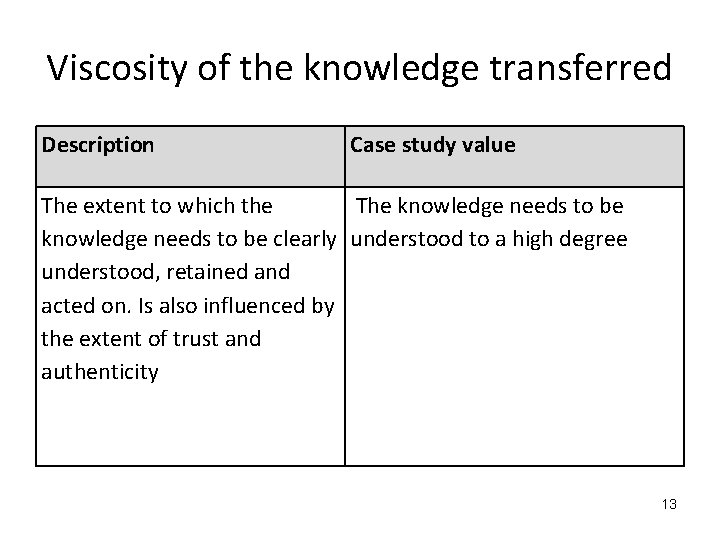
Viscosity of the knowledge transferred Description Case study value The extent to which the The knowledge needs to be clearly understood to a high degree understood, retained and acted on. Is also influenced by the extent of trust and authenticity 13
Mode of knowledge transfer Description Case study value The SECI modes of knowledge transfer are either Socialisation or Externalisation and Internalisation with the potential for Combination occurring in some instances. Can be either Socialisation is more effective ECI is quicker but only if you have access 14
Medium to be used Description Case study value The medium for the knowledge transfer could be: F 2 F, hard-copy, Digital (passive) Messaging (active), Audio, Image/diagram, Video, data or a combination of the above. Blended/optional learning model Online or face to face (F 2 F) Use of story and metaphor Delivered by senior boat crew F 2 F provides option for personalisation to address cultural or learning issues Backed up with online video and web page 15
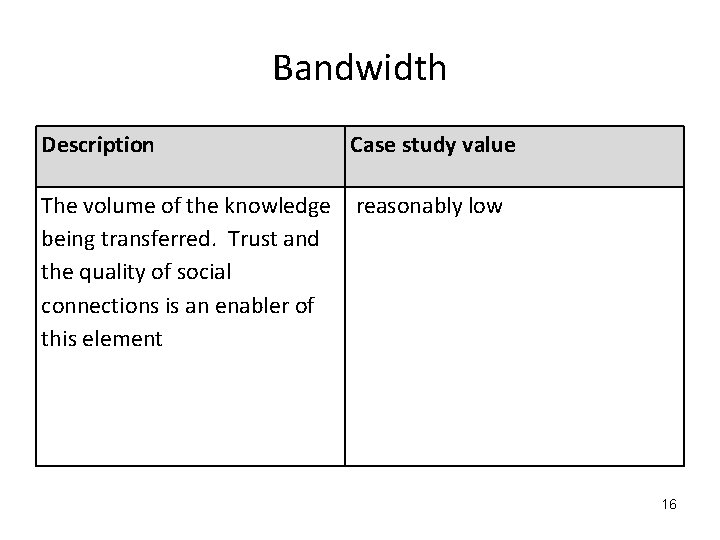
Bandwidth Description Case study value The volume of the knowledge being transferred. Trust and the quality of social connections is an enabler of this element reasonably low 16
Velocity Description Case study value The speed at which Reasonably low. Needs to be knowledge needs to move in part of training before an organisation deployment 17
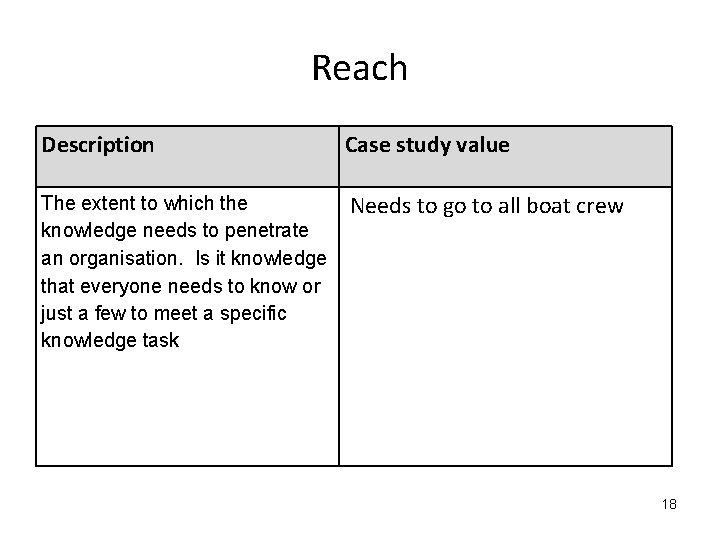
Reach Description Case study value The extent to which the knowledge needs to penetrate an organisation. Is it knowledge that everyone needs to know or just a few to meet a specific knowledge task Needs to go to all boat crew 18
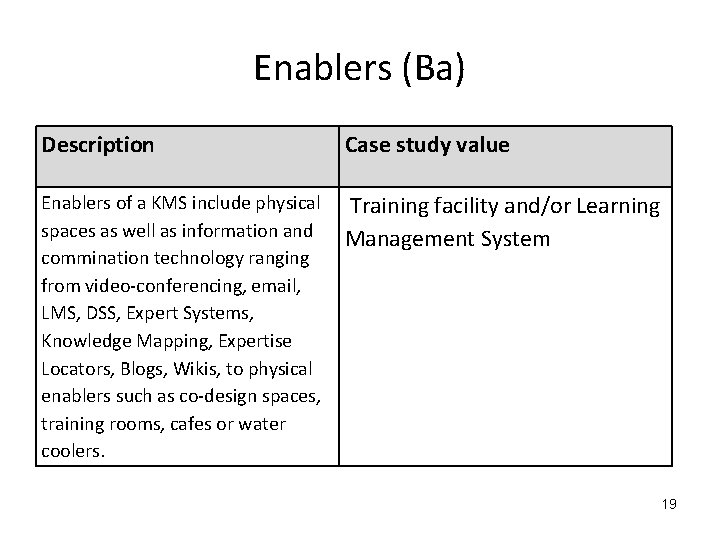
Enablers (Ba) Description Case study value Enablers of a KMS include physical spaces as well as information and commination technology ranging from video-conferencing, email, LMS, DSS, Expert Systems, Knowledge Mapping, Expertise Locators, Blogs, Wikis, to physical enablers such as co-design spaces, training rooms, cafes or water coolers. Training facility and/or Learning Management System 19
20
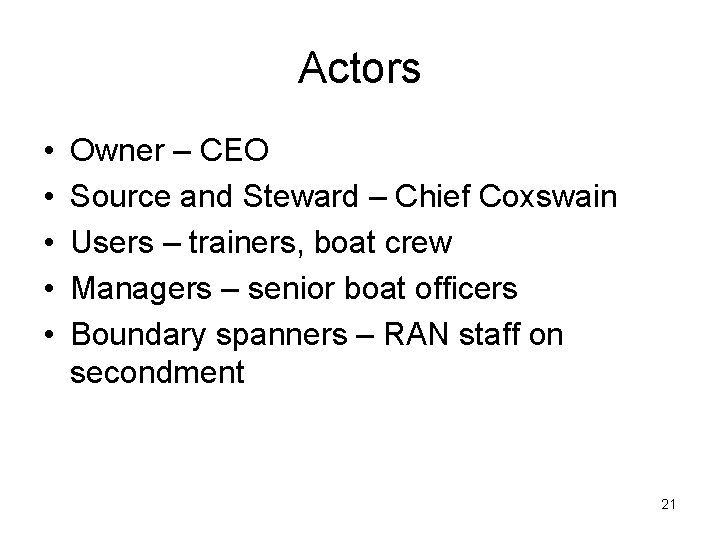
Actors • • • Owner – CEO Source and Steward – Chief Coxswain Users – trainers, boat crew Managers – senior boat officers Boundary spanners – RAN staff on secondment 21
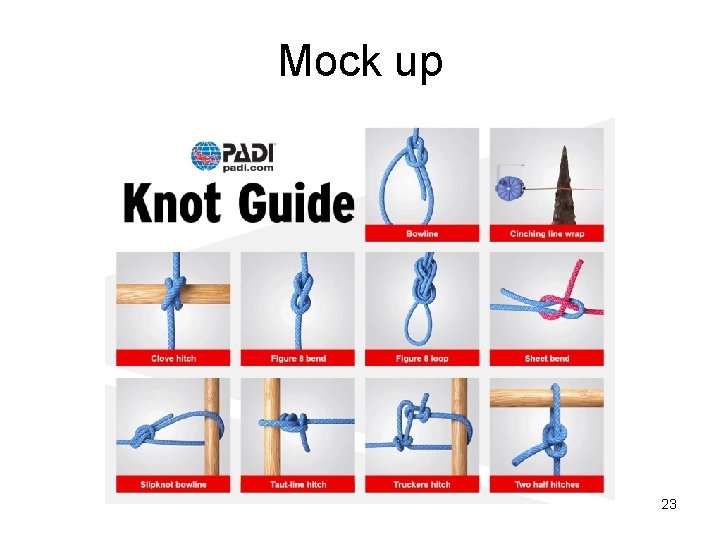
Knowledge • The knowledge – How to tie knots – When to use which knot – Where to find out more information – How to teach someone to tie knots • Coxswain is the source – have to ensure currency in their competency • Catalogue of knots 22
Mock up 23
Conclusion By introducing and maintaining the Naval Knot Knowledge Management System (NKKMS) aims to improve the competency of Customs boat crews in tying knots and through that, reduce the risk of loss to personnel and equipment 24