
Knowledge Management System Based On ISO 30401 2018
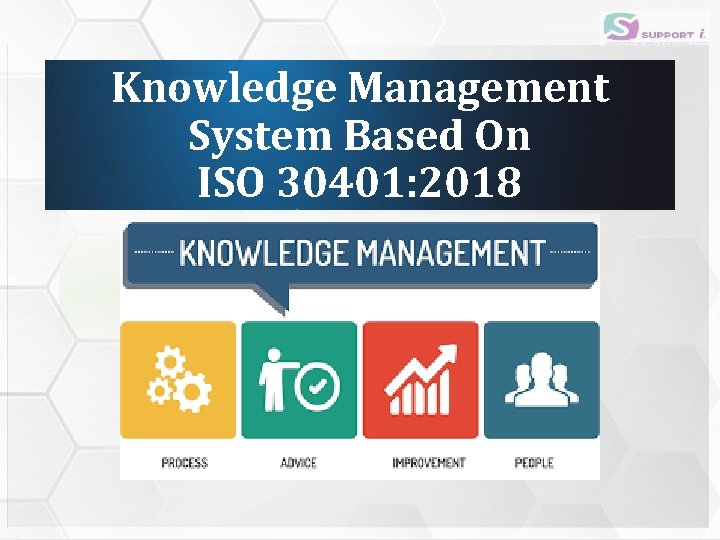
Knowledge Management System Based On ISO 30401: 2018

OVERVIEW 12/30/2021 2
What is ISO 30401? Knowledge management is a discipline focused on ways that organizations create and use knowledge. Each organization will craft a knowledge management approach, with respect to its own business and operational environment, reflecting their specific needs and desired outcomes. 12/30/2021 3
The importance of knowledge management a) Organizational knowledge is becoming a key differentiator for effectiveness, increased collaboration and competition. b) Knowledge work is increasingly important in many societies and organizations. Many economies aspire to become knowledge economies, where knowledge is the main source of wealth. In this context, knowledge becomes a core asset for organizations. c) An increased access to knowledge will create opportunities for the professional development of people in the organization through learning, practices and exchanges. d) Organizations can no longer rely on the spontaneous diffusion of knowledge to keep up with the pace of change. Instead knowledge must be deliberately created, consolidated, applied, and reused faster than the rate of change. 12/30/2021 4
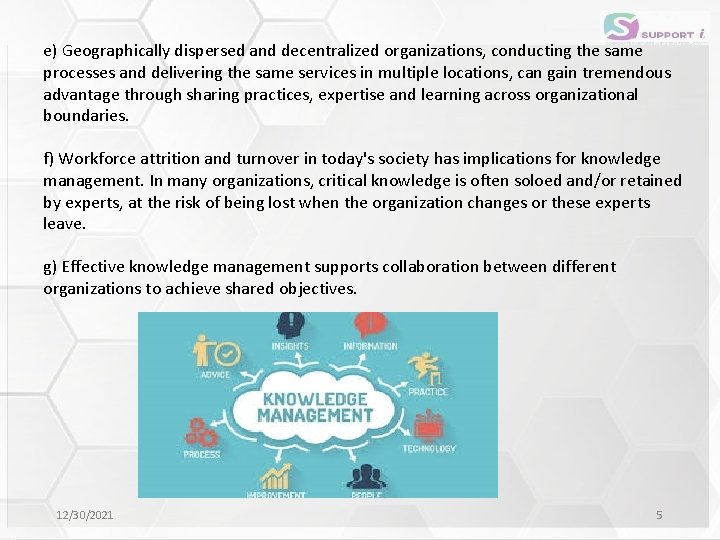
e) Geographically dispersed and decentralized organizations, conducting the same processes and delivering the same services in multiple locations, can gain tremendous advantage through sharing practices, expertise and learning across organizational boundaries. f) Workforce attrition and turnover in today's society has implications for knowledge management. In many organizations, critical knowledge is often soloed and/or retained by experts, at the risk of being lost when the organization changes or these experts leave. g) Effective knowledge management supports collaboration between different organizations to achieve shared objectives. 12/30/2021 5
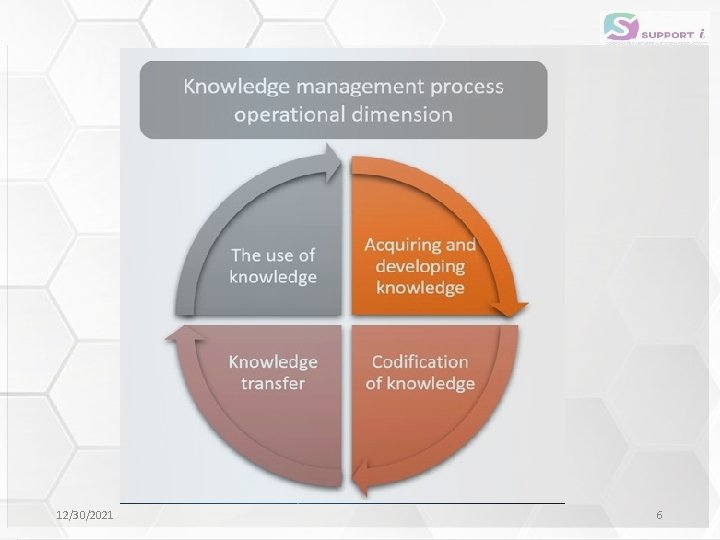
12/30/2021 6
Relationship between knowledge management and adjacent Disciplines a) Information management Knowledge management and information management are often confused, therefore it is important to distinguish between these two disciplines. 12/30/2021 7
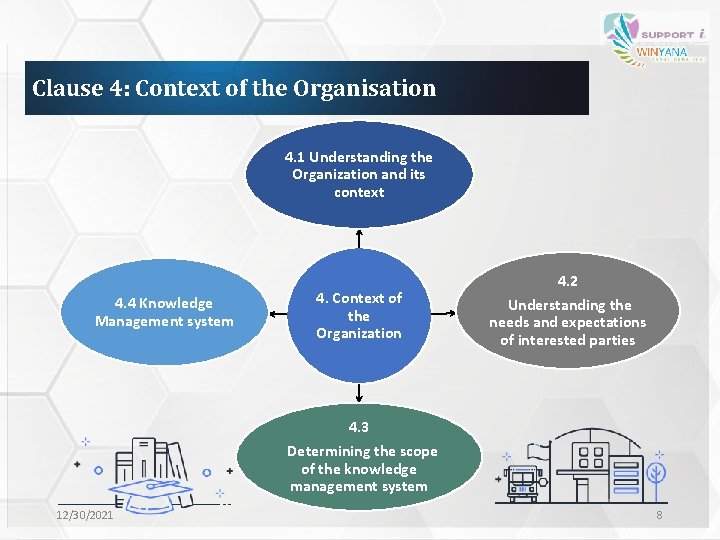
Clause 4: Context of the Organisation 4. 1 Understanding the Organization and its context 4. 4 Knowledge Management system 4. Context of the Organization 4. 2 Understanding the needs and expectations of interested parties 4. 3 Determining the scope of the knowledge management system 12/30/2021 8
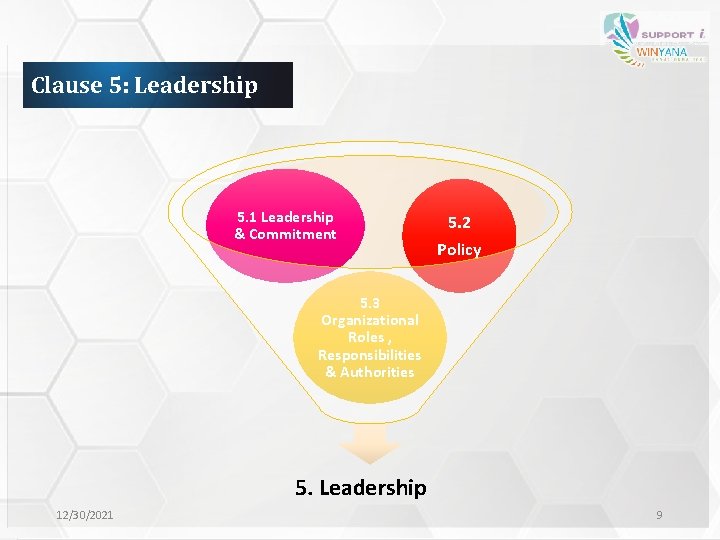
Clause 5: Leadership 5. 1 Leadership & Commitment 5. 2 Policy 5. 3 Organizational Roles , Responsibilities & Authorities 5. Leadership 12/30/2021 9
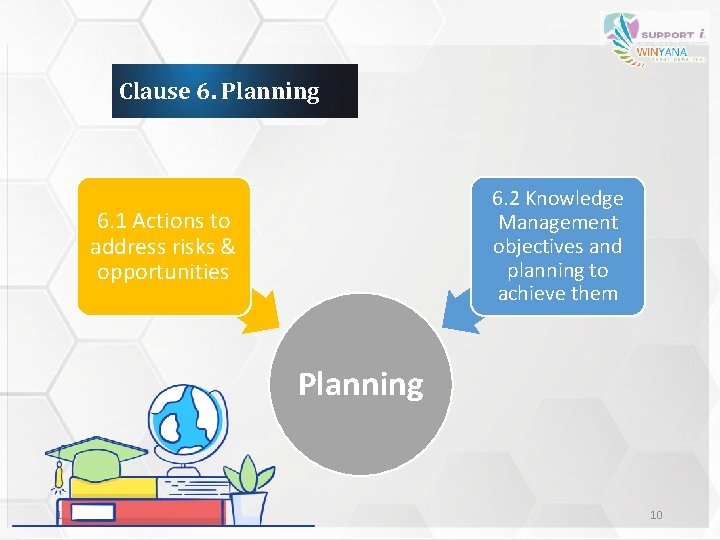
Clause 6. Planning 6. 2 Knowledge Management objectives and planning to achieve them 6. 1 Actions to address risks & opportunities Planning 12/30/2021 10
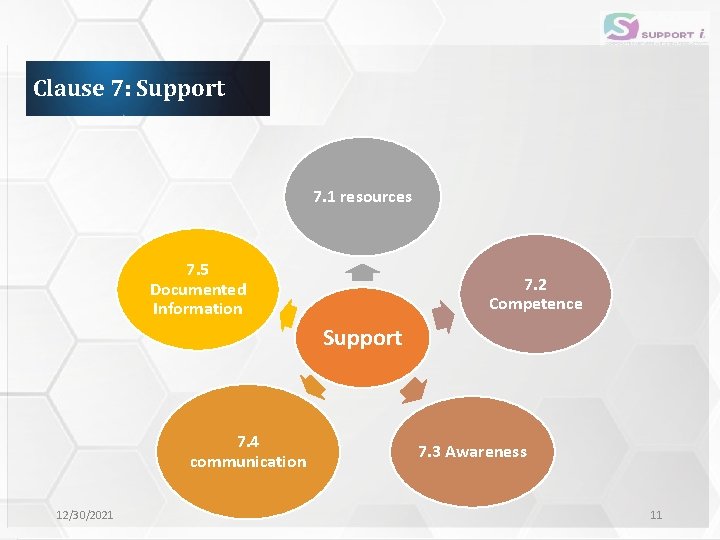
Clause 7: Support 7. 1 resources 7. 5 Documented Information 7. 2 Competence Support 7. 4 communication 12/30/2021 7. 3 Awareness 11

Clause 8 : Operation 12/30/2021 12
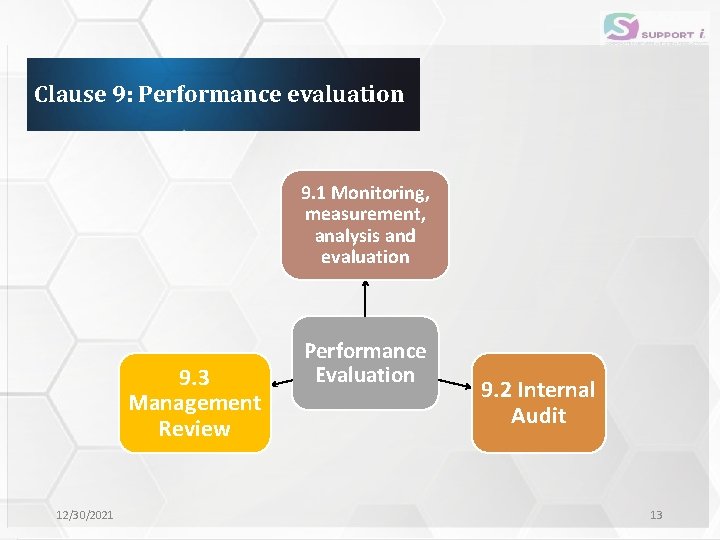
Clause 9: Performance evaluation 9. 1 Monitoring, measurement, analysis and evaluation 9. 3 Management Review 12/30/2021 Performance Evaluation 9. 2 Internal Audit 13
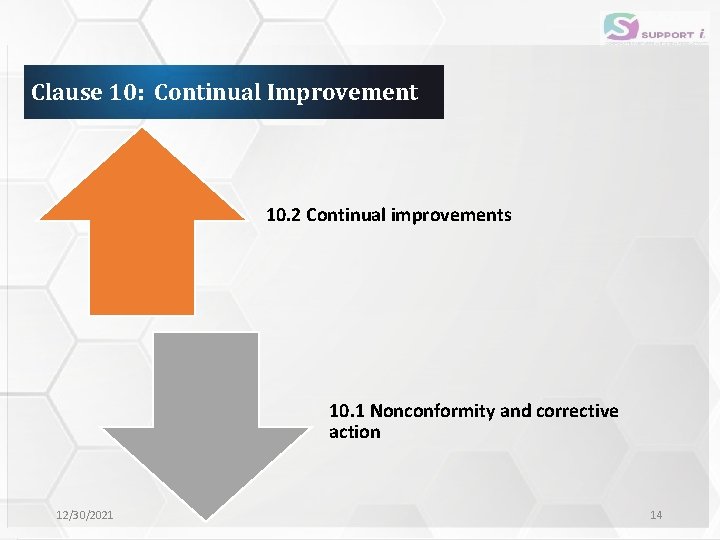
Clause 10: Continual Improvement 10. 2 Continual improvements 10. 1 Nonconformity and corrective action 12/30/2021 14
- Slides: 14