
Knowledge learning based approach to supporting Organisational Transition
Knowledge & learning based approach to supporting Organisational Transition Making the Most of Our Knowledge & Learning Chief Knowledge Officer DHID Knowledge Management Team Sue Lacey-Bryant Andrew Lambe
Aims of the Approach • To provide a knowledge based model to support knowledge sharing, collaboration and learning that will support successful transition to the new health service model • to take a systems/process approach, designing the “lego bricks” that could sit in any organisational form – the things that need doing • to consider what the PCT priorities are for the next two years. • to ensure the approach will be applicable to all areas of health • to Illustrate readily accessible tools and techniques that can help transition • to promulgate and share learning more widely across the NHS
In Transition: Making the Most of Our Knowledge & Learning Workshop 18 th May 2011 Purpose and Objectives • • • To agree the priority “knowledge domains” for action To develop a prioritised list of recommended actions To agree the production of a draft plan for discussion at and agreement by the Business Change Forum (BCF)
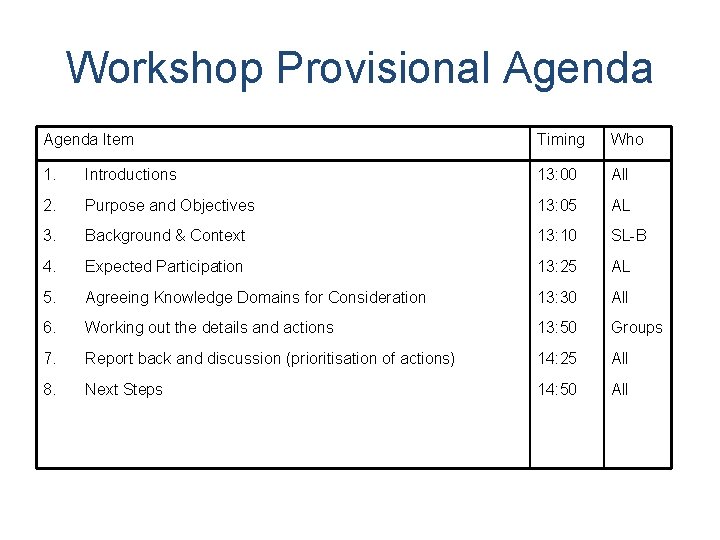
Workshop Provisional Agenda Item Timing Who 1. Introductions 13: 00 All 2. Purpose and Objectives 13: 05 AL 3. Background & Context 13: 10 SL-B 4. Expected Participation 13: 25 AL 5. Agreeing Knowledge Domains for Consideration 13: 30 All 6. Working out the details and actions 13: 50 Groups 7. Report back and discussion (prioritisation of actions) 14: 25 All 8. Next Steps 14: 50 All
Background and Context Knowledge Management • Knowledge Management first defined in early 1990 s by reference to Japanese Management practice* // Emphasis on subjective insights, intuitions and hunches over processing objective information • Since mid 1990 s, taken hold in the business world (often in IT or consultancy organisations), in response to emerging trends: o Large scale deployment of IT o New skills in data analysis o Response to corporate memory loss * Nonaka, I (1991), The knowledge-creating company, Harvard Business Review, 69, November-December, 96 -104
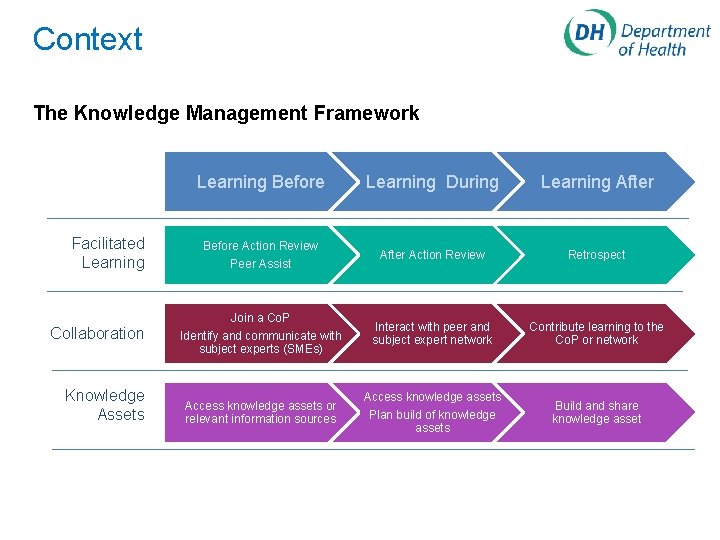
Context The Knowledge Management Framework Facilitated Learning Collaboration Knowledge Assets Learning Before Learning During Learning After Before Action Review Peer Assist After Action Review Retrospect Interact with peer and subject expert network Contribute learning to the Co. P or network Join a Co. P Identify and communicate with subject experts (SMEs) Access knowledge assets or relevant information sources Access knowledge assets Plan build of knowledge assets Build and share knowledge asset
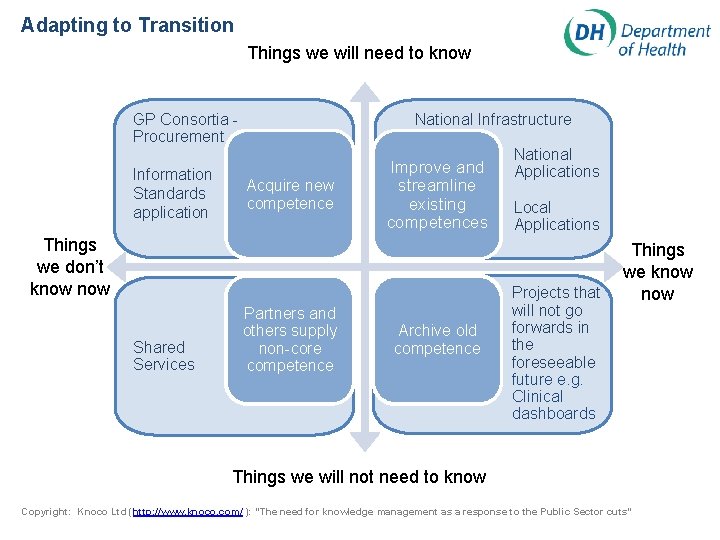
Adapting to Transition Things we will need to know GP Consortia Procurement Information Standards application National Infrastructure Acquire new competence Improve and streamline existing competences Things we don’t know Shared Services Partners and others supply non-core competence Archive old competence National Applications Local Applications Projects that will not go forwards in the foreseeable future e. g. Clinical dashboards Things we know Things we will not need to know Copyright: Knoco Ltd (http: //www. knoco. com/ ): “The need for knowledge management as a response to the Public Sector cuts”
Expected Participation Today • To get everyone on the same page • To think about PCT priorities for the next two years. • To understand that there is no organisational blueprint • To try to take a generalist, PCT and local health systems role, whilst drawing on individual’s domain expertise
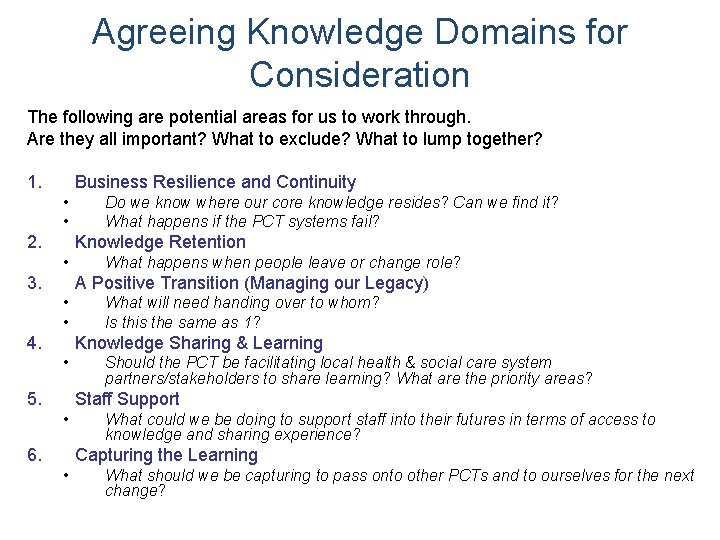
Agreeing Knowledge Domains for Consideration The following are potential areas for us to work through. Are they all important? What to exclude? What to lump together? 1. Business Resilience and Continuity • • 2. Do we know where our core knowledge resides? Can we find it? What happens if the PCT systems fail? Knowledge Retention • 3. What happens when people leave or change role? A Positive Transition (Managing our Legacy) • • 4. What will need handing over to whom? Is this the same as 1? Knowledge Sharing & Learning • 5. Should the PCT be facilitating local health & social care system partners/stakeholders to share learning? What are the priority areas? Staff Support • 6. What could we be doing to support staff into their futures in terms of access to knowledge and sharing experience? Capturing the Learning • What should we be capturing to pass onto other PCTs and to ourselves for the next change?
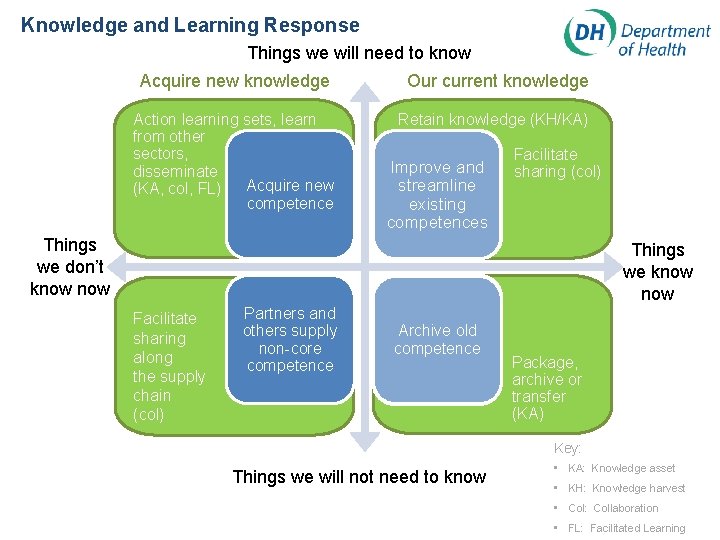
Knowledge and Learning Response Things we will need to know Acquire new knowledge Our current knowledge Action learning sets, learn from other sectors, disseminate Acquire new (KA, col, FL) competence Retain knowledge (KH/KA) Improve and streamline existing competences Facilitate sharing (col) Things we don’t know Things we know Facilitate sharing along the supply chain (col) Partners and others supply non-core competence Archive old competence Package, archive or transfer (KA) Key: Things we will not need to know • KA: Knowledge asset • KH: Knowledge harvest • Col: Collaboration • FL: Facilitated Learning
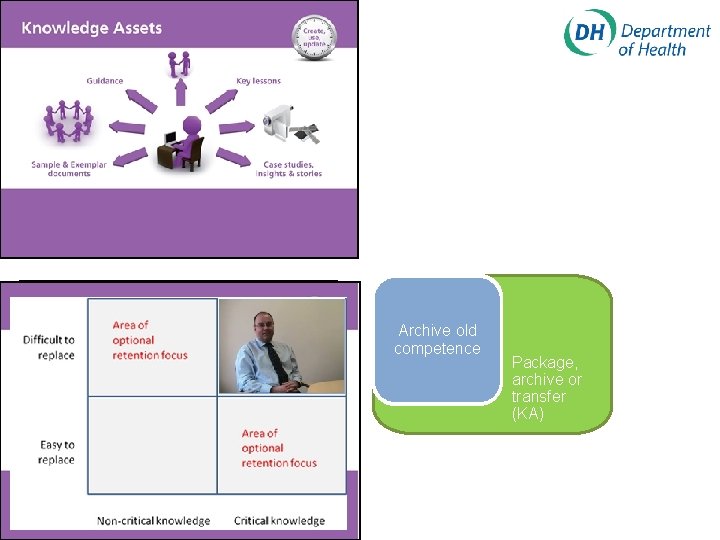
Archive old competence Package, archive or transfer (KA)
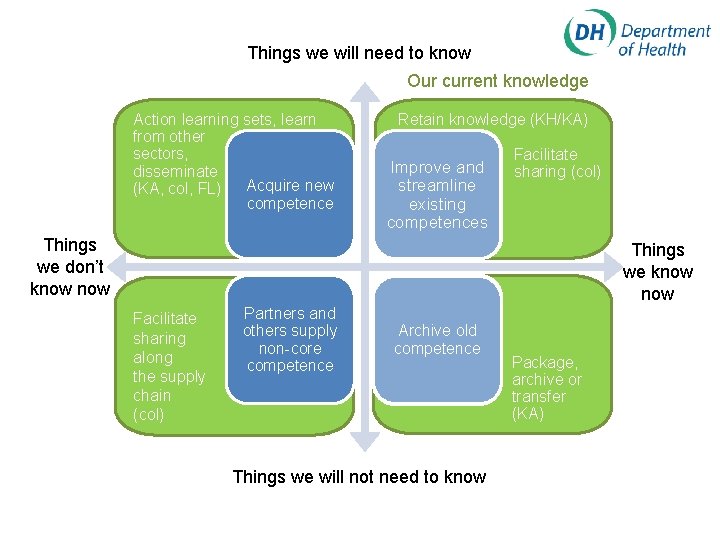
Things we will need to know Our current knowledge Action learning sets, learn from other sectors, disseminate Acquire new (KA, col, FL) competence Retain knowledge (KH/KA) Improve and streamline existing competences Facilitate sharing (col) Things we don’t know Things we know Facilitate sharing along the supply chain (col) Partners and others supply non-core competence Archive old competence Things we will not need to know Package, archive or transfer (KA)

with internal knowledge…a Learning After response Retain knowledge (KH/KA) Facilitate Application of Knowledge Learning Before Facilitated Learning Collaboration Knowledge Assets Learning Improve. During and sharing (col) After streamline existing competences Learning Before Action Review Peer Assist Learning Before After Action Review Learning During Retrospect Improve and Streamline Join a Co. P Learning Identify and communicate with. After subject experts (SMEs) Learning Before Learning During Access. Before knowledge assets or relevant information sources Learning After Learning During Interact with peer and Contribute learning to the Define the Focus of the Community subject expert network Co. P or network • Ensure community activities address business issues • Ensure high levels of sponsor expectation Provide Support assets Access knowledge • Provide Co. P co-rdinator training Build and share Plan build of knowledge asset • Ensure Co. P coordinator are given sufficient time for their role assets • Provide funding for face-to-face events • Improve the usefulness of tools provided Time What can leaders do? • Ensure there are clearly stated goals • Engage members in developing good practice • Promote Co. Ps ability to help solve daily work challenges …which iteratively can then supports ongoing better application work in learning of knowledge before and during phases…
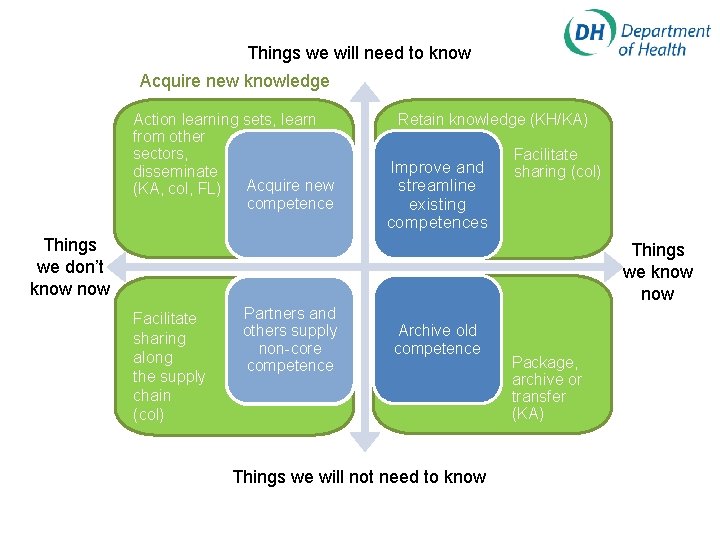
Things we will need to know Acquire new knowledge Action learning sets, learn from other sectors, disseminate Acquire new (KA, col, FL) competence Retain knowledge (KH/KA) Improve and streamline existing competences Facilitate sharing (col) Things we don’t know Things we know Facilitate sharing along the supply chain (col) Partners and others supply non-core competence Archive old competence Things we will not need to know Package, archive or transfer (KA)
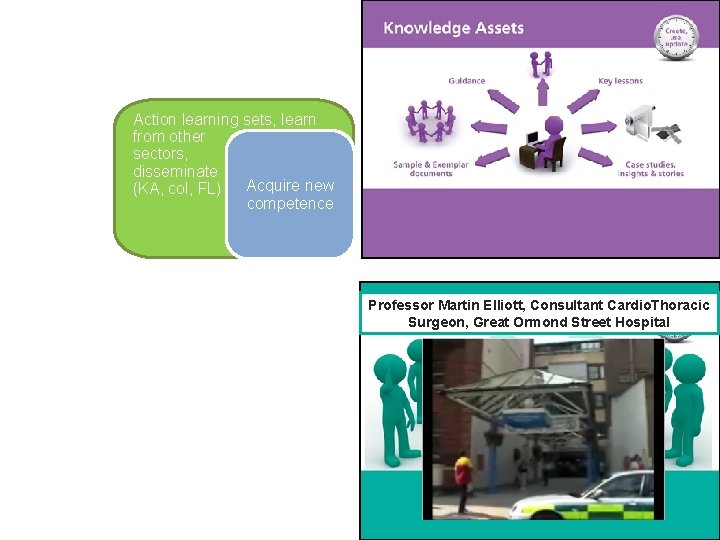
Action Learning Sets Action learning sets, learn from other sectors, disseminate Acquire new (KA, col, FL) competence -Community of purpose (experts) -Knowledge Assets Professor Martin Elliott, Consultant Cardio. Thoracic Surgeon, Great Ormond Street Hospital
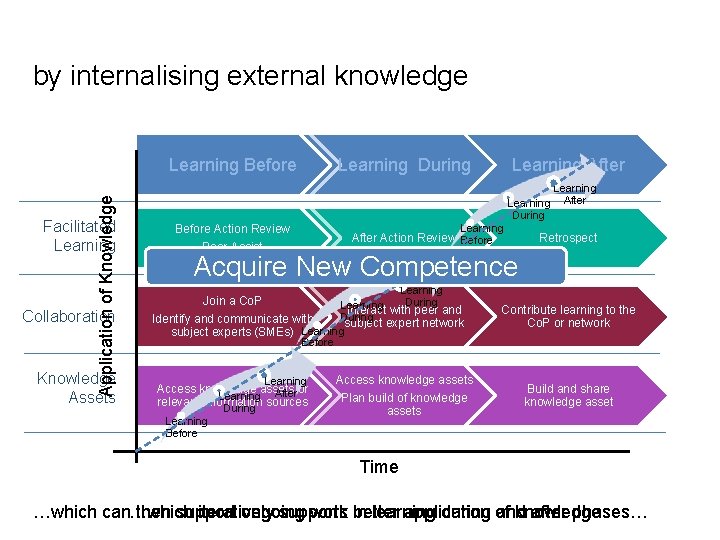
by internalising external knowledge Application of Knowledge Learning Before Facilitated Learning Collaboration Knowledge Assets Learning During Learning After Learning During Before Action Review Peer Assist After Action Review Before Join a Co. P Learning During Learning After Retrospect Acquire New Competence Learning Interact with peer and During Identify and communicate with subject expert network subject experts (SMEs) Learning Contribute learning to the Co. P or network Before Learning Access knowledge assets or Learning After relevant information sources During Learning Before Access knowledge assets Plan build of knowledge assets Build and share knowledge asset Time …which can…which then support iteratively ongoing supports work in better learning application during of and knowledge after phases…
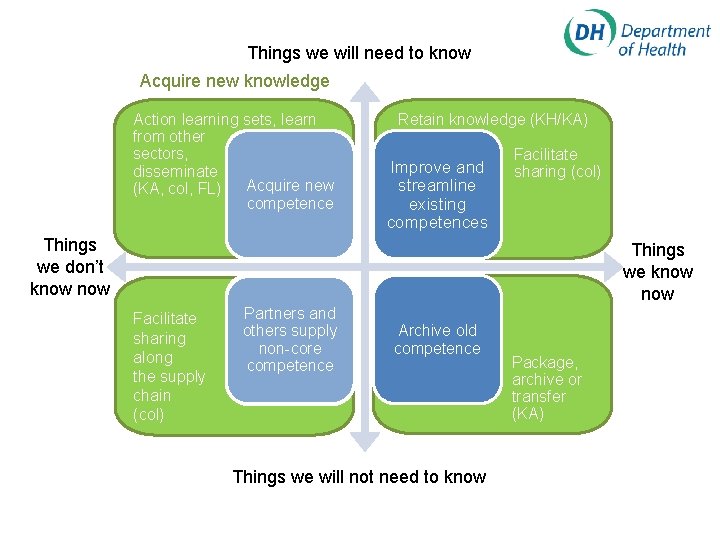
Things we will need to know Acquire new knowledge Action learning sets, learn from other sectors, disseminate Acquire new (KA, col, FL) competence Retain knowledge (KH/KA) Improve and streamline existing competences Facilitate sharing (col) Things we don’t know Things we know Facilitate sharing along the supply chain (col) Partners and others supply non-core competence Archive old competence Things we will not need to know Package, archive or transfer (KA)
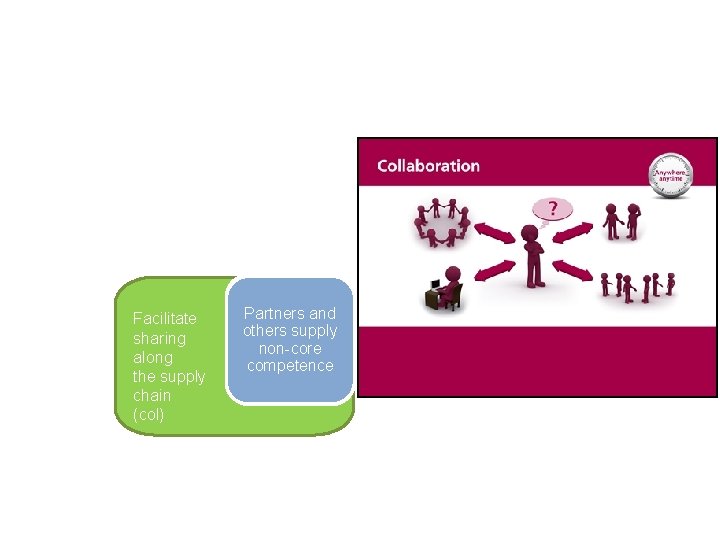
Facilitate sharing along the supply chain (col) Partners and others supply non-core competence
Working out the details and actions • Break into small groups according to how knowledge domains have been grouped. • Work on the following questions: – What’s the issue? For each issue – What is the desirable outcome? – What have we got/done already? – What is there still to do? (& who should do it? )
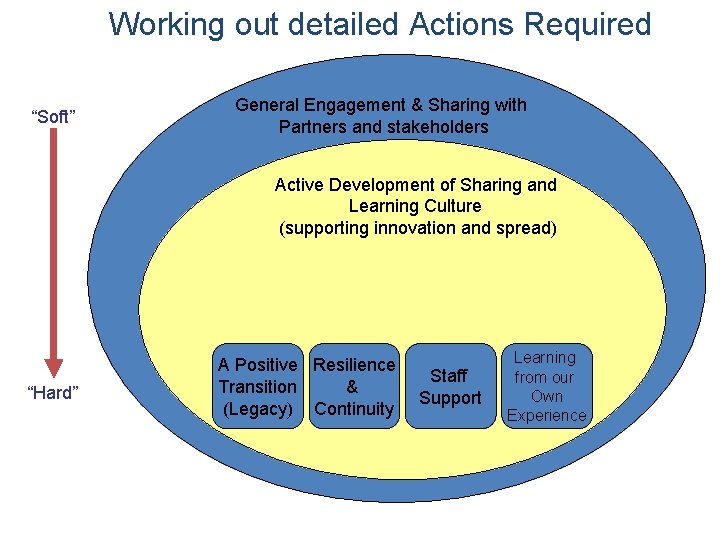
Working out detailed Actions Required “Soft” General Engagement & Sharing with Partners and stakeholders Active Development of Sharing and Learning Culture (supporting innovation and spread) “Hard” A Positive Resilience Transition & (Legacy) Continuity Staff Support Learning from our Own Experience
Feedback & Report (prioritisation of actions) • Share outputs of breakouts • Discuss and prioritise • Agree next steps and who is doing them by when…
- Slides: 21