
Knowledge into Action April 2013 What is Knowledge
- Slides: 13
Knowledge into Action April 2013
What is Knowledge into Action? know ledg e tra nsla tion “The move beyond simple dissemination knowledge implementation of knowledge to actual use of knowledge” e c i t c a r p Straus, et al (2009) d e s a b e c n e evid implementation science
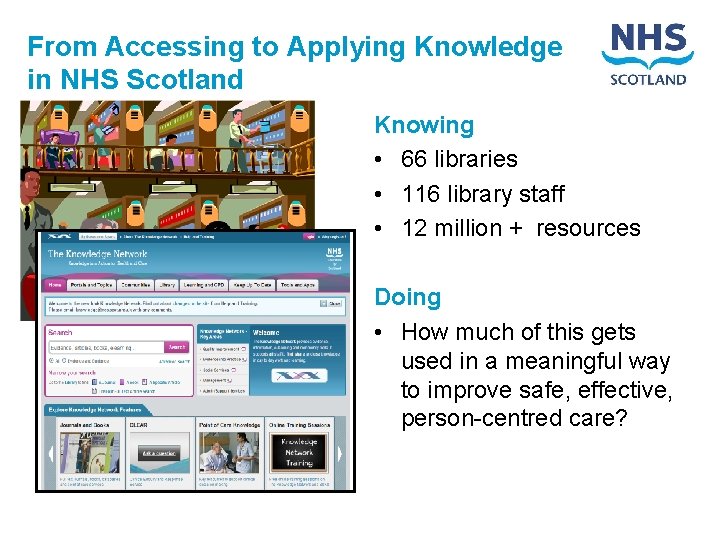
From Accessing to Applying Knowledge in NHS Scotland Knowing • 66 libraries • 116 library staff • 12 million + resources Doing • How much of this gets used in a meaningful way to improve safe, effective, person-centred care?
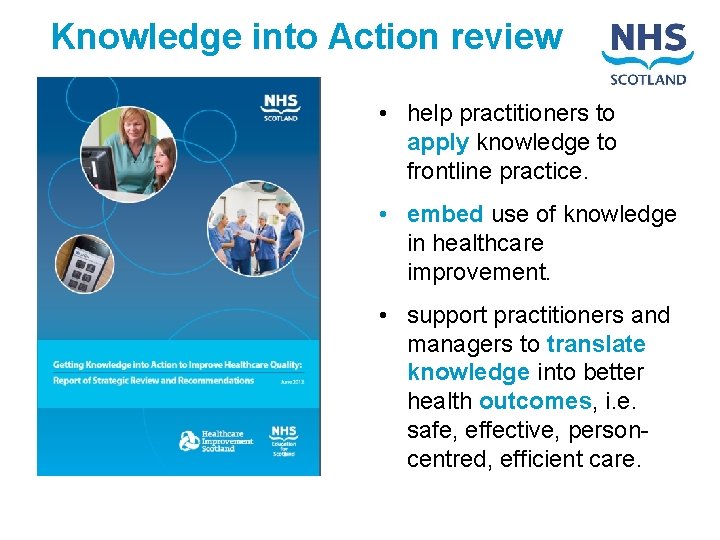
Knowledge into Action review • help practitioners to apply knowledge to frontline practice. • embed use of knowledge in healthcare improvement. • support practitioners and managers to translate knowledge into better health outcomes, i. e. safe, effective, personcentred, efficient care.
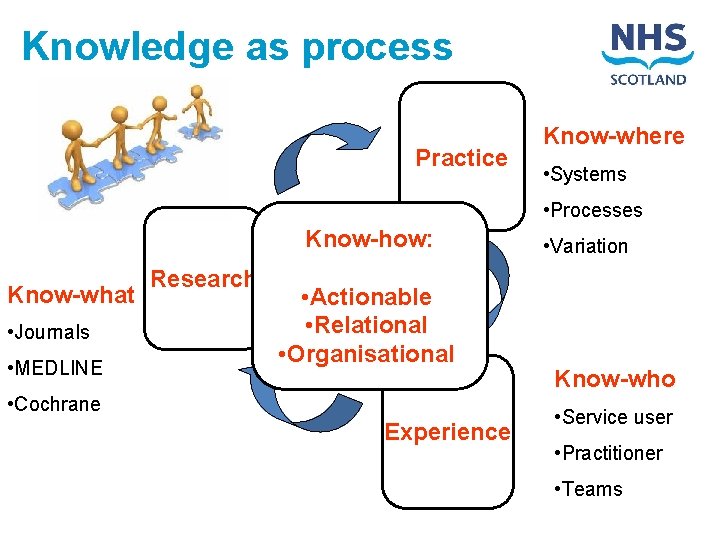
Knowledge as process Practice Know-where • Systems • Processes Know-how: Know-what • Journals • MEDLINE Research • Actionable • Relational • Organisational • Cochrane Experience • Variation Know-who • Service user • Practitioner • Teams
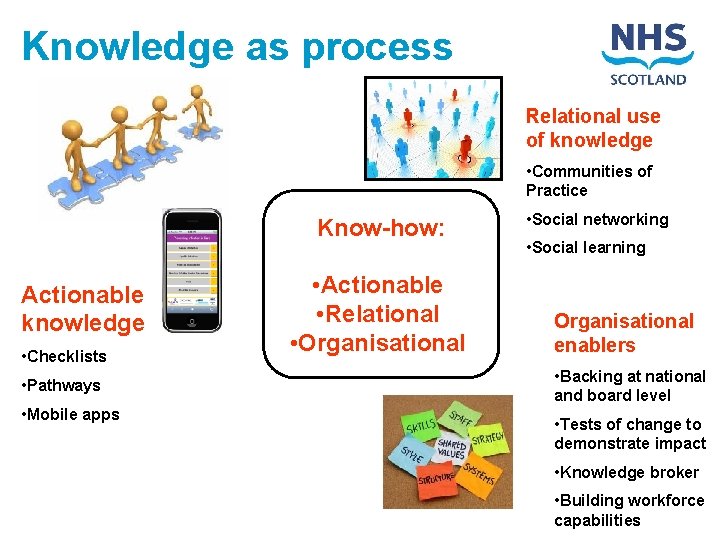
Knowledge as process Relational use of knowledge • Communities of Practice Know-how: Actionable knowledge • Checklists • Pathways • Mobile apps • Actionable • Relational • Organisational • Social networking • Social learning Organisational enablers • Backing at national and board level • Tests of change to demonstrate impact • Knowledge broker • Building workforce capabilities
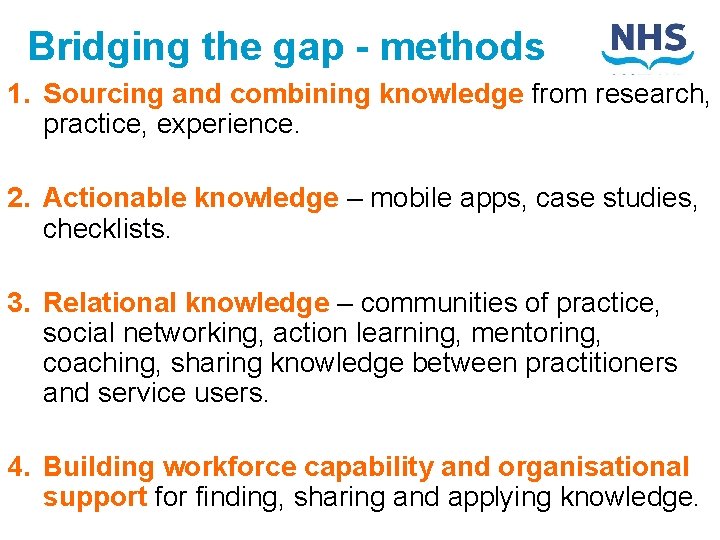
Bridging the gap - methods 1. Sourcing and combining knowledge from research, practice, experience. 2. Actionable knowledge – mobile apps, case studies, checklists. 3. Relational knowledge – communities of practice, social networking, action learning, mentoring, coaching, sharing knowledge between practitioners and service users. 4. Building workforce capability and organisational support for finding, sharing and applying knowledge.
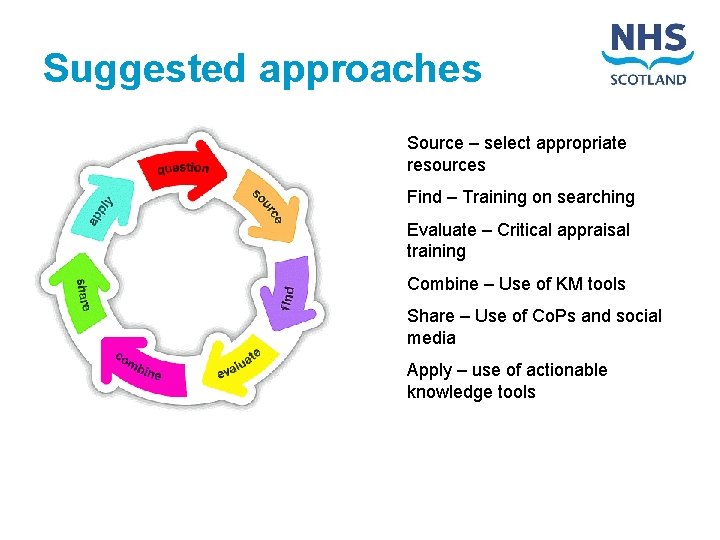
Suggested approaches Source – select appropriate resources Find – Training on searching Evaluate – Critical appraisal training Combine – Use of KM tools Share – Use of Co. Ps and social media Apply – use of actionable knowledge tools
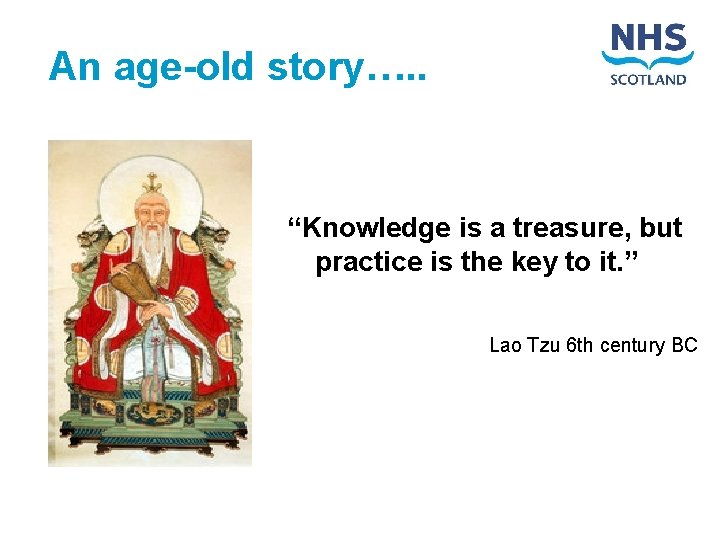
An age-old story…. . “Knowledge is a treasure, but practice is the key to it. ” Lao Tzu 6 th century BC
Summary • Knowledge into Action is a national strategy which aims to develop the skills of frontline practitioners for applying knowledge into frontline practice and improvement • This is not something new rather about embedding this approach into existing learning opportunities. • There are tools, resources and people to support this moving forward.
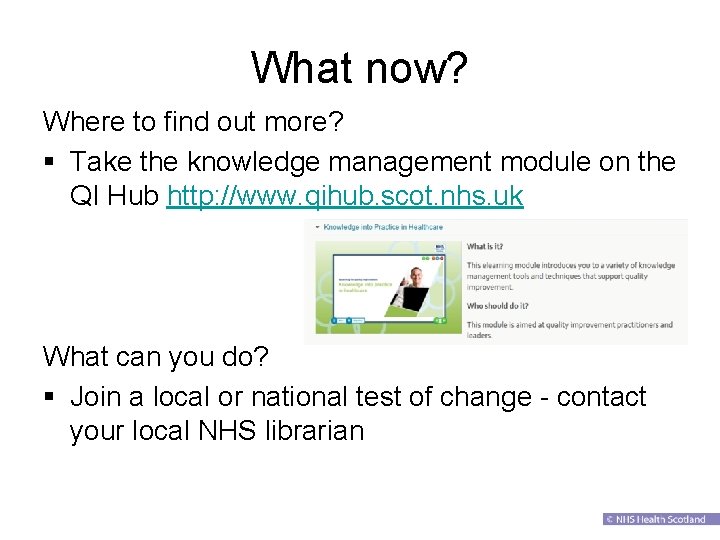
What now? Where to find out more? § Take the knowledge management module on the QI Hub http: //www. qihub. scot. nhs. uk What can you do? § Join a local or national test of change - contact your local NHS librarian
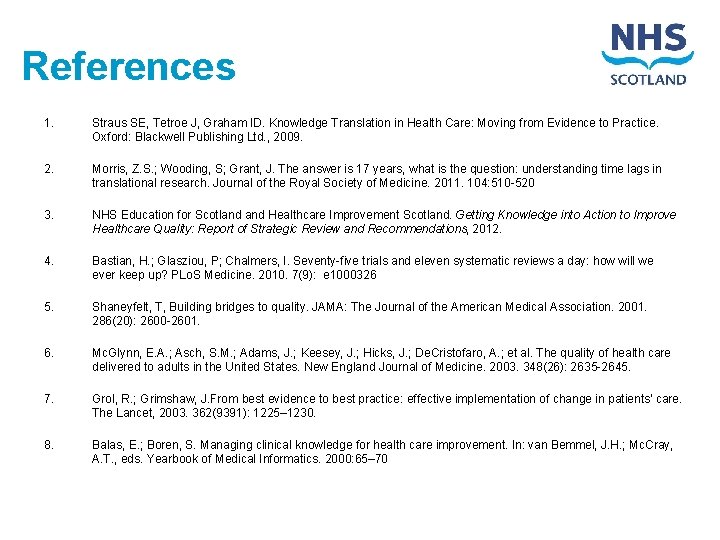
References 1. Straus SE, Tetroe J, Graham ID. Knowledge Translation in Health Care: Moving from Evidence to Practice. Oxford: Blackwell Publishing Ltd. , 2009. 2. Morris, Z. S. ; Wooding, S; Grant, J. The answer is 17 years, what is the question: understanding time lags in translational research. Journal of the Royal Society of Medicine. 2011. 104: 510 -520 3. NHS Education for Scotland Healthcare Improvement Scotland. Getting Knowledge into Action to Improve Healthcare Quality: Report of Strategic Review and Recommendations, 2012. 4. Bastian, H. ; Glasziou, P; Chalmers, I. Seventy-five trials and eleven systematic reviews a day: how will we ever keep up? PLo. S Medicine. 2010. 7(9): e 1000326 5. Shaneyfelt, T, Building bridges to quality. JAMA: The Journal of the American Medical Association. 2001. 286(20): 2600 -2601. 6. Mc. Glynn, E. A. ; Asch, S. M. ; Adams, J. ; Keesey, J. ; Hicks, J. ; De. Cristofaro, A. ; et al. The quality of health care delivered to adults in the United States. New England Journal of Medicine. 2003. 348(26): 2635 -2645. 7. Grol, R. ; Grimshaw, J. From best evidence to best practice: effective implementation of change in patients' care. The Lancet, 2003. 362(9391): 1225– 1230. 8. Balas, E. ; Boren, S. Managing clinical knowledge for health care improvement. In: van Bemmel, J. H. ; Mc. Cray, A. T. , eds. Yearbook of Medical Informatics. 2000: 65– 70