
Knowledge Broker Network Capability Framework Introduction May 2013
Knowledge Broker Network Capability Framework Introduction May 2013
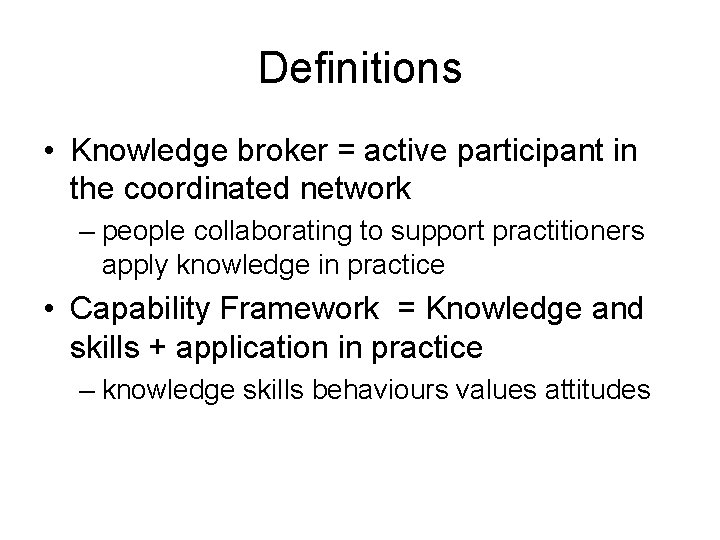
Definitions • Knowledge broker = active participant in the coordinated network – people collaborating to support practitioners apply knowledge in practice • Capability Framework = Knowledge and skills + application in practice – knowledge skills behaviours values attitudes
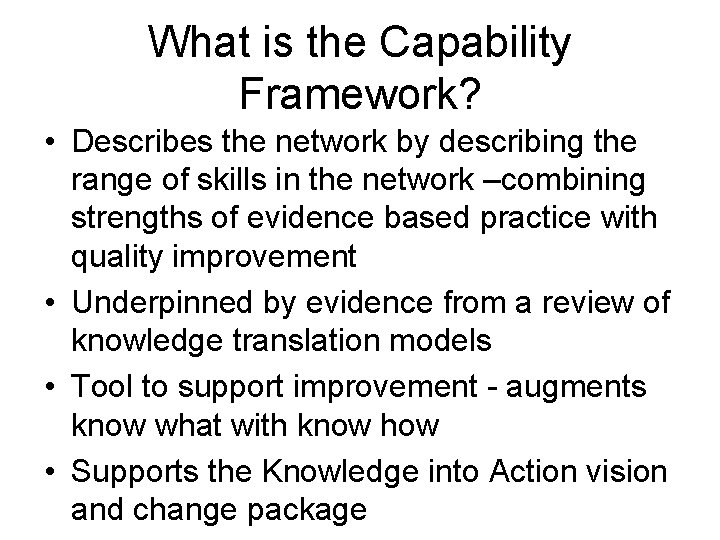
What is the Capability Framework? • Describes the network by describing the range of skills in the network –combining strengths of evidence based practice with quality improvement • Underpinned by evidence from a review of knowledge translation models • Tool to support improvement - augments know what with know how • Supports the Knowledge into Action vision and change package
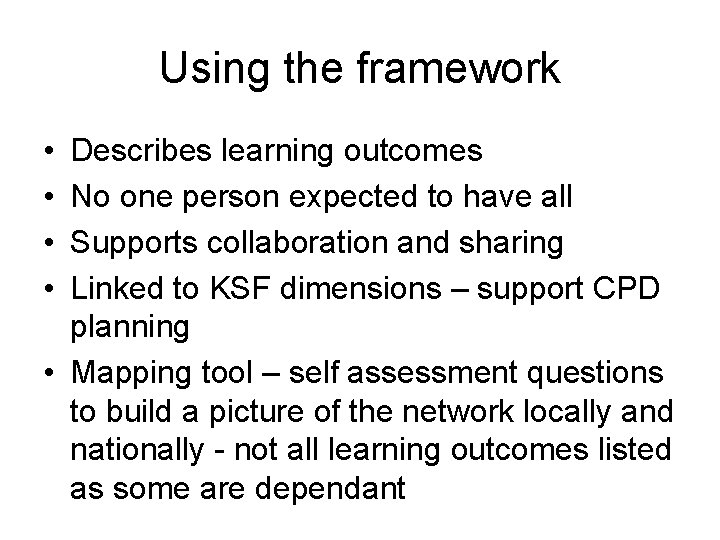
Using the framework • • Describes learning outcomes No one person expected to have all Supports collaboration and sharing Linked to KSF dimensions – support CPD planning • Mapping tool – self assessment questions to build a picture of the network locally and nationally - not all learning outcomes listed as some are dependant

K 2 A - Sourcing and synthesising knowledge from research, practice and experience Capability 3 • • Identifying needs Sourcing both explicit and tacit knowledge Combining, summarising, organising Creating new knowledge from local experiences of implementation • Reporting, sharing, disseminating
K 2 A - Delivering actionable knowledge - Capability 4 • • Defining solutions Embedding solutions Contextualising for local environment Coding and classifying
K 2 A - Facilitating social and relational use of knowledge Capability 5 • Identifying appropriate methods for person to person knowledge exchange • Facilitation skills eg support communities of practice • Use of various knowledge management techniques and tools to create connections and share • Use of social media tools

K 2 A - Building organisational capacity and capability Capability 1 • Physical library and resources • Principles of how knowledge management can support quality improvement • Information literacy and training support for end users • Leadership and change management • Quality improvement
K 2 A - Operating as a coordinated network of knowledge brokers Capability 2 • Collaborating • Coordinated processes and use of protocols, standards • Working in teams, communities and networks
Learning opportunities • Formal course • Informal activities • Signposting existing national and local opportunities • Mentoring/coaching • Applying skills in new contexts Work with managers to identify gaps in local network that service aims to fill
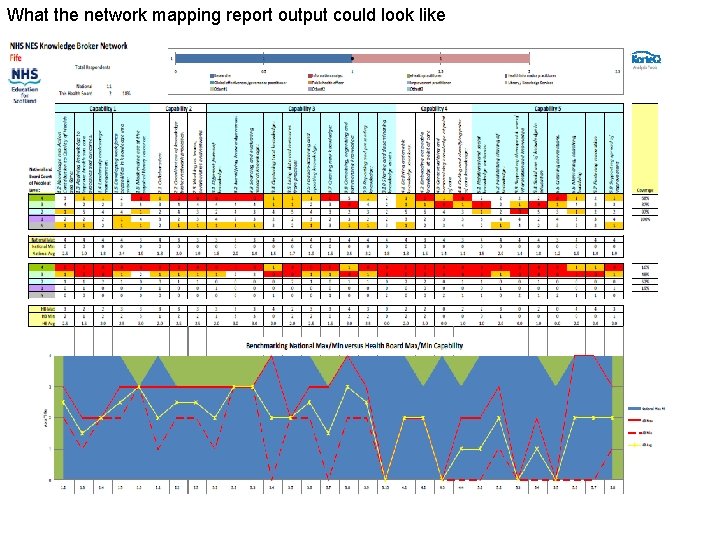
What the network mapping report output could look like
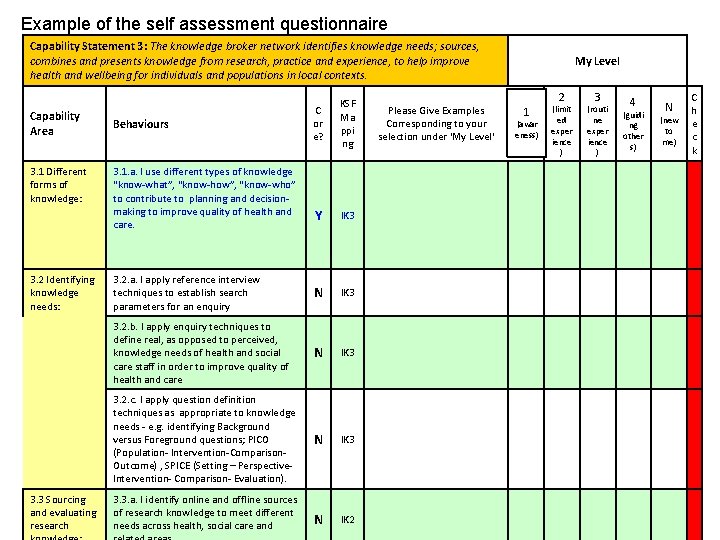
Example of the self assessment questionnaire Capability Statement 3: The knowledge broker network identifies knowledge needs; sources, combines and presents knowledge from research, practice and experience, to help improve health and wellbeing for individuals and populations in local contexts. Capability Area 3. 1 Different forms of knowledge: 3. 2 Identifying knowledge needs: 3. 3 Sourcing and evaluating research C or e? KSF Ma ppi ng Y IK 3 3. 2. a. I apply reference interview techniques to establish search parameters for an enquiry N IK 3 3. 2. b. I apply enquiry techniques to define real, as opposed to perceived, knowledge needs of health and social care staff in order to improve quality of health and care N IK 3 3. 2. c. I apply question definition techniques as appropriate to knowledge needs - e. g. identifying Background versus Foreground questions; PICO (Population- Intervention-Comparison. Outcome) , SPICE (Setting – Perspective. Intervention- Comparison- Evaluation). N IK 3 N IK 2 Behaviours 3. 1. a. I use different types of knowledge “know-what”, “know-how”, “know-who” to contribute to planning and decisionmaking to improve quality of health and care. 3. 3. a. I identify online and offline sources of research knowledge to meet different needs across health, social care and Please Give Examples Corresponding to your selection under 'My Level' My Level 2 1 (awar eness) (limit ed exper ience ) 3 (routi ne exper ience ) 4 (guidi ng other s) N (new to me) C h e c k
Next steps • Cath will contact managers about allocating codes to each member of staff • Cath will email the self assessment questionnaires to managers to circulating • Staff can complete self assessment on their own or with manager • All forms to be returned to Cath Ferguson cath. ferguson@nes. scot. nhs. uk
- Slides: 13