
Knowing our solar system In the Solar System
- Slides: 19
Knowing our solar system
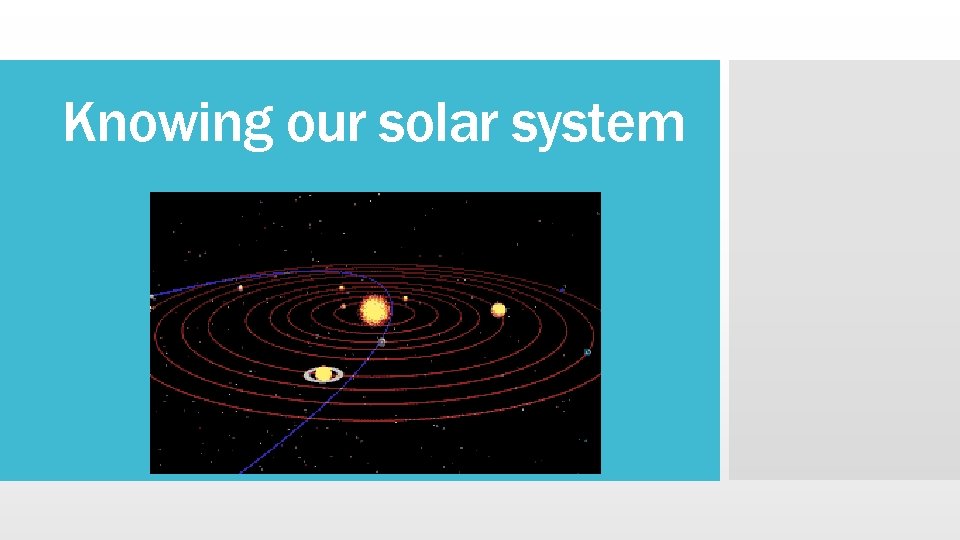
In the Solar System alone there are seven other planets (RIP, Pluto), many dwarf planets, satellites and moons, and of course, the Sun. Our solar system is in a galaxy called THE MILKY WAY. In the Milky Way is it estimated that there approximately 30 billion solar systems. We think that there are 100 billion galaxies in the universe. This means that the universe is much bigger than we can even imagine!
There are eight planets in the Solar System that all orbit the sun. Each of the planets are different: some have moons, some have rings, some are made of rock, and some are made of gas.
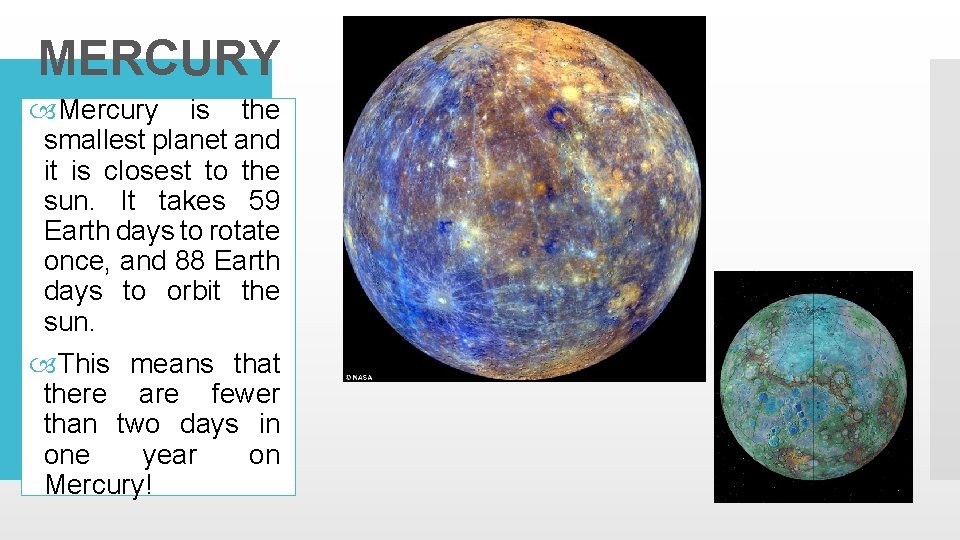
MERCURY Mercury is the smallest planet and it is closest to the sun. It takes 59 Earth days to rotate once, and 88 Earth days to orbit the sun. This means that there are fewer than two days in one year on Mercury!
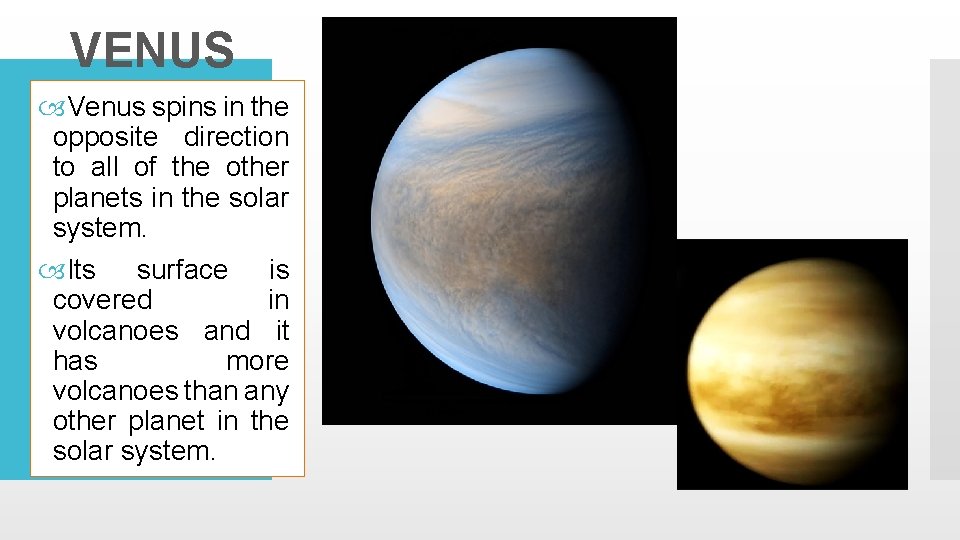
VENUS Venus spins in the opposite direction to all of the other planets in the solar system. Its surface is covered in volcanoes and it has more volcanoes than any other planet in the solar system.
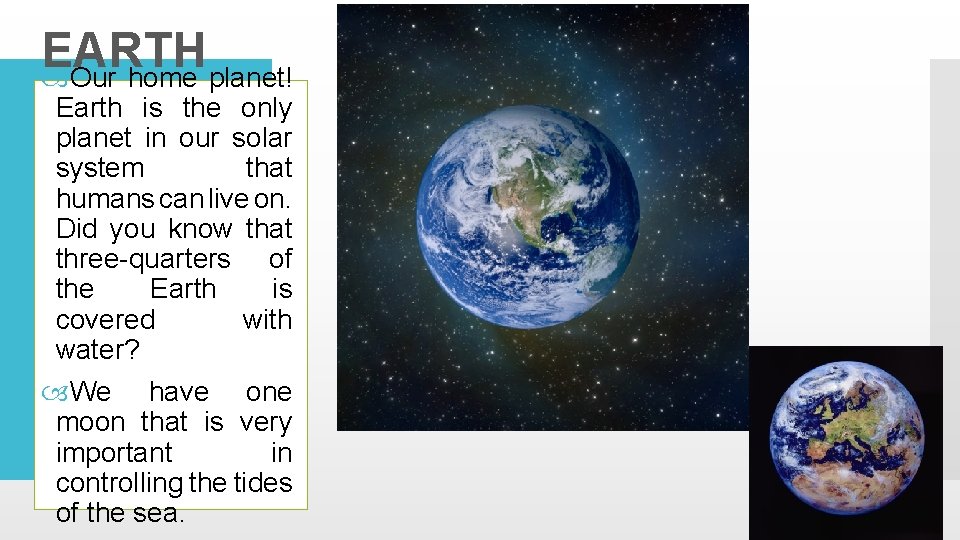
EARTH Our home planet! Earth is the only planet in our solar system that humans can live on. Did you know that three-quarters of the Earth is covered with water? We have one moon that is very important in controlling the tides of the sea.
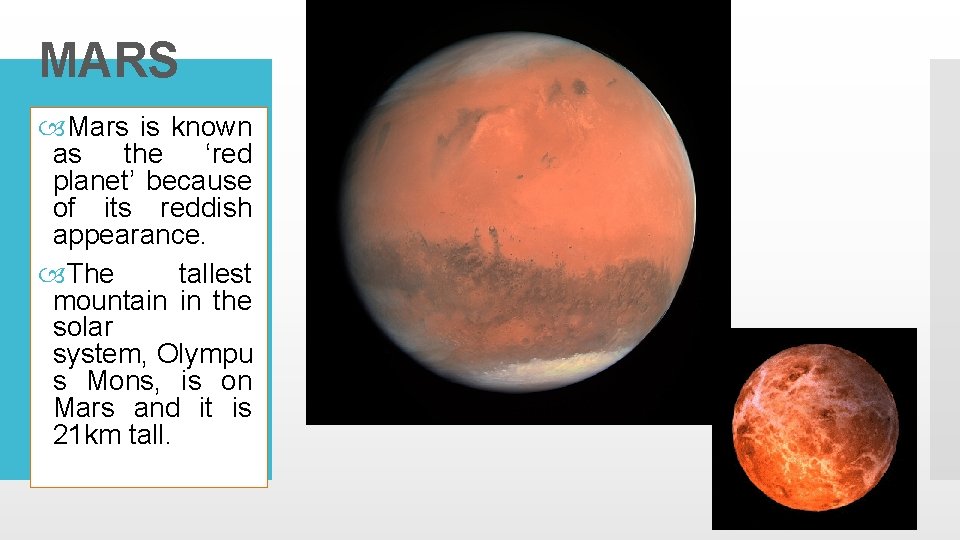
MARS Mars is known as the ‘red planet’ because of its reddish appearance. The tallest mountain in the solar system, Olympu s Mons, is on Mars and it is 21 km tall.
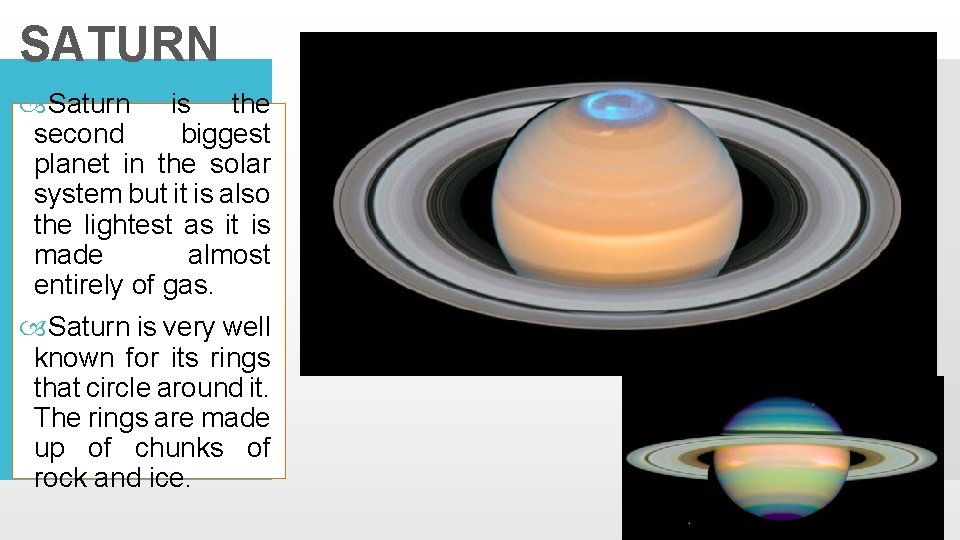
SATURN Saturn is the second biggest planet in the solar system but it is also the lightest as it is made almost entirely of gas. Saturn is very well known for its rings that circle around it. The rings are made up of chunks of rock and ice.
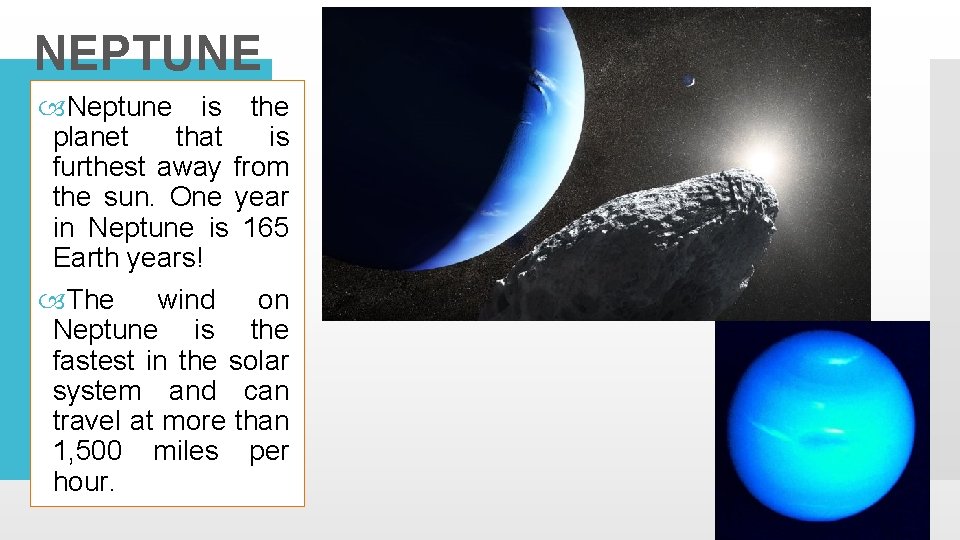
NEPTUNE Neptune is the planet that is furthest away from the sun. One year in Neptune is 165 Earth years! The wind on Neptune is the fastest in the solar system and can travel at more than 1, 500 miles per hour.
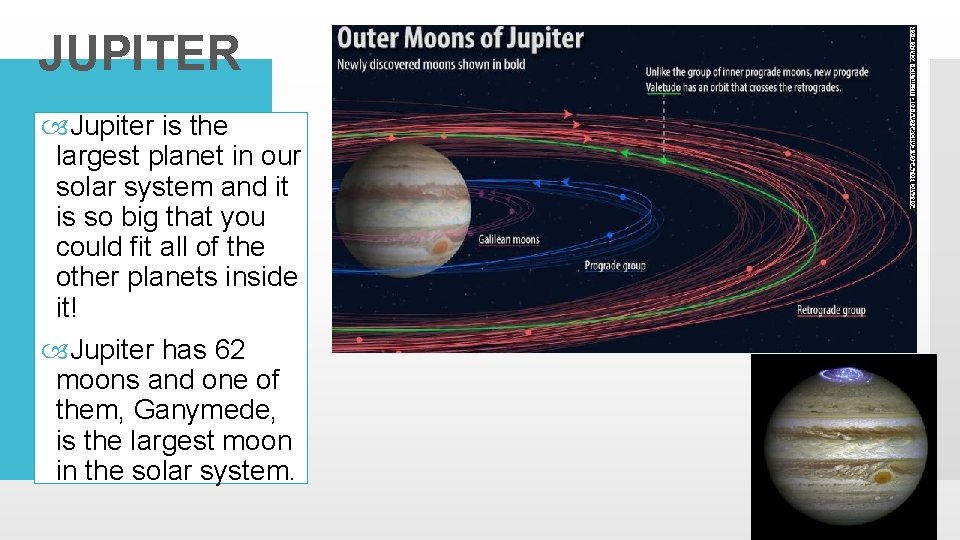
JUPITER Jupiter is the largest planet in our solar system and it is so big that you could fit all of the other planets inside it! Jupiter has 62 moons and one of them, Ganymede, is the largest moon in the solar system.
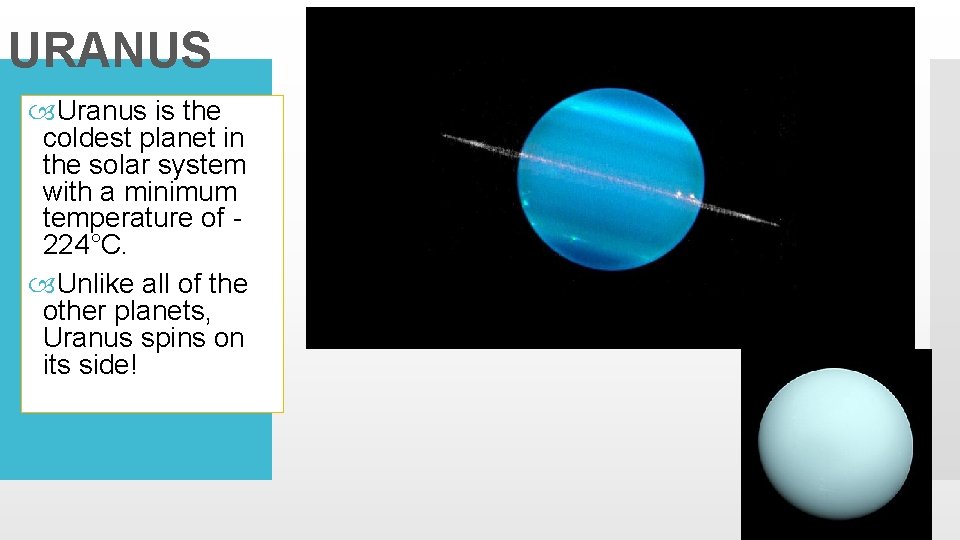
URANUS Uranus is the coldest planet in the solar system with a minimum temperature of 224°C. Unlike all of the other planets, Uranus spins on its side!
Everything in the Solar System revolves around the Sun. The Sun is a star – a massive ball of hot gas that gives off light and heat. There are eight planets that orbit around the Sun. Top 10 facts The closest planet to the Sun is Mercury, and the farthest away is Neptune. The biggest planet is Jupiter, and the smallest planet is Mercury. The Earth is the only planet that we know has creatures living on it.
The Earth rotates as it orbits the Sun. It takes one day to complete a rotation. It takes 365 days for the Earth to complete one circuit around the Sun. We call this a year. The Sun is just one of hundreds of billions of stars in the galaxy that we live in, which is called the MILKY WAY. The whole Universe has at least 100 billion galaxies in it. You are held onto the surface of the Earth by a force called GRAVITY. This is the same force that keeps the Earth and the other planets orbiting around the Sun. Not everything in the Solar system orbits directly around the Sun. The Moon orbits around the Earth.
Comets, Meteors and Asteroids
Comet, Meteor and Asteroid Vocabulary Comet: • a large body in space made of rock, ice and frozen gas Meteor: • small pieces of rock or minerals that have broken off a larger asteroid Asteroid: • a large body in space made of rock and minerals Collide: • run into or crash into Galaxy: • also known as the solar system; a system of planets, stars and moons orbiting around a Sun
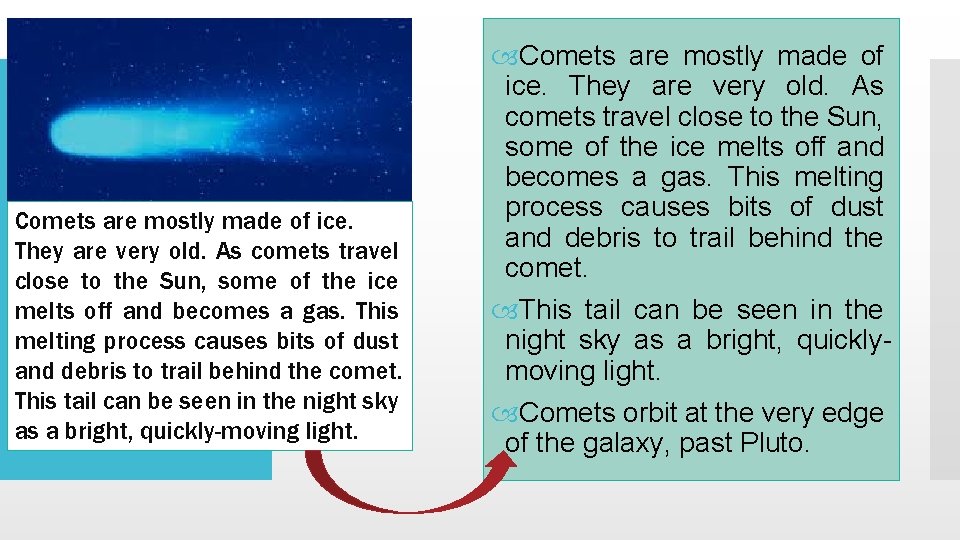
Comets are mostly made of ice. They are very old. As comets travel close to the Sun, some of the ice melts off and becomes a gas. This melting process causes bits of dust and debris to trail behind the comet. This tail can be seen in the night sky as a bright, quickly-moving light. Comets are mostly made of ice. They are very old. As comets travel close to the Sun, some of the ice melts off and becomes a gas. This melting process causes bits of dust and debris to trail behind the comet. This tail can be seen in the night sky as a bright, quicklymoving light. Comets orbit at the very edge of the galaxy, past Pluto.
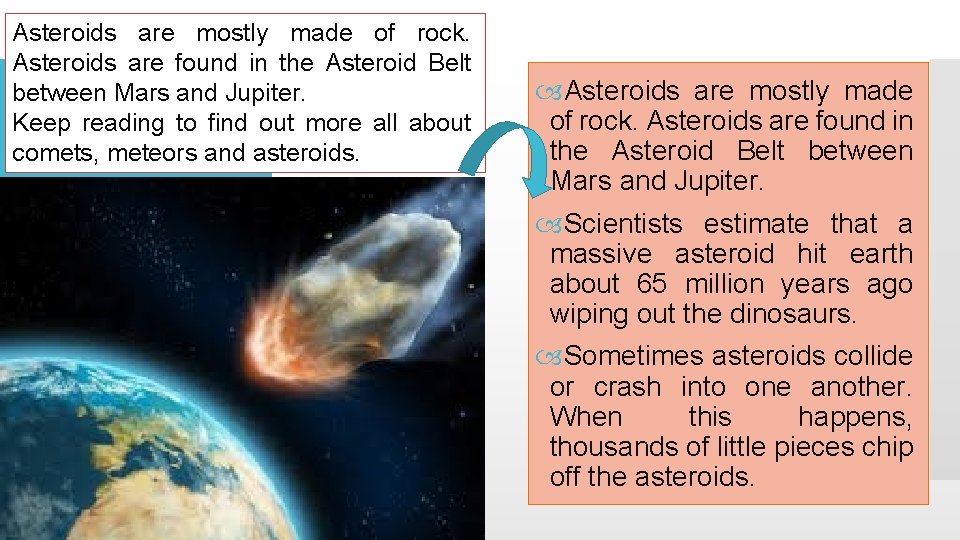
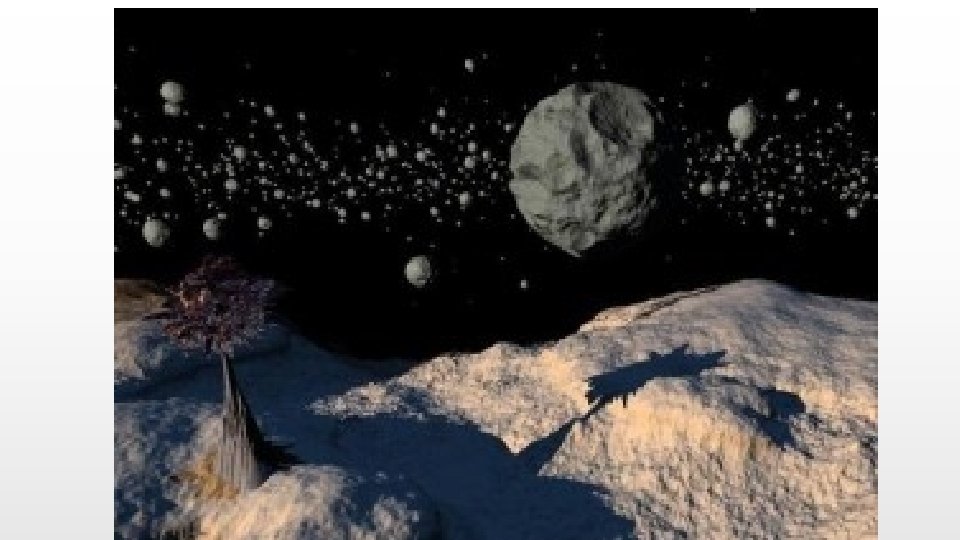
Asteroids are mostly made of rock. Asteroids are found in the Asteroid Belt between Mars and Jupiter. Keep reading to find out more all about comets, meteors and asteroids. Asteroids are mostly made of rock. Asteroids are found in the Asteroid Belt between Mars and Jupiter. Scientists estimate that a massive asteroid hit earth about 65 million years ago wiping out the dinosaurs. Sometimes asteroids collide or crash into one another. When this happens, thousands of little pieces chip off the asteroids.
These little pieces are called meteors. The meteors travel through space and occasionally become caught by a planet’s gravitational pull. Meteors enter the Earth’s atmosphere every day. Most of them burn up, but if they land on Earth, they are called meteorites. Most meteorites are small, but larger ones have landed on cars or houses, causing damage. In 2013 in area of Russia called Chelyabinsk a meteor over 20 m wide exploded in the air. The massive shock wave damaged thousands of buildings and injured over 1500 people. Luckily for the people of Chelyabinsk the meteor exploded in the air and didn’t hit the ground and explode, if it did it would have wiped out the town.