
Know the four locations fat is deposited Explain
- Slides: 29
� Know the four locations fat is deposited � Explain adipogenesis � Explain lipogenesis � Compare and contrast the different factors affecting lipid metabolism
� Fat depots – locations where fat is deposited �Visceral �Subcutaneous �Intermuscular �Intramuscular
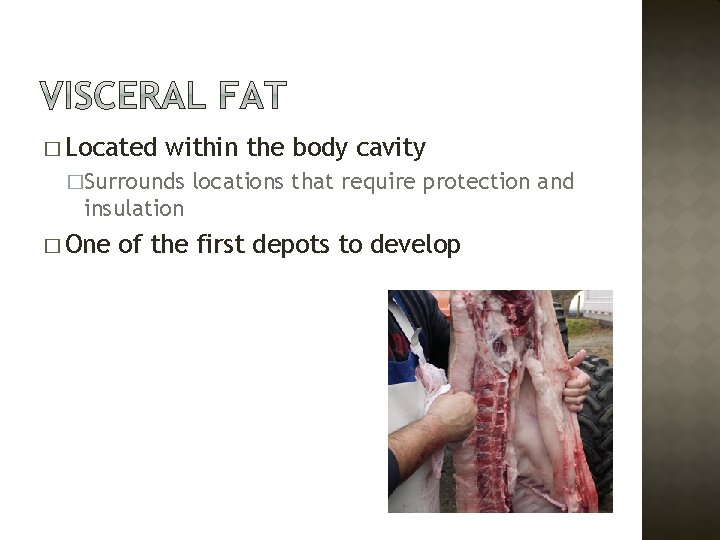
� Located within the body cavity �Surrounds locations that require protection and insulation � One of the first depots to develop
� Mesenteric �Located � Caul Fat around the intestines Fat �Thin sheet of adipose tissue contained in a large fold of connective tissue over the stomach and adjacent organs � Perirenal Fat �Protective fat around the kidneys �Also called kidney fat
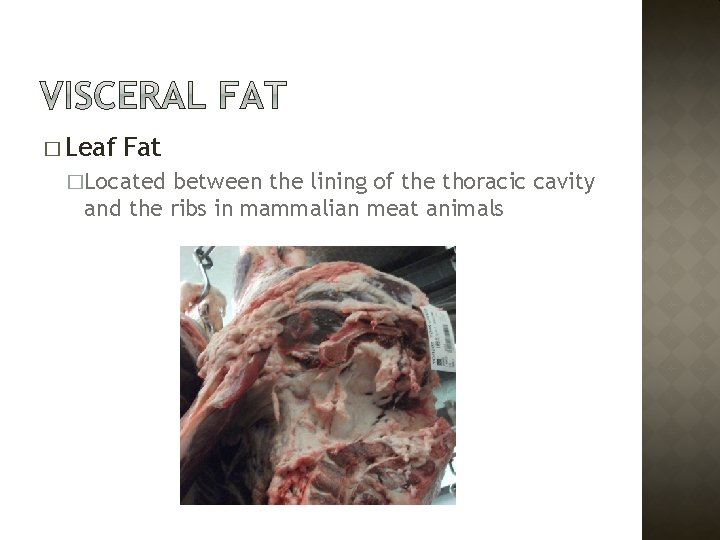
� Leaf Fat �Located between the lining of the thoracic cavity and the ribs in mammalian meat animals
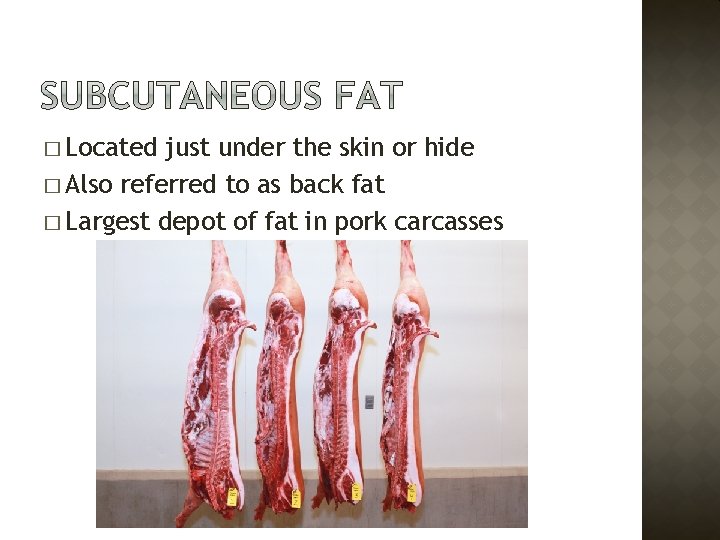
� Located just under the skin or hide � Also referred to as back fat � Largest depot of fat in pork carcasses
� Outer �Acts Layer- First to develop as insulation for the animal � Middle Layer- Second to develop �Normally thickest postnatally �Most metabolically active � Inner Layer- Last layer to develop �Small and thin �Can be difficult to detect in lean animals
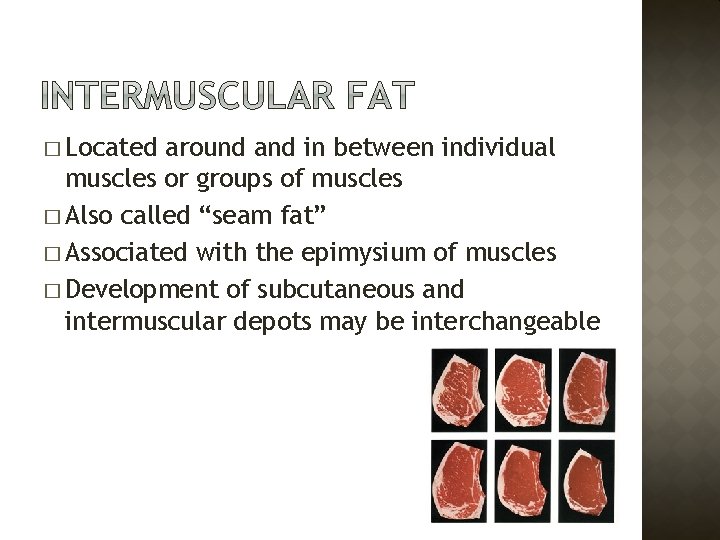
� Located around and in between individual muscles or groups of muscles � Also called “seam fat” � Associated with the epimysium of muscles � Development of subcutaneous and intermuscular depots may be interchangeable
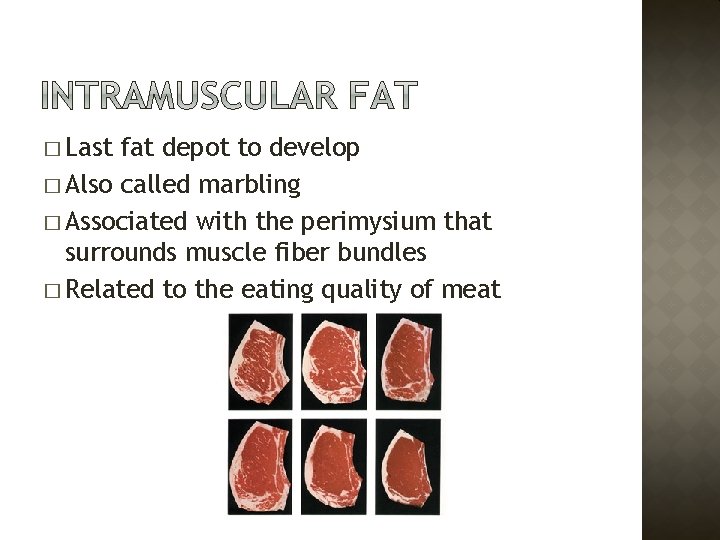
� Last fat depot to develop � Also called marbling � Associated with the perimysium that surrounds muscle fiber bundles � Related to the eating quality of meat
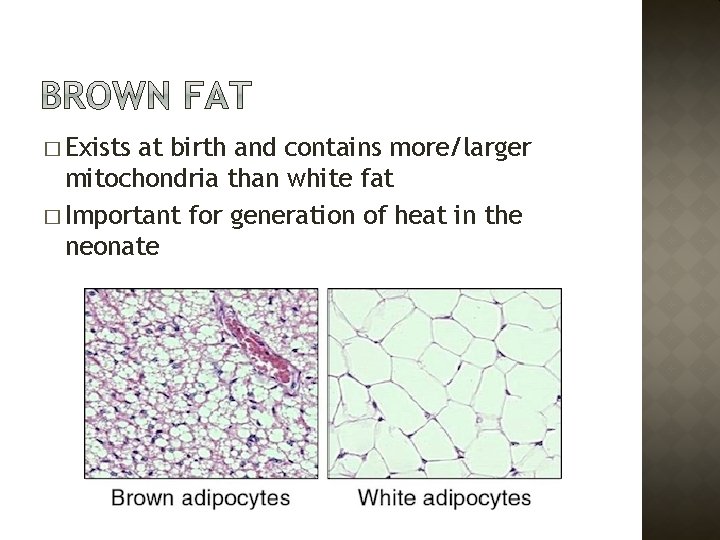
� Exists at birth and contains more/larger mitochondria than white fat � Important for generation of heat in the neonate
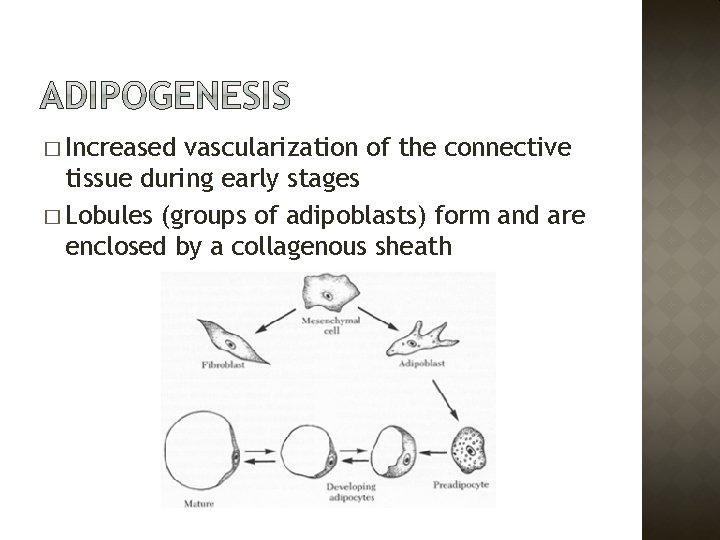
� Increased vascularization of the connective tissue during early stages � Lobules (groups of adipoblasts) form and are enclosed by a collagenous sheath
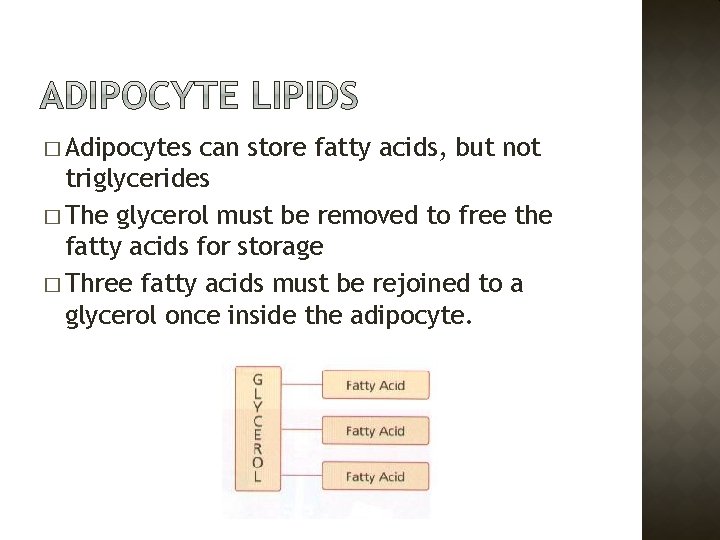
� Adipocytes can store fatty acids, but not triglycerides � The glycerol must be removed to free the fatty acids for storage � Three fatty acids must be rejoined to a glycerol once inside the adipocyte.
� Rate of fat deposition is a function of: �Absorption of FAs from the blood �FA synthesis and triglyceride formation �Lipolysis
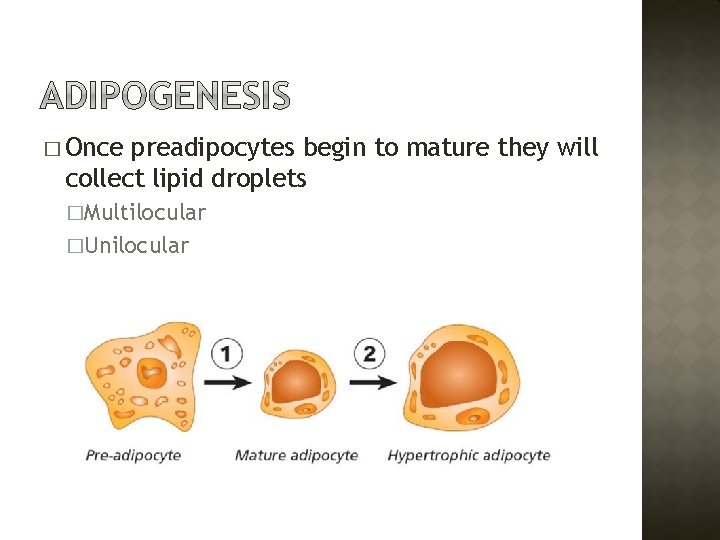
� Once preadipocytes begin to mature they will collect lipid droplets �Multilocular �Unilocular
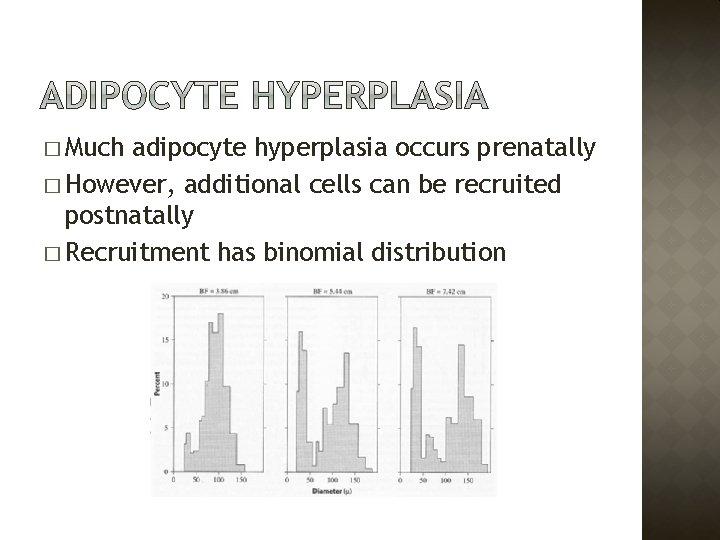
� Much adipocyte hyperplasia occurs prenatally � However, additional cells can be recruited postnatally � Recruitment has binomial distribution
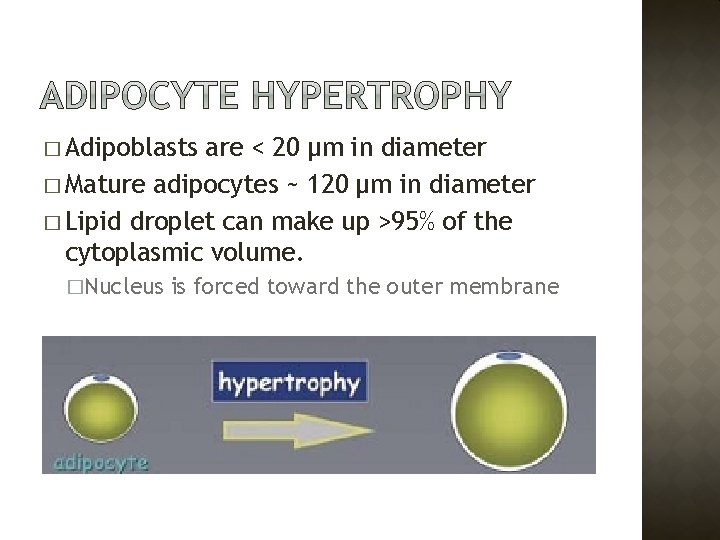
� Adipoblasts are < 20 µm in diameter � Mature adipocytes ~ 120 µm in diameter � Lipid droplet can make up >95% of the cytoplasmic volume. �Nucleus is forced toward the outer membrane
� Adipose tissue is the major site of lipogenesis in cattle, sheep, and pigs � The liver is the major site of lipogenesis in avian species
� Age � Location � Species � Genetic selection � Sex � Hormones � Nutrition � Environment
� The amount of lipid increases, as a percentage of the tissue weight, in older animals � As we enter the fattening stage of the growth curve we slow growth of other tissues, leaving more energy to be stored as fats.
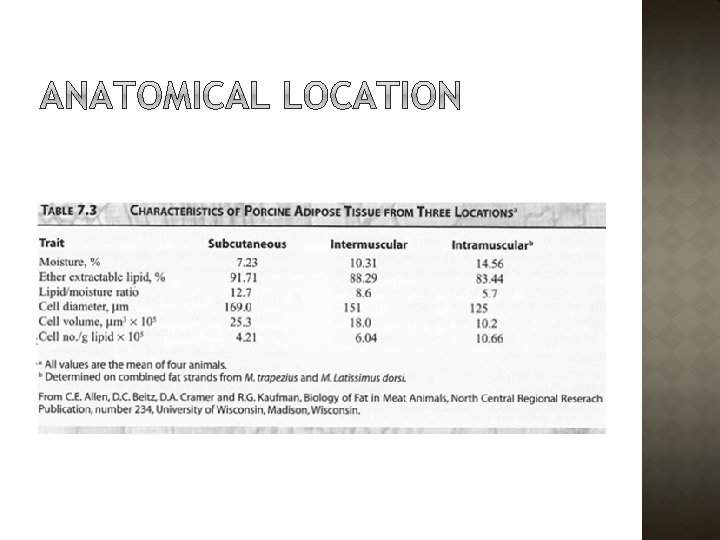
� Fat depots develop at different times �Some are larger than others based on which developed first � Intramuscular adipocytes may account for 50% of the total NUMBER of adipocytes, but may represent only 10% of the total LIPID.
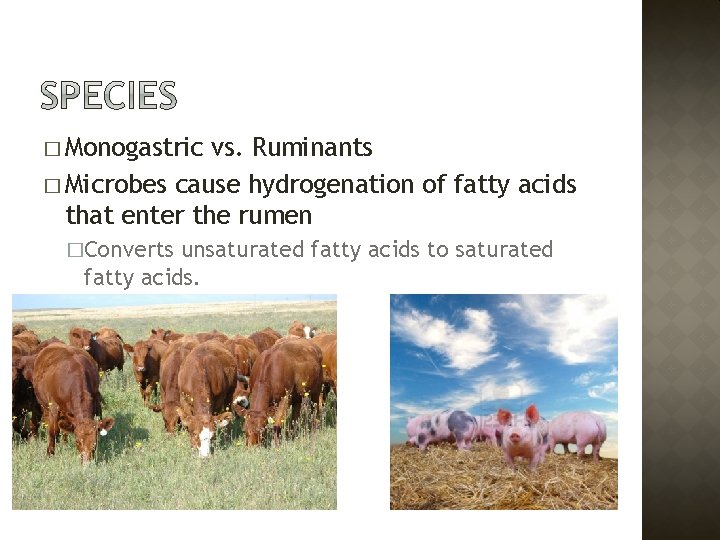
� Monogastric vs. Ruminants � Microbes cause hydrogenation of fatty acids that enter the rumen �Converts unsaturated fatty acids to saturated fatty acids.
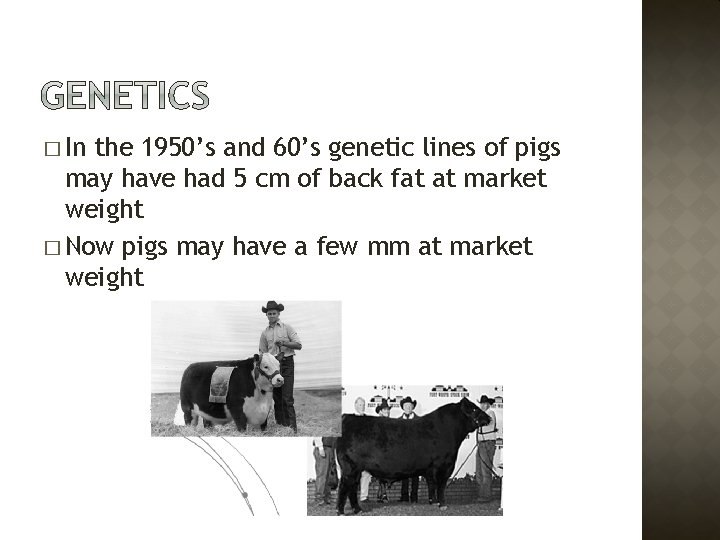
� In the 1950’s and 60’s genetic lines of pigs may have had 5 cm of back fat at market weight � Now pigs may have a few mm at market weight
� Testosterone inhibits lipid deposition. � Increased fatness seen in females is associated with a greater SIZE of adipocytes rather than a greater number. �Due to estrogenic hormones
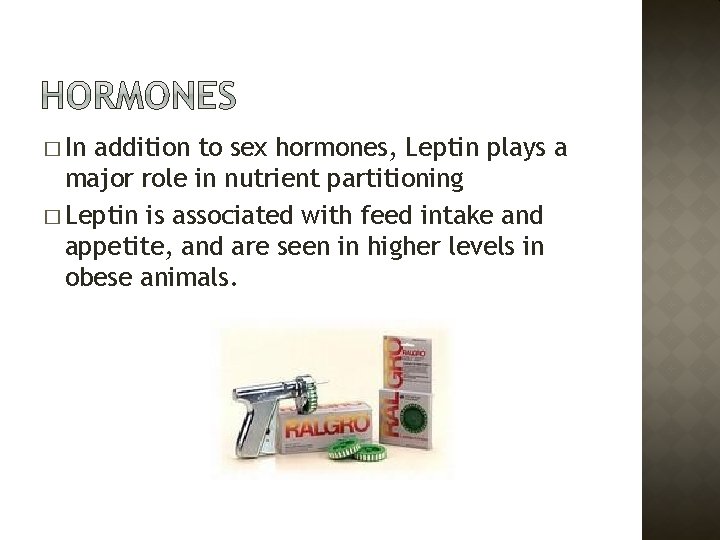
� In addition to sex hormones, Leptin plays a major role in nutrient partitioning � Leptin is associated with feed intake and appetite, and are seen in higher levels in obese animals.
� High fat diets depress FA synthesis while low fat diets increase de novo synthesis rates. � The presence of high amount of marbling generally indicates the animal was fed on a high plane of nutrition. � Diets with amino acid deficiencies often result in increased lipogenesis due to the excess energy
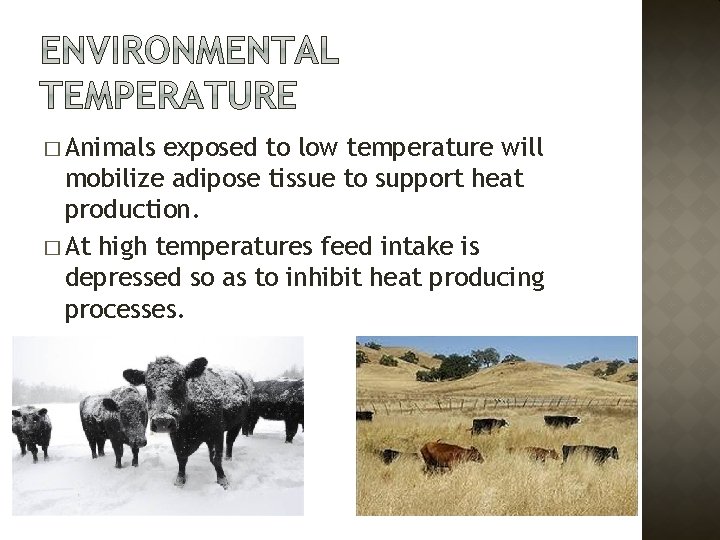
� Animals exposed to low temperature will mobilize adipose tissue to support heat production. � At high temperatures feed intake is depressed so as to inhibit heat producing processes.
� Know the four locations fat is deposited � Explain adipogenesis � Explain lipogenesis � Compare and contrast the different factors affecting lipid metabolism