
Know how to manage a patient with burns
Know how to manage a patient with burns and scalds FREC level 3 2. 5
Assessment criteria 4. 1 Classify the severity of burns and scalds 4. 2 Explain methods to treat burns and scalds involving: Dry heat Wet heat Electricity Chemicals

C ABCDE Approach Airway Breathing Obstruction due to foreign body Obstruction due to burns. Obstruction due to Anaphylaxis Asthma/ COPD Pleural Effusion Haemothorax Respiratory arrest Obstruction due to trauma Tension Pneumothorax Suspected Opioid Overdose Circulation Disability Cardiac Arrest Hypoglycaemia Hypovolemic Shock Intercranial Pressure Haemorrhage Pericardial Tamponade Seizure (Status Epilepticus) Myocardial infraction Exposure Hyperthermia Hypothermia Poisoning

4. 1 Classify the severity of burns and scalds Superficial – Red/Pink, painful, dry no blistering. Partial thickness – Red, blistered, painful and swollen. Full thickness – Black, charred, heavily blistered, nerve damage.

4. 1 Classify the severity of burns and scalds Full thickness: Note the black charring and deep burns.

4. 1 Classify the severity of burns and scalds Partial thickness: Note the blistering and dark red colouring
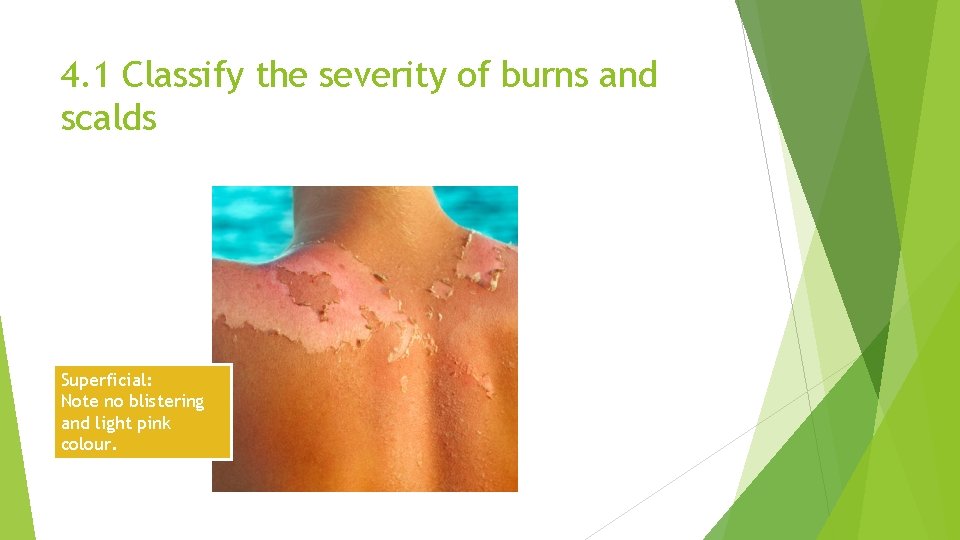
4. 1 Classify the severity of burns and scalds Superficial: Note no blistering and light pink colour.
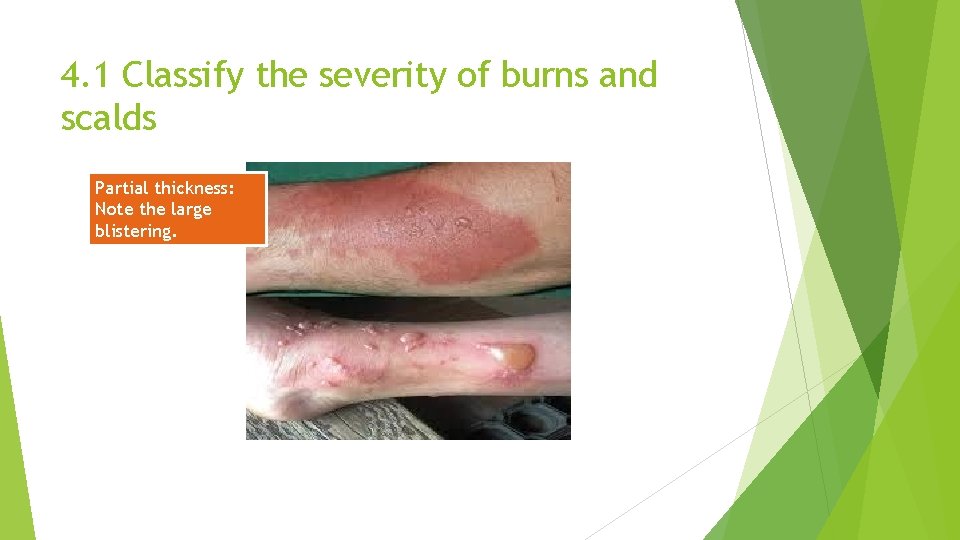
4. 1 Classify the severity of burns and scalds Partial thickness: Note the large blistering.
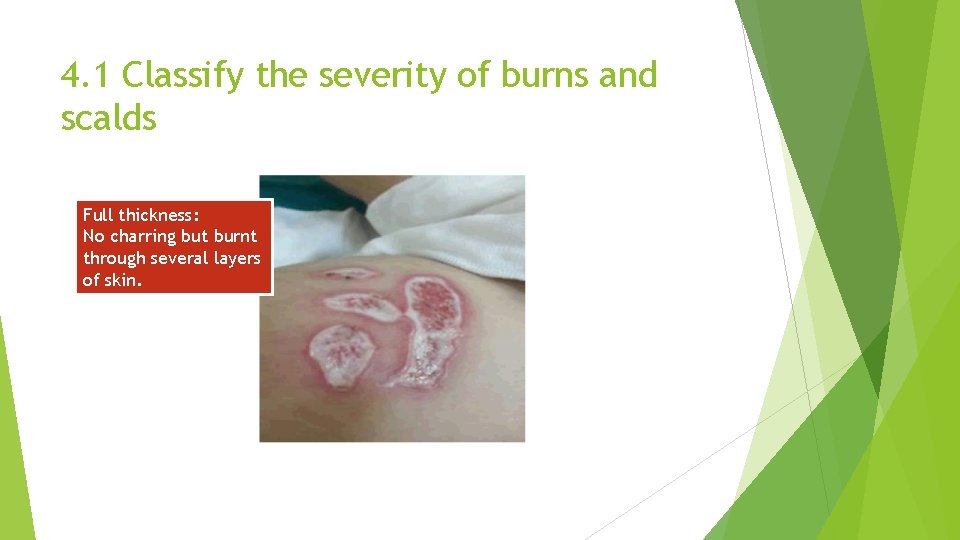
4. 1 Classify the severity of burns and scalds Full thickness: No charring but burnt through several layers of skin.
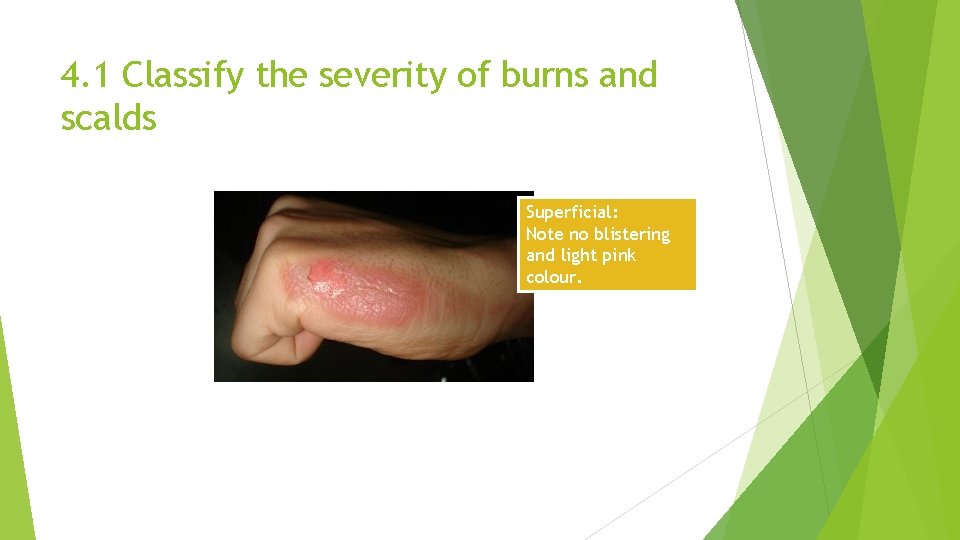
4. 1 Classify the severity of burns and scalds Superficial: Note no blistering and light pink colour.
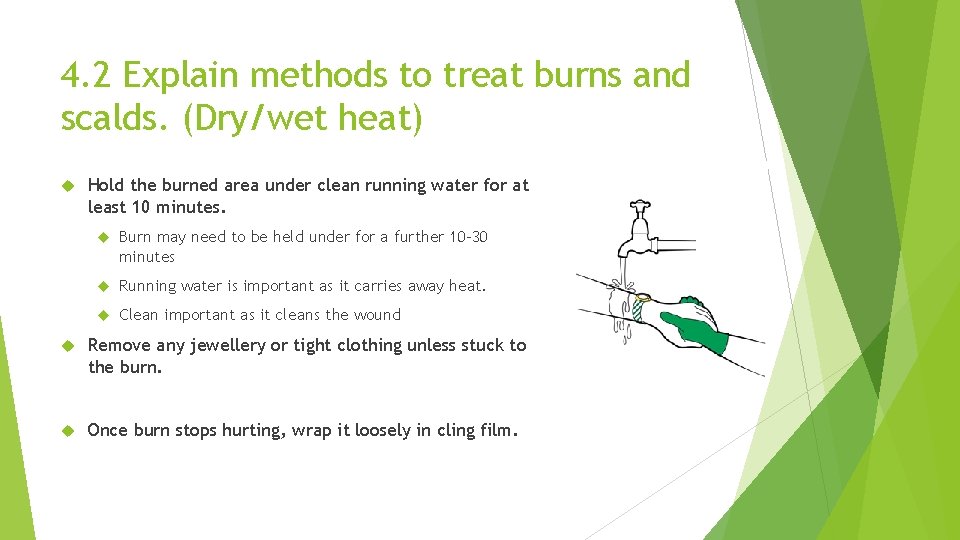
4. 2 Explain methods to treat burns and scalds. (Dry/wet heat) Hold the burned area under clean running water for at least 10 minutes. Burn may need to be held under for a further 10 -30 minutes Running water is important as it carries away heat. Clean important as it cleans the wound Remove any jewellery or tight clothing unless stuck to the burn. Once burn stops hurting, wrap it loosely in cling film.
4. 2 Explain methods to treat burns and scalds. (Electric burns) Danger! Make sure the person is no longer connected to the electricity source. Burn wounds from electrical sources often have entry and exit points, with burns in-between. Treat any visible burns normally. Remember there may be burns below the surface of the skin. Electrical burns may cause heart arrythmias, or internal damage. All electrical burns should go to hospital.
4. 2 Explain methods to treat burns and scalds. (Chemical burns) Use PPE to protect yourself. Try to rinse off any chemical or contaminated clothing. Avoid spreading the chemical further onto the patient or responder. Cut off any clothing to avoid pulling it over more skin. Avoid the contaminated water run-off. Chemical burns should be washed for at least 20 minutes All chemical burns should go to hospital.
4. 2 Explain methods to treat burns and scalds. (Serious burns) Other reasons a burn may require hospital treatment: Any burns larger than 5%. Any full thickness burns. Any burns on the face, neck, throat or inhalation. Any burns to the hands, feet or genitals. Any pregnant women or children under 5.
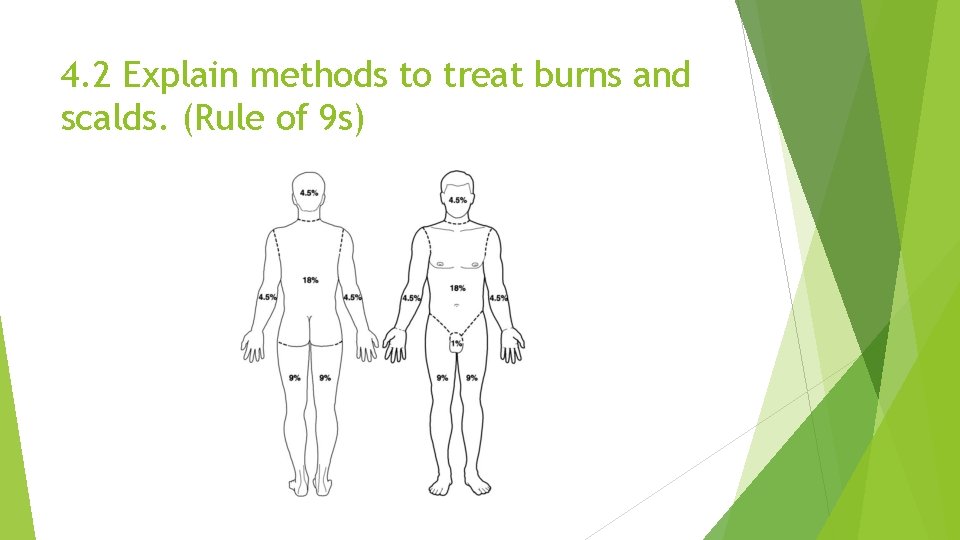
4. 2 Explain methods to treat burns and scalds. (Rule of 9 s)
Assessment criteria 4. 1 Classify the severity of burns and scalds 4. 2 Explain methods to treat burns and scalds involving: Dry heat Wet heat Electricity Chemicals
- Slides: 16