
Know about alcohol Know your units Most people
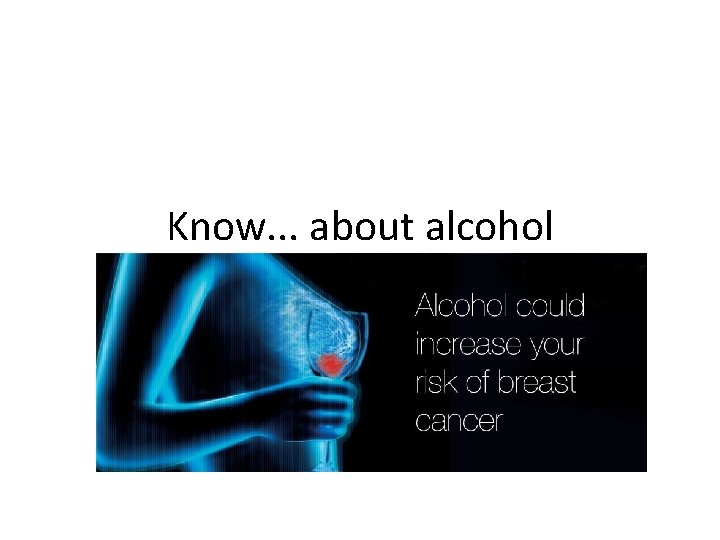
Know. . . about alcohol
Know… your units • • • Most people accept that too much alcohol can be bad for you. But do you know how much is too much? What's recommended? Drinking guidelines have been developed for people over 18 years of age, based on medical advice. Men It is recommended that men drink no more than 3 to 4 units of alcohol a day and no more than 21 units over the course of the week. Women It is recommended that women drink no more than 2 to 3 units of alcohol a day and no more than 14 units over the course of the week. Remember, for each unit you drink over the daily limit, the risk to your health increases. It's important to spread the units throughout the week – you can't ‘save up’ your units for the weekend or a party.
Know… about binge drinking • • • Many people think ‘binge drinking’ is when a person drinks continually, possibly for a couple of days or more, and gives up other activities and responsibilities, including work and family. We've all heard people saying things like: A binge is when you drink for three or four days constantly. Bingeing is disappearing at the weekend and being found in the pub drunk all the time. When you binge, you drink to the point where you don’t remember anything. Actually, binge drinking is: a man drinking 10 or more units of alcohol in one session (as little as five pints of normal strength beer); a woman drinking seven or more units of alcohol in one session (eg three small glasses of wine and a couple of vodkas). Health experts have determined that drinking above these levels can be harmful to your health. And if you think about it… many of us actually binge drink regularly at weekends without realising! Binge drinking doesn't even mean you have to be drunk – some people who drink regularly would not be drunk at these levels, while others would be very drunk indeed. Binge drinking is associated with particular health risks, even if you drink less than your weekly limit (21 units for men or 14 units for women).
Know… about mixing drugs and alcohol • • • • Mixing alcohol with drugs increases the risk of dangerous side effects. The impact of taking illegal drugs is always unpredictable and if mixed with alcohol effects can range from nausea to death. Know about… mixing alcohol and amphetamines Taking amphetamines speeds up heart rate, breathing and blood pressure. A combination of alcohol and amphetamines will put pressure on your heart and could cause death. Amphetamines can also raise your body temperature and cause dehydration. Dehydration will worsen if alcohol is added to the mix. Amphetamines can make you feel like you have more energy and confidence but can also when combined with alcohol, make you aggressive and paranoid. Know about… mixing alcohol and cannabis Using alcohol and cannabis together can lead to the cannabis having a much stronger effect than it would normally have. Side effects can be physical and psychological. When using both alcohol and cannabis together you may experience, nausea, vomiting, dizziness, paranoia or panic. Know about… mixing alcohol and cocaine People often take cocaine when they are drinking because they think it helps them keep going or sober up. In fact it is dangerous to mix cocaine and alcohol. When both cocaine and alcohol enter into the bloodstream they form a toxic substance known as cocaethylene, which is more toxic than either drug alone. It has been linked with damage to the liver and can cause fatal heart damage. Mixing cocaine and alcohol can lead to aggressive and violent behaviour. Know about… mixing alcohol and ecstasy (MDMA) Both alcohol and ecstasy will dehydrate you and taking a combination of both means you will be at risk of overheating and becoming dangerously dehydrated. The combination of alcohol and ecstasy puts pressure on the liver and kidneys. Know about… mixing alcohol and heroin Heroin slows down your heart rate and breathing. The likelihood of overdose increases when alcohol and heroin are taken together. Know about alcohol… and legal highs Because so called ‘legal highs’ are relatively new there is little known about them. Negative side effects can include nose bleeds, heart palpitations and, limbs turning blue or changes to behaviour and personality. Some of the drugs are stimulants and carry similar risks associated with cocaine and ecstasy including seizures and fits. - See more at: http: //www. knowyourlimits. info/know%E 2%80%A 6 -about-mixing-drugs-and-alcohol#sthash. f 62 VCm. Eb. dpuf

Know… about women and alcohol • • • Although many of the harmful effects of alcohol are experienced by both men and women, research shows that women may be particularly vulnerable in the following areas: Breast cancer A global study of women’s drinking behaviour has found that alcohol could increase your risk of breast cancer. The more you drink, the greater the risk. Breast cancer is one of the most common types of cancer in women. In Northern Ireland, breast cancer in women has steadily increased from 774 cases in 1993 to 1, 266 in 2011. Scientists think the link between alcohol and breast cancer could be down to the effect alcohol has on our sex hormones. Drinking alcohol changes your body’s hormone levels, including the female sex hormone oestrogen. Oestrogen is essential for normal sexual development and the functioning of female reproductive organs. It also helps maintain healthy bones and a healthy heart. But this hormone can also increase the risk of breast cancer and is known to stimulate the growth of many breast cancers. Breast cancer is one of the leading causes of death among women. As far as the risk of getting breast cancer is concerned, the more you drink, the greater the risk. There are other risk factors, some of which we have no control over, but alcohol is one of the risk factors we can control. Liver Alcohol has a more severe effect on a woman’s liver than on a man’s. As well as being unable to ‘break down’ alcohol as quickly as a man’s liver, a woman’s liver takes longer to repair itself when damaged. Regularly drinking more than the daily recommended guidelines can cause serious liver damage. Liver disease is sometimes referred to as a ‘silent killer’. It takes years to fully develop and there are usually no symptoms until you reach the advanced stages, so people may have the disease for years without knowing it. By that stage, the damage has already been done. -
Know… about conception and pregnancy • • • • Studies have shown that alcohol can reduce the chance of becoming pregnant. Even women who have five or less drinks a week may be less likely to become pregnant. The best advice for couples trying to conceive is to avoid alcohol completely as it can affect the quality of the egg and sperm before conception. Although drinking large amounts of alcohol over a period of time can result in irregular periods or stop them altogether, you could still get pregnant. During pregnancy, alcohol is known to have the potential to produce birth defects in a developing embryo or fetus. If a woman drinks during pregnancy, the alcohol passes quickly through the placenta into the bloodstream of the baby. The baby cannot break down and get rid of alcohol in the way adults do. As a result, the alcohol level in the baby’s blood can be higher and remain elevated for longer than in the mother’s blood. Drinking during pregnancy can lead to fetal alcohol syndrome. This is the leading known cause of mental retardation and birth defects, but is 100% preventable by avoiding alcohol during pregnancy. Drinking alcohol during pregnancy can affect: the way the baby develops in the womb; the baby’s health at birth; the baby’s susceptibility to illness in infancy, childhood, adolescence and adult life; the child’s ability to learn. Drinking heavily before and during pregnancy can increase your risk of early miscarriage. Government guidelines recommend that pregnant women should avoid drinking alcohol. If you do choose to drink, to minimise the risk to your baby, you are advised not to drink more than one or two units of alcohol once or twice a week and should not get drunk. These guidelines also apply to women who are breastfeeding. For more information visit www. breastfedbabies. org

Know… about underage drinking • • • • • • over half of young people aged between 11 and 16 in Northern Ireland say they’ve had an alcoholic drink at some point in their lives. If you are a parent the subject of alcohol is likely to arise as your child matures. You may think that you don’t have influence on your child, but parents often underestimate the influence that they have on their children. Research has shown that children develop ideas and attitudes about alcohol from an early age; parents and carers help to shape these attitudes and can therefore play a key role in promoting a responsible attitude to alcohol. Research indicates that the earlier a child starts drinking, the higher his or her risk of serious alcohol-related problem later in life. Other risks associated with alcohol you should also be aware of include: During late adolescence the brain is still growing. There are parts that will not be fully developed until early 20 s. The part of the brain that is involved in planning and judgment matures later, as well as the part relating to long-term memory and learning. By drinking, young people could prevent these parts of the brain developing properly. Young people are generally smaller and weigh less than adults, so they feel the effects of alcohol more quickly and for longer. Young people may also be less able to judge or control their drinking. Alcohol increases the risk of depression. Alcohol can reduce your child’s inhibitions and make it more likely that they would do things that are out of character. They could get involved in anti-social/criminal behaviour such as fights, damaging property or causing annoyance within a community. Tips on talking to you child about alcohol Do make the first move and bring up the topic of alcohol; take time to listen to what your child has to say; respect your child’s views, if you want the same in return; discuss the risks associated with drinking alcohol; discuss possible consequences of their actions and support them to make the right choices; think about your own drinking and the influence this can have on your child’s behaviour. Don't assume that your child doesn’t want to talk – not talking to your child about alcohol can be interpreted as you approving of them drinking; assume they already know everything; interrupt or be judgemental even if you don’t agree with their opinion; say one thing to your child but behave differently yourself.
Know… about the impact of alcohol on family • • • Substance misuse can have a major impact on family life. The effects of substance misuse by a parent or carer on children can be significant and long-lasting. You don’t have to be a dependant drinker for children and relationships in the home to be affected. The precise number of children affected by parental substance misuse is not known. The current estimate is that about 40, 000 children in Northern Ireland are living with a parent who misuses alcohol. 1 When we talk about alcohol misuse we generally focus on the person who is directly affected, and on providing support and treatment for him or her. However, it is important to realise that the lives of others – children and other family members, friends, the community as a whole - can also be affected by drinkers’ behaviour. The harm to children comes in many forms and includes: Parents may not be looking after them as well as they could; the child’s school life can be disrupted, eg, by being late for, or absent from, school or submitting poor, or no, homework. Children may not feel comfortable bringing friends home and may become isolated. Older children may take on roles beyond their age: caring for younger siblings and looking after the home. Some will experience emotional and physical abuse and neglect. Children can also be affected emotionally by the strain on relationships in the home. Sadly, while under the influence of alcohol, their parents may have limited awareness of the impact their behaviour has on their children. For parents, learning to deal with their substance misuse, the realisation that their actions have an impact on their children can be a real motivator to address their problems. If you feel you have a problem with alcohol, seek help. Do it for the sake of your children and for yourself. If you are a child or young person in this situation, it is important to tell somebody. For further information on getting help go to: - See more at: http: //www. knowyourlimits. info/know%E 2%80%A 6 -about-impact-alcohol-family#sthash. N 4 Tcw. Be. L. dpuf
Know… about alcohol and older people • • • • • • Alcohol can have a greater effect on our bodies as we get older. About a third of older people with alcohol problems develop them for the first time in later life. As people get older, their bodies change. Alcohol is broken down more slowly, and they become more sensitive to the effects of alcohol. Therefore, if people continue to drink the same amount of alcohol, as they get older, it is likely to affect them more. It is important for people as they get older to be aware of how much they are drinking and to think about drinking less. Major changes in our life can lead to our drinking levels creeping up without us realising. These life changes include: bereavement; physical ill-health; becoming a carer; loneliness; difficulty getting around; social isolation; changes in life patterns, eg no longer working; unhappiness or depression. Problem drinking in older people is often hidden and the symptoms can be mistaken for a physical or mental health problem. For older people, it is important to set clear drinking limits. Older people who drink too much are more at risk of a range of both physical and mental health issues. These include: accidents; stroke; heart disease; cancer; depression; confusion or dementia. The booklet ‘Alcohol, drugs and older people’ has lots more information on the issues. It sets out the risks of drinking too much alcohol. It also highlights the risks associated with misusing drugs, in particular prescription and over-thecounter medicines. It also has information on how those concerned about their alcohol or drug use can get support. It was produced by the Public Health Agency (PHA) in partnership with the Belfast Health Development Unit (BHDU), Addiction NI and Drink Think. - See more at: http: //www. knowyourlimits. info/know%E 2%80%A 6 -about-alcohol-and-older-people#sthash. g. Nc 7 WJly. dpuf
Know… when not to drink • • • Drinking more than the recommended limit can be harmful, but there also times when it’s better not to drink at all: When driving. There is NO safe limit for drinking and driving. Never drink and drive. Also remember that someone who drinks a lot in the evening may still have alcohol in their bloodstream the next morning. For more information on this, visit the DOE Road Safety website at www. doeni. gov. uk/roadsafety When pregnant. When sleeping with your baby. Sometimes parents decide to bring their baby into bed for feeding and settling at night. In such circumstances, even two units of alcohol will increase the risk of sudden infant death syndrome (SIDS) or overlaying (rolling over and smothering) your baby. Falling asleep with your baby on a sofa after drinking is particularly dangerous. Just as you wouldn’t get into a car and drive if you’ve been drinking, don’t get into bed with your baby if you’ve been drinking. When on medication. Before or when operating machinery. Alcohol slows reaction times, affects vision and balance, and makes bodily movements harder to control. Avoid activities that require physical coordination or quick response. When working with electrical equipment or ladders. When taking part in potentially risky activities such as swimming and other competitive sports. -
Know… your own drinking • • • it's worth giving some thought to your own pattern of drinking and how you can manage it so you enjoy alcohol safely. Tips for managing your drinking Eat before or while drinking and avoid salty snacks, which make you thirsty. Be assertive – don’t be pressured into drinking more than you want or intend to. Know your limits and stick to them. Stay busy – don't just sit and drink. Dance or have a game of pool if you're at a pub. Try not to confuse large measures of alcohol with standard measures, eg a glass of wine served at a party or at home may be much larger than the standard 125 mls. Keep track of your drinks and don't let people top up your drink until it's finished. Try alternating alcoholic drinks with water or other non-alcoholic drinks. Add plenty of mixer to your drinks to make them last longer. Avoid rounds, ‘shouts’ and kitties – drink at your own pace, not someone else's. Drink slowly – take sips not gulps. - See more at: http: //www. knowyourlimits. info/know%E 2%80%A 6 -your-owndrinking#sthash. H 57 k. Zz. Bx. dpuf
Drinking myths • • • • Don't believe everything you hear about alcohol. Here's some help with those frequently aired myths. Alcohol is good for the heart Research shows that moderate drinking (one or two units of alcohol a day) may reduce the risk of developing heart disease ONLY for men aged over 40 years or women who've been through menopause. There is NO evidence that non-drinkers should start drinking alcohol. Alcohol cheers me up Drinking too much tends to make you focus on your problems rather than forget them. Alcohol is a depressant and, in the long run, could make it more difficult for you to cope with any problems you already have. Drinking too much could also lead to new problems, such as illness, an accident or financial difficulties. Beer will make me less drunk than spirits One unit of beer contains the same amount of alcohol as one unit of spirits (but various drinks may affect people's moods differently). Drinking coffee will sober me up Drinking coffee will make you a ‘wide awake’ drunk. Caffeine in coffee is a stimulant, so you might feel more alert, but it does not make you sober. I'll be fine in the morning It takes approximately one hour for your liver to process (metabolise) one unit of alcohol. Sleep will not affect this and you will not necessarily be sober in the morning. This depends on the number of units you drank the night before. You can still be over the legal drink-driving limit the next morning. I'll be okay if I drink plenty of water before I go to bed This may reduce the symptoms of a hangover by preventing dehydration, but it won't make you any less drunk or protect you from the damaging effects of alcohol. Alcohol-related problems are mostly caused by ‘alcoholics’ Immediate problems like motor accidents, violent assaults and accidental injury are mostly caused by moderate drinkers who occasionally overdo it. - See more at: http: //www. knowyourlimits. info/know%E 2%80%A 6 -your-own-drinking#sthash. H 57 k. Zz. Bx. dpuf
Know… where to get help • Alcohol directories of services • Each of the Northern Ireland Drug and Alcohol Coordination Teams (DACTs) has produced a directory of services available in their area. To find out what services are available in your area • - See more at: http: //www. knowyourlimits. info/know%E 2%80%A 6 -whereget-help#sthash. Zft. KRGp. T. dpuf
- Slides: 13