
Knighthood and Chivalry What did a knight look
- Slides: 17
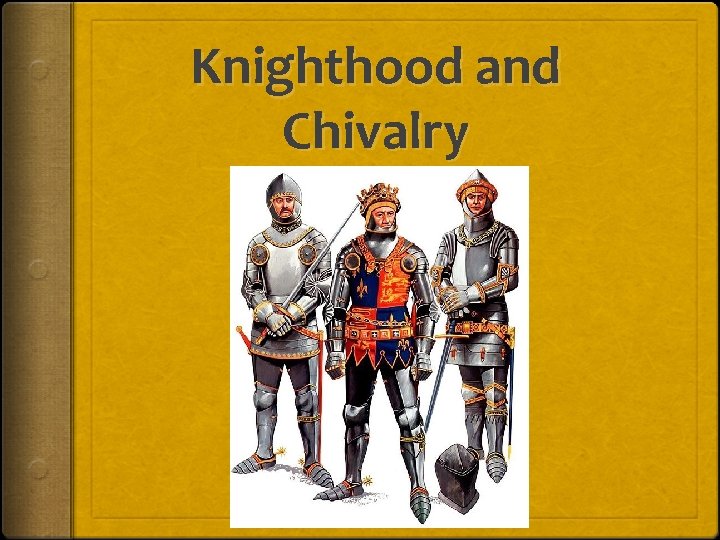
Knighthood and Chivalry
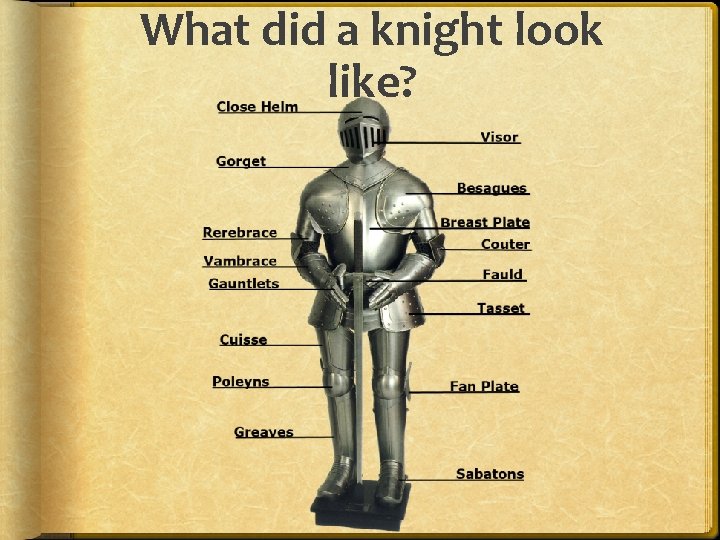
What did a knight look like?
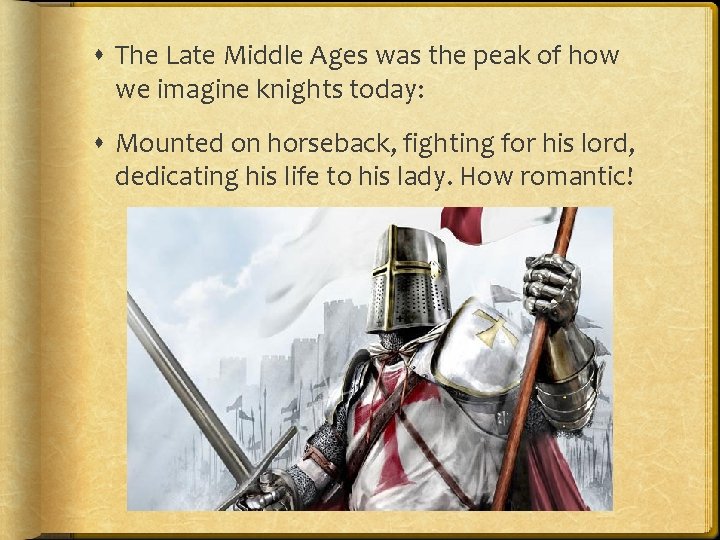
The Late Middle Ages was the peak of how we imagine knights today: Mounted on horseback, fighting for his lord, dedicating his life to his lady. How romantic!
Chivalry: a code of honour that every knight swore to uphold Based on personal honour Knights were: brave, generous, truthful (supposedly) Protect women and children, love and strengthen the church In reality, few knights were chivalrous. Chivalry not extended to serfs
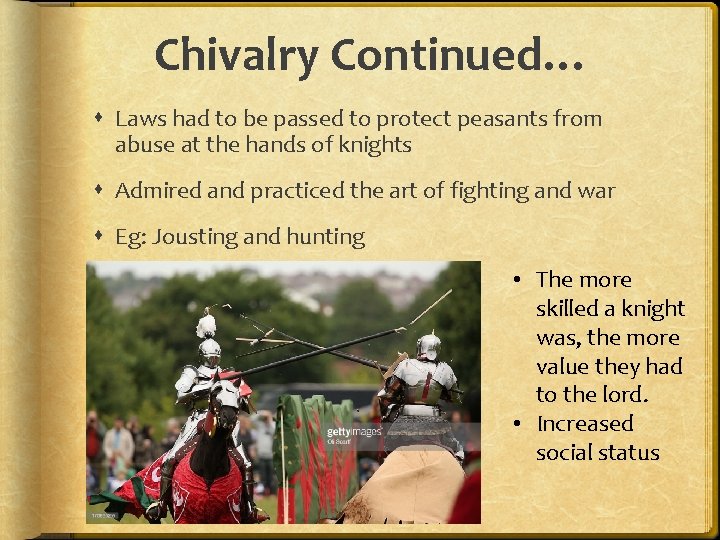
Chivalry Continued… Laws had to be passed to protect peasants from abuse at the hands of knights Admired and practiced the art of fighting and war Eg: Jousting and hunting • The more skilled a knight was, the more value they had to the lord. • Increased social status
How one became a knight: Page- Age 7 -8. Must be a boy of noble birth. Was sent to live in the household of another knight. Taught chivalry, fencing, archery, completed chores, play music and sing. Squire- Age 14 -15. Knights assistant. Cared for armor and horses. Practiced using swords and lances. Attended tournaments and followed master into battle. Knight- Age 21. Ceremony called “dubbing” made a squire into a knight. Kept vigil over his armour over night and fasted. Not all squires could afford the armour to become a knight.
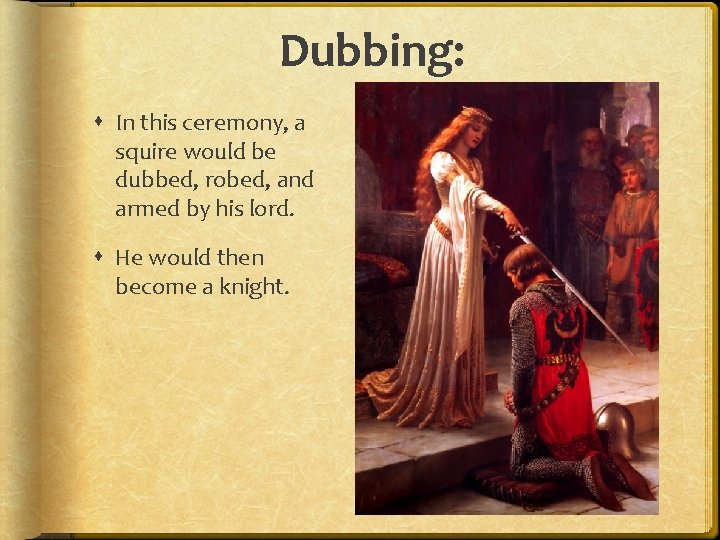
Dubbing: In this ceremony, a squire would be dubbed, robed, and armed by his lord. He would then become a knight.
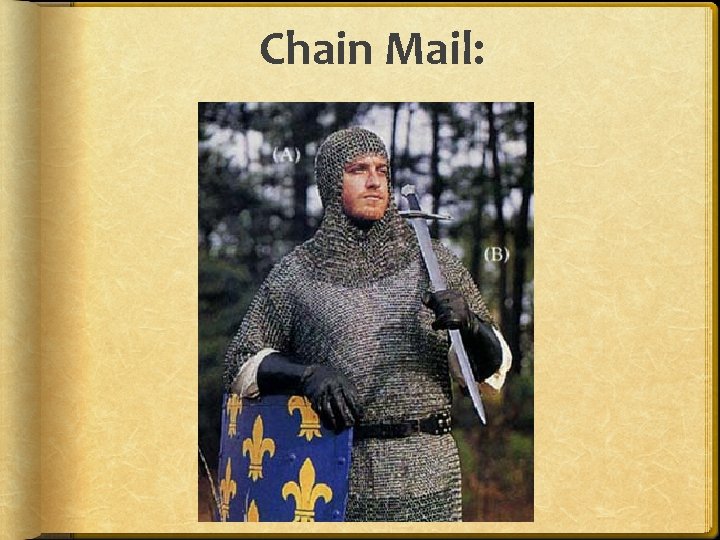
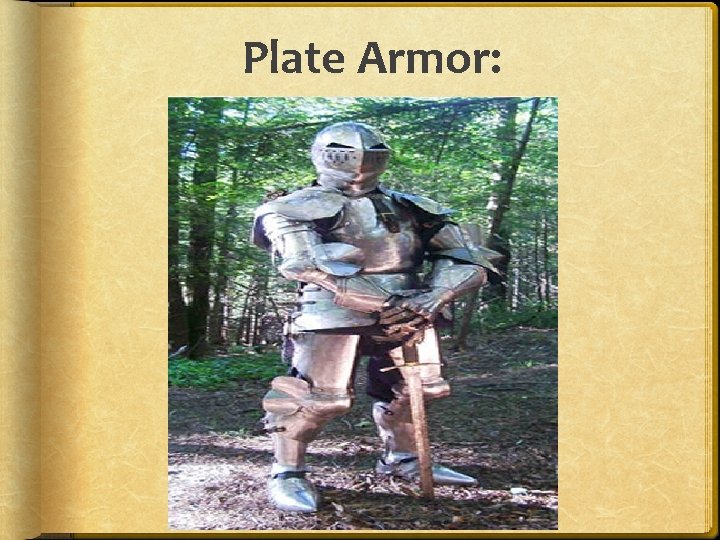
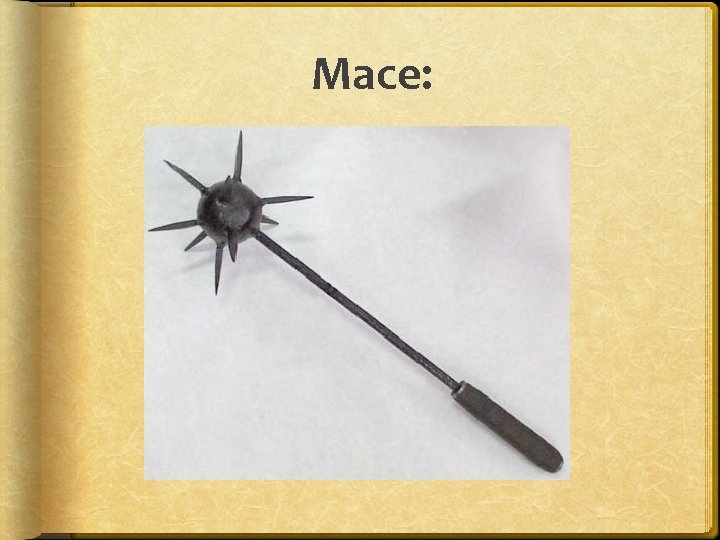
Armor: Chain mail- Original body armor for knights. Many metal rings linked together. Covered from head to foot. Protected against lances, arrows, and swords. Weapons- Swords, crossbows, and Mace- metal ball attached to the end of a club Plate armor- Eventually as weapons got stronger knights wore plate armor. Made of metal plates and much heavier than chain mail. Why could wearing plate armor be a problem?
Chain Mail:
Plate Armor:
Mace:
Jousts and Tournaments: Knights rode horses into battle. Tournaments were the top form of entertainment in castle life. Nobles and commoners attended. Anyone could enter a tournament if they had a horse, sword, armor, and a shield. You could win money at a tournament.
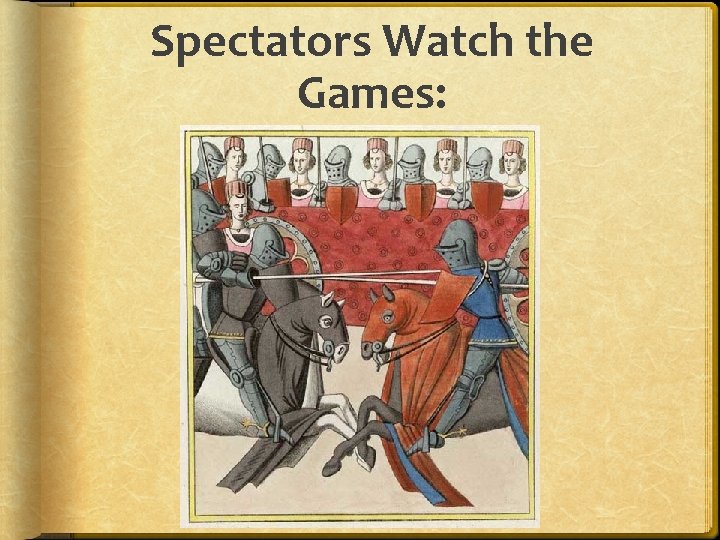
Jousts Contest between two knights Each started on separate sides on horseback. They each had a long lance (a long pole with a sharpened end). Your goal was to knock your opponent off his horse. If a lance was splintered (broken) the contest was a draw. If a knight fell from his horse the fight could continue on the ground. A winning knight could demand the losers horse or armor. Many knights died. People in the crowd were also accidentally killed sometimes as well.
Tournaments Wooden stands were built to hold nobles attending. Peasants could also attend Ladies often gave their favorite knight a scarf or glove (something which would identify him as her chosen knight) Activities at tournaments included kickboxing, other forms of fighting, jousts, and melees.
Spectators Watch the Games:
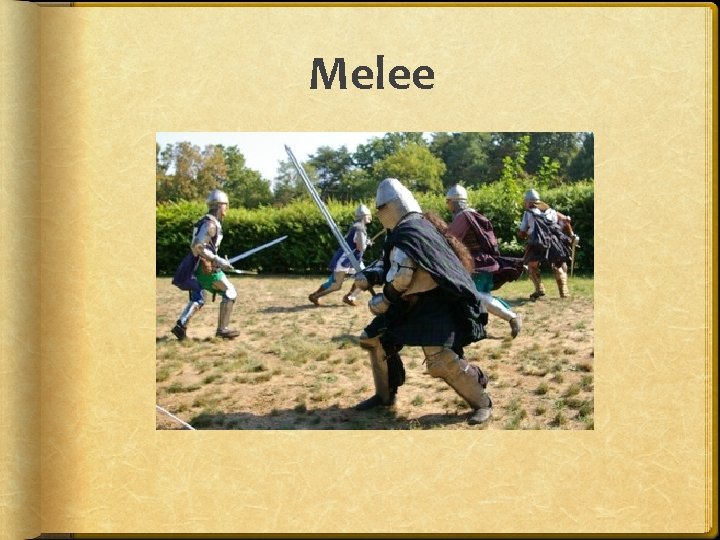
Melee: Two teams of knights. Each knight had a colored flag (team colors) on their back. Opponents tried to knock the flag off of each others backs with clubs or blunt swords. The church disapproved of jousts and melee’s but never succeeded in stopping them.
Melee