
Knife Skills Cutting Boards A cutting board is
Knife Skills
Cutting Boards • A cutting board is used to cut food to prevent damage to the countertop and to prevent cross contamination.
Wooden Cutting Boards • Keep knives sharp longer • Are porous and cross contaminate more easily
Plastic Cutting Boards Can damage knifes Safer to use because it’s easier to sanitize Available in different colors Each color is designed for use with a specific food type. • Adopting a color-coding system reduces cross contamination. • •
Stabilizing Cutting Boards • Place a damp towel under the cutting board.
Sanitizing Wooden Cutting Boards • • Scrubbing in hot soapy water Use a diluted bleach solution Never put in the dishwasher Never soak in water
Sanitizing Plastic Cutting Boards • Scrubbing in hot soapy water • Use a diluted bleach solution • Wash in the dishwasher
Use of Cutting Boards • It is advised to cut raw meat on a separate cutting board from cooked meat, vegetables or ready to eat foods to prevent crosscontamination.
Chef’s Knife • Among the most versatile knives • Used for daily chopping, slicing, dicing and mincing. • Demonstrate how to properly hold a chef knife.
Paring Knife • This indispensable knife is handy for smaller precision tasks • Garnishing, peeling, trimming and slicing small fruits and vegetables.
Serrated Knife • A serrated bread knife cuts soft, fresh loaves without squashing or tearing. • It’s also great for cutting tomatoes and citrus.
Care of Knives • Should not be washed in the dishwasher or placed in the bottom of the sink. • Hand wash knives immediately after the knife enters the dishwater with warm soapy water. • Dry immediately
Storage of Knives • Knife block • Cover each blade with a protective sheath • Knives should not be stored loose in a drawer with other knives or utensils. • The knives will bang against each other and the blade will become dull.
Knife Cutting Techniques • The following are descriptions of various knife cutting techniques. • These can be incorporated into a soup or salad you prepare.

Batonnet Knife Cut • French word for baton or stick. • Size: 1/4” x 2. 5 to 3”

Julienne Knife Cut • Size: 1/8” x 2 ½”
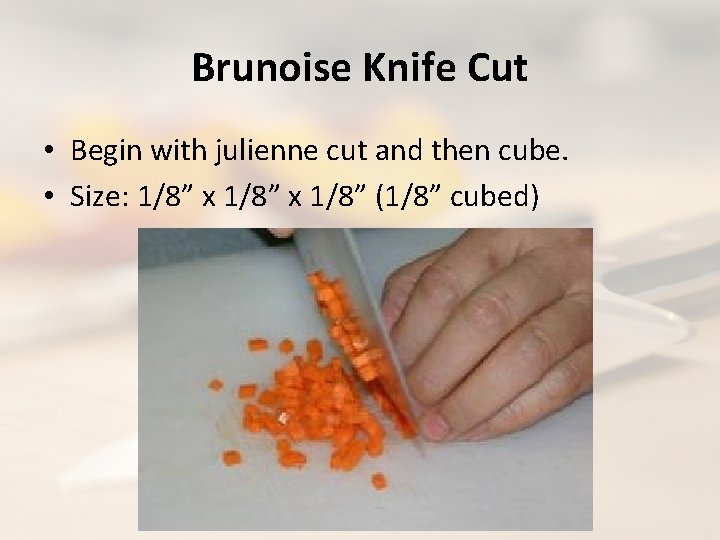
Brunoise Knife Cut • Begin with julienne cut and then cube. • Size: 1/8” x 1/8” (1/8” cubed)
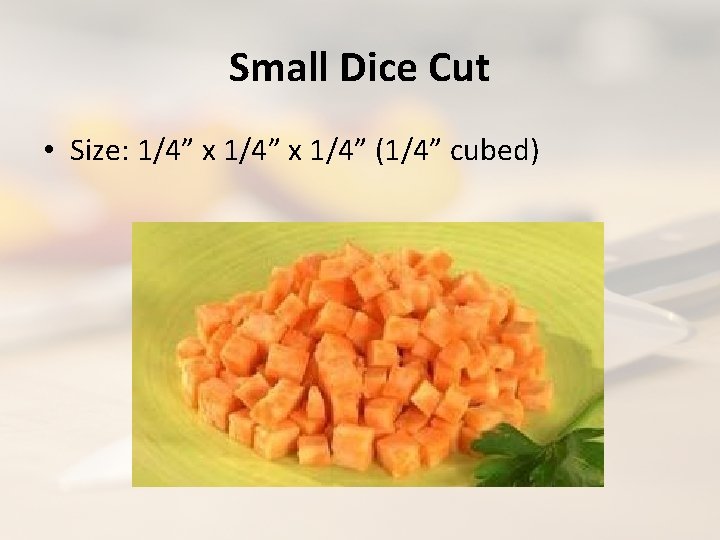
Small Dice Cut • Size: 1/4” x 1/4” (1/4” cubed)
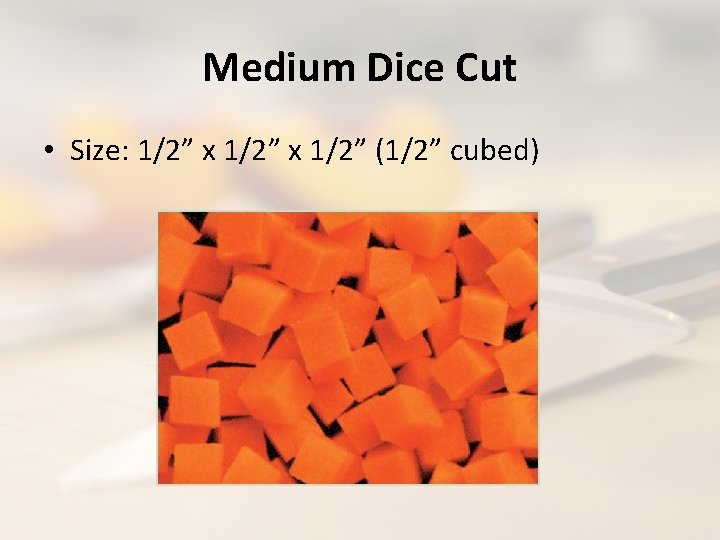
Medium Dice Cut • Size: 1/2” x 1/2” (1/2” cubed)
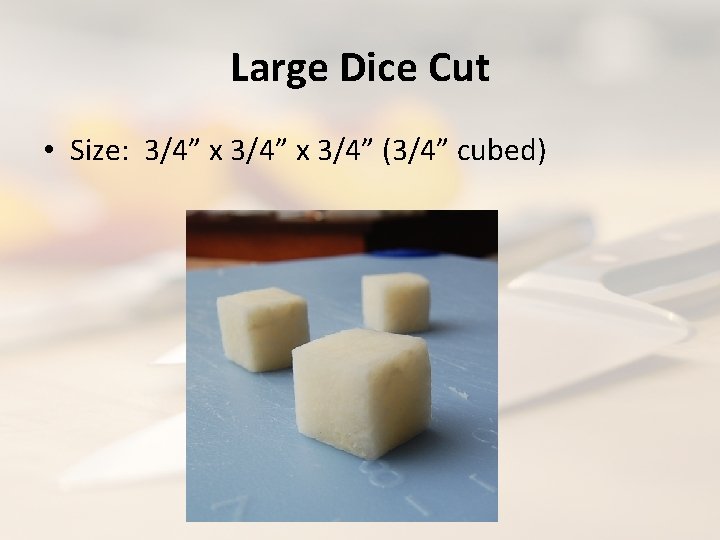
Large Dice Cut • Size: 3/4” x 3/4” (3/4” cubed)
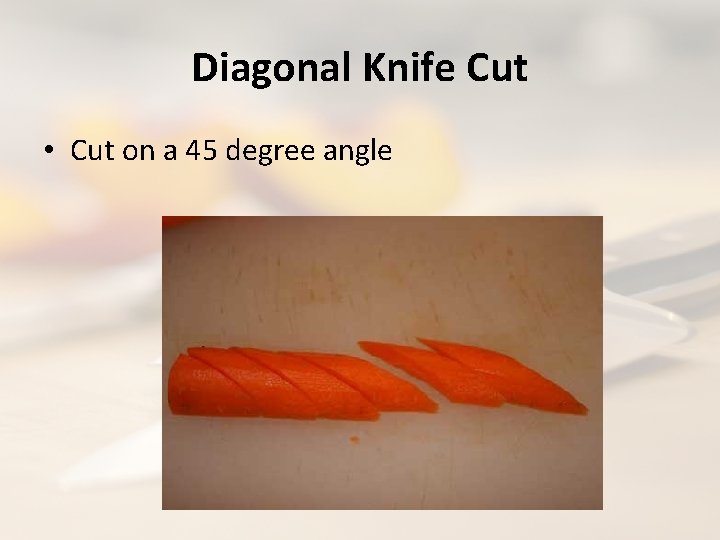
Diagonal Knife Cut • Cut on a 45 degree angle
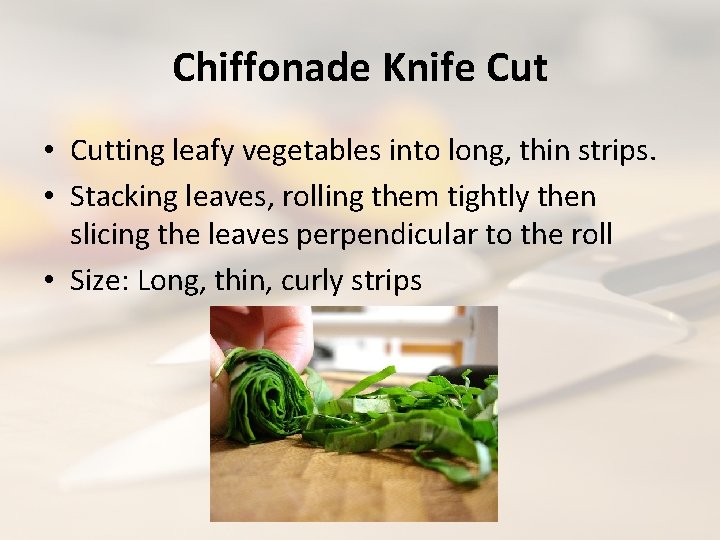
Chiffonade Knife Cut • Cutting leafy vegetables into long, thin strips. • Stacking leaves, rolling them tightly then slicing the leaves perpendicular to the roll • Size: Long, thin, curly strips
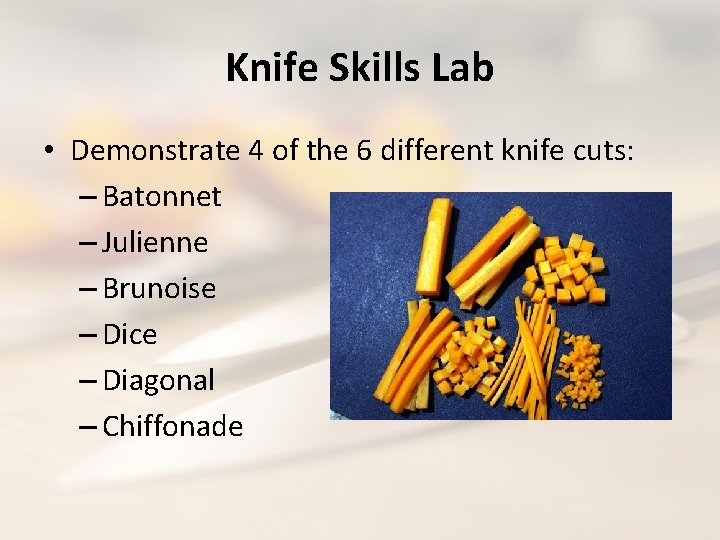
Knife Skills Lab • Demonstrate 4 of the 6 different knife cuts: – Batonnet – Julienne – Brunoise – Dice – Diagonal – Chiffonade
- Slides: 23