
Knee joint mechanism Joint structure Major types of
- Slides: 24
Knee joint mechanism 물리치료실 김준민
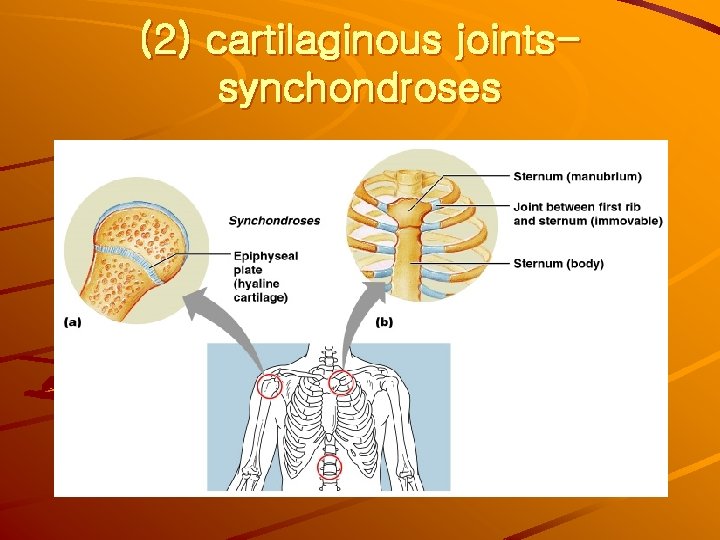
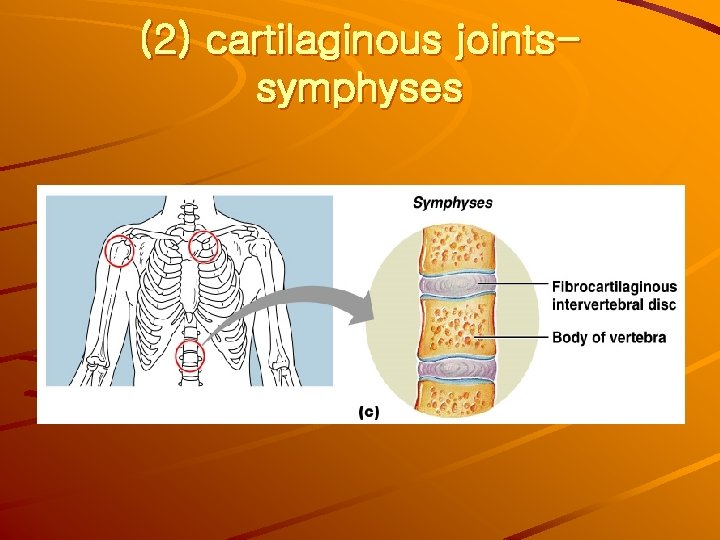
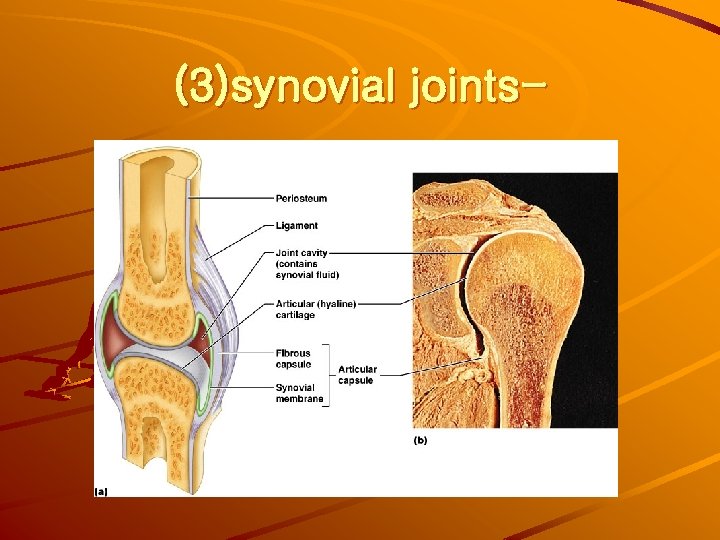
Joint structure Major types of joint in the body 1. fibrous joints (sutures, syndesmoses, gomphoses) 2. cartilaginous joints (synchondroses, symphyses) 3. synovial joints
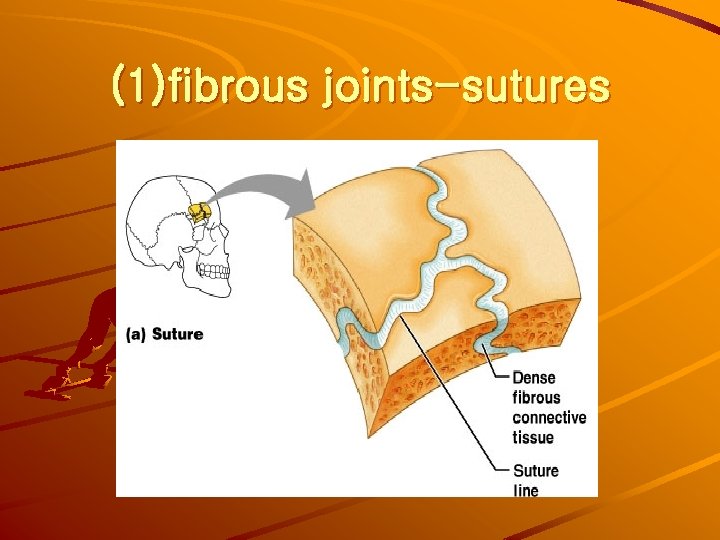
(1)fibrous joints-sutures
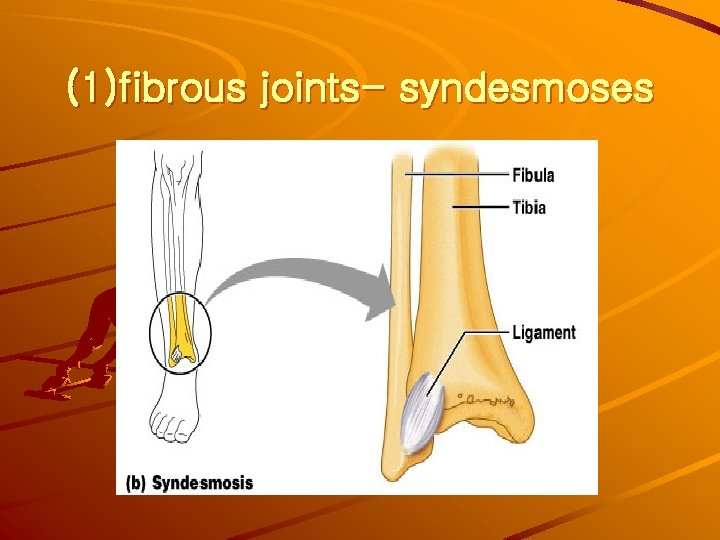
(1)fibrous joints- syndesmoses
(1)fibrous joints- gomphoses The peg-in-socket fibrous joint between a tooth and its alveolar socket The fibrous connection is the periodontal ligament
(2) cartilaginous jointssynchondroses
(2) cartilaginous jointssymphyses
(3)synovial joints-
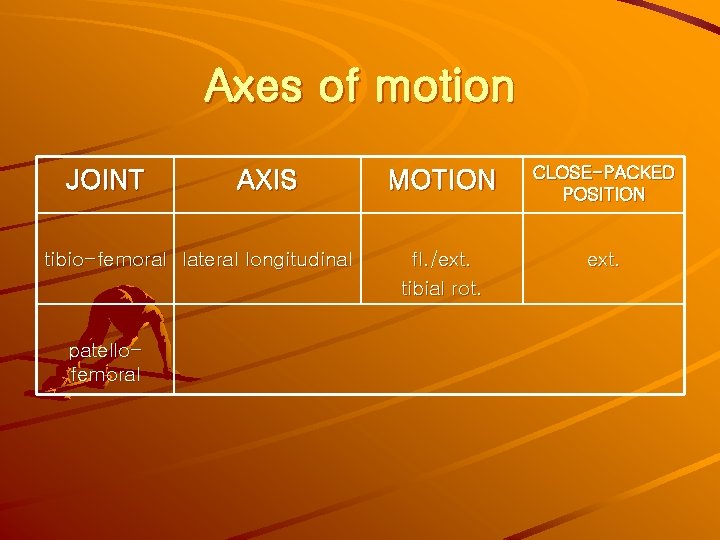
Axes of motion JOINT AXIS tibio-femoral lateral longitudinal patellofemoral MOTION CLOSE-PACKED POSITION fl. /ext. tibial rot. ext.
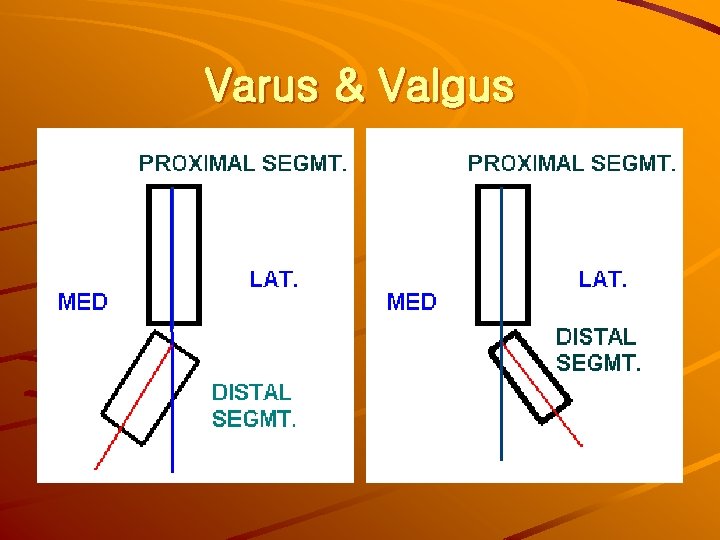
Varus & Valgus
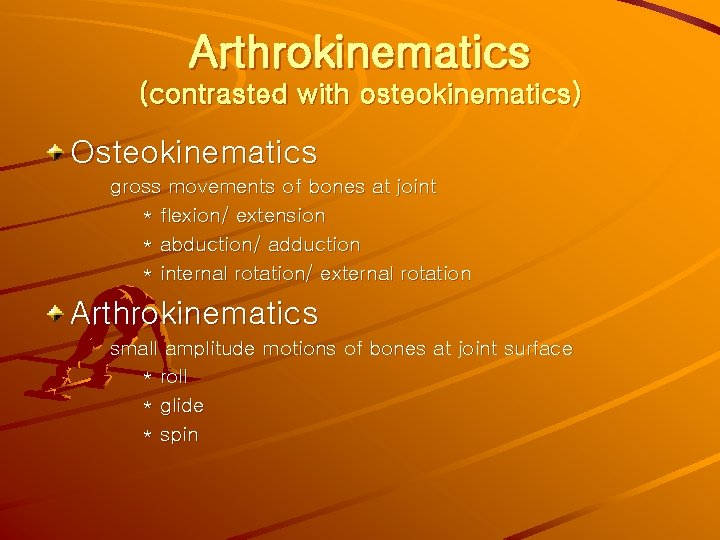
Arthrokinematics (contrasted with osteokinematics) Osteokinematics gross movements of bones at joint * flexion/ extension * abduction/ adduction * internal rotation/ external rotation Arthrokinematics small amplitude motions of bones at joint surface * roll * glide * spin
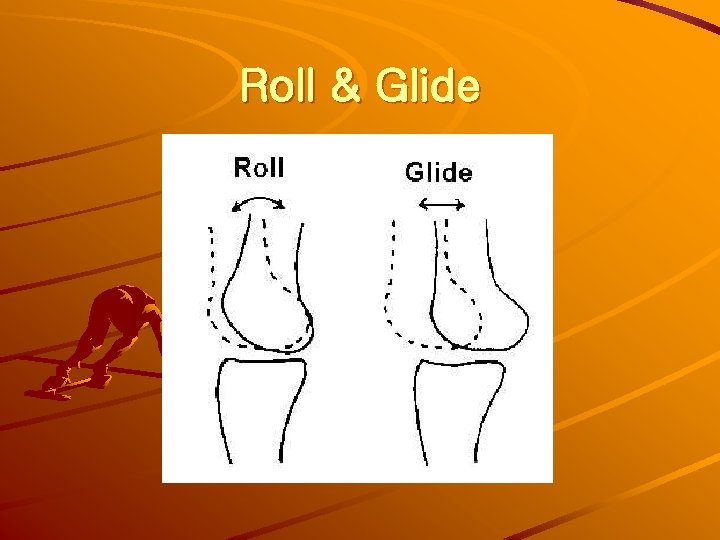
Roll & Glide
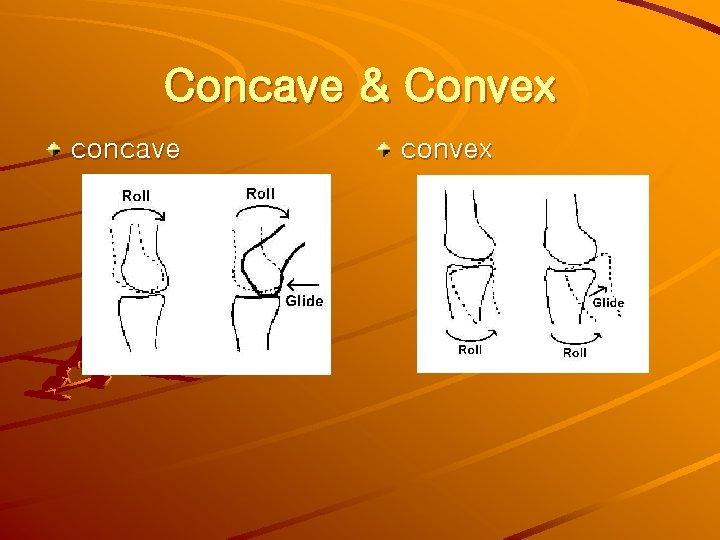
Concave & Convex concave convex
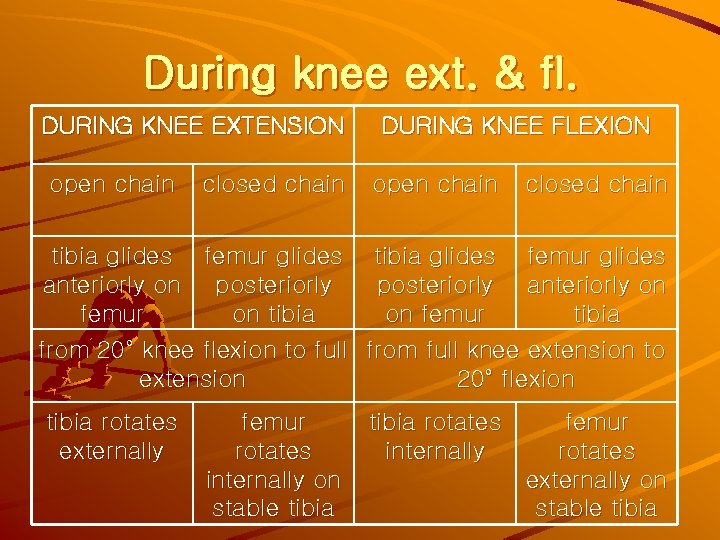
During knee ext. & fl. DURING KNEE EXTENSION open chain closed chain DURING KNEE FLEXION open chain closed chain tibia glides femur glides anteriorly on posteriorly anteriorly on femur on tibia on femur tibia from 20° knee flexion to full from full knee extension to extension 20° flexion tibia rotates externally femur rotates internally on stable tibia rotates internally femur rotates externally on stable tibia
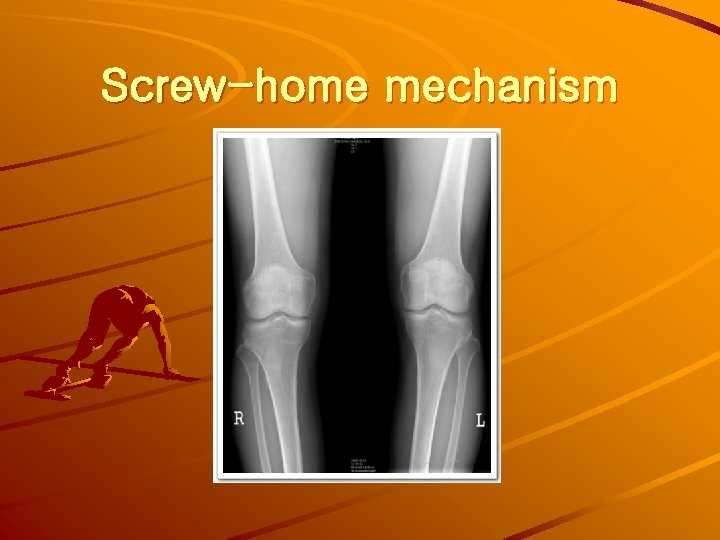
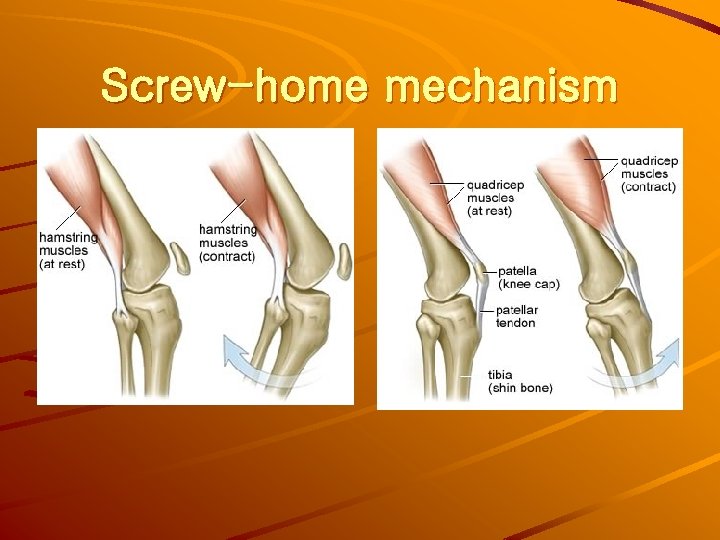
Screw-home mechanism
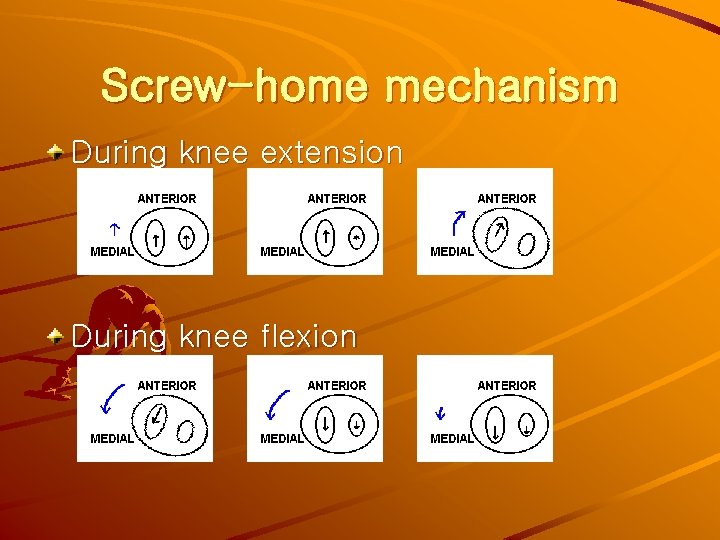
Screw-home mechanism During knee extension During knee flexion
Screw-home mechanism
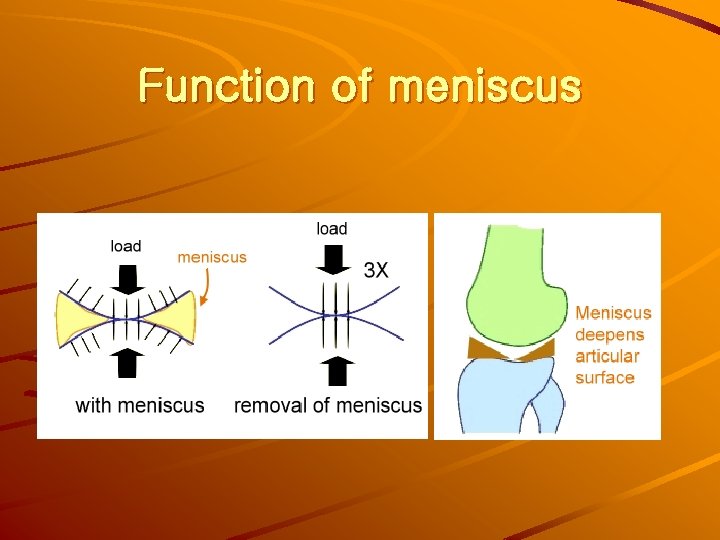
Function of meniscus
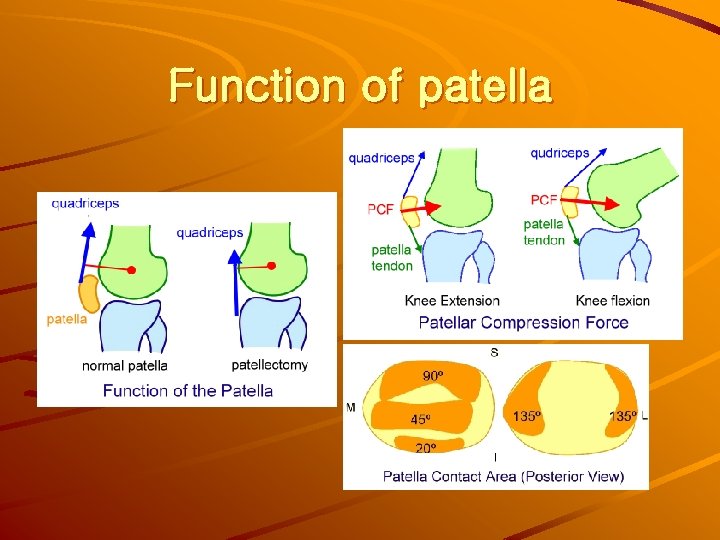
Function of patella
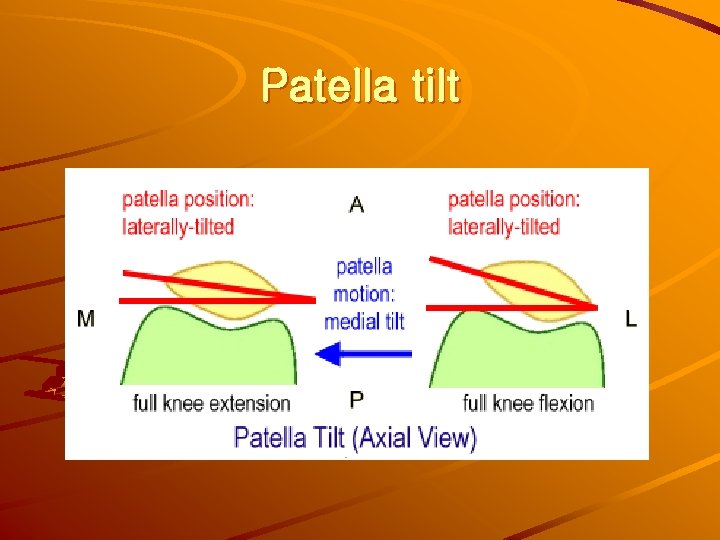
Patella tilt
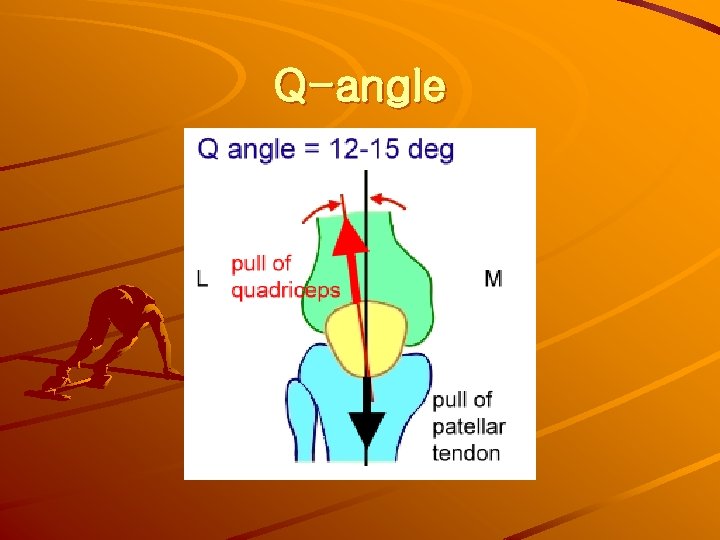
Q-angle
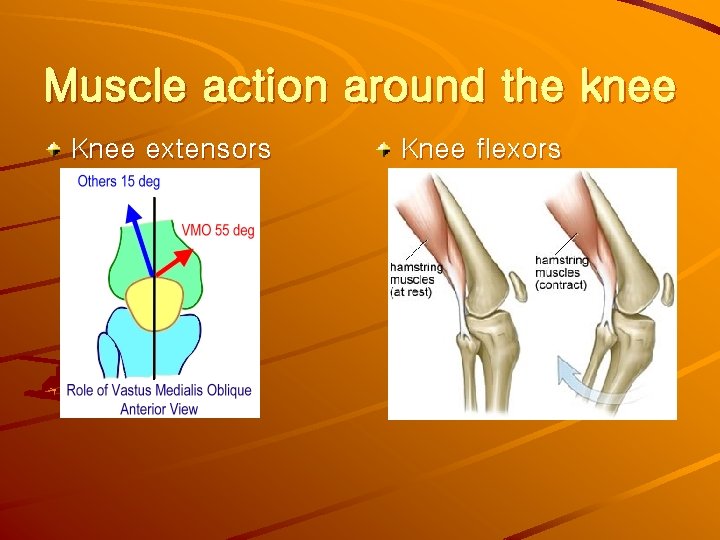
Muscle action around the knee Knee extensors Knee flexors
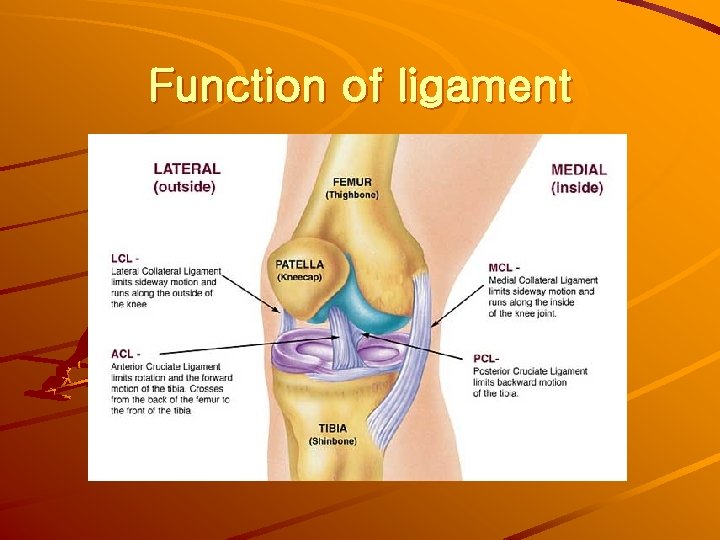
Function of ligament