
KLS Foundation 3 rd International KLS Conference 2018


- Slides: 37
KLS Foundation 3 rd International KLS Conference 2018
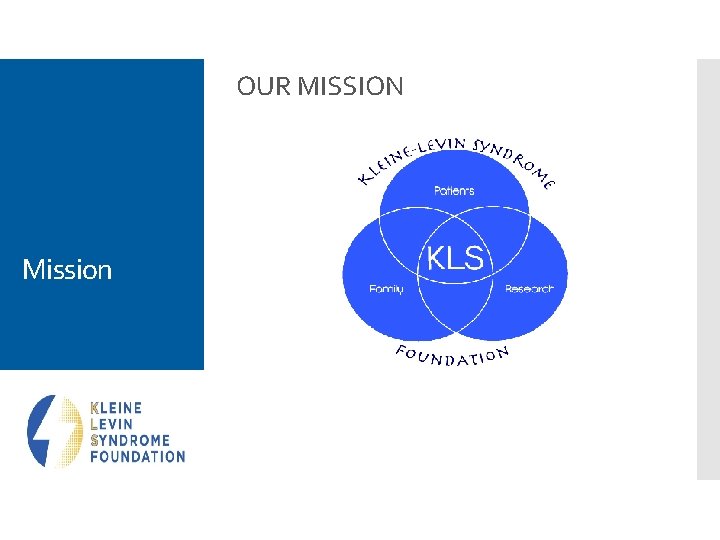
OUR MISSION Mission
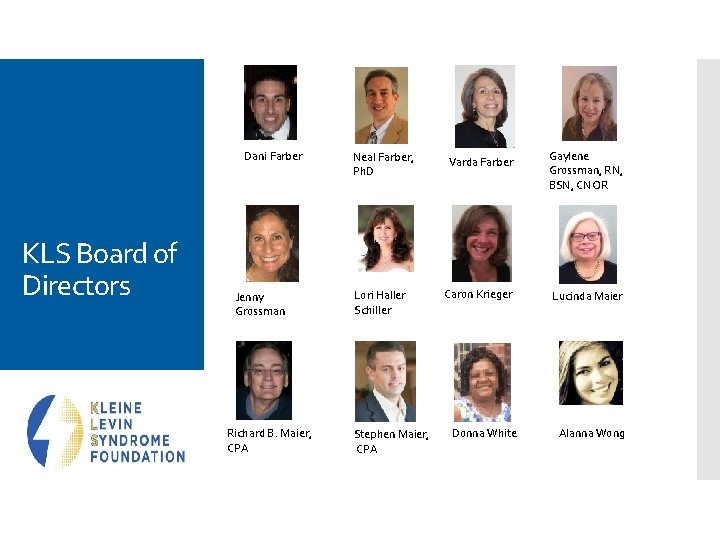
Dani Farber KLS Board of Directors Jenny Grossman Richard B. Maier, CPA Neal Farber, Ph. D Varda Farber Lori Haller Schiller Caron Krieger Stephen Maier, CPA Donna White Gaylene Grossman, RN, BSN, CNOR Lucinda Maier Alanna Wong
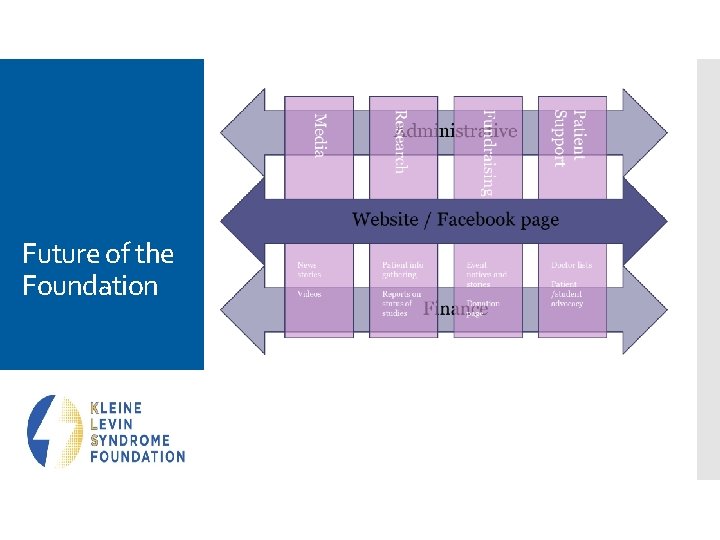
Future of the Foundation
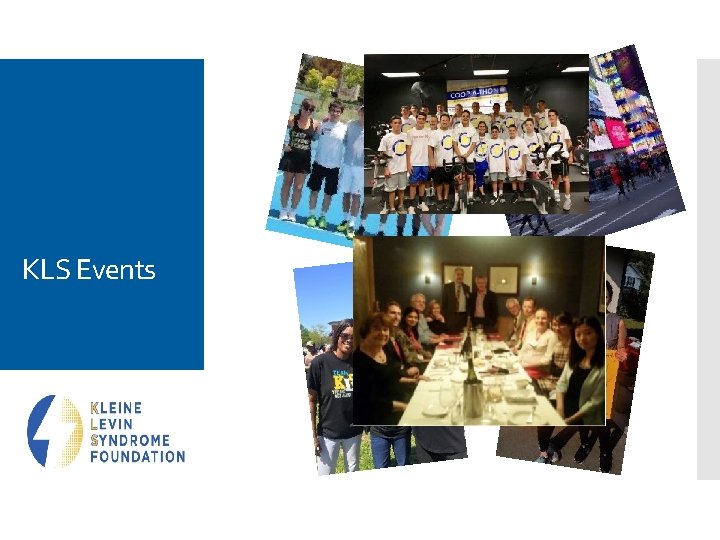
5 KLS Events
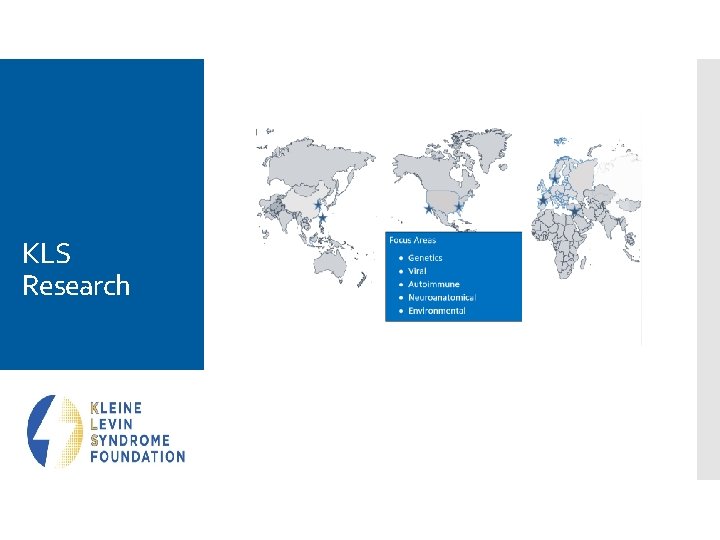
KLS Research
Kleine Levin Syndrome (“KLS”) Intro to Research Neal Farber, Ph. D
Intro to research Outline Why research? How? - challenges Where to start? Who? – researchers, volunteers, all of us How to make sense of publications Issue of KLS diagnosis Schedule of Research Sessions
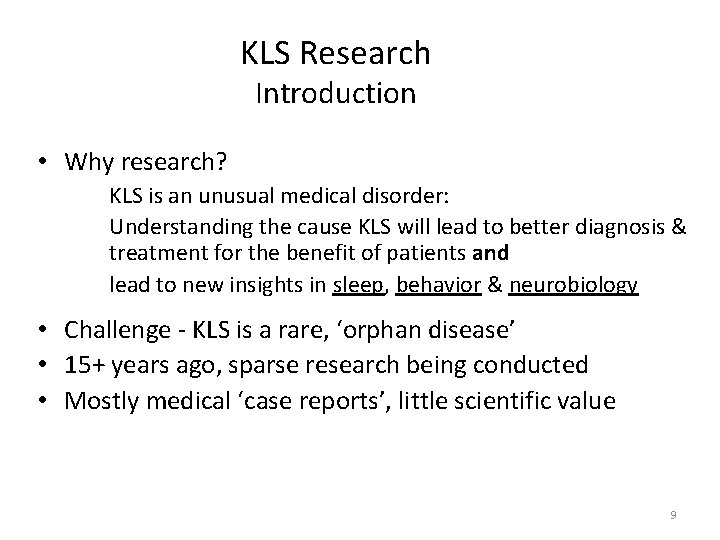
KLS Research Introduction • Why research? KLS is an unusual medical disorder: Understanding the cause KLS will lead to better diagnosis & treatment for the benefit of patients and lead to new insights in sleep, behavior & neurobiology • Challenge - KLS is a rare, ‘orphan disease’ • 15+ years ago, sparse research being conducted • Mostly medical ‘case reports’, little scientific value 9
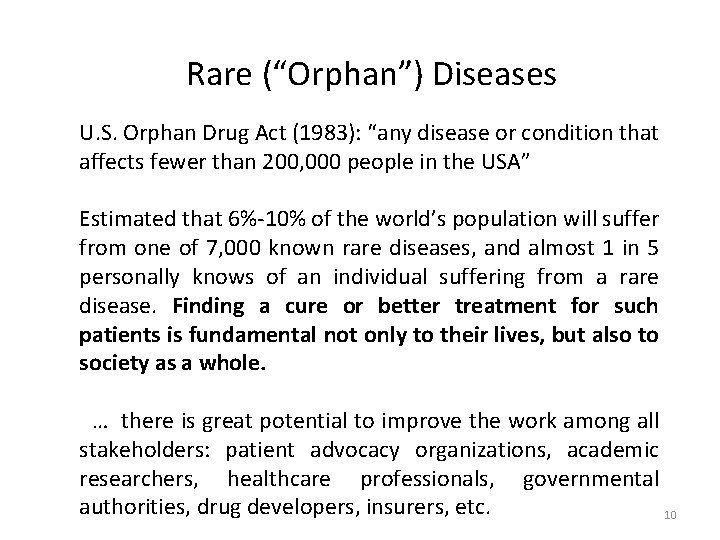
Rare (“Orphan”) Diseases U. S. Orphan Drug Act (1983): “any disease or condition that affects fewer than 200, 000 people in the USA” Estimated that 6%-10% of the world’s population will suffer from one of 7, 000 known rare diseases, and almost 1 in 5 personally knows of an individual suffering from a rare disease. Finding a cure or better treatment for such patients is fundamental not only to their lives, but also to society as a whole. … there is great potential to improve the work among all stakeholders: patient advocacy organizations, academic researchers, healthcare professionals, governmental authorities, drug developers, insurers, etc. 10
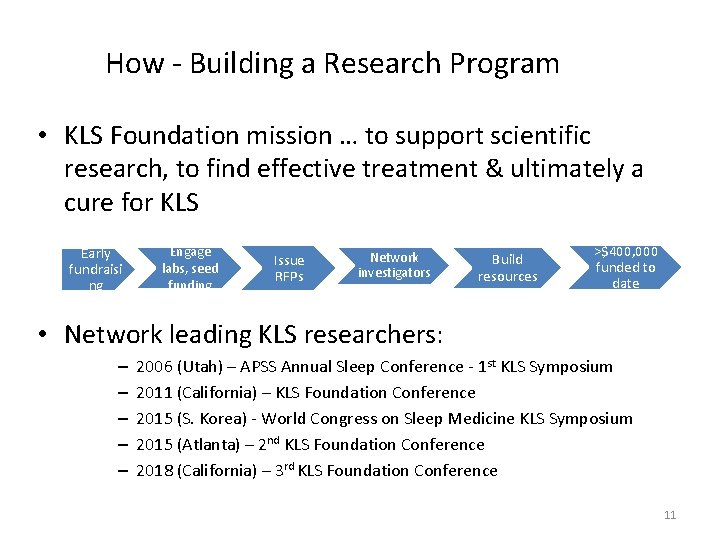
How - Building a Research Program • KLS Foundation mission … to support scientific research, to find effective treatment & ultimately a cure for KLS Early fundraisi ng Engage labs, seed funding Issue RFPs Network investigators Build resources >$400, 000 funded to date • Network leading KLS researchers: – – – 2006 (Utah) – APSS Annual Sleep Conference - 1 st KLS Symposium 2011 (California) – KLS Foundation Conference 2015 (S. Korea) - World Congress on Sleep Medicine KLS Symposium 2015 (Atlanta) – 2 nd KLS Foundation Conference 2018 (California) – 3 rd KLS Foundation Conference 11
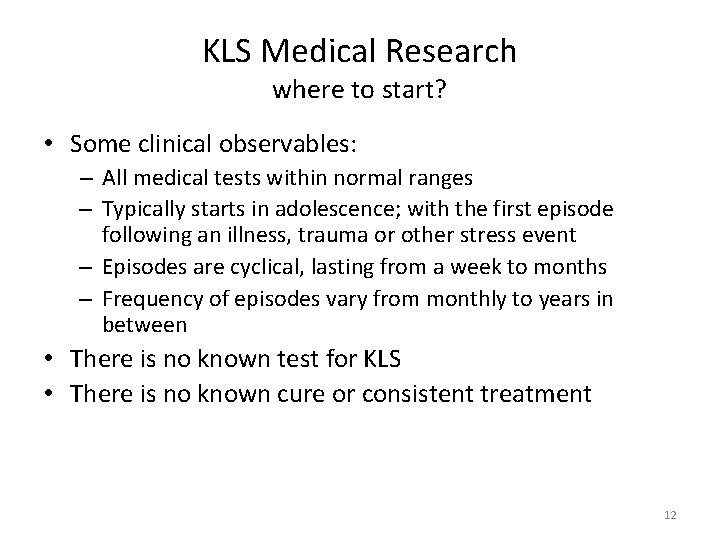
KLS Medical Research where to start? • Some clinical observables: – All medical tests within normal ranges – Typically starts in adolescence; with the first episode following an illness, trauma or other stress event – Episodes are cyclical, lasting from a week to months – Frequency of episodes vary from monthly to years in between • There is no known test for KLS • There is no known cure or consistent treatment 12
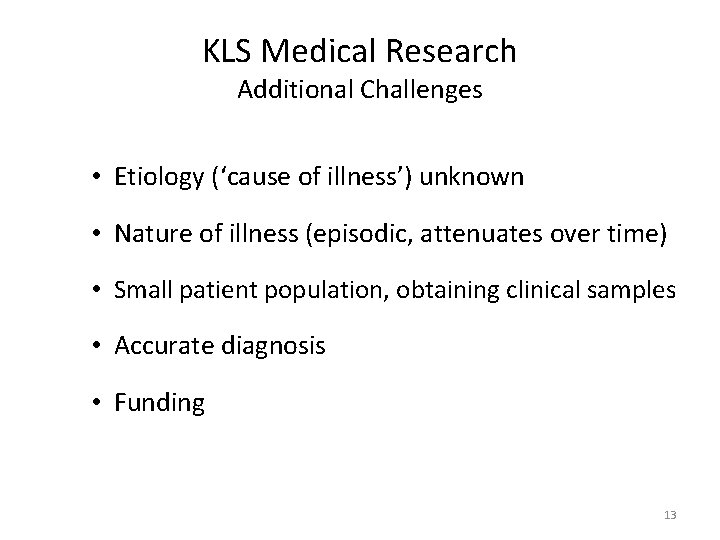
KLS Medical Research Additional Challenges • Etiology (‘cause of illness’) unknown • Nature of illness (episodic, attenuates over time) • Small patient population, obtaining clinical samples • Accurate diagnosis • Funding 13
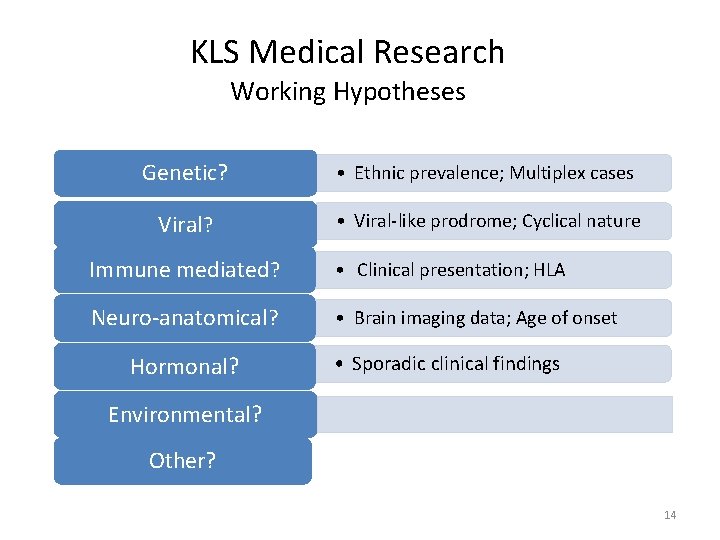
KLS Medical Research Working Hypotheses Genetic? • Ethnic prevalence; Multiplex cases Viral? • Viral-like prodrome; Cyclical nature Immune mediated? • Clinical presentation; HLA Neuro-anatomical? • Brain imaging data; Age of onset Hormonal? • Sporadic clinical findings Environmental? Other? 14
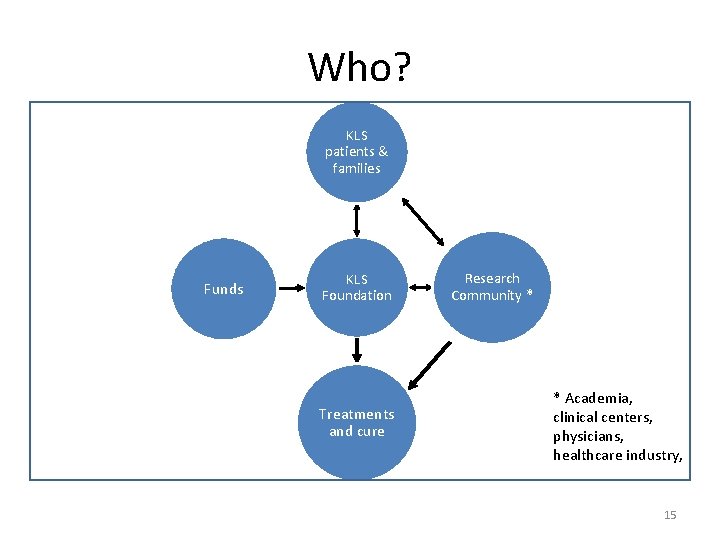
Who? KLS patients & families Funds KLS Foundation Treatments and cure Research Community * * Academia, clinical centers, physicians, healthcare industry, 15
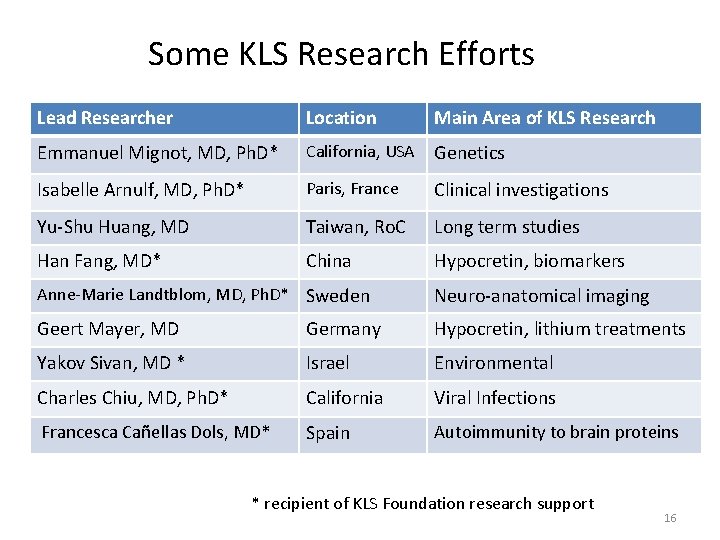
Some KLS Research Efforts Lead Researcher Location Main Area of KLS Research Emmanuel Mignot, MD, Ph. D* California, USA Genetics Isabelle Arnulf, MD, Ph. D* Paris, France Clinical investigations Yu-Shu Huang, MD Taiwan, Ro. C Long term studies Han Fang, MD* China Hypocretin, biomarkers Anne-Marie Landtblom, MD, Ph. D* Sweden Neuro-anatomical imaging Geert Mayer, MD Germany Hypocretin, lithium treatments Yakov Sivan, MD * Israel Environmental Charles Chiu, MD, Ph. D* California Viral Infections Francesca Cañellas Dols, MD* Spain Autoimmunity to brain proteins * recipient of KLS Foundation research support 16
KLS Research Volunteers THANK YOU! For those who have not yet participated, the Stanford Center for Narcolepsy & KLS Research seeks individuals who have KLS, as well as siblings when possible, for studies investigating the genetic basis of KLS Candidates with a diagnosis of KLS must be willing to: ● complete a detailed medical questionnaire ● provide a one-time blood sample For more info see: med. stanford. edu/narcolepsy/KLS. html At this conference contact: Gaylene Grossman, RN (KLS Foundation) Ling Lin, Ph. D (Sr. Research Scientist, Stanford University) 17
Understanding Research Publications Seeking Information about KLS • Scientific (‘peer-reviewed’) vs. general media TV shows, news sources & popular magazines, press, social media, internet • ‘Single case’ reports vs. large cohort studies • Quality (Impact Factor & citations) • Primary research vs. review articles 18
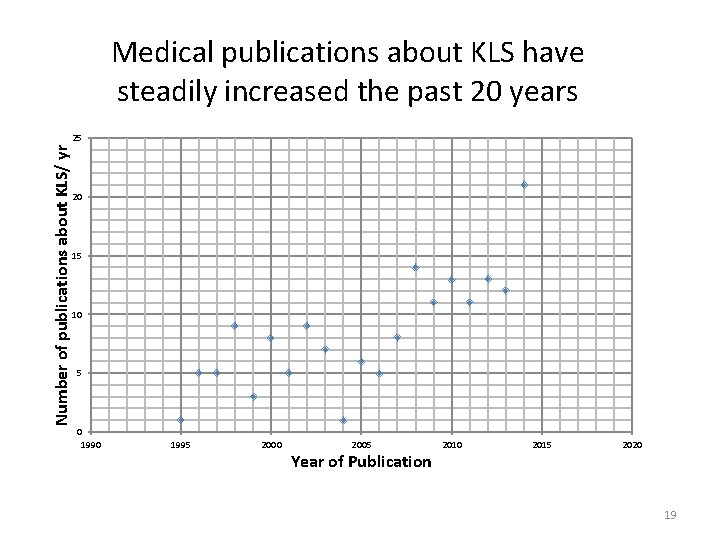
Medical publications about KLS have steadily increased the past 20 years Number of publications about KLS/ yr 25 20 15 10 5 0 1995 2000 2005 Year of Publication 2010 2015 2020 19
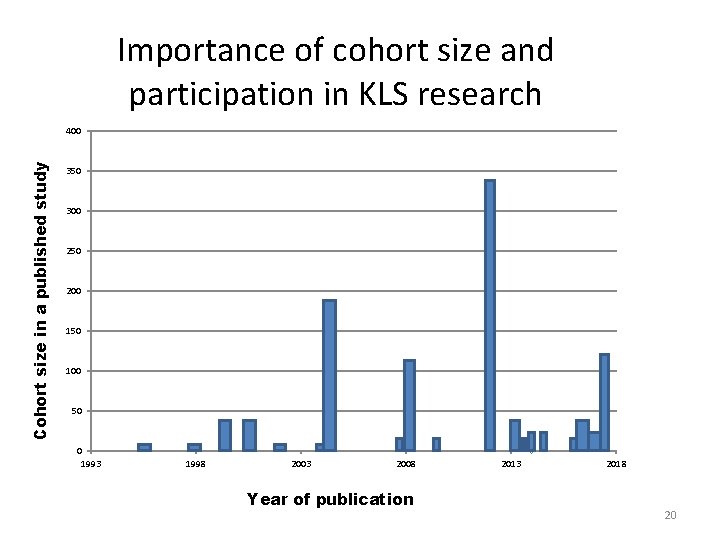
Importance of cohort size and participation in KLS research Cohort size in a published study 400 350 300 250 200 150 100 50 0 1993 1998 2003 2008 Year of publication 2013 . . . 2018 20
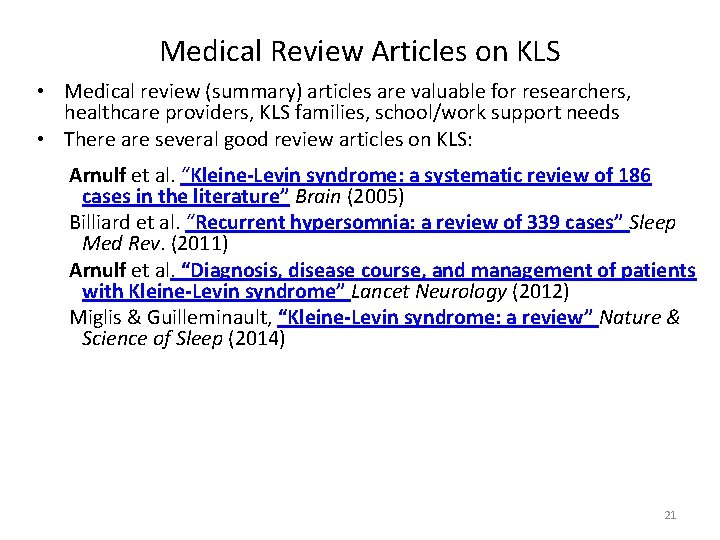
Medical Review Articles on KLS • Medical review (summary) articles are valuable for researchers, healthcare providers, KLS families, school/work support needs • There are several good review articles on KLS: Arnulf et al. “Kleine-Levin syndrome: a systematic review of 186 cases in the literature” Brain (2005) Billiard et al. “Recurrent hypersomnia: a review of 339 cases” Sleep Med Rev. (2011) Arnulf et al. “Diagnosis, disease course, and management of patients with Kleine-Levin syndrome” Lancet Neurology (2012) Miglis & Guilleminault, “Kleine-Levin syndrome: a review” Nature & Science of Sleep (2014) 21
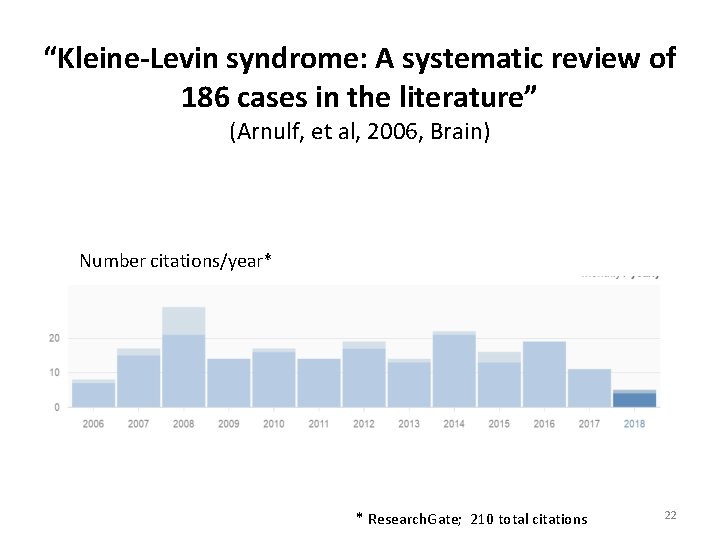
“Kleine-Levin syndrome: A systematic review of 186 cases in the literature” (Arnulf, et al, 2006, Brain) Number citations/year* * Research. Gate; 210 total citations 22
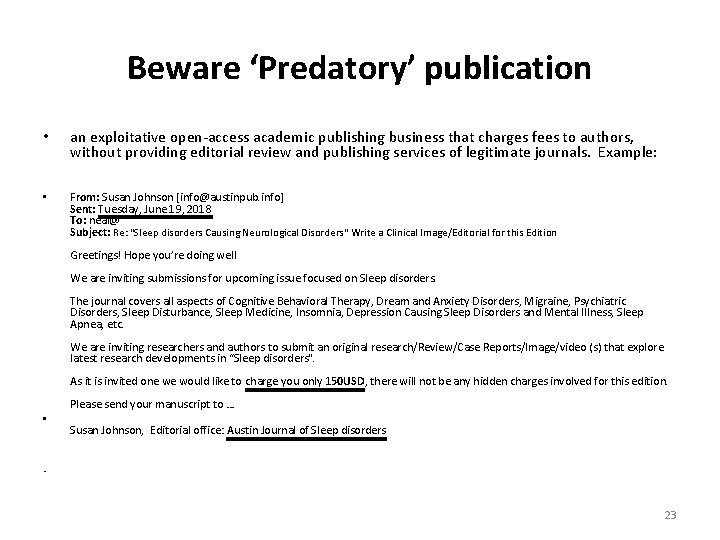
Beware ‘Predatory’ publication • an exploitative open-access academic publishing business that charges fees to authors, without providing editorial review and publishing services of legitimate journals. Example: • From: Susan Johnson [info@austinpub. info] Sent: Tuesday, June 19, 2018 To: neal@ Subject: Re: "Sleep disorders Causing Neurological Disorders" Write a Clinical Image/Editorial for this Edition Greetings! Hope you’re doing well We are inviting submissions for upcoming issue focused on Sleep disorders. The journal covers all aspects of Cognitive Behavioral Therapy, Dream and Anxiety Disorders, Migraine, Psychiatric Disorders, Sleep Disturbance, Sleep Medicine, Insomnia, Depression Causing Sleep Disorders and Mental Illness, Sleep Apnea, etc. We are inviting researchers and authors to submit an original research/Review/Case Reports/Image/video (s) that explore latest research developments in “Sleep disorders". As it is invited one we would like to charge you only 150 USD, there will not be any hidden charges involved for this edition. • Please send your manuscript to … Susan Johnson, Editorial office: Austin Journal of Sleep disorders • 23
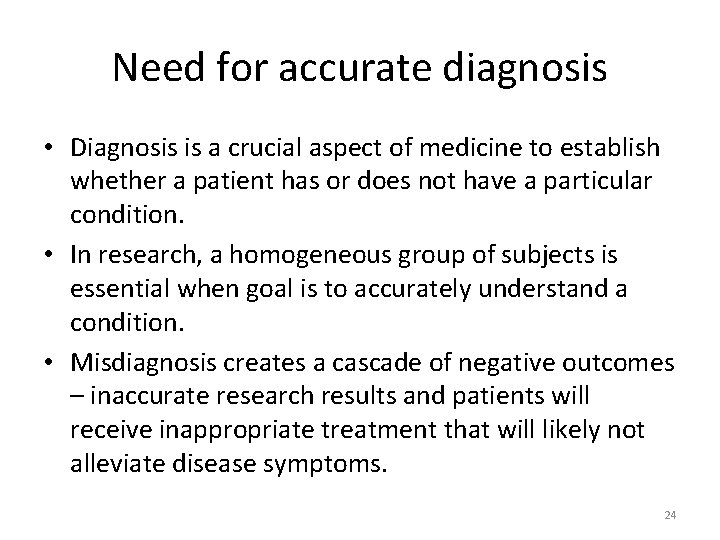
Need for accurate diagnosis • Diagnosis is a crucial aspect of medicine to establish whether a patient has or does not have a particular condition. • In research, a homogeneous group of subjects is essential when goal is to accurately understand a condition. • Misdiagnosis creates a cascade of negative outcomes – inaccurate research results and patients will receive inappropriate treatment that will likely not alleviate disease symptoms. 24
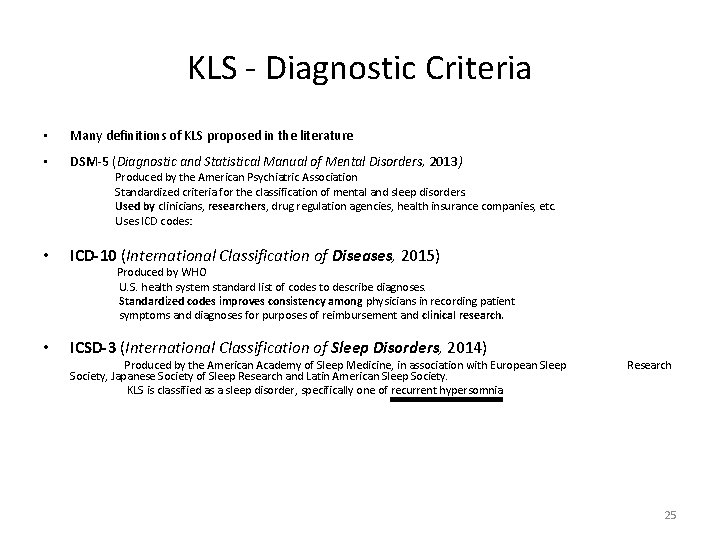
KLS - Diagnostic Criteria • Many definitions of KLS proposed in the literature • DSM-5 (Diagnostic and Statistical Manual of Mental Disorders, 2013) Produced by the American Psychiatric Association Standardized criteria for the classification of mental and sleep disorders. Used by clinicians, researchers, drug regulation agencies, health insurance companies, etc. Uses ICD codes: • ICD-10 (International Classification of Diseases, 2015) Produced by WHO U. S. health system standard list of codes to describe diagnoses. Standardized codes improves consistency among physicians in recording patient symptoms and diagnoses for purposes of reimbursement and clinical research. • ICSD-3 (International Classification of Sleep Disorders, 2014) Produced by the American Academy of Sleep Medicine, in association with European Sleep Society, Japanese Society of Sleep Research and Latin American Sleep Society. KLS is classified as a sleep disorder, specifically one of recurrent hypersomnia Research 25
Diagnostic Codes from ICD-10 CM (2018) G 47 Sleep disorders – G 47. 0 Insomnia – G 47. 1 Hypersomnia • G 47. 10 unspecified • G 47. 11 Idiopathic hypersomnia with long sleep time • G 47. 12 Idiopathic hypersomnia without long sleep time • G 47. 13 Recurrent hypersomnia • G 47. 14 … due to medical condition • G 47. 19 Other hypersomnia – G 47. 2 Circadian rhythm sleep disorders – G 47. 3 Sleep apnea – G 47. 4 Narcolepsy and cataplexy – G 47. 5 Parasomnia – G 47. 6 Sleep related movement disorders – G 47. 9 Sleep disorder, unspecified 26
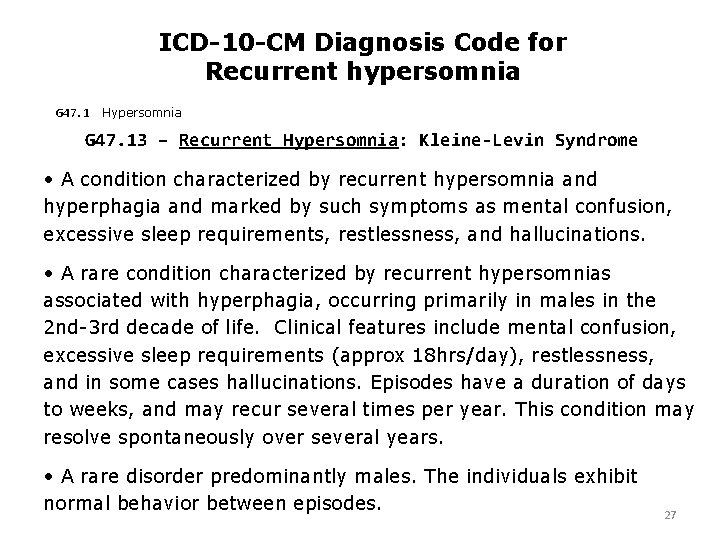
ICD-10 -CM Diagnosis Code for Recurrent hypersomnia G 47. 1 Hypersomnia G 47. 13 – Recurrent Hypersomnia: Kleine-Levin Syndrome • A condition characterized by recurrent hypersomnia and hyperphagia and marked by such symptoms as mental confusion, excessive sleep requirements, restlessness, and hallucinations. • A rare condition characterized by recurrent hypersomnias associated with hyperphagia, occurring primarily in males in the 2 nd-3 rd decade of life. Clinical features include mental confusion, excessive sleep requirements (approx 18 hrs/day), restlessness, and in some cases hallucinations. Episodes have a duration of days to weeks, and may recur several times per year. This condition may resolve spontaneously over several years. • A rare disorder predominantly males. The individuals exhibit normal behavior between episodes. 27
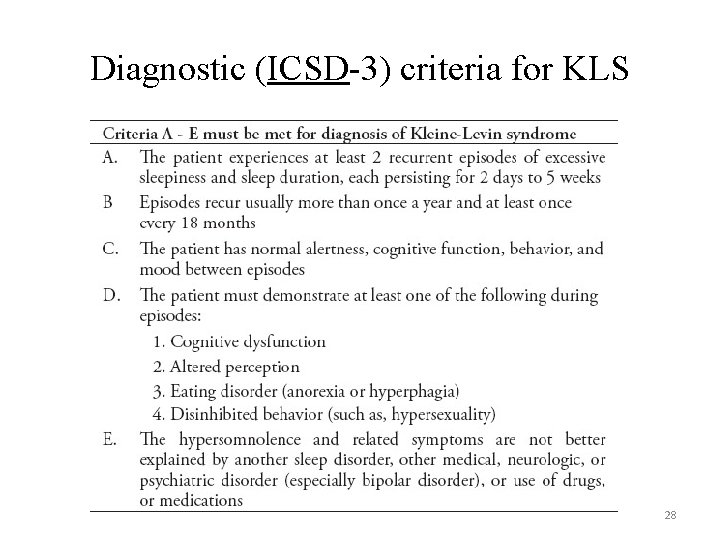
Diagnostic (ICSD-3) criteria for KLS 28
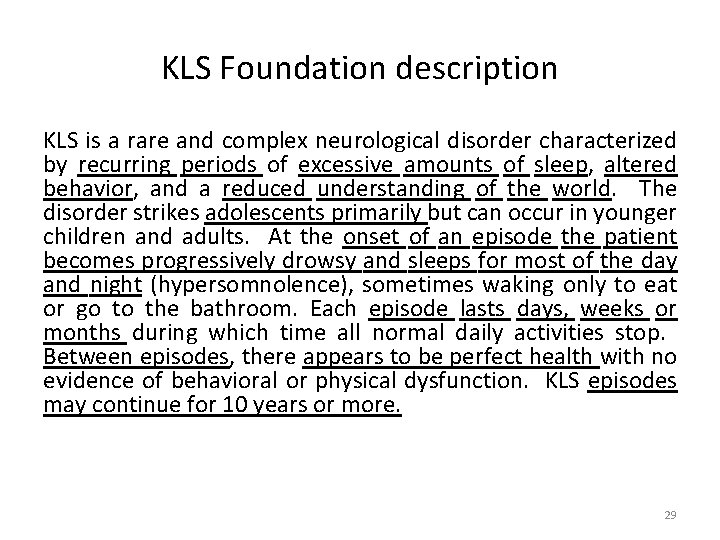
KLS Foundation description KLS is a rare and complex neurological disorder characterized by recurring periods of excessive amounts of sleep, altered behavior, and a reduced understanding of the world. The disorder strikes adolescents primarily but can occur in younger children and adults. At the onset of an episode the patient becomes progressively drowsy and sleeps for most of the day and night (hypersomnolence), sometimes waking only to eat or go to the bathroom. Each episode lasts days, weeks or months during which time all normal daily activities stop. Between episodes, there appears to be perfect health with no evidence of behavioral or physical dysfunction. KLS episodes may continue for 10 years or more. 29
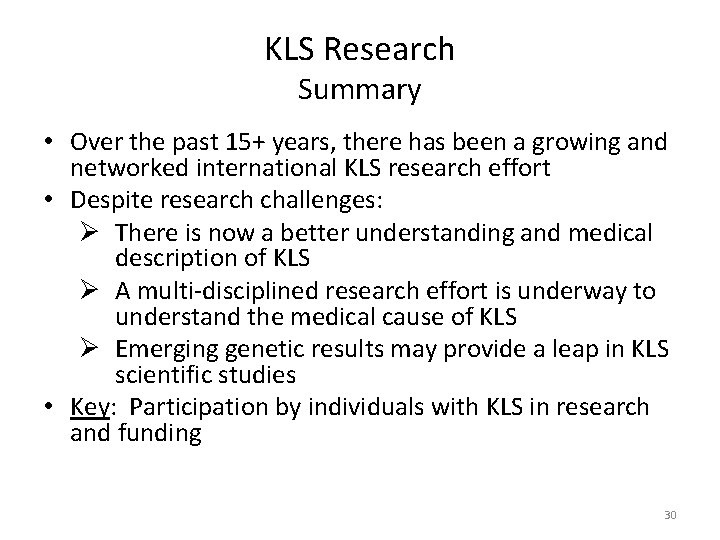
KLS Research Summary • Over the past 15+ years, there has been a growing and networked international KLS research effort • Despite research challenges: Ø There is now a better understanding and medical description of KLS Ø A multi-disciplined research effort is underway to understand the medical cause of KLS Ø Emerging genetic results may provide a leap in KLS scientific studies • Key: Participation by individuals with KLS in research and funding 30
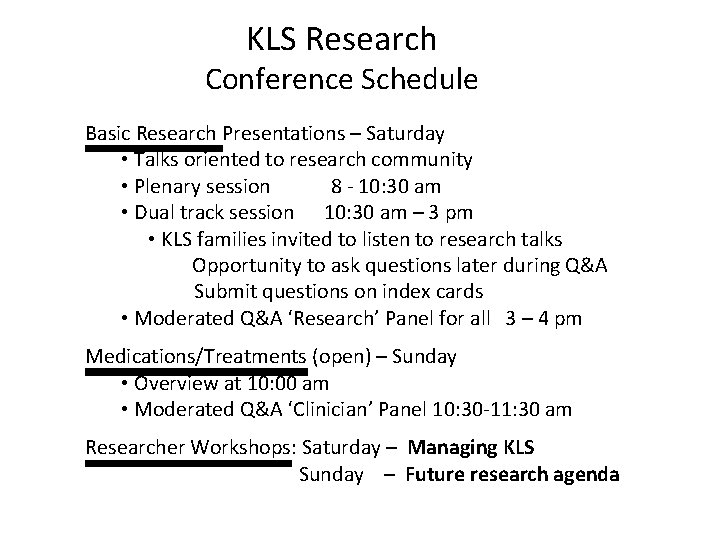
KLS Research Conference Schedule Basic Research Presentations – Saturday • Talks oriented to research community • Plenary session 8 - 10: 30 am • Dual track session 10: 30 am – 3 pm • KLS families invited to listen to research talks Opportunity to ask questions later during Q&A Submit questions on index cards • Moderated Q&A ‘Research’ Panel for all 3 – 4 pm Medications/Treatments (open) – Sunday • Overview at 10: 00 am • Moderated Q&A ‘Clinician’ Panel 10: 30 -11: 30 am Researcher Workshops: Saturday – Managing KLS Sunday – Future research agenda
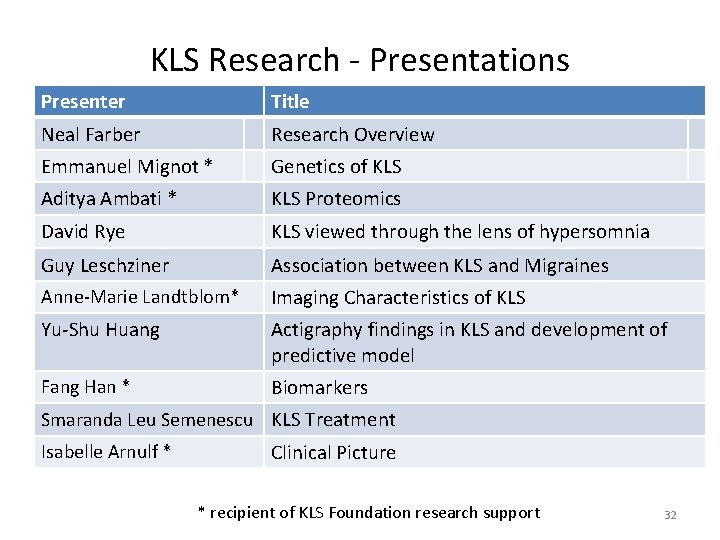
KLS Research - Presentations Presenter Title Neal Farber Research Overview Emmanuel Mignot * Genetics of KLS Aditya Ambati * KLS Proteomics David Rye KLS viewed through the lens of hypersomnia Guy Leschziner Anne-Marie Landtblom* Association between KLS and Migraines Yu-Shu Huang Actigraphy findings in KLS and development of predictive model Fang Han * Biomarkers Imaging Characteristics of KLS Smaranda Leu Semenescu KLS Treatment Isabelle Arnulf * Clinical Picture * recipient of KLS Foundation research support 32
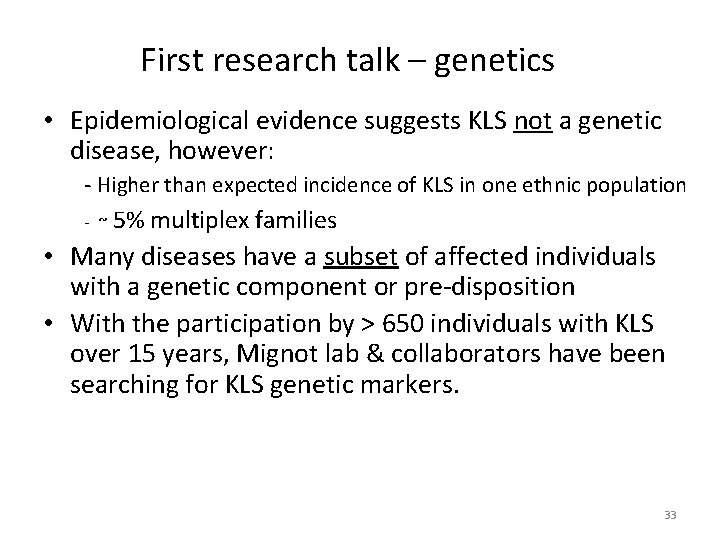
First research talk – genetics • Epidemiological evidence suggests KLS not a genetic disease, however: - Higher than expected incidence of KLS in one ethnic population - ~ 5% multiplex families • Many diseases have a subset of affected individuals with a genetic component or pre-disposition • With the participation by > 650 individuals with KLS over 15 years, Mignot lab & collaborators have been searching for KLS genetic markers. 33
Amazon gives 5% of every purchase to the KLS Foundation if you use the KLS Foundation’s Amazon Smile Link: smile. amazon. com/ch/31 -1685893
“Your illness does not define you. Your strength & courage does. ”
50% of all sales go to the KLS Foundation for Research
THANK YOU TO OUR SPONSORS!