
Kitchen Safety Learning intentions To find out about
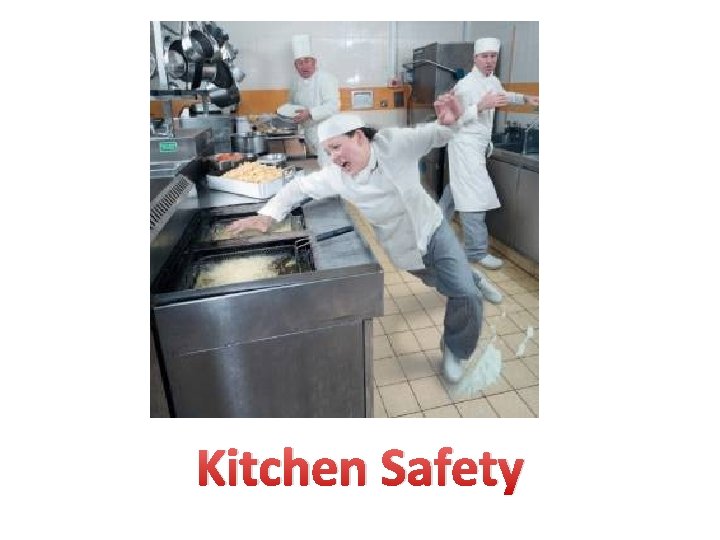
Kitchen Safety
Learning intentions: • To find out about the safety hazards in the kitchen environment. • To know how to avoid accidents and safety hazards during practical cookery classes in the future.
• Why is it important to be safe when working in the kitchen? • What examples of safety hazards in kitchen can you give? What can happen if we are not being safe when working in the kitchen?
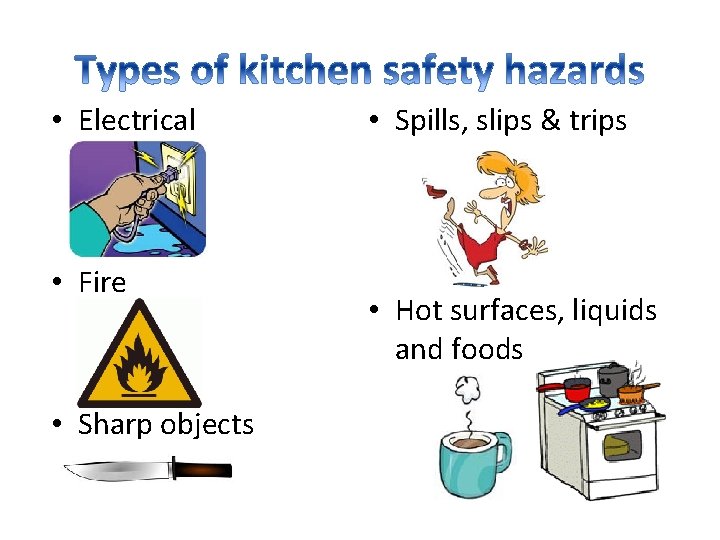
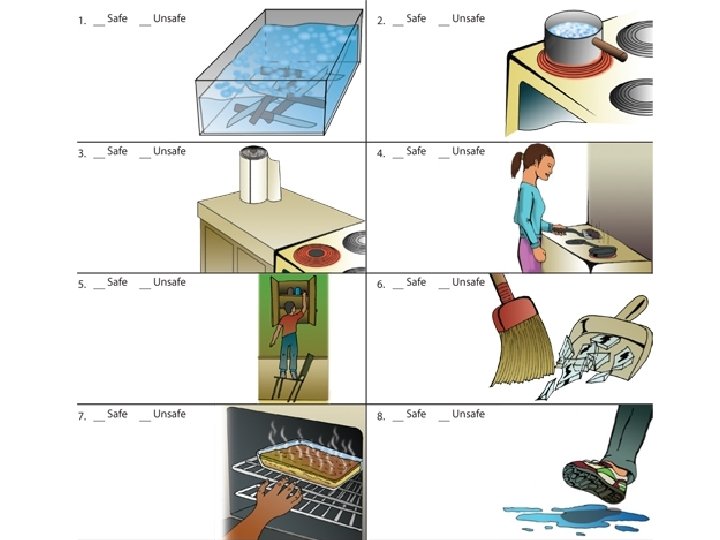
• Electrical • Fire • Sharp objects • Spills, slips & trips • Hot surfaces, liquids and foods
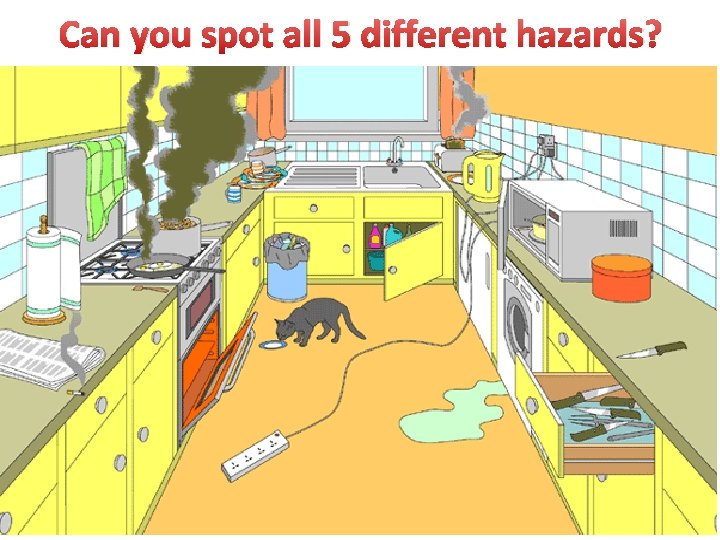
Can you spot all 5 different hazards?
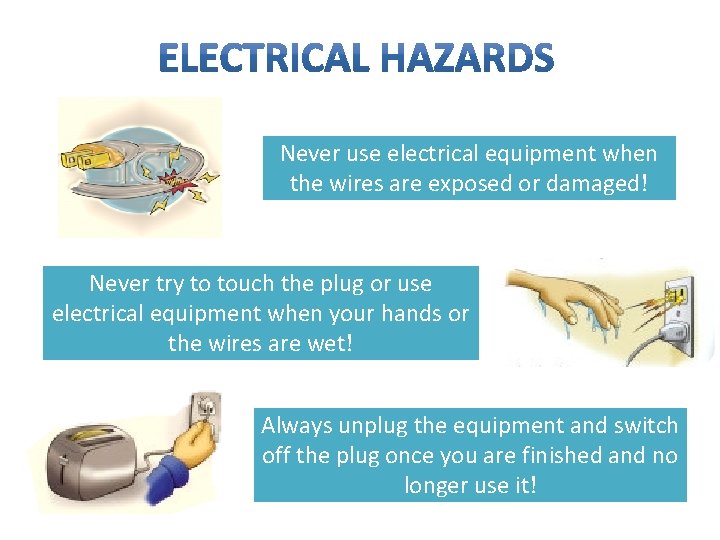
Never use electrical equipment when the wires are exposed or damaged! Never try to touch the plug or use electrical equipment when your hands or the wires are wet! Always unplug the equipment and switch off the plug once you are finished and no longer use it!
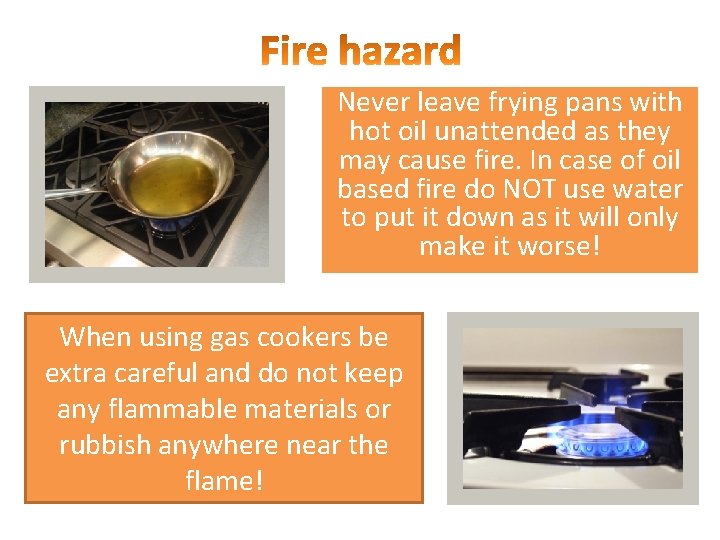
Never leave frying pans with hot oil unattended as they may cause fire. In case of oil based fire do NOT use water to put it down as it will only make it worse! When using gas cookers be extra careful and do not keep any flammable materials or rubbish anywhere near the flame!
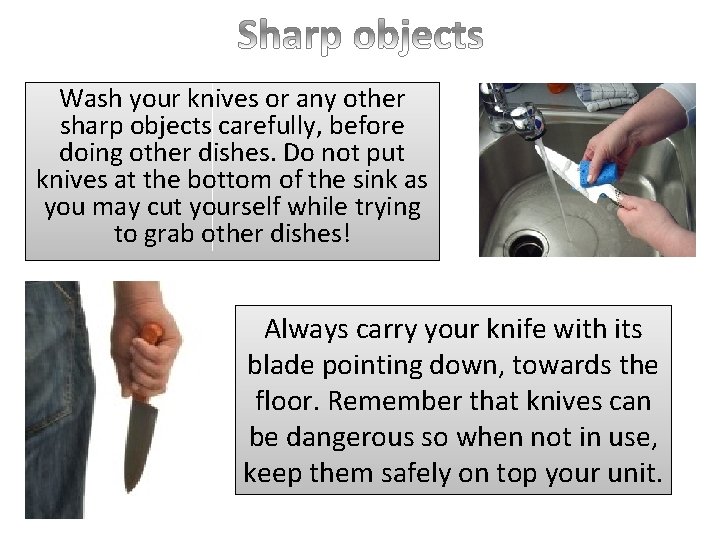
Wash your knives or any other sharp objects carefully, before doing other dishes. Do not put knives at the bottom of the sink as you may cut yourself while trying to grab other dishes! Always carry your knife with its blade pointing down, towards the floor. Remember that knives can be dangerous so when not in use, keep them safely on top your unit.
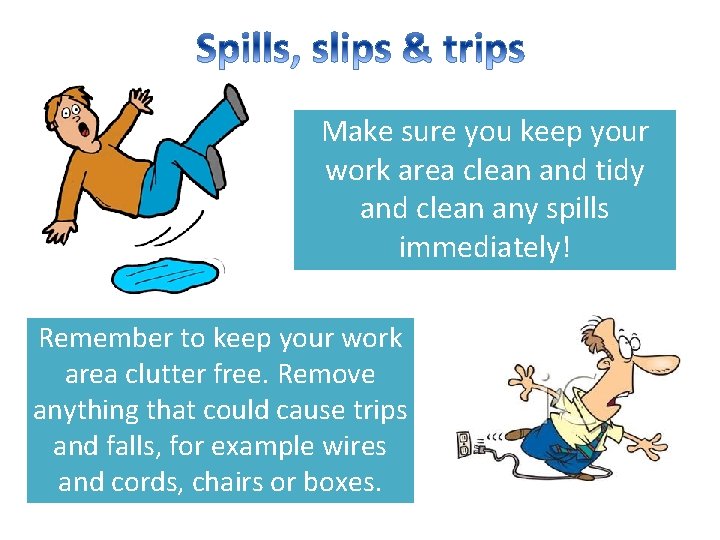
Make sure you keep your work area clean and tidy and clean any spills immediately! Remember to keep your work area clutter free. Remove anything that could cause trips and falls, for example wires and cords, chairs or boxes.
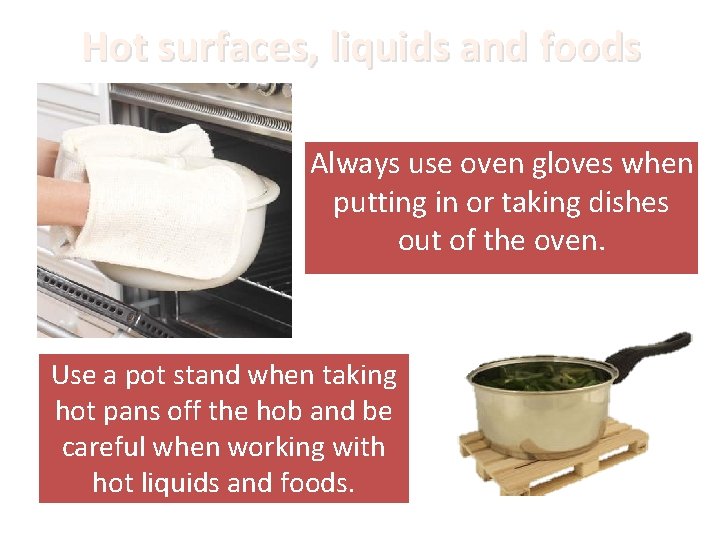
Hot surfaces, liquids and foods Always use oven gloves when putting in or taking dishes out of the oven. Use a pot stand when taking hot pans off the hob and be careful when working with hot liquids and foods.
Kitchen safety interactive game http: //www. sensoryworld. org/kitchen_safety. ht ml
- Slides: 12