
Kitchen Essentials 4 2 Standardization Portion Control The
- Slides: 25
Kitchen Essentials 4. 2 Standardization Portion Control
The Need for Standardization ▶ Reduces customer discontent ◦ Ensures quantity and quality ▶ Eliminates excessive cost
The Need for Standardization ▶ Ensures all kitchen employees have needed production information readily available ◦ Available on either recipe cards or maintained in computer files ◦ Recipe will be prepared exactly the same each time ◦ Must be available to employees preparing the food
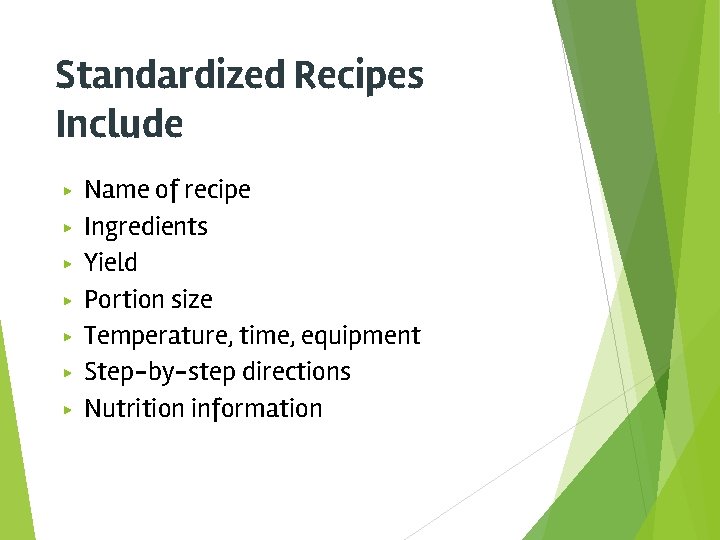
Standardized Recipes ▶ Recipes for institutional use, or standardized recipes, must follow a format that is clear to anyone who uses them. ▶ A standardized recipe lists the ingredients first, in the order they are to be used, followed by assembly directions or the method for putting the ingredients together.
Standardized Recipes Include ▶ ▶ ▶ ▶ Name of recipe Ingredients Yield Portion size Temperature, time, equipment Step-by-step directions Nutrition information
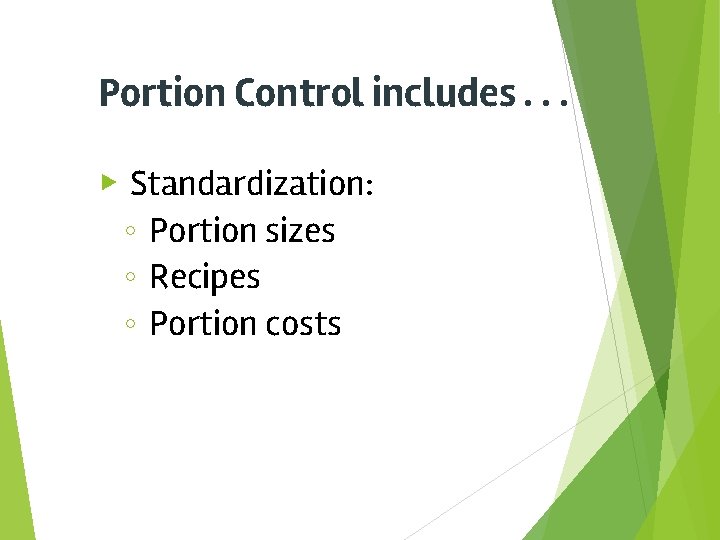
Portion Control includes. . . ▶ Standardization: ◦ Portion sizes ◦ Recipes ◦ Portion costs
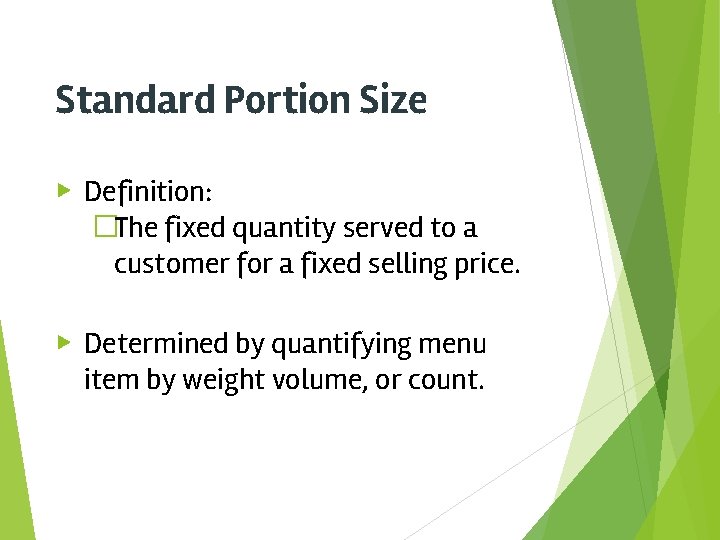
Standard Portion Size ▶ Definition: �The fixed quantity served to a customer for a fixed selling price. ▶ Determined by quantifying menu item by weight volume, or count.
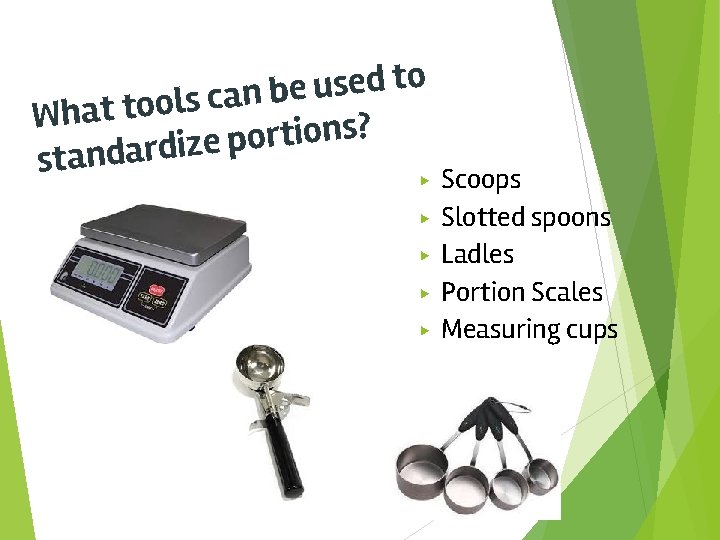
o t d e s u e b n a c s l o What to ? s n o i t r o p e z i d r a d n sta ▶ ▶ ▶ Scoops Slotted spoons Ladles Portion Scales Measuring cups
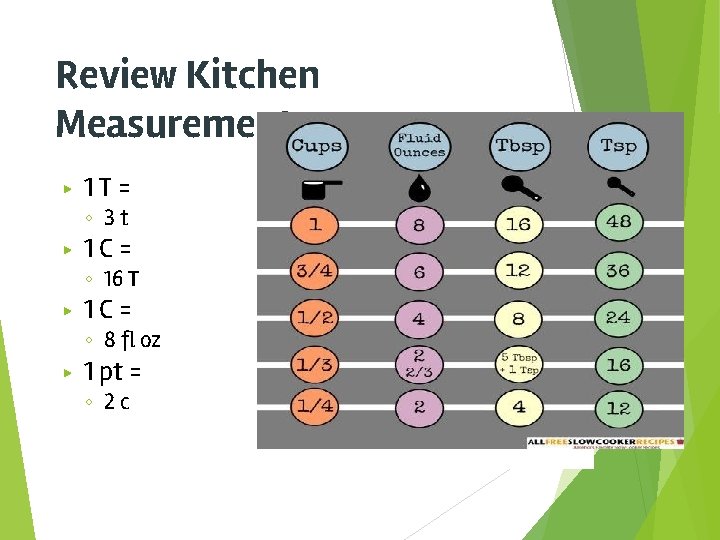
Review Kitchen Measurements ▶ 1 T= ◦ 3 t ▶ 1 C= ◦ 16 T ▶ 1 C= ◦ 8 fl oz ▶ 1 pt = ◦ 2 c
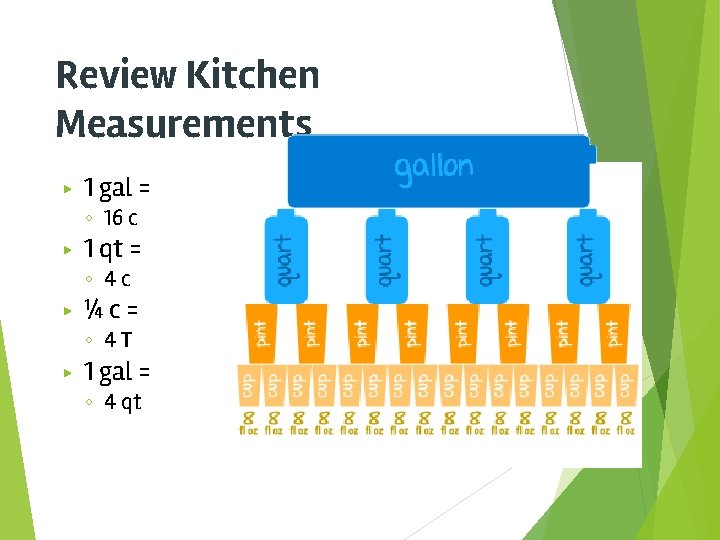
Review Kitchen Measurements ▶ 1 gal = ◦ 16 c ▶ 1 qt = ◦ 4 c ▶ ¼c= ◦ 4 T ▶ 1 gal = ◦ 4 qt
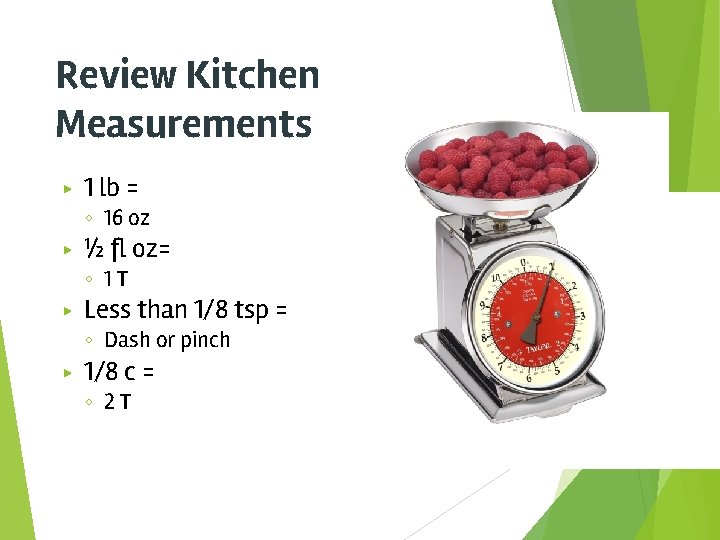
Review Kitchen Measurements ▶ 1 lb = ◦ 16 oz ▶ ½ fl oz= ◦ 1 T ▶ Less than 1/8 tsp = ◦ Dash or pinch ▶ 1/8 c = ◦ 2 T
Measuring Measurement refers to how much of something is being used in a recipe. ▶ Volume is the amount of space an ingredient takes up ◦Best used for liquids ◦Liquid measuring cups are see-through and have measurement markings on the side. 4. 2
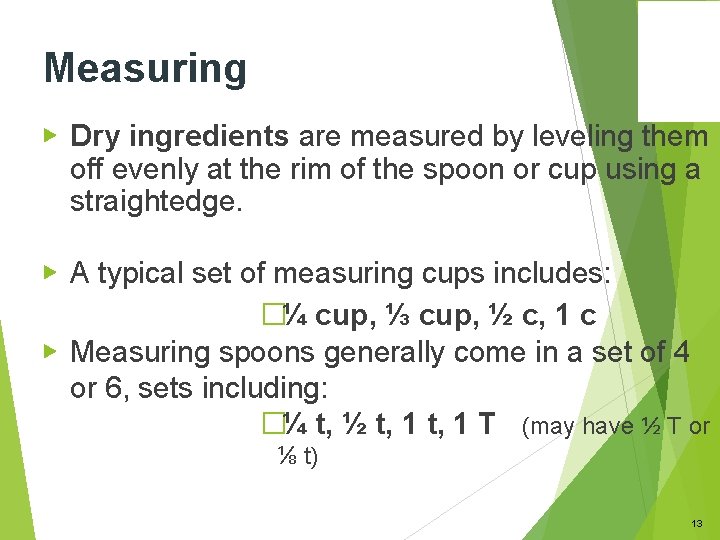
Measuring ▶ Dry ingredients are measured by leveling them off evenly at the rim of the spoon or cup using a straightedge. ▶ A typical set of measuring cups includes: �¼ cup, ⅓ cup, ½ c, 1 c ▶ Measuring spoons generally come in a set of 4 or 6, sets including: �¼ t, ½ t, 1 T (may have ½ T or ⅛ t) 4. 2 13
Measuring ▶ Weight is the measurement of an item’s resistance to gravity. ◦ Weight is expressed in ounces and pounds. ◦ A food scale is helpful for measuring ingredients by weight. 4. 2 14
Measuring ▶ Fat can be measured in several ways. ◦ Stick method: Used for fat that comes in 1/4 -pound sticks, such as butter or margarine. The wrapper is marked in tablespoons and in fractions of a cup. Simply cut off the amount needed. ◦ Dry measuring cup method: Pack the fat down into ◦ Water displacement method: This method involves the cup. Level off the top. When adding to the recipe, use a rubber scraper to empty as much of the fat as possible from the cup. combining fat with water in a liquid measuring cup. 15 4. 2
Converting Recipes Convert a recipe when the yield of the recipe (the amount it provides) is not the same as the amount of product needed. ▶ The conversion of the recipe affects the cost of the recipe, but not necessarily the cost of the portion. ▶ When properly converted and prepared, the quality of the product produced from the recipe should not vary from the original, no matter how many portions it yields. 16
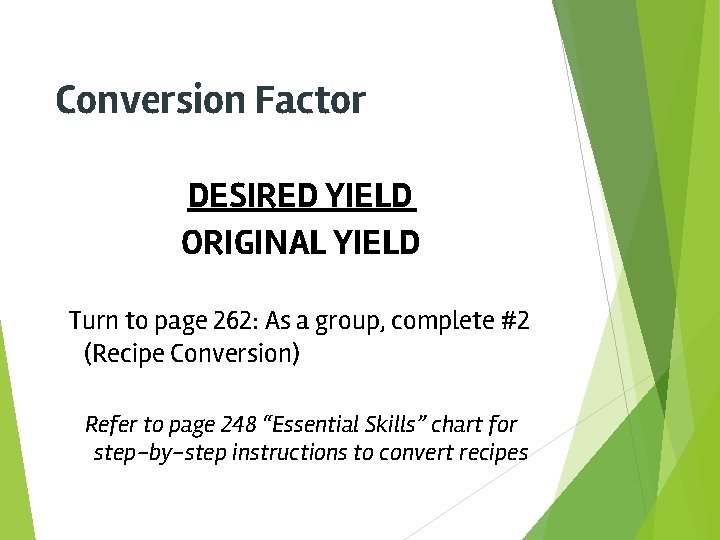
Conversion Factor DESIRED YIELD ORIGINAL YIELD Turn to page 262: As a group, complete #2 (Recipe Conversion) Refer to page 248 “Essential Skills” chart for step-by-step instructions to convert recipes
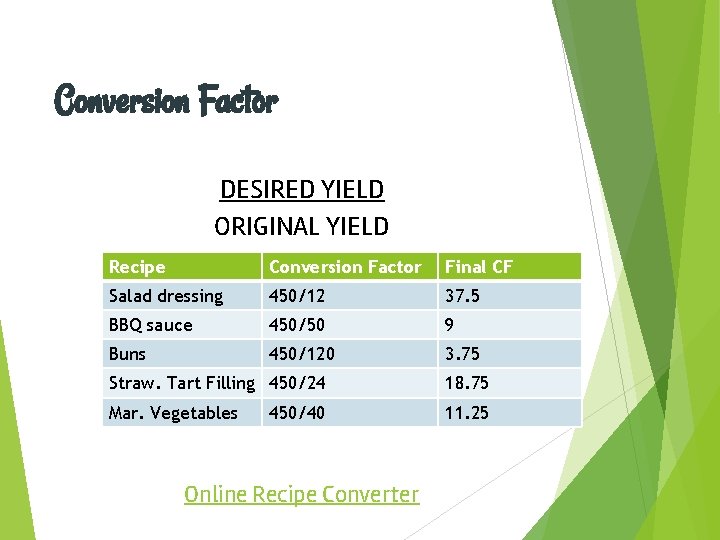
Conversion Factor DESIRED YIELD ORIGINAL YIELD Recipe Conversion Factor Final CF Salad dressing 450/12 37. 5 BBQ sauce 450/50 9 Buns 450/120 3. 75 Straw. Tart Filling 450/24 18. 75 Mar. Vegetables 11. 25 450/40 Online Recipe Converter
EP/AP Amounts ▶ Most vegetables have to be trimmed and cut before being used in recipes. ▶ Cooks must calculate the EDIBLE PORTION (EP) amount from the untrimmed AS PURCHASED (AP) amount ▶Products today can frequently be 4. 2 purchased in an “as edible portion. ” 19
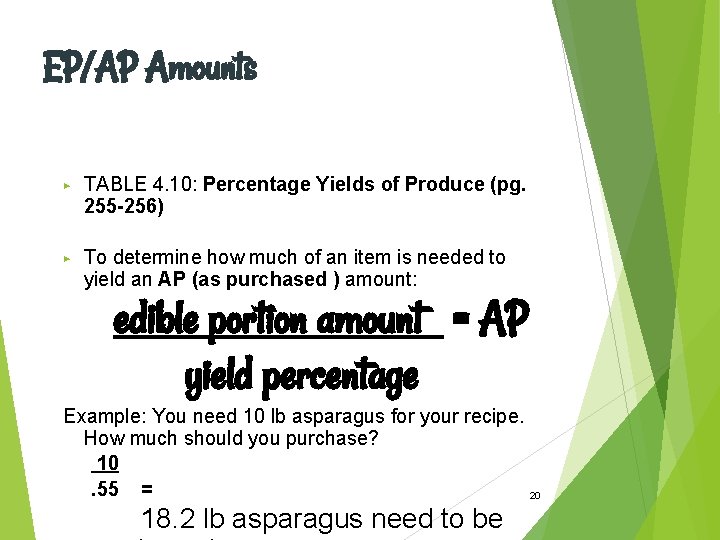
EP/AP Amounts ▶ TABLE 4. 10: Percentage Yields of Produce (pg. 255 -256) ▶ To determine how much of an item is needed to yield an AP (as purchased ) amount: edible portion amount = AP yield percentage Example: You need 10 lb asparagus for your recipe. How much should you purchase? 10. 55 = 20 4. 2 18. 2 lb asparagus need to be
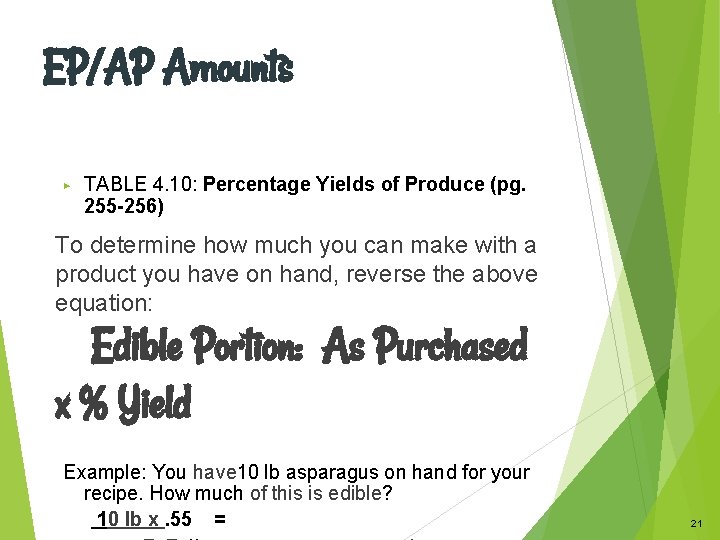
EP/AP Amounts ▶ TABLE 4. 10: Percentage Yields of Produce (pg. 255 -256) To determine how much you can make with a product you have on hand, reverse the above equation: Edible Portion: As Purchased x % Yield Example: You have 10 lb asparagus on hand for your recipe. How much of this is edible? 4. 2 10 lb x. 55 = 21
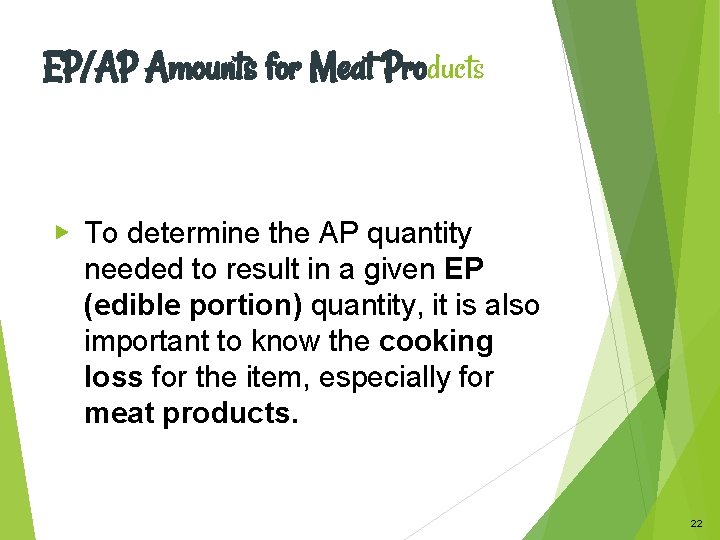
EP/AP Amounts for Meat Products ▶ To determine the AP quantity needed to result in a given EP (edible portion) quantity, it is also important to know the cooking loss for the item, especially for meat products. 4. 2 22
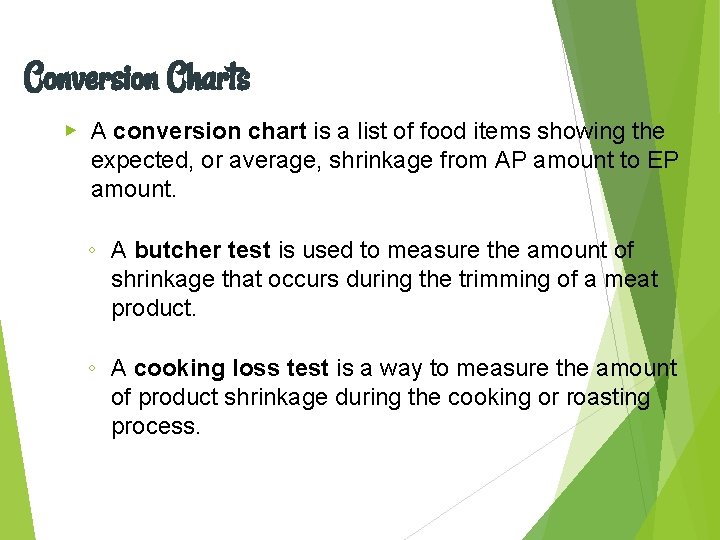
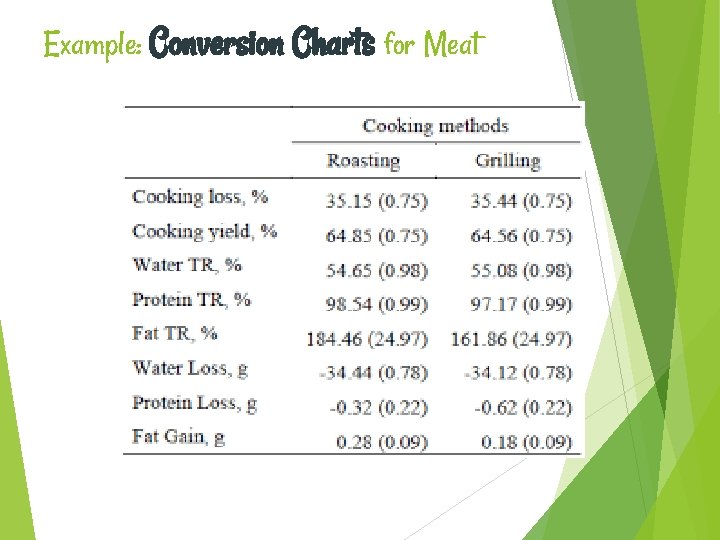
Conversion Charts ▶ A conversion chart is a list of food items showing the expected, or average, shrinkage from AP amount to EP amount. ◦ A butcher test is used to measure the amount of shrinkage that occurs during the trimming of a meat product. ◦ A cooking loss test is a way to measure the amount of product shrinkage during the cooking or roasting process.
Example: Conversion Charts for Meat
Time to Practice 4. 2 WORK PACKET Standardized Recipes Crossword Recipe Conversion Determining Yields