
KITCHEN BASICS Microwave Ovens Read the manual and
KITCHEN BASICS
Microwave Ovens Read the manual and know how to operate your microwave properly § Using & Caring for Microwave Ovens: Do not turn on a microwave when empty. § Use only microwave safe cookware, like class, ceramic, plastic and paper. Do not use metal cookware or wires or metallic-edged dishes. § § Safety Tips: Always use a hot pad, dishes become hot in the microwave from the food. § Pierce certain foods before cooking (potatoes & hotdogs) § Remove cover so steam flows away from your face §
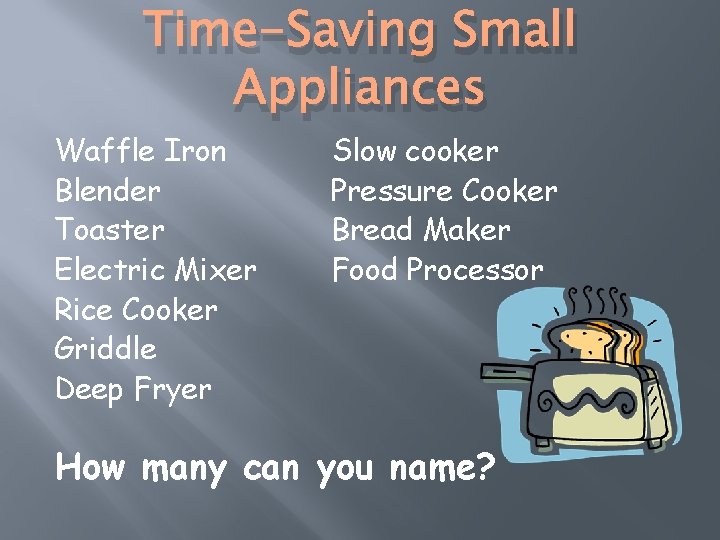
Time-Saving Small Appliances Waffle Iron Blender Toaster Electric Mixer Rice Cooker Griddle Deep Fryer Slow cooker Pressure Cooker Bread Maker Food Processor How many can you name?
Kitchen Equipment Cooking and baking tools and utensils save time and energy. § Make sure all utensils are durable and are easy to clean. Learn how to use these tools for best results: Cutting & Serving § Mixing § Baking – in the oven § Cooking – on the stovetop §
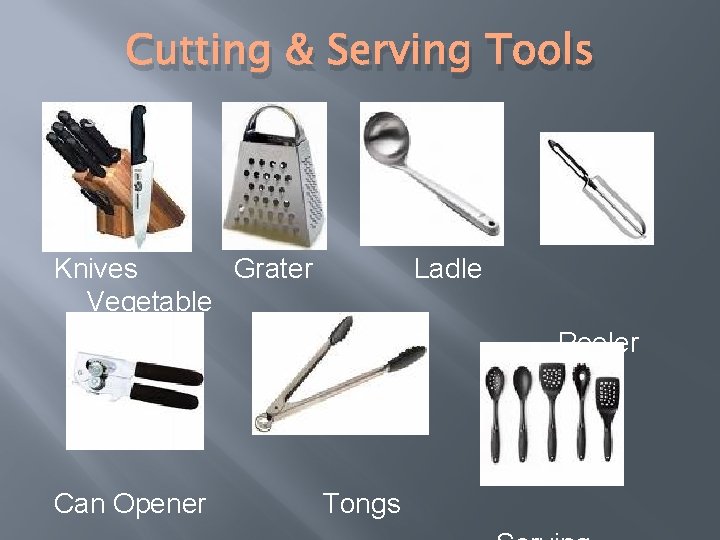
Cutting & Serving Tools Knives Grater Vegetable Ladle Peeler Can Opener Tongs
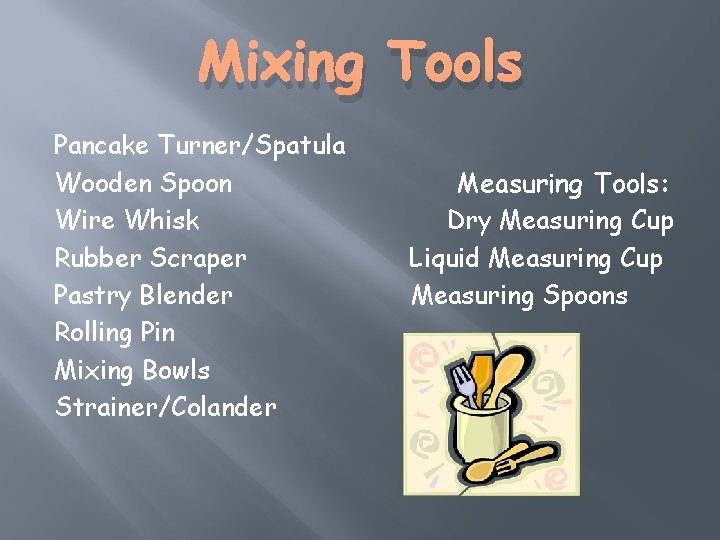
Mixing Tools Pancake Turner/Spatula Wooden Spoon Wire Whisk Rubber Scraper Pastry Blender Rolling Pin Mixing Bowls Strainer/Colander Measuring Tools: Dry Measuring Cup Liquid Measuring Cup Measuring Spoons
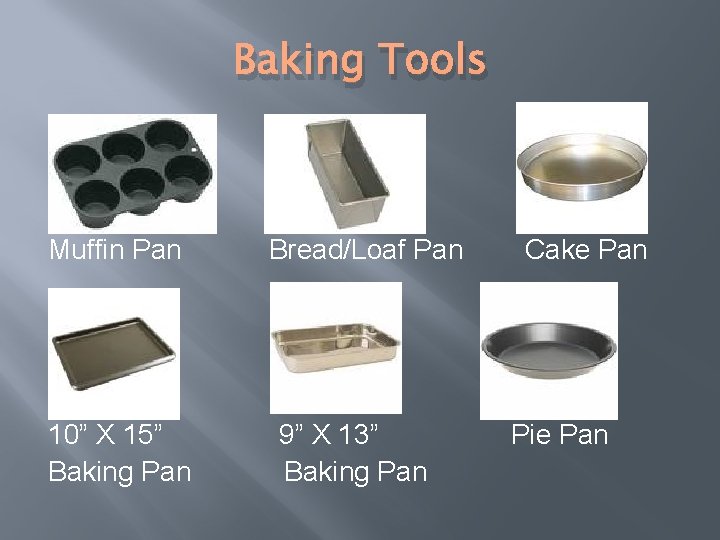
Baking Tools Muffin Pan 10” X 15” Baking Pan Bread/Loaf Pan 9” X 13” Baking Pan Cake Pan Pie Pan
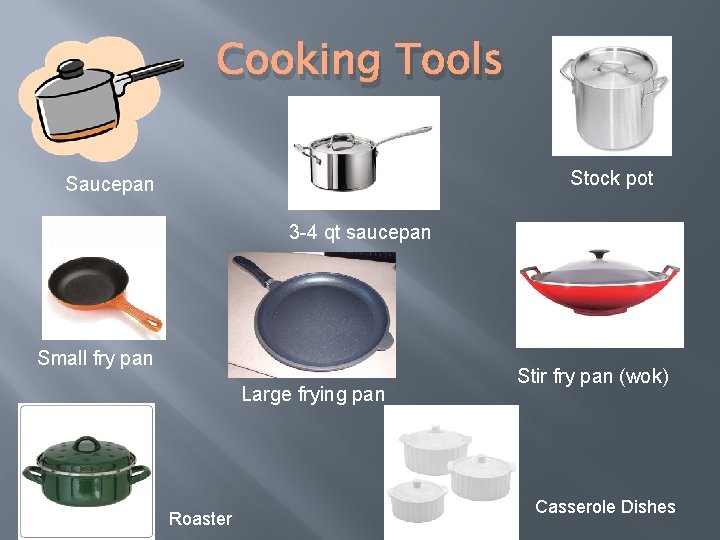
Cooking Tools Stock pot Saucepan 3 -4 qt saucepan Small fry pan Large frying pan Roaster Stir fry pan (wok) Casserole Dishes
Know How To Follow A Recipe Its is most important to know some basic cooking terms and how to measure ingredients accurately when preparing foods. Most Recipes list ingredients and directions in the order that they occur. Follow the recipe step-by-step. To Get Good Food Results From a Recipe: � Read the recipe carefully. � Get all utensils, tools and ingredients ready. � Measure accurately. � Mix as directed. � Bake or cook the required time.
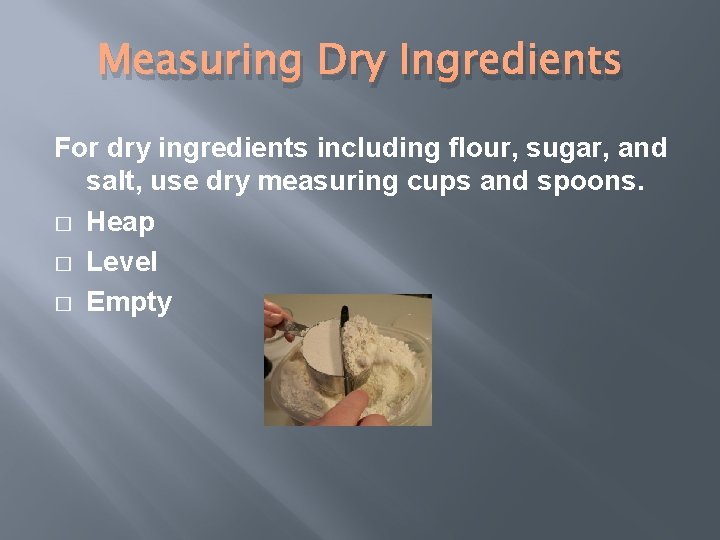
Measuring Dry Ingredients For dry ingredients including flour, sugar, and salt, use dry measuring cups and spoons. � Heap � Level � Empty
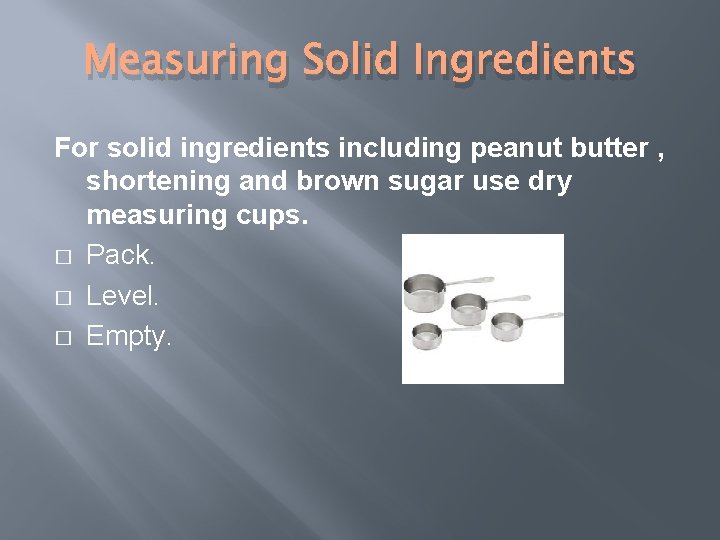
Measuring Solid Ingredients For solid ingredients including peanut butter , shortening and brown sugar use dry measuring cups. � Pack. � Level. � Empty.
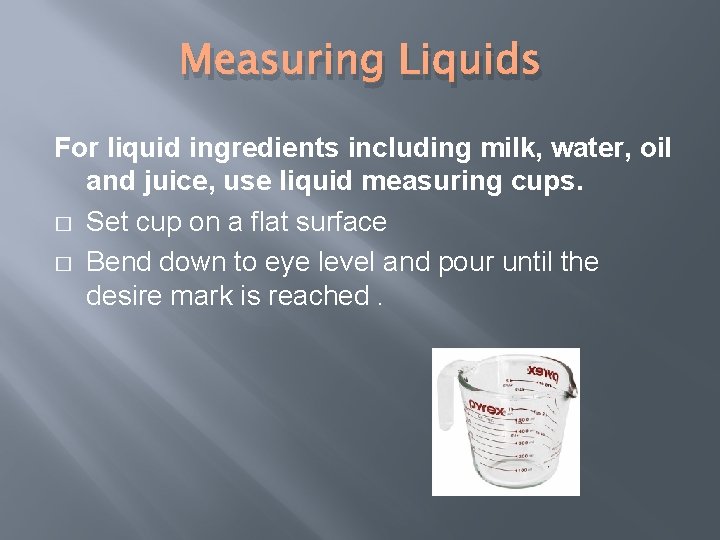
Measuring Liquids For liquid ingredients including milk, water, oil and juice, use liquid measuring cups. � Set cup on a flat surface � Bend down to eye level and pour until the desire mark is reached.
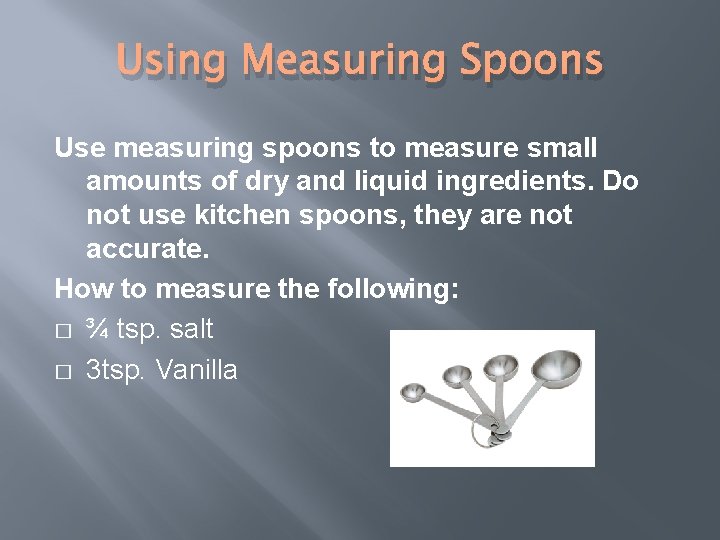
Using Measuring Spoons Use measuring spoons to measure small amounts of dry and liquid ingredients. Do not use kitchen spoons, they are not accurate. How to measure the following: � ¾ tsp. salt � 3 tsp. Vanilla
Abbreviations Do you understand these abbreviations? � Teaspoon tsp. or t. � Tablespoon tbsp. or T. � Cup c. � Pint pt. � Quart qt. � Ounce oz. � Pound lb. or # � Few grains f. g. � Fahrenheit F. Why do you think recipes have abbreviations?
Equivalents From large to small measurements : 1 Tbsp = 3 tsp. 1 c. = 16 tbsp. 2 c. = 1 pt. 4 c. = 1 qt. 16 c. = 1 gal. 2 pt. = 1 qt 4 qt. = 1 gal.
What About The Dishes? How to wash dishes properly: � Scrape the extra food into the garbage � Prepare your water, make sure its very warm, and had enough soap to clean your dishes. � Wash glasses first, then silverware, plates, and cups. Wash pots and pans last, they will make the water greasy. � Dry your dishes and put them away
Now Your Ready To Cook q Plan ahead… know your recipe and what ingredients and tools you need q -You may want to develop a time plan Get every organized q Measure ingredients carefully and follow the directions step by step q Wash your hands before and after handling foods q When finished, wash, dry and put away the tools and utensils q
- Slides: 17