
Kirkpatricks Four Level Training Evaluation Model Analyzing Training


- Slides: 13
Kirkpatrick’s Four -Level Training Evaluation Model: Analyzing Training Effectiveness next
If you deliver training for your team or your organization, then you probably know how important it is to measure its effectiveness. After all, you don't want to spend time or money on training that doesn't provide a good return. This is where Kirkpatrick's Four-Level Training Evaluation Model can help you objectively analyze the effectiveness and impact of your training, so that you can improve it in the future. next
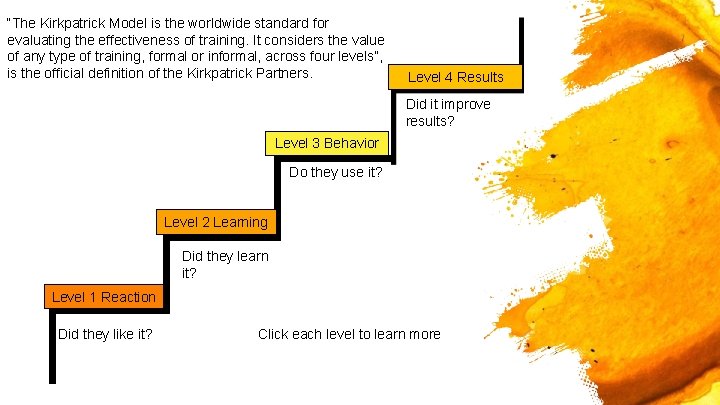
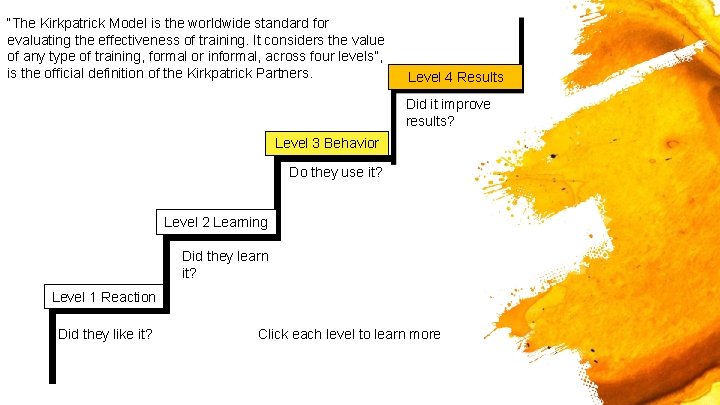
“The Kirkpatrick Model is the worldwide standard for evaluating the effectiveness of training. It considers the value of any type of training, formal or informal, across four levels”, is the official definition of the Kirkpatrick Partners. Level 4 Results Did it improve results? Level 3 Behavior Do they use it? Level 2 Learning Did they learn it? Level 1 Reaction Did they like it? Click each level to learn more
“The Kirkpatrick Model is the worldwide standard for evaluating the effectiveness of training. It considers the value of any type of training, formal or informal, across four levels”, is the official definition of the Kirkpatrick Partners. Level 4 Results Did it improve results? Level 3 Behavior Do they use it? Level 2 Learning Did they learn it? Level 1 Reaction Did they like it? Click each level to learn more
“The Kirkpatrick Model is the worldwide standard for evaluating the effectiveness of training. It considers the value of any type of training, formal or informal, across four levels”, is the official definition of the Kirkpatrick Partners. Level 4 Results Did it improve results? Level 3 Behavior Do they use it? Level 2 Learning Did they learn it? Level 1 Reaction Did they like it? Click each level to learn more
“The Kirkpatrick Model is the worldwide standard for evaluating the effectiveness of training. It considers the value of any type of training, formal or informal, across four levels”, is the official definition of the Kirkpatrick Partners. Level 4 Results Did it improve results? Level 3 Behavior Do they use it? Level 2 Learning Did they learn it? Level 1 Reaction Did they like it? Click each level to learn more
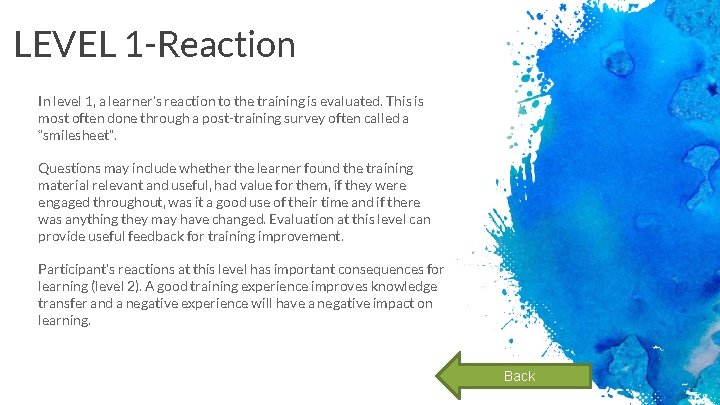
LEVEL 1 -Reaction In level 1, a learner’s reaction to the training is evaluated. This is most often done through a post-training survey often called a “smilesheet”. Questions may include whether the learner found the training material relevant and useful, had value for them, if they were engaged throughout, was it a good use of their time and if there was anything they may have changed. Evaluation at this level can provide useful feedback for training improvement. Participant’s reactions at this level has important consequences for learning (level 2). A good training experience improves knowledge transfer and a negative experience will have a negative impact on learning. Back
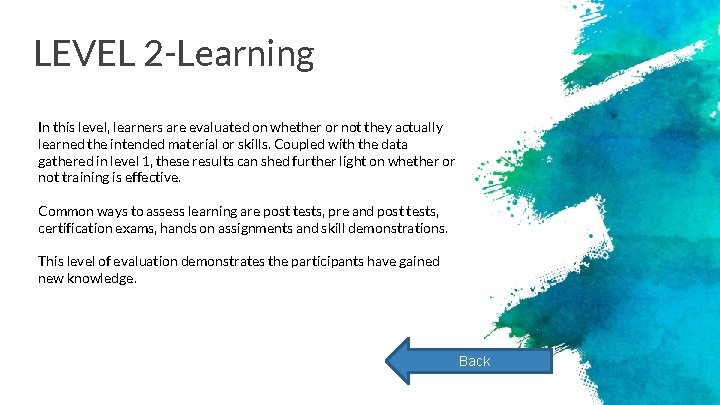
LEVEL 2 -Learning In this level, learners are evaluated on whether or not they actually learned the intended material or skills. Coupled with the data gathered in level 1, these results can shed further light on whether or not training is effective. Common ways to assess learning are post tests, pre and post tests, certification exams, hands on assignments and skill demonstrations. This level of evaluation demonstrates the participants have gained new knowledge. Back
LEVEL 3 -Behavior This level of evaluation measures whether the trainee is applying their new knowledge, skills or behaviors in the workplace and demonstrates that the training was useful and likely to be retained. Evaluating behavior changes post-training are done in an on-the-job setting. Common methods used at this level are peer evaluation, pre and post training checklists, in-field inspections or evaluations from participant’s managers Back
LEVEL 4 -Results At this level, you analyze the final results of your training. This includes outcomes that you or your organization have determined to be good for business, good for the employees, or good for the bottom line. For example, was their increased efficiency, reduced costs, quality improvements, higher morale, reduced frequency of accidents, increased sales, higher profits etc. Common methods used are: observation, surveys, interviews, before and after statistics, improved audits and performance reports and metrics. Next
The bottom line: Were your training objectives achieved? The ultimate intent of the four levels of evaluation is to show the business value and worth of training. next
Donald Kirkpatrick, Professor Emeritus at the University of Wisconsin and past president of the American Society for Training and Development (ASTD), first published his Four. Level Training Evaluation Model in 1959, in the US Training and Development Journal. next
Power. Point created by Teresa Yoder View more of my work and learn more about me at : www. teresayoderportfolio. com Questions? Comments? You can contact me at teresayoderinstructor@gmail. com. Exit