
Kingdoms Domain Archaea Corresponds to kingdom Archaebacteria Prokaryotic
Kingdoms

Domain Archaea • • • Corresponds to kingdom Archaebacteria Prokaryotic and unicellular organisms Autotrophic & Heterotrophic No organ systems Example: E-coli Cell walls lack peptidoglycan, cell membranes contain unusual lipids not found in any other organism. • Live in extreme environments (volcanic hot springs, black organic mud, salt marshes)
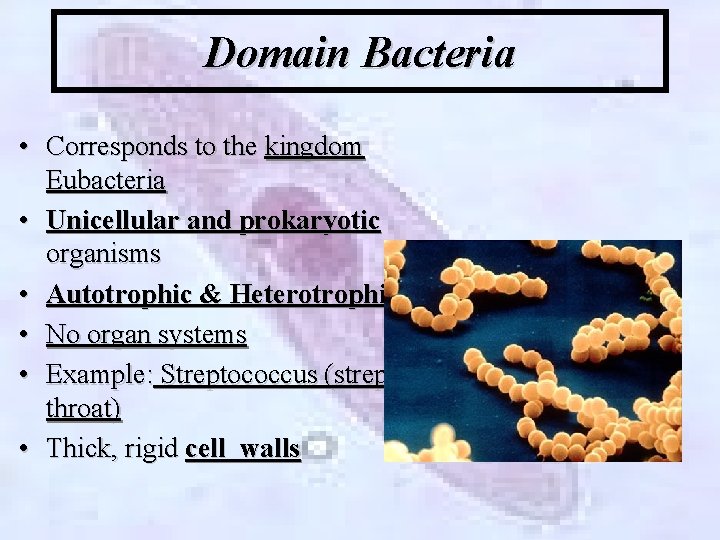
Domain Bacteria • Corresponds to the kingdom Eubacteria • Unicellular and prokaryotic organisms • Autotrophic & Heterotrophic • No organ systems • Example: Streptococcus (strep throat) • Thick, rigid cell walls
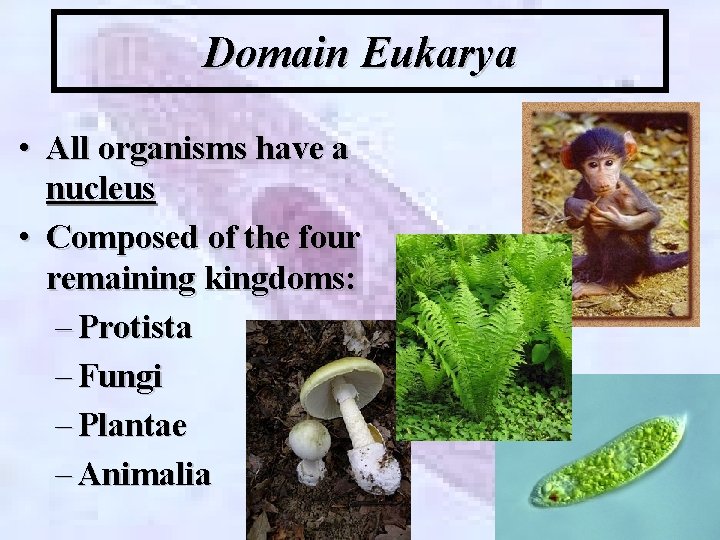
Domain Eukarya • All organisms have a nucleus • Composed of the four remaining kingdoms: – Protista – Fungi – Plantae – Animalia
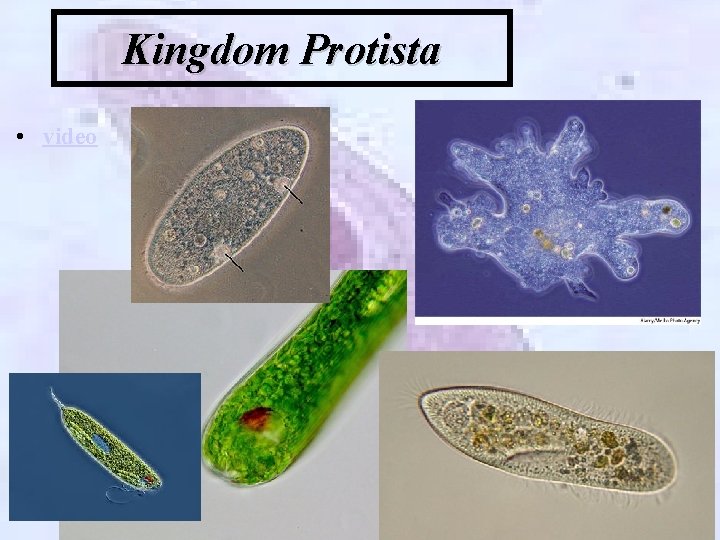
Kingdom Protista • video
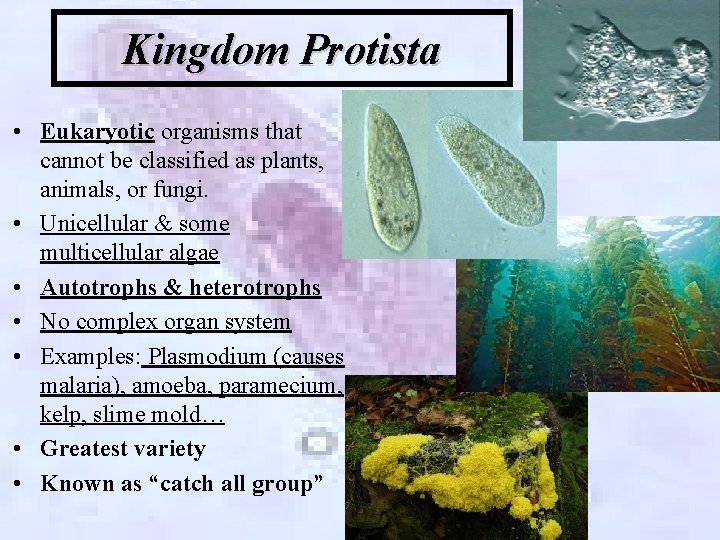
Kingdom Protista • Eukaryotic organisms that cannot be classified as plants, animals, or fungi. • Unicellular & some multicellular algae • Autotrophs & heterotrophs • No complex organ system • Examples: Plasmodium (causes malaria), amoeba, paramecium, kelp, slime mold… • Greatest variety • Known as “catch all group”
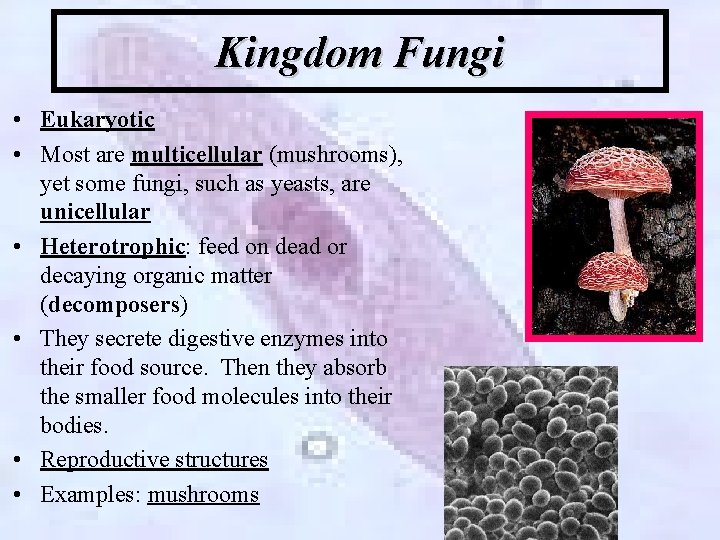
Kingdom Fungi • Eukaryotic • Most are multicellular (mushrooms), yet some fungi, such as yeasts, are unicellular • Heterotrophic: feed on dead or decaying organic matter (decomposers) • They secrete digestive enzymes into their food source. Then they absorb the smaller food molecules into their bodies. • Reproductive structures • Examples: mushrooms
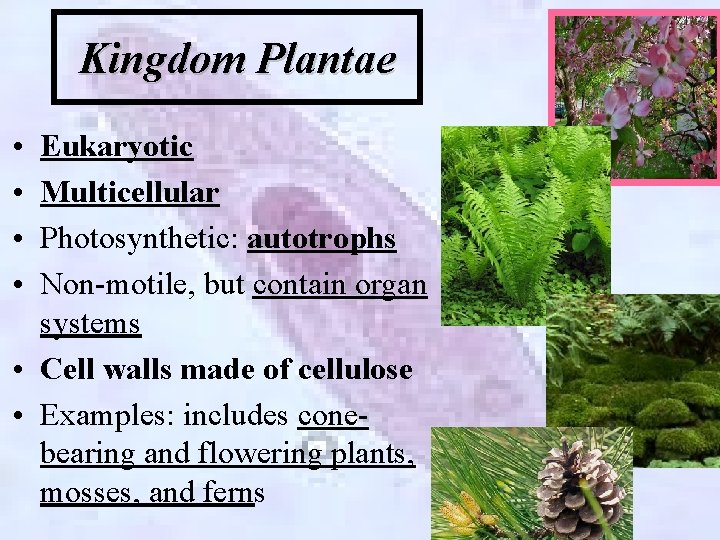
Kingdom Plantae • • Eukaryotic Multicellular Photosynthetic: autotrophs Non-motile, but contain organ systems • Cell walls made of cellulose • Examples: includes conebearing and flowering plants, mosses, and ferns
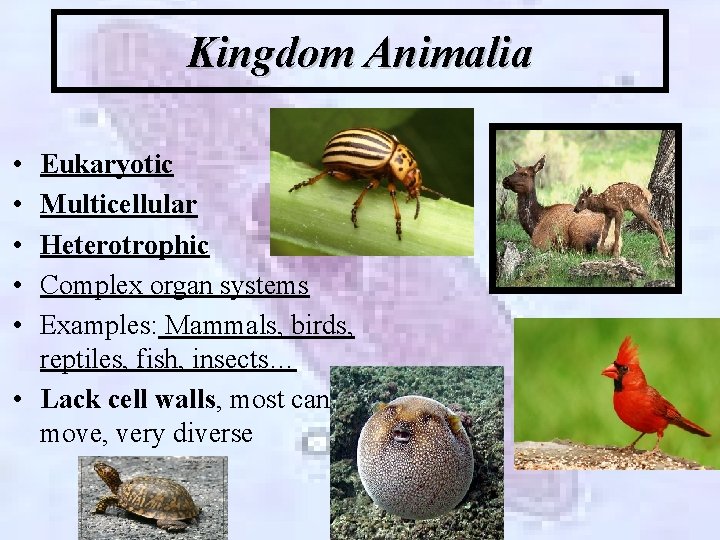
Kingdom Animalia • • • Eukaryotic Multicellular Heterotrophic Complex organ systems Examples: Mammals, birds, reptiles, fish, insects… • Lack cell walls, most can move, very diverse
- Slides: 9