
Kingdom Protista Spring 2012 Kingdom Characteristics Domain Eukarya
- Slides: 20
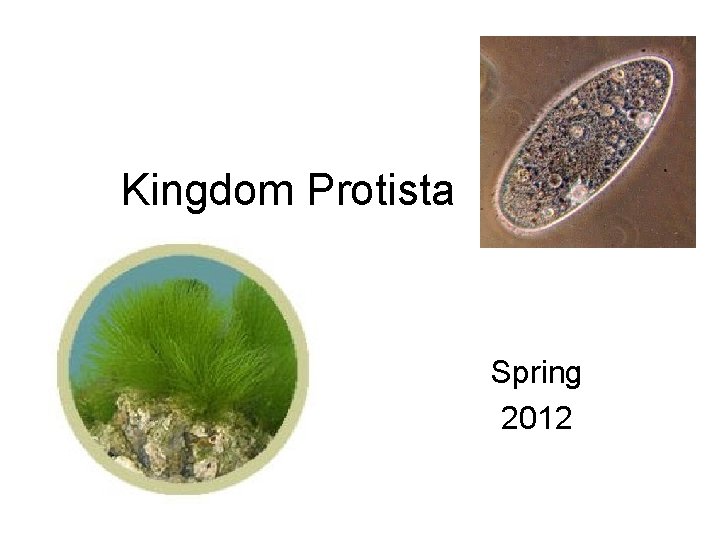
Kingdom Protista Spring 2012
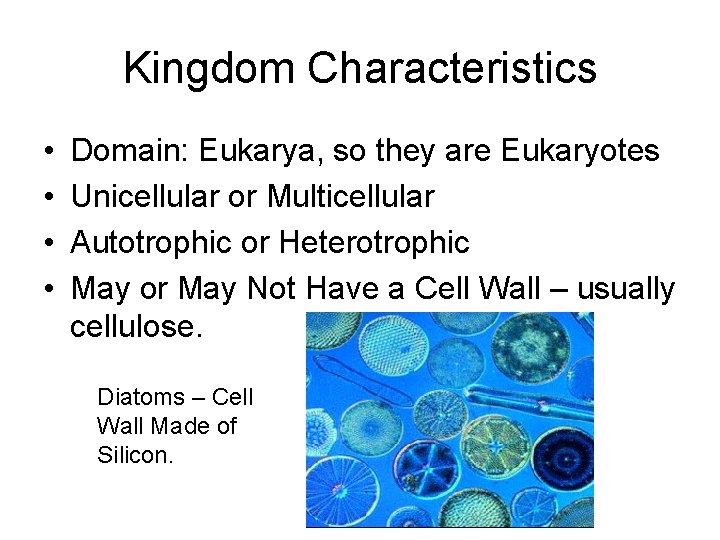
Kingdom Characteristics • • Domain: Eukarya, so they are Eukaryotes Unicellular or Multicellular Autotrophic or Heterotrophic May or May Not Have a Cell Wall – usually cellulose. Diatoms – Cell Wall Made of Silicon.
Division of the Kingdom 1. Fungus – Like Protists 2. Animal – Like Protists (Protozoans) 3. Plant – Like Protists (Algae) 1 Flap for Each Section
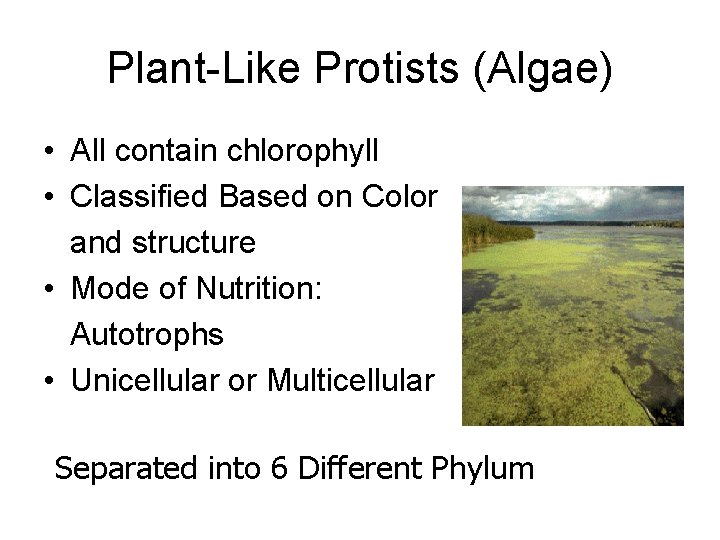
Plant-Like Protists (Algae) • All contain chlorophyll • Classified Based on Color and structure • Mode of Nutrition: Autotrophs • Unicellular or Multicellular Separated into 6 Different Phylum
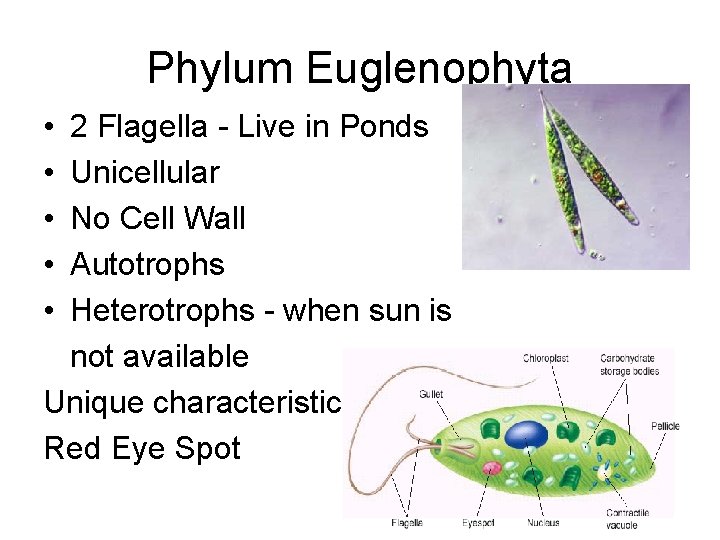
Phylum Euglenophyta • • • 2 Flagella - Live in Ponds Unicellular No Cell Wall Autotrophs Heterotrophs - when sun is not available Unique characteristics Red Eye Spot
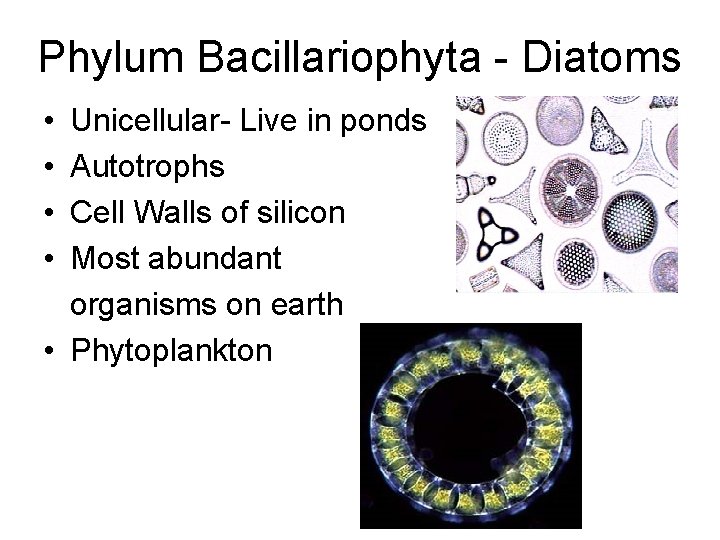
Phylum Bacillariophyta - Diatoms • • Unicellular- Live in ponds Autotrophs Cell Walls of silicon Most abundant organisms on earth • Phytoplankton
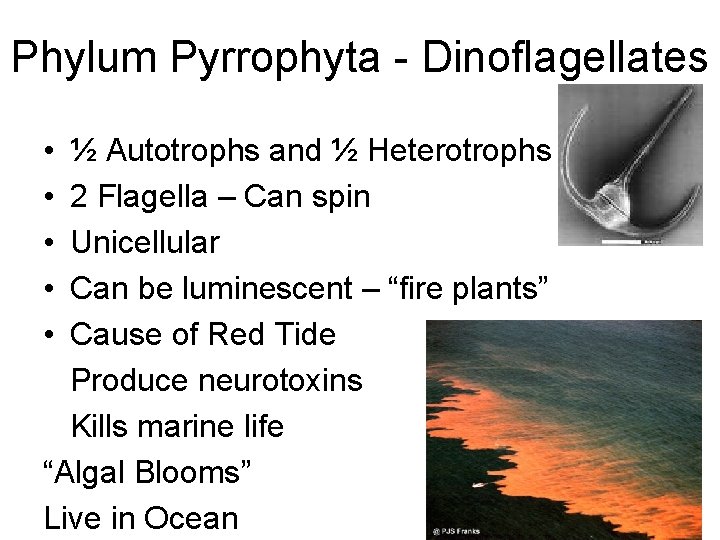
Phylum Pyrrophyta - Dinoflagellates • • • ½ Autotrophs and ½ Heterotrophs 2 Flagella – Can spin Unicellular Can be luminescent – “fire plants” Cause of Red Tide Produce neurotoxins Kills marine life “Algal Blooms” Live in Ocean
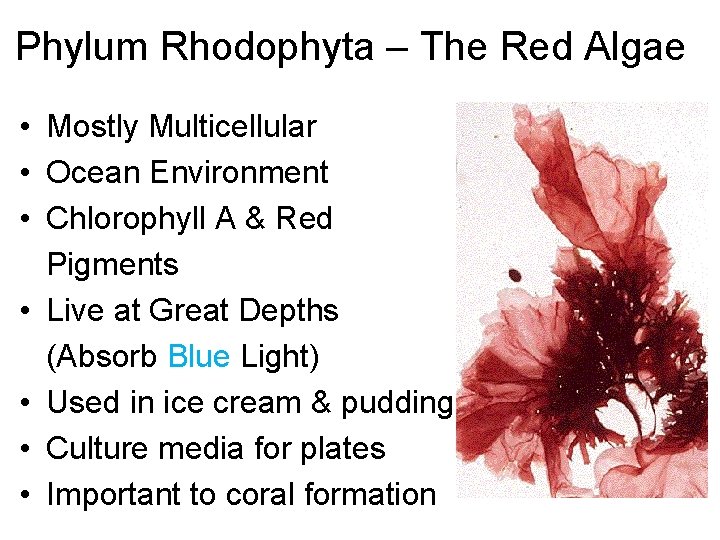
Phylum Rhodophyta – The Red Algae • Mostly Multicellular • Ocean Environment • Chlorophyll A & Red Pigments • Live at Great Depths (Absorb Blue Light) • Used in ice cream & pudding • Culture media for plates • Important to coral formation
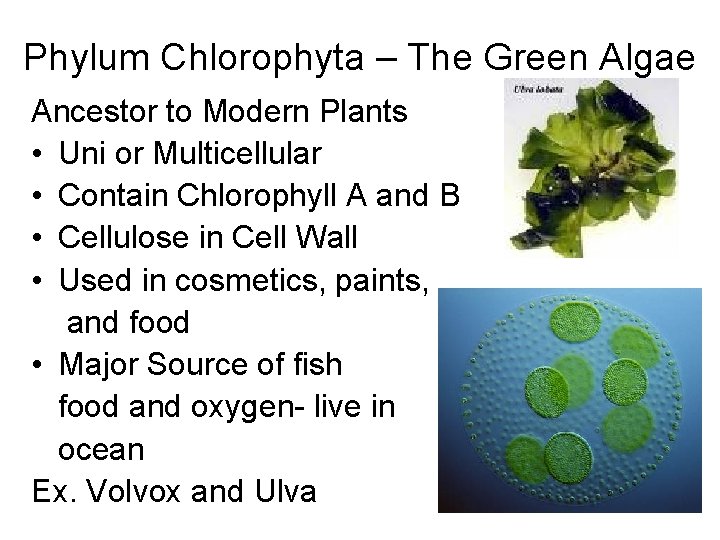
Phylum Chlorophyta – The Green Algae Ancestor to Modern Plants • Uni or Multicellular • Contain Chlorophyll A and B • Cellulose in Cell Wall • Used in cosmetics, paints, and food • Major Source of fish food and oxygen- live in ocean Ex. Volvox and Ulva
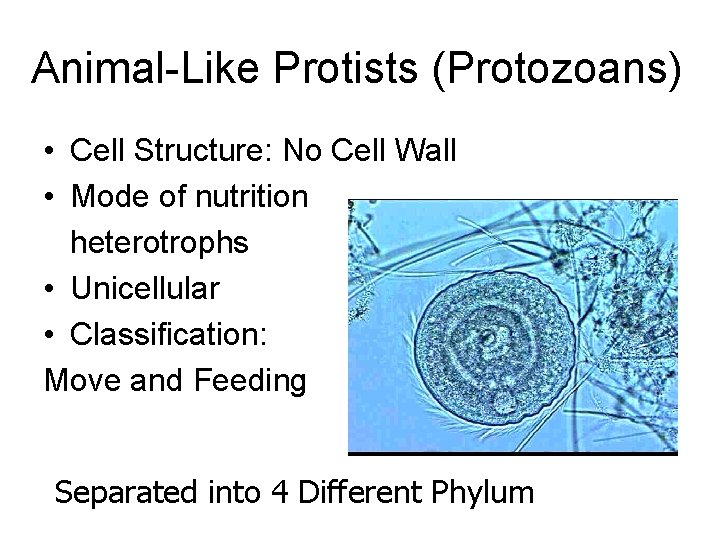
Animal-Like Protists (Protozoans) • Cell Structure: No Cell Wall • Mode of nutrition heterotrophs • Unicellular • Classification: Move and Feeding Separated into 4 Different Phylum
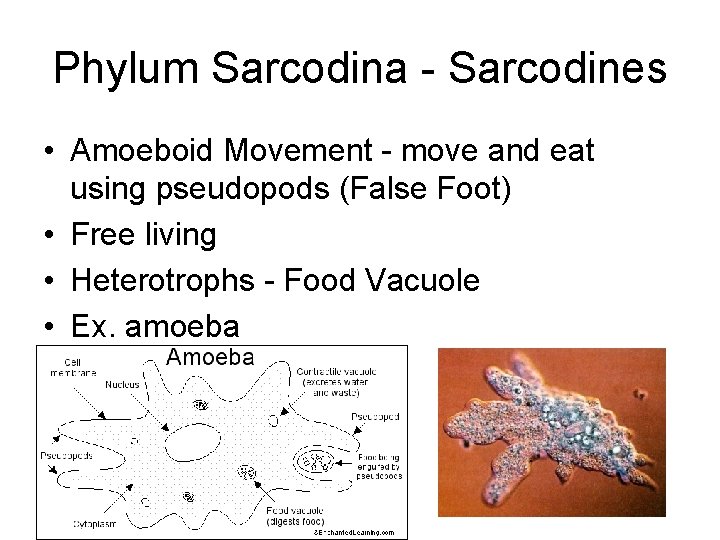
Phylum Sarcodina - Sarcodines • Amoeboid Movement - move and eat using pseudopods (False Foot) • Free living • Heterotrophs - Food Vacuole • Ex. amoeba Endocytosis - #2
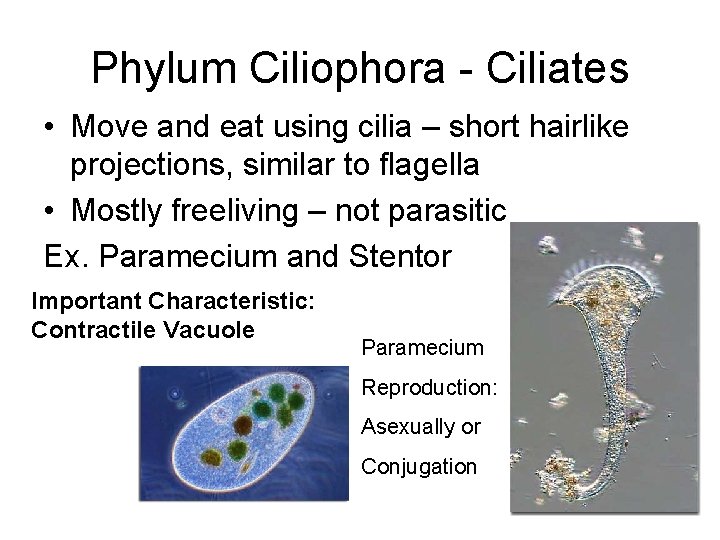
Phylum Ciliophora - Ciliates • Move and eat using cilia – short hairlike projections, similar to flagella • Mostly freeliving – not parasitic Ex. Paramecium and Stentor Important Characteristic: Contractile Vacuole Paramecium Reproduction: Asexually or Conjugation
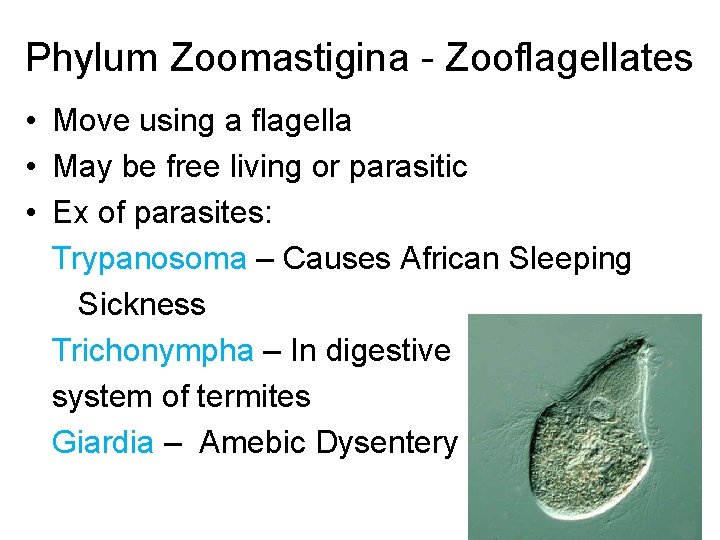
Phylum Zoomastigina - Zooflagellates • Move using a flagella • May be free living or parasitic • Ex of parasites: Trypanosoma – Causes African Sleeping Sickness Trichonympha – In digestive system of termites Giardia – Amebic Dysentery
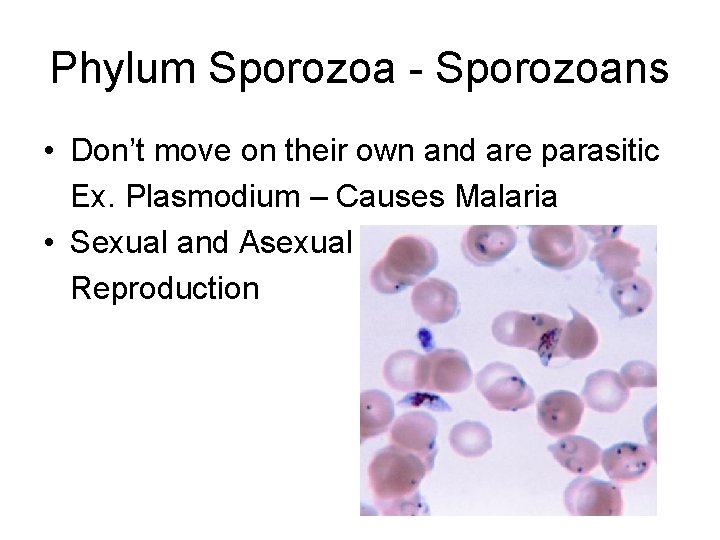
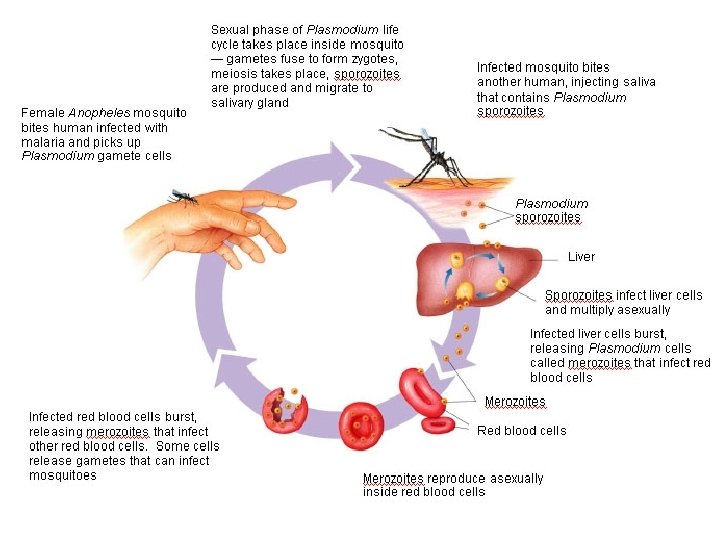
Phylum Sporozoa - Sporozoans • Don’t move on their own and are parasitic Ex. Plasmodium – Causes Malaria • Sexual and Asexual Reproduction
Malaria
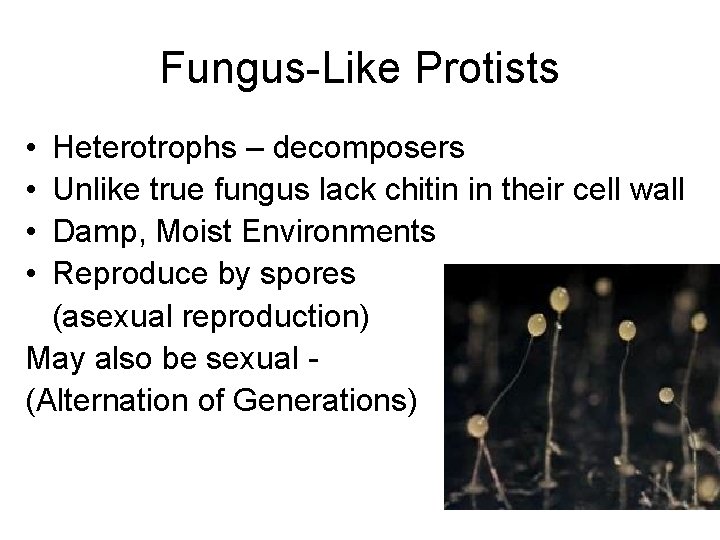
Fungus-Like Protists • • Heterotrophs – decomposers Unlike true fungus lack chitin in their cell wall Damp, Moist Environments Reproduce by spores (asexual reproduction) May also be sexual (Alternation of Generations)
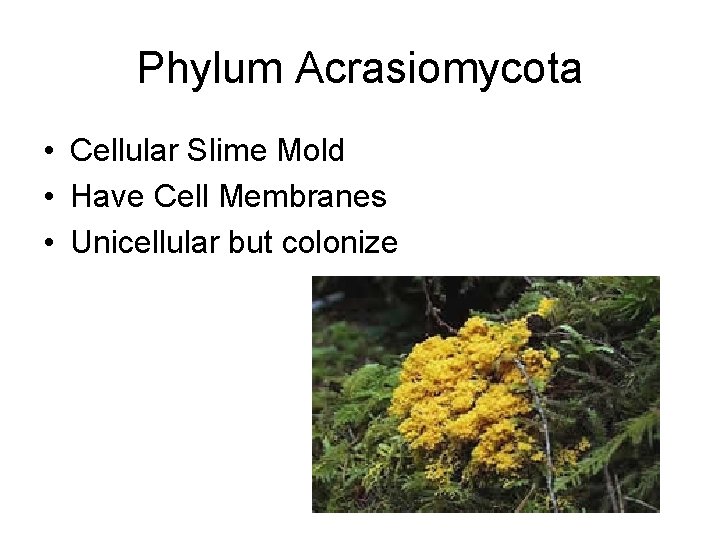
Phylum Acrasiomycota • Cellular Slime Mold • Have Cell Membranes • Unicellular but colonize
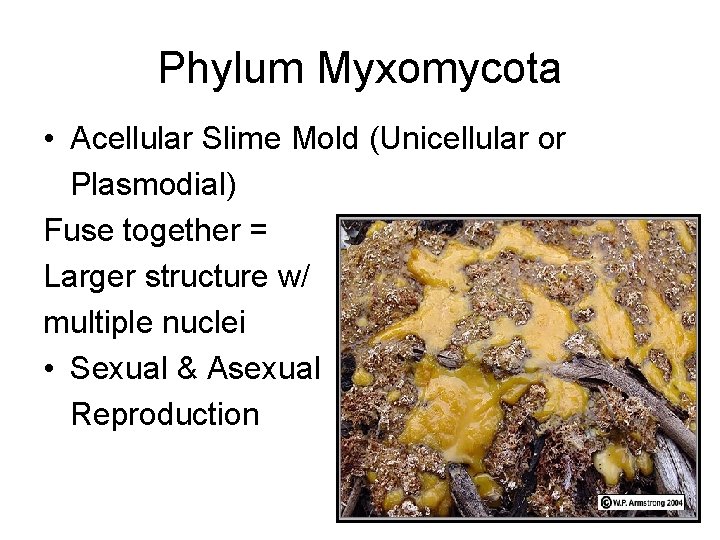
Phylum Myxomycota • Acellular Slime Mold (Unicellular or Plasmodial) Fuse together = Larger structure w/ multiple nuclei • Sexual & Asexual Reproduction
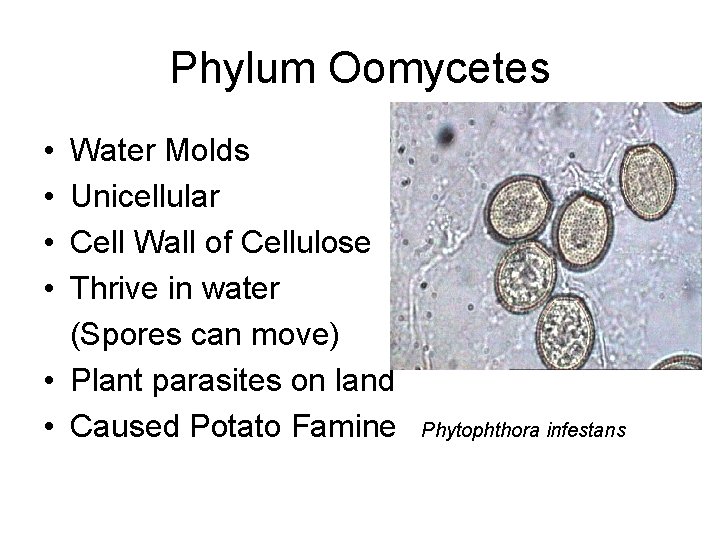
Phylum Oomycetes • • Water Molds Unicellular Cell Wall of Cellulose Thrive in water (Spores can move) • Plant parasites on land • Caused Potato Famine Phytophthora infestans
Key Questions • • What is the key characteristic all protists share? What are three categories of protists? How are plant-like and animal-like classified? Which causes malaria? Which causes algal blooms? Which is the ancestor to modern plants? Which lives at great depths due to its ability to absord blue light? • Which is responsible for the great potato famine? • Sexual reproduction by paramecium is called ______. • What is the purpose of a contractile vacuole in the paramecium?