
Kingdom Protista Special Cell Structures 1 For Movement

- Slides: 19
Kingdom Protista
Special Cell Structures
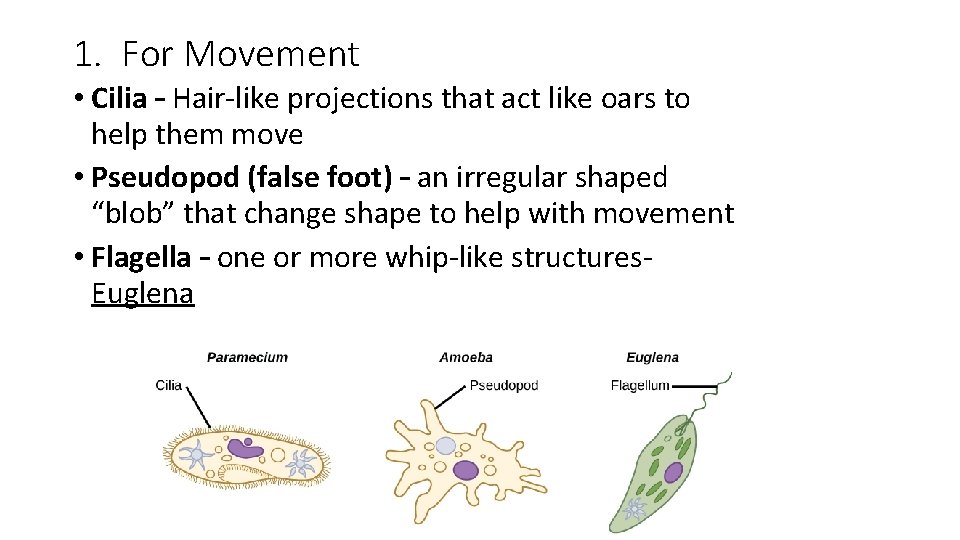
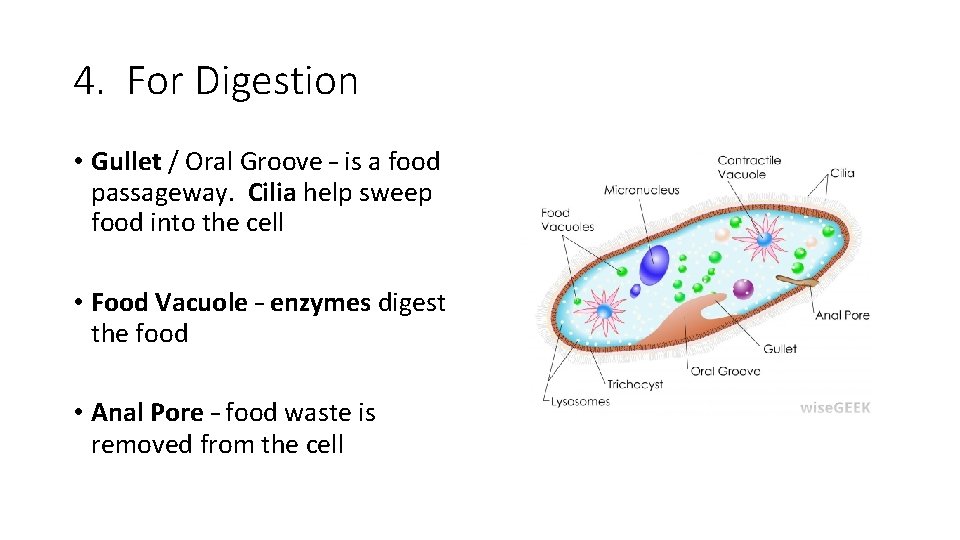
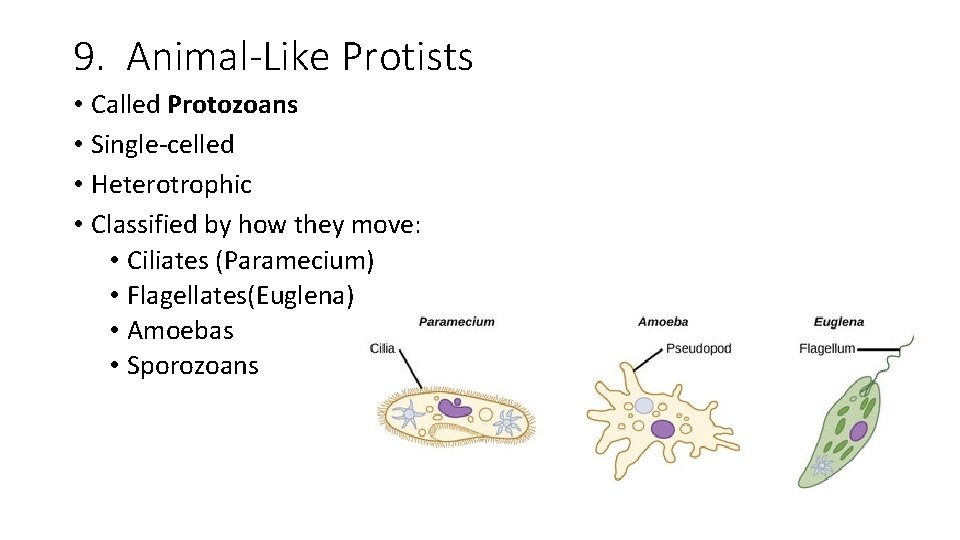
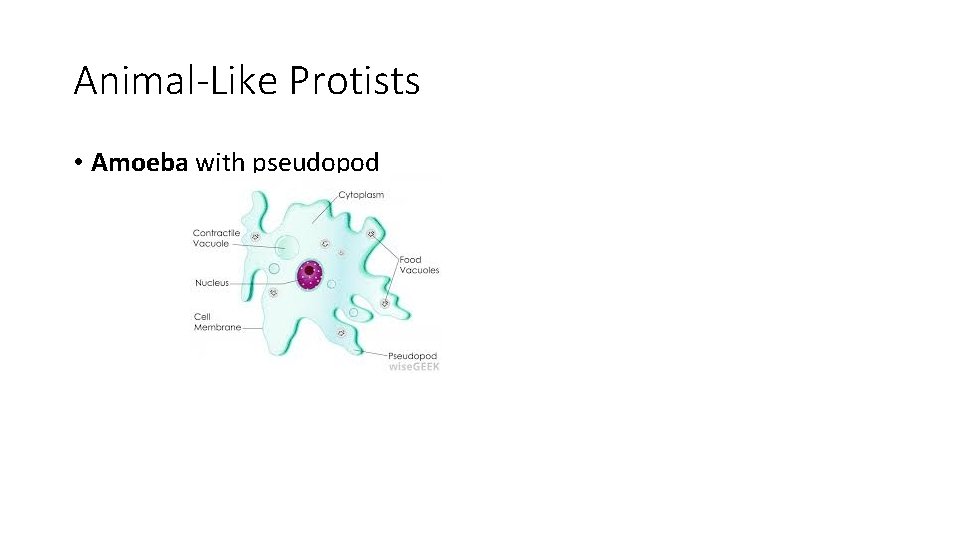
1. For Movement • Cilia – Hair-like projections that act like oars to help them move • Pseudopod (false foot) – an irregular shaped “blob” that change shape to help with movement • Flagella – one or more whip-like structures. Euglena
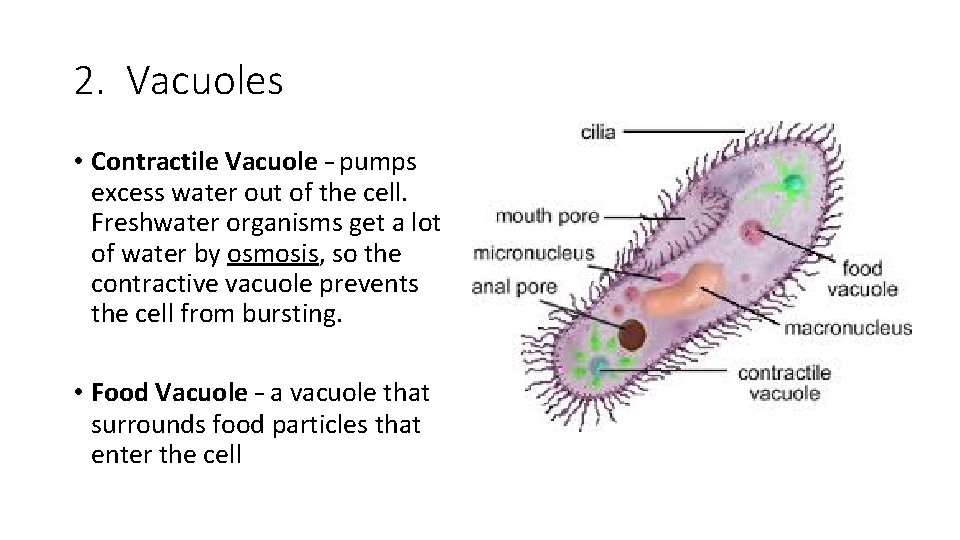
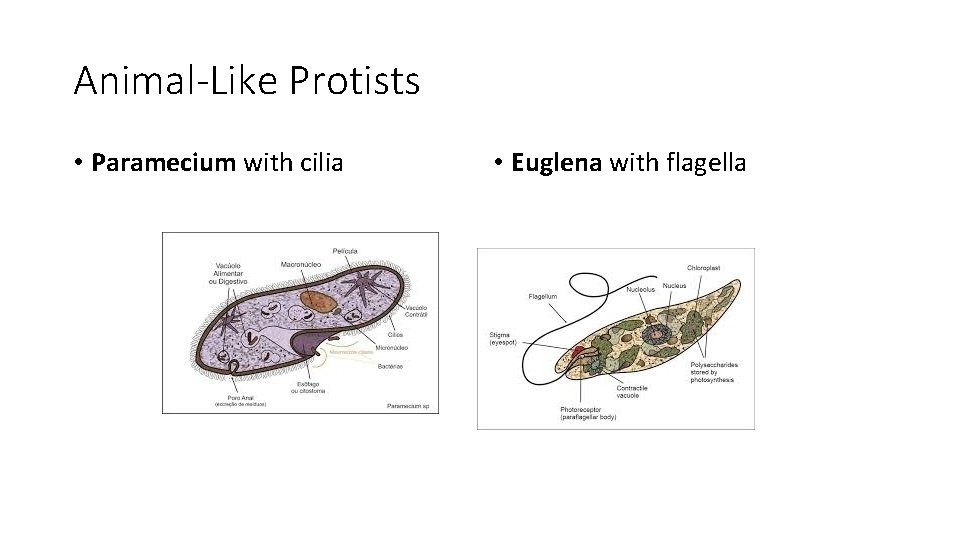
2. Vacuoles • Contractile Vacuole – pumps excess water out of the cell. Freshwater organisms get a lot of water by osmosis, so the contractive vacuole prevents the cell from bursting. • Food Vacuole – a vacuole that surrounds food particles that enter the cell
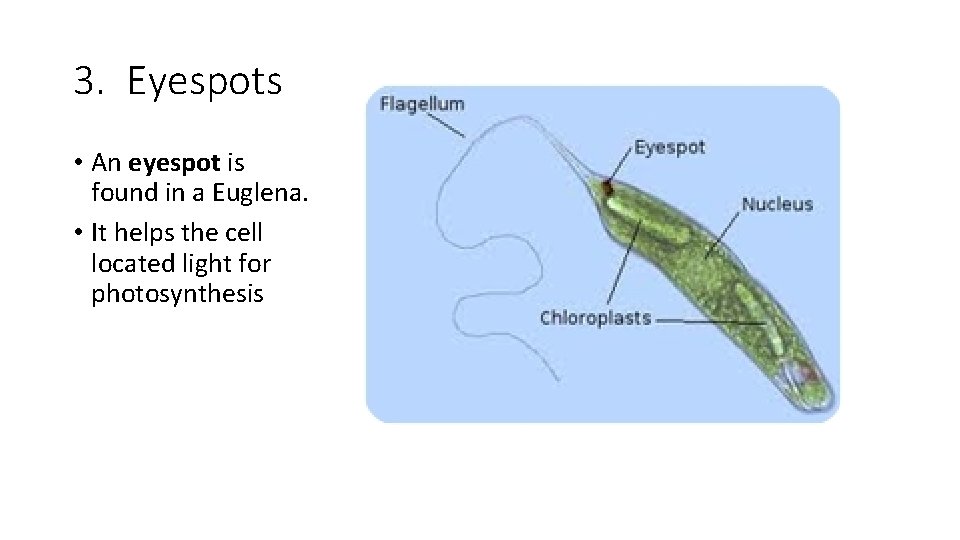
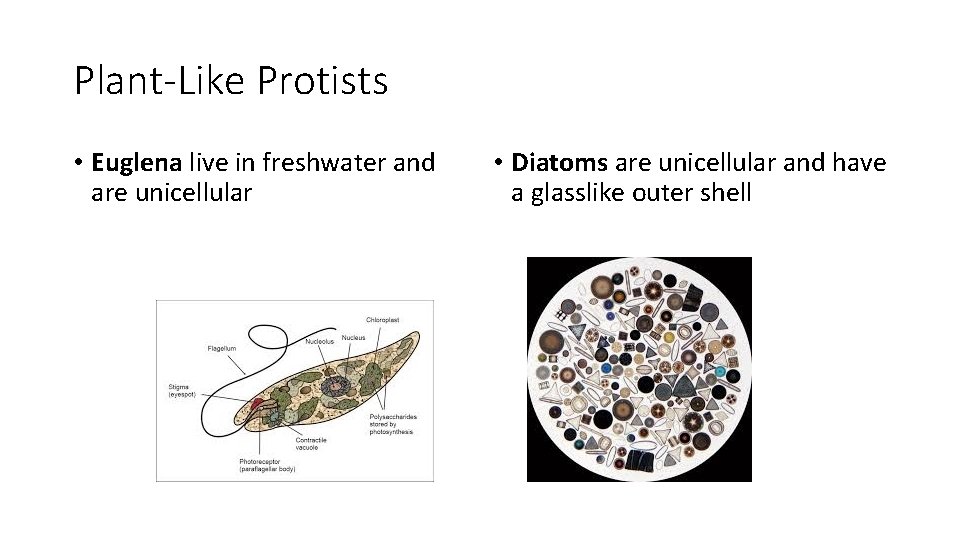
3. Eyespots • An eyespot is found in a Euglena. • It helps the cell located light for photosynthesis
4. For Digestion • Gullet / Oral Groove – is a food passageway. Cilia help sweep food into the cell • Food Vacuole – enzymes digest the food • Anal Pore – food waste is removed from the cell
Protists Characteristics
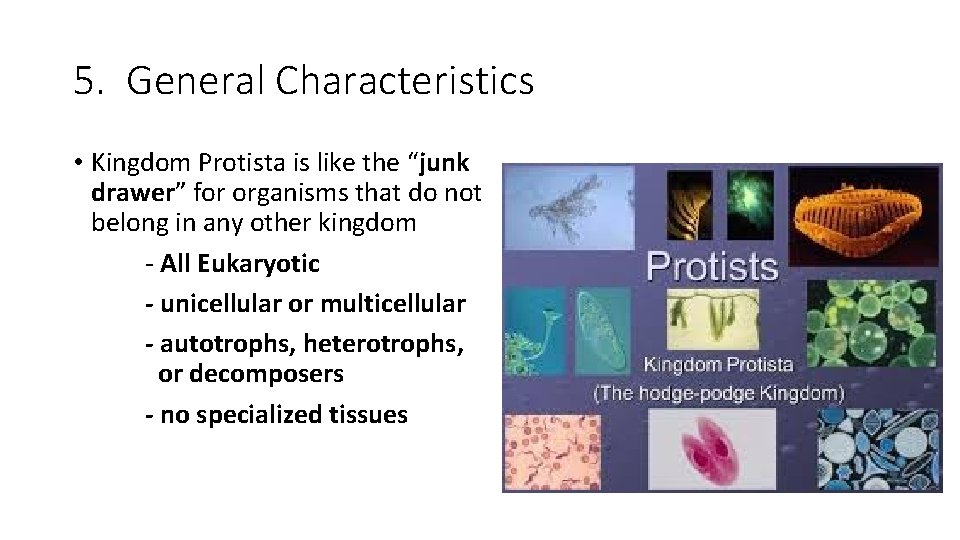
5. General Characteristics • Kingdom Protista is like the “junk drawer” for organisms that do not belong in any other kingdom - All Eukaryotic - unicellular or multicellular - autotrophs, heterotrophs, or decomposers - no specialized tissues
6. Obtaining Energy • Some protists are Autotrophs. They have chloroplasts to capture energy for photosynthesis • Heterotrophic protists get their food from their environment. They eat bacteria, yeast, or other protists. - Parasites invade other organisms to get nutrients - a host is the organism the parasite feeds from • Other protists are Decomposers. They get energy by breaking down dead organic matter
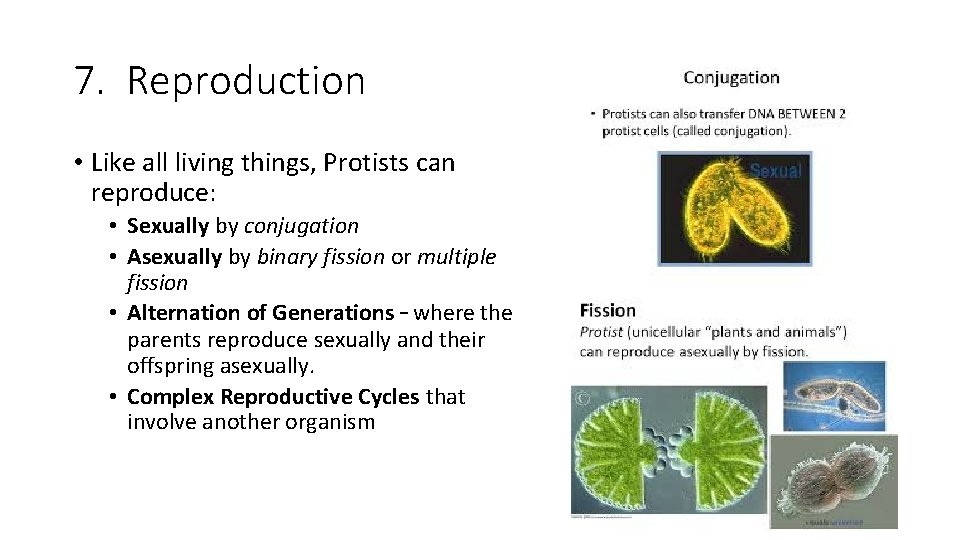
7. Reproduction • Like all living things, Protists can reproduce: • Sexually by conjugation • Asexually by binary fission or multiple fission • Alternation of Generations – where the parents reproduce sexually and their offspring asexually. • Complex Reproductive Cycles that involve another organism
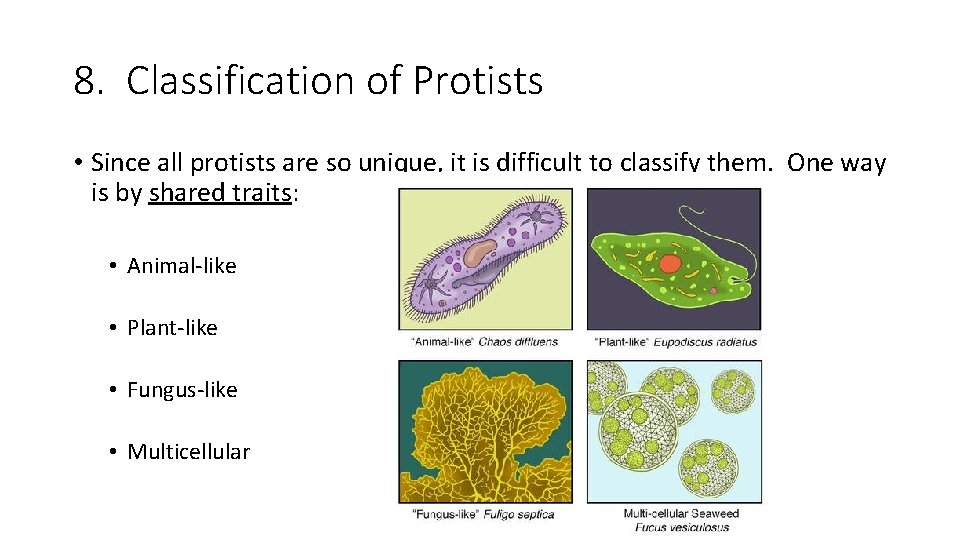
8. Classification of Protists • Since all protists are so unique, it is difficult to classify them. One way is by shared traits: • Animal-like • Plant-like • Fungus-like • Multicellular
9. Animal-Like Protists • Called Protozoans • Single-celled • Heterotrophic • Classified by how they move: • Ciliates (Paramecium) • Flagellates(Euglena) • Amoebas • Sporozoans
Animal-Like Protists • Paramecium with cilia • Euglena with flagella
Animal-Like Protists • Amoeba with pseudopod
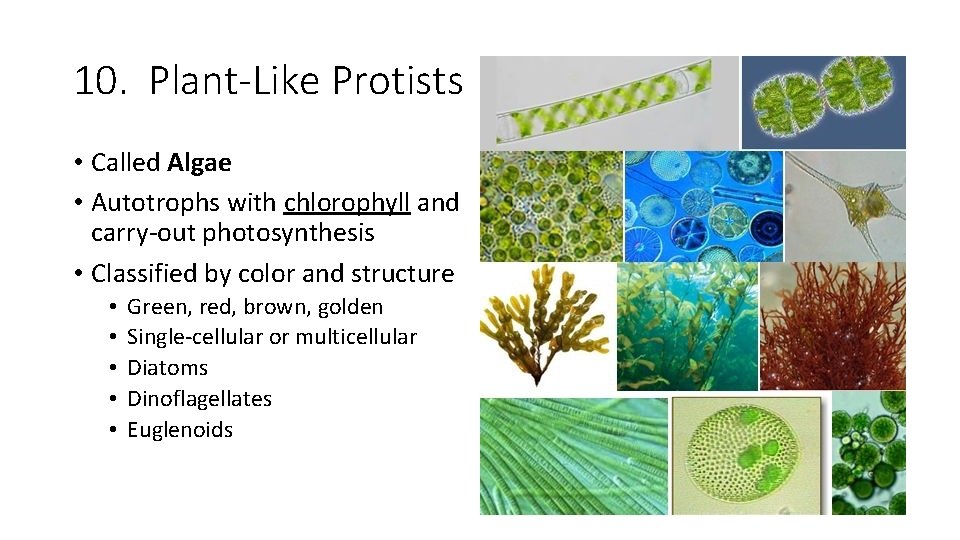
10. Plant-Like Protists • Called Algae • Autotrophs with chlorophyll and carry-out photosynthesis • Classified by color and structure • • • Green, red, brown, golden Single-cellular or multicellular Diatoms Dinoflagellates Euglenoids
Plant-Like Protists • Euglena live in freshwater and are unicellular • Diatoms are unicellular and have a glasslike outer shell
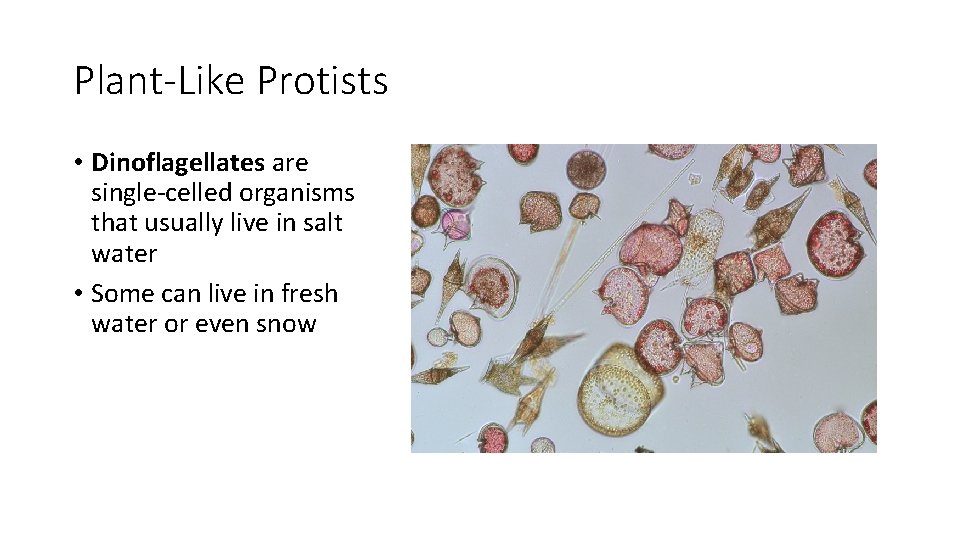
Plant-Like Protists • Dinoflagellates are single-celled organisms that usually live in salt water • Some can live in fresh water or even snow
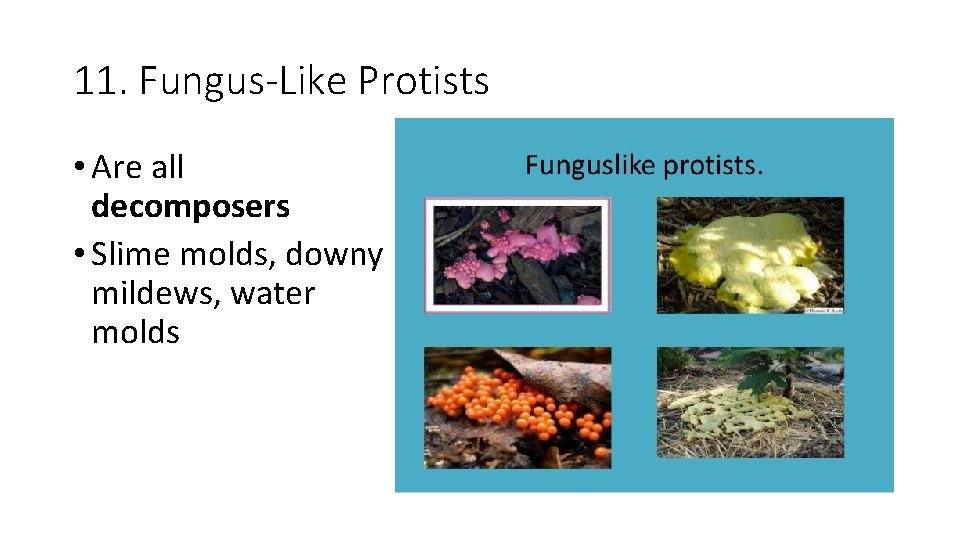
11. Fungus-Like Protists • Are all decomposers • Slime molds, downy mildews, water molds
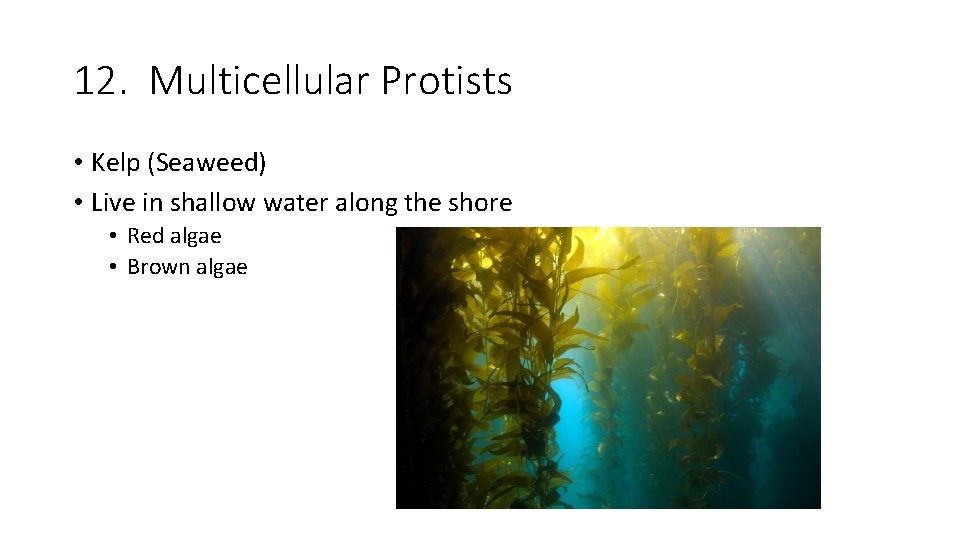
12. Multicellular Protists • Kelp (Seaweed) • Live in shallow water along the shore • Red algae • Brown algae