
Kingdom Protista Section 5 2 THE PROTISTS Microorganisms

- Slides: 27
Kingdom Protista Section 5. 2
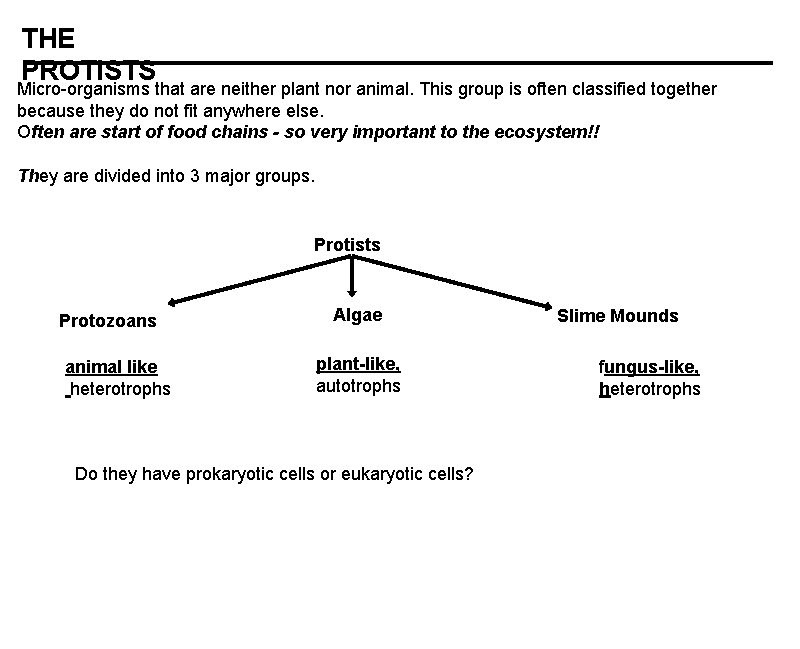
THE PROTISTS Micro-organisms that are neither plant nor animal. This group is often classified together because they do not fit anywhere else. Often are start of food chains - so very important to the ecosystem!! They are divided into 3 major groups. Protists Protozoans animal like heterotrophs Algae plant-like, autotrophs Do they have prokaryotic cells or eukaryotic cells? Slime Mounds fungus-like, heterotrophs
It is believed that the Protists gave rise to the fungi, plants and animals as they out date these organisms Aliant video; The Protists - 20 min.
The Protozoans
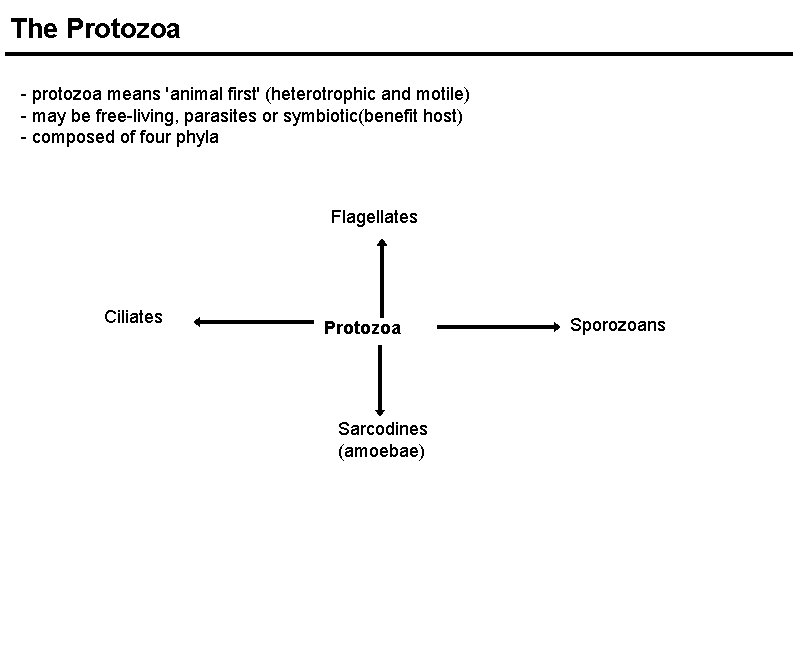
The Protozoa - protozoa means 'animal first' (heterotrophic and motile) - may be free-living, parasites or symbiotic(benefit host) - composed of four phyla Flagellates Ciliates Protozoa Sarcodines (amoebae) Sporozoans
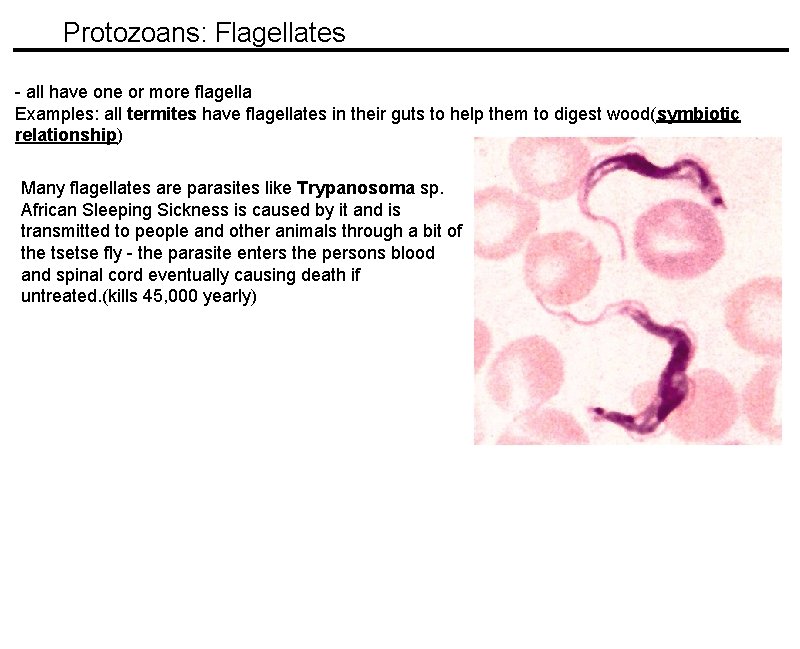
Protozoans: Flagellates - all have one or more flagella Examples: all termites have flagellates in their guts to help them to digest wood(symbiotic relationship) Many flagellates are parasites like Trypanosoma sp. African Sleeping Sickness is caused by it and is transmitted to people and other animals through a bit of the tsetse fly - the parasite enters the persons blood and spinal cord eventually causing death if untreated. (kills 45, 000 yearly)
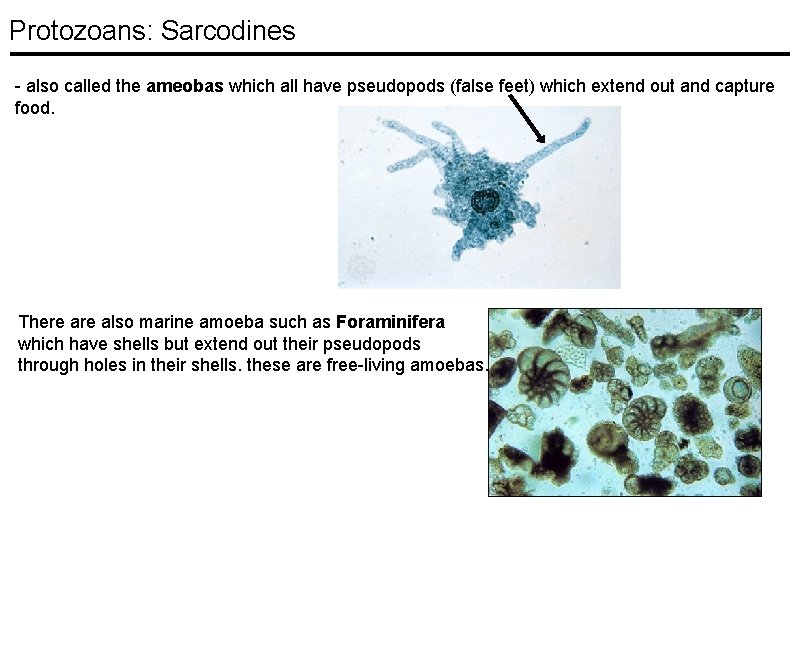
Protozoans: Sarcodines - also called the ameobas which all have pseudopods (false feet) which extend out and capture food. There also marine amoeba such as Foraminifera which have shells but extend out their pseudopods through holes in their shells. these are free-living amoebas.
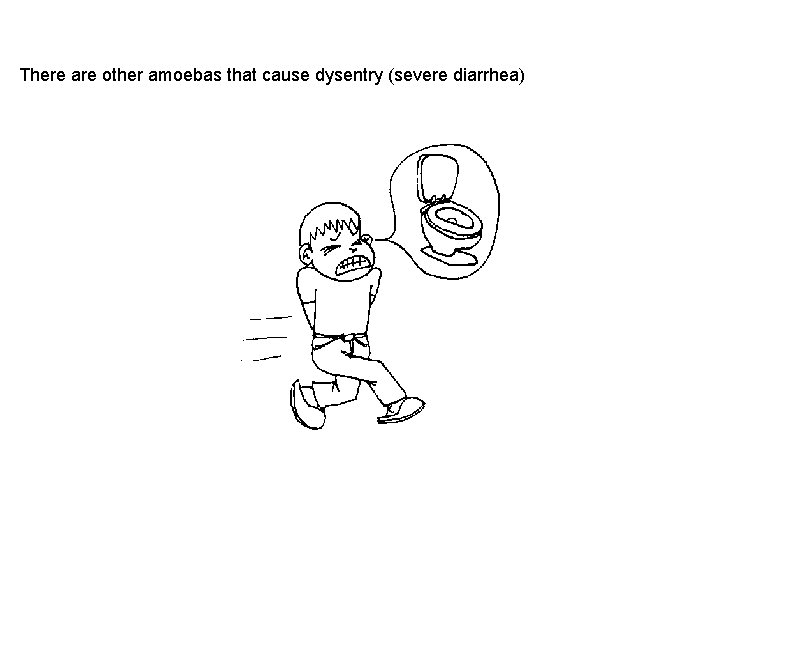
There are other amoebas that cause dysentry (severe diarrhea)
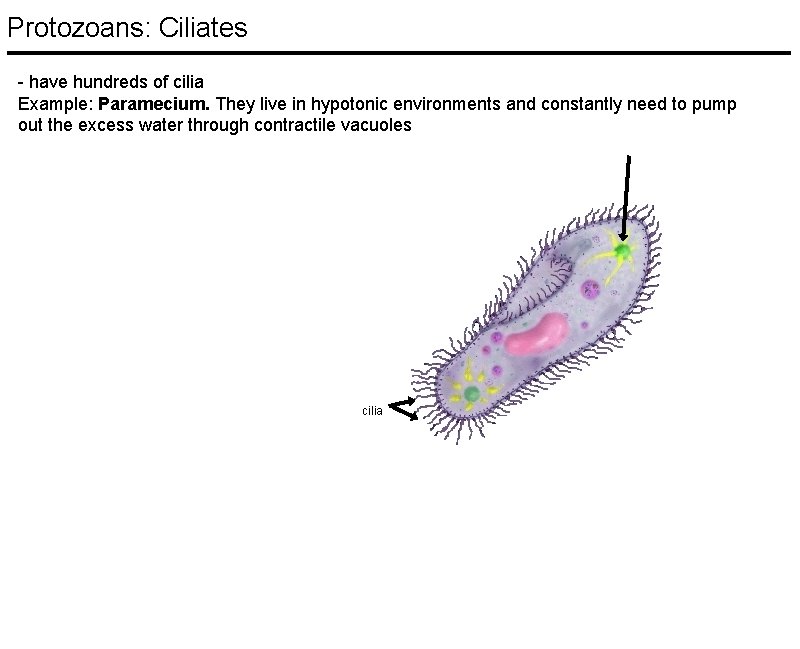
Protozoans: Ciliates - have hundreds of cilia Example: Paramecium. They live in hypotonic environments and constantly need to pump out the excess water through contractile vacuoles cilia
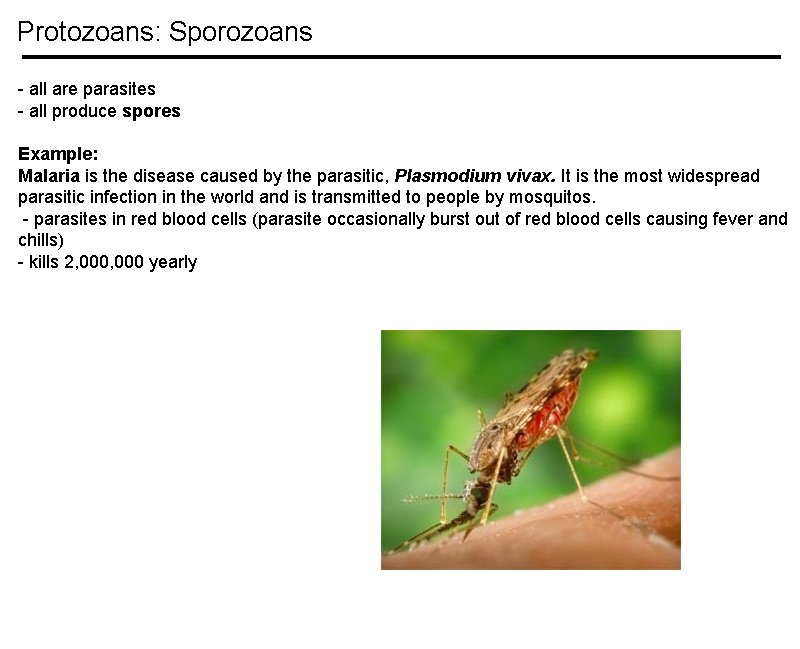
Protozoans: Sporozoans - all are parasites - all produce spores Example: Malaria is the disease caused by the parasitic, Plasmodium vivax. It is the most widespread parasitic infection in the world and is transmitted to people by mosquitos. - parasites in red blood cells (parasite occasionally burst out of red blood cells causing fever and chills) - kills 2, 000 yearly
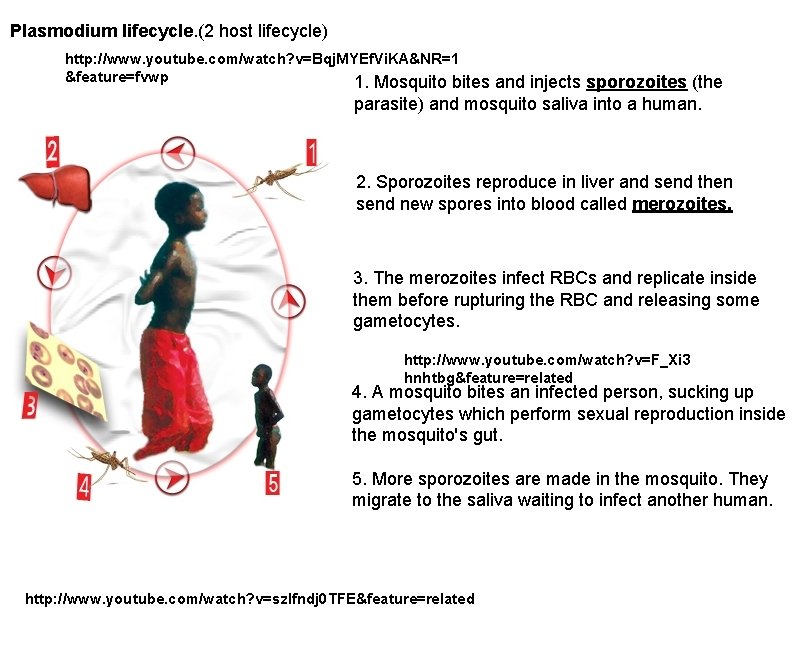
Plasmodium lifecycle. (2 host lifecycle) http: //www. youtube. com/watch? v=Bqj. MYEf. Vi. KA&NR=1 &feature=fvwp 1. Mosquito bites and injects sporozoites (the parasite) and mosquito saliva into a human. 2. Sporozoites reproduce in liver and send then send new spores into blood called merozoites. 3. The merozoites infect RBCs and replicate inside them before rupturing the RBC and releasing some gametocytes. http: //www. youtube. com/watch? v=F_Xi 3 hnhtbg&feature=related 4. A mosquito bites an infected person, sucking up gametocytes which perform sexual reproduction inside the mosquito's gut. 5. More sporozoites are made in the mosquito. They migrate to the saliva waiting to infect another human. http: //www. youtube. com/watch? v=szlfndj 0 TFE&feature=related
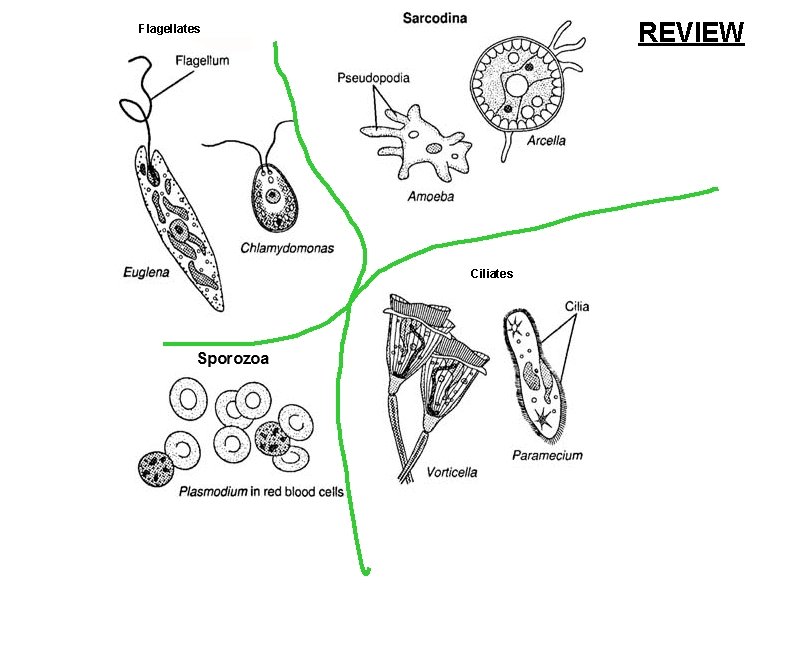
REVIEW Flagellates Ciliates
Aliant videos: The Protozoans and Algae food for all - 15 min Algae - 19 minute
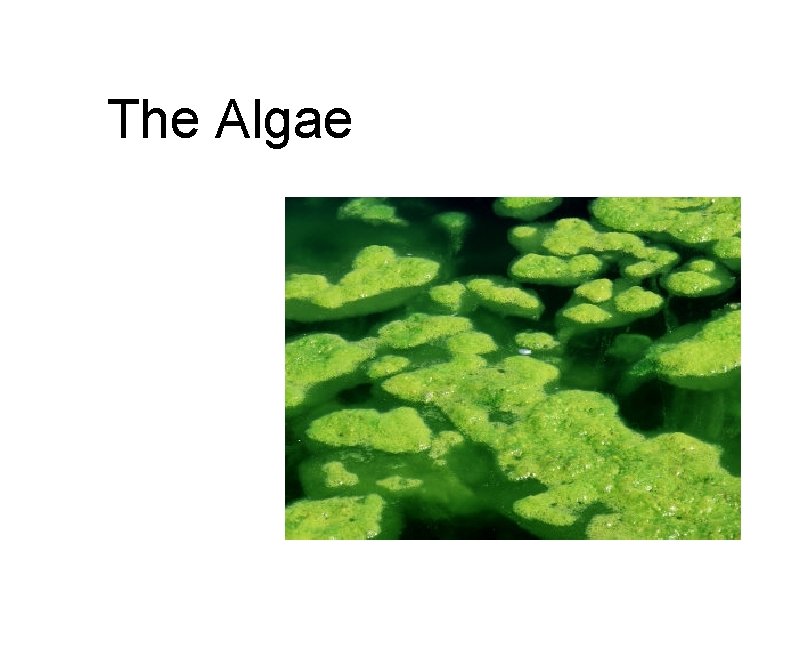
The Algae
Algae - aquatic (in water) - contain chlorophyll (three different types are found) - ancestor of plants - range in size from single cells to seaweeds up to 60 m long! They were once classified as plants but they lack leaves, stems, roots and water conducting tissues that all true plants have.
Algae: a replacement for fossil fuels http: //www. youtube. com/watch? v=7 Q 40 s 7 Pm-Nw
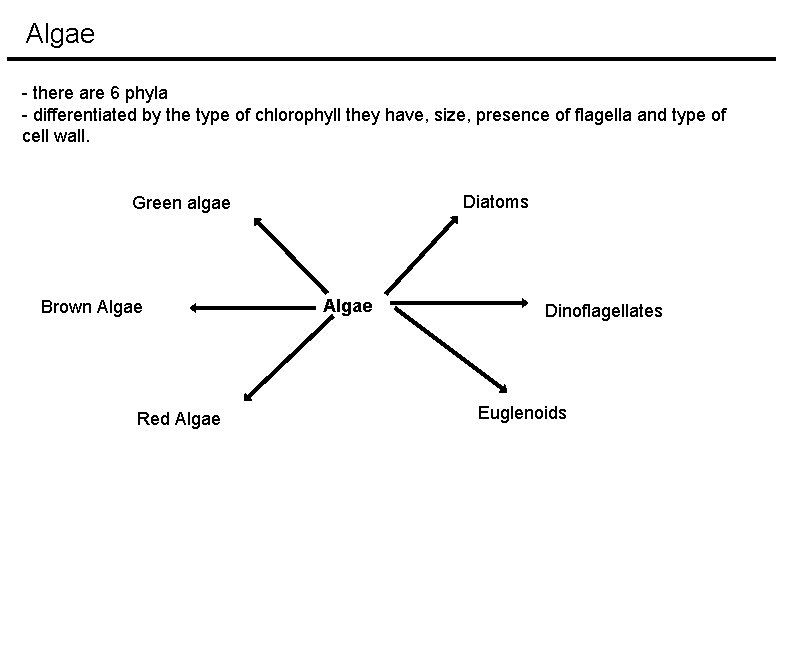
Algae - there are 6 phyla - differentiated by the type of chlorophyll they have, size, presence of flagella and type of cell wall. Diatoms Green algae Brown Algae Red Algae Dinoflagellates Euglenoids
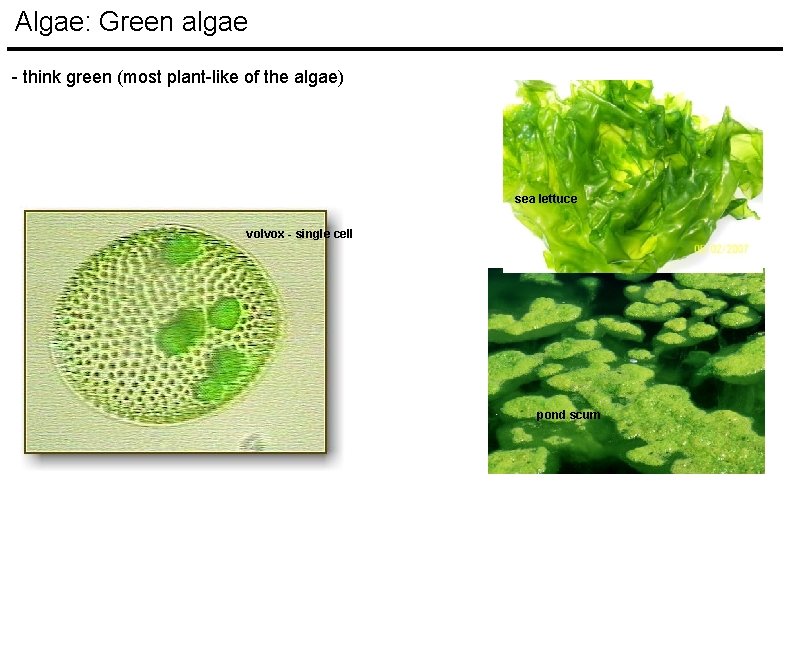
Algae: Green algae - think green (most plant-like of the algae) sea lettuce volvox - single cell pond scum
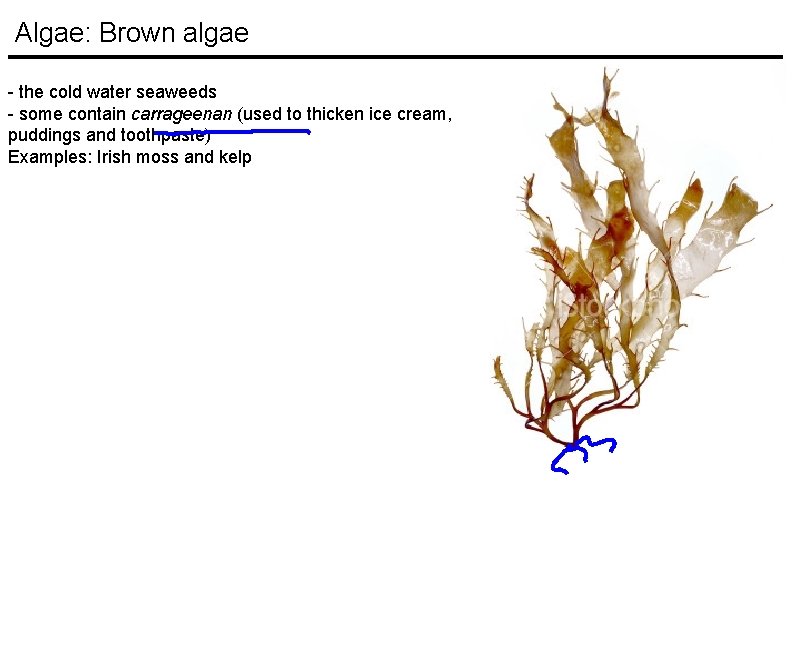
Algae: Brown algae - the cold water seaweeds - some contain carrageenan (used to thicken ice cream, puddings and toothpaste) Examples: Irish moss and kelp
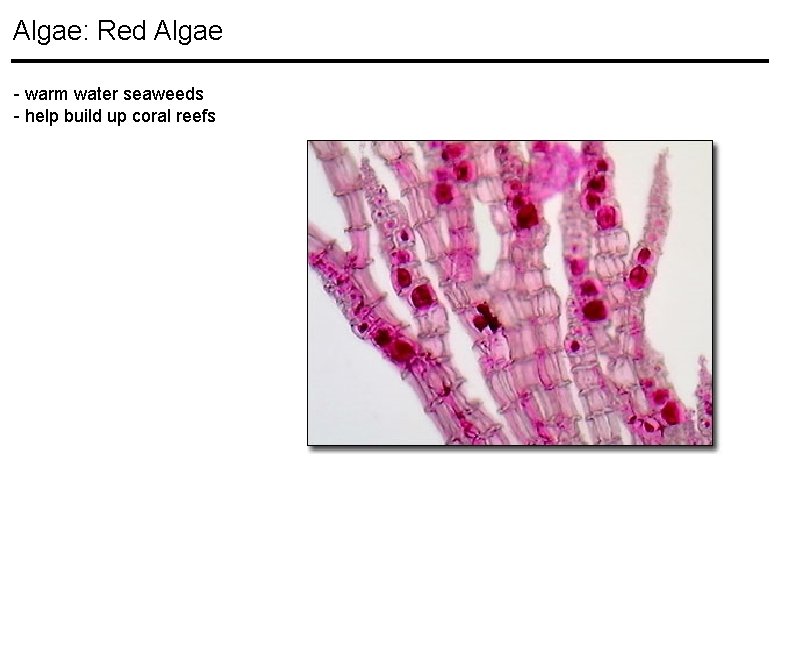
Algae: Red Algae - warm water seaweeds - help build up coral reefs
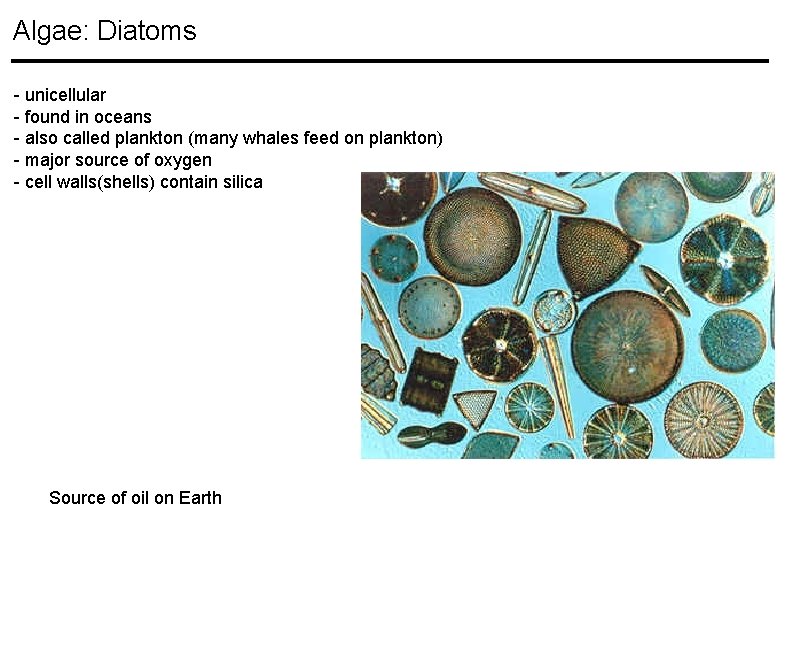
Algae: Diatoms - unicellular - found in oceans - also called plankton (many whales feed on plankton) - major source of oxygen - cell walls(shells) contain silica Source of oil on Earth
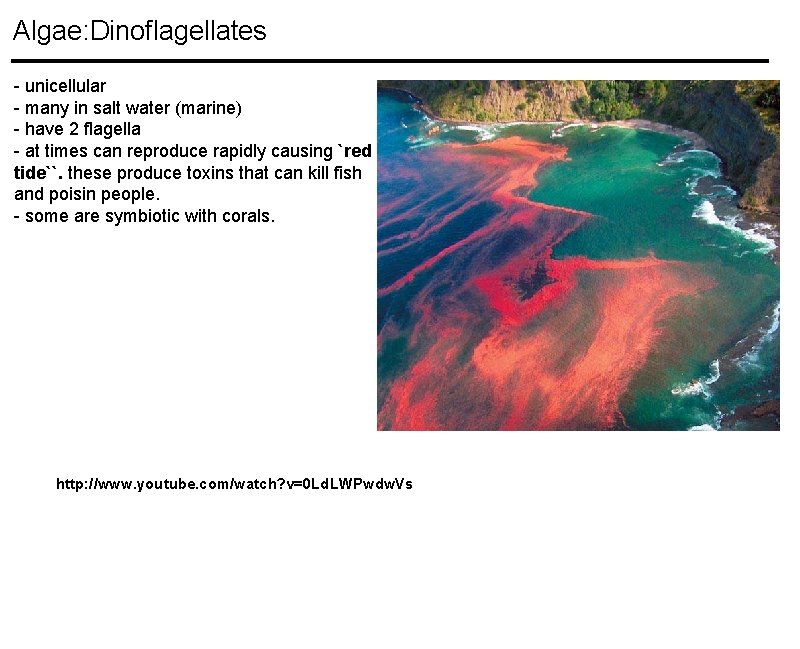
Algae: Dinoflagellates - unicellular - many in salt water (marine) - have 2 flagella - at times can reproduce rapidly causing `red tide``. these produce toxins that can kill fish and poisin people. - some are symbiotic with corals. http: //www. youtube. com/watch? v=0 Ld. LWPwdw. Vs
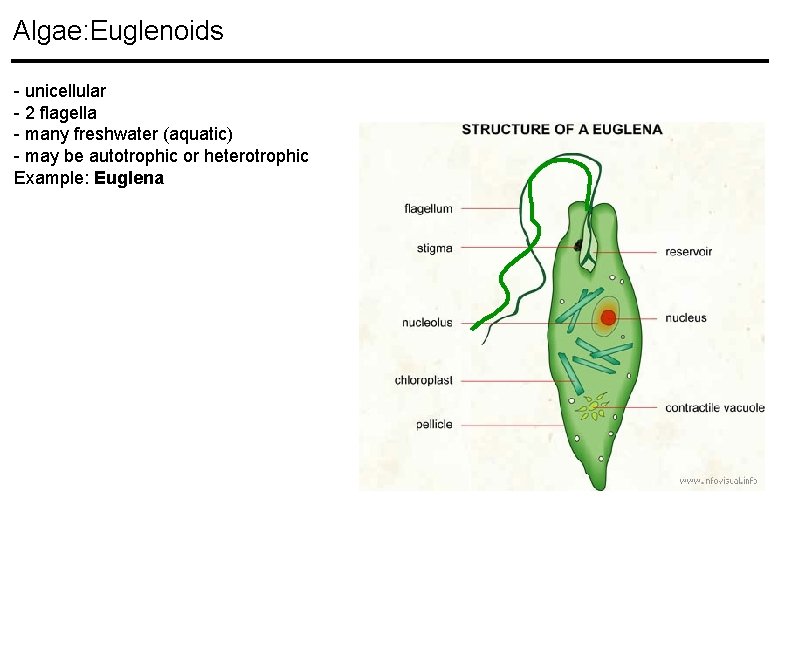
Algae: Euglenoids - unicellular - 2 flagella - many freshwater (aquatic) - may be autotrophic or heterotrophic Example: Euglena
The Slime and Water Moulds
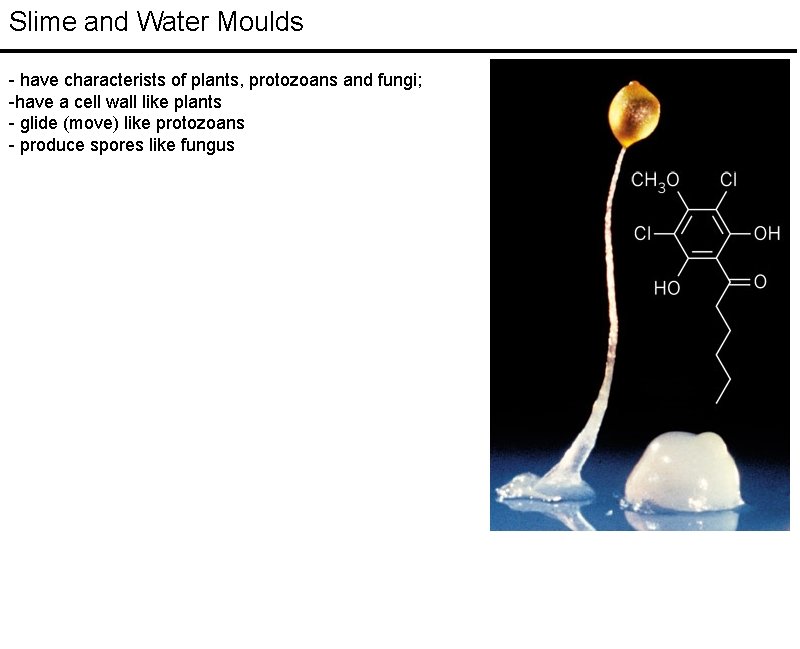
Slime and Water Moulds - have characterists of plants, protozoans and fungi; -have a cell wall like plants - glide (move) like protozoans - produce spores like fungus
Classwork/homework - read pages 140 -151 -Answer questions 1 -7 on page 151 http: //www. youtube. com/watch? v=M 5 pv 1 x. YK 6 Wo