
Kingdom Protista Protist are 1 eukaryotic has nucleus

- Slides: 7
Kingdom Protista
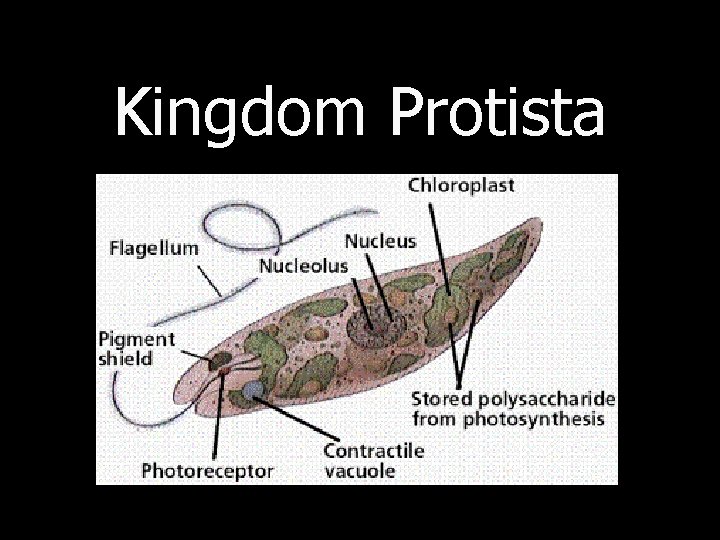
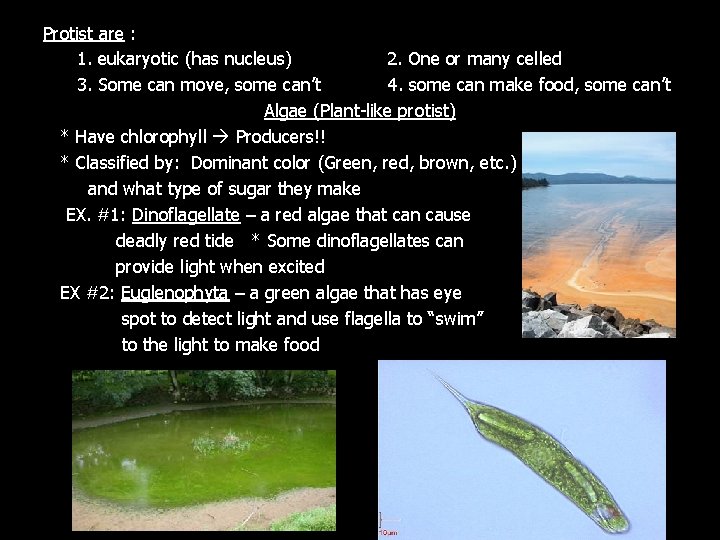
Protist are : 1. eukaryotic (has nucleus) 2. One or many celled 3. Some can move, some can’t 4. some can make food, some can’t Algae (Plant-like protist) * Have chlorophyll Producers!! * Classified by: Dominant color (Green, red, brown, etc. ) and what type of sugar they make EX. #1: Dinoflagellate – a red algae that can cause deadly red tide * Some dinoflagellates can provide light when excited EX #2: Euglenophyta – a green algae that has eye spot to detect light and use flagella to “swim” to the light to make food
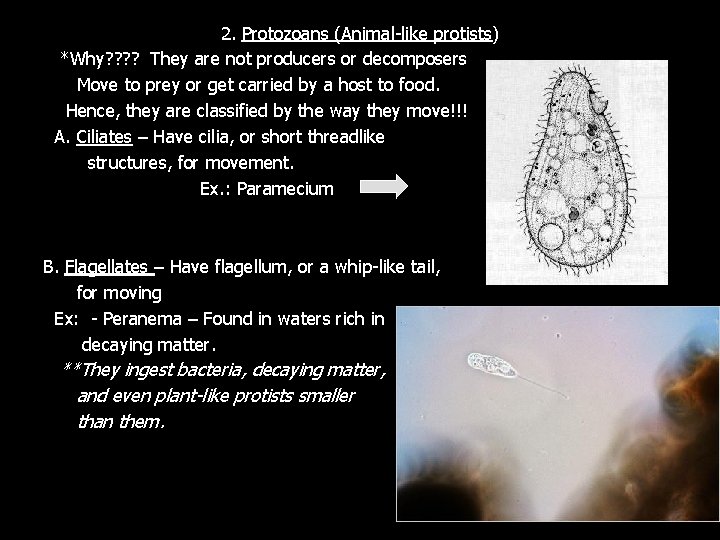
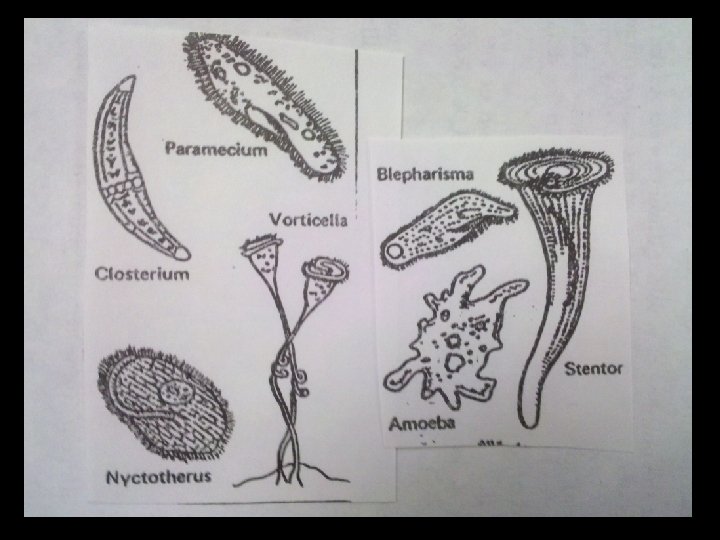
2. Protozoans (Animal-like protists) *Why? ? They are not producers or decomposers Move to prey or get carried by a host to food. Hence, they are classified by the way they move!!! A. Ciliates – Have cilia, or short threadlike structures, for movement. Ex. : Paramecium B. Flagellates – Have flagellum, or a whip-like tail, for moving Ex: - Peranema – Found in waters rich in decaying matter. **They ingest bacteria, decaying matter, and even plant-like protists smaller than them.
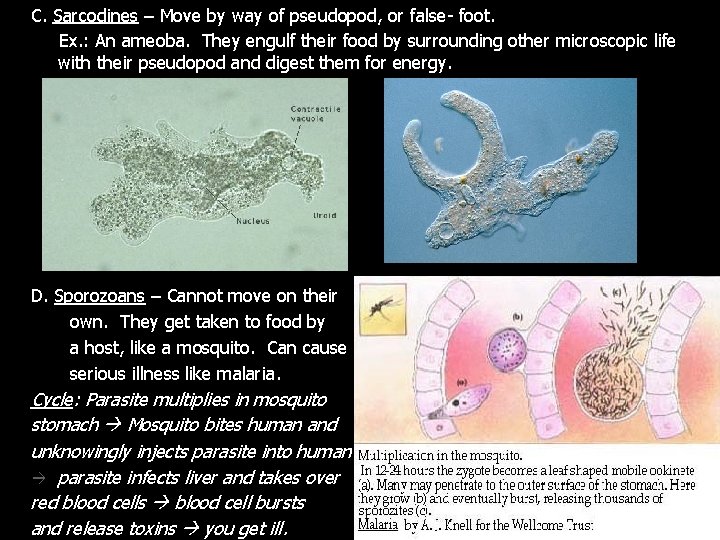
C. Sarcodines – Move by way of pseudopod, or false- foot. Ex. : An ameoba. They engulf their food by surrounding other microscopic life with their pseudopod and digest them for energy. D. Sporozoans – Cannot move on their own. They get taken to food by a host, like a mosquito. Can cause serious illness like malaria. Cycle: Parasite multiplies in mosquito stomach Mosquito bites human and unknowingly injects parasite into human parasite infects liver and takes over red blood cells blood cell bursts and release toxins you get ill.
Fungus-like Protist Have features of Fungi, even though they are true Protists Slime Mold ► Water mold – a water mold caused the Irish Potato Famine
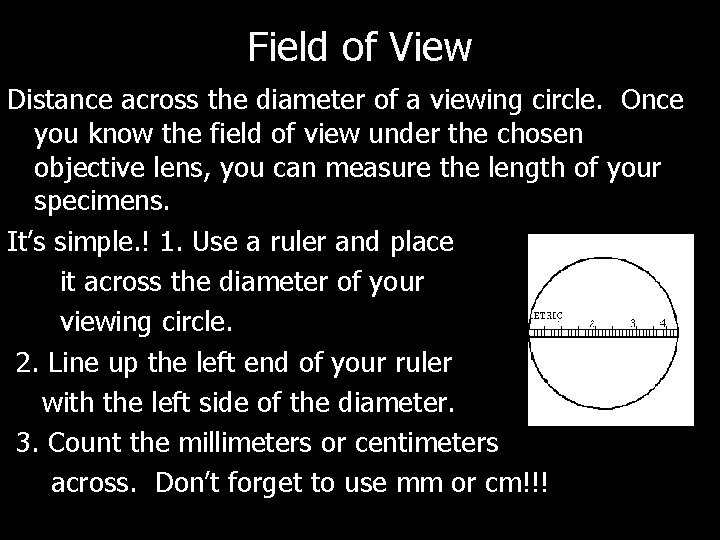
Field of View Distance across the diameter of a viewing circle. Once you know the field of view under the chosen objective lens, you can measure the length of your specimens. It’s simple. ! 1. Use a ruler and place it across the diameter of your viewing circle. 2. Line up the left end of your ruler with the left side of the diameter. 3. Count the millimeters or centimeters across. Don’t forget to use mm or cm!!!