
Kingdom Protista Eukaryotes Most with one cell Unicellular
- Slides: 13
Kingdom Protista • • • Eukaryotes Most with one cell (Unicellular) Some with many cells (Multicellular): seaweed Autotrophs or Heterotrophs Protists contains organisms that do not fit into the other eukaryotic kingdoms • Protists evolved from prokaryotes (bacteria) • Protista can be: Animal-like, Plant-like, Fungus-like
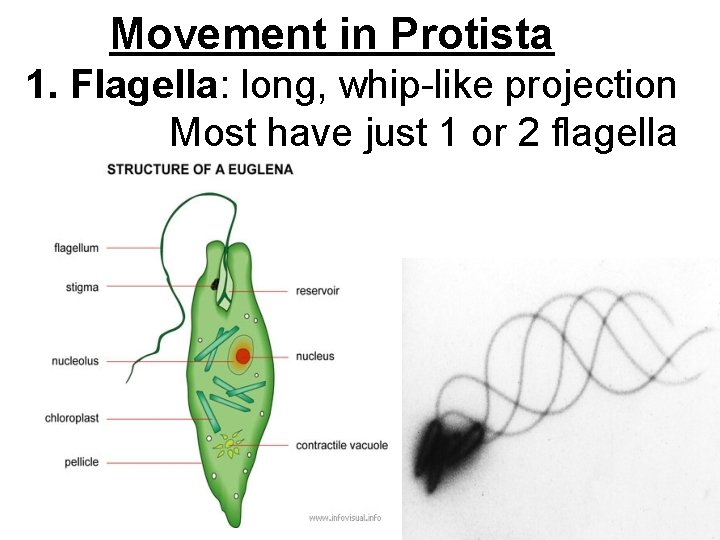
Movement in Protista 1. Flagella: long, whip-like projection Most have just 1 or 2 flagella
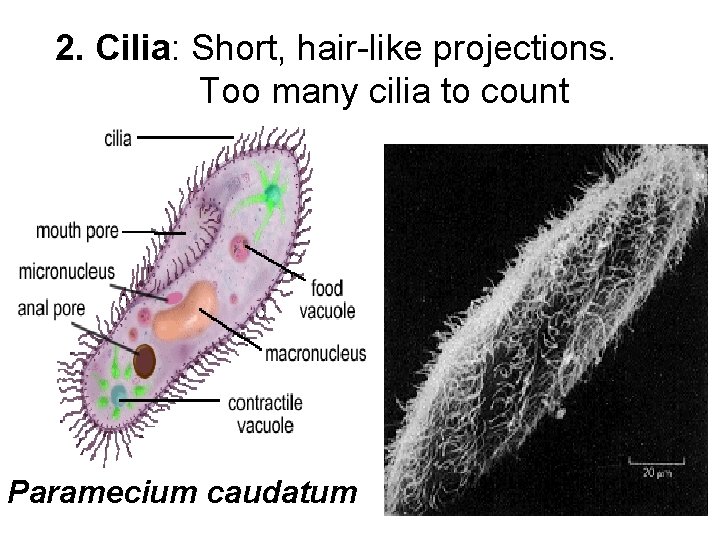
2. Cilia: Short, hair-like projections. Too many cilia to count Paramecium caudatum
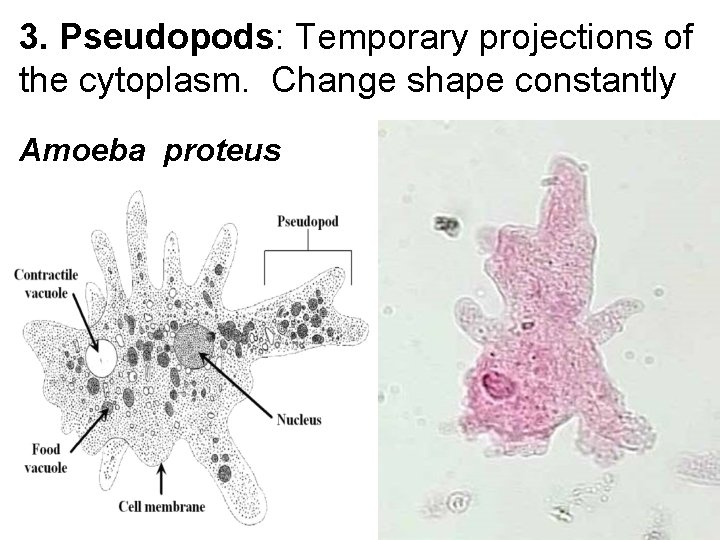
3. Pseudopods: Temporary projections of the cytoplasm. Change shape constantly Amoeba proteus
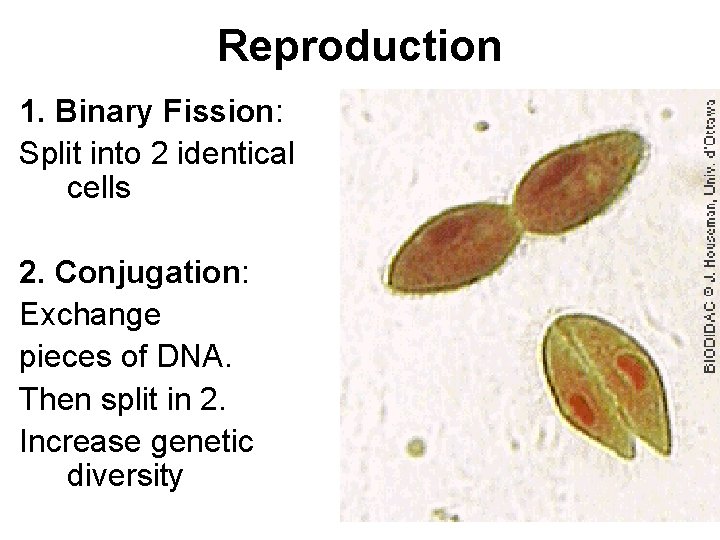
Reproduction 1. Binary Fission: Split into 2 identical cells 2. Conjugation: Exchange pieces of DNA. Then split in 2. Increase genetic diversity
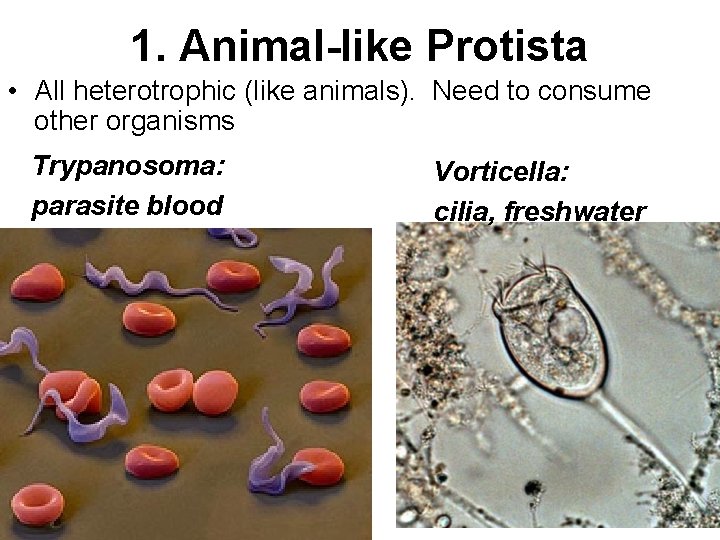
1. Animal-like Protista • All heterotrophic (like animals). Need to consume other organisms Trypanosoma: parasite blood Vorticella: cilia, freshwater
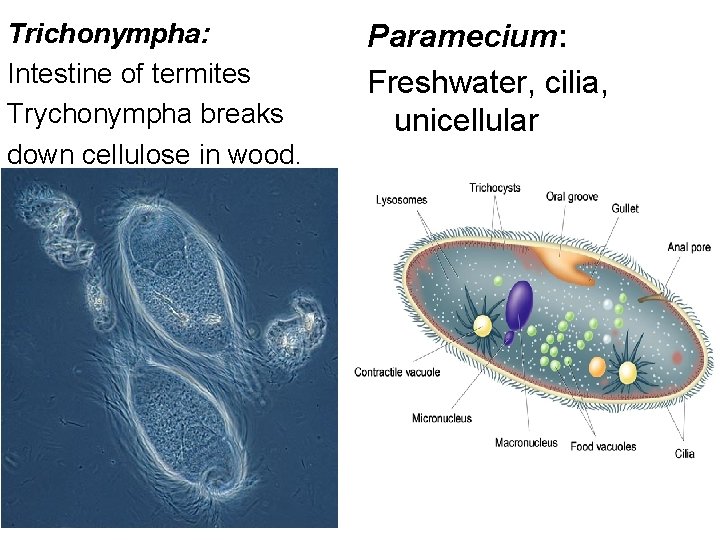
Trichonympha: Intestine of termites Trychonympha breaks down cellulose in wood. Paramecium: Freshwater, cilia, unicellular
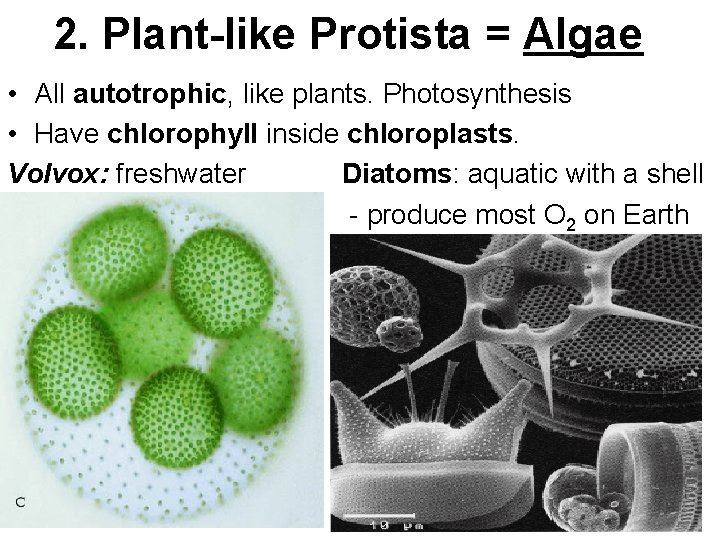
2. Plant-like Protista = Algae • All autotrophic, like plants. Photosynthesis • Have chlorophyll inside chloroplasts. Volvox: freshwater Diatoms: aquatic with a shell - produce most O 2 on Earth
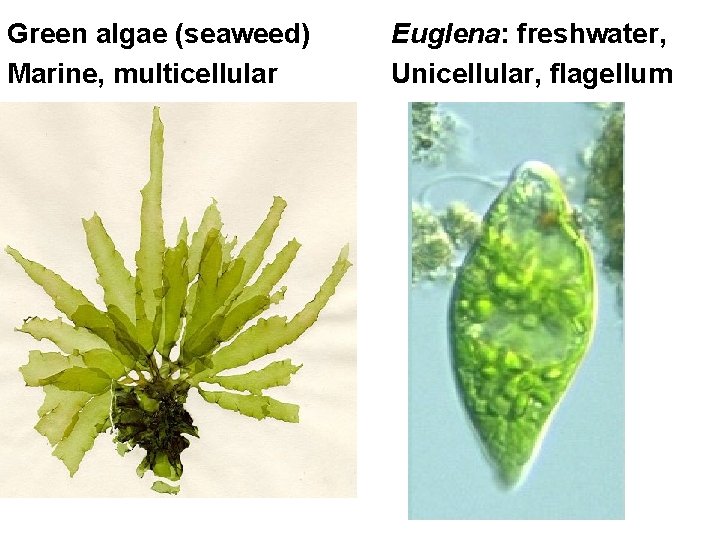
Green algae (seaweed) Marine, multicellular Euglena: freshwater, Unicellular, flagellum
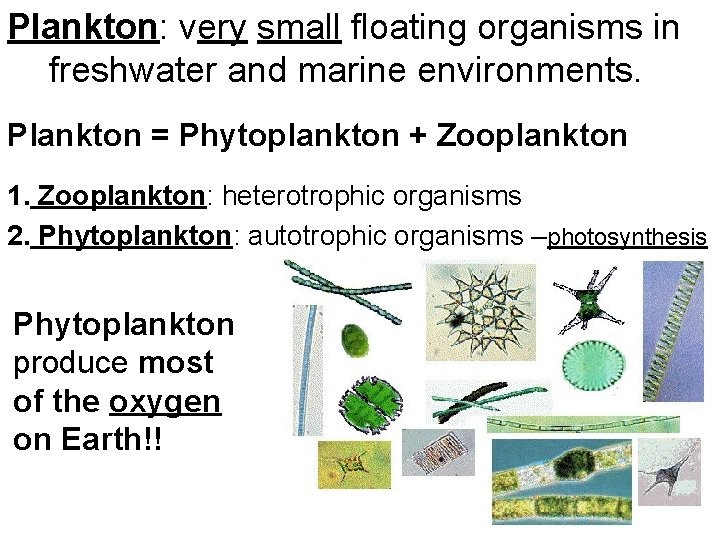
Plankton: very small floating organisms in freshwater and marine environments. Plankton = Phytoplankton + Zooplankton 1. Zooplankton: heterotrophic organisms 2. Phytoplankton: autotrophic organisms –photosynthesis Phytoplankton produce most of the oxygen on Earth!!
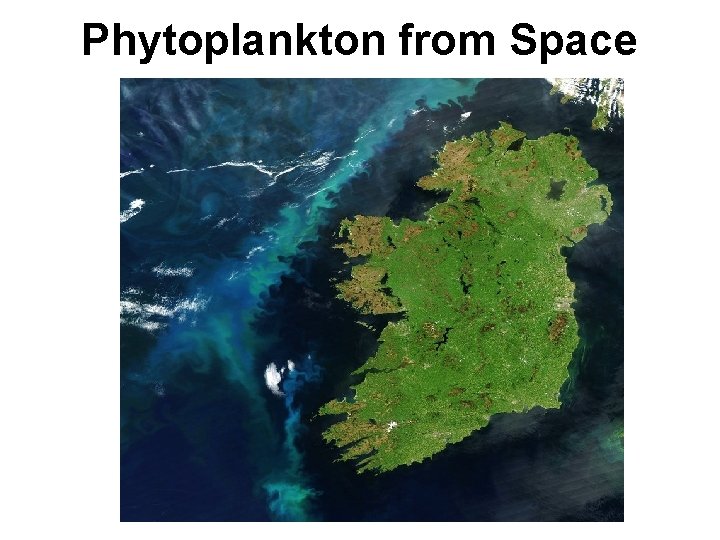
Phytoplankton from Space
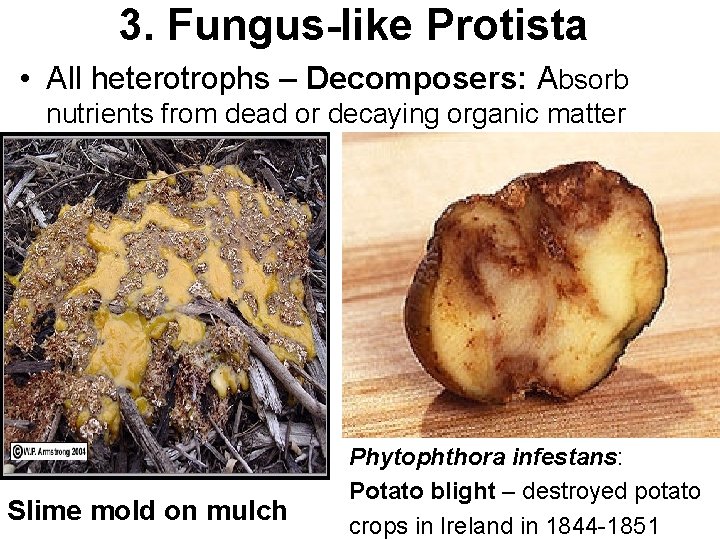
3. Fungus-like Protista • All heterotrophs – Decomposers: Absorb nutrients from dead or decaying organic matter Slime mold on mulch Phytophthora infestans: Potato blight – destroyed potato crops in Ireland in 1844 -1851