
Kingdom Protista Biology 11 Background Protists first appeared
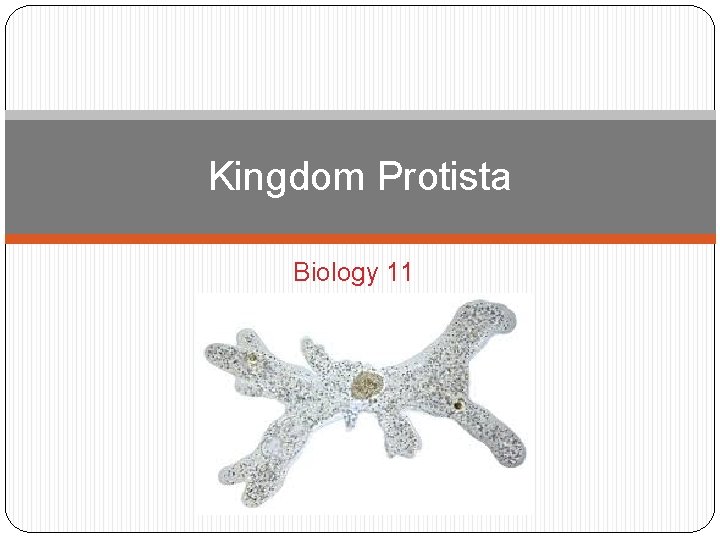
Kingdom Protista Biology 11

Background: Protists first appeared in the fossil records about 1. 5 billion years ago. Demonstrate an important evolutionary advancement, a membrane bound nucleus. Contain organelles such as ribsomes, mitochondria, and lysosomes. These structures provide a more efficient method of using available nutrients. Reproduce sexually and asexually. Require an aquatic environment.
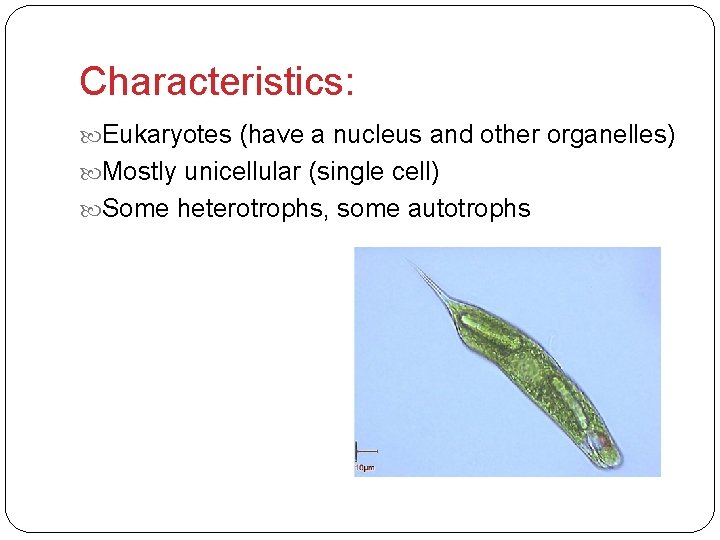
Characteristics: Eukaryotes (have a nucleus and other organelles) Mostly unicellular (single cell) Some heterotrophs, some autotrophs

Protista is divided into 3 large groups: Based on the organisms they most resemble 1. Animal-like Protists 2. Plant-like Protists 3. Fungus-like Protists

1. Animal-like Protists: 4 phyla (classified on the basis of their method of movement a. Rhizopods (Sarcodina): move by pseudopods (extensions of the cytoplasm) b. Ciliata (Ciliophora): move by cilia (tiny hair structures) c. Flagellata (Zoomastigina): move by flagella (whip like tail) d. Sporozoa: no movement

2. Plant like Protists: 6 phyla (mostly based on colour) a. Euglenoids (Euglenophyta) b. Green Algae (Chlorophyta) c. Golden Algae (Crysophyta) d. Red Algae (Rhodophyta) e. Brown Algae (Phaeophyta) f. Fire Algae (Phrrophyta)


3. Fungus like Protists: 3 phyla Includes slime molds, water molds, mildew

Pseudopods: http: //www. youtube. com/watch? v=x 1 Er. Cy. ZCFw 8
- Slides: 10