
KINGDOM PLANTAE Tissues Structures Classification and Tropisms Plant


- Slides: 14
KINGDOM PLANTAE Tissues, Structures, Classification and Tropisms
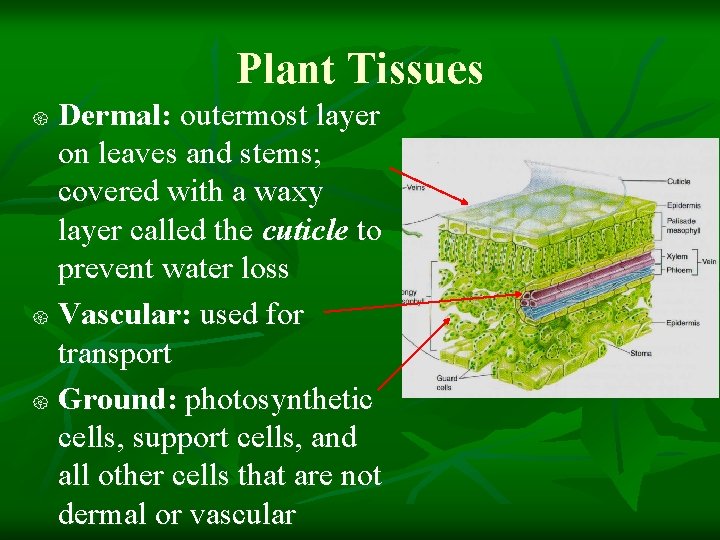
Plant Tissues Dermal: outermost layer on leaves and stems; covered with a waxy layer called the cuticle to prevent water loss { Vascular: used for transport { Ground: photosynthetic cells, support cells, and all other cells that are not dermal or vascular {
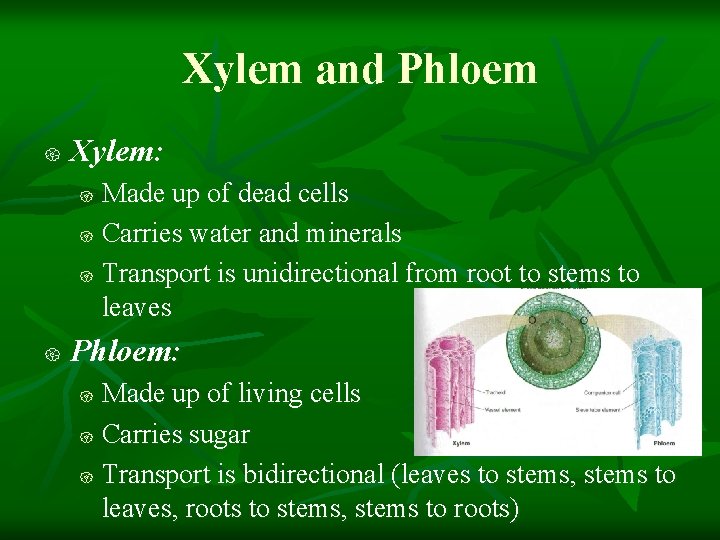
Xylem and Phloem { Xylem: Made up of dead cells { Carries water and minerals { Transport is unidirectional from root to stems to leaves { { Phloem: Made up of living cells { Carries sugar { Transport is bidirectional (leaves to stems, stems to leaves, roots to stems, stems to roots) {
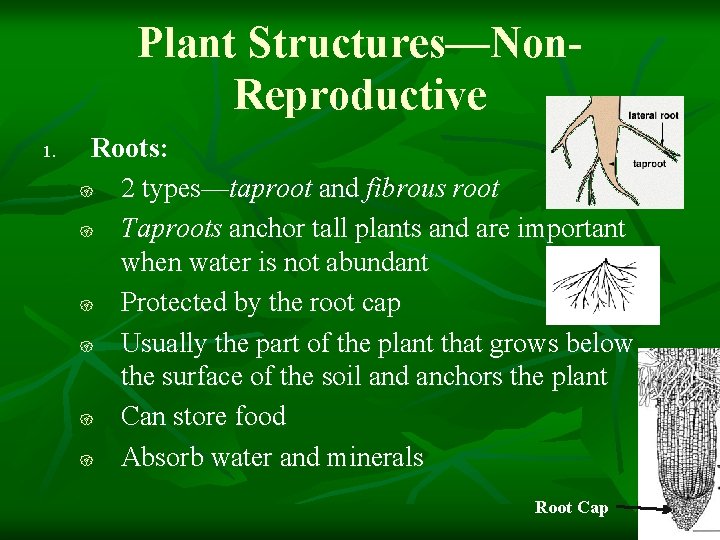
Plant Structures—Non. Reproductive 1. Roots: { 2 types—taproot and fibrous root { Taproots anchor tall plants and are important when water is not abundant { Protected by the root cap { Usually the part of the plant that grows below the surface of the soil and anchors the plant { Can store food { Absorb water and minerals Root Cap
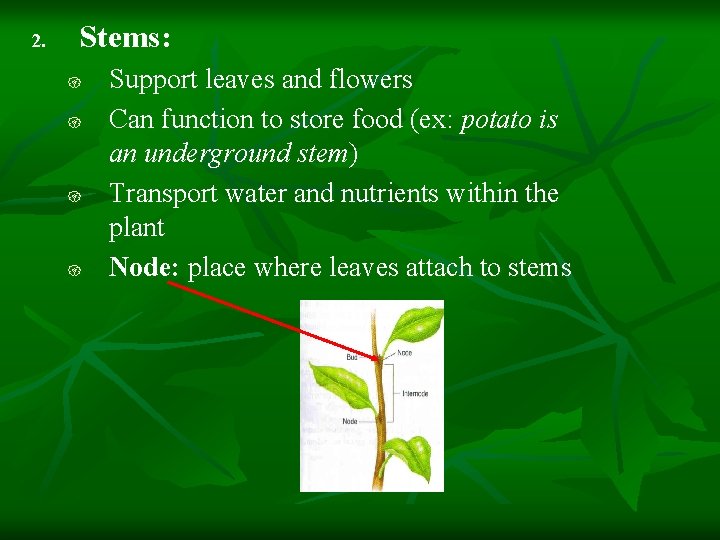
2. Stems: { { Support leaves and flowers Can function to store food (ex: potato is an underground stem) Transport water and nutrients within the plant Node: place where leaves attach to stems
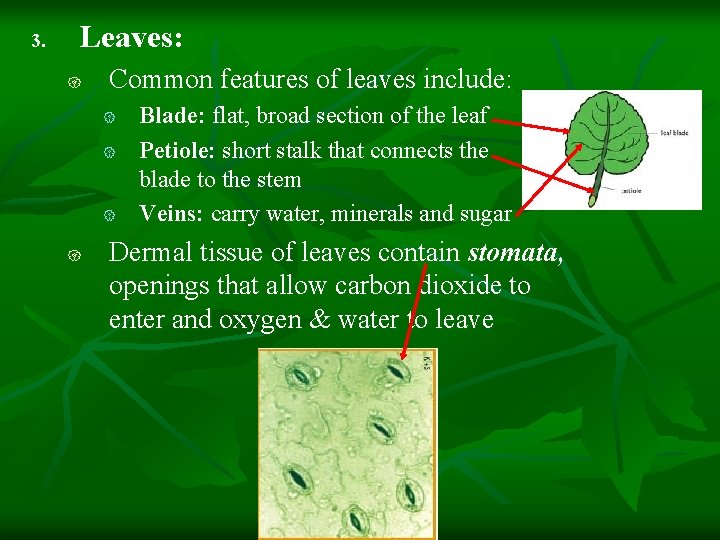
3. Leaves: { Common features of leaves include: { { Blade: flat, broad section of the leaf Petiole: short stalk that connects the blade to the stem Veins: carry water, minerals and sugar Dermal tissue of leaves contain stomata, openings that allow carbon dioxide to enter and oxygen & water to leave
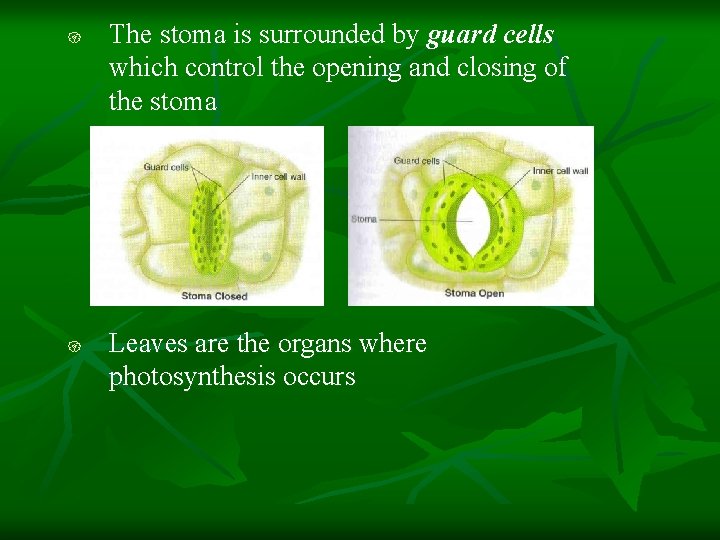
{ { The stoma is surrounded by guard cells which control the opening and closing of the stoma Leaves are the organs where photosynthesis occurs
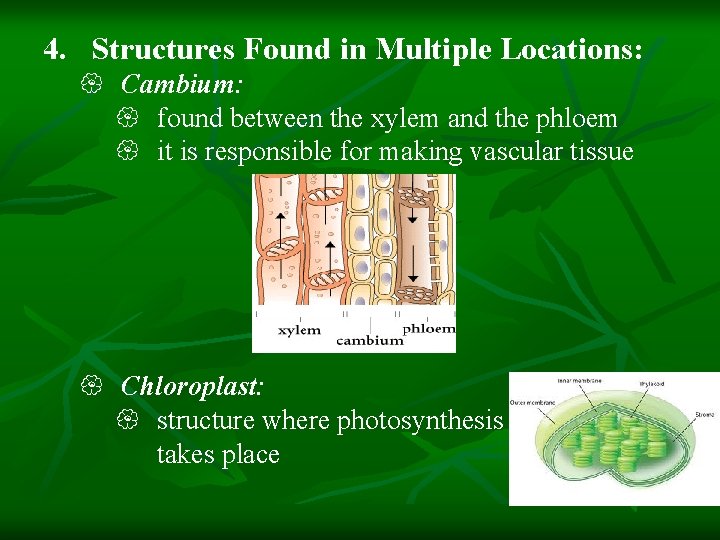
4. Structures Found in Multiple Locations: { Cambium: { found between the xylem and the phloem { it is responsible for making vascular tissue { Chloroplast: { structure where photosynthesis takes place
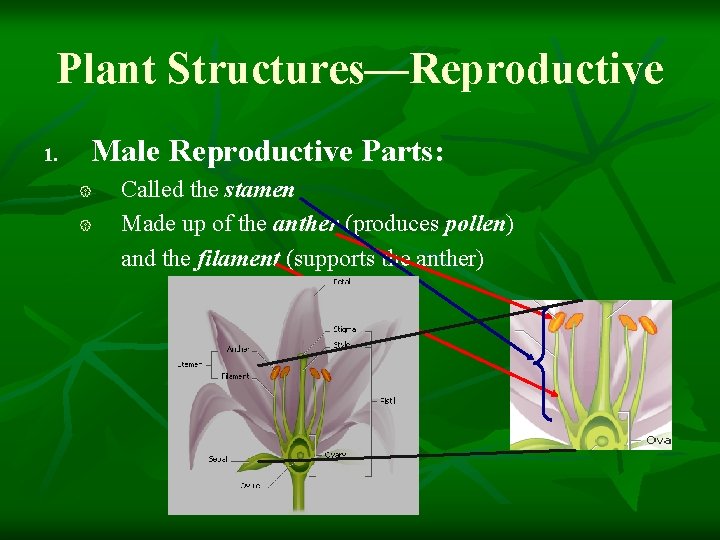
Plant Structures—Reproductive 1. Male Reproductive Parts: { { Called the stamen Made up of the anther (produces pollen) and the filament (supports the anther)
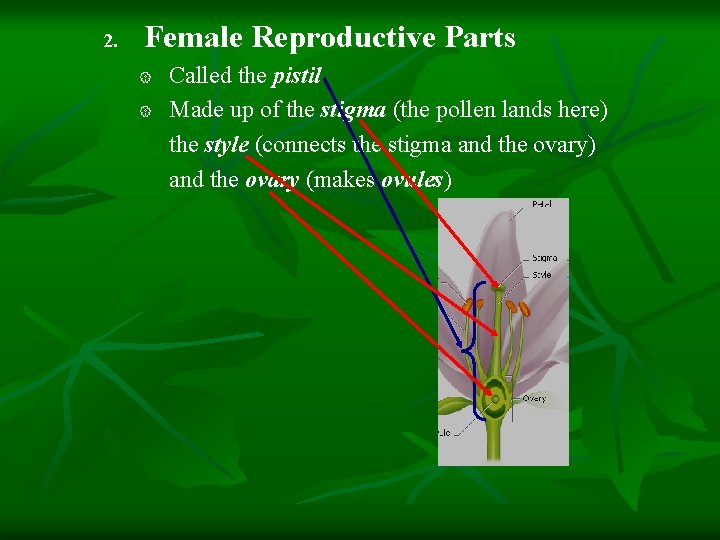
2. Female Reproductive Parts { { Called the pistil Made up of the stigma (the pollen lands here) the style (connects the stigma and the ovary) and the ovary (makes ovules)
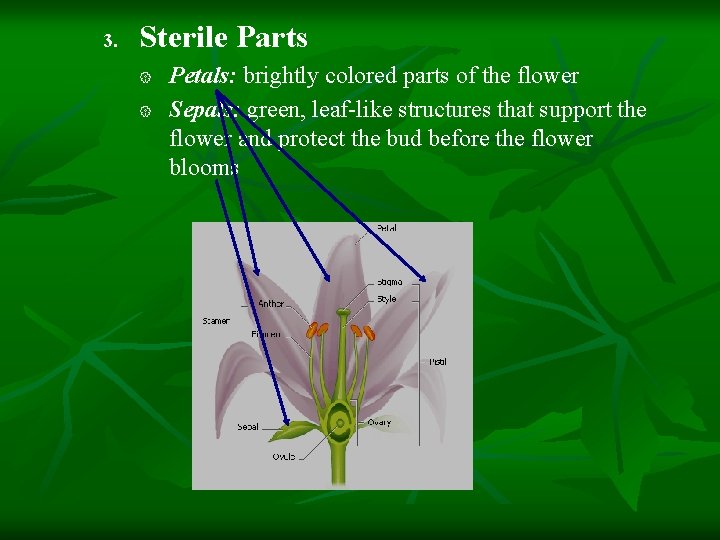
3. Sterile Parts { { Petals: brightly colored parts of the flower Sepals: green, leaf-like structures that support the flower and protect the bud before the flower blooms
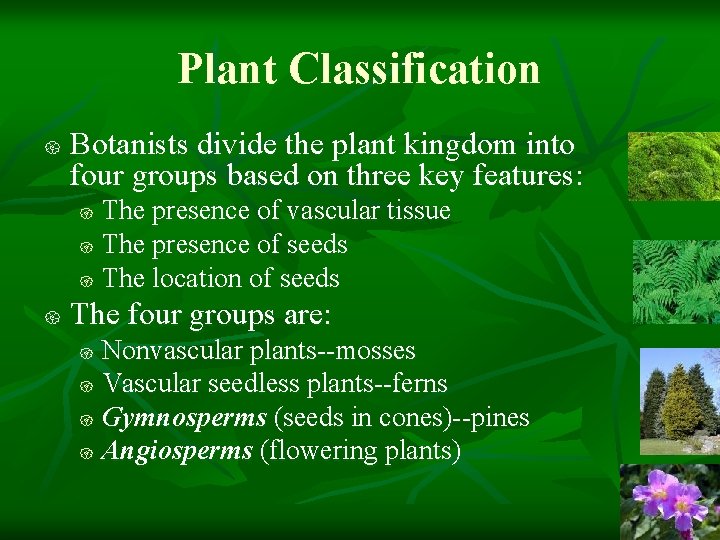
Plant Classification { Botanists divide the plant kingdom into four groups based on three key features: The presence of vascular tissue { The presence of seeds { The location of seeds { { The four groups are: Nonvascular plants--mosses { Vascular seedless plants--ferns { Gymnosperms (seeds in cones)--pines { Angiosperms (flowering plants) {
Tropisms n n Tropisms are responses by plants to environmental stimuli Examples: n n Thigmotropism: a plant’s response to touch (i. e. vines wrap around a trellis or Venus fly trap captures an insect) Phototropism: a plant’s response to light (i. e. plant’s grow towards a window)
Tropisms (cont. ) n Gravitropism: a plant’s response to gravity stem’s show negative gravitropism since they grow against the force of gravity n root’s show positive gravitropism since they grow with the force of gravity n