
Kingdom Plantae I Characteristics of All Plants A
- Slides: 16
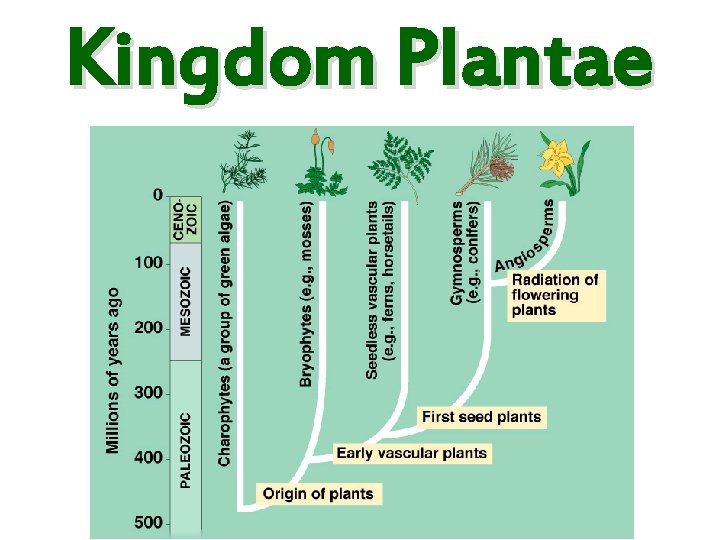
Kingdom Plantae
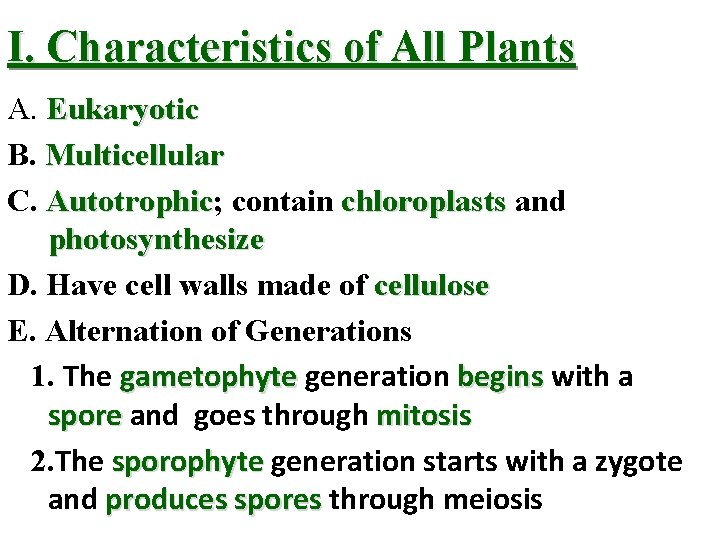
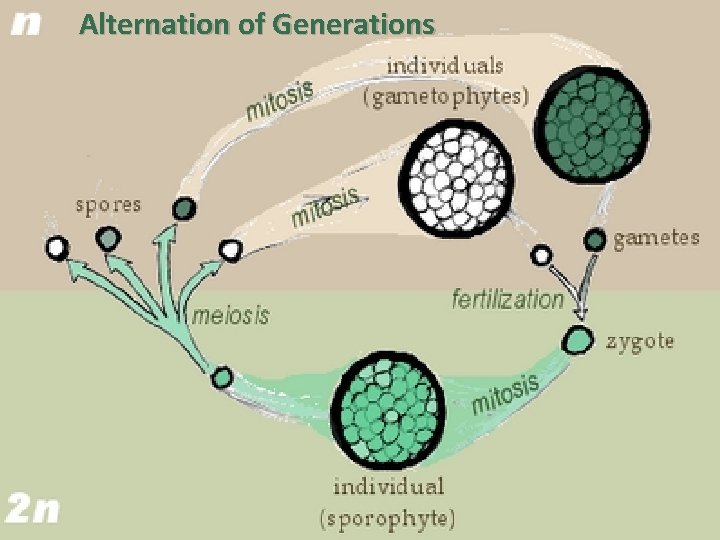
I. Characteristics of All Plants A. Eukaryotic B. Multicellular C. Autotrophic; Autotrophic contain chloroplasts and photosynthesize D. Have cell walls made of cellulose E. Alternation of Generations 1. The gametophyte generation begins with a spore and goes through mitosis 2. The sporophyte generation starts with a zygote and produces spores through meiosis
Alternation of Generations
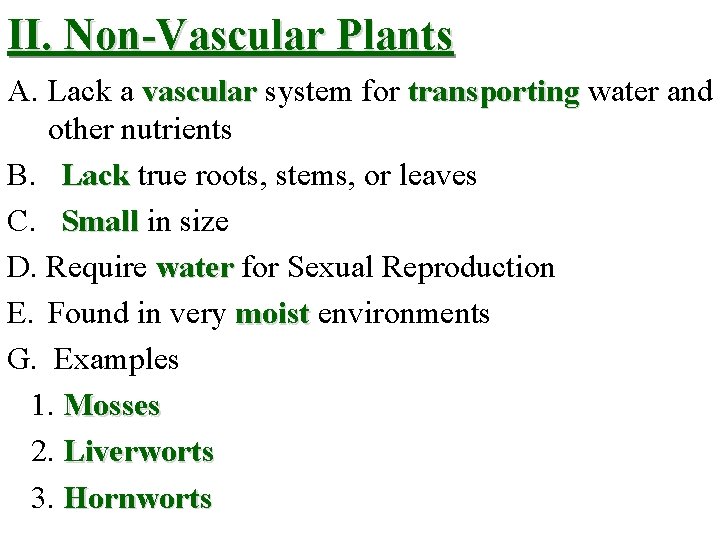
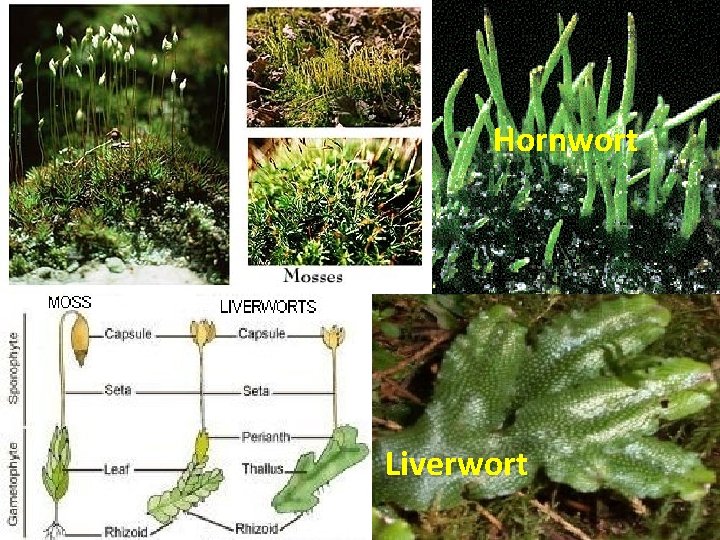
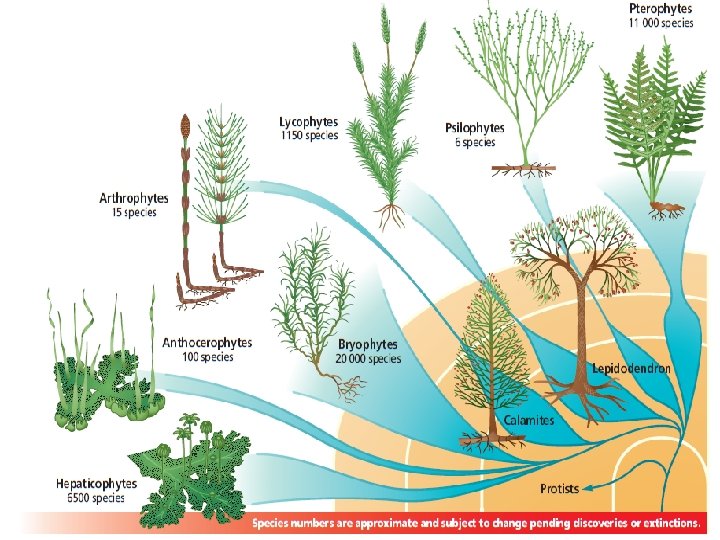
II. Non-Vascular Plants A. Lack a vascular system for transporting water and other nutrients B. Lack true roots, stems, or leaves C. Small in size D. Require water for Sexual Reproduction E. Found in very moist environments G. Examples 1. Mosses 2. Liverworts 3. Hornworts
Hornwort Liverwort
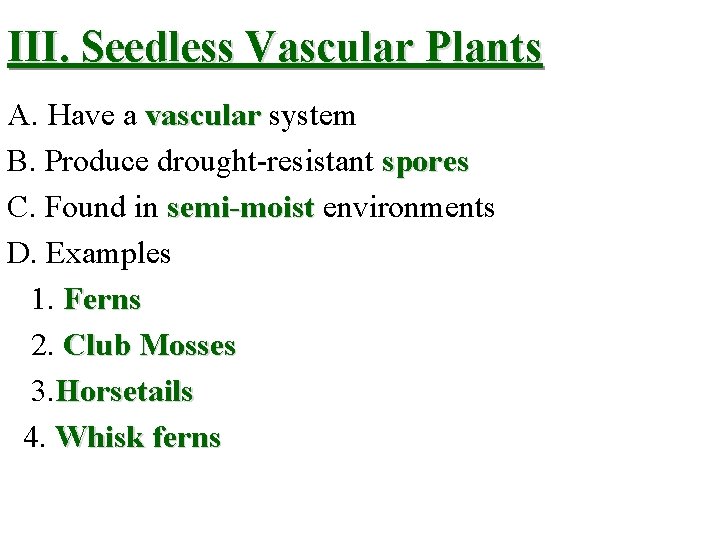
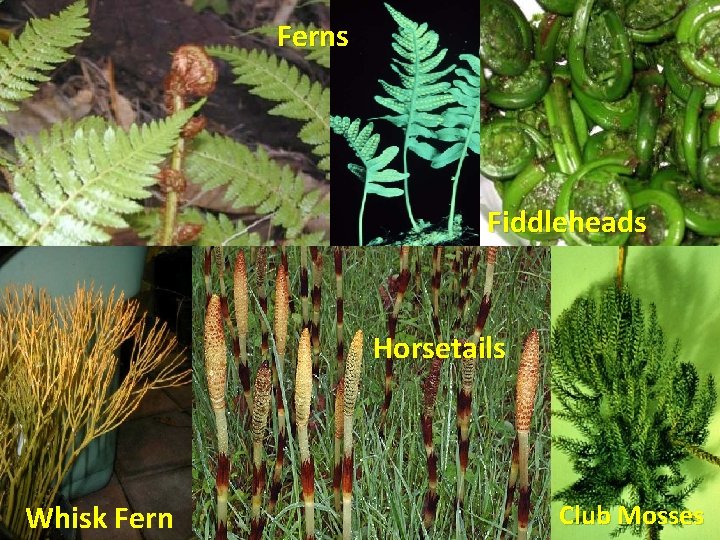
III. Seedless Vascular Plants A. Have a vascular system B. Produce drought-resistant spores C. Found in semi-moist environments D. Examples 1. Ferns 2. Club Mosses 3. Horsetails 4. Whisk ferns
Ferns Fiddleheads Horsetail Whisk Fern Club Mosses
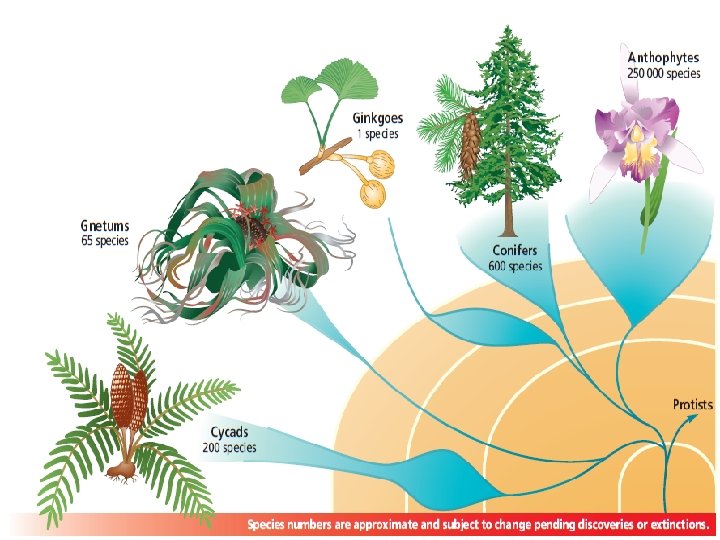
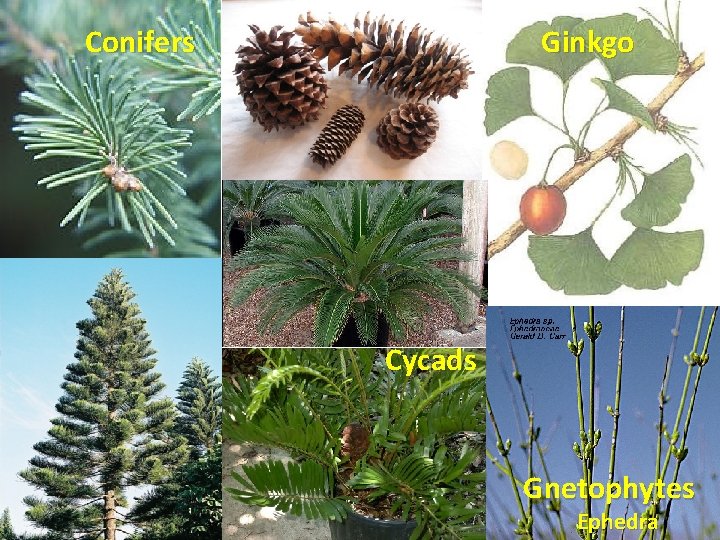
IV. Gymnosperms – “Naked-Seed” Plants A. Produce seeds in cone-like structures cone B. Greatly reduced gametophyte C. Most rely upon wind pollination D. Examples 1. conifers (needle/scale-like leaves) 2. cycads (sago palm) 3. ginkgo 4. ephedra
Conifers Ginkgo Cycads Gnetophytes Ephedra
V. Angiosperms – “Covered Seed” Plants A. Flowers – male and female gametophytes B. Fruit – contains seed(s) 1. may protect seed 2. promotes dispersal of seed C. Endosperm – store food within the seed that is absorbed by the embryo D. Most diverse group of plants – over 250, 000 species
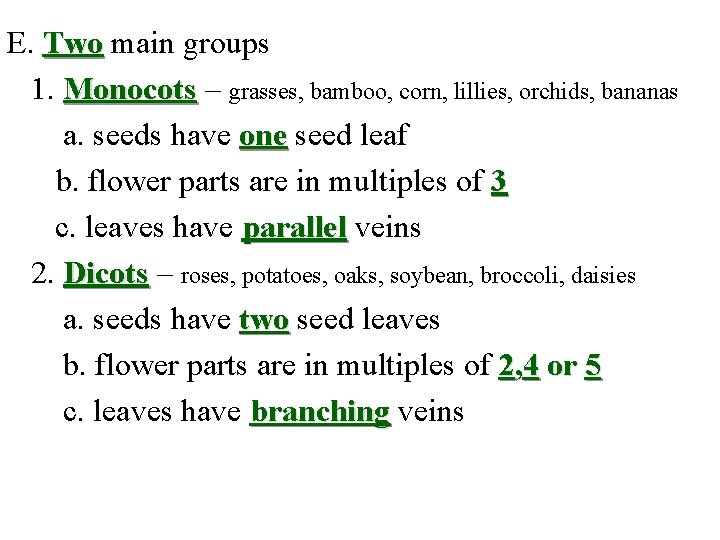
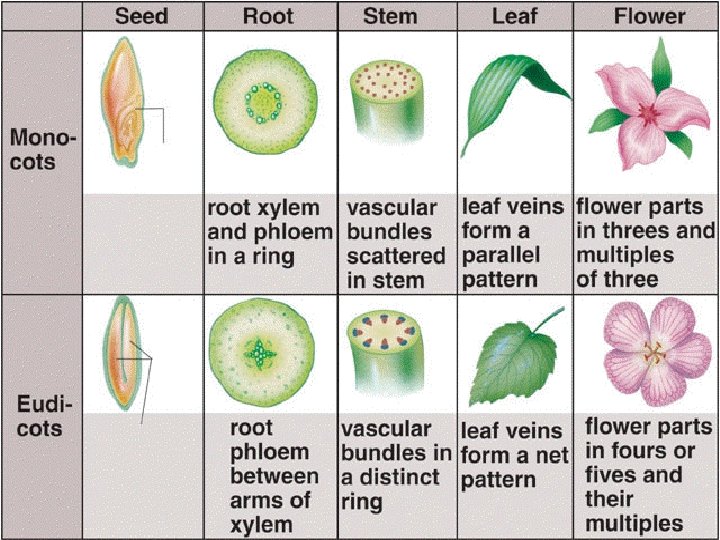
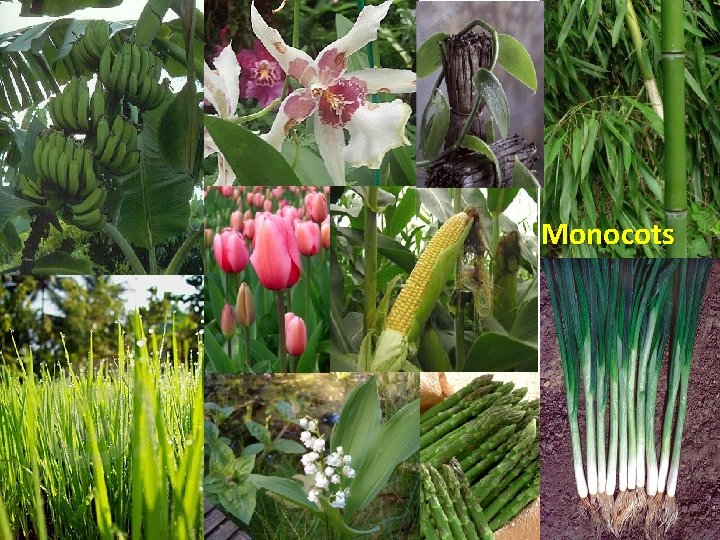
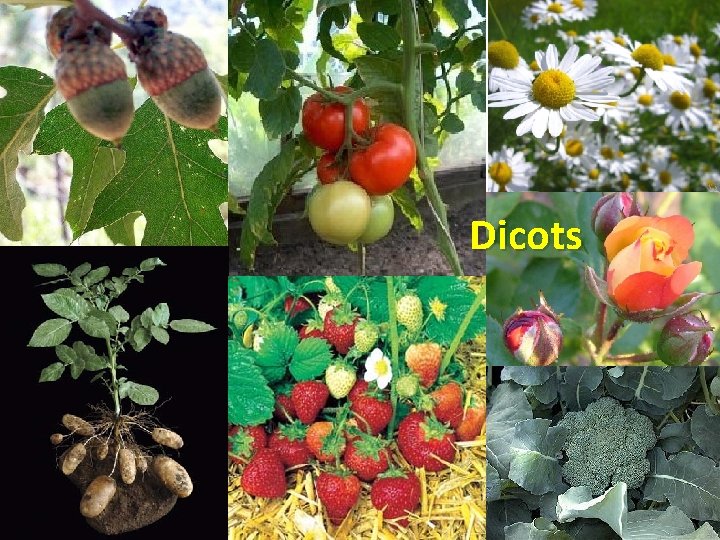
E. Two main groups 1. Monocots – grasses, bamboo, corn, lillies, orchids, bananas a. seeds have one seed leaf b. flower parts are in multiples of 3 c. leaves have parallel veins 2. Dicots – roses, potatoes, oaks, soybean, broccoli, daisies a. seeds have two seed leaves b. flower parts are in multiples of 2, 4 or 5 c. leaves have branching veins
Monocots
Dicots